UnifiedLink plans and installs televisions above fireplaces in Brampton homes and commercial spaces. We assess wall construction, fireplace clearances, viewing height, bracket selection, power access and cable routing before pricing. Each installation receives a written scope, secure mounting, on-site configuration and a documented handover using the customer’s own credentials.
Fireplace TV Mounting Planning in Brampton
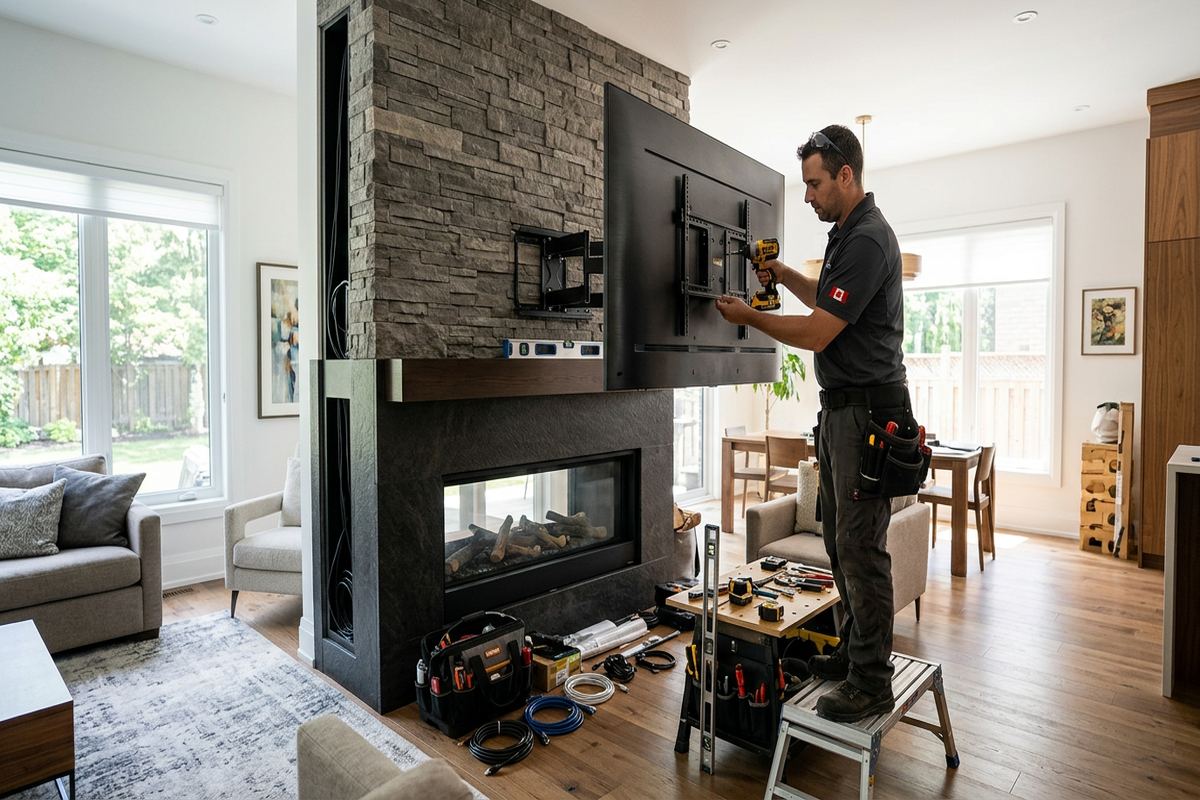
Mounting a television above a fireplace requires more planning than attaching a bracket to an open wall. Heat, viewing height, mantel depth, wall composition and access to power all affect the result. In Brampton, the work may involve a framed feature wall in a newer subdivision, an older masonry chimney breast, or a finished basement fireplace with limited access behind the surface. UnifiedLink begins with a site assessment, confirms the intended equipment and identifies practical cable routes before providing pricing. This avoids treating visually similar fireplaces as though their internal construction and clearance requirements were identical.
The assessment considers the fireplace type, its manufacturer instructions where available, the proposed screen size and the way the room will be used. A mantel can help deflect rising heat, but its dimensions and relationship to the appliance still matter. We also look for vents, removable service panels and other features that must remain accessible. If safe placement cannot be confirmed, we explain the constraint rather than proceeding on appearance alone. The written scope records device placement, equipment, cable routes, exclusions, equipment ownership and warranty details so the mounting plan is clear before installation begins.
Room layout is equally important because a technically secure installation can still be uncomfortable to watch. Seating distance, head position, screen angle and reflections from nearby windows are reviewed before the mounting height is finalized. A tilting or articulated bracket may improve the viewing angle, although bracket movement also changes clearance and cable requirements. In Downtown Brampton homes with traditional room layouts, the available wall area may be narrow. In Springdale or Mount Pleasant properties, larger open-plan rooms can introduce longer viewing distances and more daylight, requiring a different placement decision.
- Fireplace type and available documentation reviewed
- Mantel depth and heat path considered
- Seating position and viewing angle checked
- Bracket movement included in route planning
- Written scope issued before installation
Wall Construction Across Brampton Homes
Brampton’s varied housing stock calls for verification behind the finished surface. Newer feature walls are often framed and covered with drywall, but stud spacing, blocking and decorative finishes cannot be assumed. Older homes may have brick, concrete, plaster or a masonry chimney assembly beneath the visible finish. Each condition requires suitable anchors, drilling methods and load placement. A stud finder alone does not establish the complete structure, particularly around fireplaces where framing can change around the firebox and flue. We assess accessible evidence and select a mounting method appropriate to the confirmed substrate and bracket loads.
Fast-growing subdivisions in Castlemore, Fletcher’s Meadow and Mount Pleasant commonly include finished feature walls and completed basements. These spaces look ready for a television, yet the cable cavity may be interrupted by fire blocking, insulation, plumbing or fireplace framing. Decorative stone, tile and manufactured veneer also affect drilling and bracket seating. We plan holes carefully to reduce avoidable damage, but concealed conditions can still limit the original route. Any likely access openings, surface raceways or finish repairs are discussed in advance and identified as included work or exclusions within the written scope.
Masonry and frame construction behave differently during installation. Brick or concrete can provide a firm mounting base when its condition and anchor locations are suitable, while veneers and mortar joints may not be intended to carry the television load. Framed walls depend on sound structural members or purpose-built reinforcement rather than drywall alone. A projecting mantel or uneven stone surface can also prevent a bracket from sitting flat. Where spacers or another mounting detail is proposed, the assembly must remain stable and compatible with bracket instructions. UnifiedLink documents the selected approach instead of relying on a generic fastener package.
- Framing and substrate assessed on site
- Anchors matched to confirmed wall material
- Decorative stone and tile considered
- Hidden obstructions discussed before work
- Bracket loads transferred to suitable structure
Heat, Clearance and Fireplace Conditions
Heat exposure must be considered before a screen is placed above any operating fireplace. The appliance instructions, television requirements and bracket documentation provide the starting limits, while the actual room arrangement shows how heat may collect around the proposed location. Gas, electric and wood-burning units have different venting and service needs, so no single mounting height applies to every installation. We do not cover required vents or controls, and we preserve access to serviceable components. When documentation is unavailable or the condition is uncertain, further confirmation may be needed before a final mounting position can be approved.
A practical heat check can help identify whether the intended location experiences concerning temperatures during normal fireplace operation, but it does not replace manufacturer requirements. Mantel projection, recessed cavities and nearby shelving may change how warm air moves. Televisions also release their own heat and require ventilation around the cabinet. The installation plan therefore avoids tightly enclosing equipment without considering airflow. If a soundbar, media player or control device will share the feature wall, each component needs an appropriate position, a stable support method and access for future reset, replacement or maintenance.
Brampton winters lead many households to use fireplaces regularly, making operating conditions more relevant than they might appear during a warm-weather assessment. Seasonal heating can expose a screen and concealed cabling to repeated temperature changes. Exterior walls may also contain insulation, vapour-control layers and cold cavities that should not be opened casually. We plan penetrations to limit disruption to these assemblies and flag locations where another trade may be required. The objective is a secure display installation that respects the fireplace system, rather than altering or bypassing appliance components to make the television fit.
- Manufacturer clearance requirements reviewed
- Fireplace vents and controls kept accessible
- Screen ventilation included in placement decisions
- Seasonal heat use considered
- Other trades identified when required
Brampton, Ontario
Fireplace TV mounting in Brampton, scoped in writing first
Book a site assessment and get equipment, routes, exclusions, and warranty on paper before anything is installed.
Concealed Cabling for Brampton Fireplace Walls
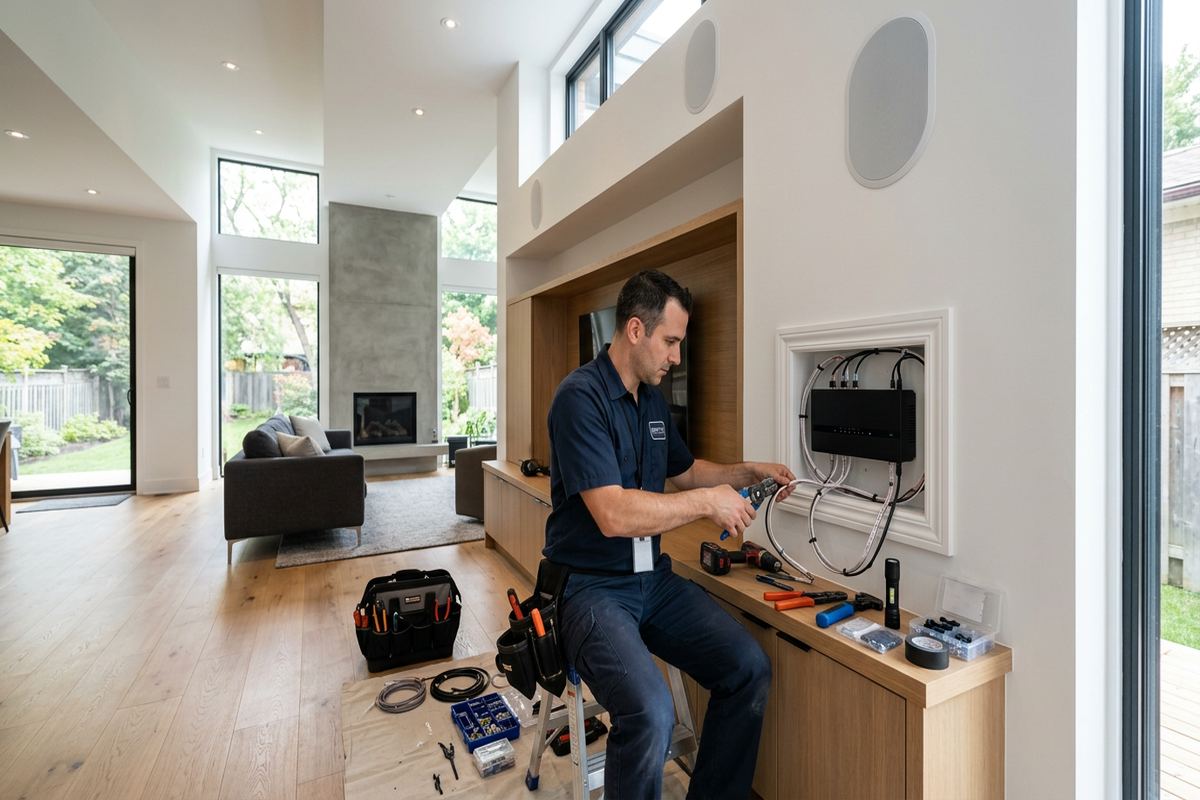
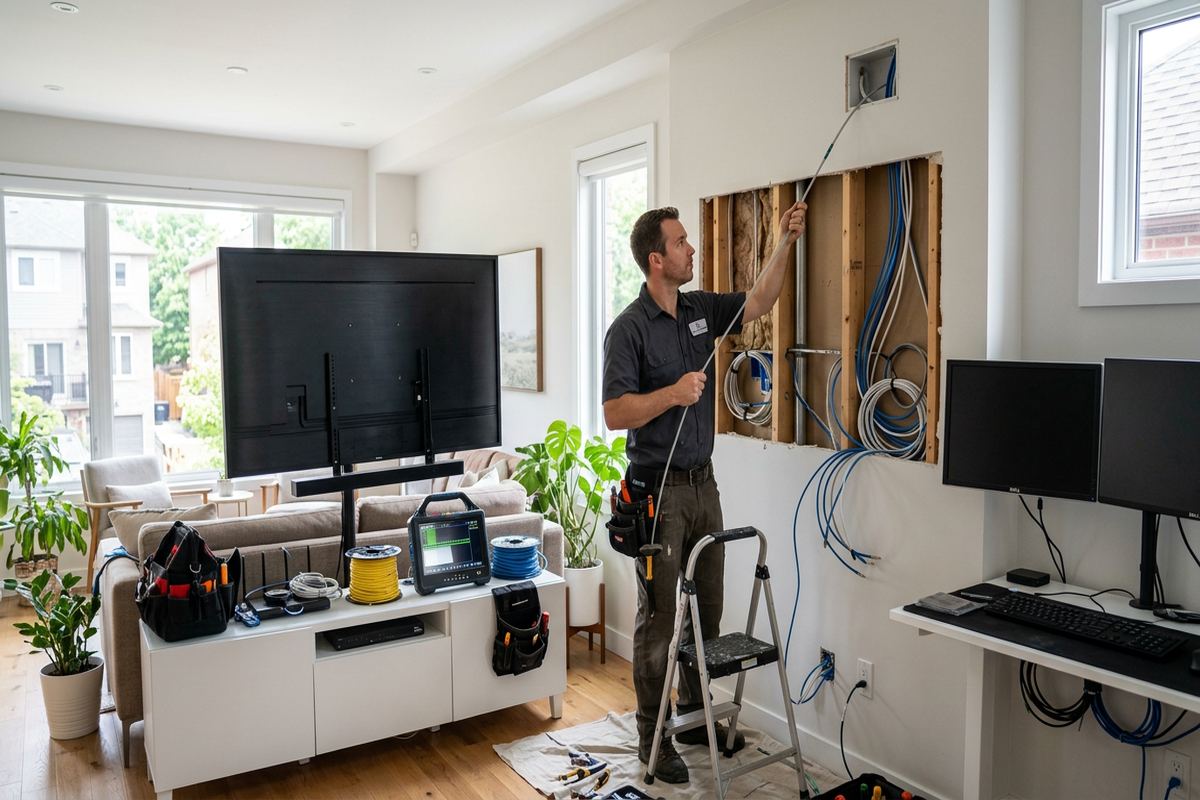
Cable routing often determines whether an above-fireplace installation is straightforward or invasive. A clear framed cavity may allow low-voltage cables to pass from the display to a nearby cabinet, but fireplace framing, masonry and horizontal blocking can prevent that route. UnifiedLink looks for accessible paths before cutting finished surfaces. Where concealed routing is practical, we install continuous labelled cable runs and avoid unnecessary intermediate joints. Where it is not, options may include a paintable surface raceway, a route through adjacent cabinetry or a carefully located access opening, subject to the agreed scope and finish requirements.
Power and low-voltage cabling are planned as separate parts of the installation. An extension cord should not be hidden inside a wall as a substitute for a properly located receptacle. If a new electrical outlet or electrical modification is needed, that work must be completed by an appropriate electrical contractor and coordinated with the display location. HDMI, data and control cables are selected for the required connection and route length. Spare capacity may be sensible where future equipment is anticipated, but the final cable package should reflect actual devices rather than adding unneeded components.
Finished basements are common throughout Brampton’s subdivision housing and can offer dedicated media rooms, yet completed ceilings and insulated exterior walls restrict cable access. The route may need to connect a fireplace display with a receiver, game console, streaming device or network point across the room. We trace the intended signal path, consider removable ceiling areas and avoid promising a fully concealed route until conditions are assessed. The scope states where cables begin and end, how they are labelled, which patch leads are supplied and whether drywall opening, patching or painting is excluded.
- Continuous labelled low-voltage cable runs
- Power requirements identified separately
- Raceway options offered for blocked cavities
- Source equipment locations documented
- Patching and painting responsibilities clarified
Mounts, Screens and Connected Equipment
Bracket selection starts with the television’s size, weight, mounting pattern and the required viewing adjustment. A fixed mount keeps the screen close to the wall, while a tilting model can reduce the neck angle created by higher placement. Full-motion mounts provide side-to-side access and viewing flexibility, but they place different forces on the wall and need space for cables to move without pinching. The bracket must also work with the wall surface, mantel projection and connection locations. We confirm compatibility before installation instead of assuming that an existing or customer-supplied mount is suitable.
Connected equipment needs a defined home before the screen is lifted into place. Streaming players, cable boxes, game consoles, network adapters and power supplies should not be left loose behind a hot display or placed where remote signals and wireless performance are unreliable. Some devices can be secured in an approved location behind the screen, while others belong in ventilated furniture with a cable route back to the television. Soundbars may attach to the wall or, where compatible, move with the television bracket. Each arrangement is reviewed for support, access, ventilation and serviceability.
On-site configuration covers the agreed display and source connections rather than only physical mounting. We can connect the specified equipment, confirm input selection, check basic picture and audio operation, and configure network access where included. Account sign-in is completed using the customer’s own credentials, which remain under the customer’s control. At handover, the customer receives an as-built record showing relevant device placement and cable information. Equipment ownership and warranty responsibilities are also stated in the written scope, reducing uncertainty if a component later needs support, replacement or relocation.
- Fixed, tilt and full-motion options assessed
- TV weight and mounting pattern confirmed
- Connected devices given serviceable locations
- Soundbar placement coordinated with screen
- Customer credentials used during configuration
Exterior and Commercial Mounting in Brampton
An exterior fireplace television faces conditions that do not apply indoors. The display, bracket, connections and enclosure must be suitable for the intended environment, including moisture, wind-driven precipitation, temperature changes and direct sunlight. Brampton’s winters and freeze-thaw cycles can stress masonry penetrations and sealants, so exterior holes require careful placement and weather-appropriate sealing. Cable entries should shed water rather than direct it into the wall. An ordinary indoor television does not become outdoor-rated because it sits beneath a roof, and the project scope will identify environmental limitations and customer-supplied equipment assumptions.
Commercial strips and industrial units can also include fireplaces or fireplace-style feature walls in reception areas, offices, restaurants and customer lounges. Brampton’s heavy base of warehouse and logistics sites means some display projects occur within larger industrial properties, where wall construction, operating hours and site access differ from residential work. The assessment considers mounting height, public circulation, equipment security, cable protection and access for future service. Work may need coordination with a property manager, landlord, facilities contact or other contractor before drilling, cable routing or electrical changes can proceed.
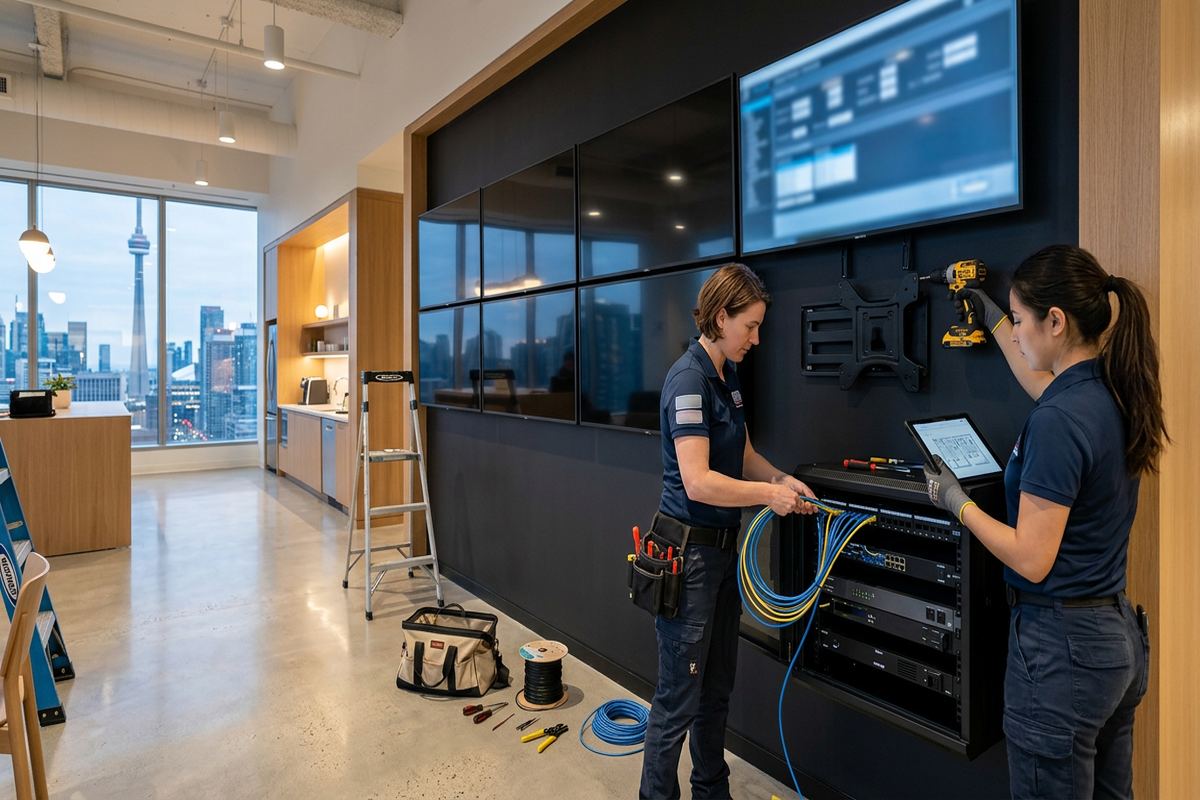
Commercial screens often serve multiple purposes, such as presentations, television programming, dashboards or digital signage. The intended use affects source equipment, network connectivity, control methods and the need to prevent casual changes. A fireplace feature can impose a high mounting position, so readability must be checked from actual seating or standing locations. UnifiedLink provides one accountable contractor for the defined low-voltage display scope, including bracket installation, planned cabling, configuration and handover. Items outside that scope, such as finish restoration, fireplace modification or electrical work, are identified before the job moves forward.
- Exterior-rated equipment requirements identified
- Penetrations planned for drainage and sealing
- Freeze-thaw exposure considered
- Commercial access requirements documented
- Public viewing angles checked on site
Approvals and Occupied Properties
Ownership does not automatically permit every alteration. Brampton condominium owners may need approval from the condominium corporation or property manager, especially when a wall is shared, structural, masonry-clad or connected to common building systems. Tenants should obtain written landlord permission before drilling or opening walls. Commercial occupants may face similar lease restrictions. UnifiedLink can describe the proposed bracket location, penetrations and cable route for the customer’s approval request, but the customer remains responsible for securing permission unless the written scope specifically assigns another coordination task.
Occupied homes require attention to furniture, flooring, dust and access around the fireplace. Before work starts, the screen, bracket and connected equipment should be available for compatibility checks, and the working area should be reasonably clear. Drilling into masonry or tile can produce dust even when collection measures are used. We discuss likely disruption, required shutdowns and any access openings before proceeding. In tighter rooms around Bramalea or Downtown Brampton, safe ladder positioning and screen handling may require temporary movement of furniture, decorative items or mantel contents by the customer.
Approvals also matter when a proposed route crosses fire separations, shared corridors or landlord-controlled utility spaces. Penetrations cannot simply be made because they offer the shortest path. Where a cable route involves regulated assemblies or specialized sealing, the required method and responsible trade must be established first. The same caution applies when unknown wiring, plumbing or gas components are suspected behind a fireplace wall. Work pauses if concealed conditions conflict with the agreed plan. A revised route or scope can then be documented, preserving accountability instead of making an unrecorded field change.
- Condo approval requirements reviewed
- Landlord permission confirmed by occupants
- Shared and regulated assemblies respected
- Occupied-room access planned in advance
- Scope changes documented before proceeding
Brampton Assessment, Installation and Handover
Every fireplace TV mounting request begins with enough information to determine the next step. Useful details include the Brampton address, fireplace type, television model, bracket model if already purchased, wall finish, source equipment and photographs of the room. A site assessment is completed before pricing because concealed structure, access and clearances cannot be confirmed from a screen size alone. Assessment timing depends on the service and travel distance. Requests sent during business hours are answered the same day, while after-hours requests are answered the next business day.
Following assessment, the written scope records the agreed equipment, device placement, bracket type, cable routes and relevant exclusions. It also states equipment ownership and warranty responsibilities. On installation day, mounting points and routes are verified again before drilling. The bracket is secured to appropriate structure, continuous low-voltage runs are installed and labelled where included, and the television is handled according to the planned method. Connections and basic operation are checked on site. If hidden conditions differ materially from what could be assessed, options are explained before additional or changed work proceeds.
Handover is intended to leave the installation understandable, not merely operational at departure. The customer receives control using their own credentials, along with an as-built record of the completed placement and cabling. We review relevant inputs, device locations and any access considerations for future service. From Heart Lake and Springdale to Castlemore and Fletcher’s Meadow, the same process applies while the technical details change with each property. One accountable contractor manages the defined display and low-voltage scope, with dependencies on electricians, fireplace specialists, property managers or finish trades identified rather than left implicit.
- Site assessment completed before pricing
- Detailed written scope provided
- Mounting points rechecked before drilling
- On-site operation confirmed
- As-built information supplied at handover
Brampton neighbourhoods we cover
- Downtown Brampton
- Bramalea
- Springdale
- Heart Lake
- Mount Pleasant
- Castlemore
- Fletcher's Meadow
Fireplace TV mounting in Brampton — common questions
Can any TV be mounted above a fireplace?
Not automatically. The television’s operating limits, fireplace instructions, mantel arrangement, wall structure and available ventilation must be reviewed. In Brampton homes, feature walls may conceal framing, masonry or blocked cavities that affect both mounting and cabling. A site assessment determines whether the proposed position is practical or whether a different height, bracket, heat-management approach or wall location should be considered.
How do you hide cables above a fireplace?
The route depends on what is behind the finished wall. Some Brampton fireplace walls have an accessible framed cavity, while others contain masonry, insulation, fire blocking or appliance components. We assess concealed routing first, then discuss alternatives such as adjacent cabinetry or surface raceway. Included cable routes, access openings and finish-work exclusions are recorded in the written scope before installation.
Do I need an electrical outlet behind the TV?
The display needs a suitable power source, but an extension cord should not be concealed inside the wall. If no correctly located receptacle exists, an appropriate electrical contractor may be required to install or modify one. UnifiedLink coordinates the low-voltage route with the planned power location and identifies that dependency during the Brampton site assessment rather than hiding an unsuitable power cable.
Will a tilt mount improve viewing height?
A tilting bracket can improve the viewing angle when the fireplace forces the screen higher than a standard wall installation. It does not correct every height or clearance problem, however. We consider seating distance, mantel projection, screen size and reflections in the actual Brampton room. Full-motion mounting may offer more adjustment, but it requires suitable structure and careful cable management.
Can you mount a TV over an outdoor fireplace?
Yes, when the proposed equipment, structure and location are appropriate. Outdoor work in Brampton must account for moisture, sunlight, winter temperatures and freeze-thaw effects on masonry penetrations and sealants. The television and bracket should be rated for the intended exposure. Cable entries require weather-aware routing and sealing, and nearby electrical provisions must be assessed by the appropriate trade where changes are needed.
Do condos and rental properties require approval?
They often do. Brampton condominium corporations, property managers and landlords may restrict drilling, wall openings, shared-wall work or changes near building systems. The owner or tenant should secure written permission before installation. UnifiedLink can provide a clear proposed mounting location and cable route for an approval request. Any conditions imposed by the building are reviewed before the final scope is accepted.
Coverage in Brampton is confirmed against the address before we quote. See everything we install in Brampton or the province-wide fireplace tv mounting page.