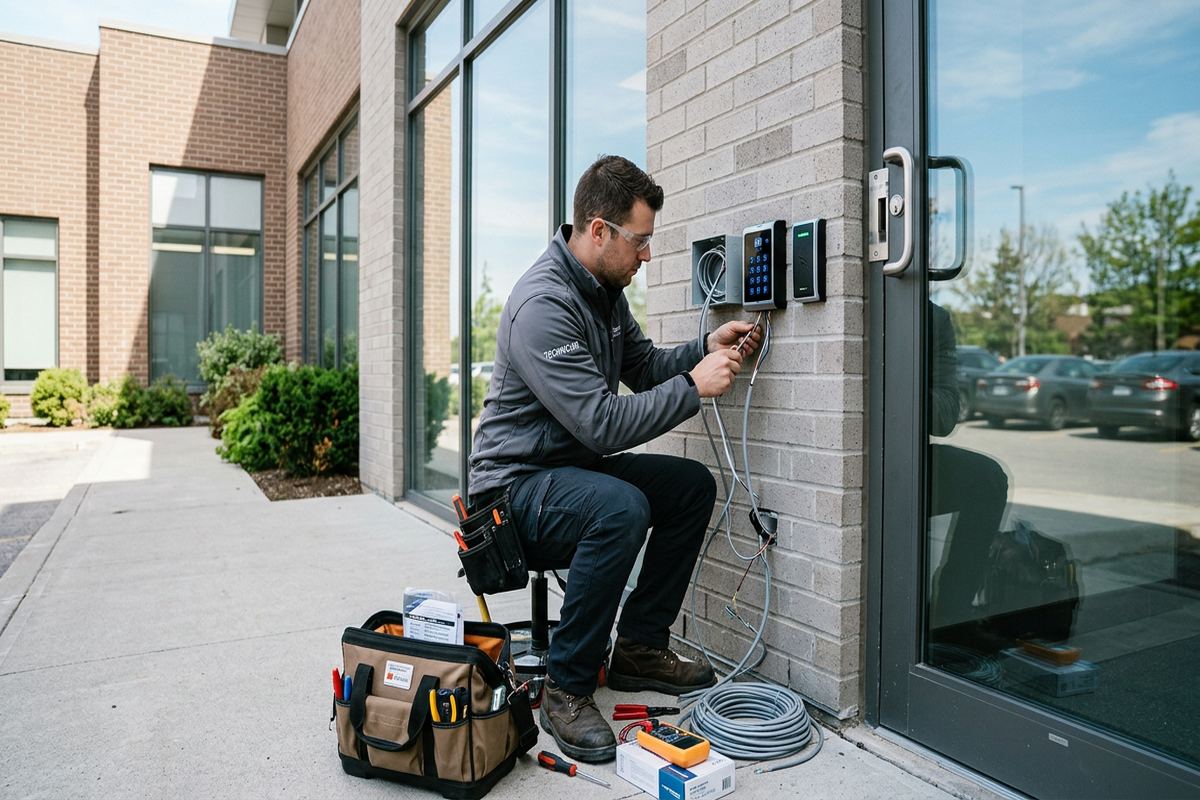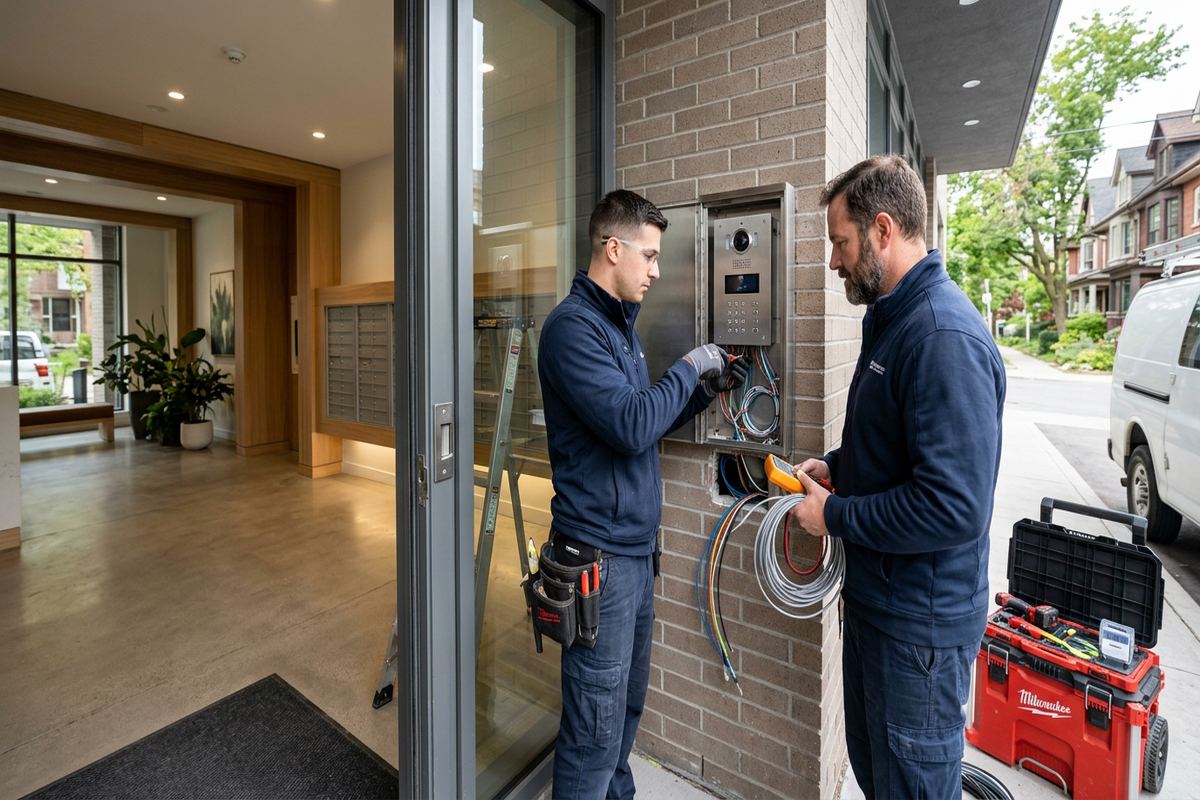
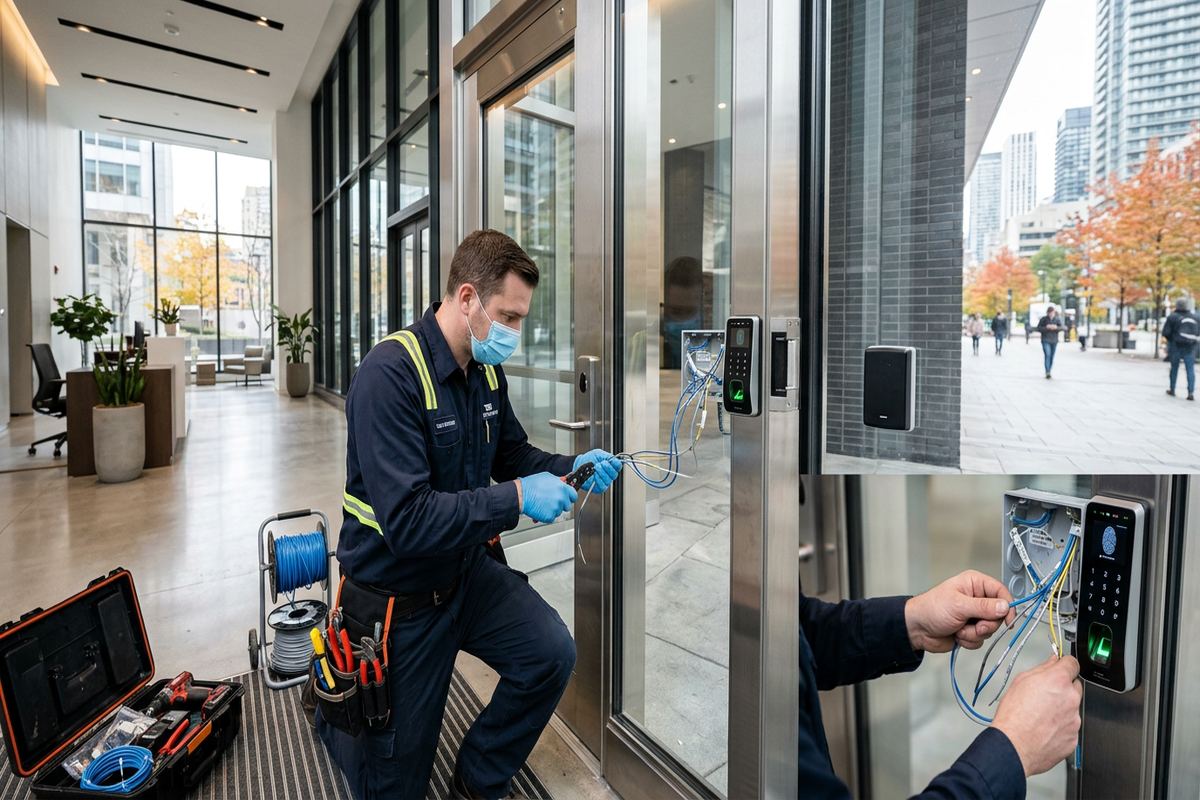
UnifiedLink plans and installs condo access control systems in Brampton for main entrances, parking areas, amenity rooms, service doors and other shared spaces. Each project starts with a site assessment and considers existing doors, wiring, management requirements and resident access. The result is a defined system that building staff can administer using their own credentials.
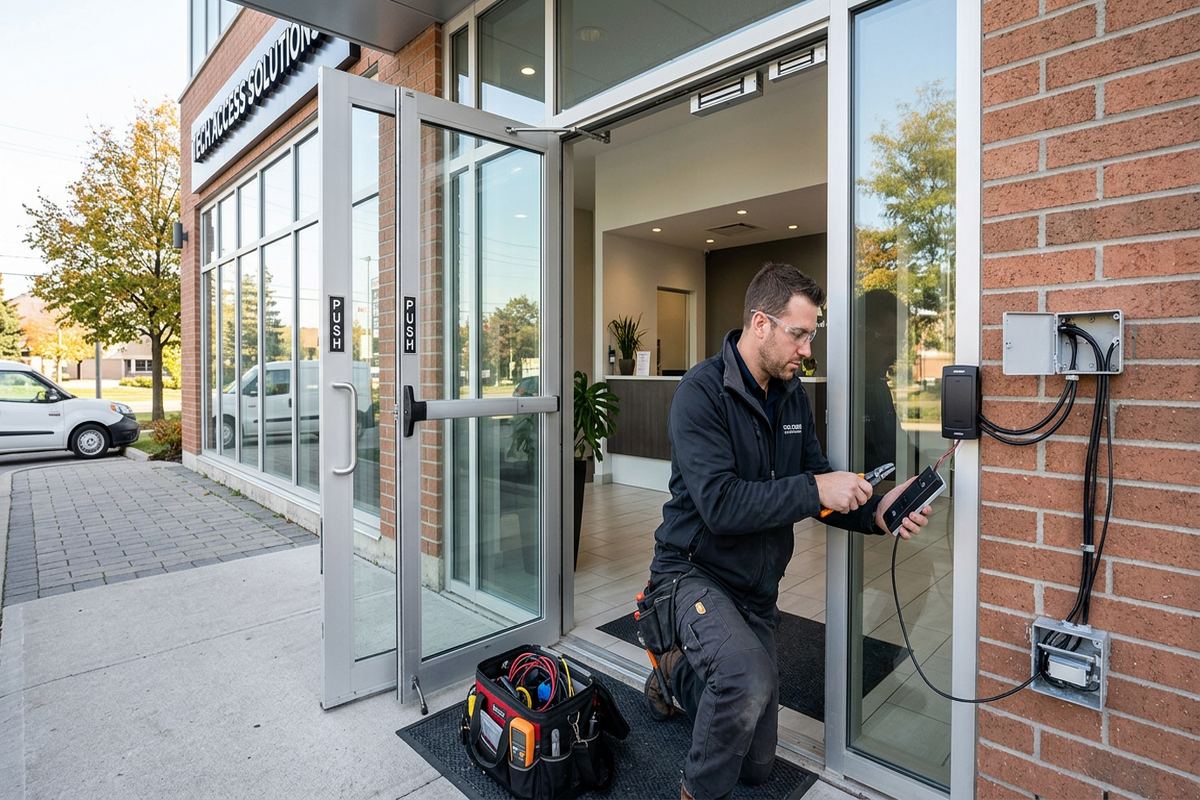
Planning Condo Access Control in Brampton
A condo access system begins with how residents, visitors, contractors and staff actually move through the property. During a site assessment, UnifiedLink reviews public entrances, vestibules, parking access, stairwells, elevators, amenity rooms and service doors. We also identify doors that must remain freely available for emergency egress. In Brampton, the required design can differ considerably between older towers near Downtown Brampton, townhouse condominiums around Bramalea and newer multi-building developments in Springdale. The assessment turns those operating needs into door-by-door requirements rather than applying one device type everywhere.
Existing conditions determine whether a project is a straightforward upgrade or a wider infrastructure job. We inspect door frames, locks, closers, power supplies, pathways, network availability and any equipment that management wants to retain. A system may need to connect with intercoms, automatic door operators, parking controls or monitored alarms, but compatibility must be confirmed before that connection enters the scope. Finished lobbies and occupied corridors also affect cable routes, working hours and restoration requirements. These details are documented before equipment is selected or pricing is prepared.
Following the assessment, the written scope identifies equipment, cable routes, device placement, exclusions, equipment ownership and warranty. It can also separate immediate work from future phases when a board wants to address priority entrances first. Clear responsibility matters in condominiums because property management, the board, residents, locksmiths and other contractors may all be involved. UnifiedLink acts as one accountable contractor for the defined access control work, while noting any door repair, fire alarm interface, network change or finish restoration that another trade must complete.
- Door-by-door access and egress review
- Existing lock and controller assessment
- Defined integrations and contractor responsibilities
- Written scope before installation
Choosing Credentials and Readers for Brampton Condos
Credential choice affects daily administration long after installation. Fobs and cards remain practical where management needs simple issue, replacement and revocation procedures. Mobile credentials may suit buildings that want phone-based access, although resident devices, application support, internet dependence and recurring platform terms require review. Keypads can serve limited staff or service areas, but shared codes provide less individual accountability. Brampton condo boards should select a method based on resident mix, staffing and operating policy rather than appearance alone. The system should let authorized administrators add and remove users without relying on an installer for routine changes.
Readers must match both the credential technology and their mounting environment. Interior lobby readers are protected from weather, while readers at parking gates, townhouse entrances or exposed service doors face moisture, road salt and changing temperatures. Brampton winters create repeated freeze-thaw cycles that can open small gaps around boxes and penetrations. Exterior installations therefore require appropriate devices, stable mounting surfaces, sealed cable entries and drip-aware routing. Weather resistance does not correct a poorly prepared opening, so masonry, metal cladding and frame construction each need a suitable fastening and sealing method.
Good credential administration depends on clear groups and permissions. Residents may receive access to their building, parking level and shared amenities, while cleaners, delivery personnel and contractors receive narrower schedules. Property staff may need broader rights without receiving unrestricted system administration. Naming conventions should identify doors and access groups in language that management understands. At handover, UnifiedLink configures the approved structure on site and provides the customer with its own administrator credentials. Management remains responsible for authorization policies, resident records and the internal process used to approve new or replacement credentials.
- Fob, card, mobile and keypad options
- Outdoor-rated reader selection where required
- Separate resident, staff and contractor permissions
- Customer-controlled credential administration
Door Hardware and Life Safety Coordination
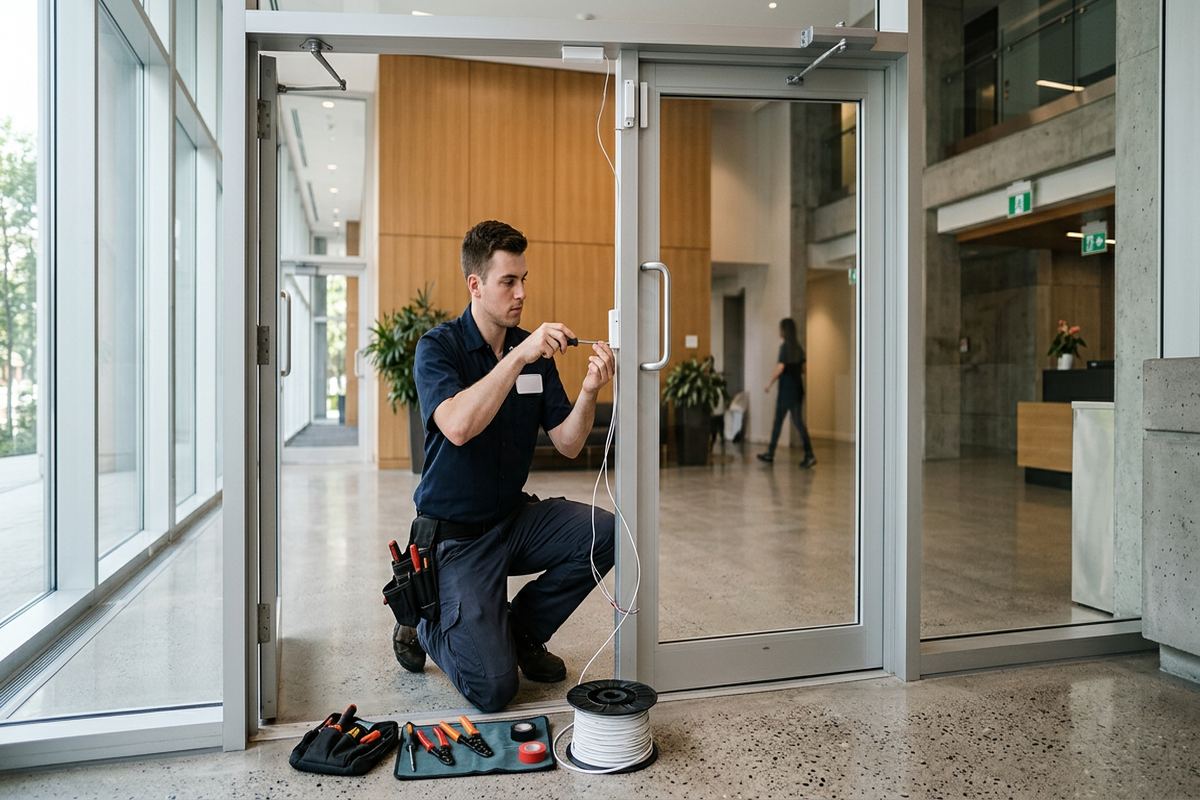
Access control cannot compensate for a door that binds, fails to latch or has a weak frame. Before electrification, each opening should be checked for alignment, closer operation, latch condition, hinges and expected traffic. Depending on the door, controlled hardware may include an electric strike, electrified lock, magnetic lock or another listed component selected for that application. The choice must account for security, accessibility and free egress. Where existing hardware is unsuitable, the written scope identifies required locksmith or door work instead of concealing a mechanical problem behind new electronics.
Life safety requirements shape every controlled opening. Residents must be able to leave as required, and certain locking arrangements may need release through fire alarm, emergency or request-to-exit functions. UnifiedLink reviews the proposed access control interface and coordinates defined connections with the appropriate fire alarm, electrical, elevator or door contractor. Final requirements depend on the building and applicable approvals, so they are not assumed from another property. Exit devices, automatic operators and door contacts must also work together without creating confusing operation for residents or building staff.
Parking and service areas introduce additional hardware concerns. Vehicle gates and overhead doors have their own control boards, safety devices and operating sequences, while pedestrian doors near loading areas often receive rougher use. Warehouse and logistics sites are a major part of Brampton’s property base, and some mixed-use or condominium developments sit near active industrial units. Dust, vibration, delivery traffic and exposed conduit can influence mounting and protection choices. An access control connection should provide authorization without bypassing the gate or operator’s required safety controls.
- Lock and frame condition checks
- Free-egress and release-function planning
- Coordination with relevant building trades
- Safe parking and gate control interfaces
Brampton, Ontario
Condo access control systems in Brampton, scoped in writing first
Book a site assessment and get equipment, routes, exclusions, and warranty on paper before anything is installed.
Cabling and Controller Installation in Brampton
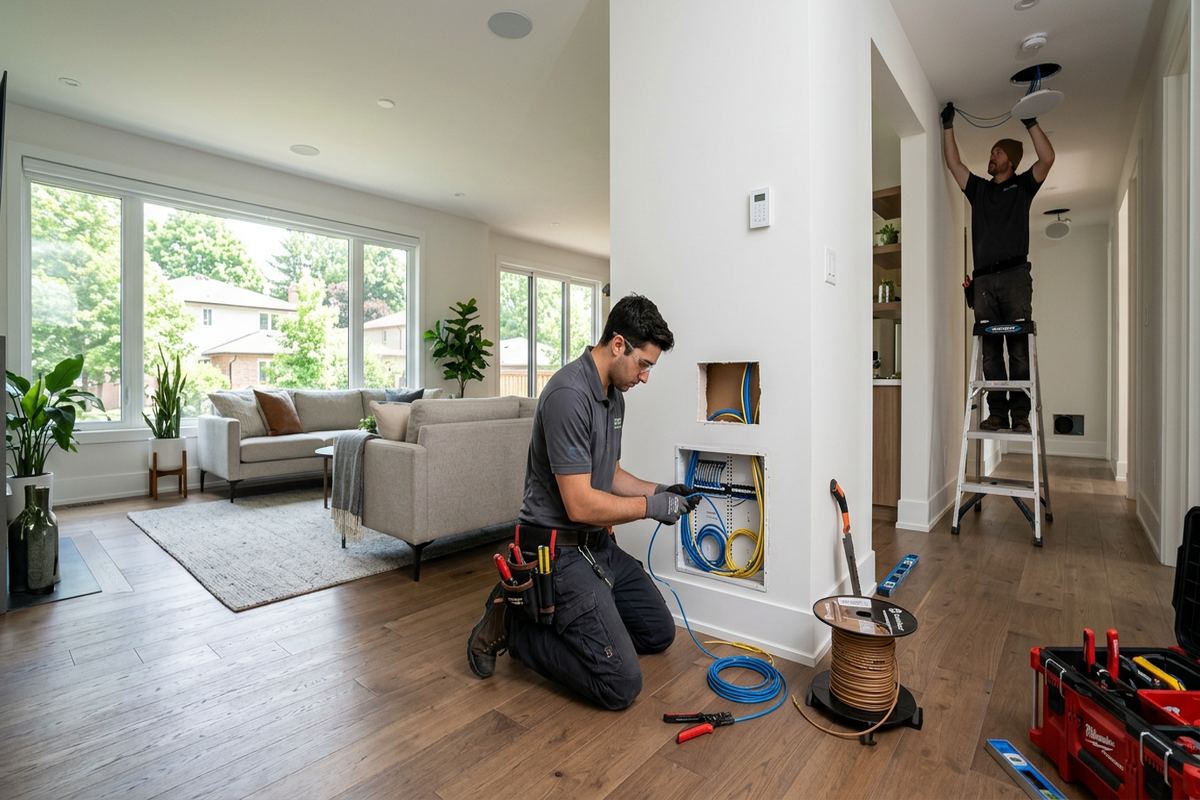
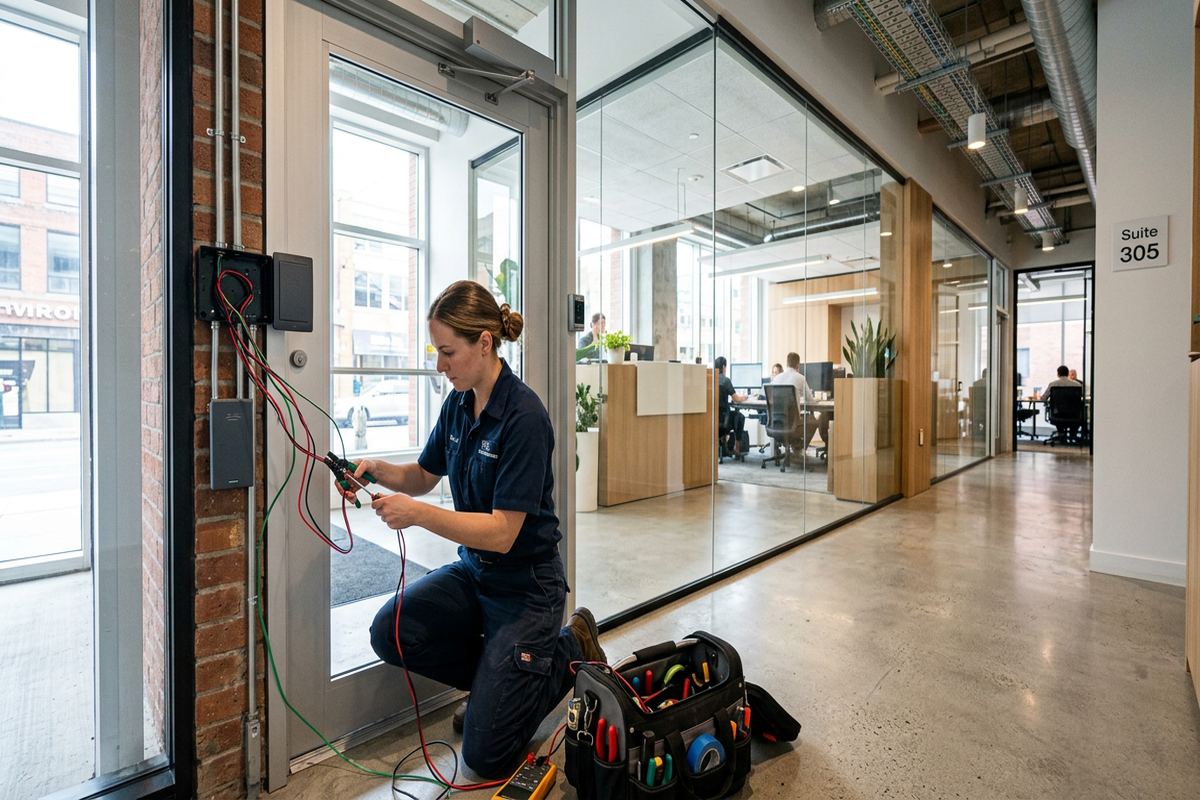
Reliable access control depends on the wiring hidden behind the readers and locks. UnifiedLink installs continuous labelled cable runs within the agreed pathways, avoiding undocumented splices that complicate troubleshooting. Typical routes may connect doors to secure controller locations through risers, ceiling spaces, conduit or surface raceway. Cable type and conductor count depend on readers, locking hardware, door contacts, request-to-exit devices and communication requirements. In occupied Brampton condos, route planning also considers dust control, corridor access, quiet periods and how openings will be protected while work is underway.
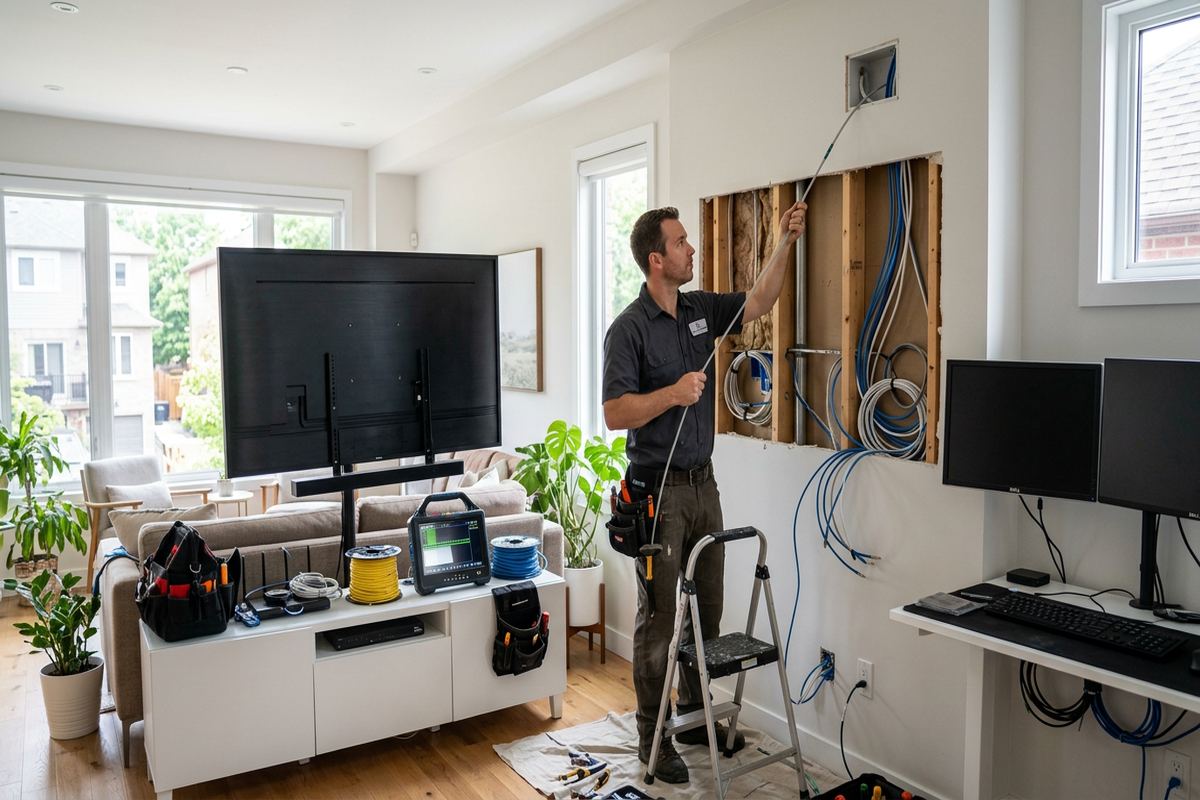
Construction type changes the installation method. Older masonry buildings may require careful drilling, anchors and surface pathways where concealed routes are unavailable. Frame-built townhouse condominiums can offer easier cavities, but fire separations, finished basements and resident-owned improvements may restrict access. Fast-growing Brampton subdivisions include many properties with completed lower levels, so an apparently direct cable route may pass through inaccessible ceilings or finished rooms. The site assessment identifies these constraints before pricing. Any necessary penetrations, sleeves, firestopping responsibility and finish restoration should be clearly assigned in the written scope.
Controllers and power supplies belong in secure, serviceable locations rather than open common areas. The selected space needs suitable power, environmental conditions, network access where applicable and enough room for labelled terminations. Battery backup can support defined system functions during an outage, but operating duration varies with lock loads, battery capacity and equipment condition. Network-connected systems also require coordination with the condominium’s internet or IT provider. Access control traffic, remote administration and vendor services should be separated and managed according to the property’s own network policies.
- Continuous labelled cable runs
- Routes planned around occupied finished spaces
- Secure, serviceable controller locations
- Clearly assigned penetration and restoration work
Entrances, Garages and Amenities Across Brampton
Main entrances often combine access control with intercoms and automatic doors. Residents need quick credential access, visitors need a defined calling process, and management needs a way to remove old credentials promptly. In Downtown Brampton towers, existing vestibules may contain several generations of door and intercom equipment, making compatibility review essential. Newer properties near Mount Pleasant may have more structured pathways but multiple entrances and shared facilities. In either case, door sequences should avoid trapping visitors, undermining security or interfering with accessible operation.
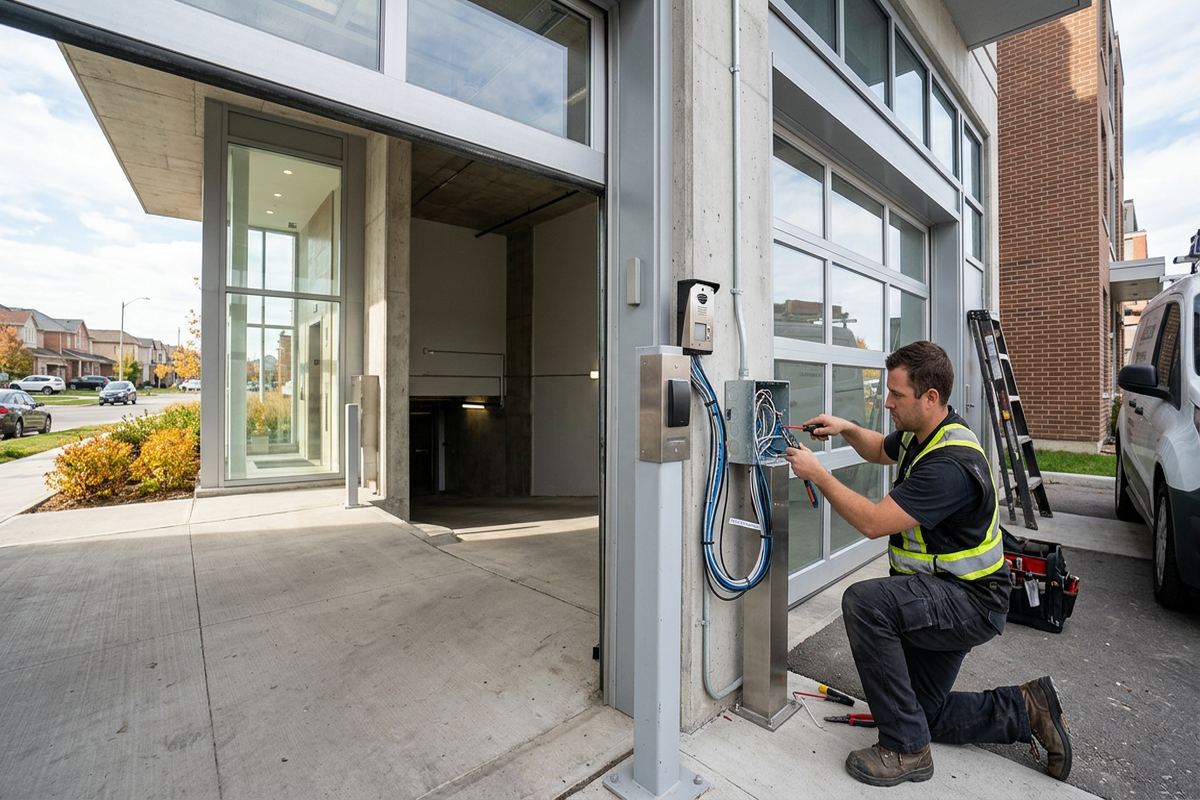
Garage access requires decisions about both vehicles and pedestrians. Fob readers, long-range credentials or other identification methods can authorize vehicles, while controlled pedestrian doors limit movement from parking levels into residential areas. Tailgating cannot be eliminated by a reader alone, so gate timing, sightlines, lighting and management procedures also matter. Brampton’s winter slush and road salt can collect around pedestals, loops and lower-mounted equipment. Exterior hardware, conduit entries and foundations should be inspected for movement, corrosion and water paths before reusable components are included in a new system.
Amenity rooms benefit from permissions that reflect booking and operating policies. Fitness rooms, pools, party rooms, bicycle storage and parcel areas may need different schedules or resident groups. Access records can help authorized management investigate reported events, but they do not show what happened beyond the door; cameras may be considered separately where appropriate and approved. In communities such as Heart Lake and Fletcher’s Meadow, townhouse-style properties may have fewer common doors but more distributed entrances. That layout can change controller placement, network design and maintenance access.
- Coordinated lobby and vestibule operation
- Separate vehicle and pedestrian permissions
- Scheduled access for shared amenities
- Designs suited to towers and townhouse condos
Approvals and Resident Coordination
Condominium access control work normally requires more than verbal agreement from an individual resident. The corporation or its authorized manager should approve work affecting common doors, cabling, electrical service, networks and building finishes. UnifiedLink records the approved contacts and bases the scope on authorized instructions. Where a commercial condominium unit shares an entrance, gate or service corridor, responsibilities can be divided between the unit owner and corporation. Confirming ownership early prevents equipment from being installed on property that the requesting party does not control.
Occupied buildings need a practical communication plan. Residents may require notice of temporary door restrictions, credential exchanges, testing sounds or technician access to limited areas. Management should decide how old fobs will be collected, how identity will be confirmed and what happens when a resident misses the enrolment period. Installation can often proceed by area or doorway, but the exact sequence depends on existing equipment and whether temporary access can be maintained. Emergency contacts and approved working hours should be settled before a cutover begins.
Landlord and condo approvals also matter in mixed residential and commercial settings. Brampton has commercial strips and industrial condominium units where offices, warehouses and shared yards may use the same property infrastructure. A tenant may request control over its suite entrance but lack authority to alter an exterior door or shared gate. The scope should distinguish base-building systems from tenant systems and identify who owns new equipment. It should also state which party controls administrator accounts, approves credentials and receives records when a tenancy changes.
- Authorized condo or landlord approval
- Resident notice and credential exchange planning
- Defined equipment and account ownership
- Base-building and tenant responsibilities separated
Access Events, Security and System Management
An access control system records credential and door activity according to its configuration, but logs require careful interpretation. A valid entry shows that a credential was presented; it does not prove who carried it or what occurred afterward. Door contacts can report held-open or forced-door conditions when hardware and programming support those functions. Management should decide who may view records, how requests are approved and how long information is retained. These operational policies belong to the condominium, with consideration for privacy obligations and the system’s available settings.
Remote management can simplify credential changes across several doors or buildings, yet it introduces network and account risks. Administrator access should be limited to named users, protected with strong unique credentials and reviewed when staff or property managers change. Cloud-connected platforms may depend on subscriptions, vendor services or internet availability, while locally managed systems have different maintenance and remote-access needs. UnifiedLink explains the selected architecture and configures it on site within the written scope. The customer receives its own credentials rather than depending on an installer-controlled account.
Access control works best as one layer of a broader building plan. Cameras can provide visual context at entrances, intercoms can support visitor screening, and alarms can report selected conditions, but each system has separate purposes and approval requirements. Integration should be limited to compatible, documented functions. For example, presenting a credential might call an elevator floor or disarm a defined area only when the connected systems support that workflow. Brampton properties should avoid unnecessary integrations that create a single complicated failure point without a clear operating benefit.
- Door-event and credential activity records
- Named administrator accounts and permissions
- Local or cloud architecture explained
- Documented integration with compatible systems
Brampton Installation, Testing and Handover
Installation is followed by testing at every controlled opening. Technicians verify accepted credentials, rejected credentials, schedules, lock operation, door status and request-to-exit functions within the agreed design. Exterior readers and penetrations are checked for stable mounting and sealing, particularly where freeze-thaw movement can expose gaps. Interfaces with gates, intercoms or other systems are tested only to the extent included in the scope and with relevant parties available. Deficiencies involving existing doors, networks or third-party equipment are recorded rather than treated as completed access control work.
Cutover planning reduces disruption when an older system must remain active until the replacement is ready. Management may choose a staged credential transition, a scheduled conversion or parallel preparation before individual doors move to the new platform. The suitable method depends on hardware compatibility and whether existing cards or fobs can be reused. Brampton condo boards should also plan for residents who are away, after-hours arrivals and contractors needing temporary access. A fallback procedure belongs in the operating plan even when the new equipment has been fully tested.
At handover, UnifiedLink provides the customer’s own credentials and an as-built record showing the installed system within the project scope. Equipment, cable and door labels are matched to practical names so future service does not depend on memory. Building representatives receive an operational review covering routine credential changes, schedules and relevant event checks. Requests sent during business hours are answered the same day, while after-hours requests are answered the next business day. Site assessment timing depends on the service required and travel distance.
- Door-by-door functional testing
- Planned migration from existing credentials
- Customer-owned administrator access
- As-built records and labelled infrastructure
Brampton neighbourhoods we cover
- Downtown Brampton
- Bramalea
- Springdale
- Heart Lake
- Mount Pleasant
- Castlemore
- Fletcher's Meadow
Condo access control systems in Brampton — common questions
Can you replace an existing condo fob system?
Yes, after assessing the existing readers, controllers, door hardware, cabling and credential format. Some components may be reusable, while others may be proprietary or unsuitable. For a Brampton condo, the scope will explain what remains, what changes, how credentials migrate and how door access will be maintained during cutover.
Do we need condo board approval?
Work on common entrances, garages, shared cabling, electrical service or building networks normally requires authorization from the condominium corporation or its designated manager. A tenant or individual owner may not control those areas. UnifiedLink confirms the approved contact and documents equipment ownership, cable routes, responsibilities and exclusions before starting work at a Brampton property.
Will outdoor readers handle Brampton winters?
Outdoor readers can be selected for exposed locations, but device rating is only part of the installation. Brampton freeze-thaw cycles, moisture and road salt make mounting, sealed penetrations, protected cable entries and stable surfaces important. Existing pedestals, masonry and conduit should be checked for movement, corrosion or water paths before they are reused.
Can access control operate a parking gate?
It can provide an authorization signal to a compatible gate or overhead door controller. The gate’s own safety devices and operating logic must remain functional and cannot be replaced by access control. At a Brampton condo, we review the operator, reader location, vehicle workflow, pedestrian routes and responsibility for any gate-contractor work.
Can residents use phones instead of fobs?
Mobile credentials are possible with platforms that support them. The condo should consider resident phone compatibility, application support, internet requirements, administrator workload and any ongoing vendor terms. Fobs or cards may still be needed for residents, contractors or staff who cannot use a phone. The selected approach is confirmed during the Brampton site assessment.
What do we receive when installation is complete?
UnifiedLink completes on-site configuration and functional testing within the agreed scope. The condominium receives its own administrator credentials and an as-built record of the installed system. Labelled cable runs, practical door names and documented controller locations make later administration and service clearer. An operational review can cover credential changes, schedules and relevant event records.
Coverage in Brampton is confirmed against the address before we quote. See everything we install in Brampton or the province-wide condo access control systems page.