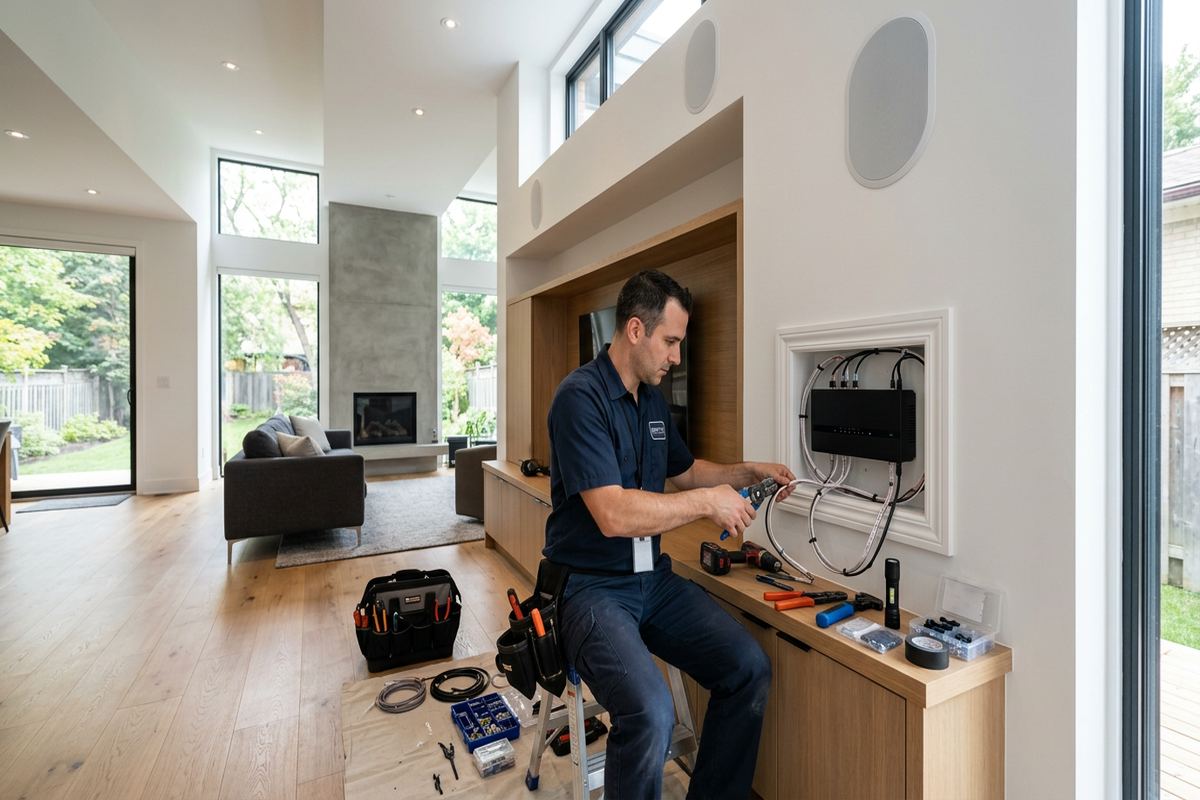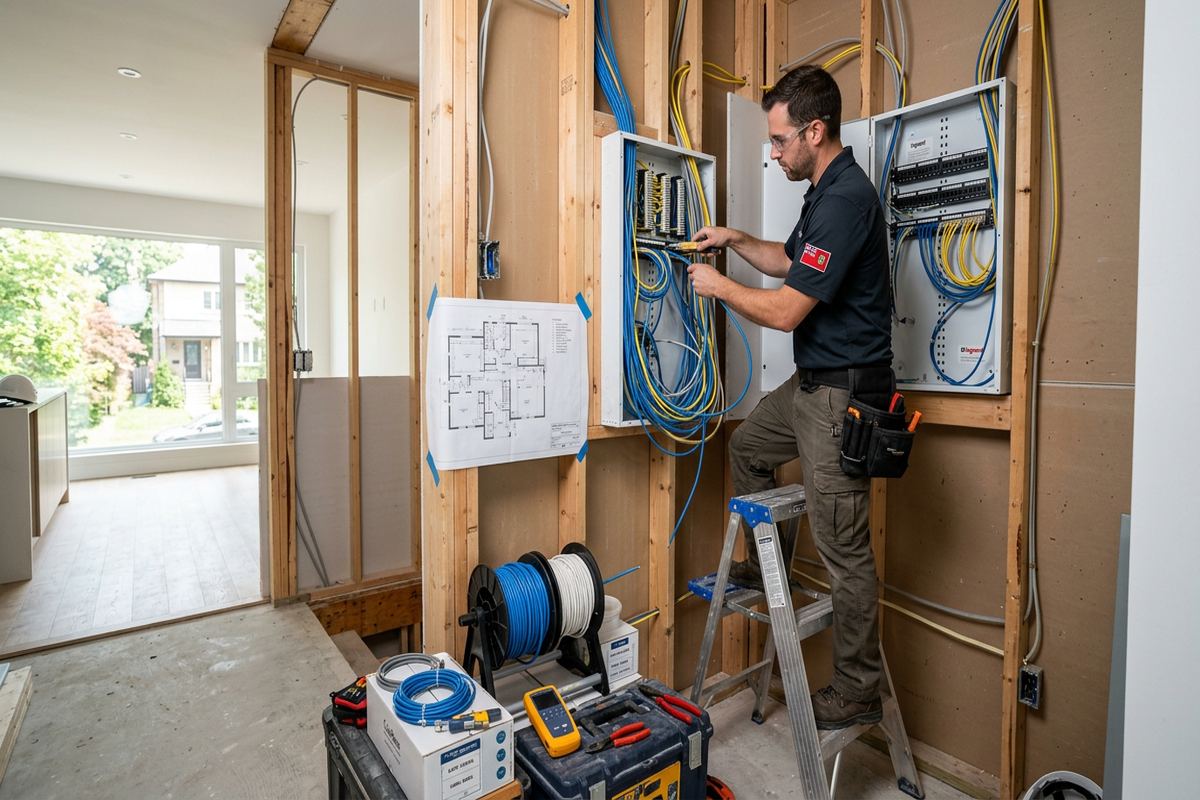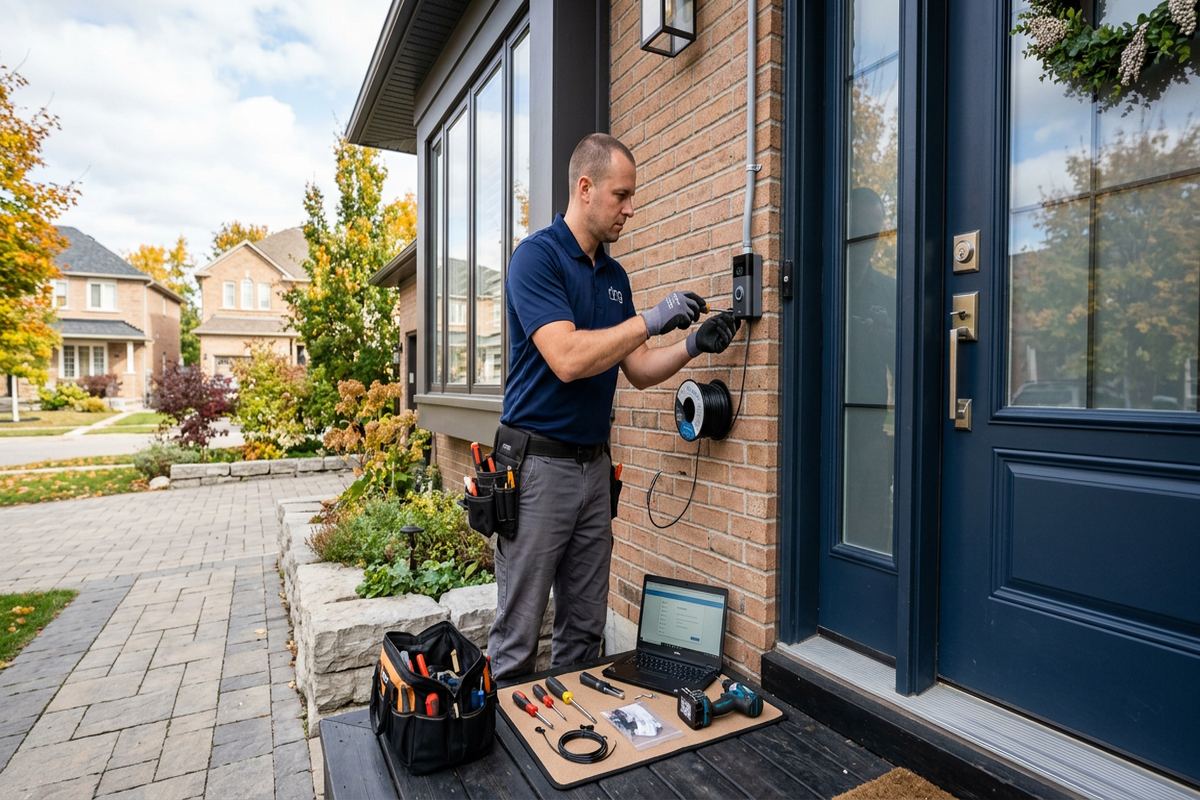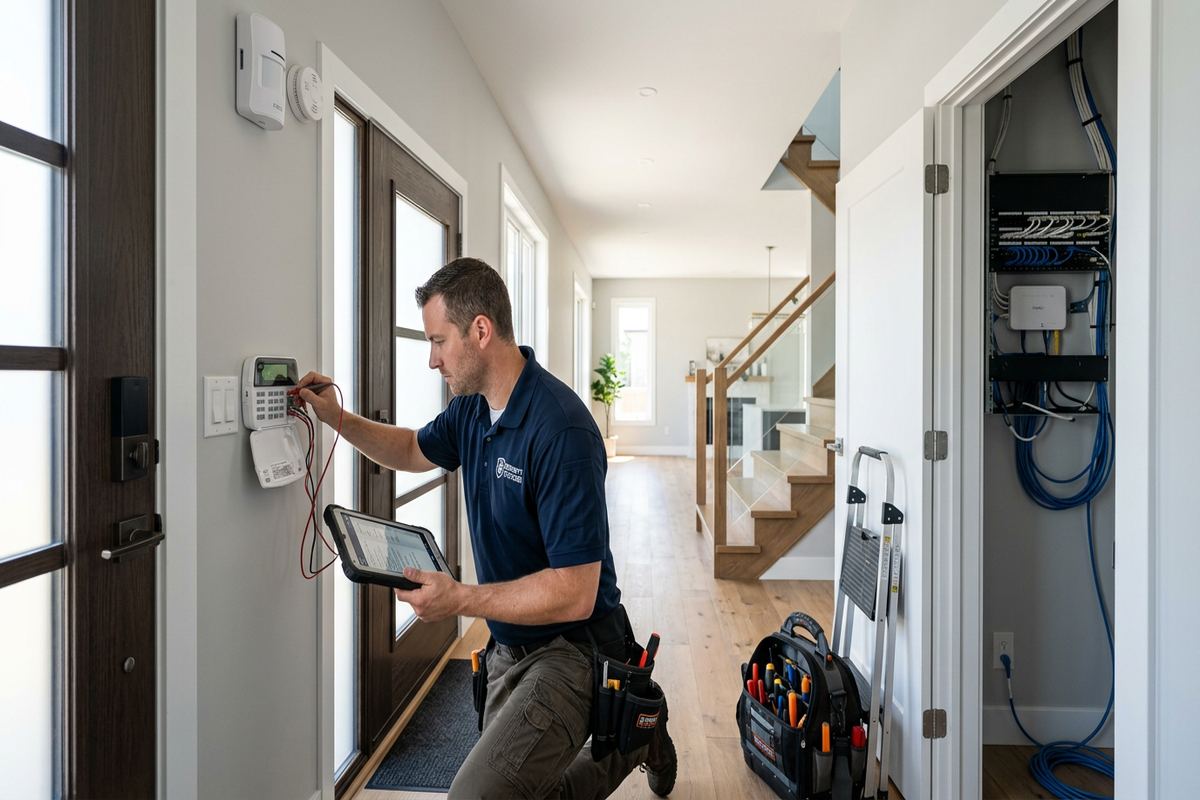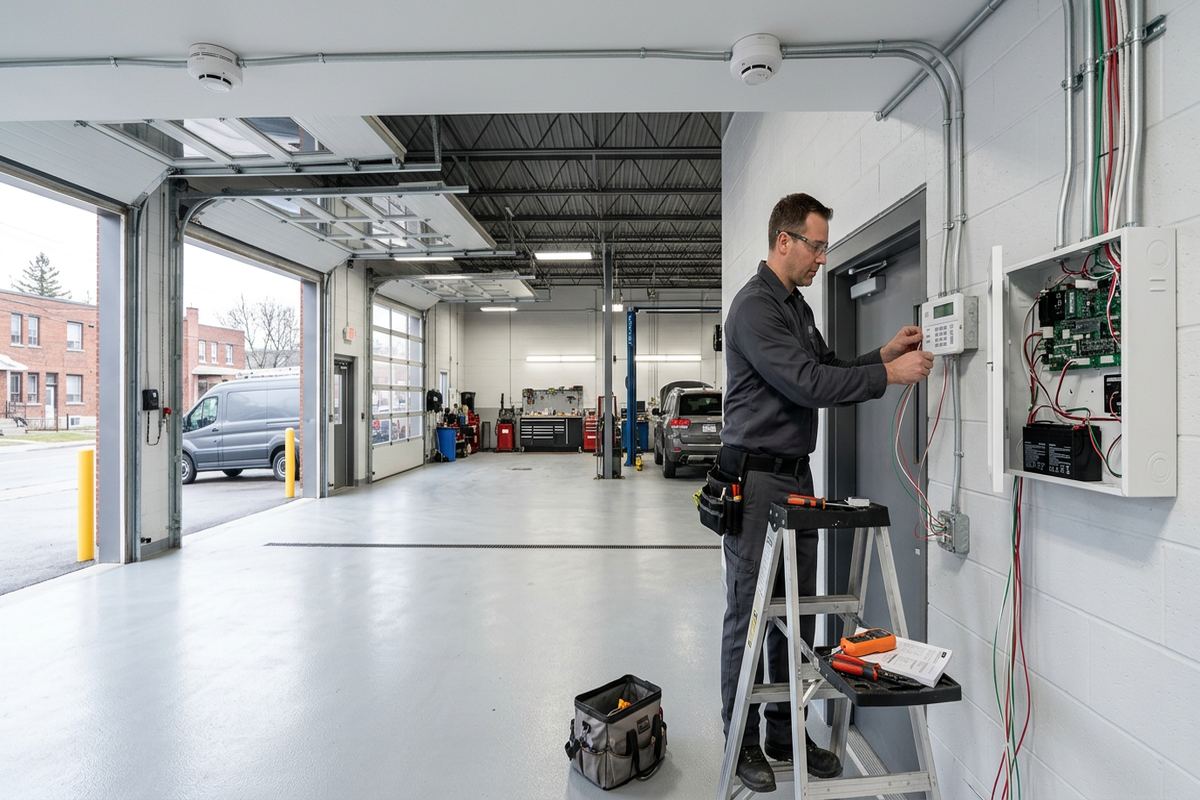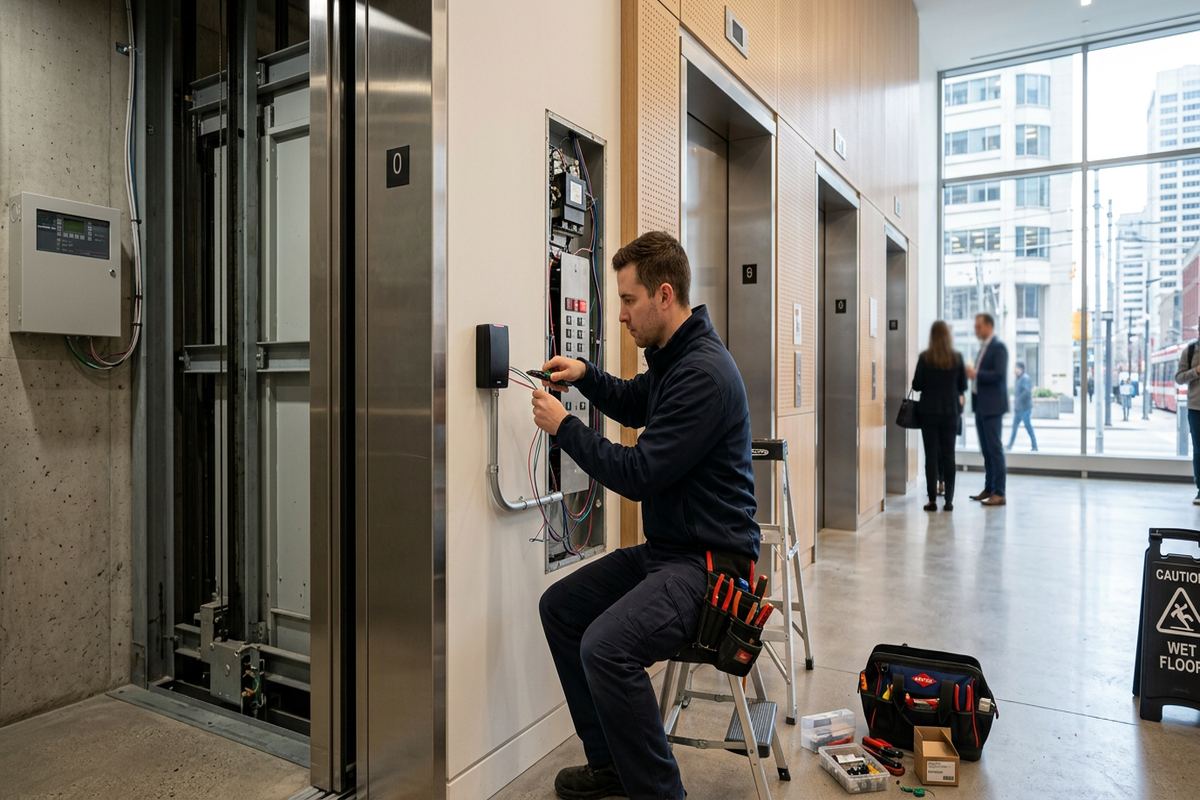
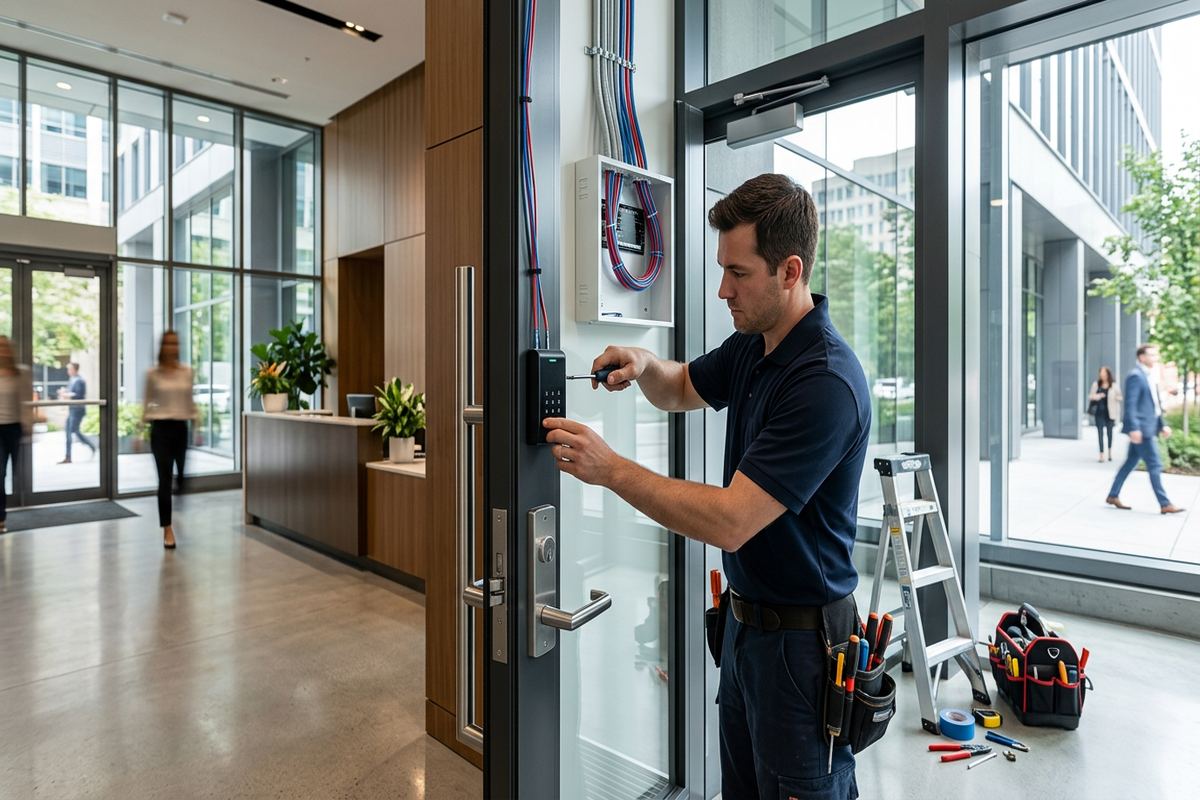
UnifiedLink installs commercial access control systems for offices, retail properties, warehouses, industrial units and shared buildings across Brampton. Each project starts with a site assessment and a written scope covering doors, credentials, cable routes, equipment ownership and exclusions. Installation includes labelled cabling, on-site configuration, testing and a documented handover using the customer’s own administrative credentials.
Commercial Access Control Planning in Brampton
An effective access control installation begins with the doors, not a product list. During a Brampton site assessment, UnifiedLink reviews entrances, internal restricted areas, emergency exits, delivery doors, gates and shared corridors. The assessment records existing locks, frames, closers, power availability and practical cable routes. We also discuss who needs access, when permissions should apply and how administrators will manage changes. This process identifies doors that need hardware work before electronic control can be added and separates essential requirements from optional integrations or future expansion.
Brampton properties vary from older commercial spaces near Downtown Brampton to newer units around Springdale, Mount Pleasant and Castlemore. Masonry walls may require different pathways, anchors and penetrations than frame construction, while completed interiors can limit access above ceilings or behind walls. In multi-tenant buildings, routes may pass through common areas controlled by a landlord or condominium corporation. Those conditions are documented before pricing so the scope reflects feasible routes, required approvals and restoration responsibilities rather than relying on assumptions made from floor plans or photographs.
The written scope defines the proposed readers, credentials, controllers, locking hardware interfaces, request-to-exit devices and door contacts. It also covers equipment ownership, cable routes, device placement, exclusions and warranty information. Where another trade must adjust a door, supply line voltage, approve fire-alarm interfaces or provide network settings, that responsibility is identified. A clear scope gives property managers and business owners a practical basis for comparing the work, arranging approvals and understanding what will be operational when the Brampton installation is handed over.
- Door, frame and locking-hardware review
- Credential and access-schedule planning
- Cable route and controller location assessment
- Landlord or condominium approval requirements
- Written equipment, ownership and warranty scope
Selecting the Right Brampton Door Hardware
Electronic access depends on the mechanical condition of each opening. A reader and controller cannot correct a dragging door, loose hinge, damaged frame or closer that fails to latch consistently. UnifiedLink checks how each door closes and identifies the existing lock type before selecting an electric strike, electrified lock, magnetic lock or other interface. Door use also matters: a warehouse personnel entrance, office suite door and busy commercial storefront experience different traffic patterns. Any required locksmith, glazing or door-contractor work is listed rather than hidden inside a general installation description.
Exterior openings in Brampton face winter cold, snow, moisture and repeated freeze-thaw cycles. Readers, junction points and penetrations therefore need suitable locations, stable mounting surfaces and careful sealing. Water should not be directed toward cable entries, and exposed pathways must be planned for physical protection as well as weather. Masonry façades often require different drilling and anchoring methods from metal panels or framed walls. The assessment also checks whether salt, loading activity or frequent impacts around an entrance could affect reader placement, conduit or door-position monitoring.
Life-safety operation must remain part of door planning. Access control should manage entry without obstructing the required operation of an exit, and some locking arrangements may need coordination with fire-alarm, building or electrical professionals. UnifiedLink documents these dependencies and tests the configured door functions included in the scope. For leased Brampton premises, owners or property managers may also restrict changes to frames, storefront systems and common exits. Written approval should be obtained before irreversible drilling, hardware modification or cabling through landlord-controlled areas begins.
- Electric strike and lock interface planning
- Door contact and request-to-exit placement
- Exterior reader sealing and protected pathways
- Existing closer and latch condition review
- Coordination requirements documented before work
Credentials and Permissions for Brampton Workplaces
Credential design should reflect how the Brampton workplace actually operates. Staff may need regular weekday entry, managers may require extended schedules, and cleaners or contractors may only need selected doors during defined periods. UnifiedLink configures groups and schedules on site according to the approved access plan. This approach is easier to administer than assigning every door separately to every person. It also helps businesses remove one credential, adjust a role or change a schedule without replacing mechanical keys across an entire office, shop or industrial unit.
Cards and fobs are practical where credentials are shared across several controlled doors and need to be disabled individually. Mobile or keypad options may suit some operations, but they introduce different questions involving phones, connectivity, shared codes and user support. The choice should account for staff turnover, visitor handling, delivery activity and administrative capacity. In Brampton warehouse and logistics sites, permissions may need to separate office areas, employee entrances, shipping functions and secured inventory rooms while still giving supervisors straightforward control over enrolment and removal.
Administrative ownership is established during handover rather than leaving the customer dependent on an installer’s account. UnifiedLink provides the customer with its own authorised credentials and records the configured doors, controller locations and relevant system details in an as-built record. Designated administrators are shown routine tasks such as adding users, disabling credentials and reviewing available events. The exact functions depend on the selected platform and scope, but responsibilities should be clear. Any cloud subscription, licence, network dependency or manufacturer account requirement is identified before equipment is approved.
- Role-based door permission groups
- Scheduled access for staff and contractors
- Individual credential enrolment and removal
- Customer-controlled administrator accounts
- Documented platform or subscription dependencies
Brampton, Ontario
Commercial access control installation in Brampton, scoped in writing first
Book a site assessment and get equipment, routes, exclusions, and warranty on paper before anything is installed.
Warehouse and Logistics Access Control in Brampton
Brampton’s heavy base of warehouse and logistics sites creates access-control requirements that differ from a small office. Large footprints can produce long cable routes, distributed entrances and controller locations far from the main administrative area. Shipping doors, employee entrances, fenced compounds and interior inventory zones may have distinct operating schedules. A site assessment maps those conditions before equipment is selected. Continuous labelled cable runs help technicians identify each controlled opening later, while appropriately located enclosures reduce unnecessary exposure to loading activity, impacts, dust and temperature changes.
Shift changes can create concentrated traffic at personnel doors, making reliable latching and practical reader placement important. Staff should be able to present a credential without standing in vehicle routes or blocking an entrance. At loading areas, controls must be positioned so they do not encourage people to walk through active truck movements. UnifiedLink discusses operating procedures with the site contact and separates pedestrian access from vehicle or gate functions where applicable. Gate equipment, intercoms and specialised operators are included only when they are assessed and expressly listed in the written scope.
Industrial units are often leased, divided or altered as occupants change. Existing cables may be unlabelled, abandoned or routed through neighbouring spaces, and a previous system may remain tied to equipment owned by a landlord. Before reuse, UnifiedLink examines accessible components and documents what can reasonably remain. New continuous labelled runs are used where included instead of depending on unidentified splices. Brampton tenants should confirm who owns existing controllers, credentials and door hardware, because physical possession of equipment does not necessarily provide administrative access, licences or permission to modify common building systems.
- Mapped doors across large industrial footprints
- Protected controller and enclosure locations
- Shift-based employee access schedules
- Separation of pedestrian and vehicle access
- Review of existing system ownership
Cabling and Network Coordination in Brampton
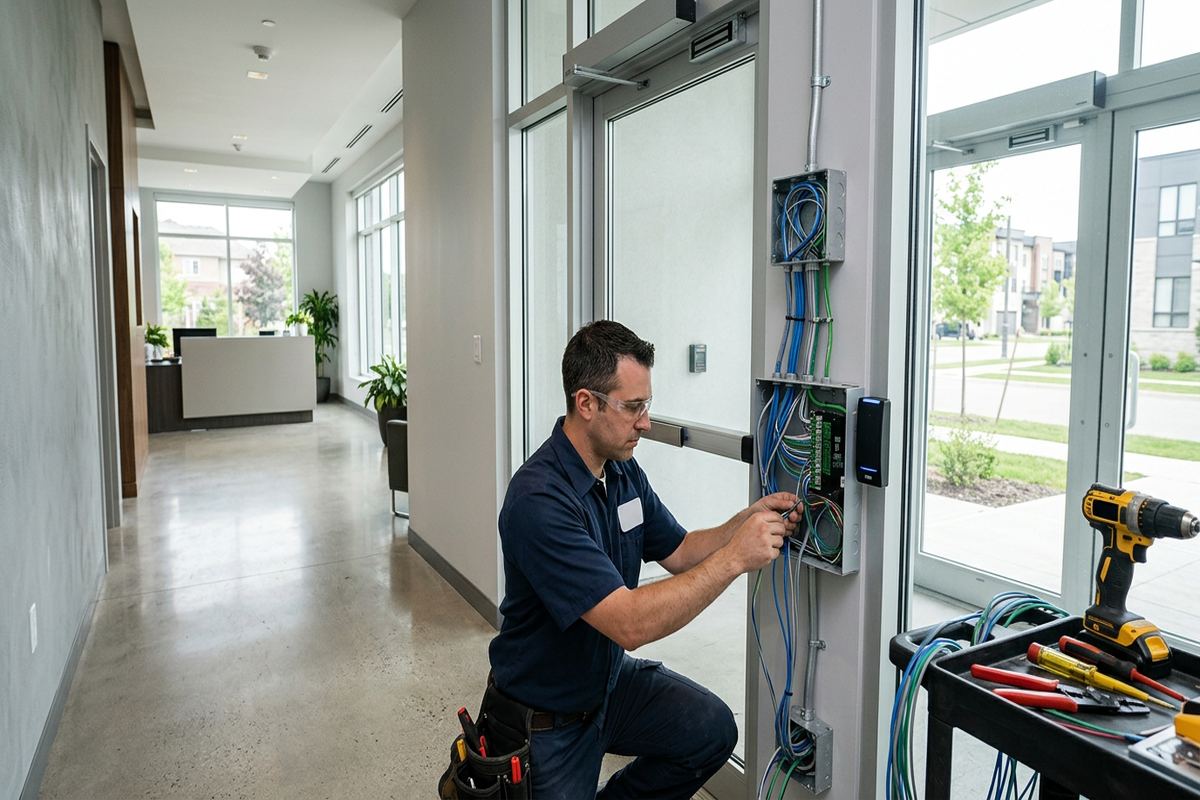
Access control cabling connects readers, locks, door contacts, request-to-exit devices and control equipment, so route planning affects both reliability and future service. UnifiedLink installs continuous labelled cable runs within the approved scope and labels terminations to match the door schedule. Routes are chosen after checking accessible ceilings, service rooms, masonry walls and finished areas. In fast-growing Brampton subdivisions, commercial or mixed-use premises may have completed interiors that leave few concealed pathways. Surface raceway, conduit coordination or limited access openings may therefore need approval before installation starts.
Controllers and network-connected components need suitable locations with the required power, space and environmental conditions. The customer or managed IT provider may need to supply network addressing, switch ports, firewall changes or remote-access policies. UnifiedLink identifies those dependencies without assuming unrestricted access to the business network. Access control traffic should be coordinated with the organisation’s security practices, especially where several sites or remote administrators are involved. Passwords and administrative accounts are transferred using the customer’s own credentials, and unnecessary installer access should not remain as the basis for normal system operation.
Finished basements are common in Brampton’s fast-growing residential subdivisions and can affect small commercial, home-office or mixed-use projects where lawful business access is being considered. Closed ceilings and completed walls make hidden routing more disruptive than it would be during construction. Similar constraints appear in renovated commercial strips and divided industrial units. The route discussion should address visible raceway, drilling, fire separations and restoration before work begins. Landlord, condominium or municipal permissions remain the customer’s responsibility unless the written scope specifically assigns coordination to another party.
- Continuous point-to-point labelled cabling
- Door schedule matched to cable labels
- Network and IT dependencies identified
- Finished-area routing options documented
- Customer-owned passwords and administrator access
Brampton Installation, Configuration and Testing
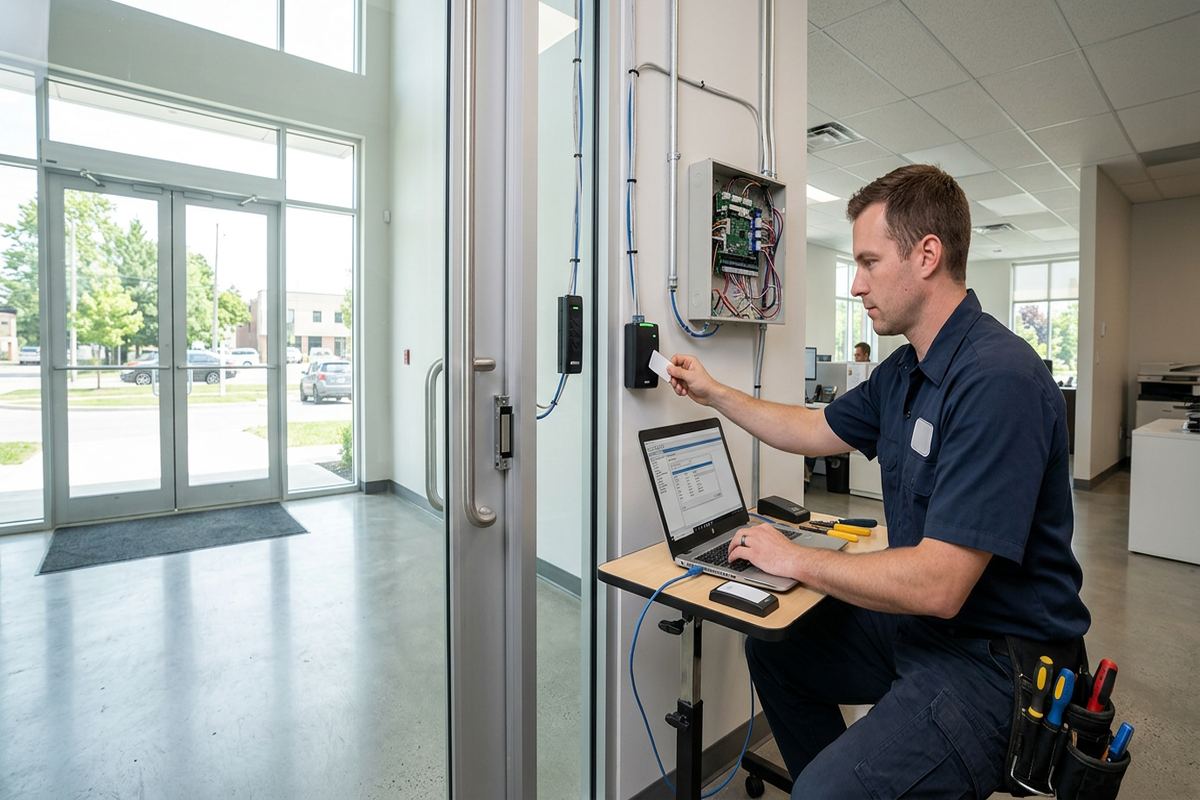
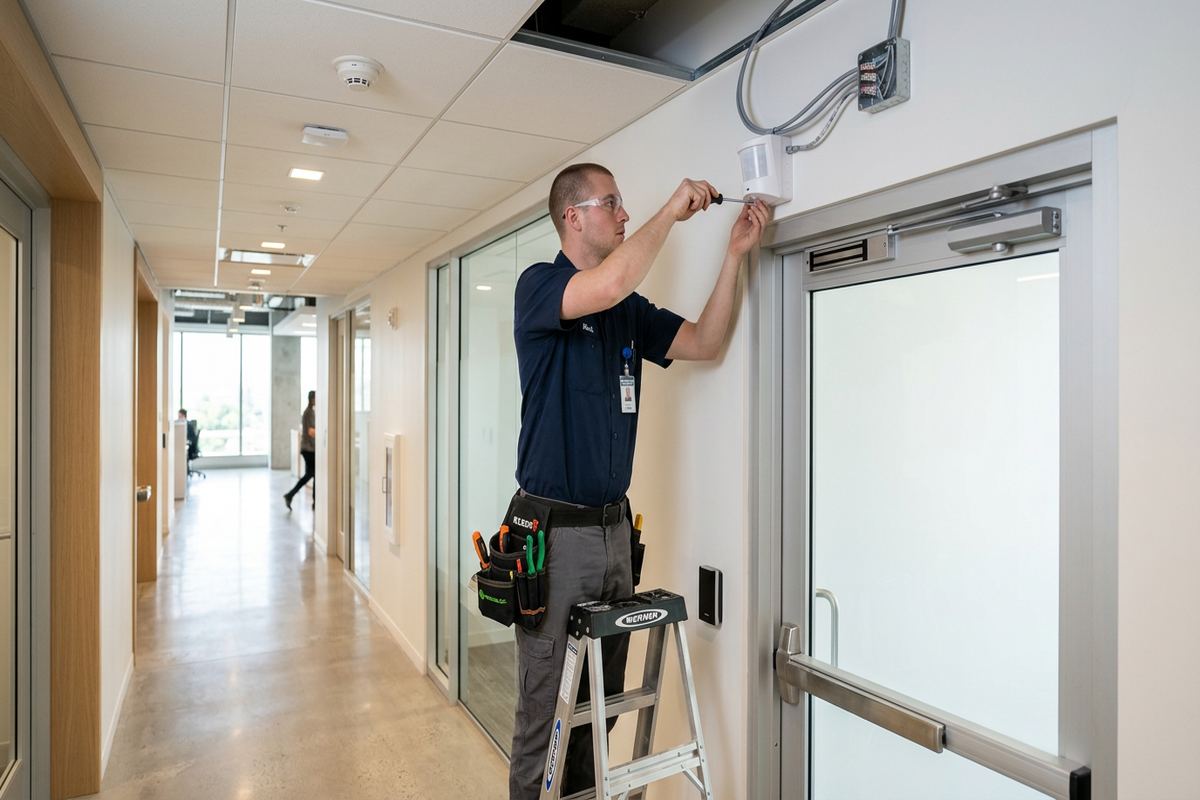
Once the scope and approvals are in place, installation proceeds door by door. Readers, contacts and interface devices are mounted at the documented positions, and cable is routed to the assigned controller or enclosure. Exterior penetrations are sealed for the mounting condition, with added attention to surfaces exposed to Brampton winters and freeze-thaw movement. Masonry, steel framing, storefront assemblies and insulated panels each call for different fastening and routing decisions. Installers avoid treating every wall or frame as interchangeable, because poor anchoring can damage finishes or allow movement around exposed devices.
On-site configuration connects physical openings to their names, access groups, schedules and event settings. Each included credential type is enrolled and checked at the relevant doors. Testing confirms that valid users receive the intended access, invalid credentials are rejected, door contacts report expected states and request-to-exit devices operate as configured. Mechanical closing and latching are also observed because an electronically released door still needs to return to a secure position. Any condition outside the access-control scope, such as a failing closer or distorted frame, is recorded for correction.
Handover provides the Brampton customer with operational control and a practical record of the completed work. UnifiedLink supplies the customer’s own administrative credentials, explains normal user management and provides an as-built record covering installed device and controller locations. The handover also reviews known exclusions, equipment ownership and applicable warranty information from the written scope. If future work is anticipated, labelled cables and consistent door names create a clearer starting point. One accountable contractor coordinates the included low-voltage work, while responsibilities assigned to locksmiths, electricians, IT staff or property management remain documented.
- Device mounting at approved locations
- On-site schedules and permissions configuration
- Valid and invalid credential testing
- Door status and exit-device checks
- As-built record and customer credentials
Integrating Brampton Access Control Systems
Access control can operate independently or exchange information with video surveillance, intrusion alarms, intercoms and visitor-management tools. Integration should be based on an operational need rather than added simply because two products advertise compatibility. A Brampton business might want a door event linked to nearby camera footage, or reception staff may need an intercom workflow before releasing an entrance. UnifiedLink reviews the required action, the available interfaces and who will administer each system. Compatibility, licensing and network dependencies are confirmed in the scope before integration work is approved.
Camera association can help an authorised administrator review activity around a controlled entrance, but it does not replace suitable camera placement or door hardware. The clock settings of connected systems should align so events can be compared meaningfully. Alarm integration may also require defined arming rules to prevent staff access from creating avoidable alarms. For commercial strips in Bramalea or Downtown Brampton, separate tenants may have different systems, networks and privacy responsibilities even when entrances are close together. Shared infrastructure should not be assumed without written owner approval and a clear division of administration.
Elevators, parking gates and common-building entrances require additional coordination because they may serve several occupants or rely on specialised controls. A tenant should not plan changes based only on access to its own suite. Property management, condominium boards, gate contractors, elevator providers or other parties may need to approve interfaces and working hours. UnifiedLink records those dependencies during assessment and includes only confirmed work in the proposal. This keeps the access-control scope distinct from equipment or permissions controlled by others and reduces uncertainty during installation at multi-tenant Brampton properties.
- Video event association where supported
- Alarm and access workflow coordination
- Intercom release requirement review
- Licensing and compatibility confirmation
- Shared-building approvals documented
Ongoing Changes and Access Control Support
Access requirements change when employees leave, departments move, tenants change or operating hours are revised. The customer’s designated administrator should remove credentials promptly and review permission groups at practical intervals. Shared codes, if used, need a defined process for replacement because they cannot be disabled for only one former user. UnifiedLink’s handover is intended to make these routine changes manageable using customer-owned credentials. Requests involving new doors, major integrations or controller expansion should begin with a fresh assessment because capacity, cabling and licensing may have changed.
Physical doors also need attention after installation. Seasonal movement, heavy use, impacts and worn closers can prevent consistent latching even when the electronics remain functional. Brampton’s winter conditions and freeze-thaw cycles can be especially relevant to exterior openings, seals and exposed mounting points. Property staff should report doors that scrape, fail to close or remain propped rather than treating every symptom as a software fault. Access records can indicate door states, but they cannot repair hinges, frames or hardware. Mechanical corrections may require an appropriate door or locksmith contractor.
For additions or service requests, clear door names and a description of the observed behaviour help determine the next step. Requests sent during business hours are answered the same day, while after-hours requests are answered the next business day. Site assessment timing depends on the service and travel distance. Brampton customers should preserve the as-built record, administrative account details and equipment ownership information supplied at handover. Those records help distinguish configuration changes from cabling, network, licensing or mechanical issues and give future work a documented starting point.
- Credential removal and permission updates
- Schedule and access-group revisions
- Exterior door condition monitoring
- Documented expansion assessments
- Same-day business-hours request response
Brampton neighbourhoods we cover
- Downtown Brampton
- Bramalea
- Springdale
- Heart Lake
- Mount Pleasant
- Castlemore
- Fletcher's Meadow
Commercial access control installation in Brampton — common questions
How is a Brampton access control project priced?
UnifiedLink completes a site assessment before pricing. The number and type of doors, existing hardware, cable routes, controller capacity, credentials, network requirements and required integrations all affect the scope. Brampton properties with masonry walls, finished interiors, exterior entrances or landlord-controlled common areas may require additional planning. The proposal documents equipment, routes, placement, exclusions, ownership and warranty information rather than relying on an undeveloped per-door estimate.
Can you reuse our existing readers and wiring?
Existing components can be considered after they are inspected and their compatibility, condition and ownership are understood. In some Brampton leased units, equipment may belong to the landlord or remain tied to another administrator or licence. Unlabelled, spliced or inaccessible cabling may not be suitable for reuse. The written scope identifies what will remain, what will be replaced and any limitations associated with retained equipment.
Do I need landlord or condo approval?
Approval is commonly needed when work affects a leased premises, common corridor, shared entrance, exterior façade, storefront frame or condominium-controlled system. Brampton tenants and unit owners should obtain written permission before drilling, altering door hardware or routing cables through common areas. UnifiedLink can document proposed device locations and routes for review, but approval responsibility remains with the customer unless coordination is expressly included in the written scope.
Will access control work during a power or network outage?
The answer depends on the selected controller, locking arrangement, power supplies, backup provisions and whether the system relies on local or cloud services. Some functions may continue locally while remote administration or event reporting becomes unavailable. During a Brampton assessment, UnifiedLink documents the required outage behaviour and relevant dependencies. Life-safety and exit operation remain part of the door design and may require coordination with other qualified trades.
Can access control connect to our cameras or alarm?
Integration may be possible when the products, interfaces, licences and network settings support the required workflow. A Brampton business might link a door event to nearby video or coordinate staff entry with an intrusion alarm. UnifiedLink first defines what should happen, who will administer it and which contractor controls each system. Supported integration and exclusions are then recorded in the written scope before installation proceeds.
What do we receive after installation?
After testing, the customer receives its own administrative credentials and an as-built record identifying installed devices and controller locations. UnifiedLink also reviews routine credential management, configured schedules, equipment ownership, exclusions and applicable warranty information from the scope. Brampton customers should retain these records with their building and IT documentation. They provide a practical reference for staff changes, troubleshooting, future doors or work by another authorised service provider.
Coverage in Brampton is confirmed against the address before we quote. See everything we install in Brampton or the province-wide commercial access control installation page.