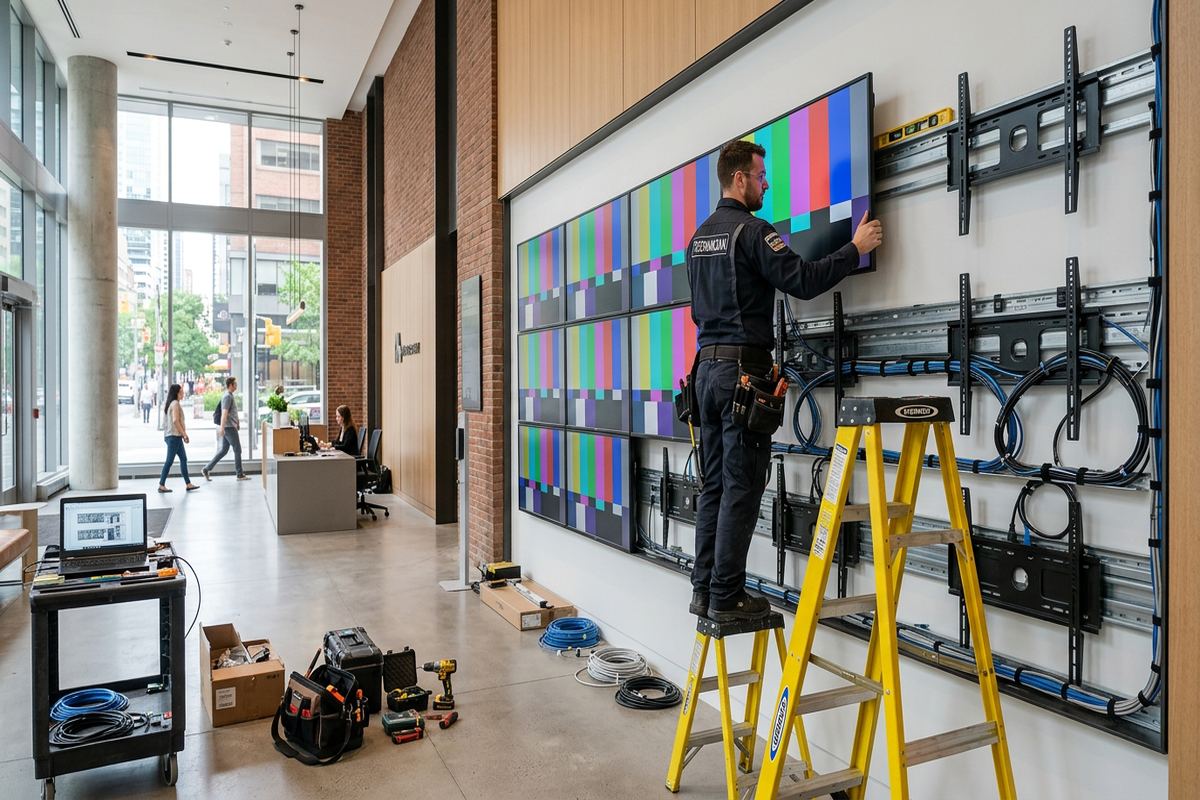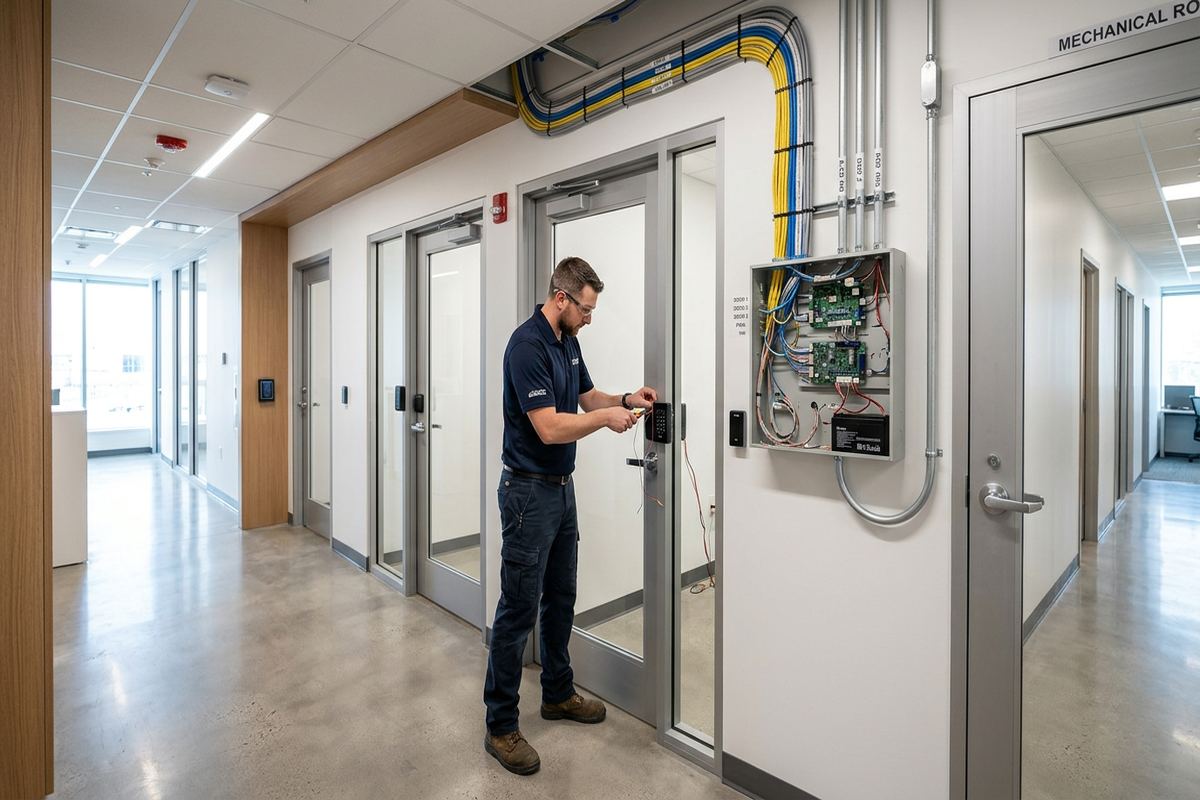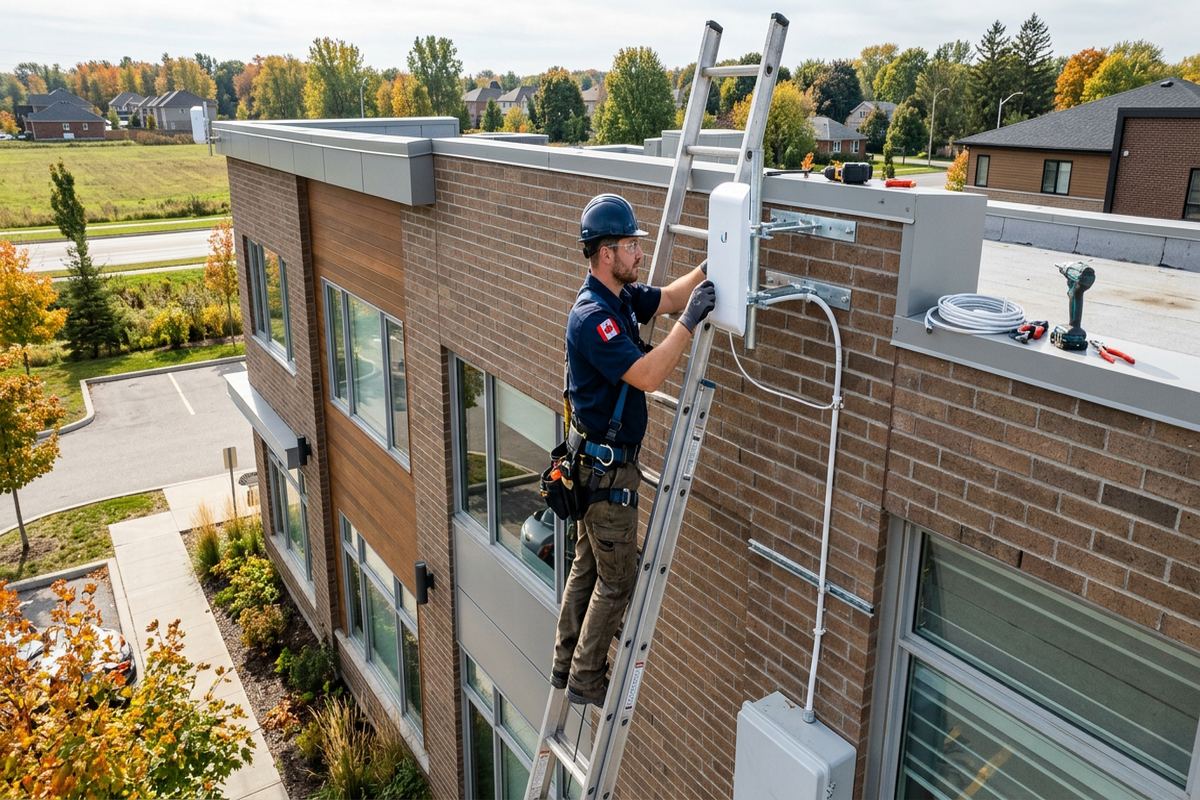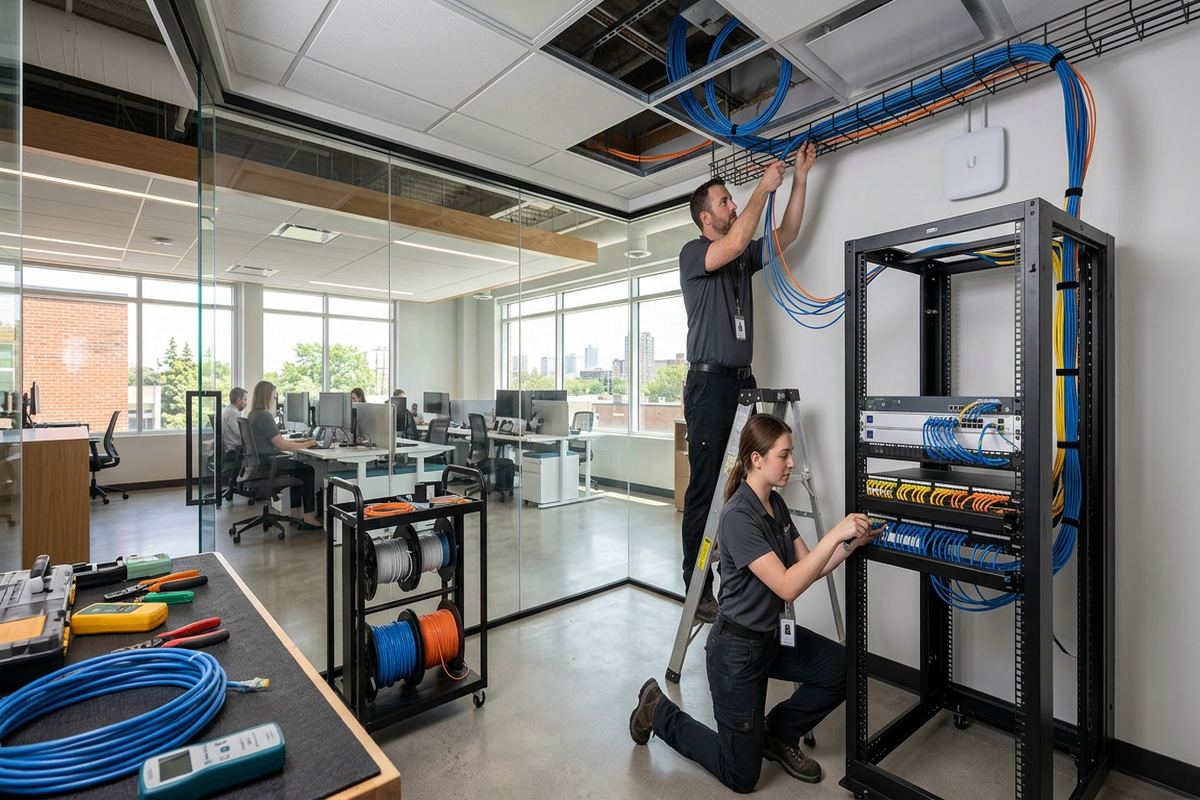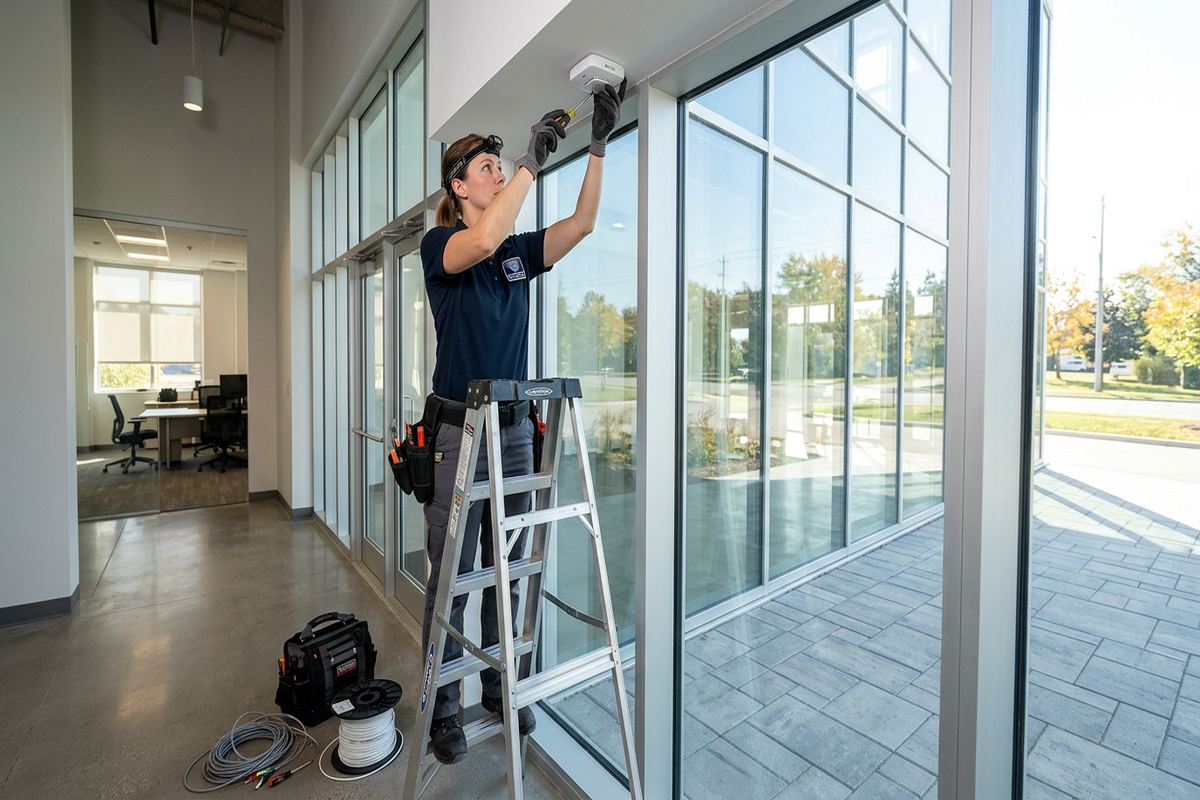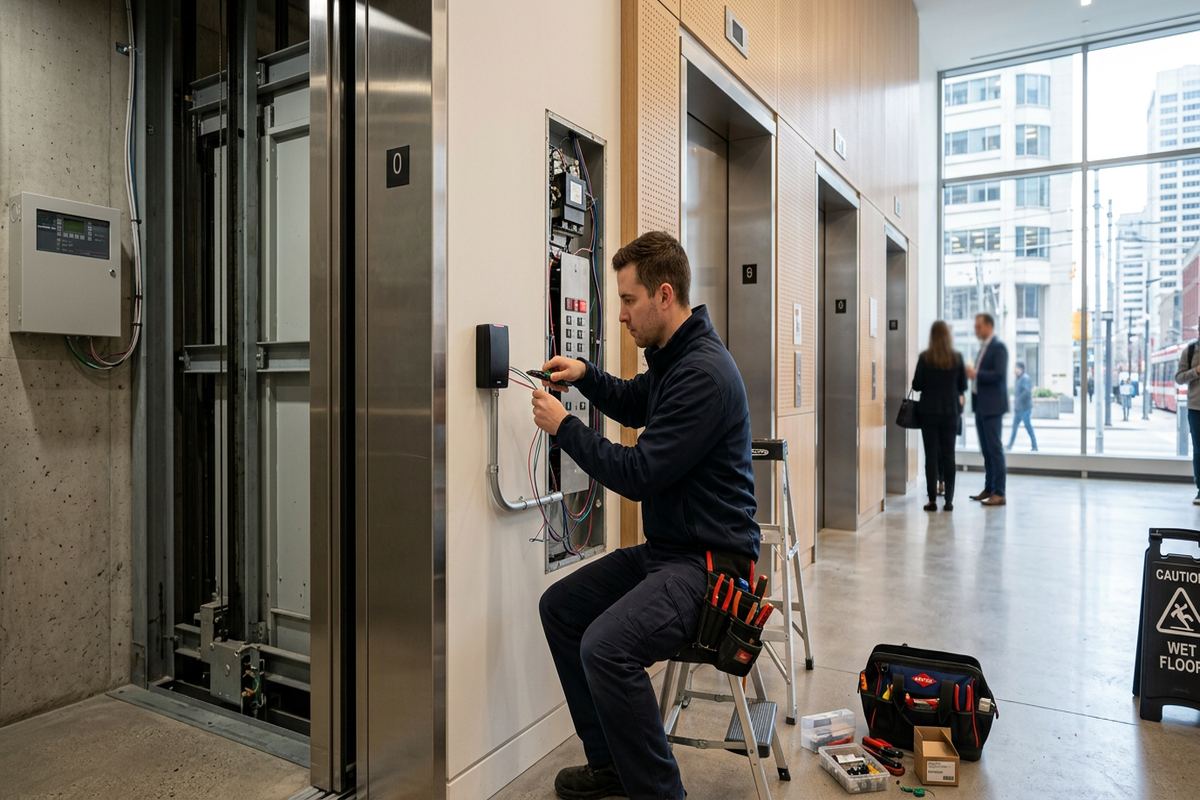
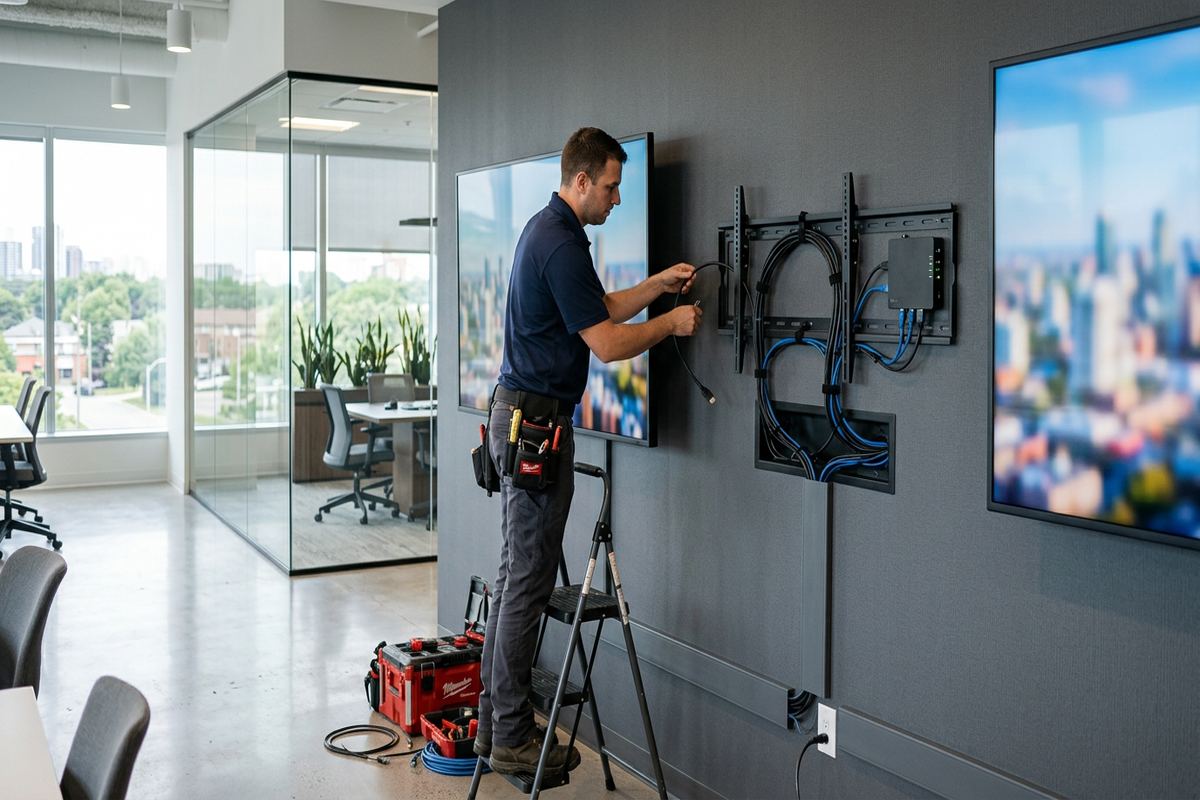
UnifiedLink installs wall-mounted televisions and commercial displays across Bowmanville. Each project starts with an assessment of the wall, viewing position, equipment and cable route. We handle retrofit work in established properties and coordinate pre-wire installations in growing subdivisions, then configure the display and provide a clear record of the completed work.
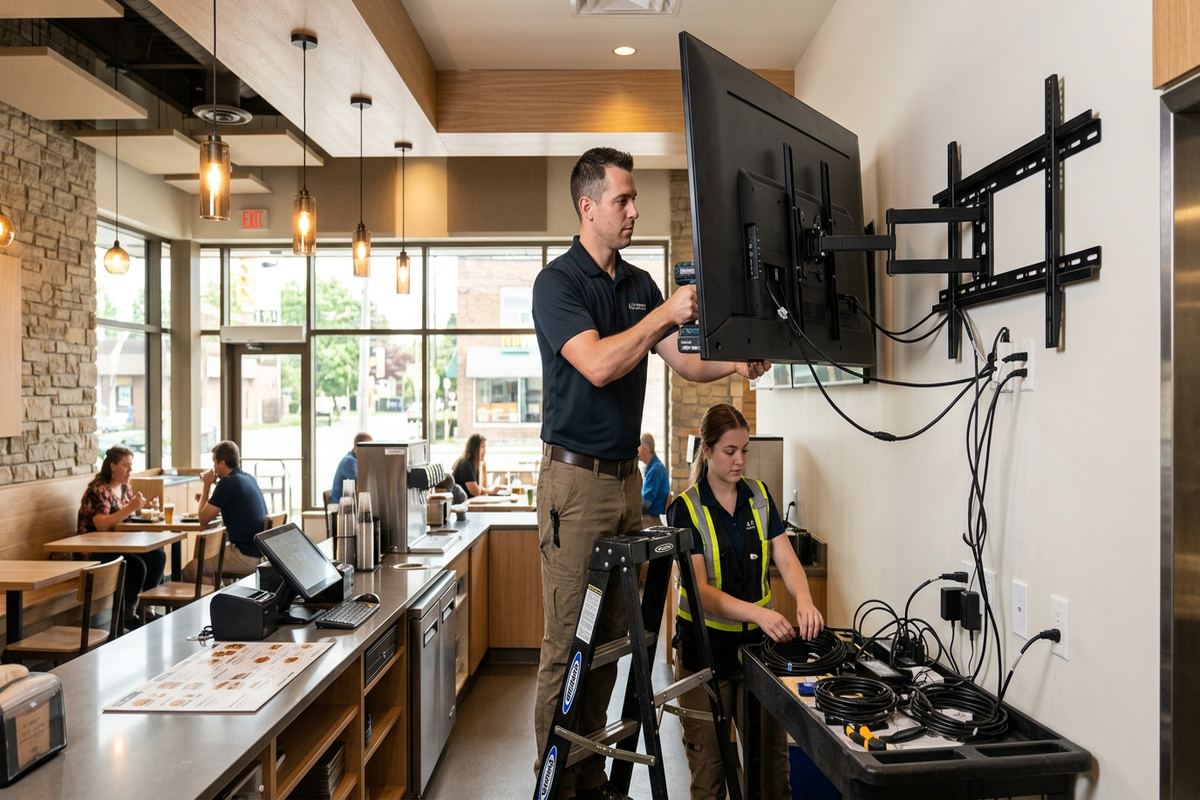
TV Wall Mounting Planned for Bowmanville Properties
A secure installation begins with the room, not the bracket. We assess where people will sit or stand, the display size, glare, viewing height and access to connected equipment. The historic main street and rapid subdivision growth on Bowmanville’s west side create very different installation conditions. Older properties may need careful investigation behind finished walls, while newer houses may offer pre-wire routes or documented framing. Before pricing, we complete a site assessment appropriate to the service and travel distance, then provide a written scope for review.
Device placement must account for more than appearance. A television mounted too high can be uncomfortable, while a low installation may conflict with furniture, children, pets or public circulation. We also consider ventilation, service access, bracket movement and the location of controls or ports. In Downtown Bowmanville retrofits, finished trim, plaster or previous renovations can limit straightforward cable routing. In newer Waverley or Northglen homes, framing and outlet locations still need verification rather than assumption. The final position is marked and discussed before drilling begins.
The written scope identifies the display, mounting hardware, planned cable routes, device placement and known exclusions. It also states who owns supplied equipment and what warranty applies, preventing uncertainty after the work is complete. If wall repairs, electrical work, specialty blocking or another trade are required, those limits are documented rather than hidden. One accountable contractor manages the low-voltage portion, mounting and on-site configuration. This approach keeps decisions clear for homeowners, landlords, property managers and businesses arranging TV wall mounting anywhere in Bowmanville.
- Viewing height and sightline review
- Wall type and framing assessment
- Written equipment and route scope
- Bracket movement and clearance planning
Wall Construction and Mounting Surfaces
Every mounting surface requires a suitable fastening method. Conventional wood-frame walls generally allow attachment to studs or installed blocking, but stud spacing and position must be confirmed. Steel framing, masonry, concrete and layered finishes need different anchors and drilling techniques. Older Bowmanville buildings may contain plaster, lath, masonry transitions or renovations completed over earlier materials. New subdivision walls can also conceal plumbing, electrical wiring, ducts or insulation. We use appropriate detection and investigation methods, then select mounting points based on verified structure rather than relying only on visible wall finishes.
Brick and concrete can support substantial loads when the substrate, anchor and installation method are compatible. The face of a brick, a mortar joint and a concrete foundation wall do not behave identically, and brittle finishes can crack if drilling is poorly controlled. A masonry fireplace presents additional questions involving heat, mantel clearance, flue location and cable access. We do not assume that every fireplace wall is suitable. The display manufacturer’s requirements, bracket rating, wall condition and expected movement must all be reviewed before a final mounting method is selected.
Frame construction is usually easier to route through, yet it still requires planning. Fire stops, insulation, vapour barriers and horizontal blocking can interrupt an intended path. On exterior walls, unnecessary openings may affect air sealing and moisture control, especially through Bowmanville winters and repeated freeze-thaw cycles. Where concealed routing is impractical, a neat surface raceway may be more appropriate than destructive wall work. Any visible route is discussed in advance. Continuous labelled cable runs are used so future service does not depend on unidentified connections hidden behind the television or furniture.
- Wood and steel stud fastening
- Masonry-compatible anchors and drilling
- Fireplace suitability review
- Concealed obstruction checks
- Surface raceway alternatives
Cabling, Power and Connected Equipment in Bowmanville
A wall-mounted television still depends on power, signal and network connections. The installation plan may include HDMI, data, coaxial, optical audio, control wiring or pathways for future cables. Low-voltage wiring is routed separately and supported appropriately, with cable type selected for the intended location. Extension cords are not concealed inside walls. If a new receptacle or electrical circuit is needed, that work must be completed by the appropriate electrical trade. We coordinate locations so power and low-voltage connections remain accessible without hanging loose beneath the display.
Connected equipment can remain near the television, sit in a cabinet below it or move to a separate equipment area. Each choice affects cable length, remote control operation, ventilation and future access. Streaming boxes, receivers, game systems, soundbars and conferencing devices should not be trapped behind a display without adequate space. For Bowmanville pre-wire projects, pathways can be planned before drywall to reduce later cutting. Retrofit installations instead use available cavities, basement or ceiling access, cabinetry and discreet raceways, depending on the structure and finish expectations.
Cable performance matters when equipment is moved farther from the screen. Long video runs may require active cabling, extenders or other purpose-built transmission equipment rather than an ordinary patch cable. We confirm the required resolution, connected source devices and control method before specifying the route. Installed cables are continuous and labelled at both ends, reducing uncertain adapters and hidden connection points. During handover, the customer receives an as-built record showing relevant device locations and routes. This makes future display replacement, troubleshooting or renovation work easier to plan without reopening finished surfaces unnecessarily.
- HDMI, data and coax planning
- No concealed extension cords
- Continuous labelled cable runs
- Remote equipment placement options
- As-built cable route record
Bowmanville, Ontario
TV wall mounting in Bowmanville, scoped in writing first
Book a site assessment and get equipment, routes, exclusions, and warranty on paper before anything is installed.
Choosing Brackets and Display Positions
Mount selection depends on display weight, mounting pattern, wall construction and required movement. A fixed bracket keeps the screen close to the wall, while a tilting model can improve sightlines or connection access. Full-motion arms provide flexibility but place greater leverage on mounting points, particularly when extended. The bracket must be rated for the television and installed according to its requirements. Existing mounts are inspected before reuse; visible compatibility alone is not enough. Missing hardware, uncertain ratings, damaged components or unsuitable anchors can make replacement the safer and more serviceable option.
Viewing height is determined from the actual room layout rather than a universal measurement. Sofas, beds, counters, boardroom tables and standing audiences all create different sightlines. Reflections from windows and lighting also affect placement, especially where a large west-facing window changes conditions during the day. In Liberty and Port Darlington properties, room function and furniture arrangement may make an offset or corner-oriented installation more practical. We mark the proposed screen outline where useful, confirm clearances, and check that doors, cabinets and articulated arms can move without contact.
Soundbars, cameras and other accessories need coordinated positions. A soundbar can attach to the wall or, with compatible hardware, move with the television. Cameras for meetings should frame seated participants without being blocked by the screen, while sensors and controls need unobstructed operation. We also leave access for ventilation, input ports and future service. If a customer plans to change furniture or add cabinetry, that information belongs in the initial assessment. Good placement avoids an installation that looks orderly on completion but becomes difficult to use once every connected component is operating.
- Fixed, tilt or full-motion mounts
- Display and bracket compatibility checks
- Furniture-based viewing height
- Accessory position coordination
- Port and ventilation access
Condo, Rental and Multi-Unit Approvals
Permission can be as important as the mounting method in a condominium or rental property. Owners, tenants and businesses should confirm applicable lease terms, condominium rules and alteration requirements before drilling or routing cables. Some buildings restrict work on shared walls, concrete structures or exterior-facing assemblies. Others require documentation of the proposed location or contractor access. UnifiedLink can describe the intended low-voltage scope and mounting approach, but the customer or property representative remains responsible for obtaining approvals. Work does not proceed through a restricted assembly without the necessary authorization.
Multi-unit construction may contain concrete, steel framing, resilient channels or fire-rated assemblies. These systems cannot be treated like an ordinary interior partition. Penetrations and cable routes must avoid compromising required separations, sound-control details or shared building services. Where concealed routing is not permitted, an approved surface raceway can keep wiring organized with less disturbance. Bowmanville property managers may also need installations completed within access windows or coordinated with occupants. Those logistical requirements are recorded in the scope so mounting, configuration and cleanup can be handled without avoidable disruption.
Rental installations should be planned with future removal in mind. A fixed position with a simple route may reduce wall disturbance, while a full-motion bracket generally requires stronger attachment and more operating clearance. The landlord may specify whether the bracket remains with the property, whether cables can enter walls and how holes must be addressed later. Equipment ownership is stated in the written scope, including customer-supplied and contractor-supplied items. At handover, credentials belong to the customer, not the installer, and the as-built information can be retained by the tenant, owner or manager.
- Lease and condominium rule review
- Shared-wall restrictions identified
- Equipment ownership documented
- Lower-disturbance routing options
- Customer-controlled credentials
Outdoor TV Mounting Through Bowmanville Seasons
Exterior display work requires equipment designed for the intended exposure. An indoor television placed outside can be affected by moisture, condensation, temperature changes, insects and sunlight, even beneath a roof. We assess shelter, prevailing exposure, viewing conditions, operating temperature requirements and the manufacturer’s installation instructions. Bowmanville winters and freeze-thaw cycles make sealing details particularly important. Mounting hardware, cable entries and exterior penetrations must suit the wall material and environment. A weather-resistant display does not remove the need for a carefully planned structure, electrical supply and protected connection path.
Exterior walls may be brick veneer, concrete, siding or another cladding over frame construction. The visible surface is not always the structural attachment point, and cladding should not be crushed or expected to carry an unsuitable load. Cable penetrations need proper location, slope and sealing to limit water entry. Existing holes are inspected rather than automatically reused. For brick installations, anchor placement and the condition of the masonry matter. For frame walls, the route must also respect insulation, air barriers and other concealed components that support the building envelope.
Outdoor placement should account for glare, wind exposure and seasonal furniture layouts. A full-motion bracket can catch more wind when extended, so the mounting design and operating expectations require careful review. Displays near pools, patios or commercial entrances may also need protective positioning against impact or unauthorized adjustment. Electrical requirements remain separate from low-voltage cabling and may need another trade. The scope identifies exclusions and coordination needs before installation. On-site configuration then confirms the display, connected sources and network features operate as expected in the installed location.
- Outdoor-rated equipment assessment
- Freeze-thaw sealing considerations
- Cladding and structure evaluation
- Protected exterior cable entries
- Glare and wind exposure review
Commercial TV Wall Mounting in Bowmanville
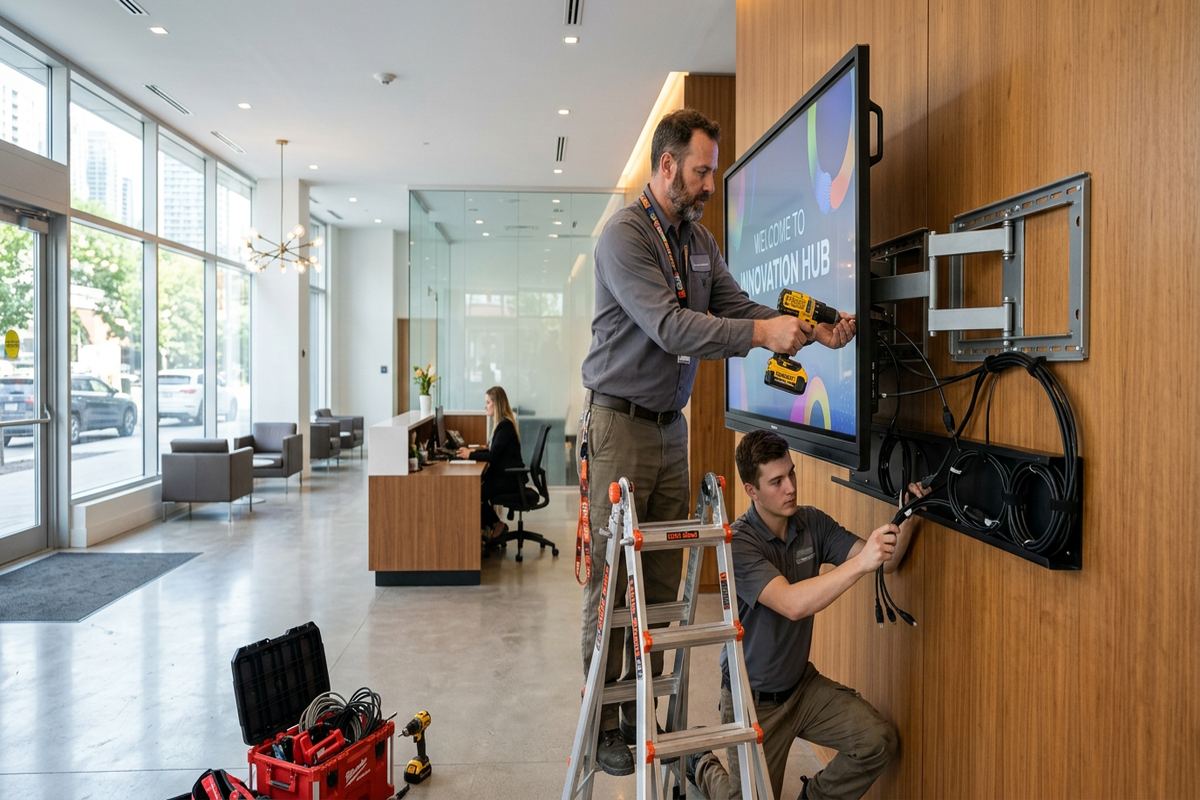
Commercial displays serve different purposes from a residential television. Restaurants, offices, retail spaces and service counters may use screens for menus, presentations, waiting-area content or operational information. Bowmanville’s commercial strips, historic main street properties and industrial units can each present distinct wall structures and access conditions. We assess audience position, operating hours, content source, service access and potential interference with customer or staff movement. Mounting heights and bracket types are selected for the application, not simply copied from a home installation. Work areas are kept organized and routes are documented.
In industrial units, tall walls, exposed structure and long cable distances can affect equipment selection. A display may require network connectivity, video extension equipment or a protected route back to a communications area. Dust, vibration, temperature and accidental impact should be considered where relevant to the space. Historic commercial buildings may instead have masonry walls, finished ceilings and limited concealed pathways. The assessment identifies practical routes and access requirements before pricing. If lifts, specialty access or coordination with other trades are necessary, those items and exclusions are stated clearly in the written scope.
For multi-display projects, consistency simplifies operation and maintenance. Screen heights, bracket offsets, cable labels, input assignments and configuration settings can be recorded across the installation. We can coordinate displays with structured cabling, Wi-Fi or audio work when those systems are part of the approved scope. Customer-owned credentials are used for connected services, and they are returned under the customer’s control at handover. The as-built record identifies installed equipment and relevant cable routes. This gives a Bowmanville business a useful reference when content systems, furniture, tenants or individual displays change later.
- Retail and office display mounting
- Menu and presentation screen planning
- Industrial unit cable routes
- Consistent multi-display layouts
- Documented inputs and settings
Bowmanville Installation, Configuration and Handover
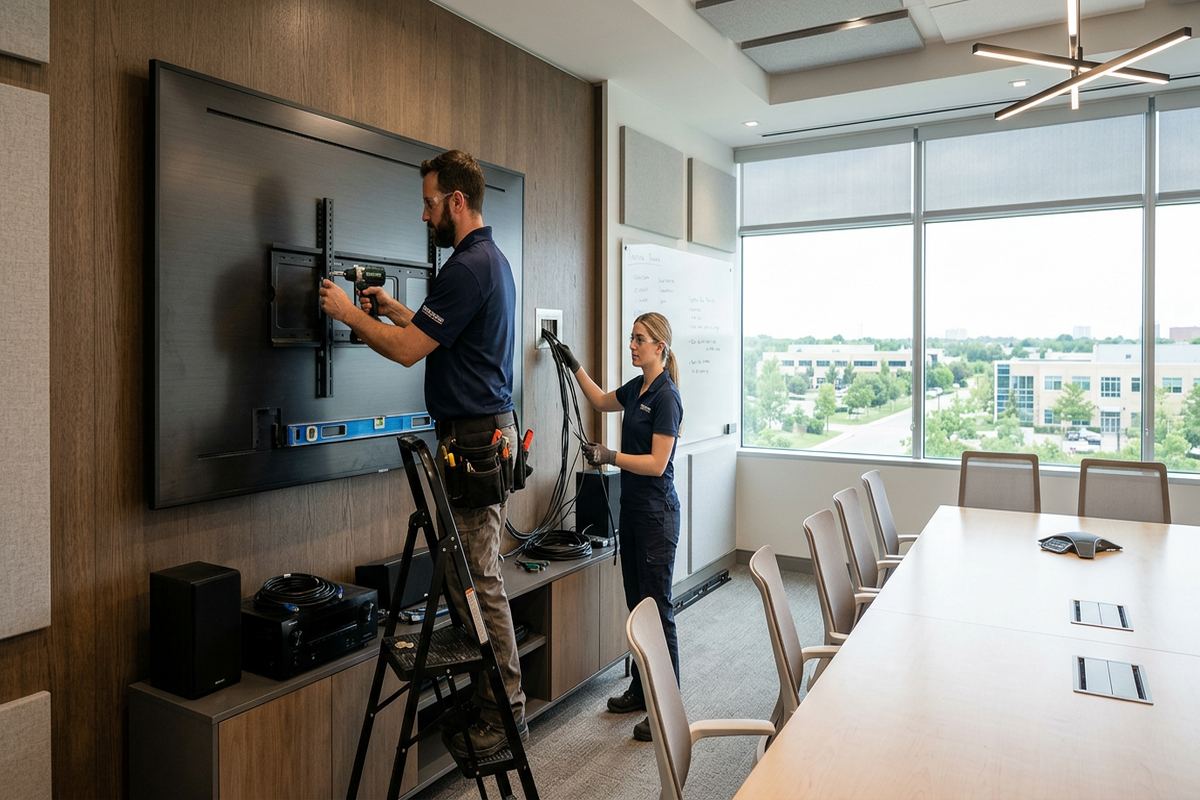
Once the scope is approved, installation follows the documented device locations and routes. The work area is protected as appropriate, wall conditions are verified again, and the bracket is levelled and secured using hardware suited to the confirmed substrate. Cables are installed without concealed intermediate joins where continuous runs are specified, then labelled for identification. The television is mounted, clearances are checked and connected devices are tested. If site conditions differ materially from the assessment, the change is discussed before proceeding rather than covered by an unapproved alteration to the work.
On-site configuration covers the functions included in the scope. This may involve selecting inputs, connecting approved source devices, joining the customer’s network, checking audio output and confirming basic display settings. Account creation and passwords remain under the customer’s own credentials. We do not retain control of streaming, manufacturer or network accounts. For a business installation, authorized staff can be shown the required input and control process. For a Bowmanville household, handover can include bracket movement, cable access and practical guidance for safely connecting or replacing a source device.
Completion includes a review of the installed equipment, visible finishes and agreed operation. The customer receives an as-built record appropriate to the project, including relevant cable routes, labels and device placement. Equipment ownership and applicable warranty information follow the written scope. Requests submitted during business hours are answered the same day; after-hours requests are answered the next business day. Site assessment timing depends on the service and travel distance. From assessment through handover, one accountable contractor manages the defined TV wall mounting work and communicates any required coordination or exclusions.
- Protected and orderly work area
- On-site source and audio testing
- Customer-owned account credentials
- As-built installation record
- One accountable contractor
Bowmanville neighbourhoods we cover
- Downtown Bowmanville
- Waverley
- Northglen
- Liberty
- Port Darlington
TV wall mounting in Bowmanville — common questions
Can you hide the TV cables inside my wall?
Often, but the available route depends on framing, insulation, fire stops, masonry and access above or below the room. Bowmanville retrofits may have plaster, layered finishes or earlier renovations that limit concealed routing. We assess the wall first and propose either an in-wall low-voltage route or a neat surface raceway. Extension cords are not concealed inside walls; new receptacle work requires the appropriate electrical trade.
Can you mount a TV over my fireplace?
Possibly, after checking the fireplace type, heat exposure, mantel clearance, wall structure and cable route. Masonry, flues and finished surrounds can restrict safe fastening or concealed wiring. The proposed height also needs to provide a comfortable viewing angle. In Bowmanville homes, we assess the actual assembly rather than assuming every fireplace wall can accept a bracket. An alternative wall may be recommended if the conditions are unsuitable.
Do I need approval in a condo or rental?
You may need written approval from the landlord, condominium corporation or property manager before holes are drilled or cables are routed. Rules can apply to concrete, shared walls, fire-rated assemblies and contractor access. The customer is responsible for securing permission, while UnifiedLink can provide a clear description of the proposed scope. Surface raceway may be an option where concealed work is restricted in a Bowmanville multi-unit property.
Can you reuse my existing TV bracket?
An existing bracket can be reused only if its condition, rating, mounting pattern, hardware and attachment method are suitable for the new display. We inspect it during the assessment or installation process. Missing parts, unknown capacity, damage or unsuitable anchors can require replacement. A larger Bowmanville home renovation does not necessarily mean the old bracket was attached correctly, so compatibility and wall fastening both need verification.
Do you install televisions on exterior walls or patios?
Yes, where the display, bracket, structure, electrical arrangement and cable route are suitable for outdoor use. Bowmanville winters, moisture and freeze-thaw cycles require careful attention to equipment ratings, penetrations and sealing. We assess exposure to rain, sunlight, wind and temperature changes. Outdoor-rated equipment is normally required for the intended conditions, and electrical work must be completed by the appropriate trade when a compliant supply is not already available.
What happens after I request an assessment?
Requests submitted during business hours are answered the same day, while after-hours requests are answered the next business day. Assessment timing depends on the service and travel distance. For a Bowmanville project, we review the display, wall, bracket, viewing position, connected equipment and cable route. You then receive a written scope covering equipment, placement, routes, exclusions, equipment ownership and warranty before pricing and installation proceed.
Coverage in Bowmanville is confirmed against the address before we quote. See everything we install in Bowmanville or the province-wide tv wall mounting page.