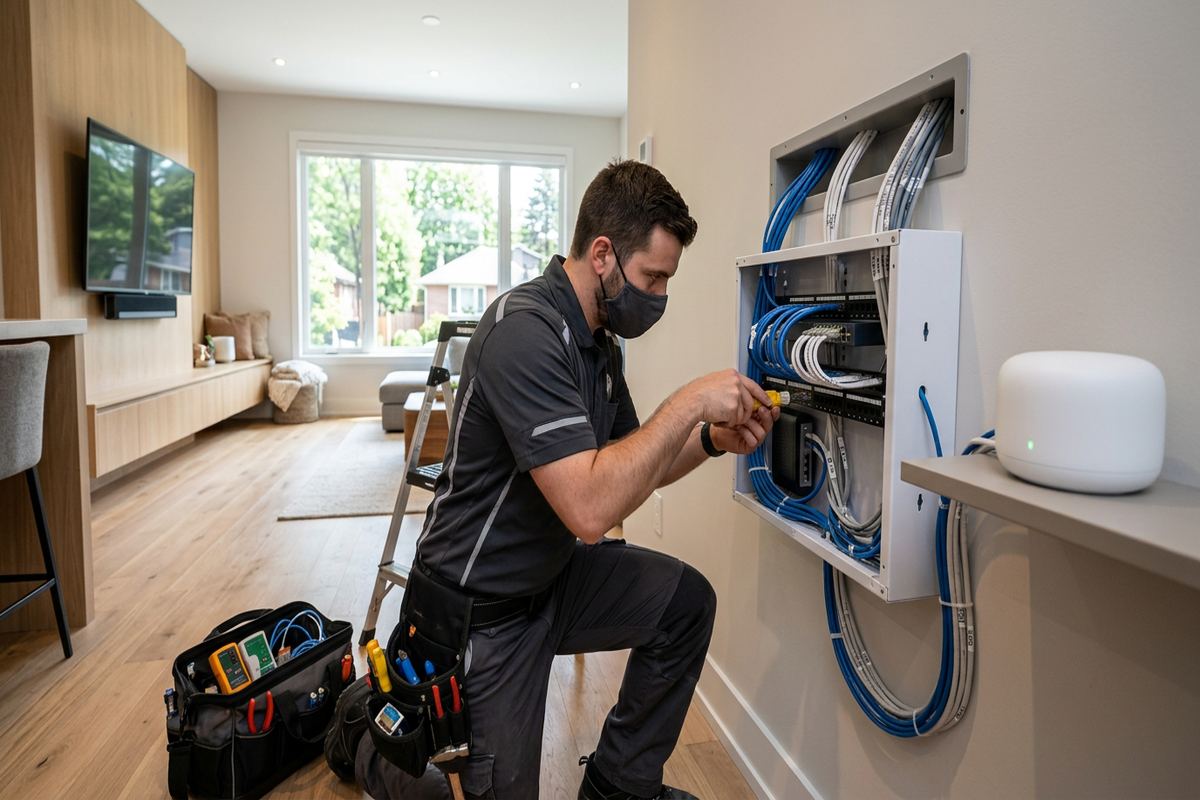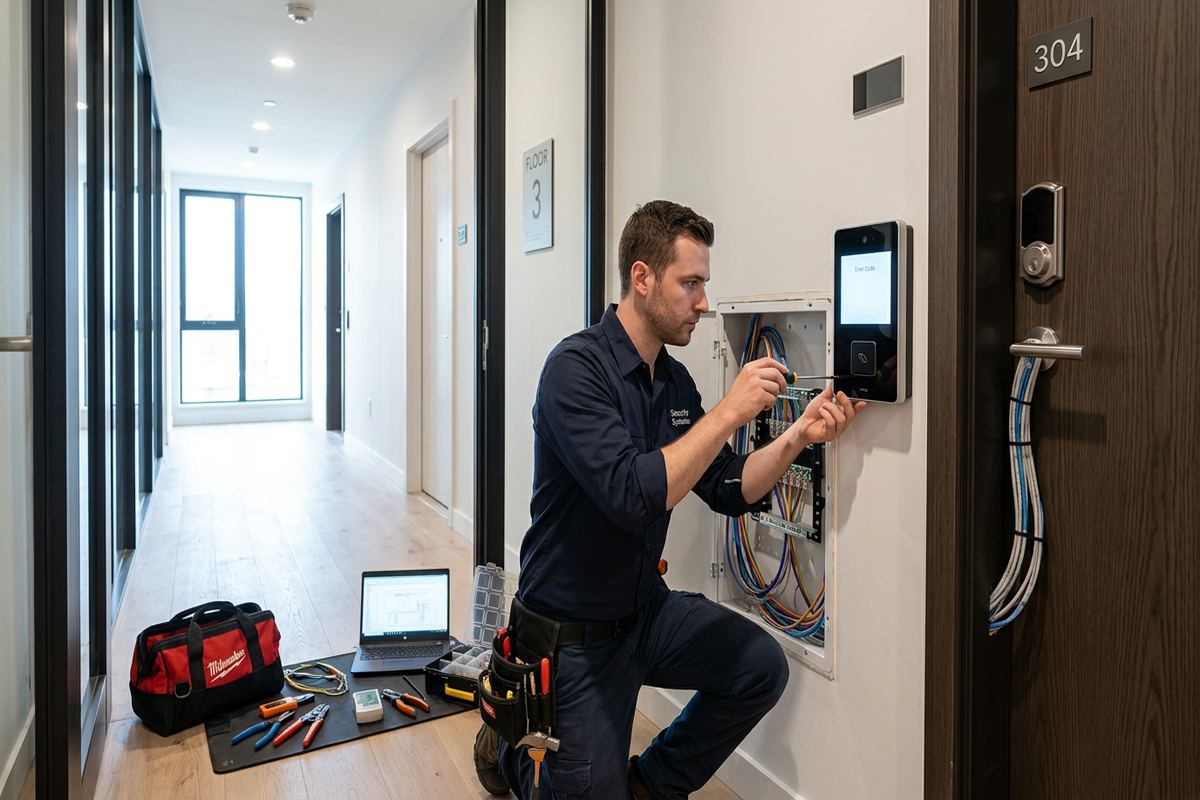
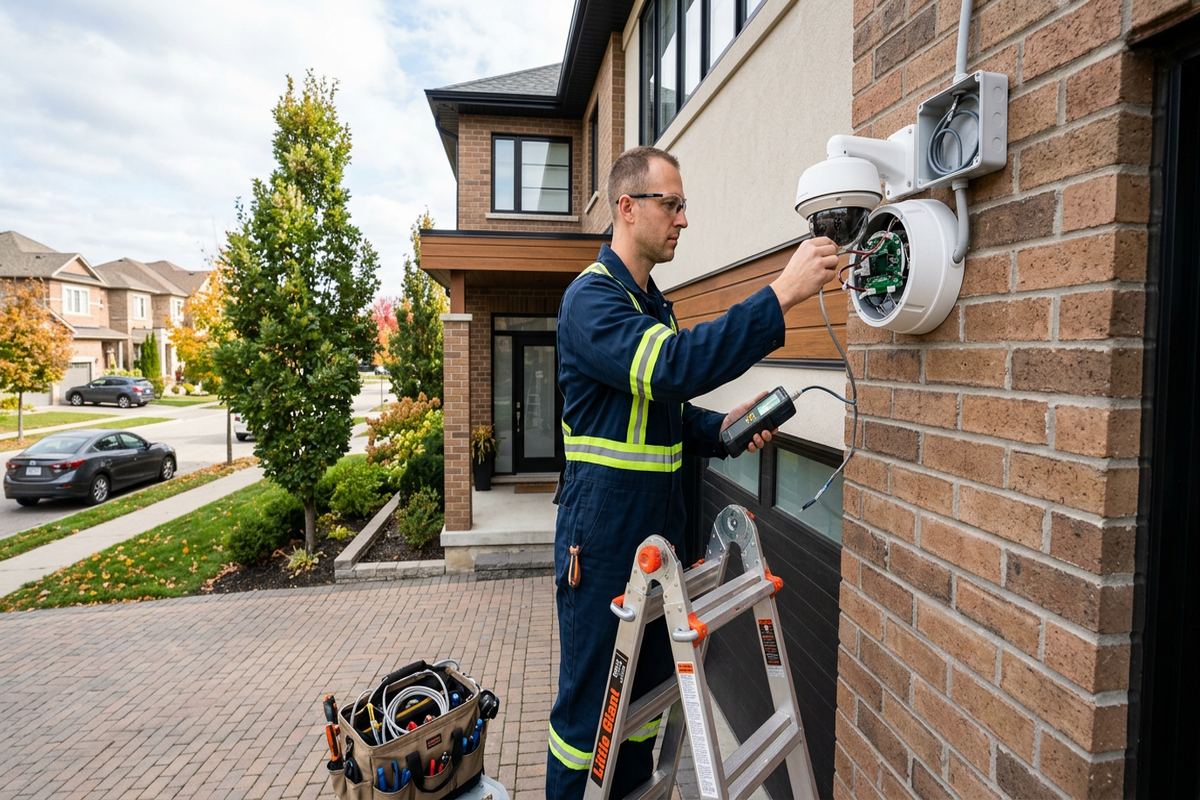
UnifiedLink installs outdoor security cameras for homes, commercial properties and industrial units across Bowmanville. Each project starts with a site assessment to plan coverage, mounting points, cable routes, recording and network requirements. Installations include exterior sealing, continuous labelled cable runs, on-site configuration and a documented handover using credentials controlled by the customer.
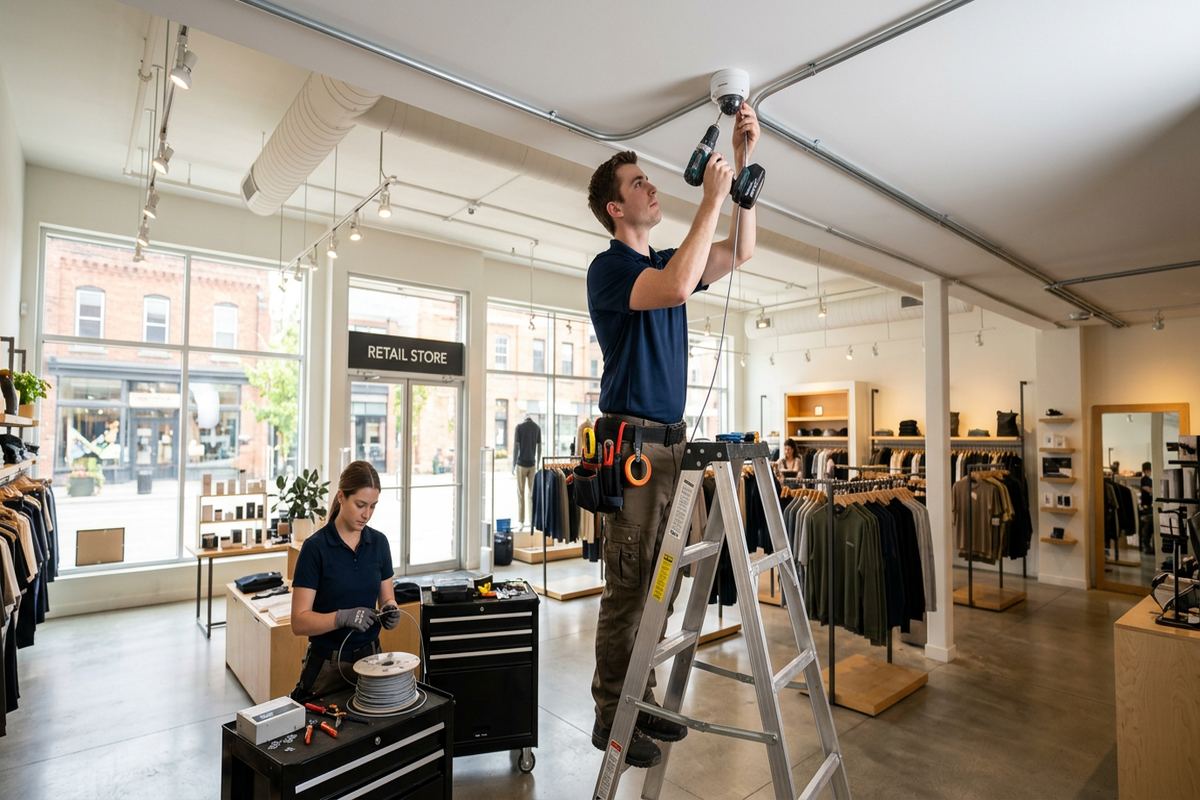
Outdoor Camera Planning for Bowmanville Properties
Outdoor camera installation begins with the views the property actually needs, not with a preset camera count. During a Bowmanville site assessment, we examine entrances, driveways, walkways, loading areas, yards and other practical points of concern. Camera locations are then considered against mounting height, lighting, obstructions and the distance needed for useful identification. This process helps distinguish general property awareness from detailed views of faces, vehicles or activity at a specific doorway. It also prevents spending equipment capacity on angles that mainly capture walls, sky, foliage or neighbouring property.
Bowmanville combines older buildings around the historic main street with newer subdivision construction on the west side, so camera planning varies considerably by site. A retrofit may require discreet routing through an attic, basement, service room or existing conduit. A pre-wire project can place cables before insulation and finishes restrict access. Frame construction usually offers different fastening and routing options than brick or other masonry. We review the surface behind each proposed mount so the camera is secured to suitable structure rather than relying only on siding, trim or a thin exterior finish.
The written scope sets out the equipment, cable routes, proposed device placement, exclusions, equipment ownership and warranty before installation proceeds. This gives Bowmanville owners a clear basis for reviewing what will be installed and where. It also identifies work that may depend on access, unfinished areas, available network capacity or approvals from another party. Site assessment timing depends on the service and travel distance. Requests sent during business hours are answered the same day, while after-hours requests are answered on the next business day.
- Entrance, driveway and yard coverage planning
- Retrofit and pre-wire route assessment
- Mounting surface and structural review
- Written equipment and placement scope
- Network and recording requirement review
Camera Coverage for Bowmanville Homes
For a detached or semi-detached home, the front door and driveway often require separate views because each area has a different identification distance and angle. One wide camera may show general movement without providing useful detail at both locations. Side gates, rear doors, sheds and walkways can also create blind areas when the house shape, garage or fencing blocks sightlines. We plan each Bowmanville residential system around practical movement paths, while avoiding excessive views of adjacent yards, windows and public areas that do not support the owner’s security objective.
Housing conditions differ between Downtown Bowmanville, Waverley, Northglen and newer growth areas, making cable access an important early question. An older finished house may have additions, limited attic access or masonry sections that complicate an otherwise short route. A newer frame-built home may support clean attic or basement pathways, but vapour barriers, insulation and finished ceilings still require care. We look for routes that protect the building envelope and interior finishes. Where construction is underway, pre-wiring can place dedicated home runs before walls and soffits become difficult to access.
Camera selection should match the scene rather than rely on resolution alone. A covered porch can have strong backlighting beyond the doorway, while a driveway may need a narrower view directed toward the point where vehicles enter. Rear yards often require wider context but still need sensible mounting heights to limit tampering. We also consider infrared reflection from soffits, walls, downspouts and nearby surfaces. On-site adjustment is necessary because the final field of view can change after the camera is physically mounted, focused and tested under the property’s available lighting.
- Front entrance identification views
- Driveway and vehicle-area coverage
- Side gate and rear-door monitoring
- Reduced infrared reflection from nearby surfaces
- Views adjusted after physical mounting
Exterior Mounting for Bowmanville Winters
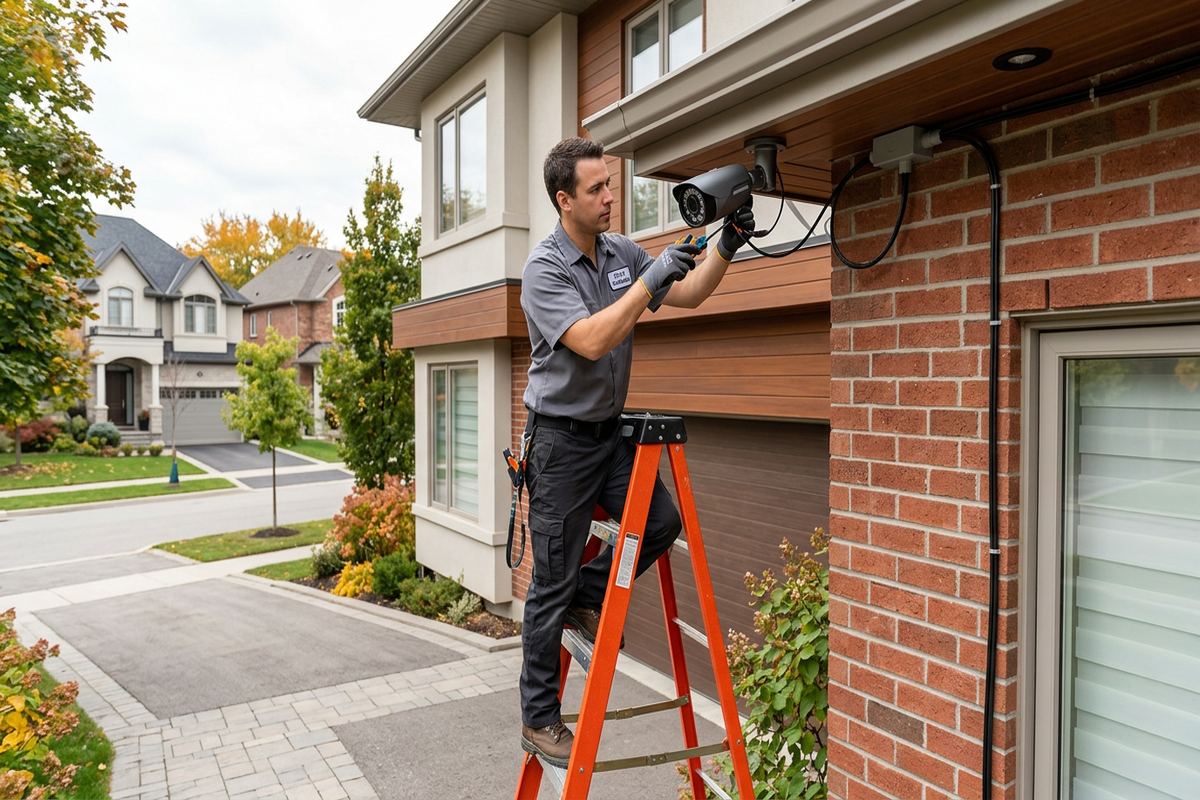
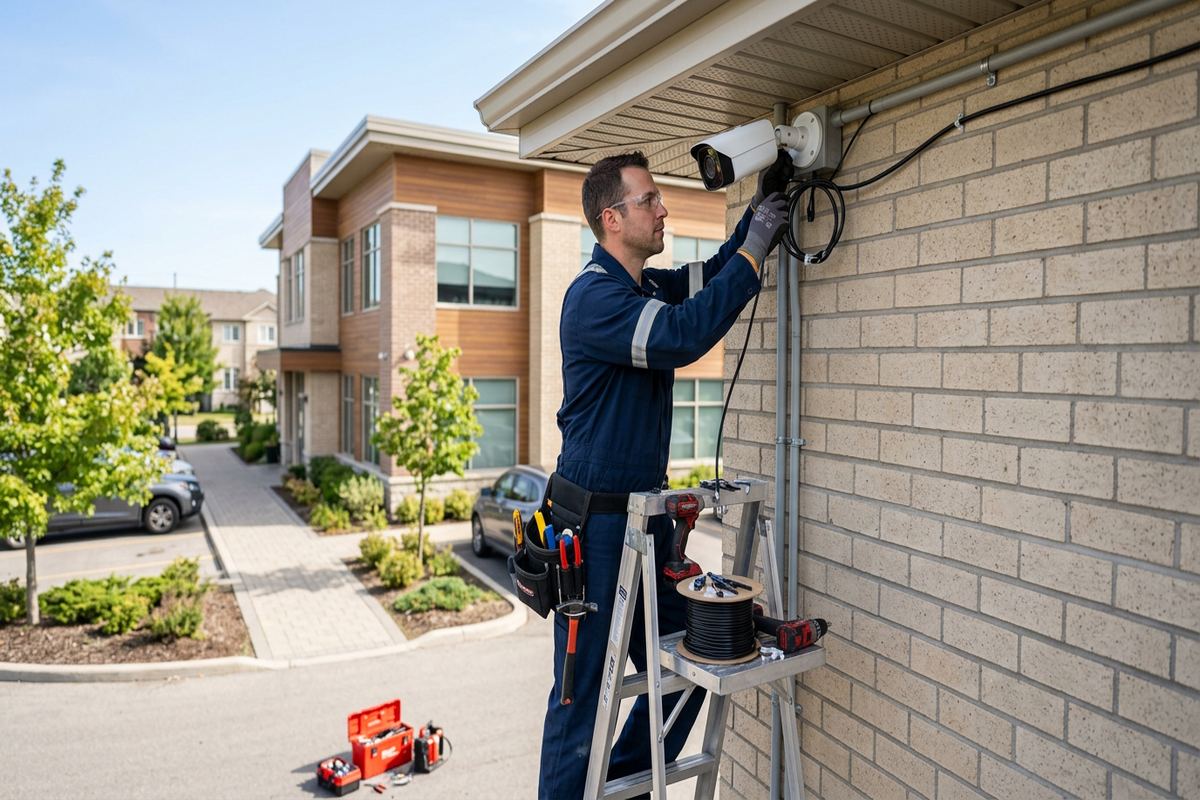
Outdoor equipment in Bowmanville must be installed with seasonal exposure in mind. Repeated freeze-thaw cycles can affect poorly sealed penetrations, loose fasteners and cable entries that allow moisture to follow the cable toward the building. We use appropriate mounting methods for the surface, protect cable transitions and seal exterior penetrations. Cable should enter in a way that discourages water movement, with connectors kept inside suitable housings or protected locations. The objective is not simply a neat appearance; it is a stable installation that does not leave avoidable openings in the exterior assembly.
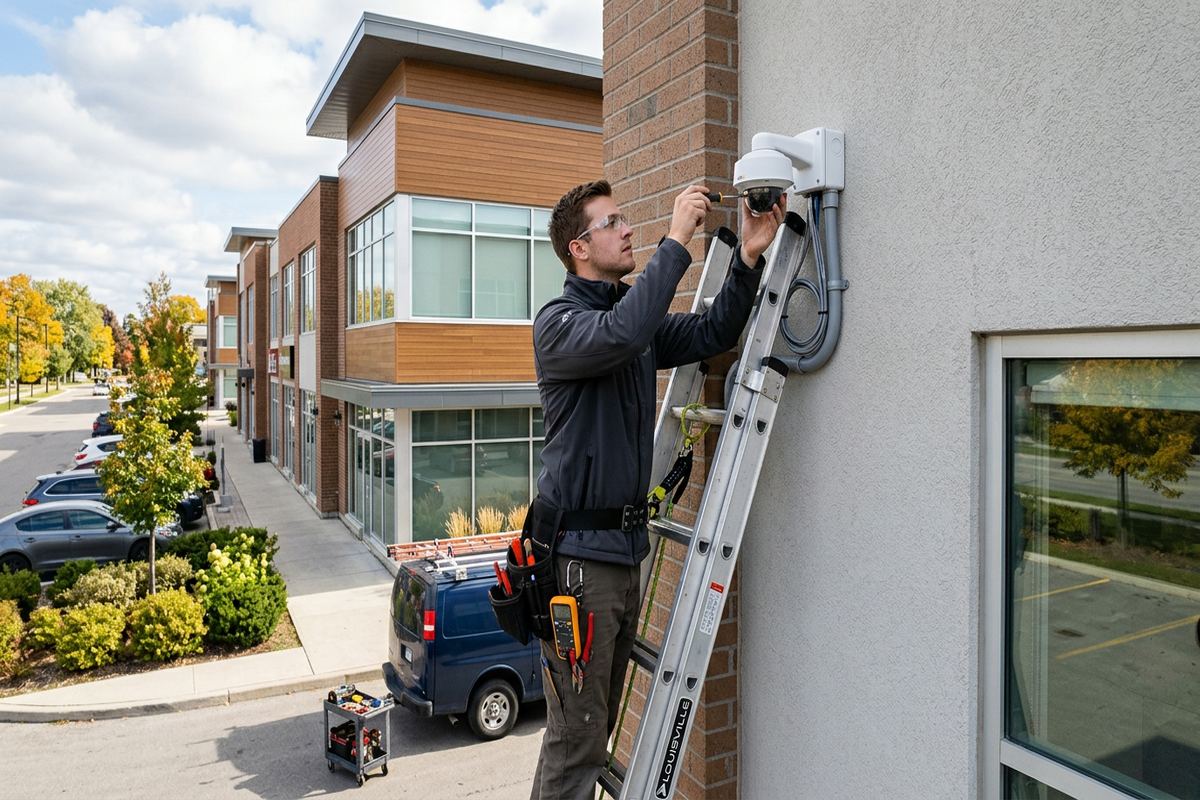
Soffit mounting can work well when the structure provides firm backing and the location does not create reflections or an overly steep viewing angle. Wall mounting may provide a better line of sight but requires proper fastening into frame construction or masonry. Brick, concrete and siding are not interchangeable surfaces, and each may need different anchors, drilling methods and weather-sealing details. Before mounting, we check what is behind the finish and whether the proposed route could interfere with utilities, drainage paths or building components. Cameras are aligned only after the mount is secure.
Snow, rain, wind and changing daylight can all influence the image. A low camera may be easier to reach or obstruct, while an excessively high camera can produce an unhelpful top-down view. Roof edges, downspouts and seasonal vegetation may also block coverage or throw infrared light back into the lens. In Bowmanville, installation planning accounts for these physical conditions without assuming that one mounting height suits every property. Final testing verifies the intended scene, nighttime operation, recording and remote viewing rather than treating a powered camera as a completed installation.
- Sealed exterior cable penetrations
- Surface-specific anchors and mounting hardware
- Protected cable and connector transitions
- Freeze-thaw exposure considered during placement
- Day and night image testing
Bowmanville, Ontario
Outdoor camera installation in Bowmanville, scoped in writing first
Book a site assessment and get equipment, routes, exclusions, and warranty on paper before anything is installed.
Commercial Outdoor Cameras in Bowmanville
Commercial strips and stand-alone businesses generally need cameras arranged around how people, goods and vehicles move through the property. Customer entrances, staff doors, delivery points, waste areas and parking approaches may each require a different field of view. For Bowmanville businesses, we identify whether the goal is general situational awareness, review of an incident or clearer identification at a controlled point. This prevents cameras from being placed only where cabling is easiest. The scope can also separate public-facing areas from staff or service zones so recording serves a defined operational purpose.
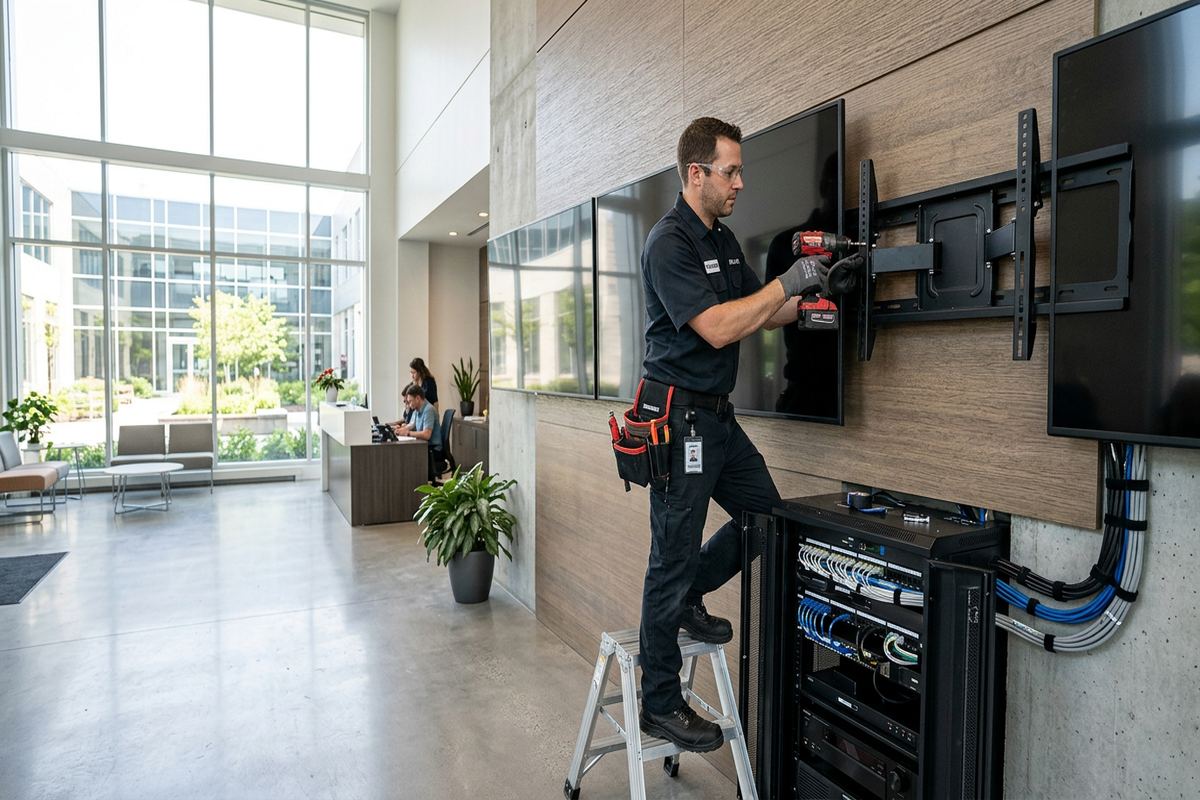
Industrial units can present long exterior walls, high mounting positions, loading doors and wide vehicle areas. Those conditions require attention to lens selection, identification distance, cable length and maintenance access. A camera mounted high enough to avoid casual interference may still need an angle that captures useful detail rather than only roofs and pavement. Network video recorders, switches and power equipment should be located in a controlled area with suitable access. We plan continuous labelled runs back to the designated termination point, helping future testing and changes remain understandable.
Existing commercial systems are often expanded in stages, but compatibility should be checked before new cameras are added. Recorder channel capacity, supported camera protocols, available storage, network switching and power budgets can all affect the result. UnifiedLink reviews accessible system details during the assessment and identifies assumptions in the written scope. If retained equipment limits features or image quality, that issue is explained rather than hidden. One accountable contractor handles the defined camera, cabling, configuration and handover work, reducing gaps between separate installers when a problem involves more than one part of the system.
- Entrances, loading areas and parking approaches
- Industrial-unit perimeter camera planning
- Recorder and network capacity checks
- Continuous runs to controlled termination points
- Defined responsibility for installation and setup
Cabling and Recording in Bowmanville
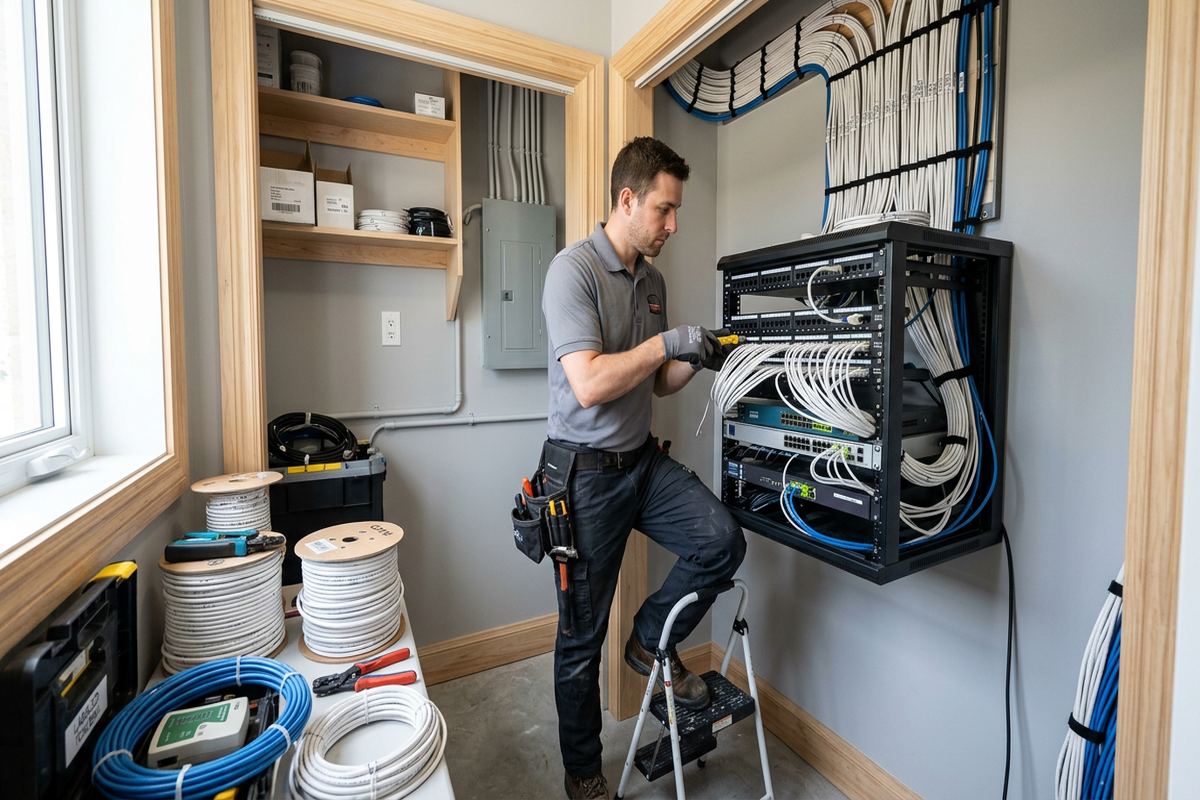
Reliable outdoor cameras depend on the pathway between each device and the recording or network equipment. UnifiedLink installs continuous labelled cable runs rather than concealing unnecessary joins above ceilings or inside inaccessible spaces. Labels identify both ends so a camera can be traced during commissioning, maintenance or later expansion. Cable routes are planned to reduce exposure to physical damage and avoid unsupported runs. Where a route crosses exterior space or enters another building area, the method is reviewed during the assessment. Any proposed conduit, surface pathway or accessible interior route is documented in the scope.
Recording design starts with how footage will be used and how the customer expects to access it. Camera count, image settings, motion activity and retention expectations all influence storage, but those requirements should be confirmed for the actual property. We configure recording parameters on site and test playback from the recorder or approved application. For network-connected systems in Bowmanville, we also review available connections and practical equipment placement. Remote access depends on the selected platform, internet service and customer-controlled account, so those dependencies are explained during setup rather than presented as universal features.
Power and network components should be placed where they remain accessible without being open to casual interference. An equipment location may include the recorder, network switch, monitor connection or other system components, depending on the design. We do not assume an existing router or switch can support additional cameras without review. During commissioning, each labelled run is checked, camera views are confirmed and recording is tested. The customer receives their own credentials instead of relying on an installer-owned account. An as-built record documents final device locations and cabling information for future reference.
- Continuous point-to-point cable runs
- Labels applied at both cable ends
- Recording and playback configured on site
- Customer-controlled system credentials
- As-built device and cabling record
Retrofits and Pre-Wires Across Bowmanville
Retrofit work requires a route that balances appearance, serviceability and the amount of disruption to finished areas. Around Downtown Bowmanville, older building layouts may include masonry walls, finished additions or limited pathways between exterior mounting points and the recorder. We inspect accessible spaces before proposing a route and state any limitations or exclusions in writing. Exterior surface cabling is not treated as the automatic solution when a protected interior path may be practical. Where concealment is limited, the proposed visible pathway is discussed before work begins rather than decided during installation.
Pre-wiring is more flexible, but only when camera positions and termination locations are considered before finishes close the walls. In west-side subdivision construction or renovation projects, cable can be routed to planned soffit, wall and entrance positions while framing remains accessible. Extra cable should be protected and clearly identified at each endpoint, not left as an unknown coil behind insulation. We coordinate the low-voltage scope around available construction access while keeping responsibility for other trades clear. Final camera installation and aiming can then occur after exterior finishes, network equipment and power are ready.
Properties in Liberty, Port Darlington and other Bowmanville communities may also involve townhouses, condominiums or rental arrangements where the person requesting work does not control every exterior surface. Condo corporation, property manager or landlord approval may be required before drilling, routing cable or mounting equipment on common elements. The customer is responsible for obtaining the necessary authorization, and the scope can identify approval-dependent work. Camera views should also be reviewed for neighbouring units and shared spaces. A technically workable location is not automatically an approved or appropriate mounting point.
- Routes assessed before finished surfaces are opened
- Pre-wire endpoints protected and identified
- Visible pathways discussed in advance
- Approval-dependent work identified in writing
- Camera views reviewed around shared spaces
Configuration, Privacy and Handover
A camera system is not complete when the devices merely appear online. On-site configuration includes naming cameras, setting the appropriate time information, confirming recording behaviour and checking live and recorded views. Notification features, where supported and included, need practical adjustment because overly broad motion areas can generate unhelpful activity. Trees, road movement, changing shadows and precipitation may influence detections. We configure the selected equipment around the observed Bowmanville site and explain which settings the owner can change. Platform capabilities vary, so the written scope identifies the system being supplied rather than promising unsupported functions.
Outdoor camera placement should remain proportionate to the intended security purpose. We aim cameras toward the customer’s entrances, property approaches and defined activity areas while limiting unnecessary views into neighbouring windows, yards or private spaces. For commercial properties, internal policies may also govern who can view or export footage. UnifiedLink provides technical installation and configuration, but owners remain responsible for how their system is operated and for obtaining legal or property-specific advice where needed. Shared driveways, condominium common areas and rental properties deserve particular attention before final placement is approved.
Handover is performed with credentials that belong to the customer. We verify access on the agreed devices, demonstrate live viewing and playback, and explain basic steps for locating or exporting footage where the platform supports them. The as-built record notes final camera positions and cable information, which is useful when equipment is serviced, expanded or transferred to another administrator. Equipment ownership and warranty terms are included in the written scope. This approach gives a Bowmanville homeowner or business a documented system rather than an installation that depends on an unknown installer account.
- Camera names and time settings configured
- Live view and playback demonstrated
- Detection areas adjusted to the property
- Neighbouring private spaces considered
- Customer credentials used at handover
Arranging Outdoor Camera Installation in Bowmanville
The first step is a discussion about the Bowmanville property, the areas of concern and whether the project is a retrofit, addition or pre-wire. Photos and building information can help with initial context, but pricing follows a site assessment because mounting surfaces, cable access and equipment conditions need to be reviewed directly. We also ask whether the customer wants a new system or plans to retain existing cameras, recording equipment or network components. Site assessment timing depends on the service and travel distance, and any required access arrangements should be confirmed beforehand.
Following the assessment, UnifiedLink prepares a written scope covering equipment, cable routes, device placement, exclusions, equipment ownership and warranty. This is the point to review appearance, visible pathways, recorder location, intended coverage and approval requirements. For occupied businesses or multi-unit properties, installation access may need coordination with staff, a landlord, a condominium corporation or property management. Work outside the agreed scope is not assumed. Clear documentation helps the owner compare the proposed result with the original concern and understand which existing services or customer-supplied items remain outside our responsibility.
Installation includes the defined mounting, continuous labelled cabling, connection and on-site configuration. Before handover, camera views and recording are tested, the customer’s access is confirmed and final device information is documented in an as-built record. Requests sent during business hours are answered the same day; after-hours requests are answered the next business day. Whether the property is in Northglen, Waverley, Port Darlington or central Bowmanville, the process remains based on the building, required coverage and available pathways rather than a generic camera package.
- Site assessment completed before pricing
- Written scope provided for review
- Installation coordinated around approved access
- Coverage and recording tested before handover
- One accountable contractor for defined work
Bowmanville neighbourhoods we cover
- Downtown Bowmanville
- Waverley
- Northglen
- Liberty
- Port Darlington
Outdoor camera installation in Bowmanville — common questions
How many outdoor cameras does my Bowmanville home need?
The number depends on the areas requiring useful coverage, not simply the size of the house. A Bowmanville home may need separate views for the front entrance, driveway, side access and rear door because one wide camera cannot always identify activity in every area. A site assessment considers sightlines, mounting height, lighting, obstructions and cable access before equipment and placement are included in a written scope.
Can cameras be installed on brick or masonry?
Yes, provided the mounting surface and route are suitable. Many older Bowmanville properties combine masonry with frame-built additions or soffits, so fastening and sealing methods may differ around the same building. The installer must consider the material behind the finish, choose appropriate anchors and seal cable penetrations against moisture. Camera placement also needs to avoid unnecessary drilling where a protected route or more serviceable mounting point is available.
Will outdoor cameras work during Bowmanville winters?
Outdoor-rated equipment can operate through local seasonal conditions when it is selected and installed appropriately. Bowmanville freeze-thaw cycles make secure fastening, protected connectors and sealed exterior penetrations particularly important. Placement should also consider snow, roof runoff and infrared reflection from nearby walls or soffits. During commissioning, UnifiedLink tests the installed views and recording, but the camera’s specified environmental limits still depend on the particular equipment included in the scope.
Can you add cameras to my existing system?
Possibly, after the existing equipment is reviewed. Compatibility can depend on the recorder, supported protocols, available channels, storage, network capacity and power budget. UnifiedLink checks accessible system information during the Bowmanville site assessment and documents assumptions or limitations in the scope. If existing components cannot support the proposed cameras or required features, the alternatives can be defined before installation rather than discovered after new cable has been installed.
Do I need condo or landlord approval?
You may need written approval if cameras, cable or fasteners will affect common elements, shared exterior surfaces or a rental property. This is relevant for some Bowmanville townhouses, condominiums and leased commercial units. The property owner or customer is responsible for obtaining authorization before work proceeds. Proposed views should also be reviewed where entrances, parking areas, shared driveways or neighbouring units could fall within the camera’s field of view.
What do I receive when installation is complete?
At handover, the Bowmanville customer receives access using their own credentials, along with a demonstration of live viewing and playback on the agreed devices. UnifiedLink confirms final camera views and recording, then provides an as-built record showing device locations and cabling information. The written scope also addresses equipment ownership and warranty. This documentation makes later service or expansion more practical and avoids dependence on an installer-controlled account.
Coverage in Bowmanville is confirmed against the address before we quote. See everything we install in Bowmanville or the province-wide outdoor camera installation page.