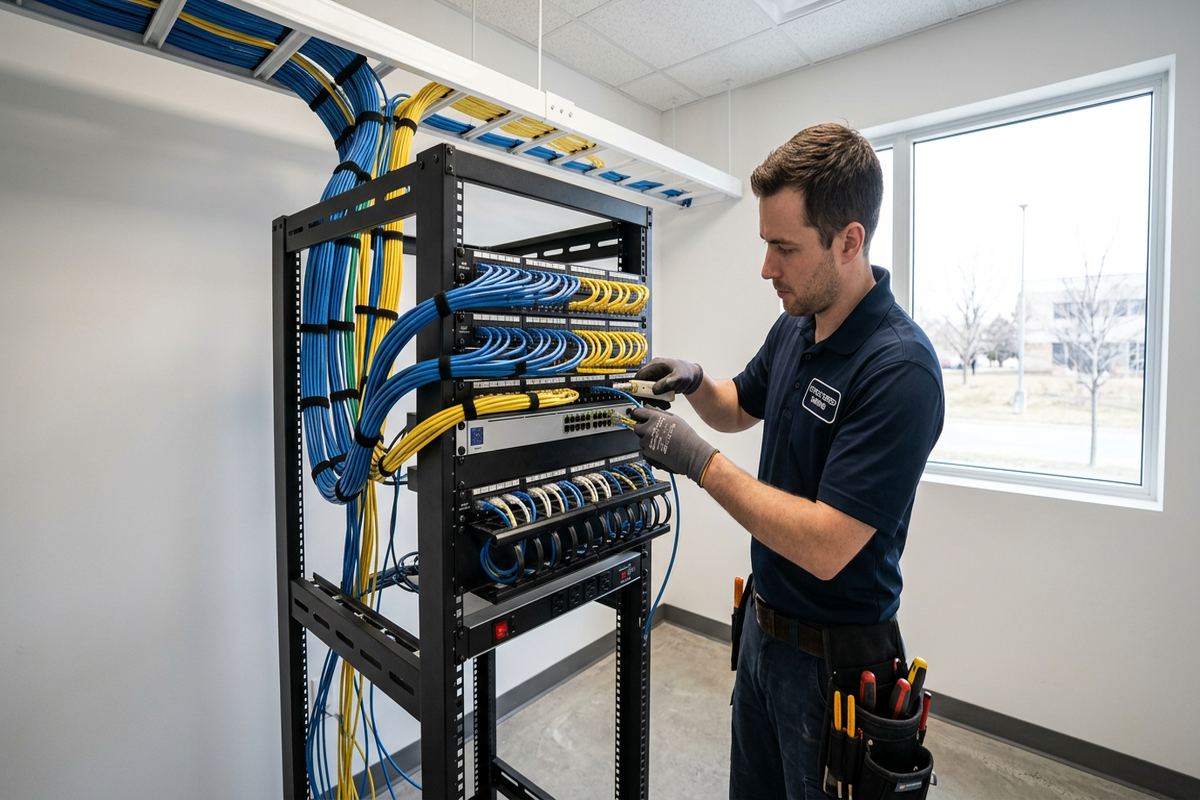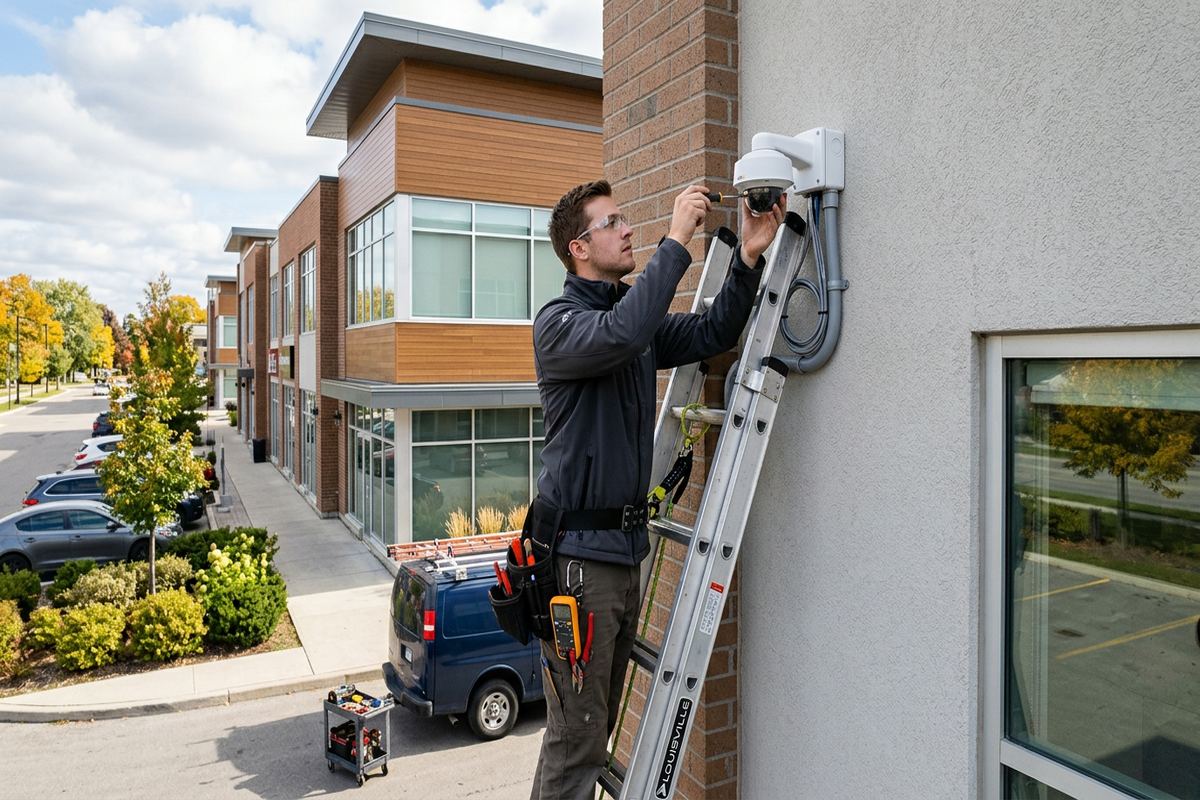
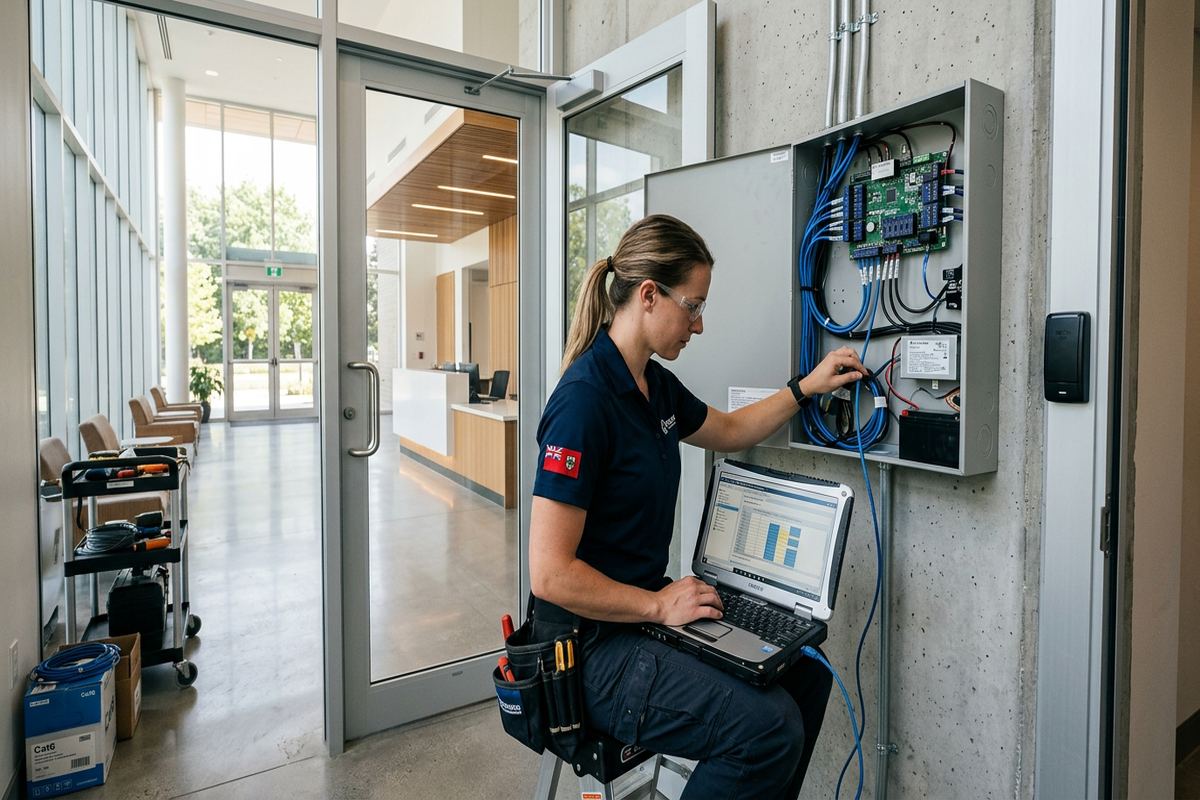
UnifiedLink plans and installs condo access control systems in Bowmanville for shared entrances, parking areas, amenity rooms and service spaces. Work begins with a site assessment covering doors, electrical conditions, cable routes and management requirements. The completed system is configured on site and handed over using the condominium corporation’s or property owner’s credentials.
Condo Access Control Planning in Bowmanville
A condo access control project starts with how residents, visitors, contractors and property staff actually move through the building. In Bowmanville, that may involve a compact converted property near Downtown Bowmanville, a newer multi-unit development in Waverley, or a waterfront building near Port Darlington. We assess entrances, vestibules, parking access, amenity rooms, elevators and service doors before recommending equipment. This establishes which openings require controlled entry, which remain mechanical, and where door release requests or management overrides should operate without making everyday access unnecessarily complicated for residents or staff.
Existing door hardware and construction conditions often determine more than the reader model. Older masonry buildings can have limited pathways, thick walls, surface-mounted conduit or entrance framing that cannot accept standard hardware without modification. Newer frame construction may provide easier cable routes, although fire separations, finished corridors and condominium common-element rules still apply. We document these constraints during the assessment. The resulting design coordinates readers, locks, request-to-exit devices, door contacts, power supplies and control panels as one system instead of treating each opening as a separate installation problem.
Approval responsibilities must also be clear before drilling, cabling or replacing shared door hardware. A condominium corporation may require board approval, while a rental condominium may involve both the unit owner and property manager. Commercial condominium units can add landlord, tenant and common-area responsibilities. UnifiedLink provides a written scope identifying equipment, proposed cable routes, device placement, exclusions, equipment ownership and warranty. That document gives decision-makers a practical basis for approval and helps prevent uncertainty about who controls credentials, software administration, records and future changes after handover.
- Door-by-door access requirements
- Existing hardware and frame review
- Common-element approval considerations
- Defined controller and power locations
- Written scope before installation
Choosing Entry Methods for Bowmanville Condos
Cards and key fobs remain practical for many Bowmanville condominium buildings because they are straightforward to issue, revoke and replace. Mobile credentials may also suit properties where residents prefer phone-based entry, provided management accepts the platform, account structure and ongoing administration involved. A project can use one credential type or a planned combination. Selection should consider resident demographics, staff workflows, visitor needs, internet dependency and equipment ownership. We explain how credentials are created, assigned and removed so the corporation or owner understands daily operation before approving a specific reader or management platform.
Not every controlled opening needs the same authentication method. A main lobby may use a fob reader alongside an intercom, while a bicycle room can use resident credentials and a management office may require restricted permissions. Parking entrances can involve long-range credentials, keypad entry or integration with existing gate equipment. Rather than applying identical permissions everywhere, we develop access groups around actual roles and schedules. This makes it easier to separate resident, superintendent, cleaner, delivery and contractor access while preserving a clear record of how each category is intended to operate.
Credentials should belong to the customer’s system, not remain dependent on an installer’s private account. During handover, UnifiedLink configures administration using the condominium corporation’s, property manager’s or property owner’s own credentials. Authorized personnel receive the information needed to add users, revoke lost fobs, review relevant events and adjust approved schedules. We also record controller locations, reader identifiers and door names in an as-built record. Clear ownership matters when management companies change, board members rotate, or a Bowmanville building later needs additional doors, replacement credentials or another qualified service provider.
- Fob, card and mobile options
- Role-based access groups
- Scheduled contractor permissions
- Customer-owned administrator credentials
- Documented reader and door names
Readers, Locks and Door Hardware
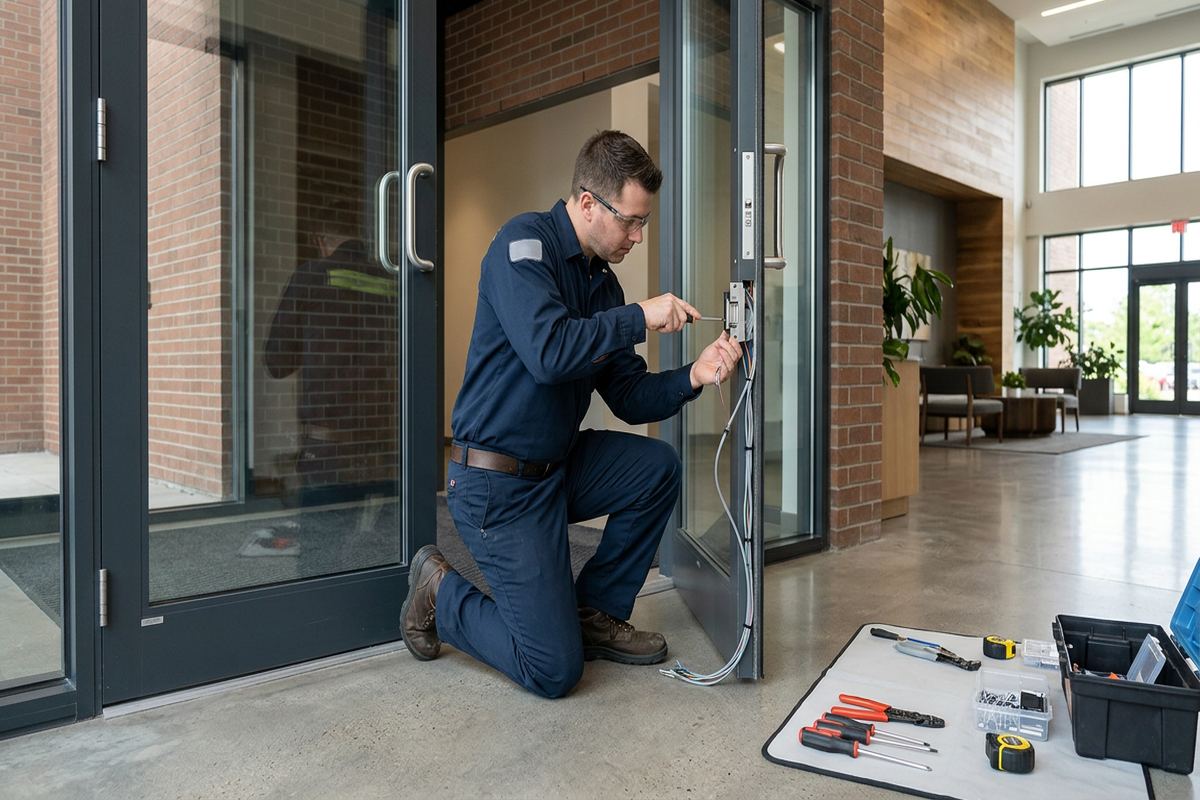
Reliable access control depends on compatible physical door hardware. Readers send credential information, but electric strikes, magnetic locks, electrified panic hardware or other locking devices perform the actual release. The correct approach depends on the door, frame, latch, fire-rating requirements, egress operation and existing hardware condition. We inspect each opening rather than assuming one lock type will fit every entrance. Where specialist door or locksmith work is required, that dependency is identified in the scope so responsibilities are established before installation and the finished opening functions as a coordinated assembly.
Life-safety and free-egress requirements cannot be treated as optional access-control features. Residents must be able to leave through required exits without presenting a credential, and controlled doors must interact appropriately with release devices and applicable building systems. Depending on the opening, the design may include request-to-exit sensors, push-to-exit devices, door position contacts, emergency release equipment or interfaces completed by other qualified trades. The assessment identifies the intended sequence of operation. Final device selection must reflect the building, applicable requirements and direction from the authority or professionals responsible for approvals.
Door condition is especially important during retrofit work. A sagging closer, worn latch, corroded threshold or misaligned frame can make a new electronic lock appear unreliable even when its wiring and controller operate correctly. Exterior doors in Bowmanville also experience snow, road salt, wind and repeated freeze-thaw cycles. We check alignment, closing action and likely exposure, then specify suitable mounting and sealing methods. Access control cannot compensate for a door that does not close consistently, so necessary repairs or exclusions are documented before electronic hardware is commissioned.
- Reader and lock compatibility review
- Free-egress requirements considered
- Door contact and release planning
- Existing closer and latch inspection
- Hardware dependencies documented
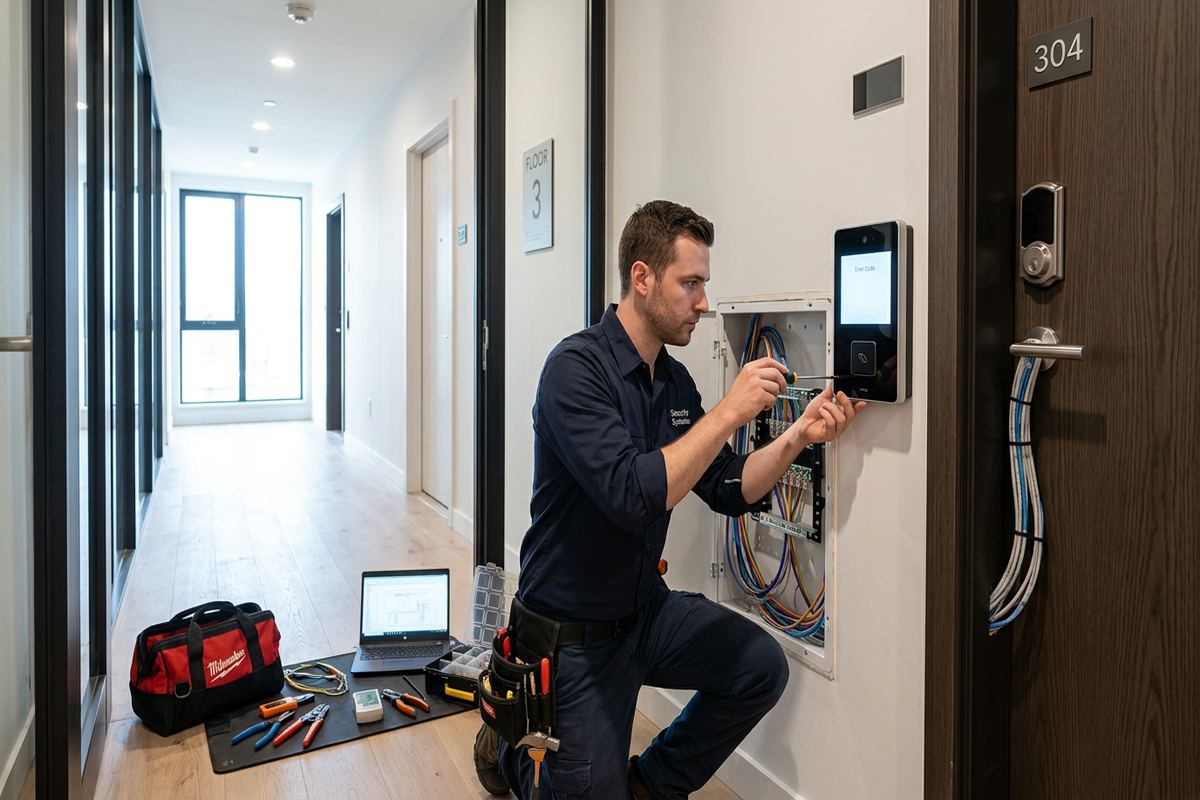
Bowmanville, Ontario
Condo access control systems in Bowmanville, scoped in writing first
Book a site assessment and get equipment, routes, exclusions, and warranty on paper before anything is installed.
Bowmanville Retrofit and Pre-Wire Work
Bowmanville combines a historic main street with rapid subdivision growth on the west side, keeping both retrofit and pre-wire work active. Retrofit projects near Downtown Bowmanville may need routes through masonry, finished ceilings, basements or surface conduit, with careful attention to existing finishes. New construction and major renovations in Northglen or Liberty can provide access before drywall closes. Early coordination allows controller space, power, network connections and door cabling to be planned alongside electrical, framing and mechanical work, reducing avoidable openings in completed common areas later.
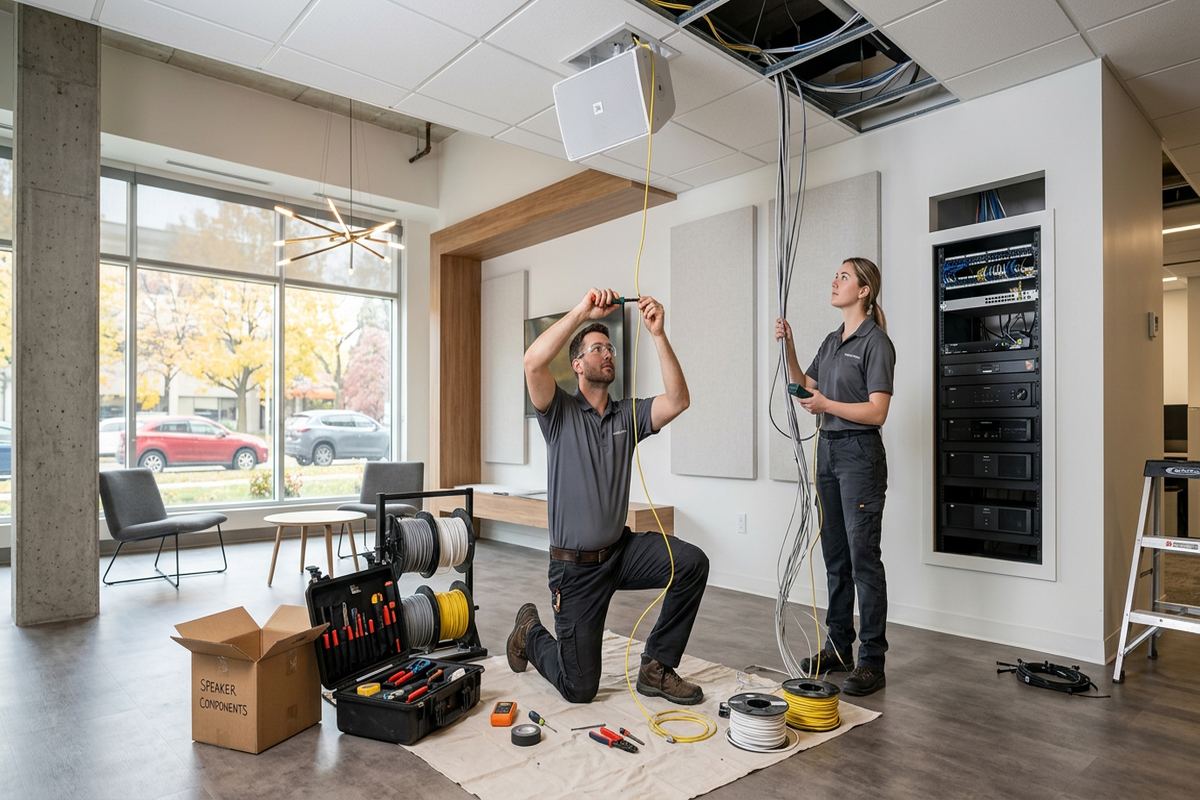
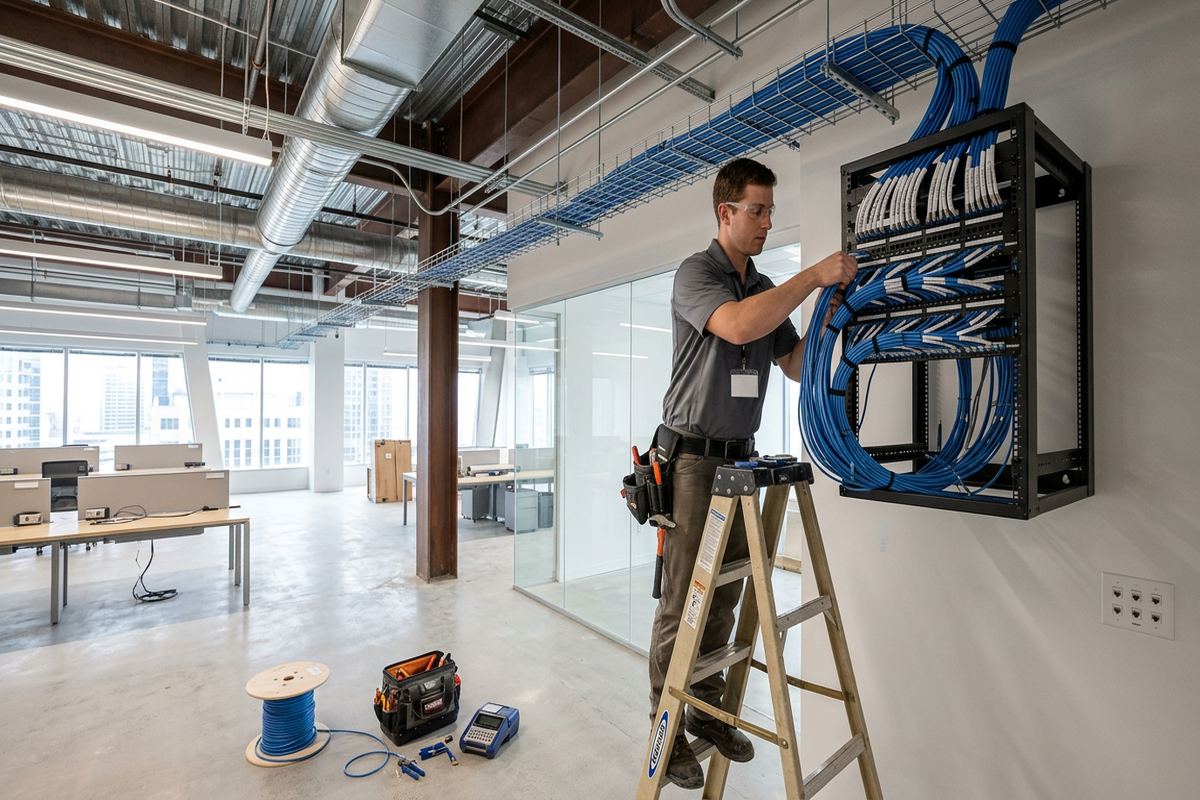
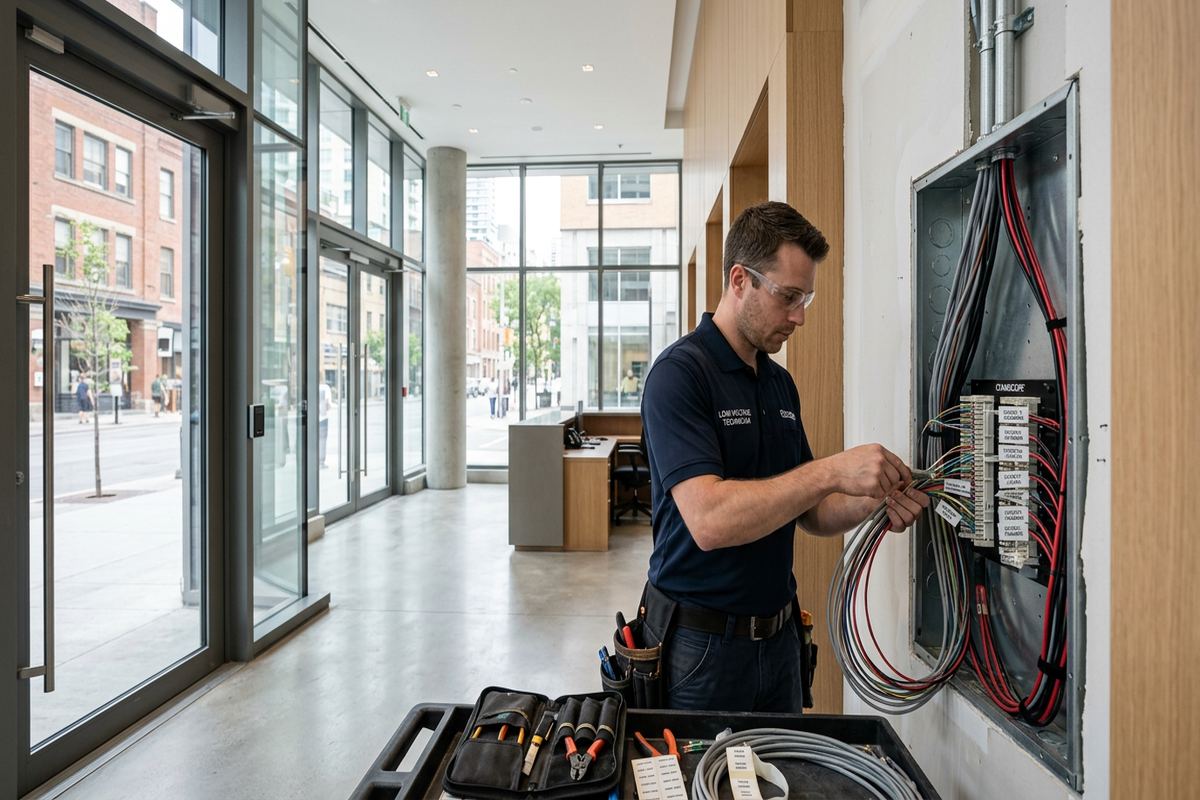
A useful pre-wire plan extends beyond placing a cable near each doorway. The cable type, conductor count, pathway, fire separation, service loop, controller capacity and power requirements must match the intended hardware. Separate runs may be needed for readers, locks, door contacts, request-to-exit devices and intercom functions. UnifiedLink installs continuous labelled cable runs and records their destinations. We avoid undocumented splices that complicate testing and future service. When doors or hardware will be supplied later, cable ends are protected and identified so another project stage can proceed from dependable records.
Retrofit routes require a balance between appearance, access and serviceability. In a finished condominium corridor, the shortest path may not be acceptable if it crosses decorative ceilings or visible heritage finishes. Masonry may favour carefully located penetrations and surface raceway, while frame construction can offer concealed routes through accessible cavities. We discuss proposed routes before work and identify areas requiring permission or restoration by others. The written scope states inclusions and exclusions, helping Bowmanville boards and property managers evaluate disruption, finished appearance and responsibility before authorizing installation.
- Retrofit routes for finished buildings
- Pre-wire before walls close
- Continuous labelled cable runs
- Masonry and frame options
- Cable destinations recorded
Exterior, Parking and Shared-Area Access
Exterior equipment must be selected and installed for its actual exposure. A reader under a deep vestibule canopy faces different conditions from one mounted beside an uncovered parking entrance. Bowmanville winters bring moisture, snow accumulation and freeze-thaw movement that can affect seals, fasteners, conduit transitions and door alignment. We consider enclosure suitability, cable entry orientation, mounting surfaces and compatible sealants. Penetrations are planned to reduce water paths, and exposed cabling receives suitable mechanical protection. The goal is a maintainable installation, not simply hardware described as outdoor-rated on a product sheet.
Parking and garage access often involve more than attaching a reader to a wall. Vehicle approach, driver reach, pedestal placement, gate timing, safety equipment and existing operator controls all affect the design. Underground garages may also have concrete pathways, limited communications coverage and controlled pedestrian doors requiring separate permissions. We review how residents, visitors and service vehicles enter and leave. Any interface with a gate operator or parking system is documented, including work expected from other trades, so the access controller does not bypass required safety functions or create unclear responsibilities.
Shared spaces benefit from permissions that match their purpose. Fitness rooms, rooftop areas, parcel rooms, storage zones and bicycle rooms may need scheduled access, resident-only entry or temporary contractor rights. Mechanical and electrical rooms usually require narrower access than general amenities. In mixed-use properties near commercial strips, residential and commercial users may share an exterior entrance but require different internal permissions. A planned hierarchy limits unnecessary access while keeping administration manageable. Door naming and access groups should remain understandable to future board members, superintendents and property managers rather than relying on unexplained codes.
- Weather-conscious exterior mounting
- Sealed and protected cable entries
- Parking gate interface planning
- Amenity-room access schedules
- Separate residential and commercial permissions
Intercom and Visitor Entry Integration
Visitor entry is related to access control but serves a different purpose. Residents use assigned credentials, while visitors normally identify themselves through an intercom or directory and receive a temporary door release. Where equipment supports integration, the two functions can share a coordinated entry sequence without sharing all administration. We review existing lobby panels, telephone or mobile calling arrangements, door release wiring and network requirements. The scope states whether an intercom is reused, replaced, separately serviced or excluded, avoiding assumptions that any reader can automatically integrate with an older visitor-entry system.
Delivery access requires particular care because convenience can create overly broad permissions. A parcel room may use a separate controlled door, a temporary code, staff release or an intercom workflow, depending on management policy and available supervision. We do not assume that couriers should receive unrestricted building credentials. Instead, permissions can be limited by door, schedule or duration where the selected platform supports those controls. For Bowmanville condominiums receiving frequent deliveries, the chosen process should also address failed deliveries, resident notifications and who is authorized to investigate access events.
Remote door release can be useful, but it depends on stable communications, correctly configured accounts and clear authorization. Cloud-managed platforms may require internet access and vendor services, while locally managed systems have different remote-access considerations. Management should know what happens during an internet outage, power interruption or platform service issue. Backup power can support selected components for a designed period, but its capacity must be based on the connected load and operating requirements. We explain these dependencies in the system scope rather than describing remote access as an unconditional feature.
- Visitor intercom coordination
- Controlled parcel-room workflows
- Defined remote-release authority
- Internet dependency reviewed
- Backup-power requirements assessed
Installation and Handover in Bowmanville
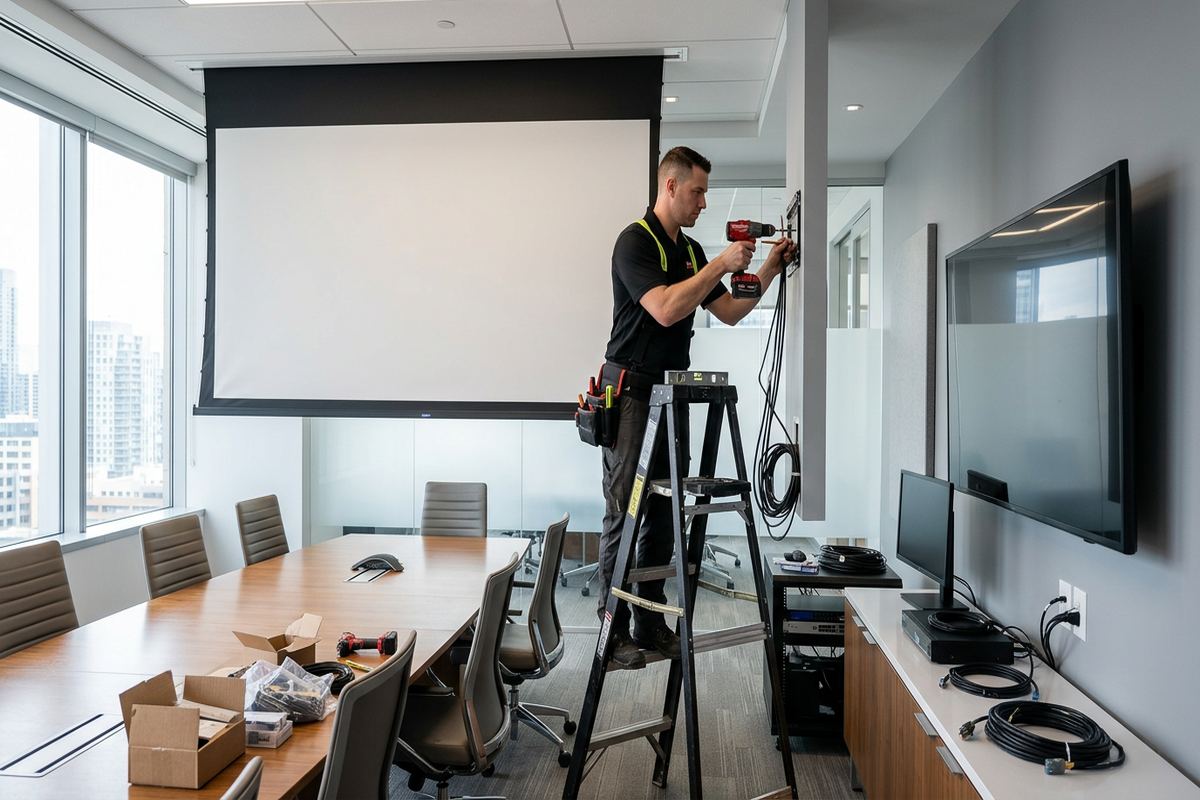
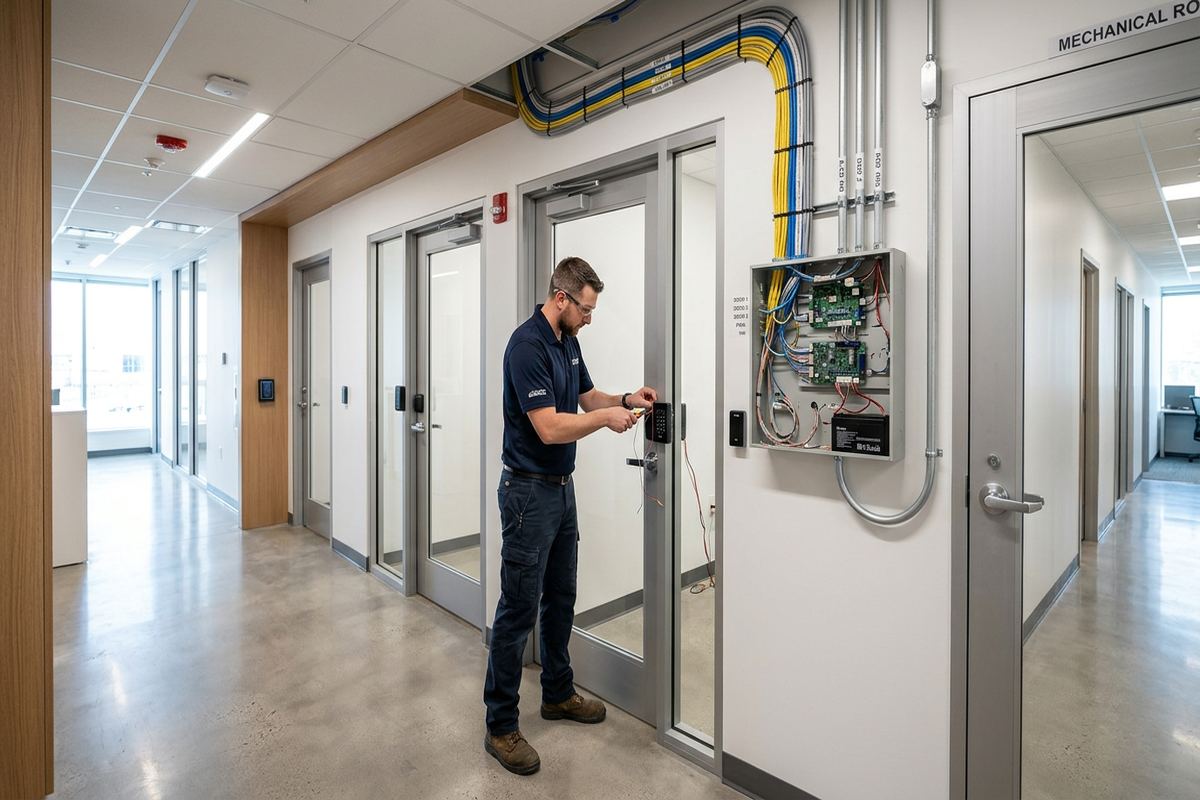
Installation is organized around approved device locations, routes and building access rules. Condominium work may require elevator bookings, notices to residents, restricted working hours, parking arrangements and protection of finished common areas. We coordinate the low-voltage portion with the designated property contact and identify dependencies on electricians, door specialists, fire-system contractors or network administrators. Cable runs are labelled at both ends, devices are mounted for service access, and controller spaces are kept orderly. One accountable contractor manages the access-control cabling, device installation and system configuration included in UnifiedLink’s scope.
Commissioning tests the complete sequence rather than checking only that a reader beeps. Each approved credential type is presented, the lock response is confirmed, door contacts are observed, request-to-exit operation is checked and schedules are reviewed. We also examine what the system reports when a door is held or forced, where supported and enabled. Tests are performed using representative permissions for residents, staff and contractors. Issues involving door alignment, network service, third-party equipment or other trades are documented so they can be corrected without confusing them with controller or reader faults.
Handover gives the customer practical control of the completed installation. Authorized representatives receive access through their own credentials, along with an as-built record showing installed door names, device locations, controller placement and relevant cable information. We review routine tasks such as adding a credential, revoking a lost fob and assigning an approved access group. Equipment ownership, warranty information and exclusions follow the written scope. This documentation is particularly useful for Bowmanville condominiums where boards, property managers or building staff may change while the physical system remains in service.
- Work coordinated with building rules
- End-to-end door testing
- On-site system configuration
- Customer-controlled account handover
- As-built installation record
Assessments, Expansion and Ongoing Changes
Access requirements change as residents move, staff roles change and common spaces are renovated. A system should allow routine credential administration without requiring physical rewiring for every user change. Expansion is different: adding doors may require controller capacity, power supplies, network ports and new cable pathways. During initial planning, we discuss foreseeable additions without claiming unlimited scalability. Spare capacity can be documented where included, giving a Bowmanville condominium a clearer basis for future decisions while avoiding equipment selected solely around uncertain plans that may never proceed.
Event records can support investigation of reported entry issues, but they have limits. A system records credential and door activity according to its configuration; it does not prove who physically carried a fob or prevent tailgating through an open entrance. Retention settings, management authority and privacy practices should be established by the condominium corporation or owner. Where video surveillance exists, timestamps and door naming may be coordinated for easier review, but camera integration is scoped separately. We explain what data the proposed platform provides and who can administer or export it.
UnifiedLink provides a site assessment before pricing because building conditions, door hardware and approval requirements differ substantially. Requests sent during business hours are answered the same day, and after-hours requests are answered the next business day. Site assessment timing depends on the service and travel distance. After reviewing the Bowmanville property, we prepare a written scope covering equipment, cable routes, device placement, exclusions, equipment ownership and warranty. This process gives the board, manager, landlord or commercial unit owner defined information before installation decisions are made.
- Credential changes without re-cabling
- Future door capacity reviewed
- Event-record limitations explained
- Optional camera coordination identified
- Assessment completed before pricing
Bowmanville neighbourhoods we cover
- Downtown Bowmanville
- Waverley
- Northglen
- Liberty
- Port Darlington
Condo access control systems in Bowmanville — common questions
Do we need condominium board approval?
Work on common entrances, corridors, garages and shared service rooms will normally require authorization from the condominium corporation or its designated manager. A unit owner should not assume permission to alter shared doors or cabling. For a Bowmanville assessment, we document proposed locations, routes and equipment so the board or manager has a clear scope to review before installation.
Can you reuse our existing fobs?
Possibly, but compatibility must be verified rather than assumed. Existing fobs may use a credential technology, format or encryption method that a proposed reader does not support. The current system may also restrict how credentials are enrolled. We inspect available equipment and records, then state whether reuse is practical, limited or excluded from the Bowmanville project scope.
Will the system work during an outage?
Operation during an outage depends on lock type, controller design, backup power capacity and any required network or cloud connection. We review the intended behaviour for each controlled opening, including safe egress and restoration after power returns. Backup power is specified against actual connected loads; it should not be treated as an undefined guarantee that every feature will remain available.
Can access control integrate with our intercom?
Integration may be possible if the existing intercom provides a suitable door-release interface or the selected systems support a documented connection. Older panels in Bowmanville buildings may require separate wiring, interface hardware or replacement. The site assessment reviews model information, cabling and operation. The written scope then identifies what will be integrated, retained, replaced or handled by another contractor.
How do Bowmanville winters affect exterior readers?
Snow, moisture, road salt and freeze-thaw cycles can affect exposed readers, fasteners, seals, conduit entries and door alignment. We select mounting methods for the actual exposure, protect cable transitions and use compatible sealing materials. Exterior-rated equipment still requires correct installation and a door that closes reliably. Weather exposure and existing hardware condition are recorded during the assessment.
Can managers remove a lost fob immediately?
An authorized administrator can normally revoke a credential through the management interface once the system is operational and accessible. The exact steps depend on the selected platform and account permissions. During handover, Bowmanville property representatives receive access using their organization’s own credentials and are shown routine tasks such as locating a user, disabling a lost fob and issuing a replacement.
Coverage in Bowmanville is confirmed against the address before we quote. See everything we install in Bowmanville or the province-wide condo access control systems page.