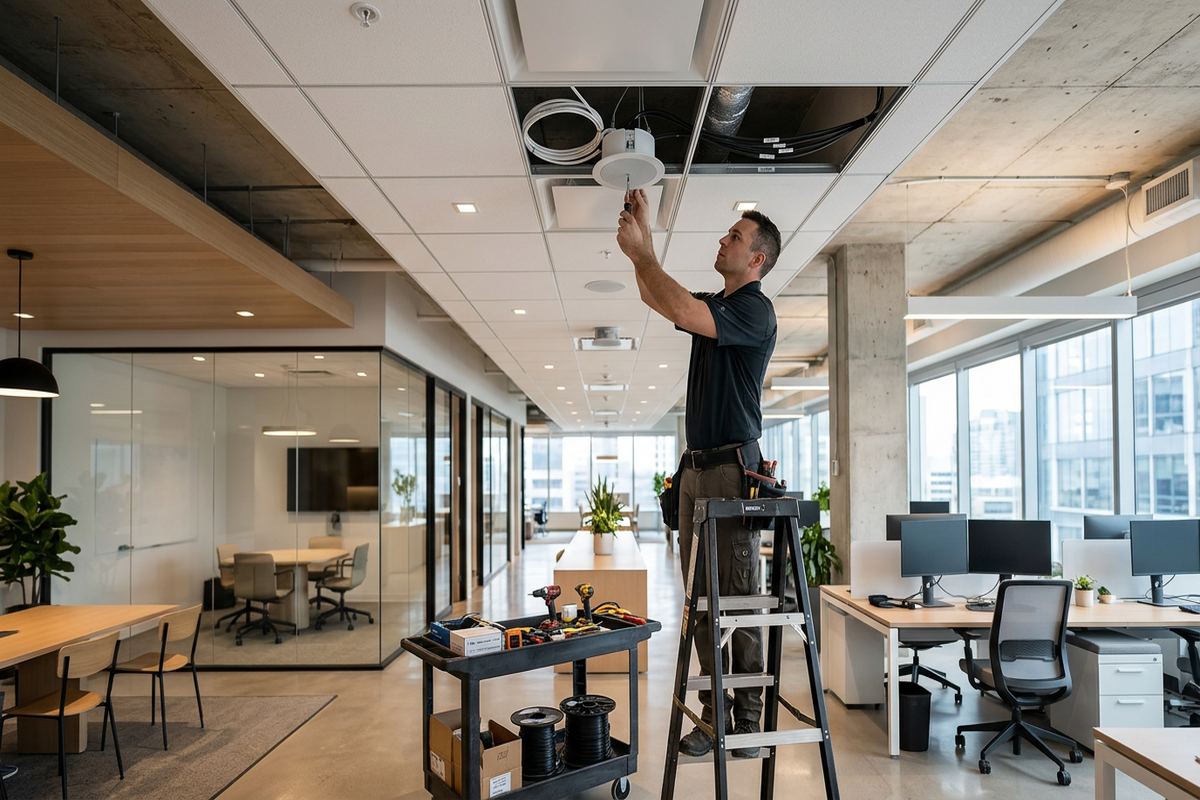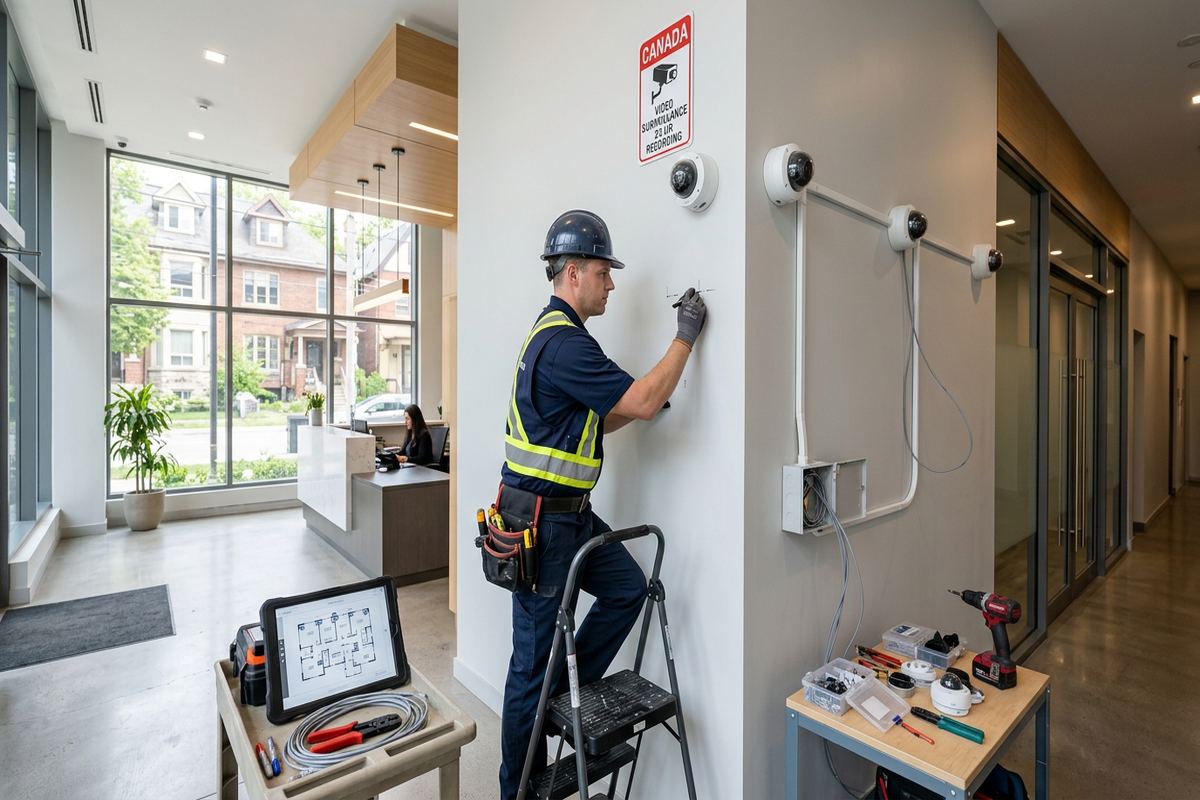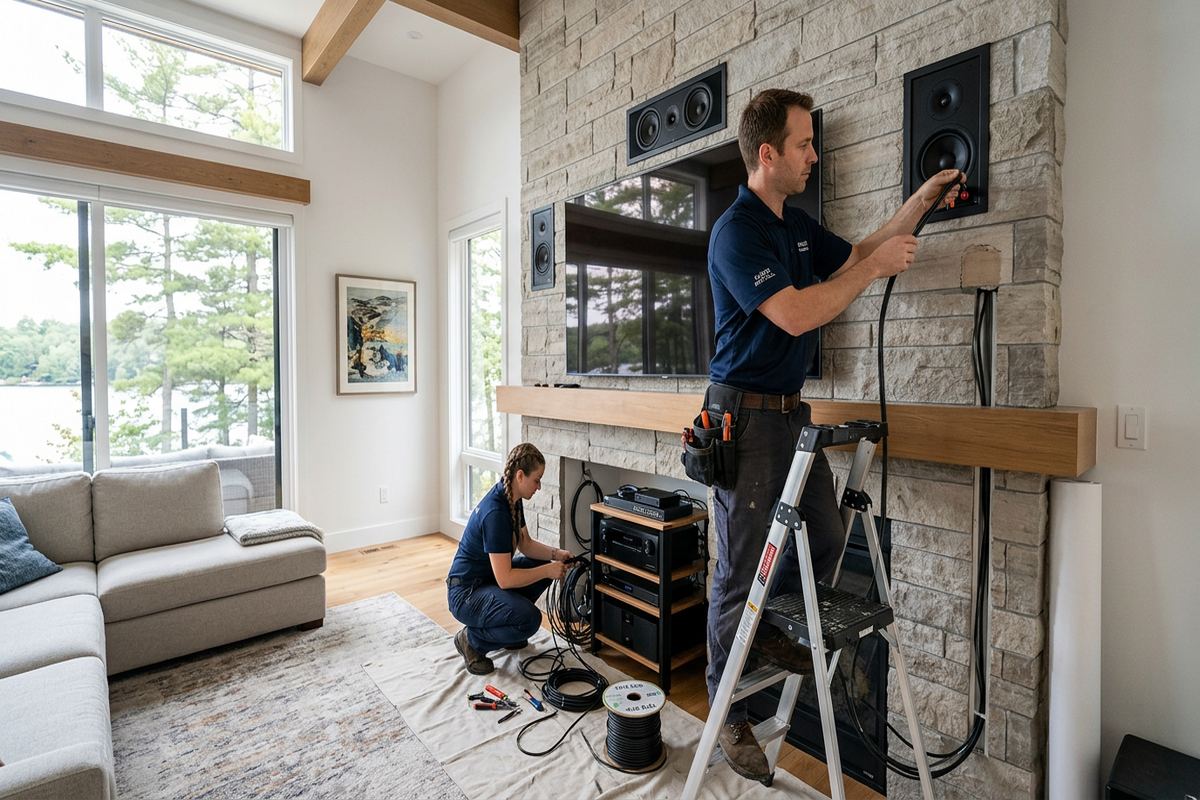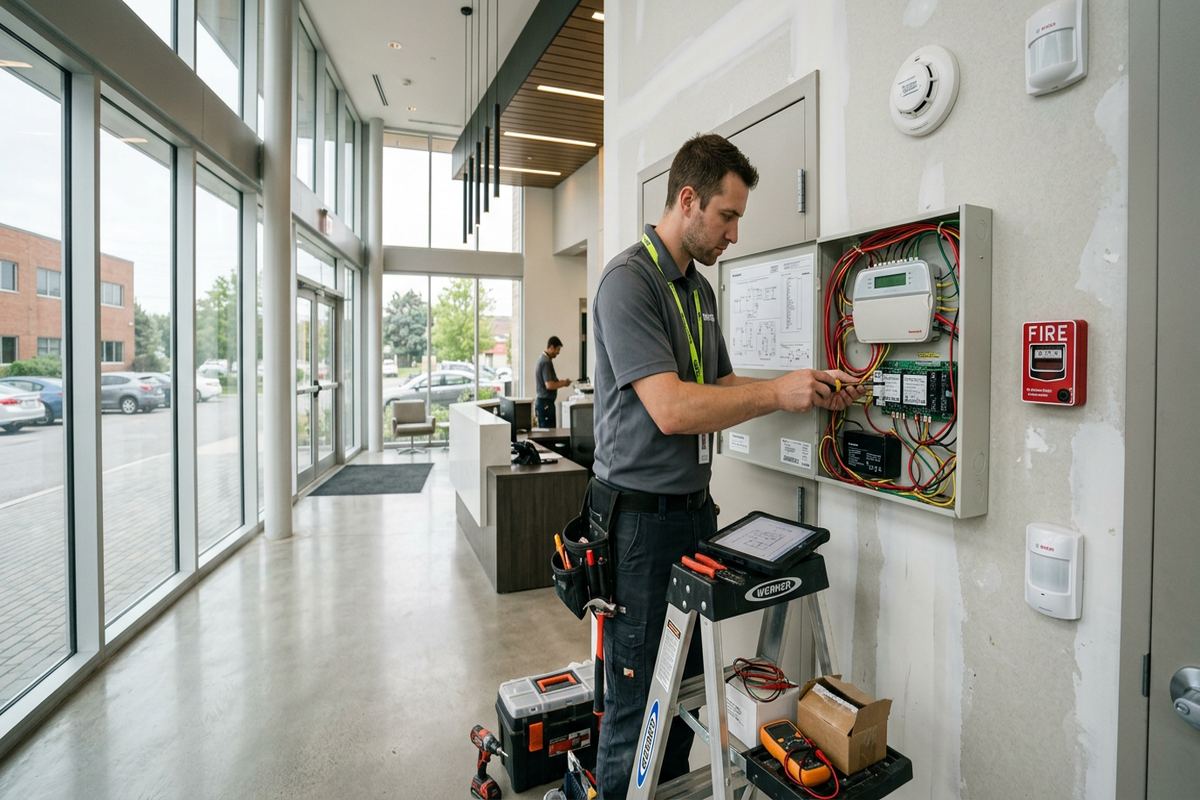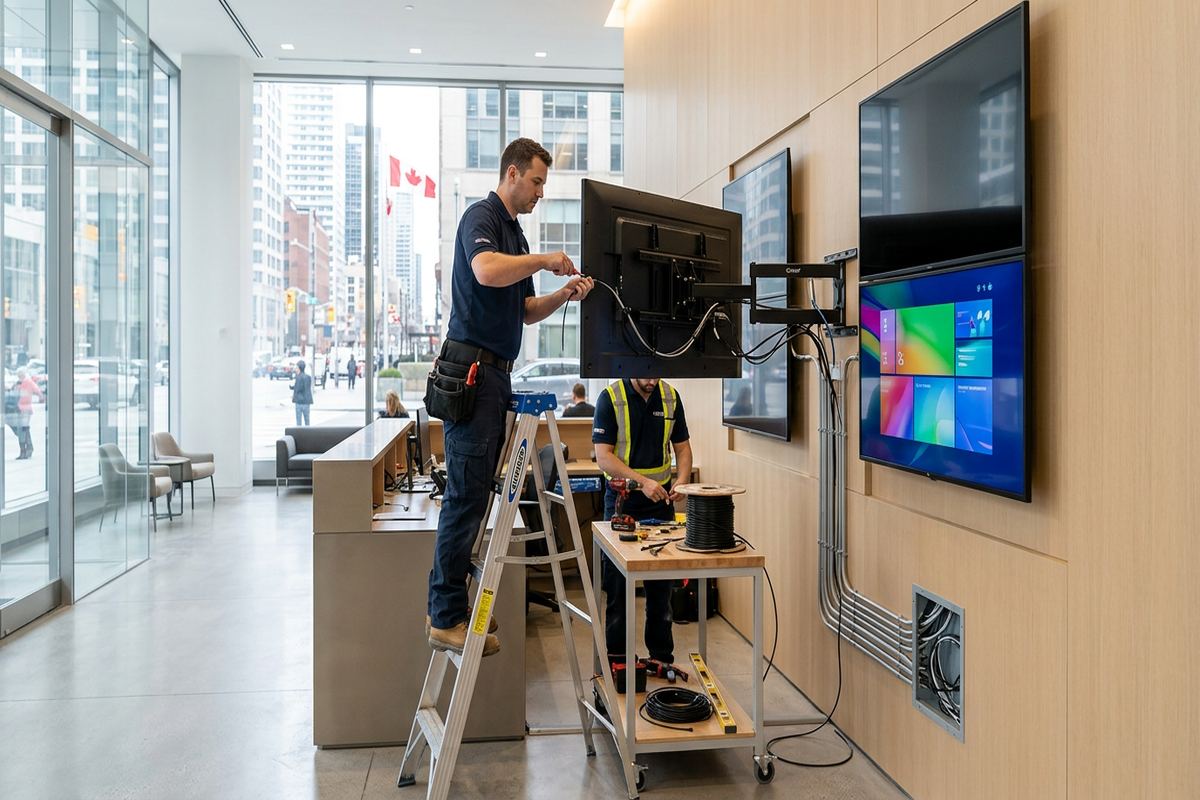
UnifiedLink installs commercial alarm systems for Bowmanville offices, shops, industrial units, mixed-use buildings and managed properties. Each project starts with a site assessment and a practical review of entrances, vulnerable areas, operating routines and existing wiring. We then provide a written scope before installation, complete on-site configuration and hand over the system using the customer’s own credentials.
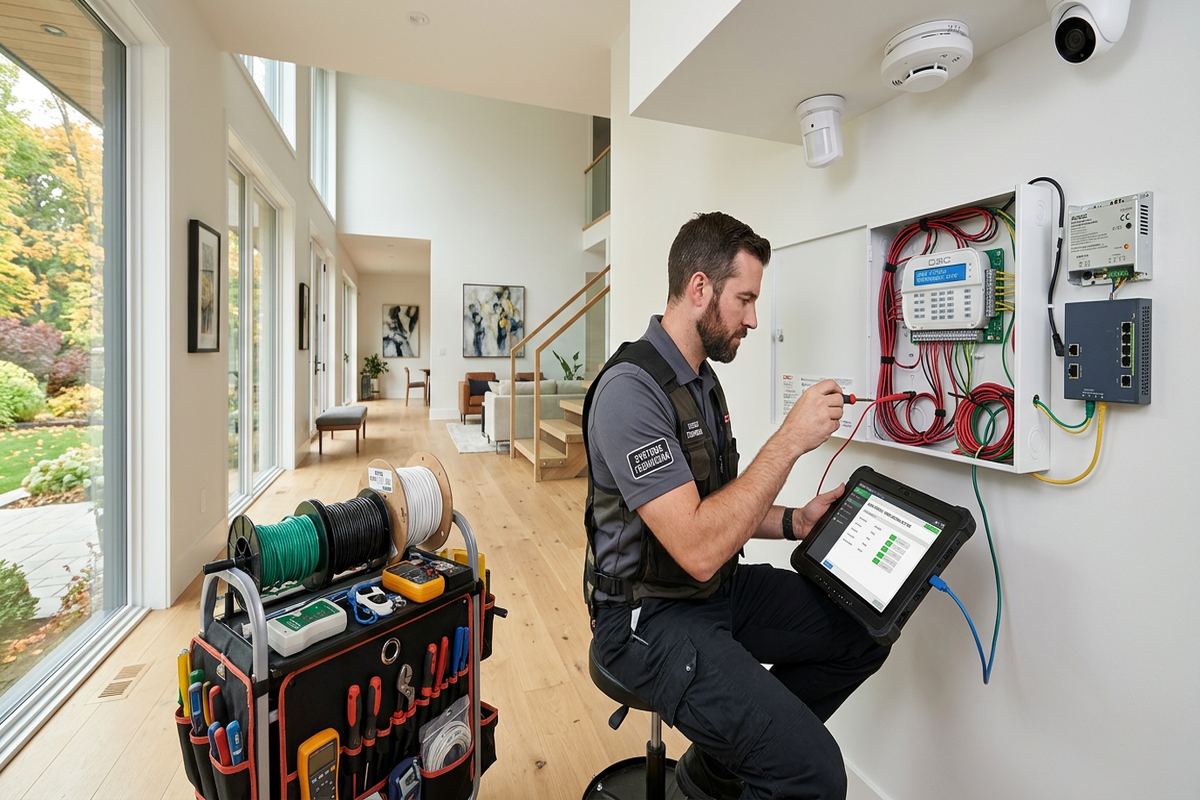
Commercial Alarm Planning for Bowmanville Properties
A useful commercial alarm system begins with the building, not a standard equipment package. During a Bowmanville site assessment, we review public entrances, staff doors, loading areas, windows, roof access, internal circulation and after-hours occupancy. We also discuss who opens and closes the property, which rooms need restricted coverage and how staff should respond to alerts. These details guide sensor selection, keypad placement, partitioning and communication options. The resulting design reflects actual operating conditions instead of adding devices wherever installation happens to be easiest for the contractor.
Bowmanville contains a mix of older premises near the historic main street and newer commercial spaces associated with rapid subdivision growth on the west side. Older buildings may have concealed renovations, masonry walls, limited pathways and alarm wiring from several previous systems. Newer frame construction often provides clearer routes but may require coordination before ceilings and walls close. We inspect accessible conditions before proposing cable routes. Where drawings are available, they help, but visible site conditions and operational requirements still determine whether an existing route, new pathway or wireless device is appropriate.
Following the assessment, UnifiedLink prepares a written scope covering equipment, device placement, cable routes, exclusions, equipment ownership and warranty. This gives owners, tenants and property managers a common reference before work begins. The scope can distinguish base-building work from tenant improvements and identify any access, electrical or finishing work required from others. Site assessment timing depends on the service and travel distance. Requests sent during business hours are answered the same day, while after-hours requests are answered on the next business day. Pricing follows assessment rather than assumptions.
- Door, window and interior risk review
- Keypad and control panel placement
- Existing wiring and pathway inspection
- Written equipment and installation scope
- Ownership, exclusions and warranty documented
Alarm Equipment Selected for the Site
Commercial intrusion detection normally combines several device types rather than relying on one sensor throughout the property. Door contacts monitor designated openings, motion detectors cover selected interior areas and glass-break sensors may suit exposed glazing when the room conditions support them. Panic or hold-up devices can be considered for defined staff procedures, while environmental inputs may supervise equipment conditions. We select devices according to opening type, ceiling height, room use, expected movement and exposure. A warehouse aisle, storefront vestibule and enclosed office each create different detection requirements and potential causes of unwanted alarms.
The control panel must provide enough zones, partitions, user capacity and expansion for the intended operation. A small office may need one arming area, while a multi-tenant building or industrial unit could require separate schedules and permissions for offices, storage and shipping areas. We plan keypads where authorized users can reach them without crossing protected space unnecessarily. Communication paths are reviewed alongside the panel design, including the available internet, cellular or other supported connection. Any monitoring arrangement is identified clearly, including responsibilities that remain with a third-party monitoring provider.
Device choice also needs to account for daily commercial activity. Heating equipment, moving stock, reflective surfaces, insects, signs, curtains and air movement can affect poorly located detectors. In Port Darlington, exterior exposure and moisture may influence equipment location and enclosure selection, while busy units near Downtown Bowmanville may need careful entry-delay planning for staff arrivals. We do not treat higher sensitivity as automatically better. Detection should cover the intended risk while allowing normal authorized activity. Final settings are tested on site after installation rather than left at generic factory values.
- Commercial control panels and expansion modules
- Door contacts for varied opening types
- Interior motion and glass-break detection
- Panic inputs where procedures support them
- Keypads placed for controlled entry
- Supported alarm communication paths
Retrofit Work in Downtown Bowmanville
Retrofit alarm work in Downtown Bowmanville often requires more investigation than installation in an open new build. Historic commercial premises can contain solid masonry, multiple ceiling layers, narrow service cavities and changes made during earlier renovations. We trace accessible wiring and examine whether it is continuous, appropriately located and suitable for reuse. Existing cable is not assumed serviceable because it reaches the correct room. Damaged insulation, hidden splices, unidentified conductors or routes shared with unsuitable services can create unreliable operation. Where new cable is required, routing is planned to limit unnecessary disruption.
Masonry and frame construction require different fastening, drilling and sealing methods. A contact mounted on an older wood door, for example, may need allowance for movement and an irregular gap. Devices attached to brick or concrete require suitable anchors and careful positioning around joints, trim and hidden services. Frame walls may offer easier cable access, although fire separations, insulation and finished ceilings still restrict pathways. We discuss visible surface raceway when concealed routing is impractical. The written scope identifies expected routes and any areas where conditions cannot be confirmed until controlled access is opened.
Occupied retrofits are organized around business use and safe access. Before work, we confirm alarm downtime, staff areas, stock locations, ceiling access and any restrictions imposed by a landlord or property manager. Commercial tenants should obtain required approvals for drilling, pathways, exterior devices and changes to shared systems. In mixed-use buildings, work may also need to avoid residential areas or common services. UnifiedLink acts as one accountable contractor for the defined alarm installation, helping keep cabling, device mounting, configuration, testing and handover aligned with the approved scope instead of divided among unrelated trades.
- Assessment of reusable alarm wiring
- Routes suited to masonry and finished spaces
- Surface raceway where concealment is impractical
- Coordination for occupied commercial premises
- Landlord and property-manager approval review
Bowmanville, Ontario
Commercial alarm system installation in Bowmanville, scoped in writing first
Book a site assessment and get equipment, routes, exclusions, and warranty on paper before anything is installed.
Pre-Wire Alarm Installation in Bowmanville
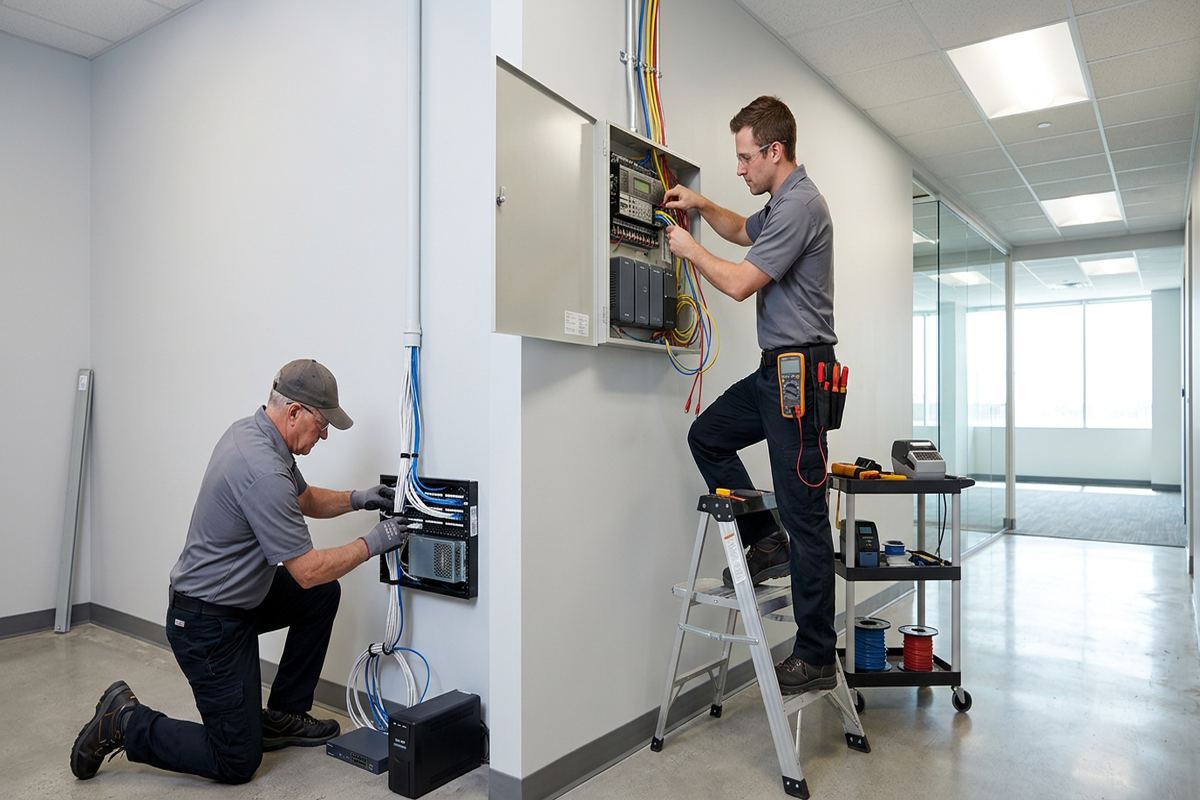
Rapid subdivision growth on Bowmanville’s west side supports ongoing construction of commercial units, professional spaces and mixed-use properties. Pre-wiring before insulation and drywall provides better control over cable routes, device positions and future expansion. We coordinate alarm locations against current floor plans and expected door hardware, then confirm conditions on site. Early plans still need field review because framing, mechanical services and millwork can shift. The goal is not simply to install more cable; it is to place continuous labelled runs where they will remain accessible, protected and useful when the alarm equipment is commissioned.
Pre-wire timing matters because alarm cabling competes for space with electrical, data, mechanical and fire protection work. Routes must avoid interference, sharp edges, likely screw zones and unsupported spans. Cable is secured using appropriate supports rather than draped across ceiling systems or other services. At doors, enough information is needed about frames, operators and access-control hardware to avoid conflicts. We label both ends of each run and document destinations. If construction will continue before device installation, cable ends are protected and positioned so later trades are less likely to bury, cut or relocate them.
A staged project can separate rough-in, trim, programming and final testing, but responsibilities should remain clear throughout. We identify which equipment will be installed at each stage and what must be complete before our return, such as doors, power, internet service, ceilings or finished wall surfaces. Changes to partitions or room use should be reviewed before trim-out because they can alter detection patterns. For Bowmanville tenant fit-outs, we can revise the documented scope when approved plans change. This preserves a clear record instead of relying on informal site instructions that may be misunderstood later.
- Continuous labelled alarm cable runs
- Coordination before walls and ceilings close
- Protection of staged cable ends
- Device locations checked against final plans
- Rough-in, trim and testing responsibilities
Exterior Alarm Devices and Bowmanville Winters
Exterior alarm equipment in Bowmanville must be selected and mounted with winter conditions in mind. Freeze-thaw cycles, wind-driven precipitation, snow accumulation and temperature swings can affect exposed contacts, junctions, conduits and fasteners. We use devices intended for the proposed environment and avoid placing indoor equipment outside merely because it fits. Mounting surfaces are reviewed for movement and drainage, particularly around overhead doors, gates and service entrances. Exterior detection also requires realistic expectations: wildlife, vegetation, vehicles and drifting snow can make some outdoor locations unsuitable for dependable intrusion detection without careful design.
Penetrations through exterior walls need more than a bead of sealant applied after drilling. Cable entry should shed water, avoid low points where moisture can collect and use bushings, glands or suitable fittings where required. Sealants must be compatible with the surface and expected movement. Brick veneer, solid masonry, siding and metal cladding each need a different approach. In Northglen or Waverley frame buildings, the route may pass through several envelope layers. Poorly planned penetrations can create water or air leakage even when the alarm device itself continues to operate.
Overhead and loading doors present another local design issue, especially in commercial strips and industrial units. Door movement, loose tracks, steel framing and wide seasonal gaps can make standard contacts unreliable or vulnerable to impact. We assess the opening hardware before choosing contact style and mounting position. Conduit or armoured protection may be appropriate where forklifts, pallets or maintenance activity could damage exposed cable. After installation, each opening is tested through normal travel and secured conditions. Exterior mounting details are included in the as-built record so future service work does not depend on guesswork.
- Weather-suitable contacts and enclosures
- Sealed exterior cable penetrations
- Mounting for seasonal building movement
- Protected wiring near loading activity
- Operational testing through full door travel
Installation, Configuration and Alarm Testing
Once the scope is approved, installation follows the agreed cable routes and device locations. New wired connections use continuous labelled cable runs wherever the planned design calls for them. Control equipment is mounted in an accessible but controlled location, with consideration for power, communication services and future maintenance. Devices are fastened to stable surfaces and aligned for their intended coverage. If hidden conditions require a route change, we review the practical effect before proceeding. This keeps the physical installation consistent with the documented design and reduces undocumented decisions made solely for short-term convenience.
Configuration translates the installed hardware into a system staff can operate. We name zones clearly, assign entry and exit delays, create partitions where required and set user permissions according to the customer’s instructions. Notifications and communication features are configured on site within the capabilities of the selected equipment and subscribed services. Credentials belong to the customer, not the installer. Administrators receive their own access rather than a shared contractor account. This approach supports future management changes and avoids leaving the business dependent on unknown passwords or credentials held by an unrelated third party.
Testing covers each initiating device, keypad, sounder, partition and configured communication path included in the scope. Door contacts are checked open and closed, motion coverage is walked, delays are timed and user permissions are confirmed. Where monitoring is provided by another company, signal verification and account procedures require coordination with that provider. We also discuss opening, closing and alarm-response routines with designated users. A technically functional system can still create problems if staff do not understand bypasses, after-hours access or cancellation steps, so operational handover is treated as part of commissioning.
- Continuous labelled cable installation
- Zone names based on real locations
- User permissions and partition setup
- Customer-controlled administrator credentials
- Device, sounder and communication testing
- Staff operating procedure review
Integrating Bowmanville Alarms with Other Systems
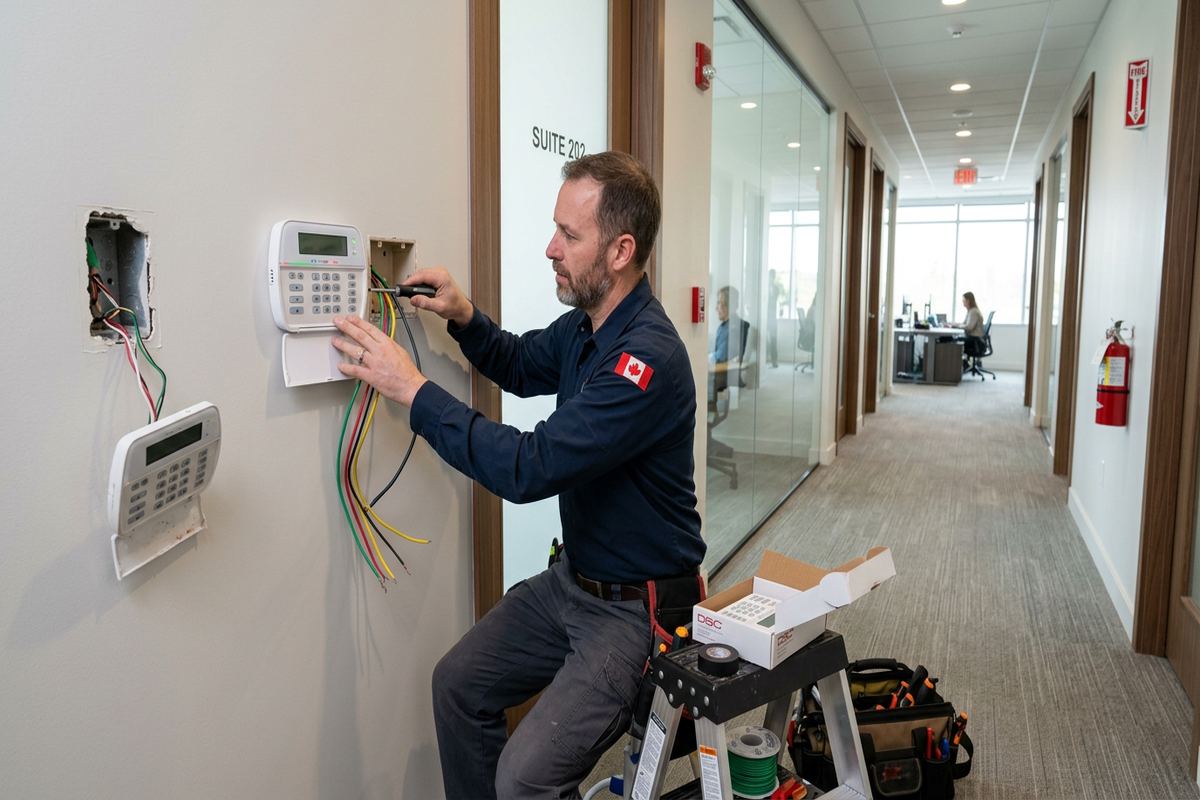
A commercial alarm can share operational goals with cameras and access control without forcing every system onto one platform. In a Bowmanville storefront, an alarm event may prompt staff to review recorded video. In an industrial unit, door status and authorized access records may help explain an after-hours condition. Integration depends on compatible equipment, supported interfaces and a defined purpose. We review what information needs to pass between systems before adding relays, software links or shared notifications. A simple, documented connection is usually more dependable than a complex feature nobody is responsible for maintaining.
Alarm and access-control functions need clear boundaries. Access control decides who may unlock a managed door, while intrusion detection determines whether a protected area is armed and whether activity creates an alarm. Door contacts may serve related purposes, but sharing hardware is not automatically appropriate or supported. We identify required behaviour during normal entry, forced-door events, schedules and emergency conditions. Life-safety and fire alarm functions are not casually combined with security equipment. Any interface involving another regulated or third-party system must follow its requirements and be coordinated with the responsible provider.
Network-connected alarm features also depend on the customer’s internet and account administration. We confirm available connections and coordinate with authorized IT contacts where network access is required. The alarm should not be connected through undocumented switches, borrowed wireless credentials or temporary construction service. For managed properties in Liberty or Port Darlington, ownership and account control need particular attention when tenants change. The written scope identifies who owns the equipment and which subscriptions or third-party services are separate. Handover records then provide a stable reference for future operators, service providers and property managers.
- Defined camera and alarm event workflows
- Access-control interface planning
- Supported relay or software connections
- Coordination with customer IT contacts
- Clear equipment and account ownership
Commercial Alarm Handover in Bowmanville
Project completion includes a practical handover rather than only a demonstration that the keypad turns on. UnifiedLink provides the customer with their own administrative credentials and reviews arming, disarming, bypassing, user changes and common status messages. Designated users can practise routine operations while the installer is present. We also explain which issues belong to the installed alarm, the communication service, the monitoring provider or the building itself. Clear responsibility is especially useful for leased Bowmanville premises, where a business owner, landlord and property manager may each control different parts of the property.
The as-built record documents installed device locations, zone descriptions and relevant cable or equipment information from the completed scope. It reflects approved field changes rather than simply reproducing an early proposal. Labels at the panel and cable terminations correspond with the record so later troubleshooting can proceed logically. Equipment ownership and warranty details are also confirmed during handover. Customers should retain these materials with building records and keep their user list current. Documentation cannot prevent every service issue, but it reduces uncertainty when spaces are renovated, staff roles change or another authorized provider is involved.
Alarm systems should be reviewed when the property or operating routine changes. New partitions, shelving, window coverings, machinery, doors or tenant areas can obstruct sensors or alter how people move through protected space. User codes should be removed promptly when access is no longer authorized. Exterior devices deserve inspection after building work or visible sealant damage, particularly following Bowmanville winter cycles. If an alarm begins reporting recurring trouble or unwanted activations, the cause should be investigated rather than ignored. A documented installation gives that service work a reliable starting point and keeps changes accountable.
- Customer-owned administrator credentials
- Operational training for designated users
- As-built zone and device record
- Equipment ownership and warranty details
- Guidance for future changes and service
Bowmanville neighbourhoods we cover
- Downtown Bowmanville
- Waverley
- Northglen
- Liberty
- Port Darlington
Commercial alarm system installation in Bowmanville — common questions
Do you assess my Bowmanville property before pricing?
Yes. UnifiedLink completes a site assessment before pricing because door types, construction, cable routes, operating routines and existing equipment affect the scope. Timing depends on the service and travel distance. Requests sent during business hours are answered the same day; after-hours requests are answered the next business day. The assessment supports a written scope rather than an estimate based only on floor area.
Can you reuse an existing commercial alarm system?
Potentially, but existing equipment and wiring must be inspected first. In older Downtown Bowmanville premises, previous renovations can leave unidentified cables, hidden splices or unsupported devices. We check accessible panel capacity, device condition, cable suitability and account ownership. Reuse is included only where it supports reliable operation and compatible configuration. Unsupported or locked equipment may need replacement rather than being built into a new installation.
Can alarm wiring be installed before drywall?
Yes. Pre-wiring is practical for new commercial units and tenant fit-outs, including growth areas on Bowmanville’s west side. We coordinate device locations and continuous labelled cable runs before insulation and drywall. Framing, door hardware and other trades must be sufficiently defined. A staged scope can cover rough-in, trim, configuration and testing, with responsibilities and prerequisites documented for each return visit.
Do I need landlord or condo approval?
Tenants and commercial condominium occupants may need written approval before drilling, installing exterior devices, using common pathways or modifying shared services. Requirements depend on the lease, condominium rules and property management. For Bowmanville managed properties, approvals should be settled before installation. UnifiedLink can identify proposed routes and equipment locations in the written scope, but the customer remains responsible for obtaining required owner or condominium authorization.
Will outdoor alarm contacts handle Bowmanville winters?
Outdoor equipment must be selected and mounted for the actual environment. Bowmanville freeze-thaw cycles, precipitation, temperature changes and seasonal movement can affect contacts, gaps and cable entries. We assess the opening, use suitable exterior equipment where applicable, protect exposed wiring and seal penetrations according to the wall material. No exterior detector is suitable for every location, so nearby traffic, wildlife and snow also need consideration.
What do we receive when installation is complete?
Handover includes on-site configuration, testing, customer-controlled credentials and an as-built record of the completed alarm installation. We review normal operation with designated users and document zone or device locations from the final scope. Equipment ownership and warranty information are also confirmed. If another company provides monitoring or communications, its account terms and response procedures remain separate and should be retained with the Bowmanville property’s alarm records.
Coverage in Bowmanville is confirmed against the address before we quote. See everything we install in Bowmanville or the province-wide commercial alarm system installation page.