UnifiedLink installs low-voltage cabling for Bolton homes, commercial spaces and industrial units. We plan routes, install continuous labelled runs, terminate and test connections, and configure connected equipment on site. Each project begins with an assessment and written scope suited to the building, intended systems and future needs.
Low-Voltage Cabling for Bolton Properties
Low-voltage cabling provides the physical connection for cameras, access control, alarms, Wi-Fi access points, network equipment, displays and audio systems. In Bolton, the required approach varies between valley-side houses, older buildings near Old Bolton, commercial strips and units in Bolton Industrial Park. UnifiedLink starts by identifying every intended device, its network or power requirements, and a practical route back to the designated equipment area. This planning avoids unnecessary splices, exposed cable and endpoints that cannot support the equipment selected for the property.
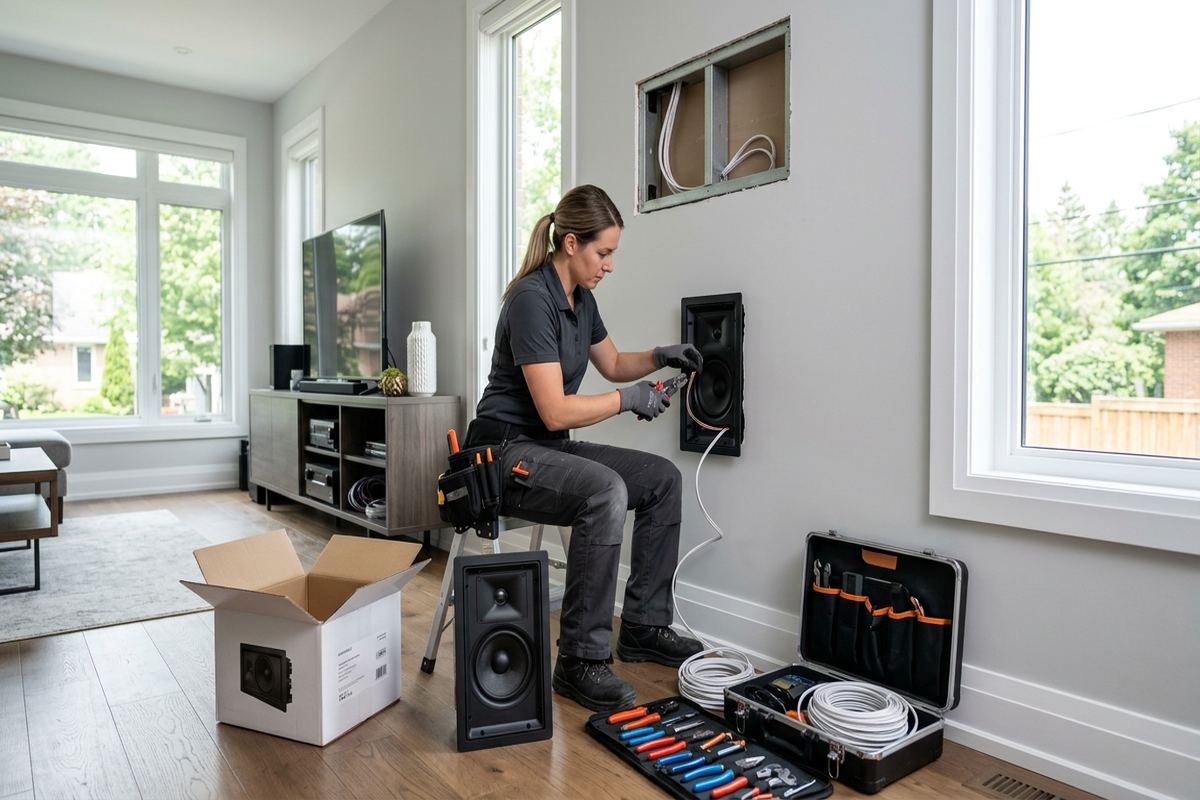
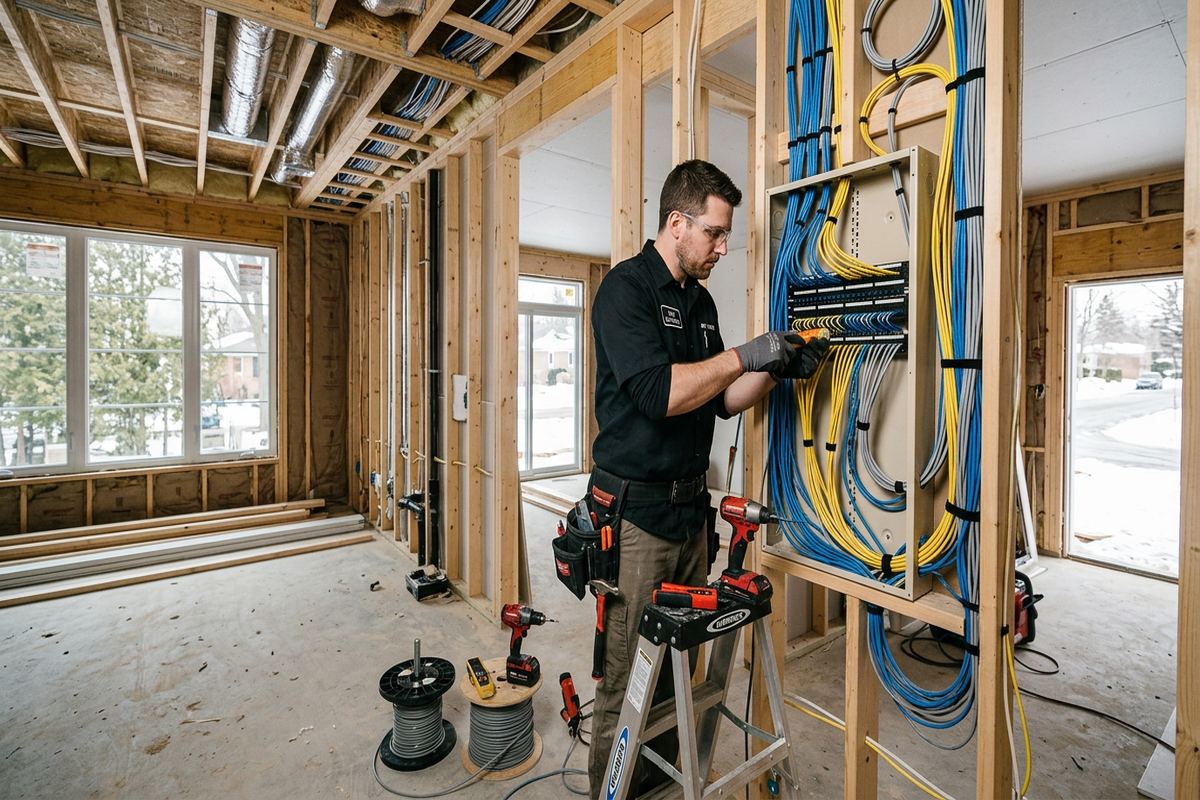
Residential work often involves finished basements, attached garages, additions and exterior devices mounted at different elevations. Frame construction may allow concealed routes through joist spaces and wall cavities, while masonry walls can require surface pathways, sleeves or carefully placed penetrations. We review those conditions before setting the scope. Cable type is matched to the application and environment rather than treated as interchangeable. Indoor data cable, outdoor-rated cable, direct-burial products and fire-alarm-related wiring have different uses, limitations and installation requirements that affect route planning.
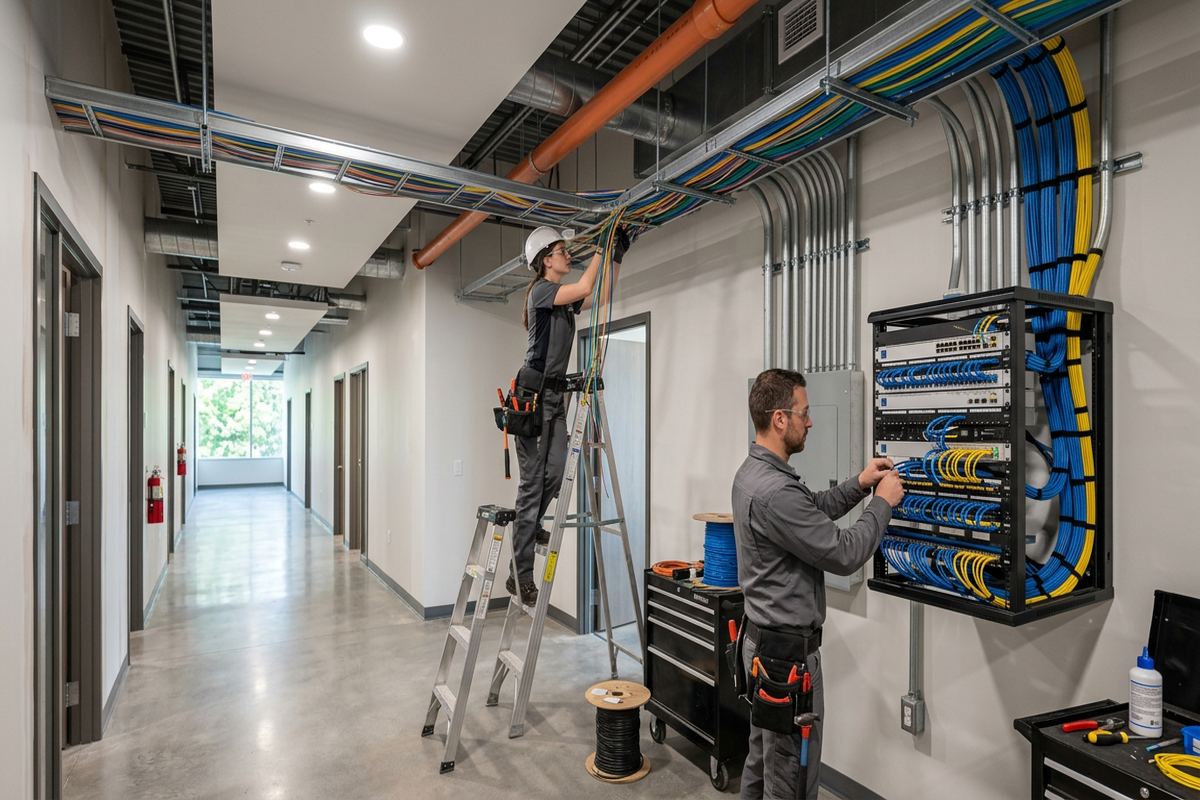
Commercial and industrial cabling must account for longer distances, ceiling conditions, equipment locations and ongoing operational needs. A unit in Bolton Industrial Park may require connections across warehouse areas, offices, loading zones and exterior walls. Commercial strips can add shared service spaces, landlord rules and restrictions on drilling or pathway access. We document the proposed route and identify approval requirements before work begins. The objective is an organized installation that can be tested, maintained and expanded without leaving the customer to identify undocumented cables later.
- Network and Wi-Fi access point cabling
- Camera, alarm and access control wiring
- Audio, display and control connections
- Residential, commercial and industrial routes
- New installations and cable replacements
Planning Cable Routes in Bolton
A site assessment establishes what can be installed before pricing is prepared. During the visit, we review device positions, cable distances, accessible cavities, ceiling types, electrical interference and the proposed location for racks, panels or network equipment. Bolton properties can change elevation quickly, especially around valley-side residential areas, so a route that appears direct on a drawing may involve finished levels, retaining walls or difficult exterior access. The assessment turns those physical conditions into a defined plan instead of relying on assumptions made after work has started.
The written scope covers equipment, cable routes, device placement, exclusions, equipment ownership and warranty. It can also note customer-supplied devices, existing pathways to be reused, areas requiring access and work that depends on landlord or condominium approval. In multi-unit or leased premises, permission may be required before drilling common walls, entering shared ceilings or attaching equipment to the exterior. Identifying that responsibility early helps prevent incomplete pathways and avoids placing cable where building management will later require it to be removed or relocated.
Route design considers current requirements without ignoring likely changes. A homeowner may want camera wiring now but also need a ceiling access point or office connection later. An industrial unit might require spare capacity between a communications area and a warehouse zone. We discuss practical provisions such as additional cable, spare pathway space or a pull string where access will become difficult after finishing. These options are included only where they have a defined purpose. The plan remains tied to the property, selected systems and approved scope rather than adding unspecified infrastructure.
- Assessment completed before project pricing
- Device locations reviewed on site
- Cable distances and pathways checked
- Approvals identified before installation
- Written scope supplied for review
Masonry, Frame and Finished Construction
Bolton’s varied building stock requires different installation methods. In frame homes, cables may travel through basements, attics, joist cavities or framed interior walls, subject to access and obstructions. Older sections of Old Bolton can involve previous renovations, mixed materials and concealed conditions that are not obvious from the room finish. A route is selected to limit unnecessary openings while preserving safe separation from electrical wiring and other building services. Where concealed installation is not practical, a neat surface pathway may provide the more serviceable and predictable result.
Masonry construction changes how entries, anchors and sleeves are handled. Brick veneer, concrete block and solid masonry should not be treated as equivalent surfaces. Before drilling, we consider wall composition, interior finish, likely cavity position and the device’s mounting requirements. Exterior penetrations are located and sealed to reduce water entry, and cable loops are arranged so runoff does not follow the cable indoors. Fasteners and mounting methods must suit both the surface and equipment load rather than relying on general-purpose anchors for every camera, enclosure or access point.
Finished spaces require agreement about what disruption is acceptable. Fishing cable behind walls may involve exploratory openings, especially where blocking, insulation or renovated framing interrupts the expected path. We identify known access requirements in the scope and explain when a visible raceway offers a lower-impact alternative. Patchwork and painting are not assumed to be included unless specifically written into the project. This is important for occupied homes in Bolton North Hill and Bolton South Hill, where finished basements and renovated living areas can leave few continuous routes between floors.
- Concealed routes where access permits
- Surface raceway for difficult finished areas
- Anchors selected for the wall material
- Electrical separation considered during routing
- Openings and exclusions documented beforehand
Bolton, Ontario
Low-voltage cabling installation in Bolton, scoped in writing first
Book a site assessment and get equipment, routes, exclusions, and warranty on paper before anything is installed.
Exterior Cabling for Bolton Winters
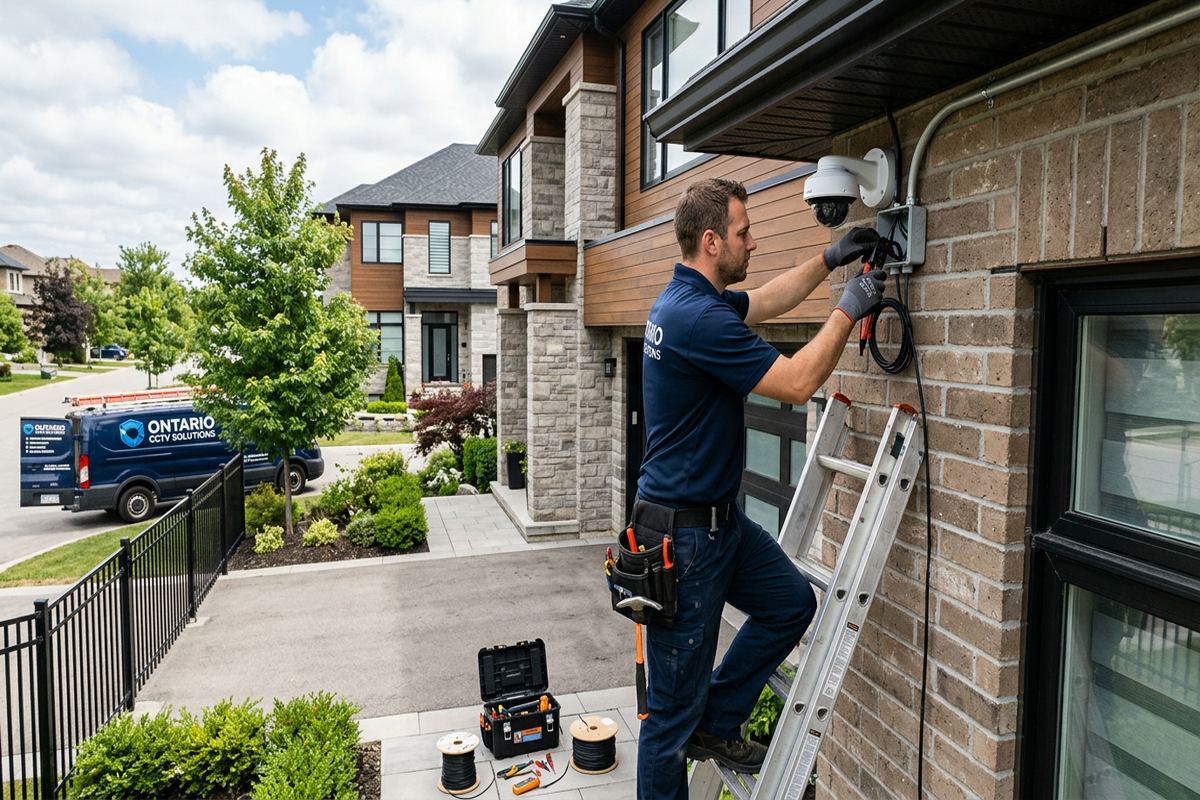
Outdoor cable in Bolton must be selected and installed for seasonal temperature changes, moisture and ultraviolet exposure. Winter conditions and repeated freeze-thaw cycles can expose weaknesses in poorly sealed penetrations or unsuitable cable jackets. We use cable intended for the actual environment and plan entries to reduce standing water, ice loading and direct runoff. Exterior cable is supported rather than left to move against siding or masonry. Device positions are also reviewed for mounting access, field of view, wireless performance and future service requirements before holes are made.
Sealing is more than applying material around an opening after the cable is pulled. The entry angle, sleeve, wall composition and cable movement all affect how water can reach the interior. Where suitable, exterior cable approaches the entry with a drip loop, and the penetration is sealed using a method compatible with the surface. Masonry joints, brick faces, siding and metal cladding require different consideration. For industrial units, exterior routes may also need protection near loading areas, vehicle movement, snow storage locations or places where maintenance equipment could strike exposed wiring.
Buried or underground routes require their own review. Standard indoor cable is not appropriate simply because it is placed inside a conduit outdoors; moisture can still collect in underground pathways. We determine whether an outdoor-rated or direct-burial product is needed and assess where the route enters each structure. Trenching, utility location responsibilities, conduit and restoration must be clearly assigned in the written scope. On valley-side properties, drainage patterns and grade changes can influence pathway depth, entry location and exposure, so the proposed route is assessed on site before installation proceeds.
- Outdoor-rated cable selected where required
- Exterior entries sealed for wall conditions
- Cable supported against movement and abrasion
- Drip loops used where appropriate
- Underground responsibilities defined in writing
Terminations, Labels and Testing
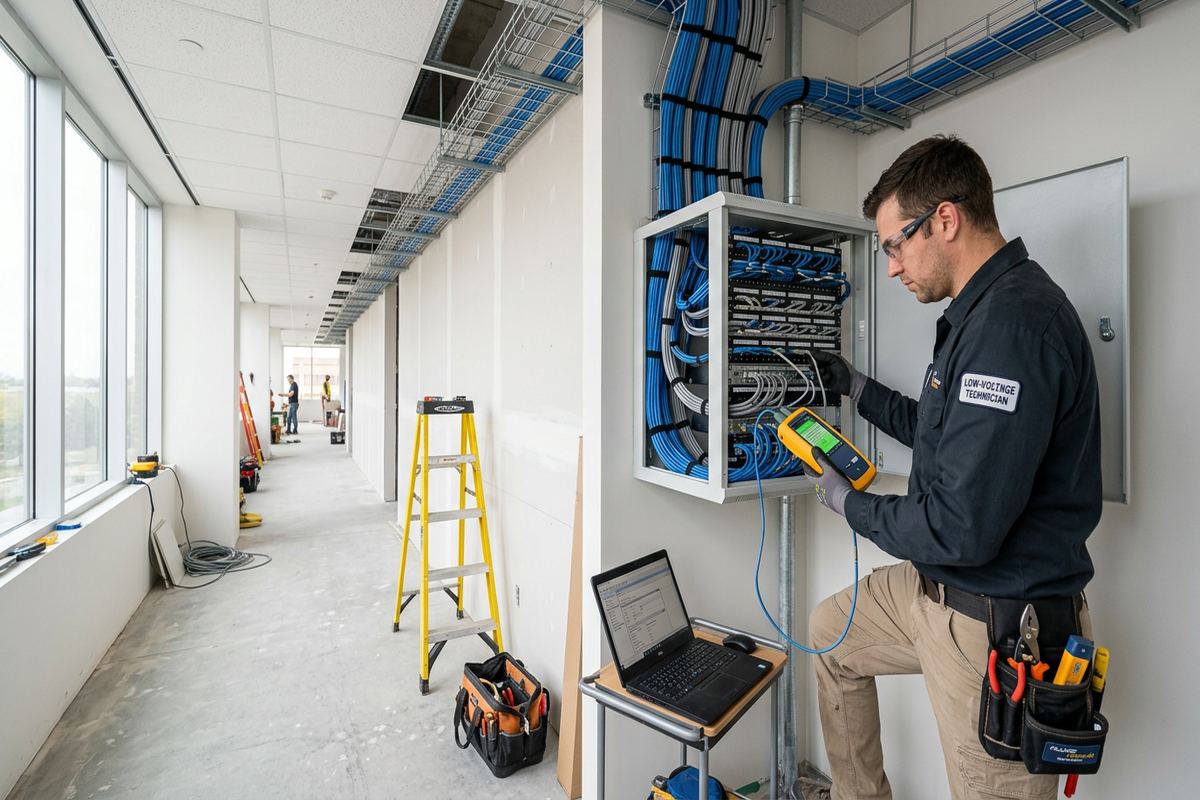
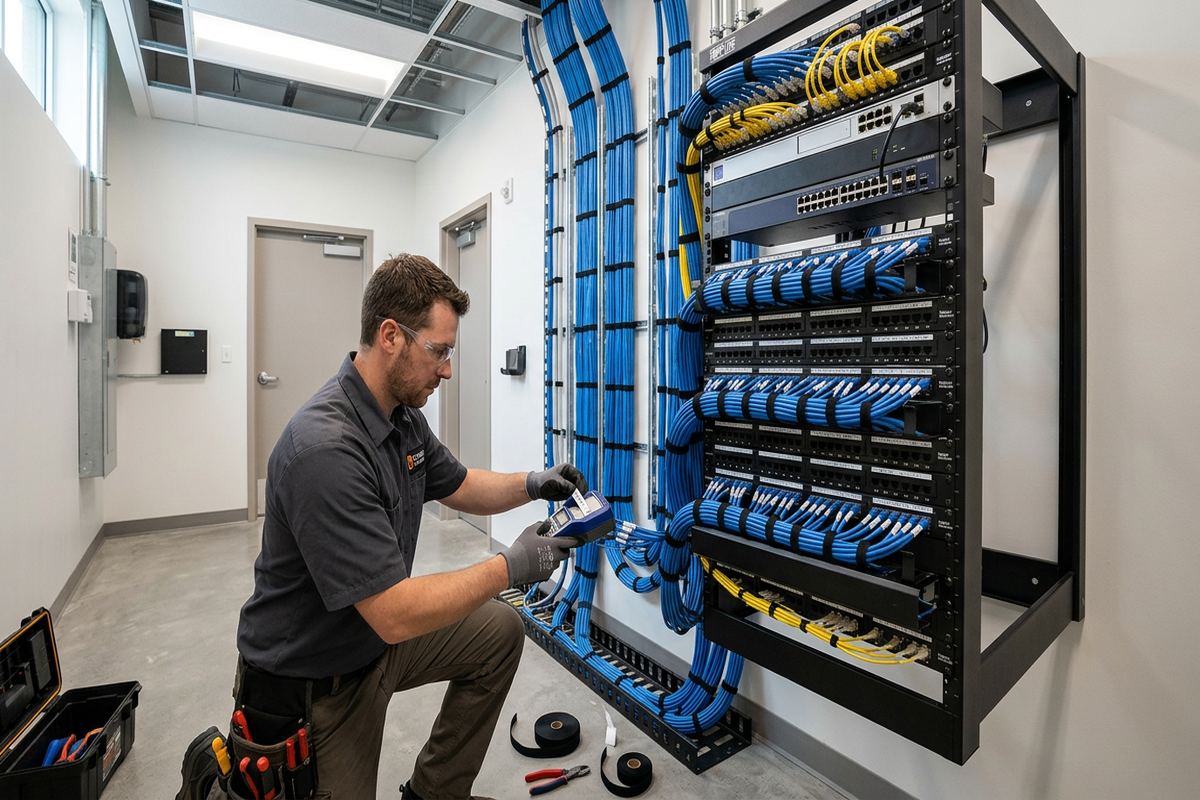
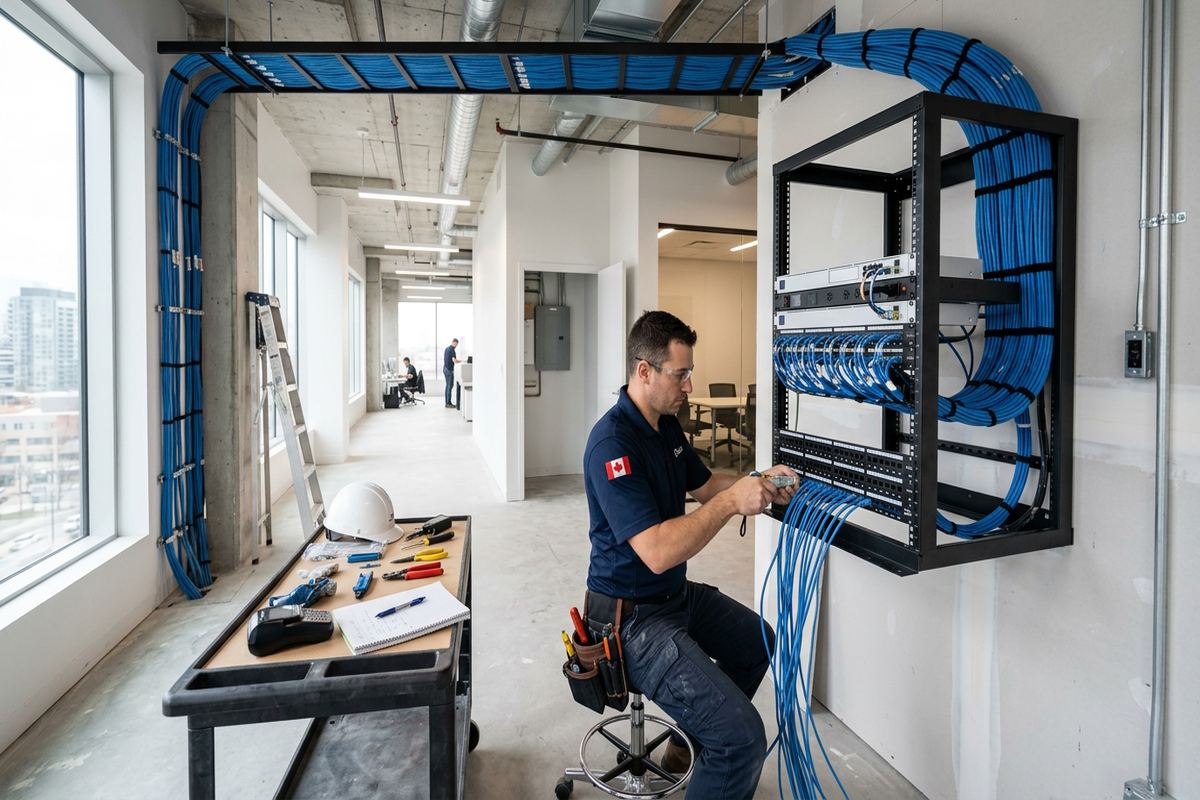
A cable run is only useful when both endpoints are identifiable and properly terminated. UnifiedLink installs continuous labelled runs between the approved locations, avoiding hidden intermediate joins that complicate troubleshooting. Labels are applied consistently at the equipment end and device end, with identifiers that correspond to the handover record. Patch panels, jacks, plugs and system-specific terminations are selected for the cable and connected equipment. Cable management is planned so conductors are not sharply bent, crushed behind devices or left unsupported around a rack, cabinet or control panel.
Testing depends on the cable and system. Data connections are checked for correct termination and continuity using suitable test methods, while camera, access control, alarm, audio and display wiring may require additional functional checks with the connected devices. Testing does not correct limitations in customer-supplied equipment, internet service or an existing network, so those dependencies are identified where they affect results. If an existing cable is being reused, we inspect and test what is accessible before treating it as part of the finished system. Unknown concealed sections remain documented as existing infrastructure.
On-site configuration connects the physical installation to its intended use. That may include adopting a Wi-Fi access point, confirming camera connectivity, assigning switch ports, checking display signals or verifying that an access control component communicates with its controller. Configuration is performed within the agreed scope and with the customer’s own credentials. We do not retain ownership of the customer’s primary accounts. At handover, the customer receives relevant access information, endpoint records and an as-built record describing installed routes and device locations for later maintenance or expansion.
- Continuous runs without concealed splices
- Both endpoints labelled consistently
- Terminations checked before handover
- Connected equipment configured on site
- As-built cable record supplied
Home Cabling Across Bolton
Home cabling projects commonly support security cameras, video doorbells, alarm devices, wired network outlets, ceiling-mounted Wi-Fi and entertainment equipment. Bolton North Hill and Bolton South Hill homes may have attached garages, multiple finished levels and exterior soffits that appear connected but are separated by framing or fire-rated construction. We verify access rather than assuming a route exists. A central equipment location is chosen with ventilation, electrical power, internet service and future access in mind, avoiding damp utility areas or locations where equipment would be difficult to inspect.
Older or renovated houses near Old Bolton may contain additions completed with different framing, plaster finishes, masonry sections or previous wiring. Existing cables are not automatically suitable for modern network speeds, Power over Ethernet or exterior use. We identify accessible cable markings, inspect termination quality and test the run where practical. Reusing sound infrastructure can reduce disruption, but undocumented cables with damaged jackets, hidden joins or unclear destinations may need replacement. The scope distinguishes new work from retained wiring so the homeowner knows which connections are covered by the completed installation.
Condominium, rental and managed properties require an additional approval step. Owners or tenants may need written authorization for exterior cameras, common-area cabling, penetrations through shared walls or equipment attached to a façade. UnifiedLink can define the proposed locations and pathways for the customer’s approval request, but the customer remains responsible for obtaining permission unless the scope says otherwise. Work proceeds after required approvals are confirmed. This protects the installation from later conflicts over privacy, appearance, shared infrastructure or building rules and keeps responsibility clear among the occupant, owner and manager.
- Camera and doorbell cable pathways
- Wired outlets for offices and televisions
- Ceiling cabling for Wi-Fi access points
- Existing residential cables inspected
- Approval-dependent work clearly identified
Cabling for Bolton Businesses
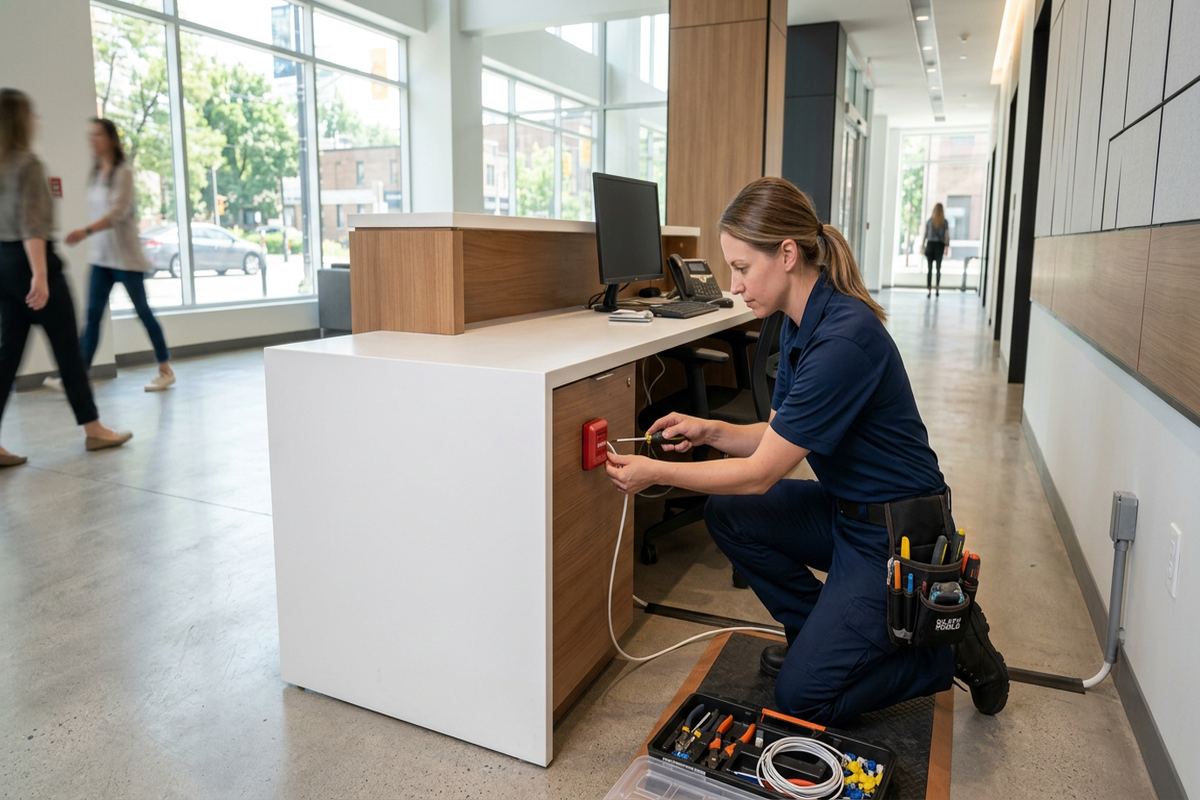
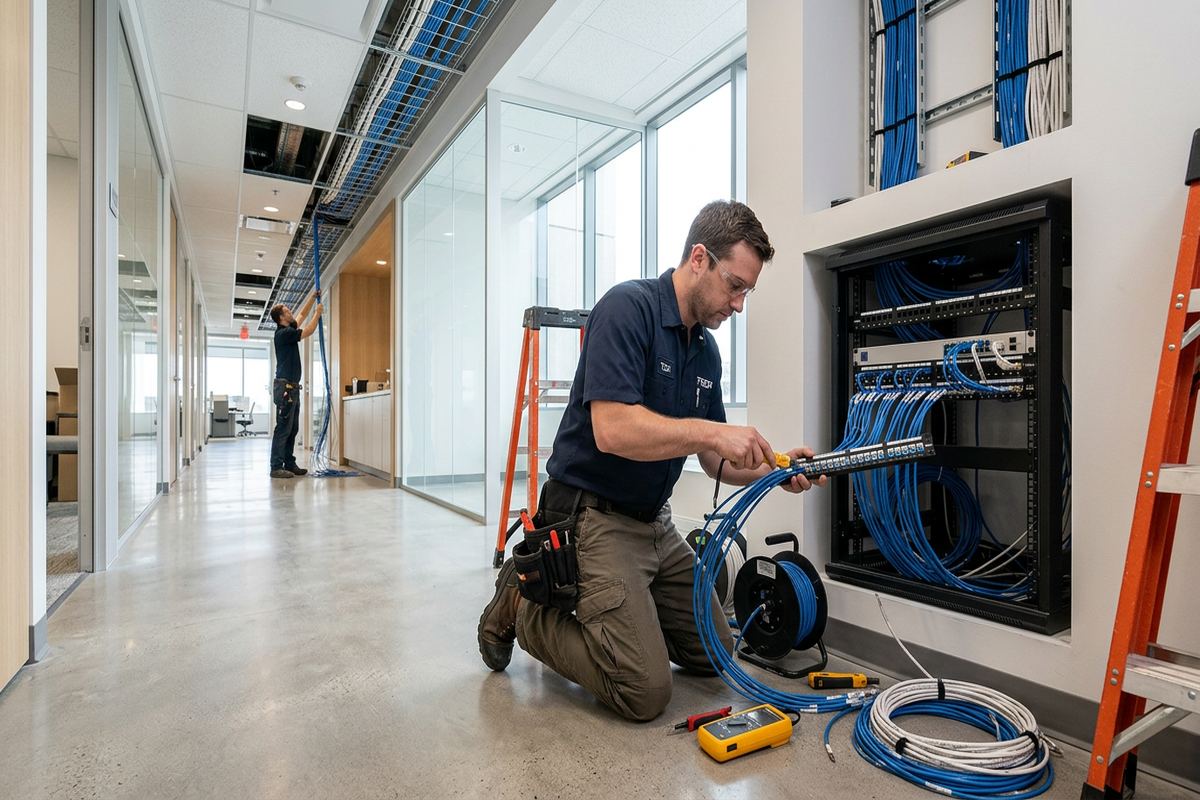
Business installations in Bolton range from small commercial units to warehouses and production spaces. Each environment affects pathway selection, cable support and device protection. Office areas may use suspended ceilings and wall outlets, while warehouse areas can require elevated routes, conduit drops or protection near equipment and storage. In Bolton Industrial Park, loading doors, high ceilings and long building dimensions can make device placement and cable distance especially important. We review these factors alongside network layout, camera coverage, access-controlled openings and the location of communications equipment.
Commercial strips present a different set of constraints. Ceiling spaces may be shared, demising walls can have fire-resistance requirements, and landlords may control roof, exterior or utility-room access. Before installation, the project scope notes access permissions and any pathway that depends on property management. Cable penetrations and supports are planned for the building area involved, with fire stopping addressed where applicable to the approved work. Work areas, operating hours and equipment shutdowns are discussed so the customer can coordinate installation around staff, customers, deliveries and other contractors.
One accountable contractor can coordinate the low-voltage portion across related systems instead of leaving separate cable routes undocumented. This is useful when a business needs network cabling, Wi-Fi, cameras, access control and displays within the same renovation or relocation. We map shared equipment areas, identify which cables belong to each system and avoid unnecessary duplicate pathways where proper separation and system requirements allow. The written scope also states whether equipment is supplied by UnifiedLink, the customer or another contractor, reducing uncertainty about mounting hardware, configuration, licensing and final responsibility.
- Office, retail and warehouse cabling
- Pathways coordinated across related systems
- Landlord access requirements documented
- Device drops protected in work areas
- Equipment responsibility defined before work
Bolton Project Process and Handover
Every Bolton low-voltage cabling project begins with a discussion about the property, intended systems and preferred timing. A site assessment follows when required to confirm routes, construction and access. Assessment timing depends on the service and travel distance. Requests sent during business hours are answered the same day, while after-hours requests are answered the next business day. This response wording applies to the initial request, not a guaranteed installation or arrival time. Scheduling is confirmed after the work, site conditions, approvals and equipment requirements are understood.
Following the assessment, UnifiedLink prepares a written scope covering equipment, routes, placements, exclusions, ownership and warranty. The customer can review assumptions before authorizing work, including visible pathways, access openings and dependencies on other trades. During installation, cables are routed, supported, labelled and terminated according to that approved plan. If concealed conditions prevent the intended route, we explain the issue and agree on a revision instead of making an undocumented change. This process is particularly useful in older buildings, finished homes and occupied industrial units where access can differ from initial observations.
Handover confirms what was installed and how the customer will manage it. Connected equipment is configured on site where included, using the customer’s own credentials. We review relevant device locations, cable labels and equipment connections, then provide an as-built record of the completed installation. Any exclusions, retained existing cabling or unresolved third-party dependencies are noted. The result is a practical reference for future service, tenant changes, renovations or expansion. Bolton customers deal with one accountable contractor for the defined low-voltage work from assessment through documentation.
- Initial requirements reviewed before assessment
- Written scope approved before installation
- Route changes discussed and documented
- Customer-controlled credentials used at setup
- As-built information delivered at completion
Bolton neighbourhoods we cover
- Bolton North Hill
- Bolton South Hill
- Old Bolton
- Bolton Industrial Park
Low-voltage cabling installation in Bolton — common questions
Do you assess my Bolton property before quoting?
Yes. UnifiedLink completes a site assessment before pricing when the project requires route, access or construction review. We examine proposed device locations, cable pathways, wall and ceiling conditions, equipment areas and exterior entries. Assessment timing depends on the service and travel distance. The resulting written scope defines the installation rather than relying on an estimate based only on photographs or floor plans.
Can you run cables through finished walls?
Often, but the available route depends on framing, insulation, blocking, previous renovations and access above or below the wall. Finished Bolton homes may require exploratory openings or a surface raceway when cavities are interrupted. We discuss likely access points before work and document exclusions such as patching or painting unless those tasks are specifically included in the written scope.
What cable should be used outdoors in Bolton?
The cable must suit moisture, ultraviolet exposure, temperature changes and the installation method. Bolton winters and freeze-thaw conditions also make entry placement and sealing important. Outdoor-rated, direct-burial and indoor cables are not interchangeable. We assess the route, mounting surface, conduit conditions and wall entry before specifying cable, supports, sleeves and an appropriate sealing approach.
Can you reuse my existing network cabling?
Existing cabling can be reused when its type, condition, route and termination support the intended equipment. In Bolton properties with renovations or undocumented wiring, we inspect accessible markings and test the cable where practical. Hidden joins, damaged jackets or unsuitable indoor cable on an exterior route may justify replacement. Retained existing wiring is identified separately in the project scope and as-built record.
Do I need landlord or condo approval?
Approval may be required for exterior devices, shared ceilings, common walls, utility rooms or changes visible from outside. Bolton tenants, condominium owners and businesses in leased units should confirm their building rules before installation. UnifiedLink can document proposed device positions and routes for an approval request, while responsibility for obtaining permission remains with the customer unless the written scope assigns it differently.
What do I receive after installation?
At handover, you receive an as-built record showing the completed cable runs and relevant device locations. Endpoints are labelled, included connections are tested, and covered equipment is configured on site using your own credentials. We also note exclusions, retained existing cables and third-party dependencies. This gives a Bolton homeowner or business a usable reference for maintenance, renovation or later system expansion.
Coverage in Bolton is confirmed against the address before we quote. See everything we install in Bolton or the province-wide low-voltage cabling installation page.