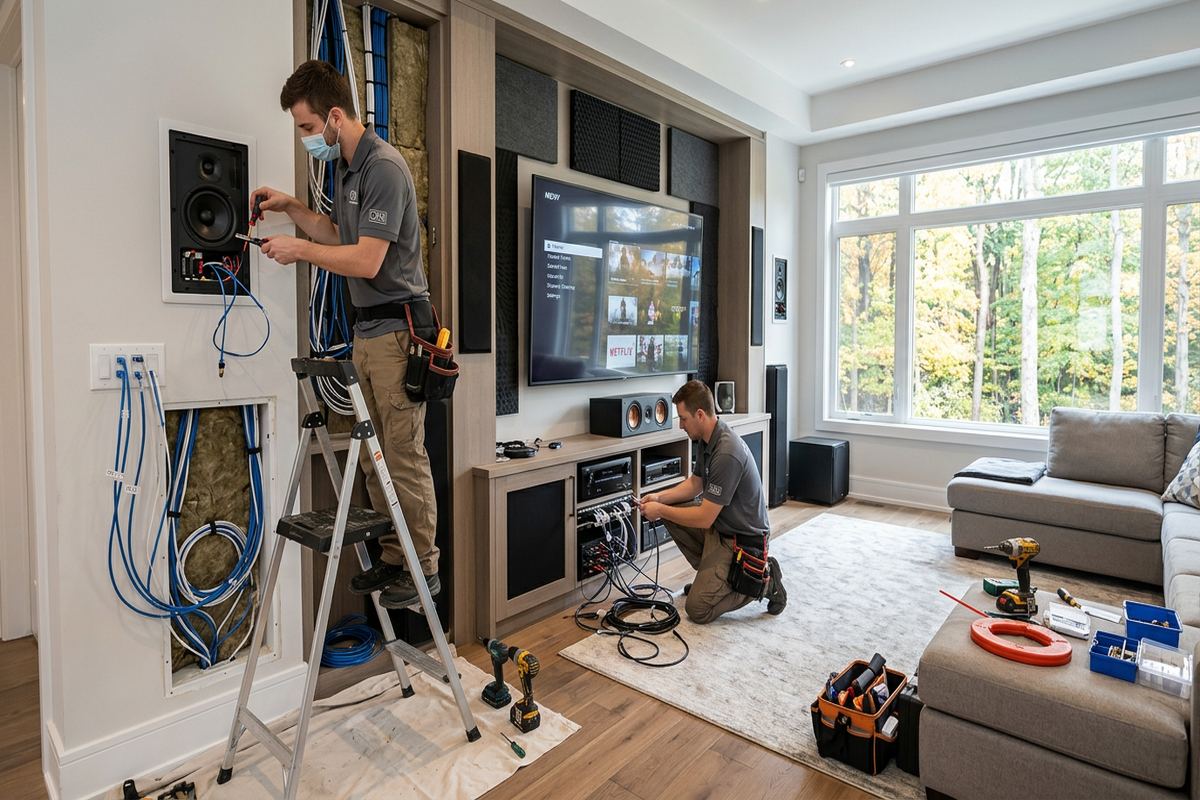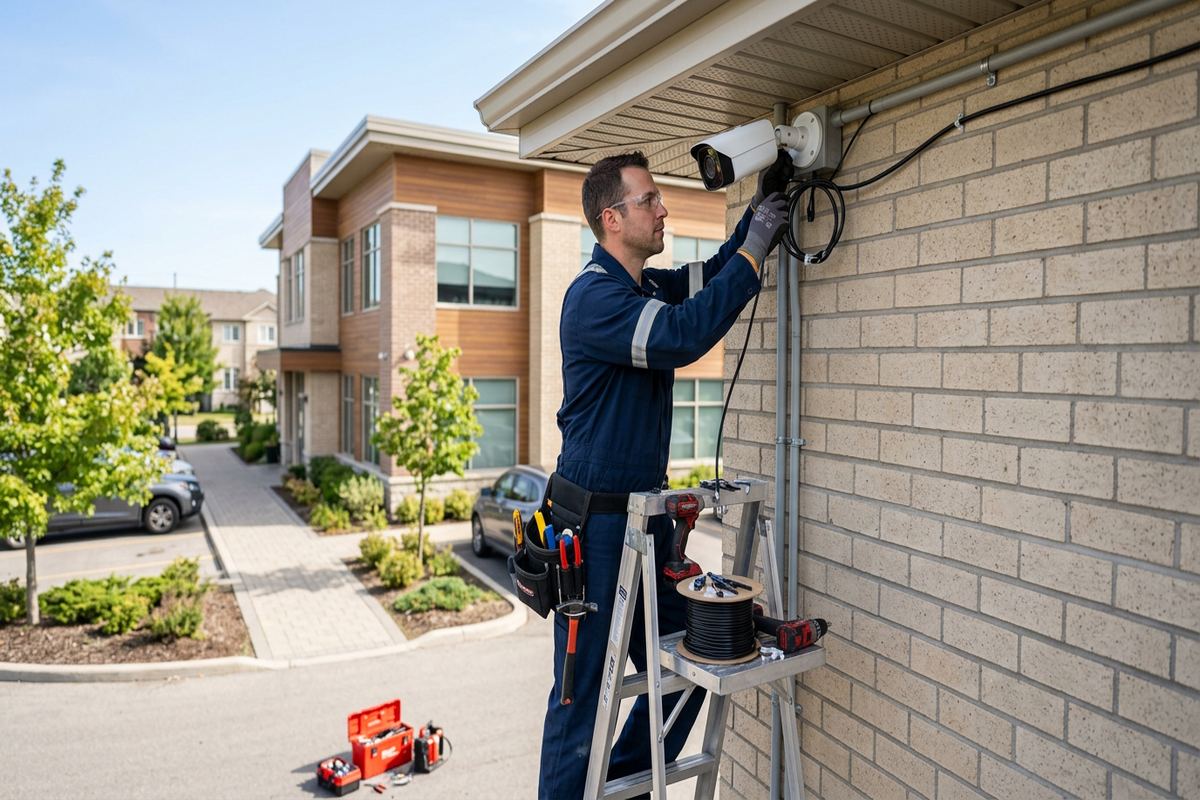
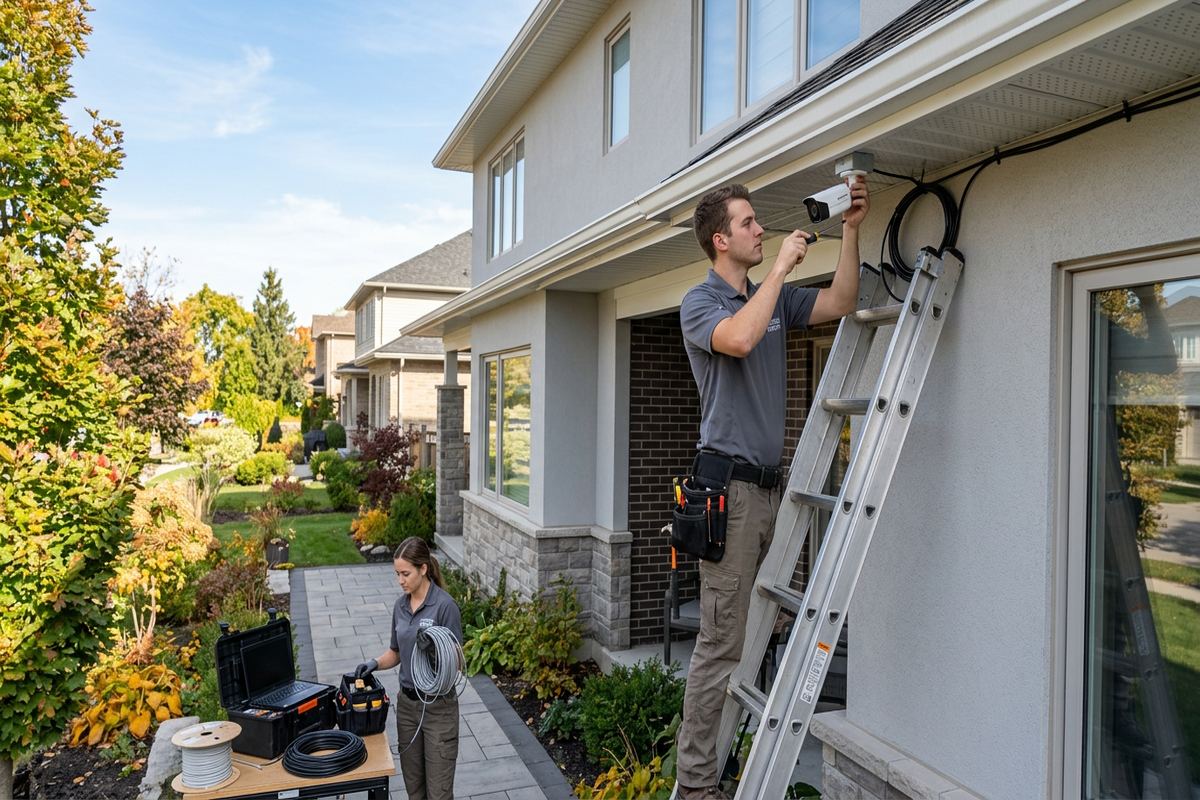
UnifiedLink designs and installs commercial security camera systems for offices, shops, industrial units and managed properties in Bolton. Each project starts with a site assessment to confirm coverage, mounting conditions, cable routes, recording needs and network access. The result is a clearly scoped system configured on site and handed over using the customer’s own credentials.
Commercial Camera Planning for Bolton Properties
A useful camera system begins with the areas that need evidence, not with a device count. During a Bolton site assessment, UnifiedLink reviews entrances, loading areas, parking spaces, customer counters, corridors and restricted rooms. The assessment considers the direction people and vehicles move, likely identification points, available light and objects that could block the view. It also identifies privacy-sensitive areas that should remain outside the frame. These findings support a written scope showing proposed equipment, device placement, cable routes, exclusions, equipment ownership and applicable warranty details before pricing is prepared.
Bolton’s mix of commercial strips, converted buildings and purpose-built industrial units creates different installation constraints. A small storefront may need discreet coverage without obstructing signs or displays, while a warehouse may require long views across racking, dock doors and fenced yards. Ceiling height, wall construction and existing network rooms affect camera selection and cable routing. UnifiedLink checks these conditions rather than assuming every property can use the same layout. The plan can also identify where supplemental lighting, a different lens or a closer identification view would be more useful than a single wide overview camera.
Site assessment timing depends on the requested service and travel distance. Requests received during business hours are answered the same day, while after-hours requests are answered the next business day. Before scheduling installation, the customer receives a defined scope that separates included work from optional or excluded items. This gives owners, property managers and tenants a practical basis for internal approval. It also establishes who owns the equipment, where recordings will be stored, which network resources are required and what access UnifiedLink will need on the installation date.
- Entrances, exits and transaction points reviewed
- Parking, yards and loading areas assessed
- Privacy-sensitive views excluded from the plan
- Written scope prepared before pricing
- Recording and network requirements documented
Camera Coverage for Bolton Industrial Park
Facilities in Bolton Industrial Park often combine offices, production space, storage, loading docks and exterior yards within one property. Each zone presents a different viewing problem. Dock cameras may need to capture activity at a door without being overwhelmed by daylight outside, while yard cameras need useful detail across longer distances. Interior warehouse cameras must account for high ceilings, racking and changing stock. UnifiedLink maps these conditions during the assessment, then assigns overview and identification views separately so one camera is not expected to perform several incompatible tasks.
Vehicle coverage requires clear decisions about where usable images should be captured. A broad parking-lot view can show movement but may not provide enough detail at a gate, driveway or delivery point. In Bolton, a more reliable design may pair the overview with a focused view at a controlled route where vehicles slow down. Mounting height, headlight glare, snowbanks, trailers and seasonal changes in sunrise direction are considered. If licence plate detail is an objective, that requirement is documented specifically rather than implied by a general outdoor camera description.
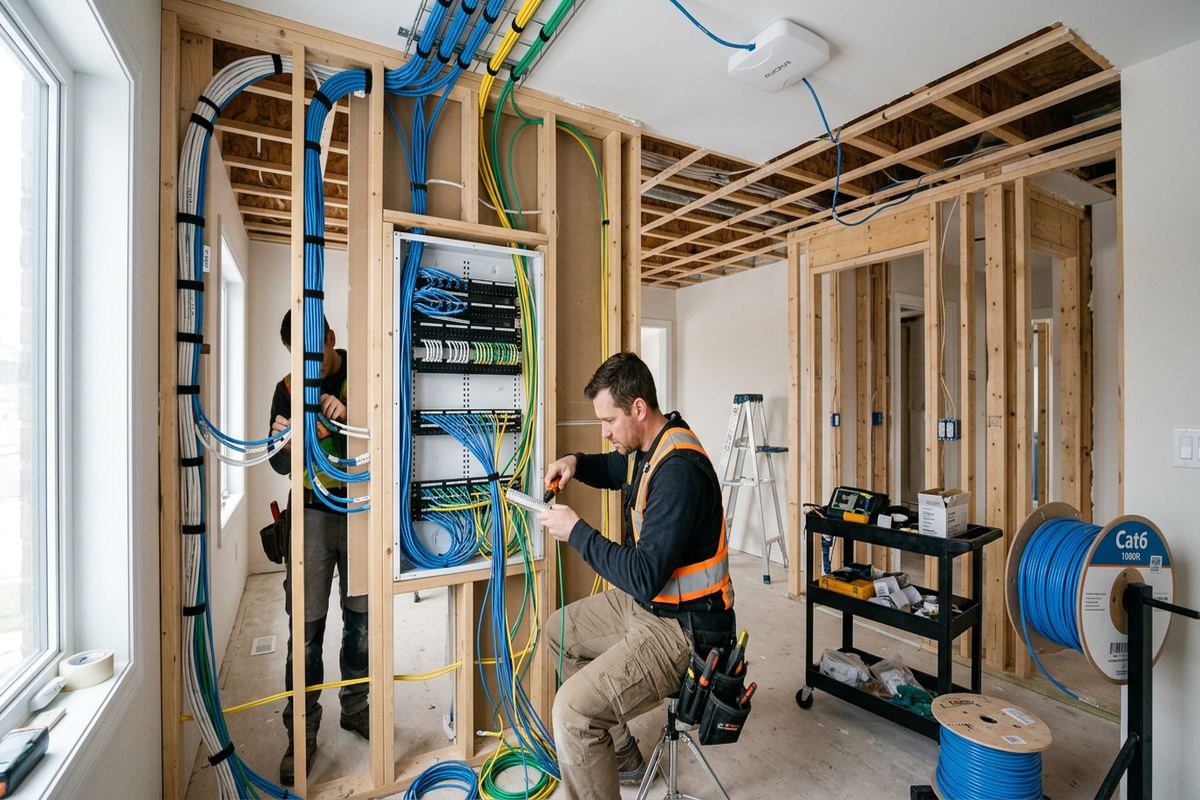
Industrial installations also depend on practical cable pathways and equipment locations. UnifiedLink examines conduit, cable tray, accessible ceilings, fire separations and distances back to the network or recording cabinet. New runs are installed as continuous, labelled cables rather than joined through hidden couplers. Where detached structures, gates or distant poles are involved, the scope identifies the proposed connection method and any required electrical work by others. Recording equipment is positioned with ventilation, service access and physical security in mind, reducing avoidable disruption when footage must be reviewed or components serviced.
- Dock and yard views planned separately
- Warehouse obstructions included in camera placement
- Vehicle choke points used for focused coverage
- Cable routes labelled at both ends
- Recording equipment placed for secure access
Exterior Cameras Built for Bolton Conditions
Bolton winters expose exterior equipment to cold, wind-driven moisture, snow and repeated freeze-thaw cycles. These conditions matter at every wall penetration and mounting point. UnifiedLink selects suitable exterior devices and plans mounts so water is not directed toward cable entries or junctions. Penetrations are sealed using methods appropriate to the surface, with drip paths and exposed cable protection considered during installation. Existing cracks, loose mortar or damaged cladding are identified before drilling because a camera mount cannot correct an unsuitable substrate. Any required building repair remains clearly noted in the project scope.
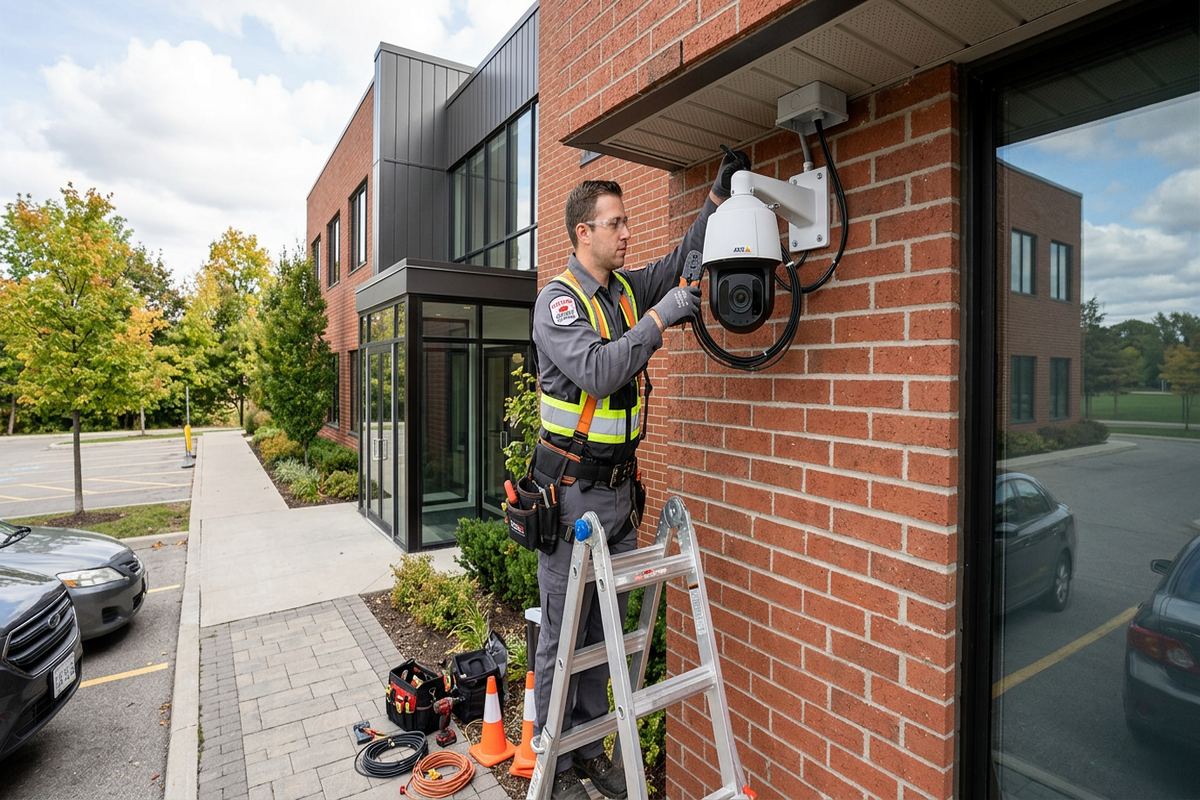
Masonry and frame construction require different fastening and routing methods. Many commercial units use concrete block, brick veneer or precast panels, while smaller premises and mixed-use properties may include framed walls with siding. On masonry, installers must avoid careless placement near weak edges, joints or unknown embedded services. On frame walls, attachment points and weather barriers need equal attention. UnifiedLink confirms accessible interior conditions where possible, chooses appropriate mounting locations and avoids unnecessary penetrations. Surface conduit or junction boxes may be recommended when concealed routing would create excessive disturbance or compromise the building envelope.
Exterior views change throughout the year. Leaves can hide a summer approach, bare branches can create winter glare, and piled snow can block low-mounted cameras or alter how people enter a property. Building lighting, neighbouring signs and reflective surfaces can also affect night images. In valley-side parts of Bolton, grade changes may create steep approaches or place doors above and below parking areas. Camera height and angle are therefore selected for the specific view, not simply aligned along the eaves. Final positioning is checked on site using live images before installation is completed.
- Weather-resistant exterior device selection
- Penetrations sealed for the mounting surface
- Masonry and frame walls handled differently
- Freeze-thaw exposure considered during placement
- Live exterior views checked before completion
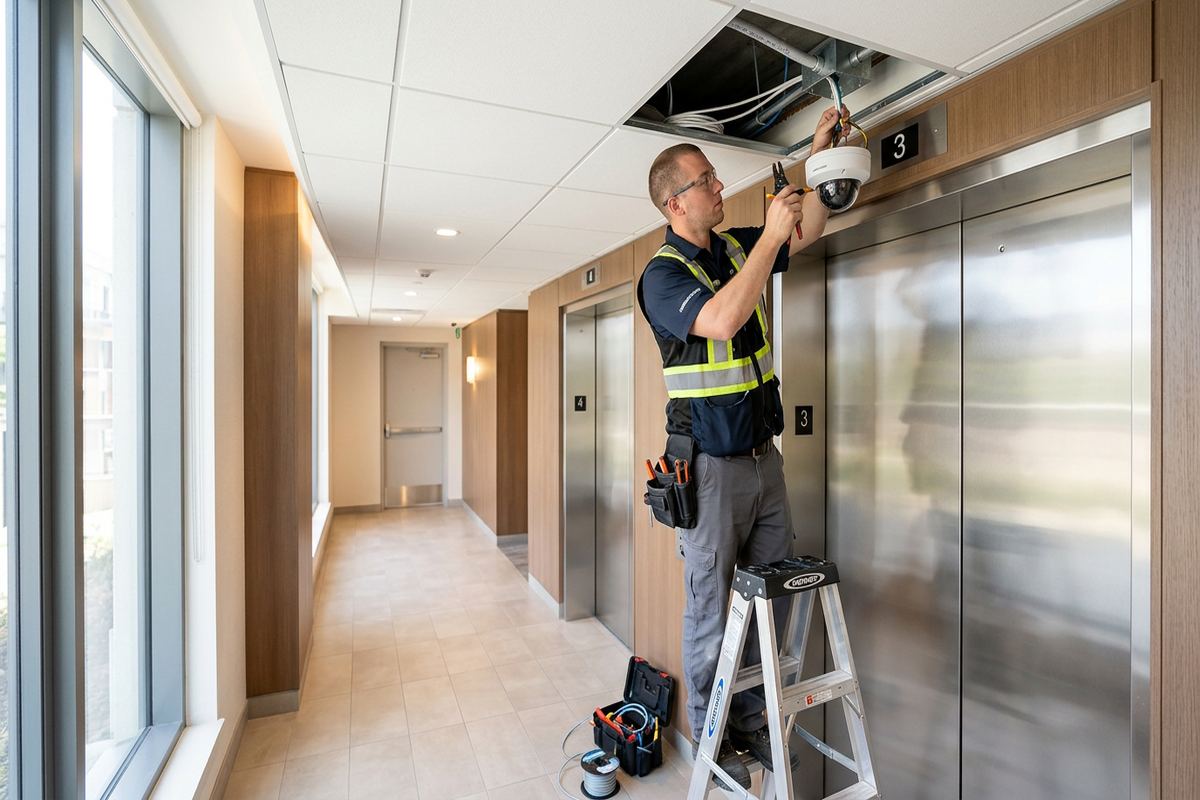
Bolton, Ontario
Commercial security camera installation in Bolton, scoped in writing first
Book a site assessment and get equipment, routes, exclusions, and warranty on paper before anything is installed.
Recording, Remote Access and Cybersecurity
Recording design starts with operational needs: what must be captured, how long footage should remain available and who is allowed to view or export it. Camera resolution, frame rate, activity levels and retention targets all affect storage. UnifiedLink documents the agreed recording approach instead of promising a fixed retention period without calculations. Local network video recorders, camera-based storage and other supported arrangements can be considered according to the site. Equipment ownership, subscription requirements and customer responsibilities are identified in the written scope so there is no uncertainty during handover.
Remote viewing is configured on site using the customer’s own accounts and credentials. Default passwords are changed where applicable, user access is separated by role when the platform supports it, and only required services are enabled. Business owners should decide who can view live video, retrieve recordings or change settings, particularly when managers, landlords and outside monitoring personnel are involved. UnifiedLink does not retain ownership of the customer’s administrative identity. The handover records the agreed access method and gives the designated customer representative control over future user changes and password recovery.
Commercial cameras share network resources with other business systems, so their connection should be planned rather than improvised. Available switch capacity, Power over Ethernet requirements, uplink limits and cabinet space are reviewed before equipment is installed. Where network separation is required, UnifiedLink coordinates the camera configuration with the customer’s managed service provider or internal information technology contact. Changes affecting firewalls, virtual networks or internet service are documented in advance. This approach helps avoid placing cameras on unsuitable guest networks or relying on wireless links where a continuous wired connection is feasible.
- Storage based on documented retention needs
- Customer-controlled administrator credentials
- User permissions configured where supported
- Power over Ethernet capacity reviewed
- IT coordination included when required
Camera Installation in Occupied Bolton Businesses
Installing cameras in an operating workplace requires coordination around customers, staff, deliveries and production. UnifiedLink confirms work areas, access times and any site-specific safety or escort requirements before arrival. Cable routes are planned to limit disruption while remaining serviceable and technically sound. In retail and office settings, ceiling access may need to occur outside busy periods. In industrial units, lifts or restricted zones may affect sequencing. The written scope identifies known access assumptions, while site contacts remain responsible for communicating workplace rules and arranging entry to locked electrical, network or storage rooms.
Older properties around Old Bolton may have renovated interiors, limited ceiling access or several layers of previous cabling. Existing pathways are inspected before they are reused. Abandoned or unidentified cables are not treated as suitable simply because they reach the approximate location. UnifiedLink tests relevant infrastructure and installs continuous, labelled runs for new camera connections. If concealed routing would damage finished surfaces or encounter inaccessible construction, a surface pathway may offer a cleaner, more maintainable result. The route and visible components are reviewed with the customer before work proceeds beyond the agreed scope.
Tenant and condominium projects may require permission before drilling, using common pathways or mounting equipment on an exterior wall. A commercial tenant should confirm landlord approval, while a condominium owner or manager may need authorization from the corporation. UnifiedLink can provide proposed device locations and cable routes for that review, but does not assume authority over common elements. In Bolton North Hill or Bolton South Hill, this can also apply to home-based businesses operating from managed properties. Approval should be settled before installation dates are confirmed, preventing avoidable changes to mounting or routing.
- Work coordinated around active operations
- Access and escort needs confirmed beforehand
- Existing cabling inspected before reuse
- Visible pathways reviewed with the customer
- Landlord or condominium approval identified early
Image Quality and Practical Camera Selection
Camera specifications only matter when they support the required scene. A high-resolution image can still be ineffective if the subject is too distant, backlit or compressed into a small part of the frame. UnifiedLink selects lens coverage and mounting distance around the intended task, whether that is observing a sales floor, identifying a person at an entrance or documenting activity at a loading bay. Wide views and detailed views are treated as separate requirements where necessary. Live testing confirms that faces, clothing and actions appear at a useful scale under typical conditions.
Lighting is evaluated during both daytime and darker operating periods. Glass doors, bright windows, vehicle headlights and glossy floors can create strong contrast that hides detail. Infrared illumination may help in some scenes, but reflective walls, dust, insects or nearby surfaces can reduce its value. Colour-at-night features also depend on available light and should not be treated as a substitute for proper illumination. The Bolton camera plan documents difficult scenes and places devices where the environment supports them. Additional lighting can be listed as work by others when it is needed.
Different camera forms suit different locations. Domes may fit some finished interiors, turrets can simplify aiming, and bullet-style cameras can make the viewing direction obvious outdoors. Form alone does not determine performance or resistance to interference. Mounting surface, reachability, weather exposure, lens needs and maintenance access are considered together. UnifiedLink also checks whether microphones, speakers or analytic functions are appropriate and permitted for the intended use. Features that are not required can be disabled, helping keep the configuration aligned with the approved purpose rather than enabling every available option.
- Lens chosen for the required detail
- Wide and identification views separated
- Backlighting and reflections assessed
- Camera form matched to each location
- Unneeded features disabled during configuration
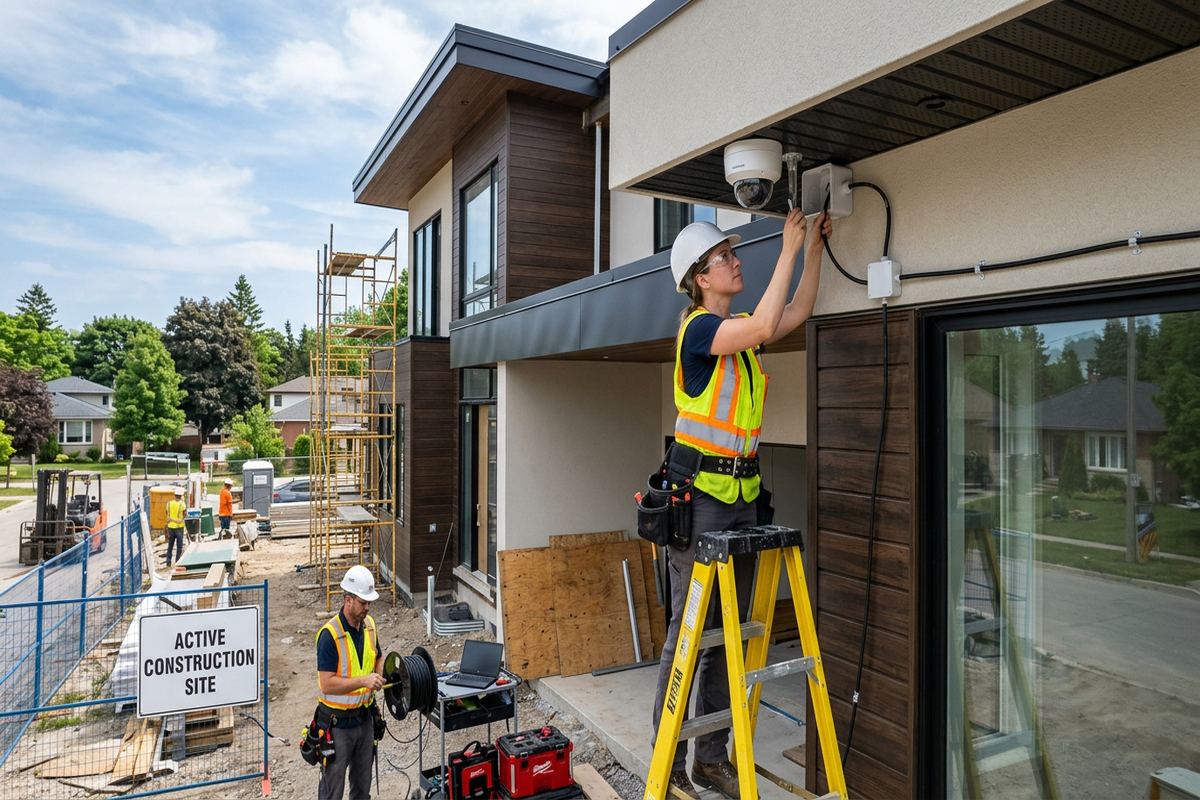
Bolton System Handover and Documentation
Completion includes more than confirming that cameras turn on. UnifiedLink checks each named view, recording status, date and time settings, supported event functions and remote access included in the scope. Cameras and cable endpoints are labelled consistently so a future service visit can identify the correct run without guesswork. The customer representative is shown how to view live video, search recordings and export footage using the installed platform. Any limitations observed during commissioning are documented rather than hidden behind a general statement that the system is operational.
The handover uses customer-owned credentials and includes an as-built record reflecting the installed arrangement. Documentation identifies camera names and locations, recording equipment, relevant cable destinations and agreed network information without exposing passwords. The written scope remains the reference for equipment ownership, warranty and exclusions. If the installed route changed because of a concealed obstruction or site request, the as-built record captures the final condition. This is particularly useful for multi-unit Bolton properties where managers, tenants and information technology providers may need a common reference after installation.
Staff training should focus on repeatable tasks rather than every advanced menu. Designated users practise finding a time range, selecting cameras, playing footage and creating an export when the system supports those functions. They also learn where account management and health notifications appear. UnifiedLink explains which settings should not be changed without reviewing storage, network or image-quality effects. One accountable contractor handles the assessed camera scope, cabling, on-site configuration and handover, reducing gaps between separate equipment sellers, cable installers and software contacts during the original project.
- Every camera view checked at completion
- Cables and endpoints labelled consistently
- As-built camera and cabling record supplied
- Customer users shown footage export steps
- Final credentials belong to the customer
Expanding or Replacing Cameras in Bolton
An existing system may be worth expanding, partially replacing or removing, depending on its condition and compatibility. UnifiedLink first identifies camera types, cable media, recorder capacity, available network ports and account ownership. Analogue coaxial systems, network cameras and mixed installations have different upgrade paths. Reusing a cable or recorder is considered only when its condition and specifications support the proposed result. The assessment also checks whether current views still match how the Bolton property operates, since renovated counters, new racking or changed entrances can make previously useful cameras ineffective.
Phased work can be practical when a business has several areas or must coordinate improvements with renovations. The initial scope can prioritize entrances, transaction points or high-activity loading areas while reserving network and recording capacity for later devices. Future routes should be identified before ceilings close or warehouse layouts become fixed. UnifiedLink documents which components are installed now and which remain optional, avoiding assumptions that every proposed camera is included. A phase should still function as a complete, manageable system rather than leaving temporary accounts, unlabelled cables or unsupported recording arrangements.
Bolton businesses can start the process by describing the property, operating hours, priority areas and any existing camera equipment. Photos, floor plans and network details may help with initial preparation, but pricing follows a site assessment because mounting and routing conditions must be verified. Requests sent during business hours are answered the same day; after-hours requests receive an answer the next business day. Assessment timing depends on the service and travel distance. Following the visit, UnifiedLink prepares a written scope so the customer can review the technical approach before authorizing installation.
- Existing cameras and cabling assessed
- Recorder and switch capacity verified
- Phased expansion planned around priorities
- Future cable pathways considered early
- Site assessment completed before pricing
Bolton neighbourhoods we cover
- Bolton North Hill
- Bolton South Hill
- Old Bolton
- Bolton Industrial Park
Commercial security camera installation in Bolton — common questions
How many cameras does my Bolton business need?
The number depends on required evidence, not square footage alone. A Bolton site assessment reviews entrances, transaction areas, parking, loading points, internal circulation and restricted spaces. Some locations need separate overview and identification views. UnifiedLink then provides a written scope showing proposed camera locations, equipment, cable routes and exclusions before pricing.
Can you install cameras on brick or concrete walls?
Yes, subject to the condition and construction of the wall. Many Bolton commercial properties use brick veneer, concrete block or precast panels. UnifiedLink selects fastening and sealing methods for the specific surface, avoids unsuitable edges or damaged areas, and protects exterior cable entries from moisture. Required masonry repairs or specialized access are identified in the scope.
Will outdoor cameras work through a Bolton winter?
Exterior cameras can be selected and mounted for Bolton’s cold, snow and freeze-thaw conditions. Performance still depends on correct placement, suitable equipment, protected connections and proper sealing. The assessment considers snow accumulation, changing light, wind-driven moisture and safe maintenance access. Existing wall damage or poor drainage may need correction before a secure exterior mount can be completed.
Can I view my cameras remotely?
Remote viewing can be configured when the selected platform, internet connection and customer network support it. UnifiedLink sets up access on site using the customer’s own credentials and changes applicable default passwords. User roles can be separated where supported. Any subscriptions, firewall coordination or information technology responsibilities are identified in the written scope before the Bolton installation proceeds.
Do I need landlord or condo approval?
Approval may be required if cameras, cables or mounts affect leased space, common elements or exterior walls. Bolton tenants should check their lease and obtain landlord consent where necessary. Condominium owners or managers may need corporation approval. UnifiedLink can provide proposed camera locations and routes for review, but the customer is responsible for securing authorization before installation.
Can you reuse my existing camera cabling?
Existing cabling can be considered after its type, condition, route and performance are checked. A cable is not reused solely because it reaches the camera area. UnifiedLink tests relevant infrastructure and confirms compatibility with the proposed equipment. New connections are installed as continuous, labelled runs. The Bolton scope clearly states which existing components will remain and which require replacement.
Coverage in Bolton is confirmed against the address before we quote. See everything we install in Bolton or the province-wide commercial security camera installation page.