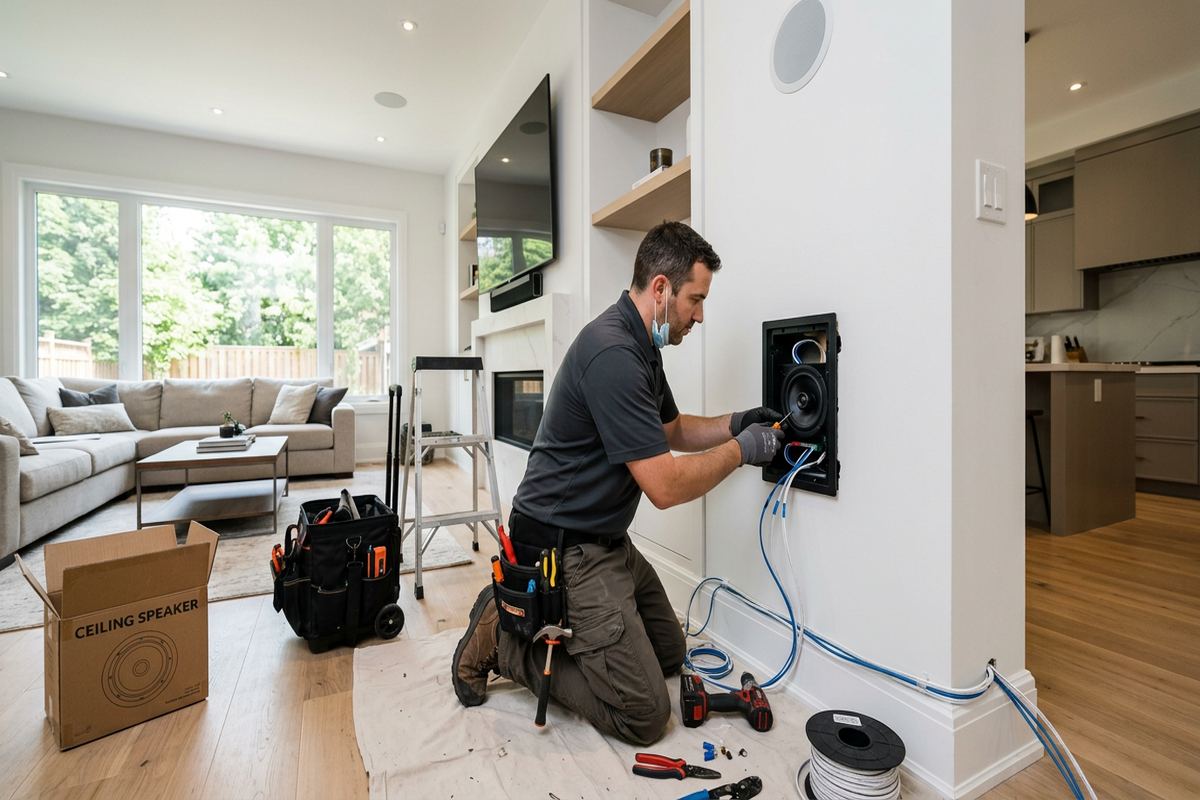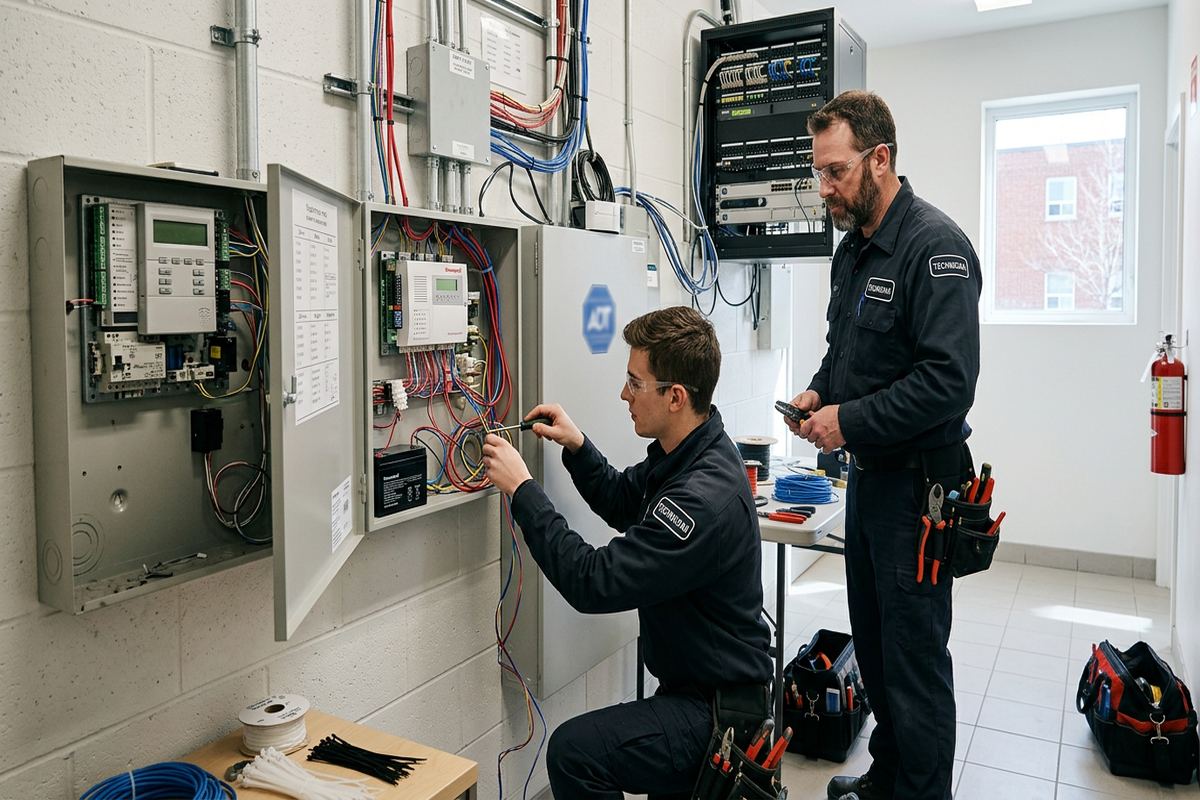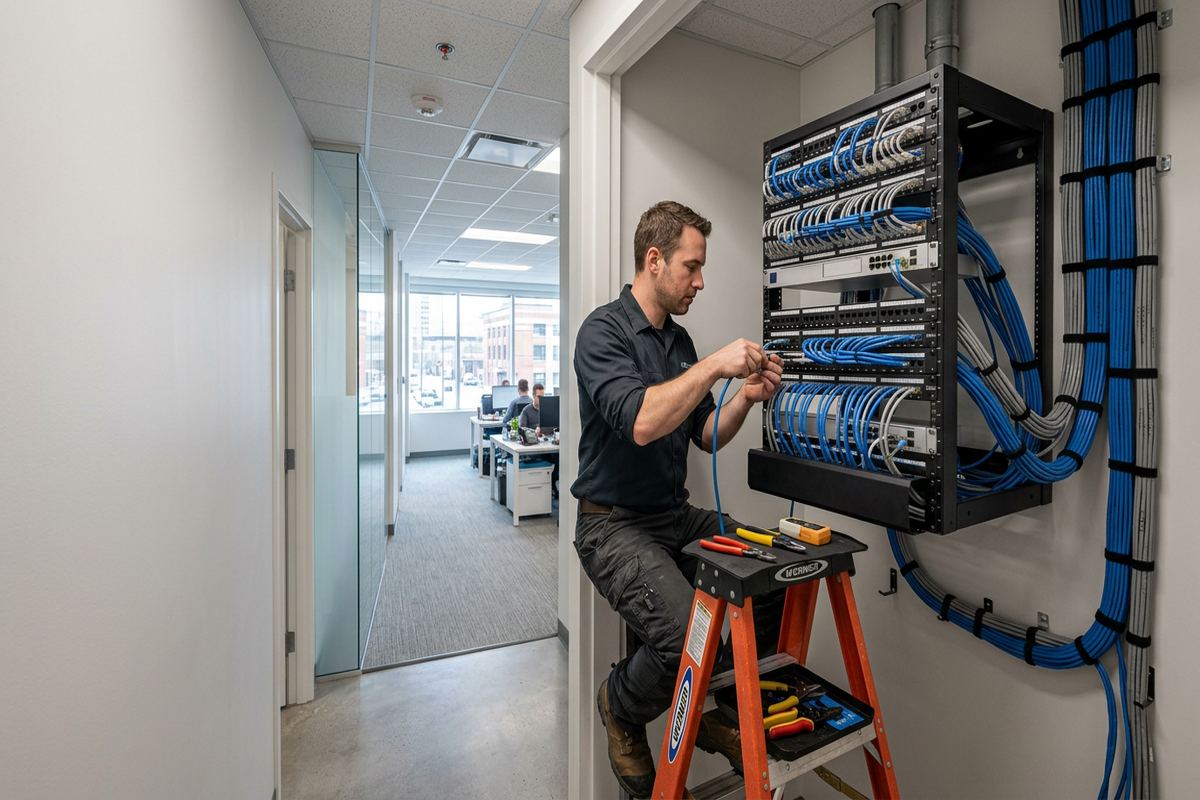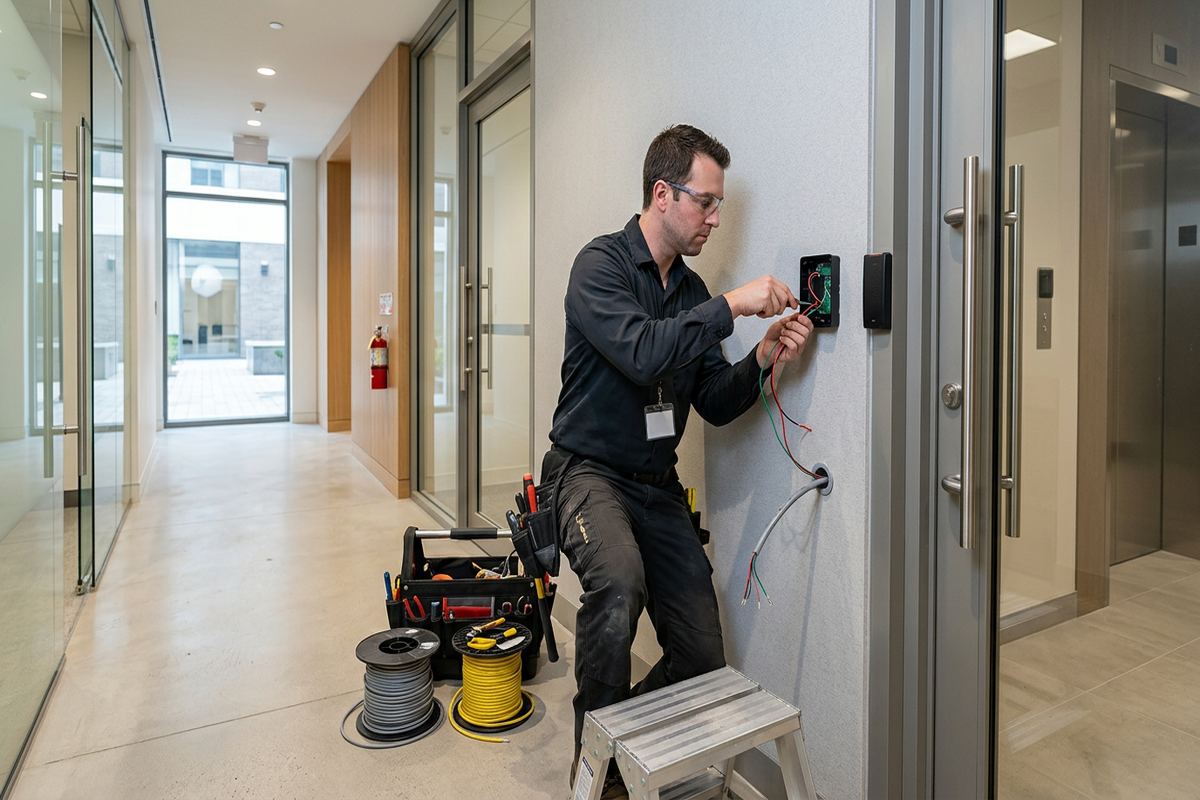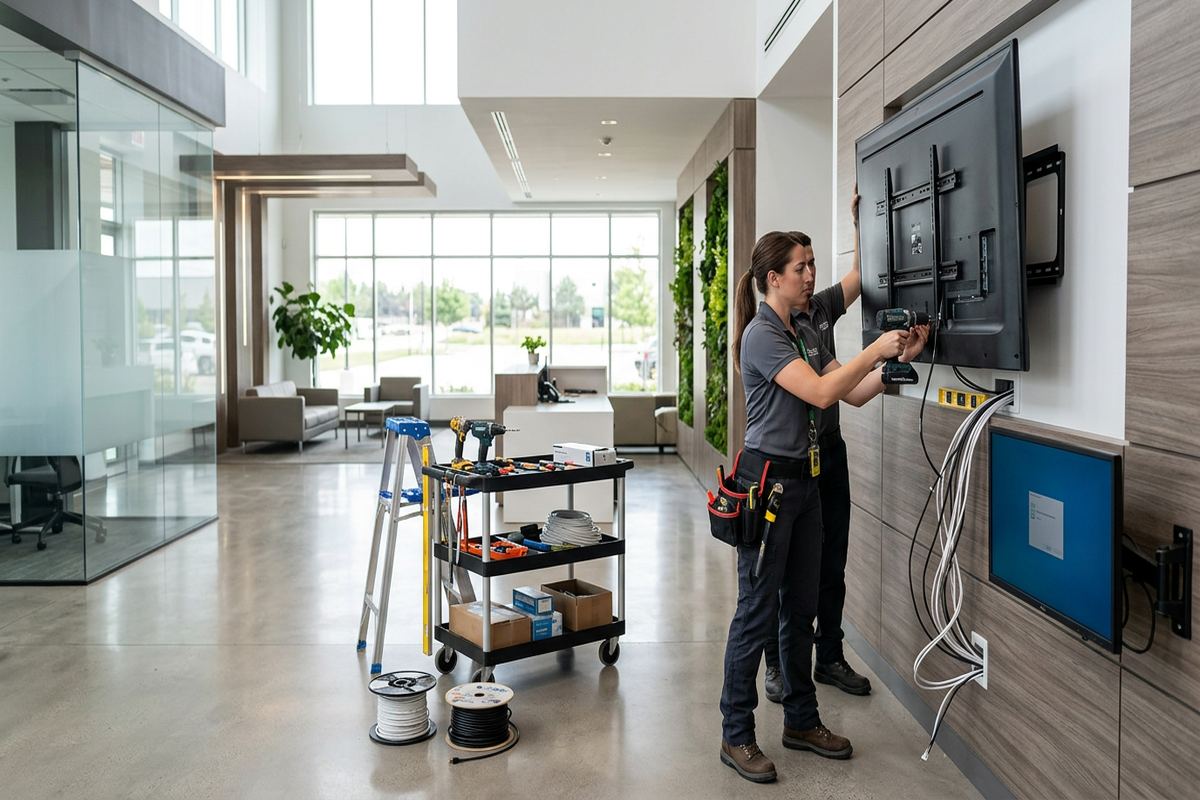
UnifiedLink installs commercial alarm systems for offices, shops, industrial units and other workplaces in Bolton. We assess the property, plan detection and notification devices, identify cable routes, configure the system on site and document the finished installation. The result is a practical alarm system designed around the building, its occupants and daily operating procedures.

Commercial Alarm Planning for Bolton Properties
A commercial alarm system should reflect how the premises is built, occupied and secured after hours. Bolton includes commercial strips, converted spaces and industrial units that need different combinations of door contacts, motion detection, glass-break detection and audible notification. During the site assessment, we review entry points, interior circulation, loading areas, offices and spaces containing important equipment. We also discuss opening and closing procedures, authorized users and monitoring requirements. This information supports a written scope rather than a generic package based only on floor area or a device count.
Bolton Industrial Park properties commonly combine a front office with warehouse, production or storage areas. High ceilings, overhead doors, interior partitions and changing stock layouts can affect detector selection and positioning. A motion sensor suitable for a small office may not provide useful coverage in an open industrial bay. Likewise, loading doors and staff entrances may require separate zones so activity can be identified clearly. Planning accounts for normal movement, heating equipment, sunlight, air currents and machinery where these conditions could contribute to avoidable alarms or leave an area insufficiently covered.
Businesses around Old Bolton may occupy buildings with additions, finished basements or layouts adapted from earlier uses. Alarm cabling must follow practical routes without unnecessarily disturbing visible finishes. Masonry walls, frame sections and concealed voids are assessed individually before installation begins. Where a clean concealed route is not available, surface raceway or another protected method can be included in the scope. Any assumptions and exclusions are documented before pricing, along with proposed equipment, device placement, ownership, warranty terms and the responsibilities of other trades or service providers.
- Perimeter openings and interior areas assessed
- Detection matched to room use and construction
- User procedures considered during system design
- Written scope provided before installation
Alarm Devices Selected for Bolton Workplaces
Device selection begins with the risk and operating conditions at each location, not with a fixed alarm kit. Door contacts can supervise frequently used staff entrances, emergency exits and loading doors, while motion detectors can protect circulation routes and selected interior areas. Glass-break devices may be appropriate near exposed glazing, subject to room shape and ambient noise. Panic or hold-up devices require careful discussion about placement, user training and response procedures. The control panel must support the required zones, users, communications method and future changes without making routine operation unnecessarily complicated.
A retail unit on Bolton South Hill may need a different arrangement from an office, workshop or warehouse on the north end. Public entrances, stockrooms, rear service doors and shared corridors each present distinct operating patterns. We consider whether employees remain inside after public closing, whether cleaners need limited access and whether deliveries occur outside normal hours. The system can then be divided into understandable areas or partitions where supported. Clear zone names help users and responders identify whether an event came from a front door, office corridor, warehouse bay or another defined location.
Notification equipment also needs to suit the premises. Indoor sirens should be audible where staff work, but their placement must account for walls, machinery and separated floors. Exterior sirens or indicators require appropriate mounting, cable protection and weather sealing. Bolton winters and repeated freeze-thaw cycles can expose weak penetrations, loose fittings and unsuitable exterior components. We select mounting methods based on the surface, keep penetrations controlled and seal exterior entries appropriately. Device locations are confirmed before drilling so visibility, service access and exposure are considered alongside alarm performance.
- Door, motion and glass-break detection options
- Zones named for clear event identification
- Audible notification planned around building layout
- Exterior equipment mounted and sealed appropriately
Wired and Wireless Alarm Options in Bolton
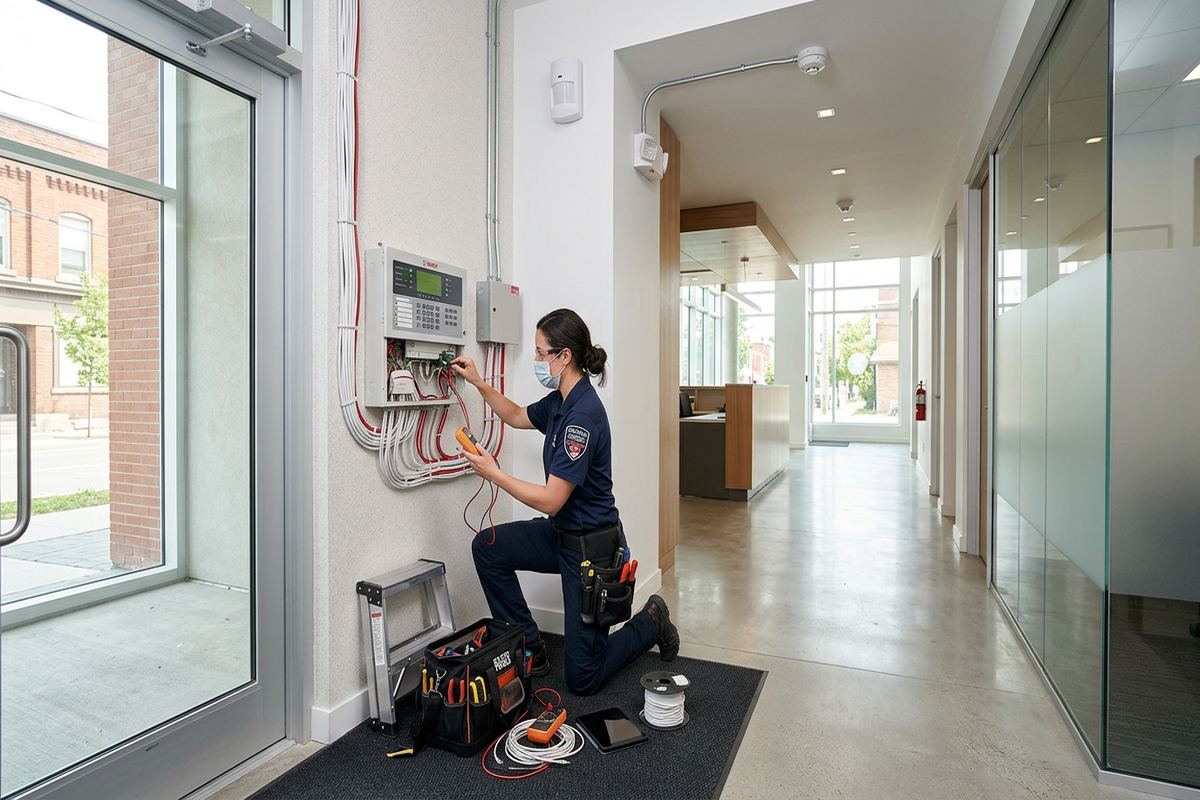
Wired alarm devices provide stable, continuous connections and are often practical during renovations, tenant improvements or installations with accessible ceilings. UnifiedLink installs continuous labelled cable runs between devices and designated termination points, avoiding undocumented joins wherever the route permits. Cable type and pathway depend on the device, construction and environmental conditions. In commercial settings, routing must also account for electrical equipment, ceiling systems, fire separations and areas exposed to physical damage. The proposed routes are reviewed during assessment and recorded in the scope so the customer understands where cabling will remain concealed or visible.
Wireless devices can reduce disruption where finished surfaces, masonry construction or lease restrictions make new cabling difficult. They still require planned placement, reliable communication with the control equipment and an ongoing battery maintenance process. Dense construction, metal shelving, industrial equipment and long distances can affect signal paths, so device locations should not be chosen solely for convenience. Hybrid systems can combine wired devices in accessible areas with wireless devices where cabling is impractical. The final approach depends on the building, the required coverage and any limitations established by the landlord or property manager.
Bolton properties can contain both masonry and frame construction, particularly where a building has been altered or expanded. Masonry may require surface pathways, appropriate anchors or carefully planned penetrations, while frame walls can sometimes support concealed routes through accessible cavities. We do not assume that every wall is open or that every ceiling space is usable. Before pricing, the assessment identifies likely pathways and access constraints. If the business operates in a condominium commercial unit or leased premises, approvals for drilling, exterior equipment and common-area work should be confirmed before installation is scheduled.
- Continuous labelled wired cable runs
- Wireless placement checked for site conditions
- Hybrid designs available where appropriate
- Landlord or condominium approvals identified early
Bolton, Ontario
Commercial alarm system installation in Bolton, scoped in writing first
Book a site assessment and get equipment, routes, exclusions, and warranty on paper before anything is installed.
Exterior Openings and Local Weather Protection
Exterior alarm components face conditions that indoor equipment does not. Door contacts on loading entrances, detached structures or exposed service doors must tolerate movement, moisture and temperature changes appropriate to their location. Mounting surfaces can shift slightly through seasonal freeze-thaw cycles, especially around older openings or previously repaired masonry. During assessment, we inspect the condition and alignment of doors before recommending contact types. An alarm contact cannot correct a loose frame, failing closer or poorly fitting overhead door, so required door repairs are identified as an exclusion or prerequisite in the written scope.
Cable penetrations through exterior walls need deliberate placement and sealing. A route that allows water to track toward the interior can damage finishes or affect equipment over time. For Bolton installations, we consider wall material, drainage, exposure and the ability to service the connection later. Exterior cable is protected using methods suited to the location, and entries are sealed after installation. On masonry walls, anchors and penetrations are selected for the substrate rather than treated like frame construction. Visible pathways are kept orderly, secured and positioned away from predictable impact wherever site conditions allow.
Valley-side homes make up a substantial part of local service work, and some Bolton businesses operate from residential-style or mixed-use properties. Split levels, side entrances, walkout lower floors and detached work areas can create several perimeter approaches that are not obvious from the main entrance. Commercial use may also introduce staff access, stored tools or scheduled deliveries. We map each opening and determine which should be supervised, then separate business areas from private or inactive spaces where the system supports it. Zoning and arming procedures must remain clear for everyone authorized to use the premises.
- Weather-appropriate exterior device selection
- Controlled and sealed wall penetrations
- Mounting suited to masonry or frame surfaces
- Door condition checked before contact placement
Installation and Configuration in Bolton
Once the scope is approved and site requirements are ready, installation follows the documented device plan and cable routes. Technicians mount the control equipment in an accessible but appropriately protected location, install detection devices and complete the required connections. Cable runs are labelled to make future tracing and service more straightforward. Work areas are managed around business operations where practical, although drilling, ladder access or temporary area restrictions may be necessary. Any site condition that materially changes the planned route or device placement is discussed before proceeding rather than being hidden behind an undocumented substitution.
Configuration takes place on site because room use and actual device behaviour need to be checked in the installed environment. Zones receive plain names that correspond to recognizable locations, and user permissions are set according to agreed operating needs. Entry and exit delays, arming modes and notification functions are reviewed with the customer. Detection devices are tested for intended coverage, while door contacts are checked for reliable activation and restoration. Where communications or third-party monitoring are included, responsibilities, account setup and available connection methods must be confirmed as part of the scope.
Commercial alarm work may intersect with internet service, electrical power, access control, cameras or building management responsibilities. Keeping one accountable contractor for the low-voltage scope helps coordinate pathways and prevents duplicated cabling or poorly placed equipment. In Bolton Industrial Park, this can be useful where an office, warehouse and loading area share infrastructure but require different security procedures. Alarm systems remain distinct from life-safety systems unless explicitly designed and documented otherwise. We identify interfaces and exclusions clearly so customers understand what the installation does, what it does not do and which services require others.
- Equipment installed to the agreed scope
- Each cable and zone clearly labelled
- On-site configuration and functional testing
- Interfaces and exclusions documented
User Access, Monitoring and Alarm Procedures
An alarm system is effective only when authorized users understand how to operate it consistently. Staff turnover, shared codes and unclear closing responsibilities can undermine an otherwise sound installation. We recommend individual user credentials where the chosen system supports them, with permissions matched to each person’s role. Managers may need access to all areas, while cleaners, contractors or delivery staff may require limited schedules or partitions. At handover, the customer receives control using their own credentials rather than relying on an installer-owned login. Administrative access and account responsibilities are explained before the installation is closed.
Monitoring is a separate operational decision from local alarm detection. Available communication paths may include network, cellular or other supported connections, depending on the selected equipment and service arrangement. Monitoring does not replace suitable response procedures, accurate contact lists or staff training. Customers should decide who receives notifications, who may attend the Bolton property and what should happen after different event types. Where a monitoring provider is involved, equipment compatibility, account ownership, ongoing service terms and division of responsibility are documented. No response outcome should be assumed solely because a signal can be transmitted.
False alarms often begin with procedures rather than hardware failure. A door left open, an unsecured overhead bay, a forgotten user code or movement in an armed area can create preventable events. Clear zone labels help users identify the source instead of treating every activation as unexplained. We review routine arming, disarming and testing steps with designated representatives. Businesses should maintain their contact lists, remove former users promptly and report physical changes such as new partitions or shelving. Those changes can affect detection patterns and may require a site review before devices are moved or added.
- Individual credentials where equipment supports them
- Customer controls administrative account access
- Monitoring responsibilities defined in writing
- Operating procedures reviewed at handover
Alarm Upgrades for Existing Bolton Systems
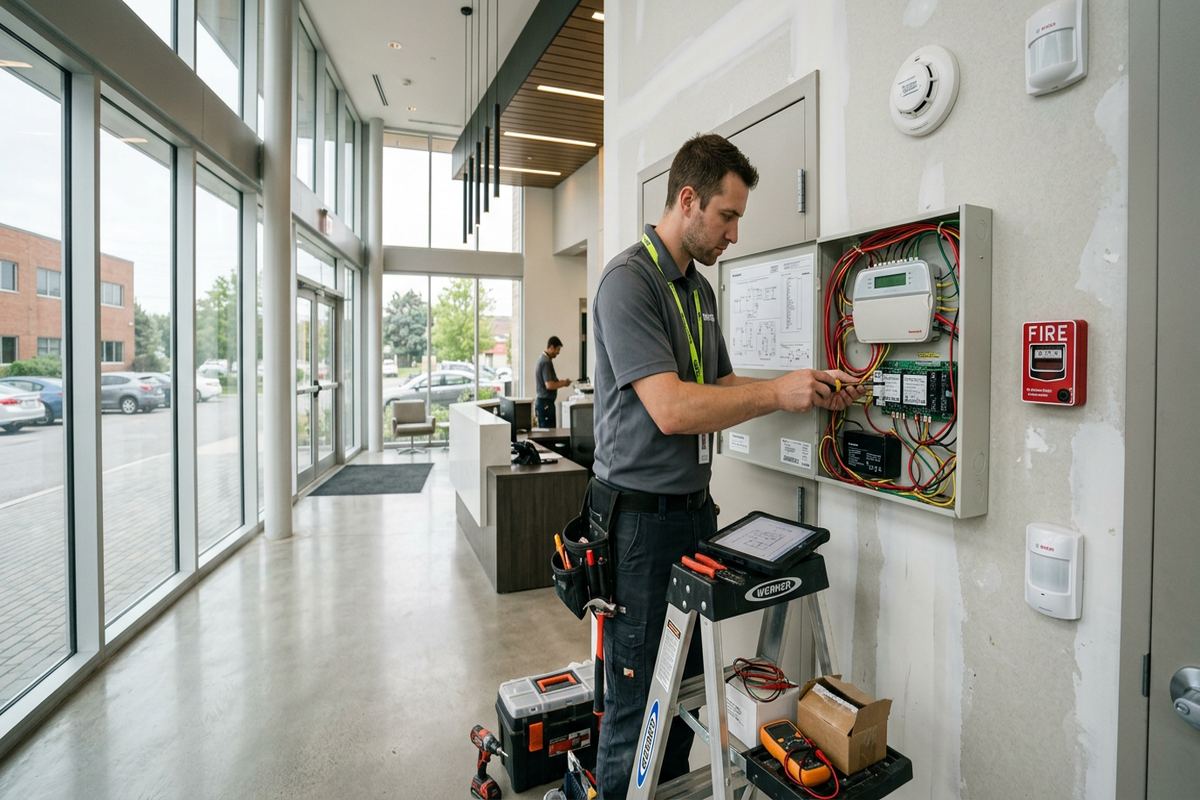
An existing commercial alarm system does not always need complete replacement. The assessment can identify whether the panel, power supply, cabling, contacts and detectors remain usable and compatible with current requirements. Labels, programming records and equipment ownership are particularly important when the original installer or monitoring arrangement has changed. We inspect accessible components and test functions that can be evaluated safely. Reusing equipment depends on condition, compatibility and access to programming. Unsupported, damaged or proprietary components may limit practical upgrade options, and those constraints are explained before a replacement or migration scope is prepared.
Renovations frequently change how alarm coverage performs. A new office wall can block a motion detector, while taller shelving can create blind areas or unwanted reflections. A former rear exit may become a staff entrance, and an open warehouse can be divided into separately occupied units. In Bolton North Hill and Old Bolton, adapted buildings may also contain mixed construction that complicates relocation. Before devices are moved, we review the new layout, cable access and intended operating schedule. The revised scope identifies retained equipment, new devices, abandoned cabling and any patching or finishing outside the low-voltage work.
Takeovers require attention to credentials, communicator accounts and documentation. Customers should confirm that they own or are permitted to reuse installed equipment, especially when it was supplied under a monitoring or lease arrangement. UnifiedLink can document accessible device locations, cable identifiers and known limitations as part of the project. We do not represent uncertain wiring or untested devices as verified. If concealed cabling cannot be traced without disruption, the scope states that limitation. A planned migration reduces the risk of losing essential coverage while panels, communications or user procedures are changed.
- Existing equipment assessed before replacement
- Compatibility and ownership limitations reviewed
- Coverage updated after layout changes
- Retained and abandoned components documented
Scope, Handover and Service Requests in Bolton
Pricing follows a site assessment because commercial alarm requirements depend on openings, construction, access and operating needs. The written scope covers proposed equipment, cable routes, device placement, exclusions, equipment ownership and warranty. It also identifies expected visible pathways, required approvals and work assigned to other parties. This allows a Bolton business to compare the proposed installation with its actual needs rather than relying on an undefined allowance. If optional work is useful, it can be separated clearly. Site assessment timing depends on the requested service and travel distance, and access to relevant rooms must be arranged.
Handover includes practical information needed to operate and maintain the installed system. The customer receives their own credentials, an explanation of normal controls and an as-built record showing installed devices and relevant pathways or termination information. Designated users can review arming, disarming, zone identification and basic event handling. Any monitoring, network or third-party dependencies are recorded along with known exclusions. Documentation should be stored where an authorized manager can retrieve it after staffing or service-provider changes. Sensitive credentials should be protected rather than written on equipment or shared through uncontrolled messages.
Bolton service requests sent during business hours are answered the same day, while after-hours requests are answered the next business day. This wording describes when the request is answered, not a guaranteed arrival or repair time. The next step depends on the reported issue, system information, required equipment and travel distance. Providing panel details, photographs, event messages and a description of recent building changes can support initial review. For additions or upgrades, current drawings and landlord approvals are also useful. One accountable contractor manages the agreed low-voltage alarm scope from assessment through documented handover.
- Site assessment completed before pricing
- Detailed written scope and exclusions
- Customer credentials supplied at handover
- As-built alarm record provided
- One contractor accountable for the scope
Bolton neighbourhoods we cover
- Bolton North Hill
- Bolton South Hill
- Old Bolton
- Bolton Industrial Park
Commercial alarm system installation in Bolton — common questions
Do you assess my Bolton property before quoting?
Yes. Commercial alarm pricing follows a site assessment because the required equipment and labour depend on the building layout, construction, openings, cable access and operating procedures. Assessment timing in Bolton depends on the service and travel distance. Afterward, UnifiedLink prepares a written scope covering equipment, cable routes, placement, exclusions, ownership and warranty rather than relying on an undefined package.
Can you install alarms in Bolton industrial units?
Yes. Bolton Industrial Park units may include offices, warehouses, loading bays, overhead doors and equipment areas, each requiring different detection methods. We review ceiling heights, door use, partitions, stock layouts and available cable routes. The design can use clearly named zones or partitions so authorized users can operate separate areas without making the system difficult to understand.
Are wired or wireless alarms better?
Neither option is automatically better for every Bolton property. Wired devices are often suitable where ceiling spaces and cable routes are accessible. Wireless devices may reduce disruption in finished or masonry areas, but placement, signal paths and battery maintenance matter. A hybrid design can combine both. The site assessment determines which approach fits the construction, required coverage, landlord conditions and future maintenance needs.
Do I need landlord or condo approval?
Approval may be required if the alarm work affects exterior walls, common areas, shared pathways or building finishes. This is relevant for leased commercial premises and condominium units in Bolton. Customers should check their lease, condominium rules or property-management requirements before scheduling. The written scope can identify proposed drilling, visible raceway and exterior devices so the appropriate party can review the planned work.
Can you reuse my existing alarm equipment?
Possibly. We assess accessible panels, detectors, contacts, cabling and power components for condition and compatibility. Reuse also depends on equipment ownership, programming access and any monitoring agreement. For an existing Bolton system, retained devices and known limitations are documented. Unsupported, proprietary or damaged components may need replacement, and concealed wiring cannot be represented as verified unless it can be traced and tested.
What do I receive when installation is finished?
At handover, the system is configured on site and reviewed with designated users. The customer receives access through their own credentials, along with an as-built record of installed devices and relevant cable or termination information. We explain routine arming, disarming and zone identification. Monitoring, network dependencies, exclusions and other responsibilities are documented so the Bolton property manager is not dependent on an installer-owned account.
Coverage in Bolton is confirmed against the address before we quote. See everything we install in Bolton or the province-wide commercial alarm system installation page.