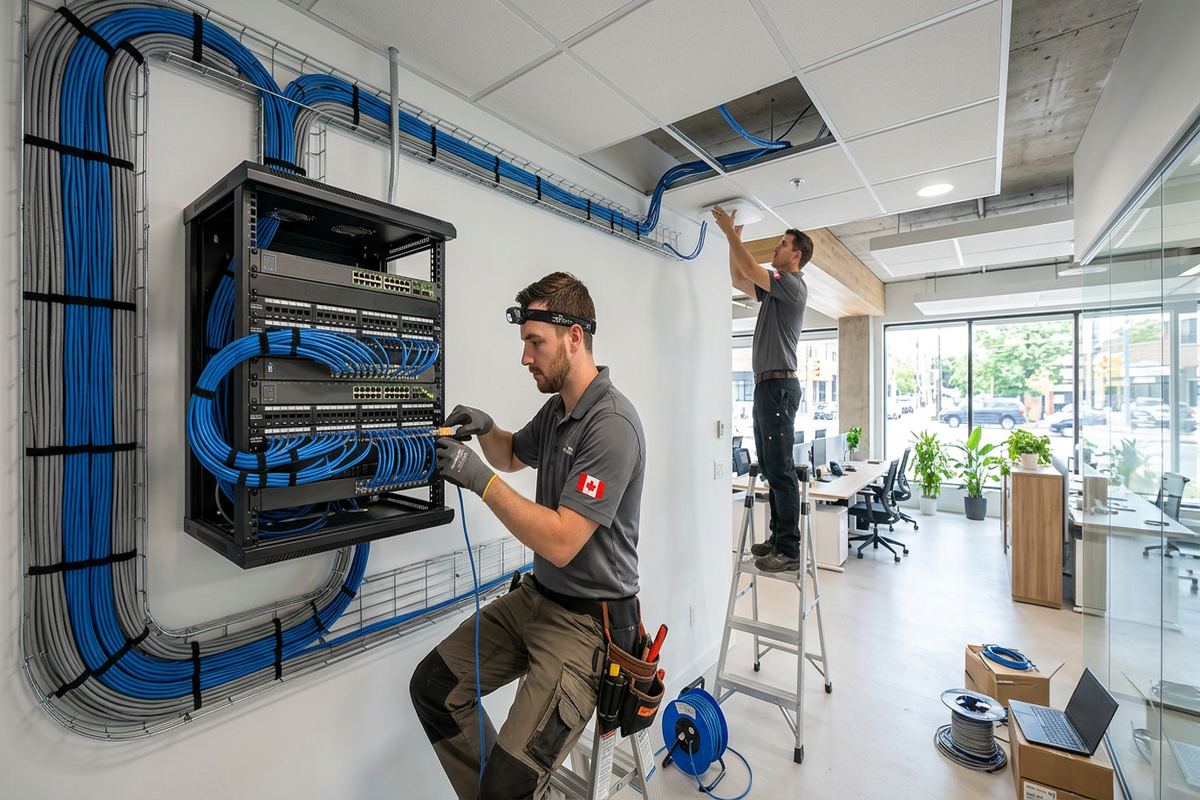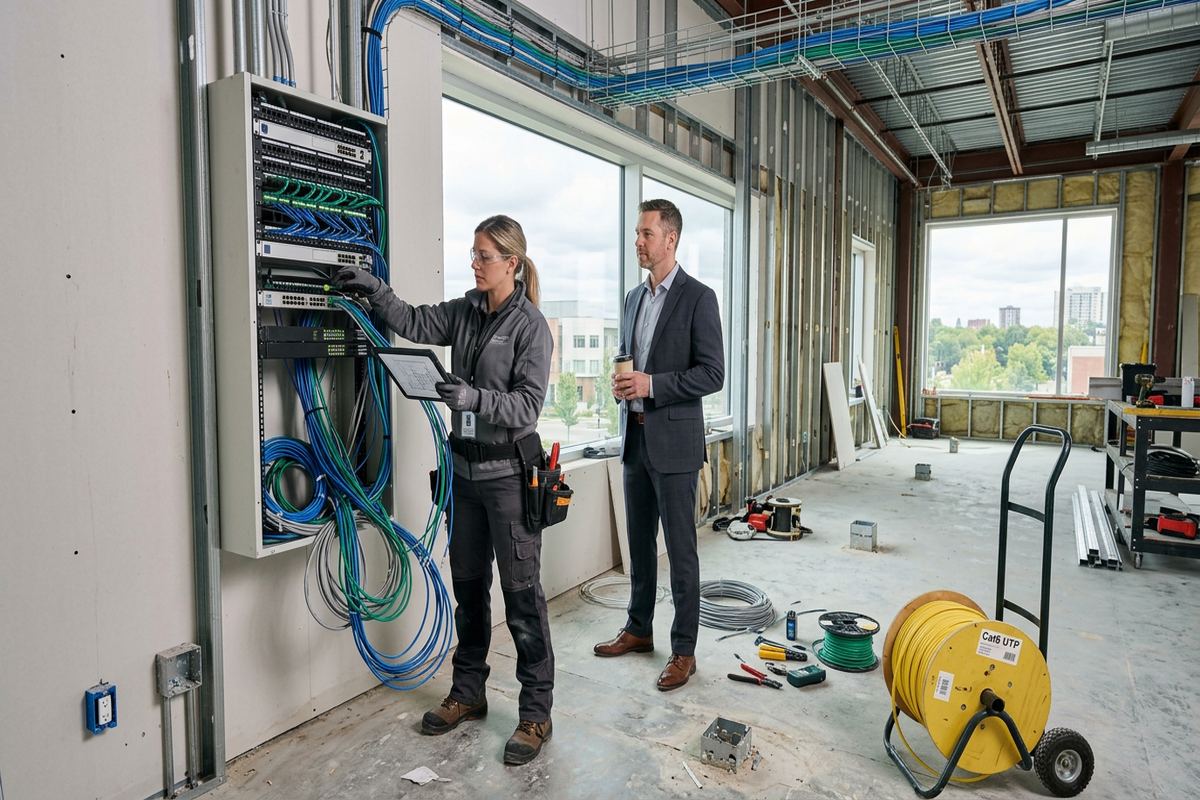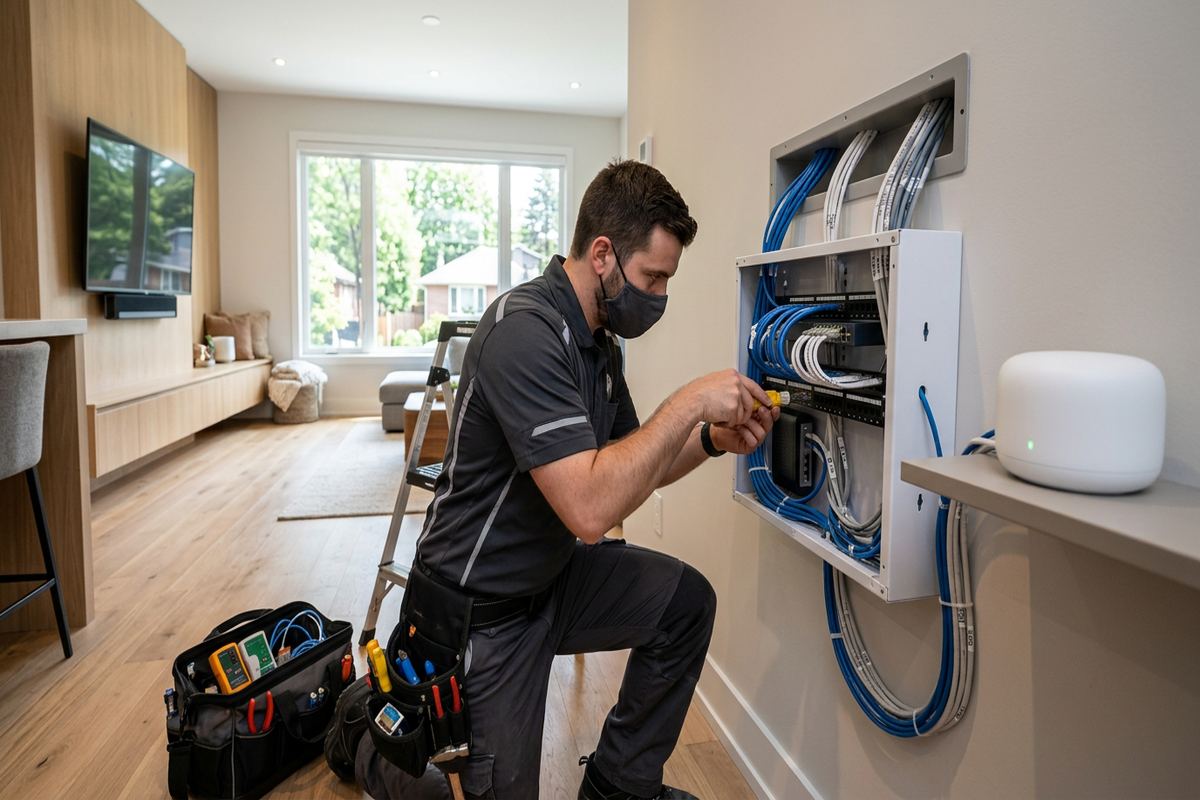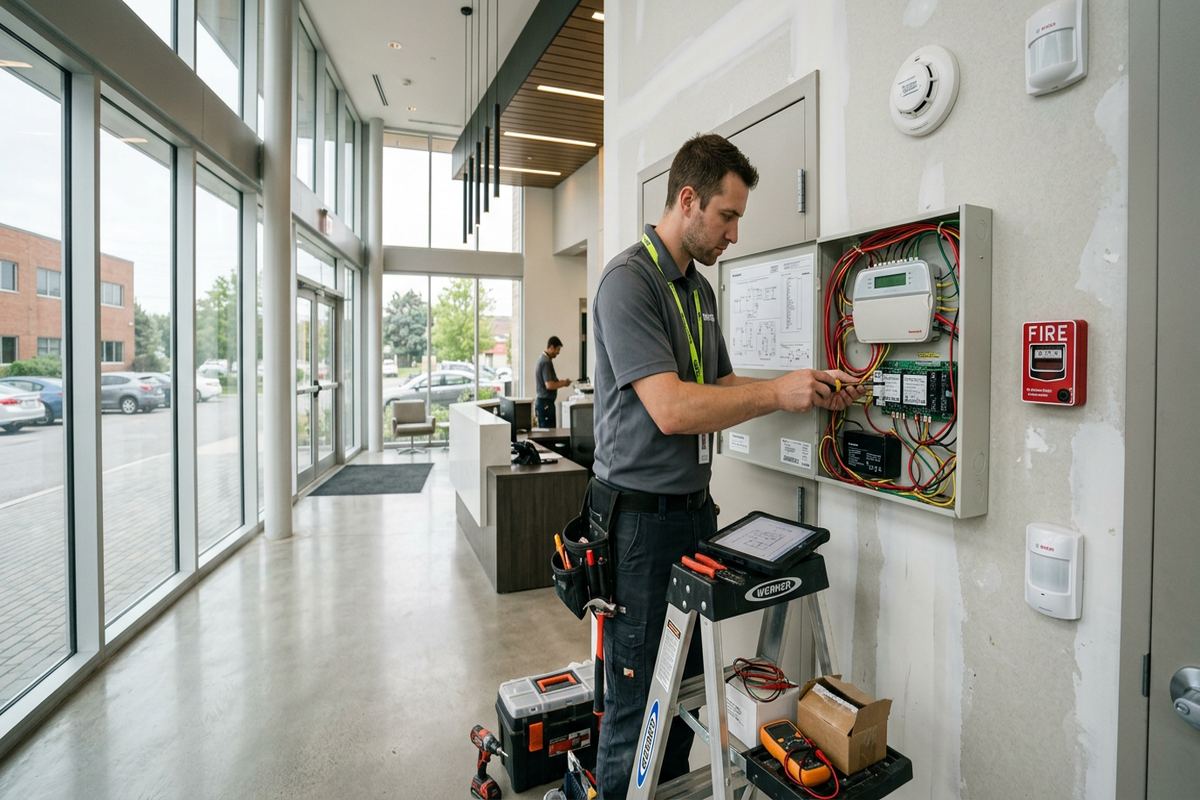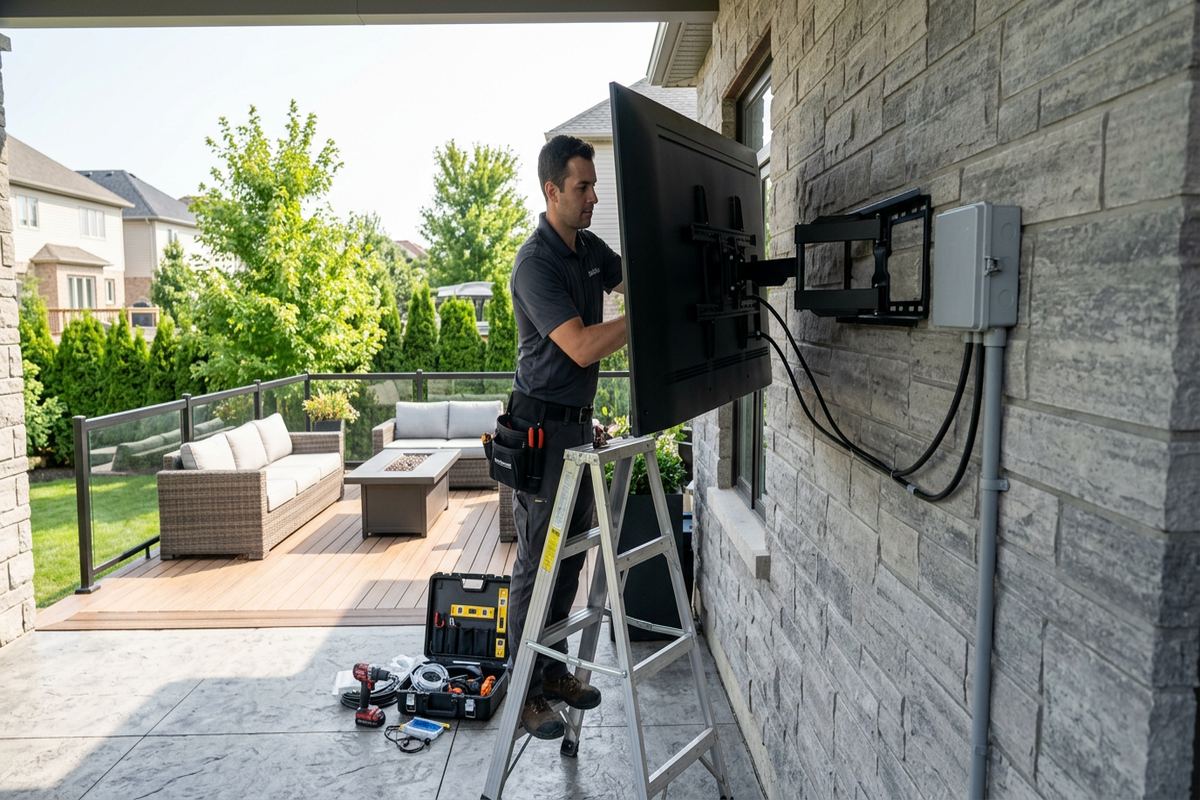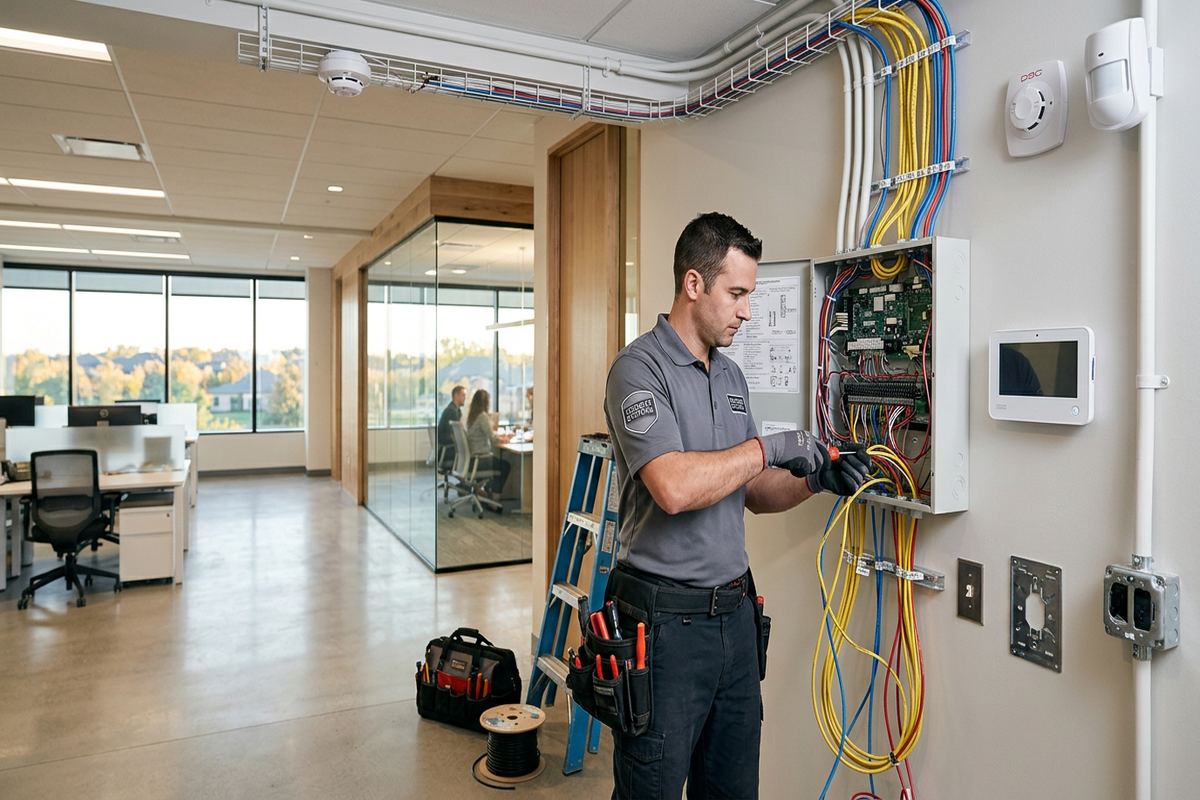
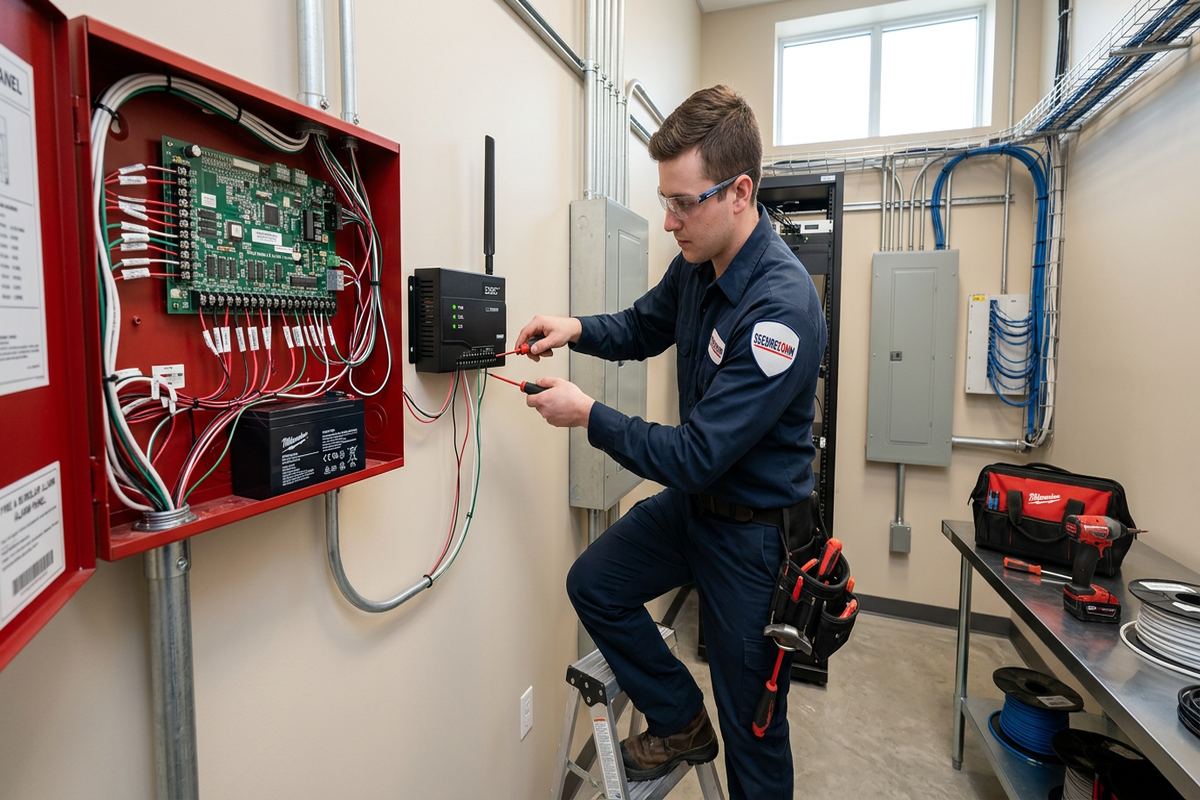
UnifiedLink installs wireless alarm systems for homes, commercial spaces and industrial properties in Belleville and the Bay of Quinte. Each project starts with a site assessment to identify entry points, construction constraints, signal conditions and approval requirements. We then provide a written scope before pricing, install and configure the system on site, and complete a documented handover.
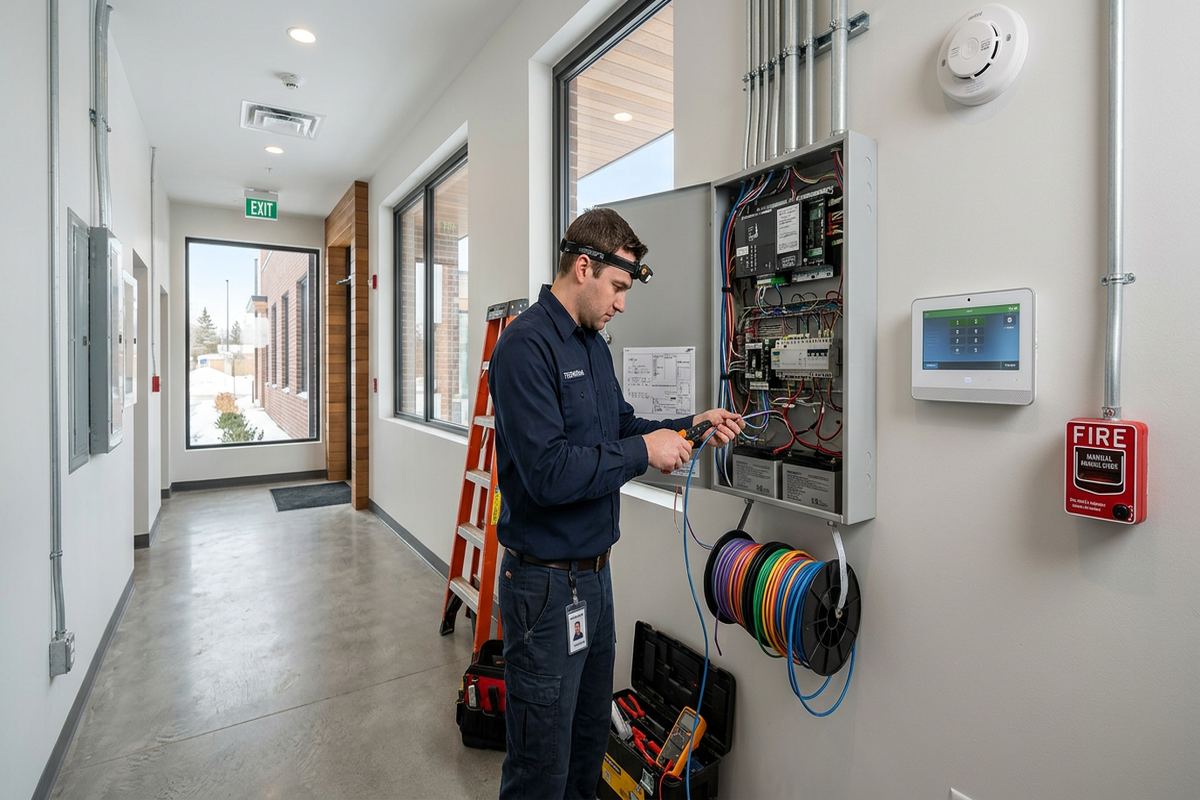
Wireless Alarm Planning for Belleville Properties
A wireless alarm system still requires careful planning. During a Belleville site assessment, UnifiedLink reviews doors, accessible windows, attached garages, loading areas and other practical entry points. We also look at floor layout, construction materials, electrical availability and the location of the internet equipment when connected functions are required. This determines where wireless contacts, motion detectors, keypads, sirens and supporting equipment should be placed. The objective is not to cover every opening automatically, but to build sensible detection layers around how the property is occupied, entered and secured each day.
Belleville properties are not all approached in the same way. Older downtown buildings may contain thick masonry, additions, changed interior layouts and limited mounting surfaces. Waterfront homes can expose exterior components to wind-driven moisture and repeated temperature changes. Food-processing plants require planning around washdown areas, metal equipment, controlled spaces and operating procedures. A useful design accounts for these conditions before equipment is selected. It also separates security needs from convenience features, reducing unnecessary devices while identifying locations where reliable detection, audible notification or user control is genuinely important.
After the assessment, we prepare a written scope covering the proposed equipment, device placement, expected cable routes where any wired connections are needed, exclusions, equipment ownership and warranty. This gives a Belleville homeowner, property manager or business operator a defined basis for reviewing the work before pricing. The scope can also identify work that depends on landlord, condominium or facility approval. Clear documentation is particularly useful in mixed-use buildings, leased commercial units and properties where finishes, fire separations or shared spaces limit where equipment can be mounted or supporting cables installed.
- Review doors, windows, garages and loading areas
- Check construction materials and wireless signal paths
- Identify power, internet and control equipment locations
- Document equipment, placement, exclusions and ownership
Choosing Wireless Alarm Equipment in Belleville
Equipment selection begins with the risks and daily routines of the site, not a preselected package. A detached home in East Hill may need perimeter contacts, interior motion detection and simple keypad control, while a business in Downtown Belleville may require scheduled arming, separate user permissions and protection for rear service doors. UnifiedLink considers how many people use the property, whether spaces remain occupied after hours and how alerts should be handled. The resulting design can include door and window contacts, motion detectors, glass-break detection, panic devices, sirens and compatible environmental sensors where the scope calls for them.
Wireless devices communicate by radio, but building materials can absorb, reflect or interrupt those signals. Brick walls, concrete floors, metal shelving, mechanical equipment and foil-backed insulation can affect device placement. Before final mounting, we consider practical communication paths between sensors and the main alarm equipment. Larger homes, multi-level commercial spaces and industrial units may require different equipment locations or supporting devices to maintain dependable coverage. Testing is performed in the actual building because a floor plan alone cannot show the influence of machinery, renovations, tenant fixtures or dense construction found in many Belleville properties.
The alarm controls should also match the people responsible for the property. We can configure named users, practical entry and exit delays, partitioning where supported, and notification settings included in the agreed system. A family may need straightforward operation from a keypad and mobile application, while a commercial operator may require different permissions for managers, employees and cleaners. The system is configured on site rather than handed over in a default state. Credentials belong to the customer, and administrator access is transferred during handover so future account decisions remain under the customer’s control.
- Door, window and motion detection options
- User permissions based on actual responsibilities
- Signal planning around brick, concrete and metal
- On-site configuration using customer credentials
Wireless Detection for Older Belleville Buildings
Older buildings in Downtown Belleville often need a less intrusive installation approach. Original trim, uneven openings, solid masonry and later renovations can make standard contact placement unsuitable. Wireless devices may reduce the need to open finished walls, but they still need secure mounting, correct alignment and accessible battery replacement. We assess each opening rather than assuming that identical sensors will fit throughout the building. Where surfaces are irregular or protected finishes must remain intact, the scope can describe alternate positions, brackets or limited supporting cable work before installation begins, avoiding improvised placement on the day of work.
Masonry and frame construction behave differently during both installation and wireless operation. Masonry can require appropriate anchors and careful drilling, while frame walls may conceal wiring, plumbing or vapour barriers near a proposed mounting point. Thick brick partitions can also reduce radio performance between devices and the alarm control. In mixed construction, such as a masonry storefront with a framed rear addition, equipment may need to be distributed around the transition. UnifiedLink checks mounting surfaces, tests communication and seals approved exterior penetrations with materials suited to the surface and exposure rather than relying on a general-purpose indoor sealant.
Tenants and condominium owners should confirm what they are permitted to alter before work proceeds. A landlord may control drilling into masonry, mounting in common corridors or connecting equipment to shared internet and electrical services. Condominium rules may also restrict exterior sirens, door hardware changes or devices visible from outside. The written scope identifies known approval dependencies and separates work inside the unit from work affecting shared property. For leased commercial spaces in Belleville, this documentation can help the tenant and owner review mounting, equipment ownership and removal obligations before committing to the installation.
- Non-invasive options for finished interiors
- Mounting plans for uneven doors and trim
- Appropriate anchors for masonry or frame surfaces
- Approval dependencies recorded before installation
Belleville, Ontario
Wireless alarm installation in Belleville, scoped in writing first
Book a site assessment and get equipment, routes, exclusions, and warranty on paper before anything is installed.
Belleville Winters and Exterior Alarm Devices
Winter conditions in the Bay of Quinte affect where and how alarm devices are installed. Repeated freeze-thaw cycles can open small gaps around exterior penetrations, loosen unsuitable mounting methods and introduce moisture behind poorly sealed hardware. Exterior-rated equipment must be selected where a device is exposed, but the rating alone does not correct a weak mounting surface or unsealed cable entry. We consider exposure to snow, rain, wind and direct sunlight, then use mounting and sealing methods suited to the wall material. Indoor wireless contacts are kept away from condensation-prone locations when practical.
Waterfront homes and properties near open shoreline can experience greater wind exposure and driven precipitation than sheltered urban lots. A gate contact, detached-building sensor or exterior siren therefore needs a different review from an indoor device. UnifiedLink checks whether the proposed equipment is intended for the temperature range and environment, whether radio communication remains stable at that distance, and whether the mounting location permits maintenance. If a location is unsuitable, the scope explains an alternative rather than treating outdoor placement as interchangeable with interior installation. Batteries and device condition should also be checked as part of ongoing maintenance.
Temperature changes can affect doors and frames as materials expand, contract or shift. A contact that is aligned during mild weather may become unreliable if the gap changes significantly in winter. During installation, we choose practical positions with stable alignment and test the opening through its normal range of movement. Garages, vestibules, outbuildings and unheated service areas receive particular attention because their conditions differ from occupied rooms. For Belleville businesses, exterior loading and staff doors also need mounting that can tolerate frequent use without placing sensors where carts, deliveries or snow removal equipment may strike them.
- Exterior-rated devices where exposure requires them
- Sealed penetrations appropriate to each wall surface
- Contact alignment planned for seasonal movement
- Accessible locations for inspection and battery changes
Alarm Coverage for Belleville Homes
Home alarm design should reflect the way residents enter, leave and move through the property. In West Park Village, a typical plan might prioritize the main entrance, patio access, an attached garage and accessible ground-floor windows. Homes in Thurlow may include larger lots, detached structures or longer distances between buildings, requiring additional signal testing before wireless devices are specified. Rather than installing motion detection everywhere, we consider pets, overnight movement and occupied zones. This helps reduce avoidable activations while retaining useful detection along likely paths through the home after an entry point is breached.
A wireless system can support renovations or finished homes where extensive new cabling is undesirable. It does not eliminate every wire: the main control, keypad, siren, communications equipment or supporting network hardware may still need power or a planned connection. Where cables are included, UnifiedLink installs continuous labelled runs instead of concealed splices or unidentified segments. Cable routes are shown in the written scope and reflected in the as-built record. This is especially important when equipment is placed in a basement utility area, finished closet or structured wiring location that another contractor may need to understand later.
Household use is reviewed during commissioning. We test doors and windows, confirm detector coverage, adjust supported entry and exit timing, and explain how to arm, disarm and respond to common notifications. Each authorized user should understand the difference between an alarm event, a trouble condition and a low-battery notice. The customer receives administrator credentials rather than relying on an installer-controlled account. Handover also records device locations and relevant equipment details, providing a useful reference when a Belleville homeowner replaces a door, changes internet service, renovates a room or requests future system modifications.
- Coverage matched to household entry routines
- Pet and overnight movement considered
- Labelled supporting cable runs where required
- Device testing and user training at handover
Commercial Wireless Alarms in Belleville
Commercial alarm requirements extend beyond locking the front door at closing time. Retail units, offices and service businesses along Belleville commercial strips may have rear entrances, stockrooms, cash-handling points, shared vestibules and employees arriving at different times. A suitable plan assigns detection and user access around those operations. It may also divide supported systems into separately controlled areas so one section can remain occupied while another is armed. We review opening and closing routines with the responsible contact because operational details often determine whether an alarm system is practical after installation.
Industrial units and food-processing plants need particular attention to environmental and operating conditions. Metal wall panels, machinery, storage racks and moving equipment can influence wireless communication and detector views. Washdown procedures, humidity, dust, refrigeration zones or sanitation rules may make standard device locations inappropriate. UnifiedLink coordinates proposed positions with facility representatives and identifies restricted areas or shutdown requirements in the scope. Devices must remain accessible for testing without interfering with production, material movement or cleaning. Where wireless performance or environmental suitability is uncertain, the design is revised rather than assuming residential equipment will work in an industrial setting.
Accountability matters when alarm work intersects with internet service, door hardware, electrical power or other low-voltage systems. UnifiedLink acts as one accountable contractor for the agreed installation and coordinates the alarm components within that scope. We document exclusions so the customer knows when work by an electrician, locksmith, internet provider or building representative is required. For leased Belleville commercial units, equipment ownership and removal expectations are stated in writing. This reduces uncertainty when a tenant relocates, a property changes management or another contractor needs to service an adjacent system in the future.
- Scheduled arming and role-based users
- Coverage for storefronts, stockrooms and service doors
- Industrial signal and environmental assessment
- Clear coordination with other required trades
Installation and Configuration Across Belleville
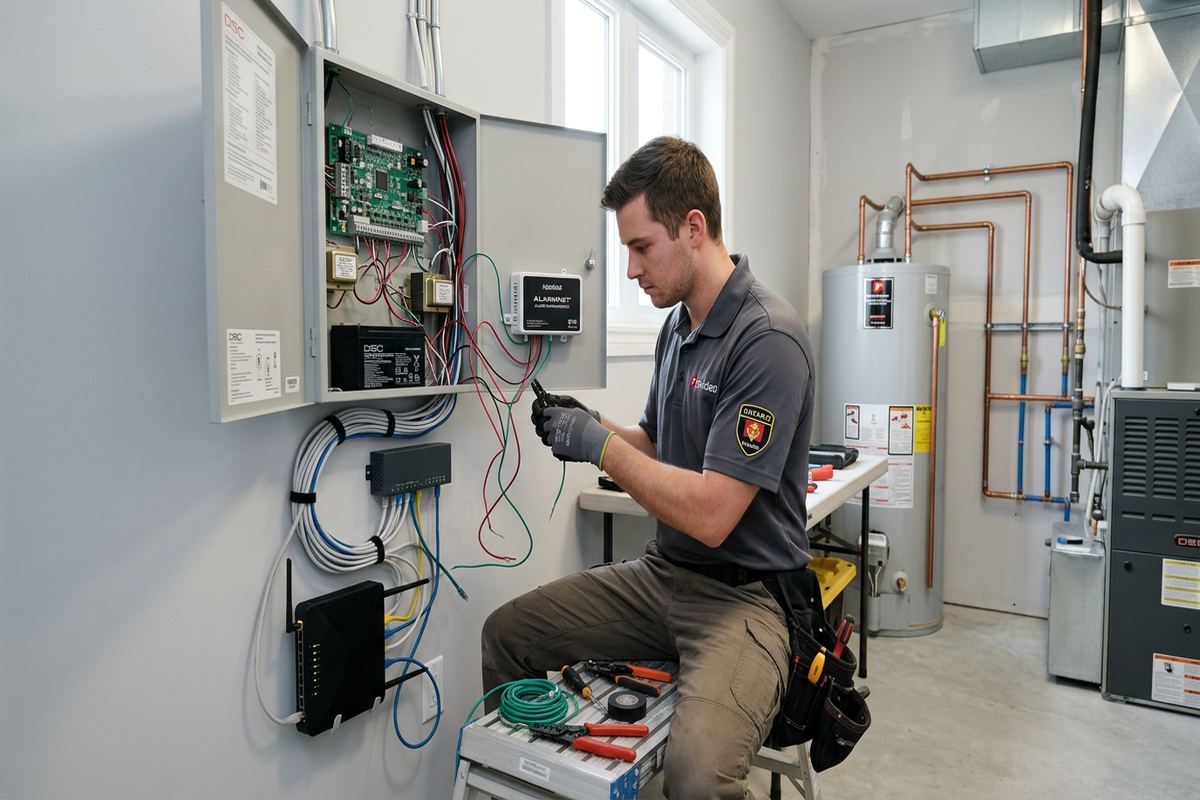
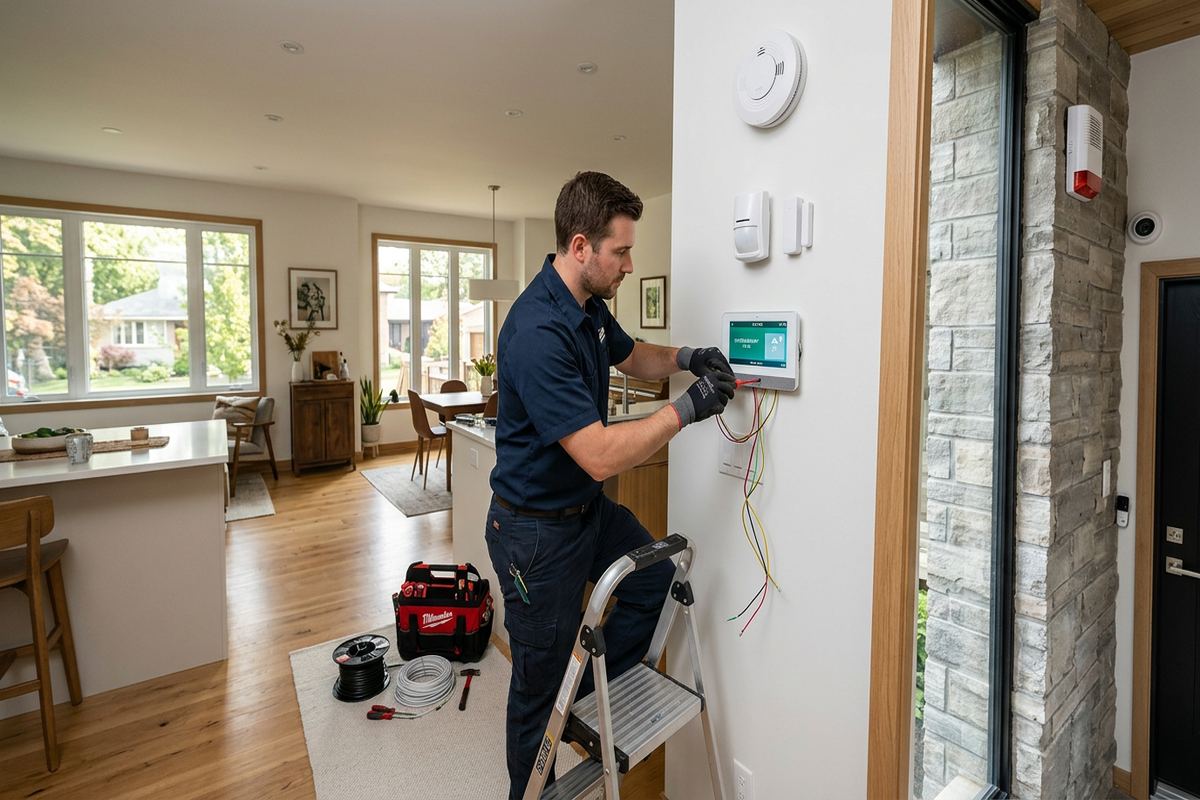
Once the scope is approved, installation starts with confirming device locations against current site conditions. Renovations, new shelving or changed furniture can affect a position selected during an earlier assessment, so material changes are reviewed before mounting. Wireless contacts are aligned and securely fixed, motion detectors are aimed to cover intended paths, and controls are placed where authorized users can operate them safely. Any agreed cable runs are installed continuously and labelled at their endpoints. Work areas are kept organized, and penetrations are sealed according to whether the surface is interior, exterior, masonry, siding or another approved material.
Configuration is completed on site using the agreed operating requirements. Devices are enrolled, named in plain language and assigned to appropriate zones or partitions supported by the equipment. We verify entry delays, exit delays, audible notifications, user permissions and connected alert functions included in the scope. Signal and activation tests are performed from installed positions rather than relying only on equipment status at the control. In Bayside, Point Anne or more dispersed parts of Thurlow, internet and cellular conditions may differ by property, so any connected communication path must be assessed at the specific Belleville-area location.
Handover is part of the installation, not an optional follow-up. UnifiedLink provides the customer with their own credentials, explains routine operation and records installed device locations in an as-built document. We also review battery notifications, basic testing and circumstances that should prompt service, such as repeated communication faults or a door contact becoming misaligned. The customer should know which equipment they own, what warranty applies and what was excluded from the work. This record supports future maintenance and gives another authorized technician a clear starting point if property use or security requirements later change.
- Device positions reconfirmed before mounting
- Sensors named clearly during configuration
- Installed locations tested for activation and communication
- Credentials and as-built record supplied at handover
Arranging a Belleville Alarm Site Assessment
A site assessment is the starting point for pricing a wireless alarm installation in Belleville. The visit allows us to confirm the number and type of openings, construction materials, environmental exposure, user requirements and practical equipment locations. For businesses, we also discuss operating hours, access responsibilities, restricted areas and any coordination needed with property management. Site assessment timing depends on the service and travel distance. Requests sent during business hours are answered the same day, while after-hours requests are answered the next business day. An answered request is not a promise of an immediate site visit.
Preparing basic information helps make the assessment useful. Homeowners can identify the doors, windows, garage areas or outbuildings they want considered and disclose whether pets remain inside when the system is armed. Business owners should identify responsible users, after-hours occupancy, delivery access and spaces with unusual temperature, moisture or sanitation conditions. If the property is leased or part of a condominium, available rules or written approvals should be shared early. In older Belleville properties, details about prior renovations can also help explain concealed additions, mixed wall construction or areas where drilling and mounting are restricted.
Following the assessment, the written scope sets out the agreed equipment, placement, any cable routes, exclusions, equipment ownership and warranty information. It gives the customer an opportunity to review assumptions before pricing and installation are finalized. Changes can then be addressed as scope changes rather than informal additions during the work. From Downtown Belleville and East Hill to Point Anne and Bayside, the same process applies: inspect the actual property, account for its construction and use, document the proposed system, configure it on site, and complete handover under the customer’s own credentials.
- Assessment completed before project pricing
- Service and travel affect assessment timing
- Written scope provided for review
- One accountable contractor for agreed work
Belleville neighbourhoods we cover
- Downtown Belleville
- East Hill
- West Park Village
- Thurlow
- Bayside
- Point Anne
Wireless alarm installation in Belleville — common questions
Will a wireless alarm work in an older Belleville home?
It often can, but thick masonry, additions, metal materials and unusual door trim can affect sensor selection and radio communication. UnifiedLink assesses the actual Belleville property, tests proposed communication paths and plans mounting around finished surfaces. Wireless equipment can reduce new cabling, although controls, power supplies or supporting communications equipment may still require planned wired connections.
Do wireless alarm devices work during Belleville winters?
Indoor devices generally operate within their specified environment, while garages, outbuildings and exterior locations require closer review. Belleville freeze-thaw cycles, condensation and seasonal door movement can affect mounting and contact alignment. We select equipment for the proposed conditions, test it in place and use appropriate exterior sealing where an approved penetration or outdoor mounting point is included.
Can you install an alarm in a rented or condominium property?
Yes, provided the required permissions are in place. Belleville landlords or condominium corporations may restrict drilling, exterior devices, common-area work or connections to shared services. The written scope can identify approval dependencies, equipment ownership and removal obligations. Customers should obtain authorization before work affecting shared property, masonry, exterior finishes or building-managed electrical and internet systems proceeds.
Can wireless alarms cover a detached garage or outbuilding?
Possibly, but distance, construction, temperature, power and radio obstructions must be assessed at the property. A detached building in Thurlow may present different conditions from an attached garage in East Hill. We test practical signal paths and review whether the proposed devices suit the environment. Supporting communication equipment or a different design may be necessary where reliable wireless coverage cannot be confirmed.
What happens during alarm system handover?
UnifiedLink tests installed devices, reviews routine operation and explains common alarm, trouble and low-battery notifications. The Belleville customer receives their own administrator credentials and an as-built record identifying device locations and relevant equipment details. We also confirm equipment ownership, warranty information and exclusions so the customer has a clear reference for maintenance, renovations or later system changes.
How quickly will you respond to my installation request?
Requests sent during business hours are answered the same day. Requests received after hours are answered the next business day. This response confirms the request and allows us to discuss the Belleville property; it does not guarantee an immediate visit. Site assessment timing depends on the required service and travel distance, and pricing follows assessment of the proposed installation scope.
Coverage in Belleville is confirmed against the address before we quote. See everything we install in Belleville or the province-wide wireless alarm installation page.