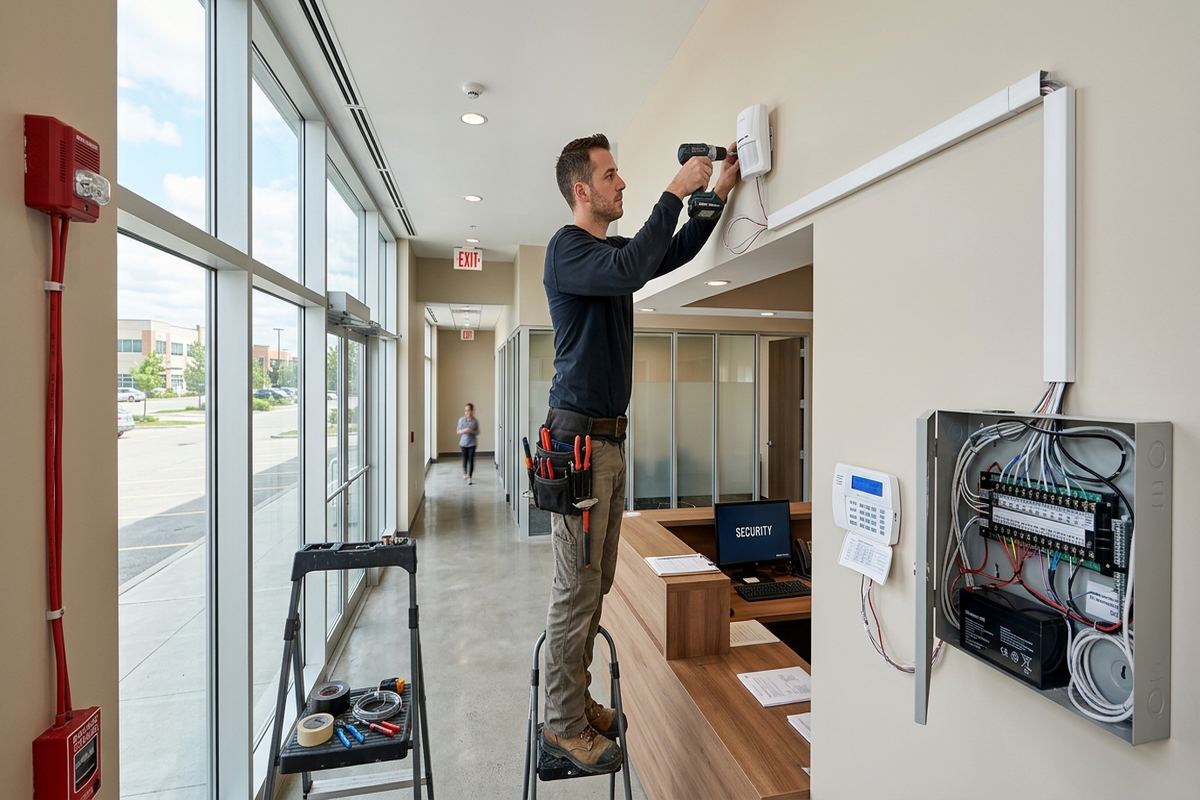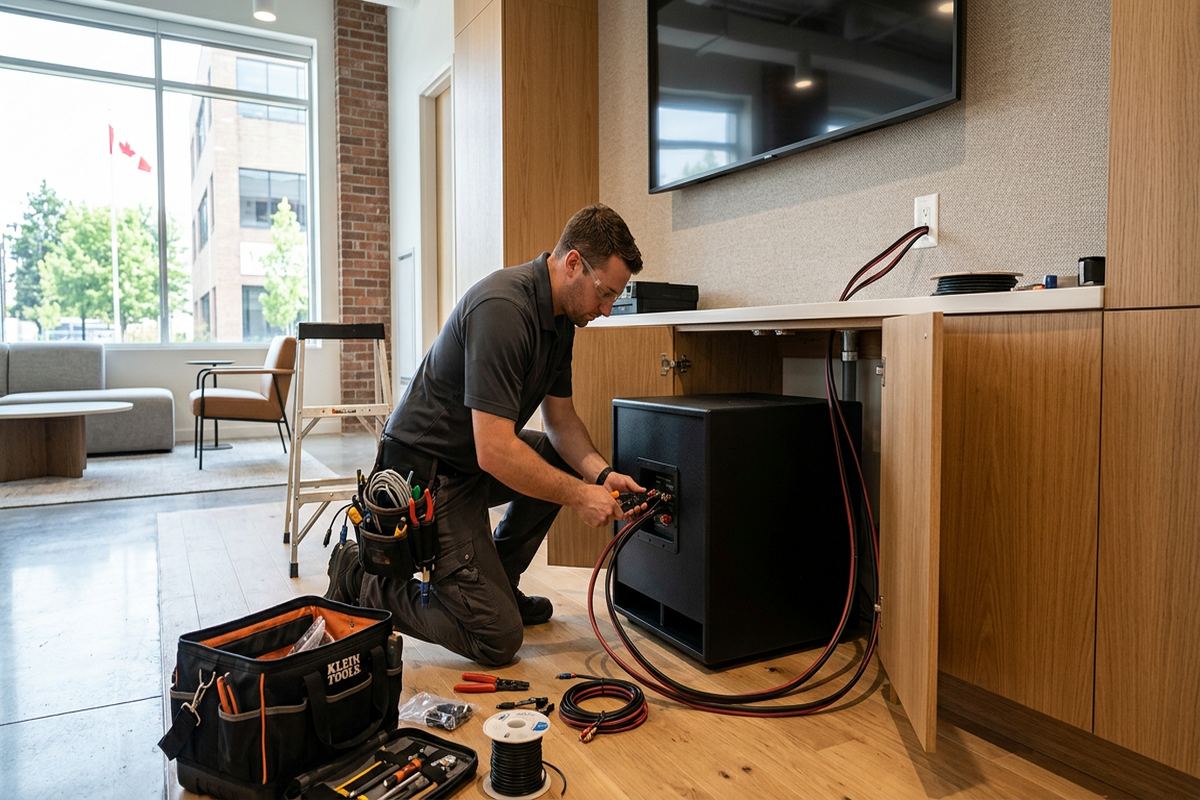
UnifiedLink installs outdoor speaker systems for homes, hospitality spaces, commercial properties and industrial sites across Belleville and the Bay of Quinte. Each project starts with the listening area, property construction and seasonal exposure. We plan speaker placement, mounting, cable routes, amplification and controls as one complete system, then configure and document it on site.
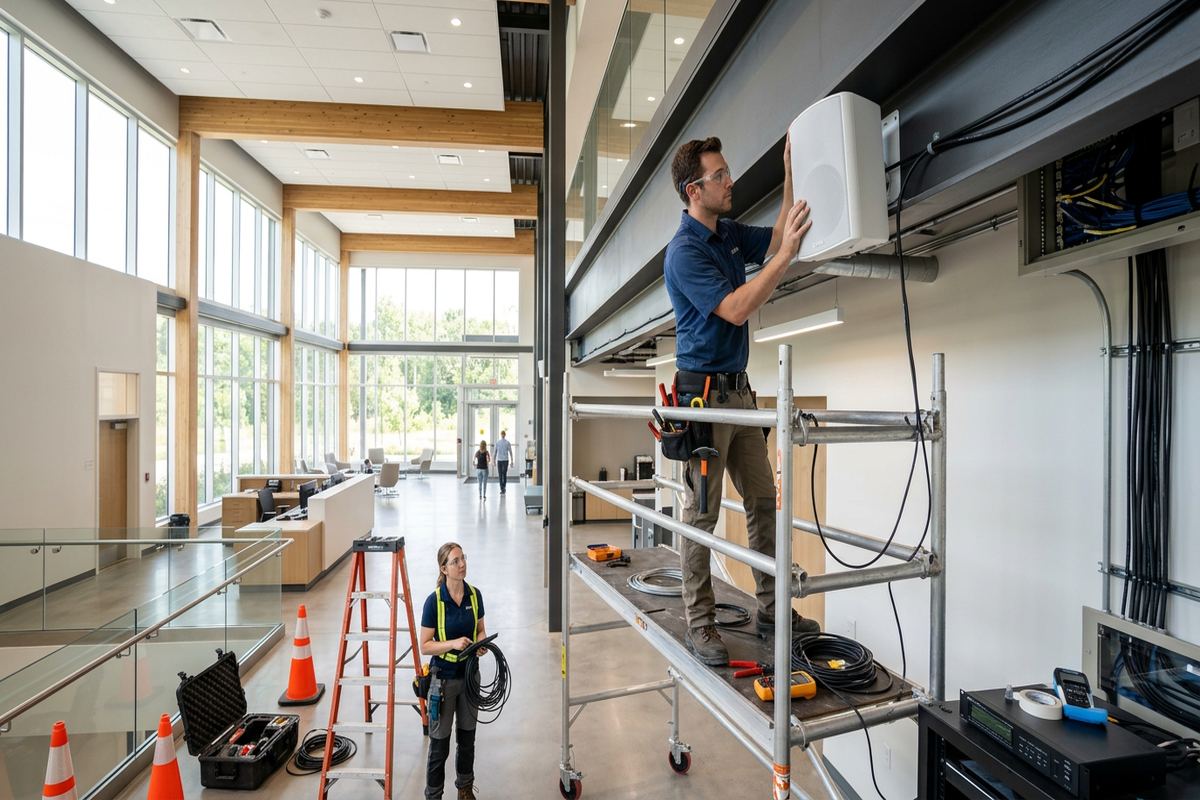
Outdoor Speaker Planning for Belleville Properties
A useful outdoor audio system begins with coverage planning rather than simply attaching speakers to a wall. We assess where people will listen, expected volume, nearby rooms, property boundaries and surfaces that may reflect sound. A small residential patio needs a different layout from a restaurant terrace, loading area or large waterfront yard. Speaker direction and spacing matter because excessive volume from one location creates uneven sound and can carry farther than intended. The design should provide intelligible, balanced audio across the occupied area without making one position uncomfortably loud.
Belleville properties vary considerably, so installation details cannot be copied from one building to another. Older downtown buildings may have thick masonry, renovated interiors and limited concealed pathways. Frame homes in East Hill or West Park Village can offer easier routes, but wall cavities, insulation and finished basements still affect access. Waterfront homes may expose equipment to wind-driven moisture and open sightlines. Food-processing plants introduce washdown practices, machinery noise and operating restrictions. We identify these conditions before selecting equipment, mounting hardware, wiring methods or control locations for the planned system.
Every project receives a site assessment before pricing. The written scope identifies proposed equipment, cable routes, speaker and control placement, exclusions, equipment ownership and applicable warranty information. It also distinguishes work that requires access, approvals or coordination with another trade. This process gives homeowners, property managers and business operators a practical basis for review before installation begins. Site assessment timing depends on the service and travel distance. Requests sent during business hours are answered the same day, while after-hours requests are answered the next business day.
- Listening-area and sound-coverage assessment
- Speaker spacing and direction planning
- Construction and cable-route review
- Written equipment and installation scope
Weather, Mounting and Sealing in Belleville
Outdoor speakers in Belleville must tolerate more than occasional rain. Winter cold, summer heat, snow, ice and repeated freeze-thaw cycles place stress on enclosures, brackets, fasteners and cable entry points. Equipment still needs placement that limits direct exposure where the building permits it. Under-eave mounting can provide protection, but it is not automatically the correct acoustic position. We consider drainage, snow accumulation, roof runoff and access for future inspection. The selected product must suit the location rather than relying on a generic indoor speaker placed beneath a shallow overhang.
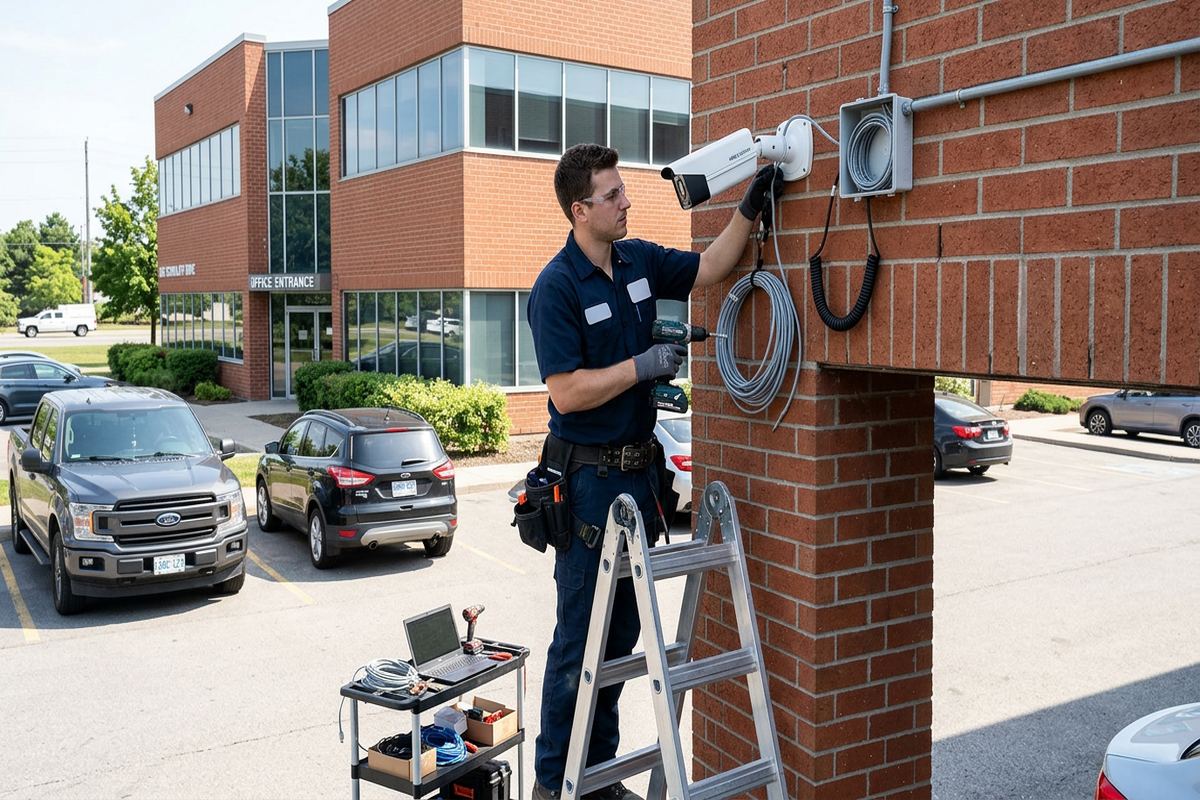
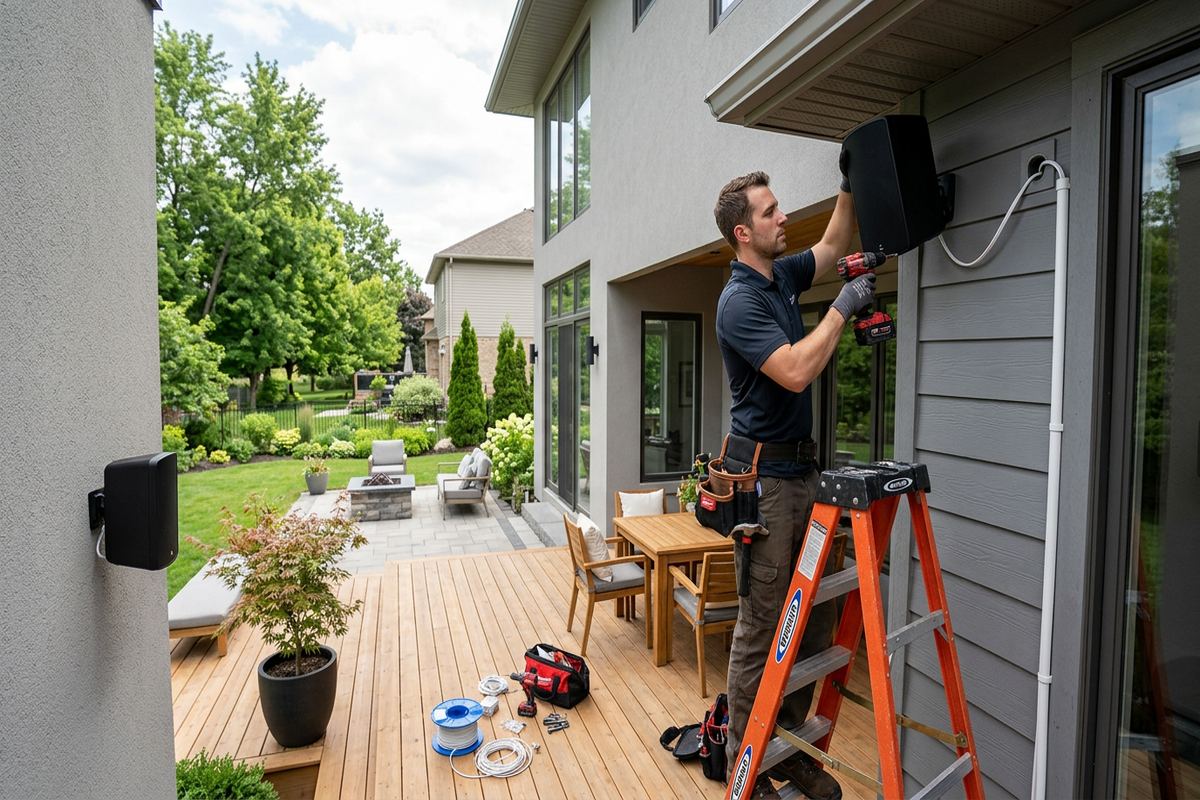
Exterior penetrations require deliberate sealing and mechanical support. A cable should not pass through siding, masonry or trim without a suitable entry method, drip management and sealant compatible with surrounding materials. Holes should be positioned to reduce water tracking toward the interior. Brackets need fasteners anchored into structural material, not merely cladding or thin finish layers. On brick buildings, mounting decisions must account for brick condition, mortar joints and the load involved. On frame construction, concealed backing and stud locations may determine the safest practical speaker position.
Waterfront exposure around the Bay of Quinte can increase wind-driven rain and place additional demands on connectors and mounting hardware. Point Anne and Bayside properties may also have open yards where sound travels differently than it does between closely spaced buildings. We plan connector protection, cable orientation and service access with those conditions in mind. Exterior wiring is secured so it does not move against sharp surfaces or hang where snow removal, ladders or routine maintenance could damage it. Visible components are arranged neatly and kept accessible for reasonable future service.
- Weather-suitable speaker selection
- Corrosion-conscious brackets and hardware
- Sealed, downward-managed cable entries
- Secure mounting into appropriate structure
Speaker Coverage and Placement
Speaker quantity should follow the shape of the listening area, not a preference for fewer visible devices. Several speakers operating at moderate levels often provide more even coverage than one pair driven loudly from the building. Long patios, pools, gardens and commercial seating areas may need separate positions or zones. We consider listening height, furniture, landscaping, fences and seasonal obstructions before confirming placement. Where neighbours or public walkways are nearby, speakers can be aimed inward and downward to help keep useful sound within the intended area while maintaining consistent coverage for occupants.
Mounting height affects clarity, projection and serviceability. Speakers positioned too low may be blocked, struck or tampered with, while units mounted excessively high can send sound beyond the listeners and become difficult to maintain. Downtown Belleville properties may have narrow rear areas, shared walls and upper-level residences that limit practical directions. In Thurlow, larger lots may call for distributed speakers closer to the listening zones. The final arrangement balances acoustic performance with building access, cable routing, appearance and the need to avoid creating unnecessary sound spill beyond property boundaries.
Outdoor audio can serve music, announcements, television sound or operational communication, but each use changes the design. Music systems prioritize balanced coverage and appropriate low-frequency performance. Speech requires clear intelligibility, especially where traffic, ventilation equipment or production machinery raises background noise. Television audio must align with the display location without disturbing unrelated zones. For mixed uses, separate volume control or source selection may be appropriate. We confirm the expected content and operating patterns before specifying the system so speakers, amplification and control methods work together instead of creating avoidable limitations.
- Even coverage at moderate listening levels
- Inward speaker aiming where practical
- Placement matched to primary audio use
- Separate zones for distinct outdoor areas
Belleville, Ontario
Outdoor speaker installation in Belleville, scoped in writing first
Book a site assessment and get equipment, routes, exclusions, and warranty on paper before anything is installed.
Cabling and Amplification for Belleville Installations
Reliable outdoor audio depends on the infrastructure behind the speakers. Cable type and conductor size must suit the amplifier, speaker configuration and length of each route. Longer runs can create performance losses if they are treated like short indoor connections. We calculate the practical load and select an appropriate wiring approach, including conventional low-impedance systems or distributed audio where the project requires it. Cable paths are planned to avoid electrical interference, physical hazards and unnecessary exterior exposure while preserving access to the amplifier, source equipment and network connection where applicable.
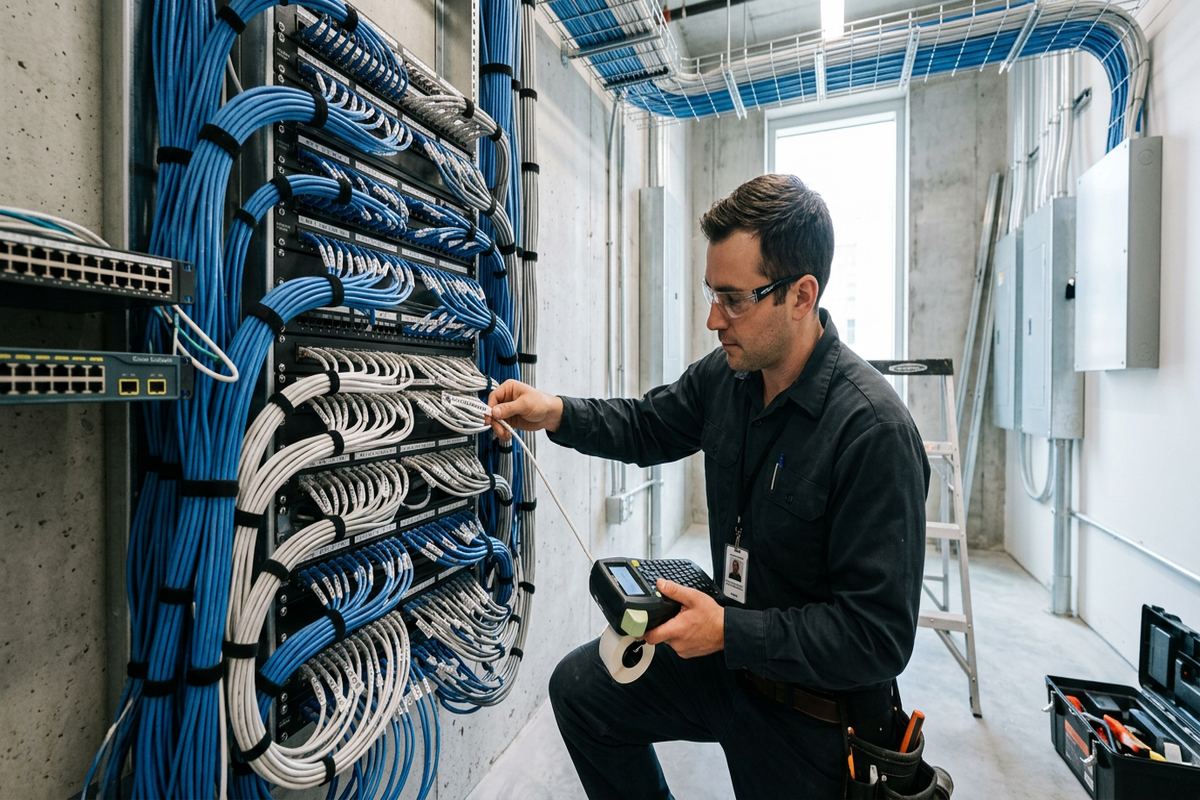
UnifiedLink installs continuous labelled cable runs between planned termination points. Avoiding hidden splices reduces potential failure locations, particularly where moisture or temperature changes can affect an inaccessible connection. Cable passing outdoors, underground or between buildings requires a method suited to that environment; indoor cable is not substituted simply because part of a route is sheltered. When conduit is present or proposed, fill, bends, drainage and entry points must be considered. Labels identify destinations at the equipment end and support future troubleshooting, changes or replacement without unnecessary tracing through finished areas.
Amplifier placement needs ventilation, electrical power, usable controls and protection from weather. It may be located in a utility area, communications cabinet, office or suitable interior equipment space rather than beside the outdoor speakers. Belleville businesses with commercial strips or industrial units may need rack integration and defined staff access. Homes may require a compact arrangement shared with television or network equipment. We verify speaker compatibility, expected zone loads and source connections before commissioning. Equipment is not enclosed in a location that traps heat or prevents reasonable inspection and cable management.
- Continuous labelled speaker cable runs
- Cable type matched to route conditions
- Amplifier load and ventilation review
- Organized terminations at equipment locations
Controls, Streaming and Audio Zones
Outdoor speakers can be controlled through a dedicated amplifier, wall control, mobile application, commercial audio processor or an existing automation platform, depending on compatibility and project needs. The control method should be understandable to the people using it every day. A complicated interface is not an improvement if staff or household members cannot quickly select a source and adjust the correct area. During planning, we identify who needs control, which devices they will use and whether guests, tenants or general employees should have restricted access to system settings.
Separate zones are useful when outdoor areas have different schedules or listening requirements. A restaurant patio may need independent level control from an indoor dining area, while a home may separate a deck from a pool or garden. Commercial and industrial properties can distinguish public areas from staff or loading spaces. Zoning requires suitable amplification and wiring from the beginning; it is not always a software setting that can be added later. We document the intended zones, permitted sources and control points so the installation supports normal operation without confusing overlapping volume adjustments.
Streaming audio depends on network reliability as well as speaker hardware. If the amplifier or audio player uses Wi-Fi, its location must have suitable coverage and a stable connection. Exterior speakers do not solve weak connectivity inside a utility room or detached structure. Where practical, a wired network connection can provide a more predictable link for fixed equipment. We also review account ownership and device registration. At handover, customers receive access using their own credentials rather than an installer-controlled account, helping them retain control of subscriptions, settings and future device changes.
- Simple source and volume controls
- Independent zones where required
- Network review for connected audio equipment
- Customer-owned accounts and credentials
Residential and Commercial Audio in Belleville
Residential installations often need to fit around finished surfaces and existing outdoor features. Decks, pergolas, pools, gardens and detached garages each present different cable and mounting options. In established Belleville neighbourhoods such as East Hill and West Park Village, an attic, basement or renovation may provide a route, but assumptions should not be made before inspection. We explain where wiring can remain concealed and where a surface route or conduit is more practical. The plan also considers children, pets, landscaping work and storage areas that could expose low-mounted speakers or cables to damage.
Commercial outdoor audio requires attention to operating hours, staff controls, adjacent occupancies and the purpose of the system. Downtown Belleville restaurants and storefronts may have compact patios near residences or shared building elements. Commercial strips can involve suspended ceilings, rear service areas and landlord-controlled exterior walls. Industrial units and food-processing plants may have high ambient noise, sanitation requirements or restricted installation windows. We define whether audio is for customers, staff, announcements or general background use, then select placement and control arrangements appropriate to the building and operating environment.
Food-processing facilities need particular coordination because an ordinary patio speaker plan may not suit production conditions. Washdown exposure, cleaning chemicals, temperature changes, hygiene practices and equipment noise can affect product and location choices. Mounting must avoid interfering with cleaning access, production movement or existing services. Work may also need coordination with plant representatives and established site procedures. We document exclusions where specialist equipment or another trade is required. The objective is a maintainable audio installation that respects the facility’s operational conditions rather than introducing unsuitable consumer equipment into a demanding area.
- Home patios, decks and yard systems
- Restaurant and retail outdoor audio
- Industrial and staff-area sound coverage
- Planning for food-processing environments
Approvals and Installation Coordination
Permission should be confirmed before any exterior surface is drilled. Condo corporations may regulate visible equipment, balcony use, common elements and acceptable cable routes. Tenants usually need written landlord approval, particularly where speakers attach to masonry, siding, roofing elements or shared walls. Commercial occupants may also require property-management review before work begins. UnifiedLink can provide a clear proposed scope and placement information for that discussion, but the customer remains responsible for obtaining required permissions unless the written scope states a different arrangement. Approval conditions are incorporated into the final installation plan.
Older downtown buildings can require additional coordination because exterior finishes may conceal earlier renovations, irregular framing or fragile masonry. A desired speaker position may not provide a safe anchor or usable pathway. In those cases, we discuss alternatives instead of forcing the original layout. Work near electrical services, roofing, fire separations or other regulated systems may require another qualified trade or building representative. The written scope identifies known dependencies and exclusions. This keeps responsibility clear and helps avoid unplanned penetrations, blocked access or work that conflicts with existing building systems.
One accountable contractor coordinates the outdoor audio scope, including speaker mounting, low-voltage cabling, equipment connection, on-site configuration and handover. Where displays, Wi-Fi or other low-voltage systems are related to the project, their interfaces can be reviewed together rather than treated as isolated devices. Coordination does not remove the need for approvals or specialist trades, but it reduces gaps between planned components. Customers receive one documented scope showing included work, proposed routes and device locations, making it easier to review the project with landlords, condo boards, managers or other contractors.
- Condo and landlord approval planning
- Documented routes for property review
- Coordination with other required trades
- One accountable low-voltage contractor
Testing and Handover in Belleville
Commissioning is completed on site after speakers, cabling and amplification are connected. We test each speaker, confirm correct channels or zones and listen for obvious level differences, distortion or unwanted vibration. Controls and source selection are checked from the intended user devices. For network-connected equipment, we verify that it joins the designated network and responds through the agreed interface. Final adjustment takes place in the actual listening areas because drawings cannot fully represent reflective walls, landscaping, furniture, machinery or the background sound present at a Belleville home or business.
Outdoor systems should be operated within their intended limits. During handover, we demonstrate source selection, zone control, normal volume adjustment and basic shutdown or restart procedures where applicable. Customers are shown which equipment must remain ventilated and which exterior components should not be repositioned without checking cable slack and bracket loading. Seasonal visual checks can identify loose hardware, damaged cable or deteriorated sealing before a small issue becomes disruptive. After severe winter weather, exterior work or building maintenance, the speaker locations and cable entries should be inspected for visible changes.
The completed handover includes the customer’s own credentials and an as-built record of the installed system. Documentation identifies speaker locations, cable destinations, equipment placement and relevant configuration details. It also records approved changes made during installation when site conditions required a different route or mounting point. This information supports future service, renovations and equipment replacement without relying on memory. Equipment ownership and warranty information follow the written scope. The result is a Belleville outdoor speaker system that customers can operate directly and a documented installation another qualified technician can understand later.
- On-site speaker and zone testing
- Practical control demonstration
- Customer-owned login credentials
- As-built cable and device record
Belleville neighbourhoods we cover
- Downtown Belleville
- East Hill
- West Park Village
- Thurlow
- Bayside
- Point Anne
Outdoor speaker installation in Belleville — common questions
Can outdoor speakers remain installed through Belleville winters?
Yes, when the speakers and mounting hardware are suitable for permanent outdoor use and installed in an appropriate location. Belleville freeze-thaw cycles, snow, runoff and wind-driven moisture still require careful bracket attachment, cable management and sealed penetrations. Weather resistance does not eliminate inspection needs. Exterior speakers, fasteners, visible cable and sealant should be checked periodically and after building work or severe seasonal conditions.
How many speakers will my patio need?
The number depends on patio shape, listening positions, nearby properties, mounting options and expected volume. Several speakers at moderate output commonly provide more consistent coverage than one loud pair, but the correct arrangement requires a site assessment. For Belleville patios near neighbouring homes, shared walls or public walkways, direction and spacing are also planned to reduce unnecessary sound beyond the intended area.
Can you install speakers on brick or older masonry?
Yes, subject to the masonry condition and a suitable anchoring location. Older Downtown Belleville buildings can have repaired brick, irregular wall assemblies or previous renovations that affect mounting and cable routes. We inspect the proposed area before pricing. Fasteners must support the bracket properly, and cable penetrations need an appropriate entry and seal. Fragile or unsuitable masonry may require a different position or mounting approach.
Do I need condo or landlord permission?
Permission is often required when speakers, brackets or cables affect exterior walls, balconies, common elements or other visible surfaces. Belleville condo owners and tenants should confirm written requirements before installation. Commercial tenants may also need approval from a landlord or property manager. UnifiedLink can provide proposed placement and route details for review, while responsibility for obtaining permission is defined in the written scope.
Can outdoor speakers use my existing streaming service?
Often, provided the selected amplifier or audio player supports the service and has a reliable network connection. We review compatibility rather than assuming every platform works with every device. Wi-Fi coverage at the equipment location is also important. During handover, the system is configured using the Belleville customer’s own credentials, so account ownership and future subscription control do not remain with the installer.
Can one system control several outdoor areas?
Yes. A properly designed system can provide separate zones for a deck, pool, garden, restaurant patio or staff area. Each zone may have independent volume or source control, depending on the selected amplifier and wiring. Zoning should be planned before cables are installed because it can affect equipment capacity and cable routes. We document the intended Belleville zones and demonstrate their controls during handover.
Coverage in Belleville is confirmed against the address before we quote. See everything we install in Belleville or the province-wide outdoor speaker installation page.