UnifiedLink installs low-voltage cabling for homes, businesses and industrial properties across Belleville and the Bay of Quinte. We plan routes for data, cameras, access control, alarms, Wi-Fi, audio and displays. Each project starts with a site assessment and ends with labelled runs, on-site configuration and practical documentation for future service.
Low-Voltage Cabling Planned for Belleville Properties
A useful cabling system starts with the property rather than a generic list of materials. In Belleville, older downtown buildings, waterfront homes and food-processing plants each require a different plan. Existing walls, service spaces, moisture exposure, equipment locations and future expansion all affect cable selection and routing. UnifiedLink assesses these conditions before pricing. The written scope identifies equipment, proposed cable routes, device placement, exclusions, equipment ownership and warranty terms, giving the owner a clear basis for reviewing the installation before work begins.
Older properties in Downtown Belleville may have masonry walls, finished ceilings, narrow service cavities or additions built at different times. Running cable through these spaces takes more planning than drilling a direct route through modern frame construction. We look for accessible pathways, avoid unnecessary surface damage and identify where conduit, raceway or carefully placed penetrations may be appropriate. If a route crosses common areas, leased premises or protected finishes, required landlord, condo or property-management approvals should be confirmed before installation starts, not after cables have been pulled.
Residential work in East Hill, West Park Village, Thurlow and Bayside can involve frame construction, renovated basements, detached garages or outdoor devices separated from the main building. The plan must account for insulation, vapour barriers, attic access and routes near electrical wiring. For waterfront homes, exterior exposure and changing temperatures deserve particular attention. Cable jackets, mounting hardware, drip loops and sealed penetrations must suit the location. Freeze-thaw movement can open poorly finished holes, so exterior entries are positioned and sealed to limit water intrusion over time.
- Site assessment completed before pricing
- Routes selected for masonry or frame construction
- Exterior entries sealed for local weather
- Approvals identified before common-area work
What Belleville Low-Voltage Cabling Can Support
Structured low-voltage cabling provides the physical connection for many separate building systems. A Belleville office may need network outlets, ceiling access points, cameras, card readers, alarm devices and meeting-room displays, while a home may need fewer outlets with better coverage and simpler controls. Planning these systems together reduces conflicting routes and scattered equipment locations. It also allows suitable separation from power conductors and noisy equipment. We install only the pathways and cable types included in the agreed scope, with each destination identified so later configuration and troubleshooting remain manageable.
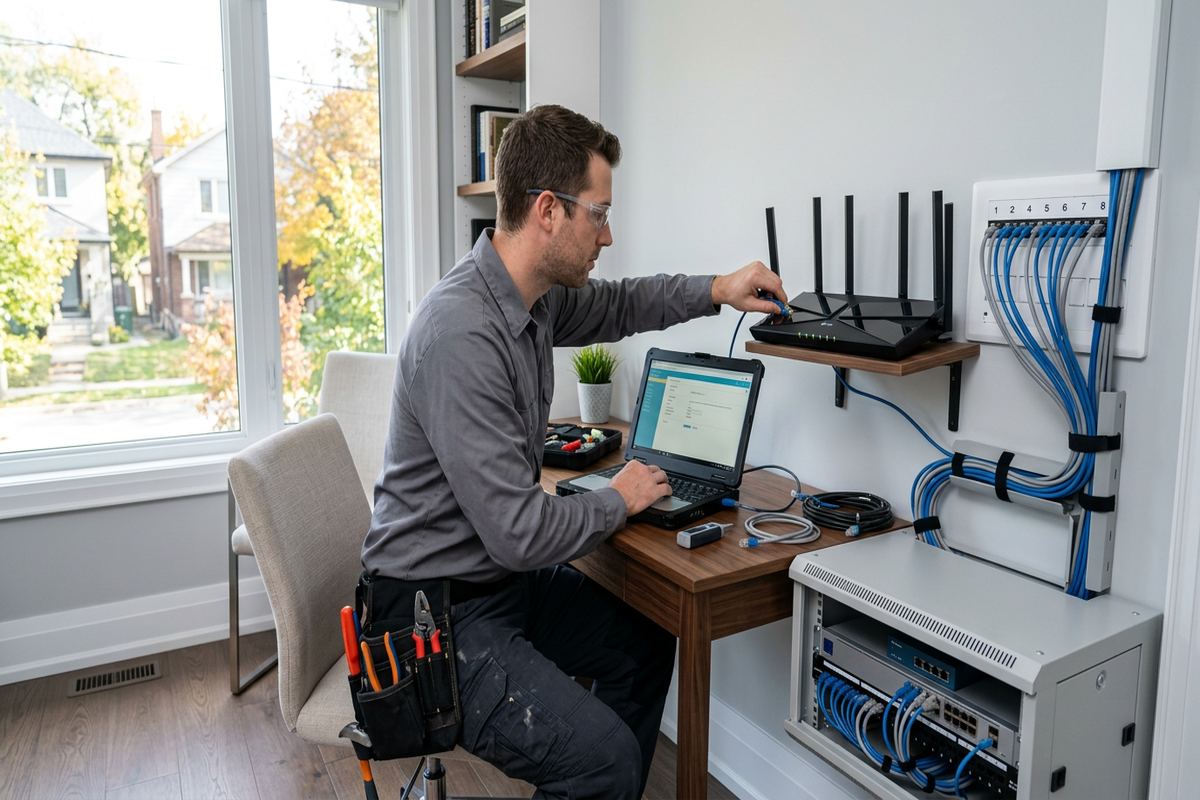
Network cabling commonly connects workstations, printers, phones, wireless access points, controllers and internet equipment. Camera cable may carry both data and power when compatible devices and switching equipment are used. Access-control and alarm systems can require several conductor types for readers, locks, contacts, request-to-exit devices and control panels. Audio and display installations have their own distance, bandwidth and connector requirements. UnifiedLink confirms what each endpoint needs before selecting cable, because one cable category or conductor arrangement is not automatically suitable for every low-voltage application.
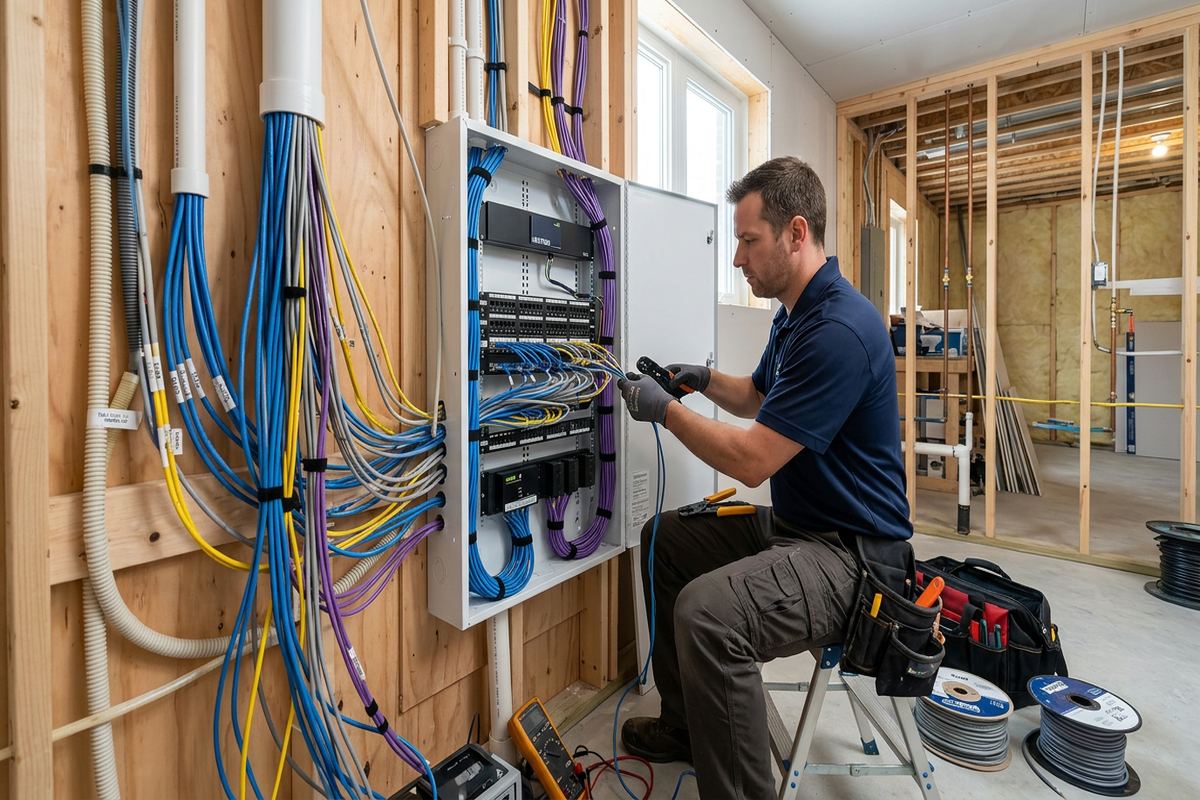
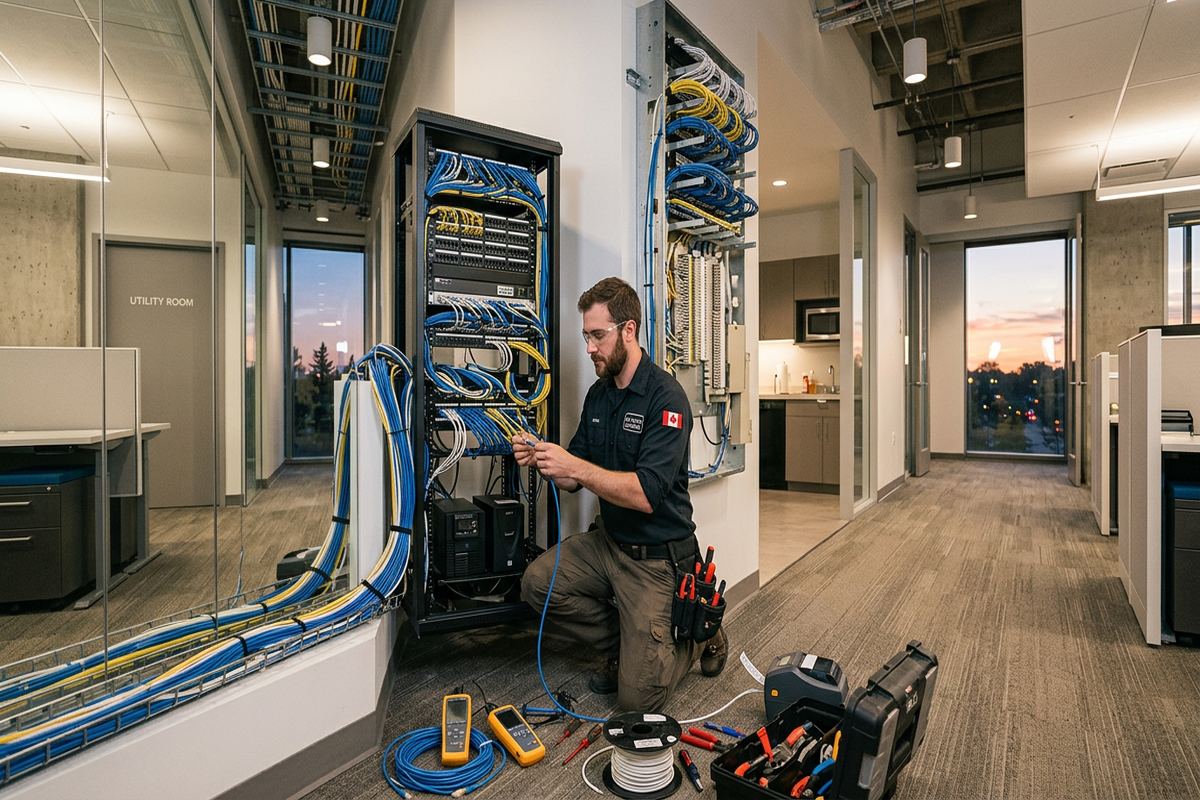
A complete route plan also considers racks, cabinets, patch panels, power availability and equipment ventilation. Terminating every run in a random utility corner makes future maintenance difficult, even when the cable itself works. For Belleville commercial strips and industrial units, the communications area should remain accessible without obstructing production, storage or tenant operations. Home installations may use a compact wall-mounted enclosure instead. In either setting, service loops, bend radius and orderly support matter. They protect the cable and give technicians enough working room for testing, changes and replacement hardware.
- Data and Wi-Fi cabling
- Security camera connections
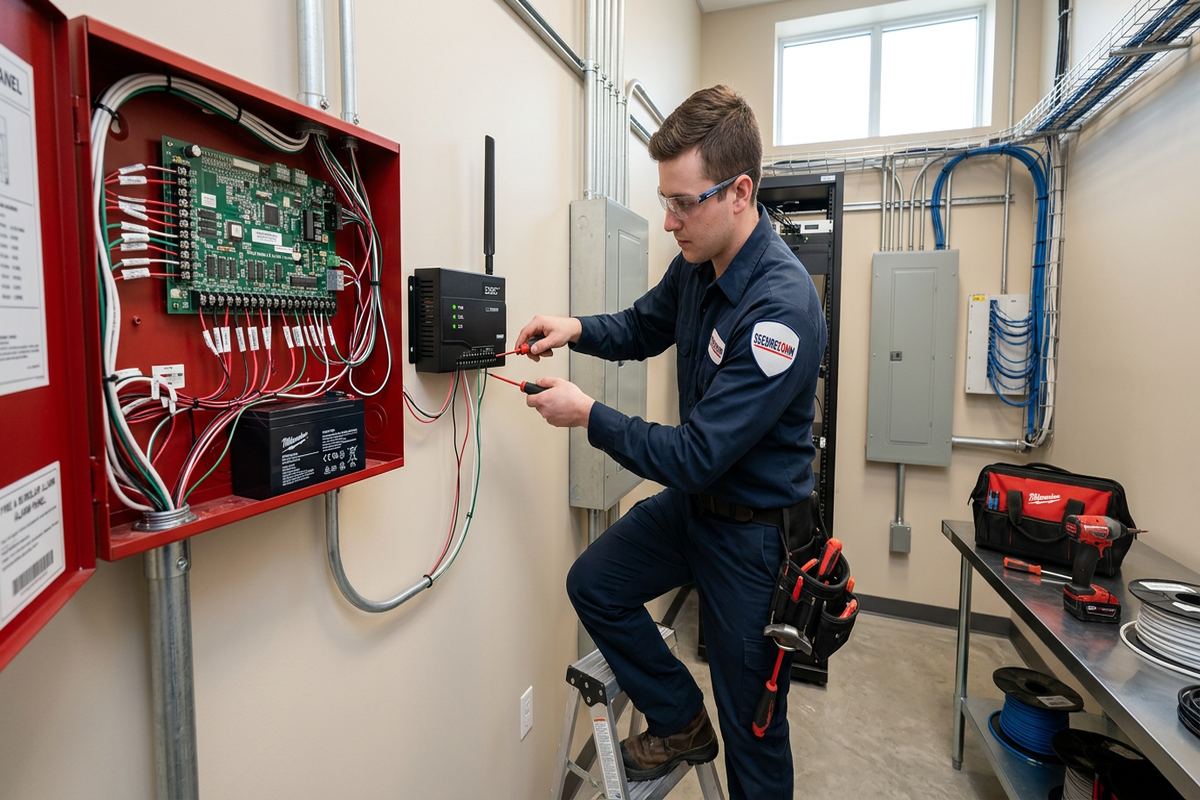
- Alarm and access-control wiring
- Audio and display signal routes
Choosing Cable and Pathways
Cable selection depends on the connected system, distance, environment and installation method. Indoor network cable intended for a dry office ceiling should not be treated as an exterior cable or buried without a suitable pathway. Likewise, flexible patch cords are not a substitute for permanent in-wall runs. We review manufacturer requirements and the actual route before specifying materials. Where cable passes through different spaces, jacket ratings and pathway details must match those conditions. The scope explains the planned approach so customers can compare the installation method, not merely the number of outlets.
Pathways can include accessible framing cavities, cable supports, conduit, surface raceway and existing sleeves that remain usable. Masonry construction often needs surface-mounted raceway or carefully drilled penetrations, while frame buildings may permit concealed routes through studs, joists or attic spaces. Existing conduits must be checked for space, damage and appropriate use before new cable is added. We do not assume an old pathway is clear. Pull points, bends and overall distance are considered beforehand to avoid excessive pulling force and cable deformation that could affect performance.
Industrial and food-processing environments require closer attention to cleaning, moisture, vibration, temperature and electromagnetic interference. Routes near motors, drives, refrigeration equipment or production machinery may need additional separation, shielding or a different pathway. Installation work must also fit the facility’s operating rules and sanitation controls. In Belleville food-processing plants, device placement and accessible surfaces should be discussed with site representatives before drilling begins. Low-voltage cable should not create an obstacle, trap debris or interfere with washdown practices, maintenance access, guarding or normal production movement.
- Cable matched to application and environment
- Conduit and raceway assessed before use
- Bend radius and pulling limits respected
- Industrial interference considered during routing
Belleville, Ontario
Low-voltage cabling installation in Belleville, scoped in writing first
Book a site assessment and get equipment, routes, exclusions, and warranty on paper before anything is installed.
Belleville Exterior Cabling and Seasonal Conditions
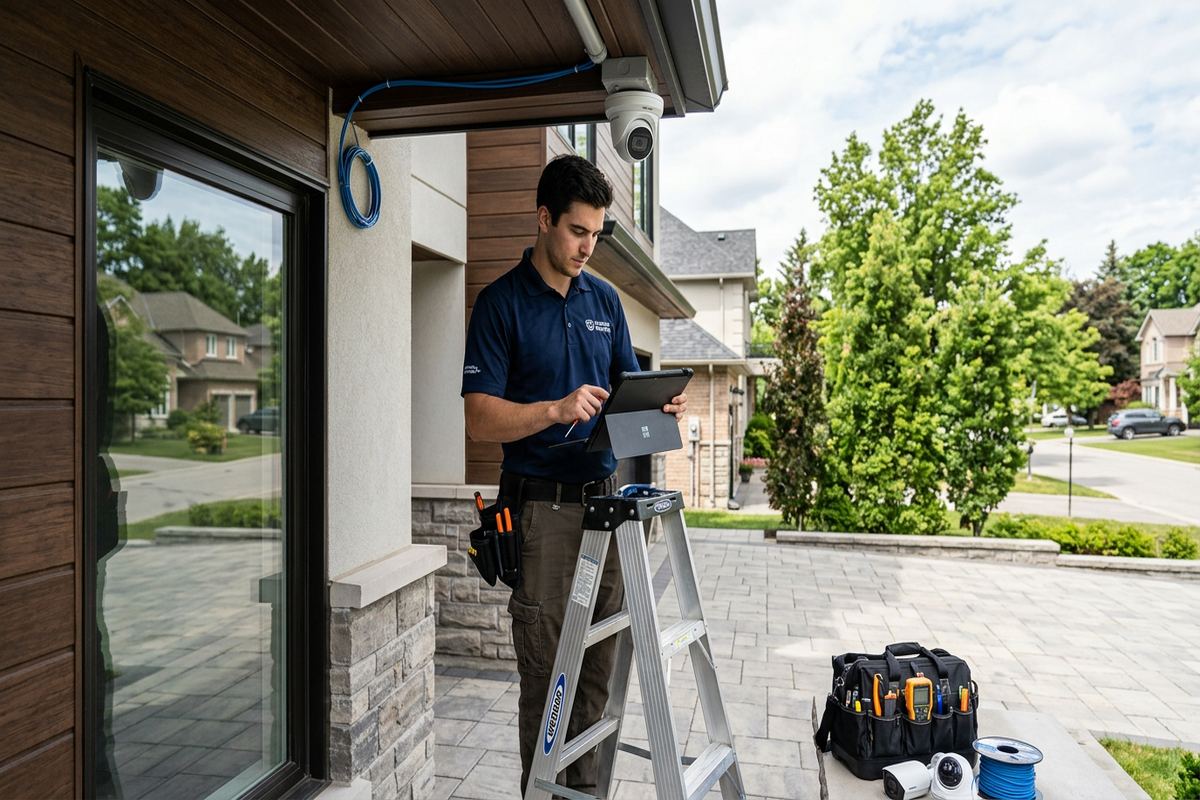
Outdoor cabling in the Bay of Quinte must be planned for rain, snow, ultraviolet exposure and repeated temperature changes. Winter conditions can make brittle materials and weak seals more likely to fail, while freeze-thaw cycles can enlarge gaps around poorly finished penetrations. We use cable and fittings intended for the specified environment and route entries to reduce direct water exposure. Exterior cable is supported rather than left hanging from connectors. Where practical, the route enters from below or includes a drip loop so water is not directed toward the building opening.
Cameras, wireless links, gate equipment and detached-building connections often require exterior sections. The mounting surface determines the fastening and sealing approach: brick, concrete, siding and wood framing do not accept the same anchors or sealants. Waterfront homes may also have open exposure to wind-driven precipitation. Before mounting, we consider drainage, soffit access and the location of concealed utilities. Sealant alone should not compensate for a poor route. A durable installation combines an appropriate penetration, mechanical support, weather-rated components and enough service access for later maintenance.
Underground routes between buildings require more than placing indoor cable in the soil. The pathway, burial arrangement, entry points and moisture exposure must all be reviewed. Underground conduit can collect condensation or water even when its ends appear sealed, so cable within it must suit that possibility. Electrical separation and the risks created by different building grounds also need consideration. Depending on the system, fibre may be a practical option between structures. UnifiedLink identifies these conditions during assessment and documents the selected approach before installation proceeds at a Belleville property.
- Weather-suitable exterior cable and fittings
- Supported routes with planned drip loops
- Penetrations sealed against water entry
- Underground pathways reviewed for moisture
Installation, Termination and Testing
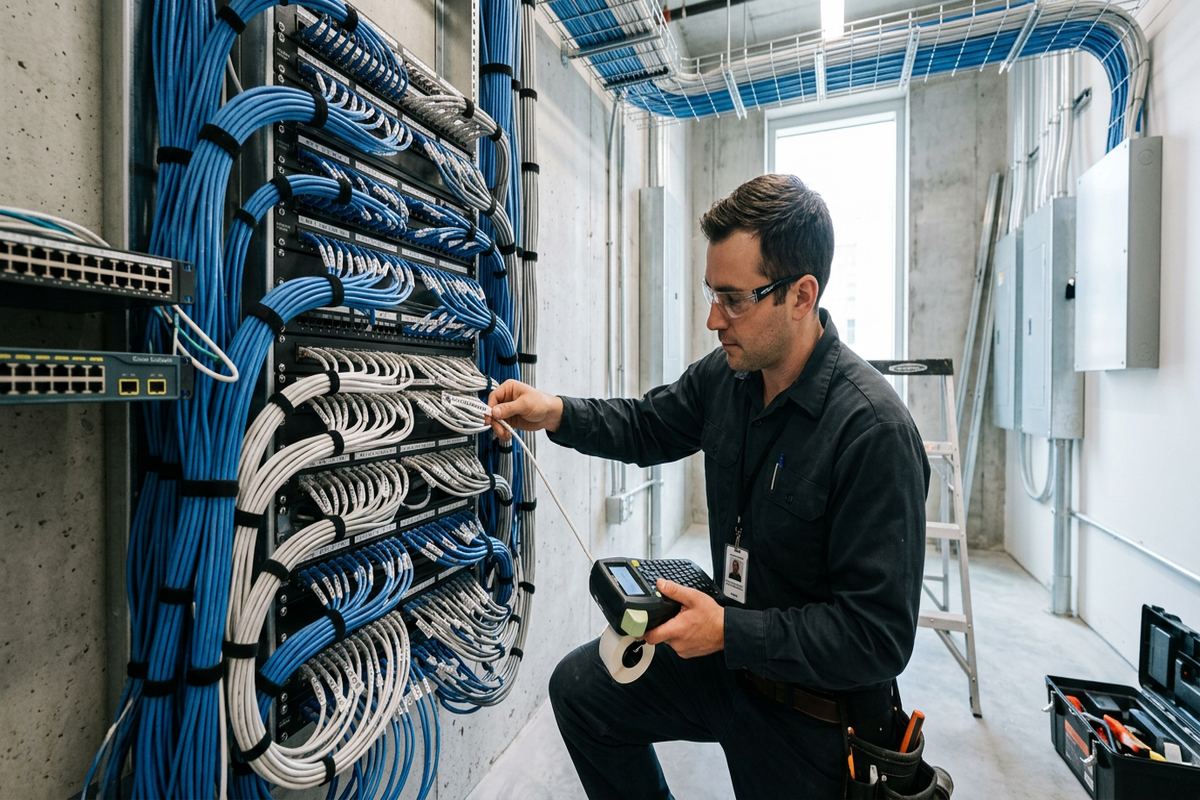
Once routes are approved, cable is installed as continuous labelled runs between defined endpoints. Unplanned splices inside ceilings or walls make faults harder to locate and can reduce reliability. Supports are selected to prevent sagging, crushing or sharp bends, and cables are kept away from hazards identified during assessment. Labels correspond with outlets, panels or the as-built record. In occupied Belleville homes and businesses, the work sequence is arranged to limit disruption, protect finishes and keep active areas usable wherever the agreed installation method allows.
Termination quality matters as much as cable quality. Connectors and jacks must match the conductor type and system requirements, with cable jackets maintained close to the termination and pairs handled correctly. Rack and cabinet work is arranged so ports can be identified without tracing loose bundles. Security, audio and control conductors are also dressed and labelled according to their destinations. We avoid leaving unsupported coils above ceilings or tangled excess cable inside enclosures. Neat work is not only visual; it reduces strain and makes later moves, additions and troubleshooting more practical.
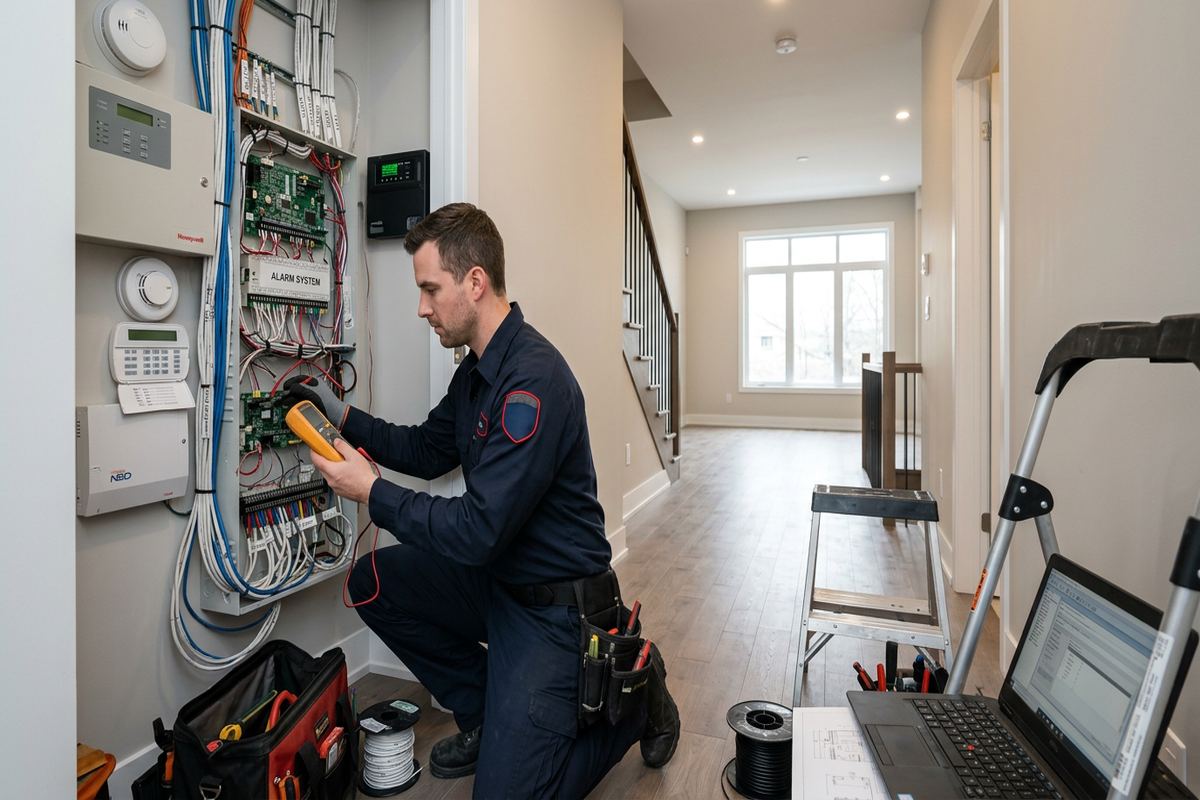
Testing is based on the type of cabling and the agreed project scope. Basic continuity checks can identify opens, shorts or incorrect conductor order, while network cabling may require performance testing appropriate to the installed link. Fibre, coaxial and control wiring use different methods and equipment. Results are reviewed before handover so accessible faults can be corrected while the route and endpoint details are still current. On-site configuration is completed for included equipment, and the customer receives control using their own credentials rather than an installer-owned account.
- Continuous runs without hidden splices
- Both ends labelled consistently
- Terminations matched to cable type
- Testing suited to the installed system
Cabling for Belleville Homes and Multi-Unit Properties
Home cabling should support how rooms are used now without making future changes unnecessarily difficult. During assessment, we discuss modem location, work areas, television points, wireless coverage, cameras and any planned renovation. A central location may simplify distribution, but it must have suitable power, ventilation and access. In finished Belleville homes, routes may use basements, attics, closets or discreet surface raceway depending on construction. We explain where openings are expected and what restoration is excluded, allowing the owner to coordinate painting, carpentry or other finishing work when needed.
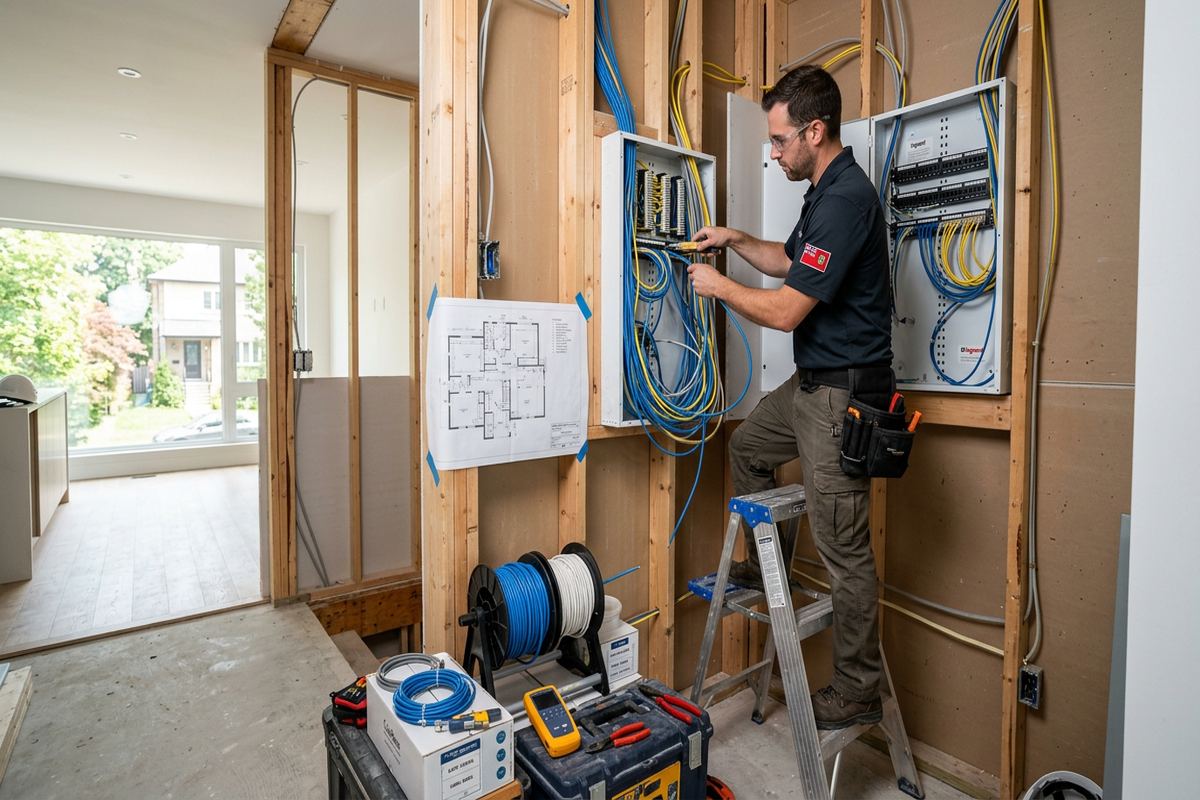
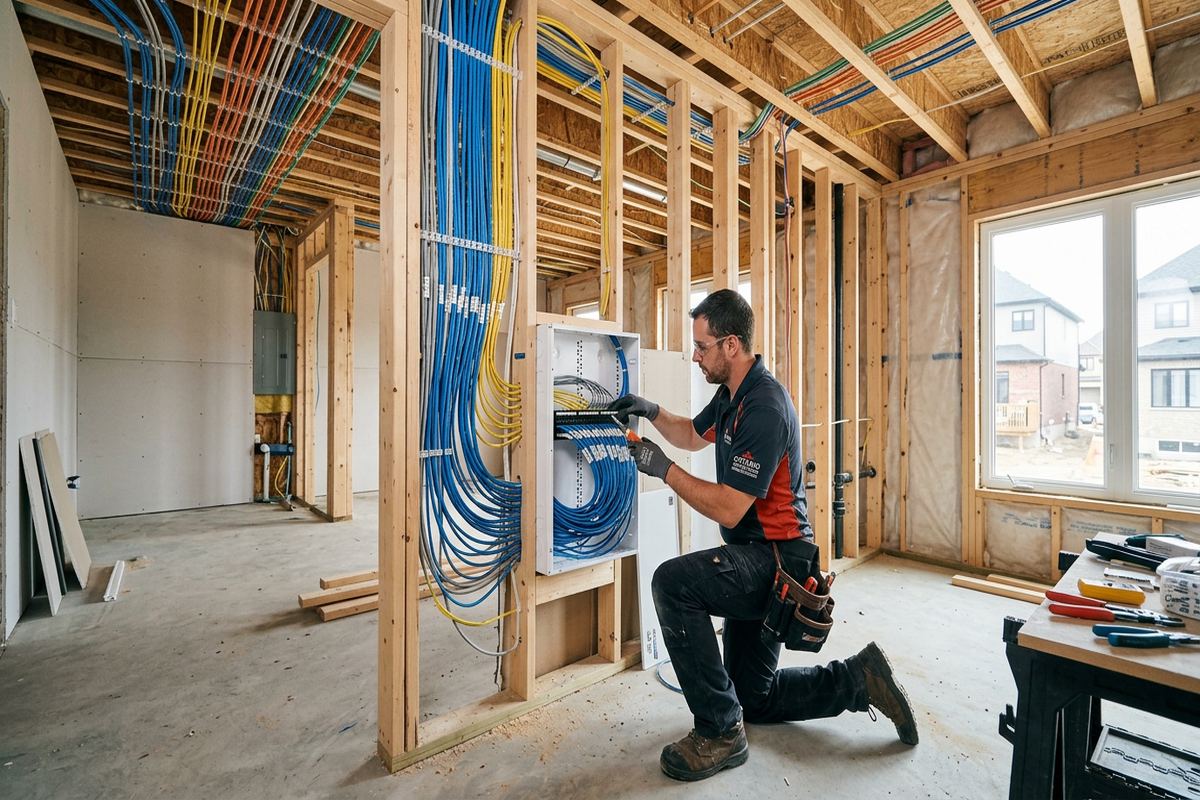
Renovations provide an opportunity to install cable before insulation and drywall close the framing, but coordination remains important. Cable can be damaged by later fastening, pinched by other trades or buried without an endpoint record. We confirm outlet positions and leave labelled runs at agreed locations. In older East Hill or Downtown Belleville properties, renovations may expose mixed masonry and frame construction, abandoned wiring or blocked cavities. Existing cable is not automatically reusable; its type, condition, route and termination must be checked before relying on it for a new system.
Condos, rental homes and multi-unit buildings involve responsibilities beyond the inside of one room. Cable routes may cross common walls, corridors, risers, exterior surfaces or spaces controlled by a landlord or condominium corporation. Written approval may be needed before drilling, mounting equipment or using a shared pathway. Fire separations and access restrictions also influence the route. UnifiedLink can document the proposed work for review, but the property owner or tenant remains responsible for obtaining applicable permissions unless the written scope assigns that task differently. Approval should precede scheduling intrusive work.
- Routes planned around finished living spaces
- Renovation cabling coordinated before walls close
- Existing wiring checked before reuse
- Condo and landlord approvals addressed
Commercial and Industrial Cabling
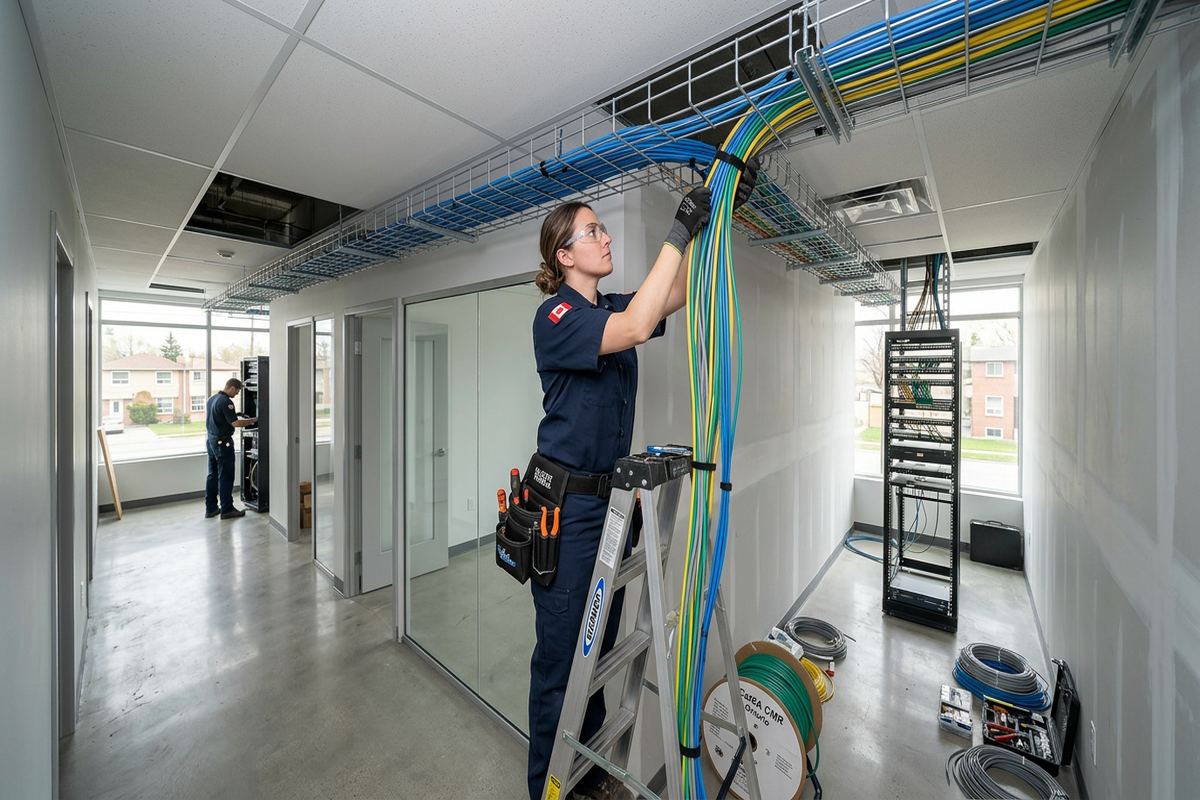
Commercial cabling has to fit operating hours, tenant boundaries and future service needs. A shop, office or clinic in Belleville may need network drops, wireless access points, cameras and access-control devices installed without blocking customer areas. The assessment identifies ceiling access, communications equipment, demarcation points and any restricted rooms. If several tenants share a building, cable must remain within authorised pathways and terminate in the correct space. Clear labelling is especially important when previous installations have left unidentified wiring above ceilings or inside shared electrical and communications rooms.
Warehouses and industrial units present longer routes, higher ceilings and more potential exposure to impact or machinery. Cable may require conduit, guarded drops or dedicated supports rather than attachment to unrelated building services. Lifts and specialised access equipment may also affect scheduling and site preparation. We review the endpoint height, mounting surface and maintenance access before setting the scope. In Point Anne, Thurlow and other areas with industrial or mixed-use properties, each route still depends on the individual building, its operations and the environmental conditions around the proposed devices.
Changes to active systems need a controlled sequence. Moving a rack, replacing patching or rerouting a live device can interrupt network, camera, alarm or access functions if dependencies are not identified. We document which services are included, what must remain active and where customer or third-party coordination is required. Internet providers, IT administrators, alarm monitoring companies and door hardware contractors may each control part of a system. UnifiedLink acts as one accountable contractor for its written scope while clearly identifying outside work, exclusions and decisions that belong to other parties.
- Work planned around occupied premises
- Long routes supported independently
- Live-system dependencies identified first
- Third-party responsibilities documented
Belleville Project Scope, Handover and Future Changes
Pricing follows a site assessment because route difficulty, access and materials cannot be confirmed reliably from an outlet count alone. Assessment timing depends on the service and travel distance. Requests sent during business hours are answered the same day, while after-hours requests are answered the next business day. For a Belleville project, useful preparation includes floor plans, photographs, device lists and details about finished or restricted spaces. These help the discussion, but they do not replace seeing relevant pathways and mounting conditions where the proposed installation requires an on-site review.
The written scope is the reference point for the project. It covers equipment, cable routes, device placement, exclusions, equipment ownership and warranty. It should also identify assumptions that could change after concealed conditions are exposed, such as blocked cavities or unusable conduit. Customers can review where surface raceway is expected, which equipment they are supplying and whether patching or painting belongs to another trade. Clear scope boundaries reduce confusion between cabling installation, internet service, electrical work, furniture movement and final building restoration, which are not automatically part of one another.
Handover includes on-site configuration for included equipment, customer control through the customer’s own credentials and an as-built record of the completed installation. Labels and records make later additions easier because another technician can understand where runs begin and end. If a Belleville business expands, a homeowner adds cameras or a tenant rearranges workstations, the existing record provides a starting point for assessment. It does not eliminate the need to inspect new routes, but it reduces guesswork. One accountable contractor remains responsible for the work described in UnifiedLink’s agreed scope.
- Assessment completed before project pricing
- Written scope records responsibilities and exclusions
- Customer retains their own system credentials
- As-built information supplied at handover
Belleville neighbourhoods we cover
- Downtown Belleville
- East Hill
- West Park Village
- Thurlow
- Bayside
- Point Anne
Low-voltage cabling installation in Belleville — common questions
Do you assess my Belleville property before quoting?
Yes. UnifiedLink completes a site assessment before pricing because cable routes, wall construction, access and environmental exposure affect the work. Timing depends on the service and travel distance. Requests sent during business hours are answered the same day; after-hours requests are answered the next business day. The resulting written scope sets out equipment, routes, placements, exclusions, ownership and warranty.
Can you run cable in an older Downtown Belleville building?
Yes, subject to assessment and any required property approvals. Older Downtown Belleville buildings may contain masonry, blocked cavities, finished ceilings or several generations of renovation. We review accessible routes and may recommend conduit or surface raceway where concealed installation would create excessive damage. The scope identifies expected penetrations and any patching, painting or restoration that is excluded.
What cabling can you install in a home?
Belleville home projects can include cabling for networks, Wi-Fi access points, security cameras, alarms, audio, displays and other compatible low-voltage systems. Cable and pathway choices depend on distance, construction and device requirements. We can plan around basements, attics, detached garages and finished rooms, with exterior-rated materials and sealed penetrations used where the approved route moves outdoors.
Will you reuse the cabling already in my building?
Existing cabling may be reused only after its type, condition, route and terminations are checked against the intended application. An unidentified cable above a Belleville office ceiling is not automatically suitable for a new network, camera or control device. Damaged cable, hidden splices, unsuitable jackets or uncertain routes may justify replacement. Reuse decisions and related limitations are recorded in the written scope.
Do I need condo or landlord approval?
Approval may be required if cabling crosses common property, shared walls, corridors, risers or exterior surfaces, or if equipment is mounted to a landlord-controlled area. Belleville condo owners and tenants should confirm the applicable rules before intrusive work is scheduled. UnifiedLink can provide a proposed route and scope for review, while responsibility for obtaining permission is assigned clearly in the project documents.
What do I receive when installation is finished?
At handover, UnifiedLink provides labelled cable runs and an as-built record showing the completed installation. Included equipment is configured on site, and system access is handed over using the customer’s own credentials. Testing appropriate to the installed cable is completed within the agreed scope. Equipment ownership, warranty details and exclusions are also documented, giving the Belleville customer a practical reference for maintenance or expansion.
Coverage in Belleville is confirmed against the address before we quote. See everything we install in Belleville or the province-wide low-voltage cabling installation page.