UnifiedLink installs home alarm systems for houses, condos, rental properties and mixed-use buildings across Belleville and the Bay of Quinte. Each project starts with a site assessment so door contacts, motion detectors, keypads, sirens and communications equipment match the property. The completed system is configured on site and handed over using the customer’s own credentials.
Planning a Home Alarm System in Belleville
A useful alarm system begins with the building rather than a package of devices. During a Belleville site assessment, we review exterior doors, accessible windows, attached garages, basement entries, stairways and normal routes through the home. We also ask how residents use the property, whether pets remain inside and who needs arming permissions. This information determines where perimeter contacts, motion detectors, glass-break sensors, keypads and audible devices belong. It also prevents unnecessary equipment from being placed where it adds cost without improving practical coverage or day-to-day operation.
Belleville properties do not follow one construction pattern. Older downtown buildings may have thick masonry, altered floor plans and additions completed at different times. Waterfront homes can have exposed exterior locations and detached structures, while frame houses in East Hill or West Park Village may allow different cable routes. The assessment identifies these conditions before equipment is selected. We examine likely drilling points, finished spaces, utility areas and available power so cable paths and wireless coverage can be planned without assuming that every wall cavity is clear or accessible.
After the assessment, UnifiedLink provides a written scope before pricing. It covers proposed equipment, device placement, cable routes, exclusions, equipment ownership and warranty terms. The scope also records whether monitoring or communications services are separate from the installation. This gives the homeowner, landlord or property manager a practical basis for reviewing the work. If renovations, new doors or occupancy changes are planned, they can be considered before installation begins. A clear scope reduces last-minute decisions and keeps responsibility with one accountable contractor throughout the alarm project.
- Exterior door and window review
- Pet and occupancy considerations
- Proposed keypad and siren locations
- Cable route and power planning
- Written scope before pricing
Alarm Devices and Zone Design
Alarm zones should identify events clearly instead of reporting every detector under one general label. Front doors, patio doors, garage entries, basement windows and interior motions can be assigned logical names that make notifications easier to understand. Zone design also affects entry delays, stay modes and overnight use. A Belleville family may want perimeter protection active while people move upstairs, while a shopfront residence may require separation between living and commercial areas. We configure the panel around these routines and test each zone from the device through to the user interface.
Door and window contacts provide perimeter detection, but their mounting method depends on the opening. Recessed contacts may suit some wood frames, while surface contacts can be more appropriate for steel doors, heritage trim or openings that should not be drilled. Motion detectors require clear fields of view and careful placement around stairs, heating sources, curtains and pets. Glass-break detection may be considered for rooms with substantial glazing. No single detector type covers every risk, so devices are combined according to access, construction and how each room is normally occupied.
Keypads, sirens and communications modules need equally deliberate placement. A keypad near the usual entrance can make daily use straightforward, but it should not be visible through an exterior window. Interior sirens must be audible across occupied levels without being installed where they are easily reached. Communication equipment requires suitable network or cellular conditions, stable power and an understood ownership arrangement. Where remote applications are included, setup is completed using the customer’s own account credentials. Final programming reflects named users, permissions, entry delays and notification preferences approved during commissioning.
- Named zones for clear alerts
- Perimeter and interior detection options
- Practical entry and exit delays
- Customer-controlled user permissions
- Remote application setup where supported
Belleville Building Types Require Different Plans
Older buildings in Downtown Belleville can present cable-routing and mounting constraints that are not obvious from finished surfaces. Masonry walls, deep window returns, plaster, previous renovations and mixed framing may limit access between floors. Rather than assuming wires can be fished through every wall, we identify usable service spaces, basements, closets and existing pathways. Surface raceway may be proposed where concealed routing would cause unnecessary damage. Device choices also account for older doors and irregular frames, allowing reliable operation without removing distinctive trim or forcing hardware into unsuitable mounting positions.
Homes in Thurlow, Bayside and Point Anne may have larger lots, detached garages, workshops or outbuildings that need separate consideration. Distance, power availability, construction materials and wireless signal strength determine whether a device can communicate reliably with the main panel. An outbuilding should not simply be added because a wireless product lists a theoretical range. We assess the actual route, walls and environmental exposure first. Where coverage is practical, the system can distinguish the house, garage and other protected areas so users know where an event originated and can arm areas appropriately.
Condos, rentals and mixed-use properties require approval questions before drilling or routing cable. A condo corporation may control common walls, exterior doors, balconies or shared service spaces. Tenants generally need landlord authorization for permanent devices, while landlords should define who owns the equipment and controls the account after occupancy changes. Commercial strips and industrial units can also share entrances or utility areas with neighbouring occupants. The written scope identifies approval-dependent work and exclusions, helping avoid an installation that conflicts with lease terms, building rules or access arrangements.
- Masonry and plaster route assessment
- Detached-building signal evaluation
- Condo approval requirements identified
- Landlord and tenant responsibilities documented
- Mixed-use access areas reviewed
Belleville, Ontario
Home alarm system installation in Belleville, scoped in writing first
Book a site assessment and get equipment, routes, exclusions, and warranty on paper before anything is installed.
Wired, Wireless and Hybrid Alarm Options
Wired alarm devices can provide stable communication and avoid routine detector battery replacement, but they require practical cable routes. They are often suitable during renovations, unfinished-basement work or construction where framing is open. UnifiedLink installs continuous labelled cable runs rather than assembling hidden chains of unnecessary joins. Cables are supported, separated from electrical wiring where required and terminated at planned panel and device locations. In a finished Belleville home, wired installation remains possible when attics, basements, closets or service chases provide access, although the route must be confirmed during assessment.
Wireless devices can reduce disturbance to finished walls and may suit older masonry buildings or spaces where cable access is limited. Their performance still depends on distance, intervening materials, radio conditions and battery maintenance. Brick, stone, metal cladding and mechanical equipment can affect communication, so placement should be tested in the actual property. Wireless does not mean unplanned or maintenance-free. Device supervision, battery reporting and signal results are reviewed during commissioning. Owners also need to understand which batteries they can replace and which service messages require further investigation.
A hybrid alarm system combines wired and wireless devices under one control platform. This approach can preserve usable wiring from an existing system while adding devices in renovated or inaccessible areas, provided the equipment is compatible and the old cabling passes inspection. We do not assume unidentified wires are serviceable. Each reused run must be traced, labelled and tested for continuity and condition. Hybrid planning is particularly useful when a Belleville property has additions from different periods, because the installation method can change by area without creating separate alarm systems for one building.
- Continuous labelled wired runs
- Wireless signal testing on site
- Hybrid layouts for altered properties
- Existing cable tested before reuse
- Battery responsibilities explained
Winter, Exterior Devices and Sealing in Belleville
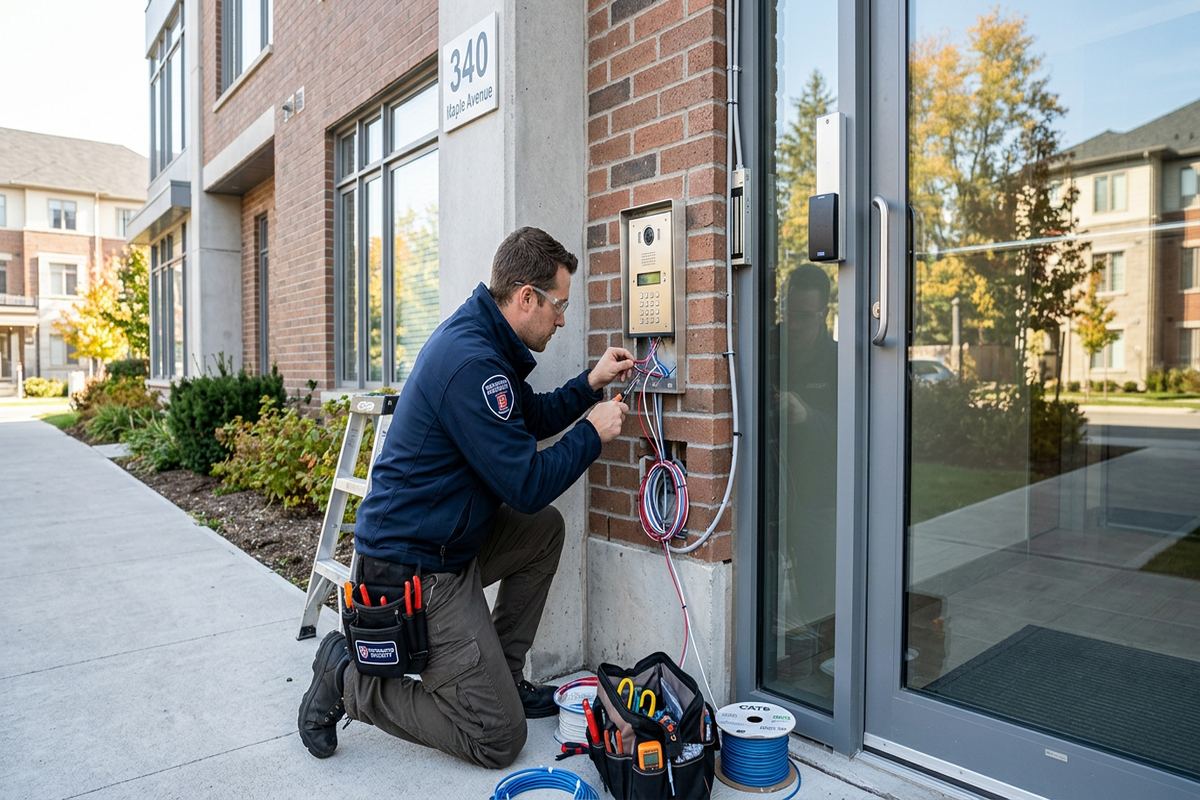
Belleville winters and repeated freeze-thaw cycles affect exterior installation decisions. Fasteners, cable entries and enclosures must suit the mounting surface and exposure rather than relying on indoor methods outside. Brick, poured concrete, siding and wood framing each require different anchors and drilling practices. Exterior penetrations are kept controlled and sealed to limit water entry around cable routes. Where a device is exposed to precipitation, direct sun or drifting snow, its environmental rating and location are reviewed before installation. Sheltered placement is preferred when it preserves detection performance and service access.
Exterior contacts on gates, garage doors or outbuildings face movement and alignment changes that indoor contacts may not. Frost, settling, loose hardware and seasonal expansion can alter the gap between a sensor and magnet. Mounting brackets must keep components aligned without interfering with normal operation. Cables near grade need protection from moisture and physical damage, while equipment should remain reachable for inspection. For waterfront homes in the Bay of Quinte, wind exposure and driven moisture also influence placement. These conditions are addressed through suitable hardware, sealing and realistic maintenance expectations.
Not every outdoor area should be connected to a standard home alarm detector. Unheated spaces can fall outside an indoor device’s operating range, and open yards can produce activity that is difficult to distinguish reliably. The assessment considers whether the goal is intrusion detection, gate status, garage-door position or another specific condition. We then select equipment intended for that environment or explain the limitation. Clear purpose matters because an unreliable exterior zone encourages users to bypass it. A smaller, properly designed system is more useful than broad coverage that produces recurring faults.
- Mounting suited to masonry or siding
- Sealed exterior cable penetrations
- Freeze-thaw movement considered
- Environmental ratings checked
- Outdoor zone purpose clearly defined
Installation and Configuration Across Belleville
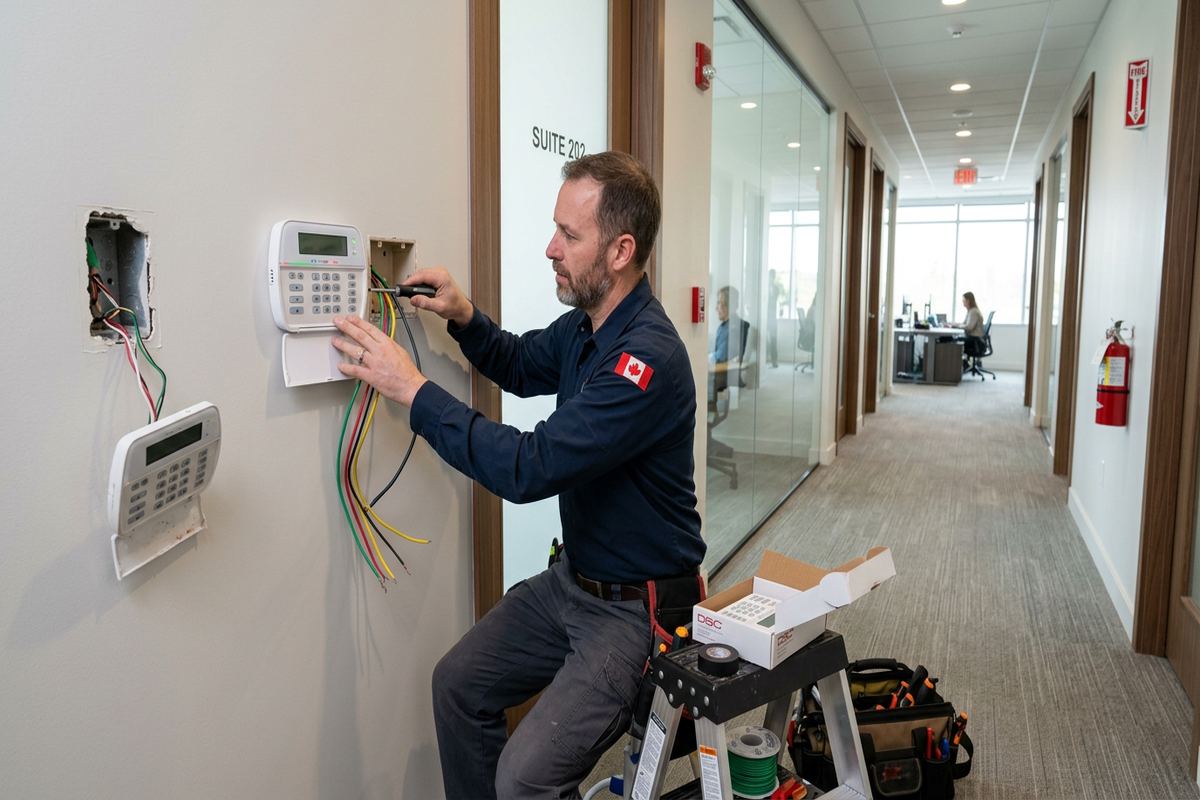
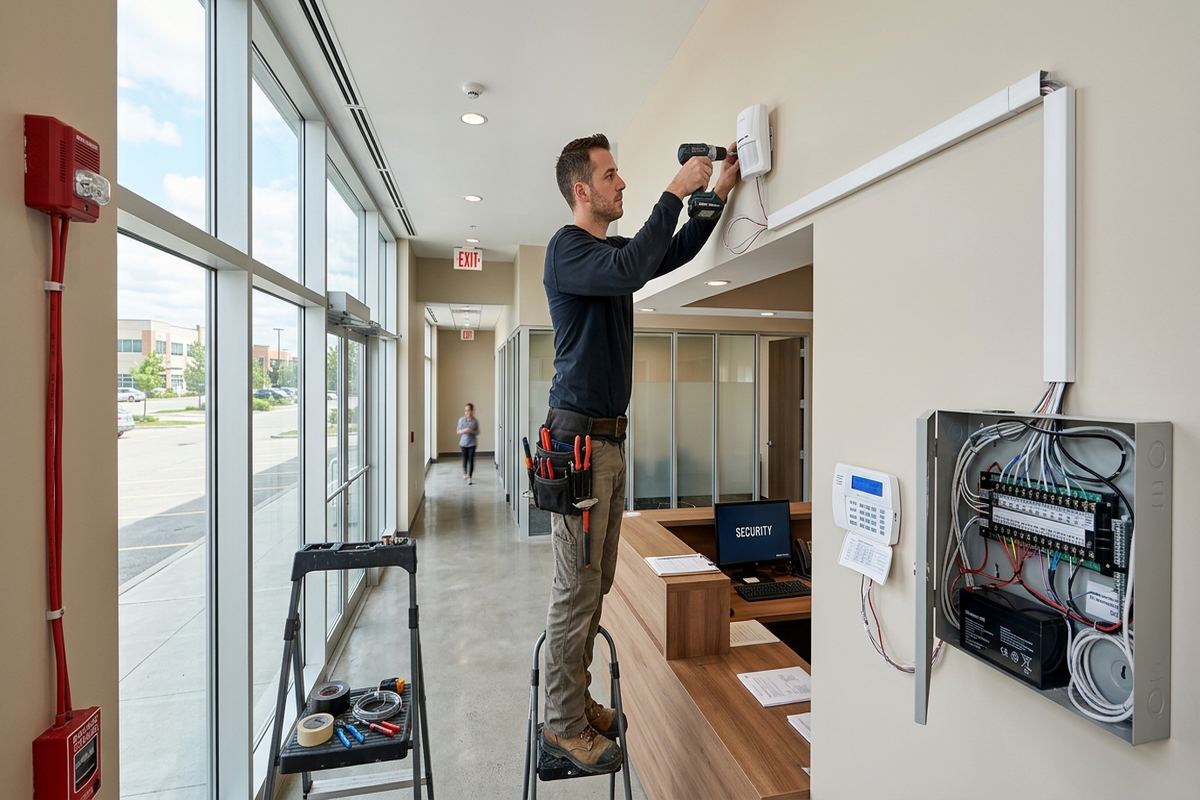
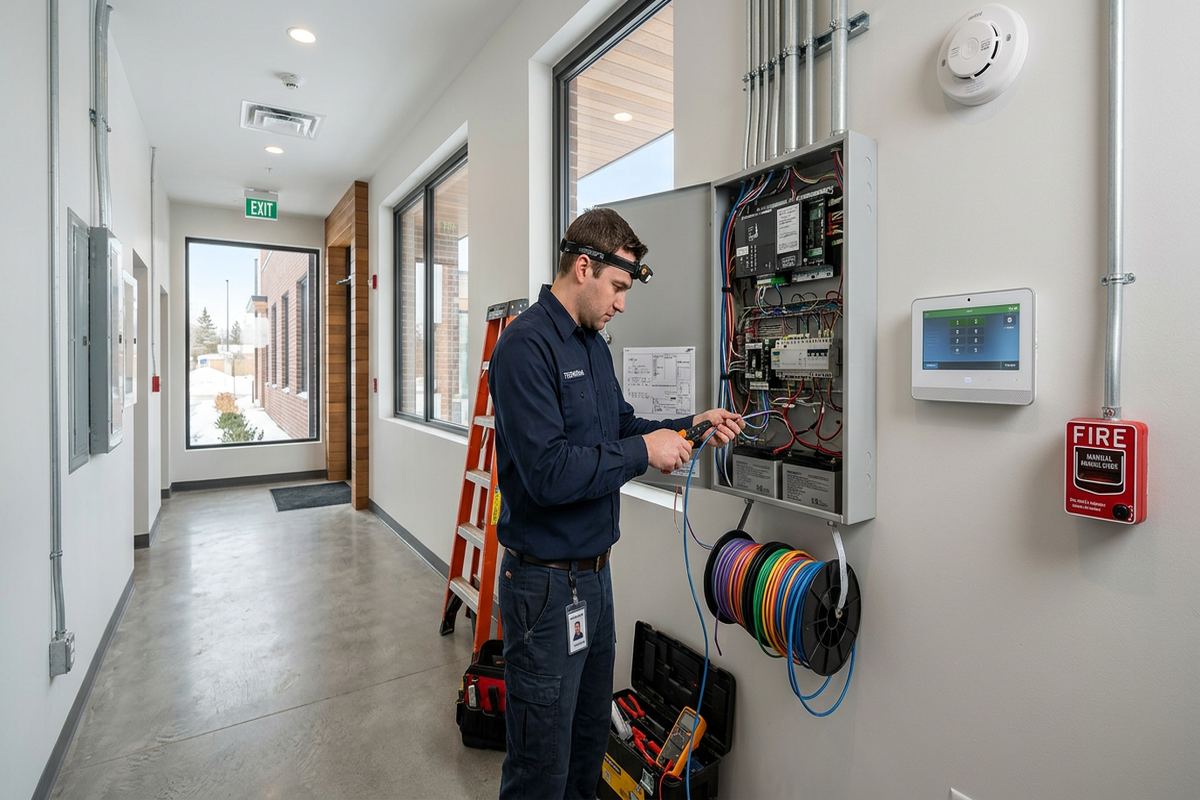
Before installation, device positions and cable routes are confirmed against the written scope. Technicians protect work areas, locate practical drilling points and avoid making changes without discussing their effect on finish, access or coverage. Continuous cable runs are labelled at the panel and relevant termination points. Surface-mounted devices are aligned and secured to the appropriate material, whether the opening is wood, metal or masonry. In occupied Belleville homes, work is sequenced so residents understand when doors, network equipment or alarm functions will be temporarily unavailable during the installation process.
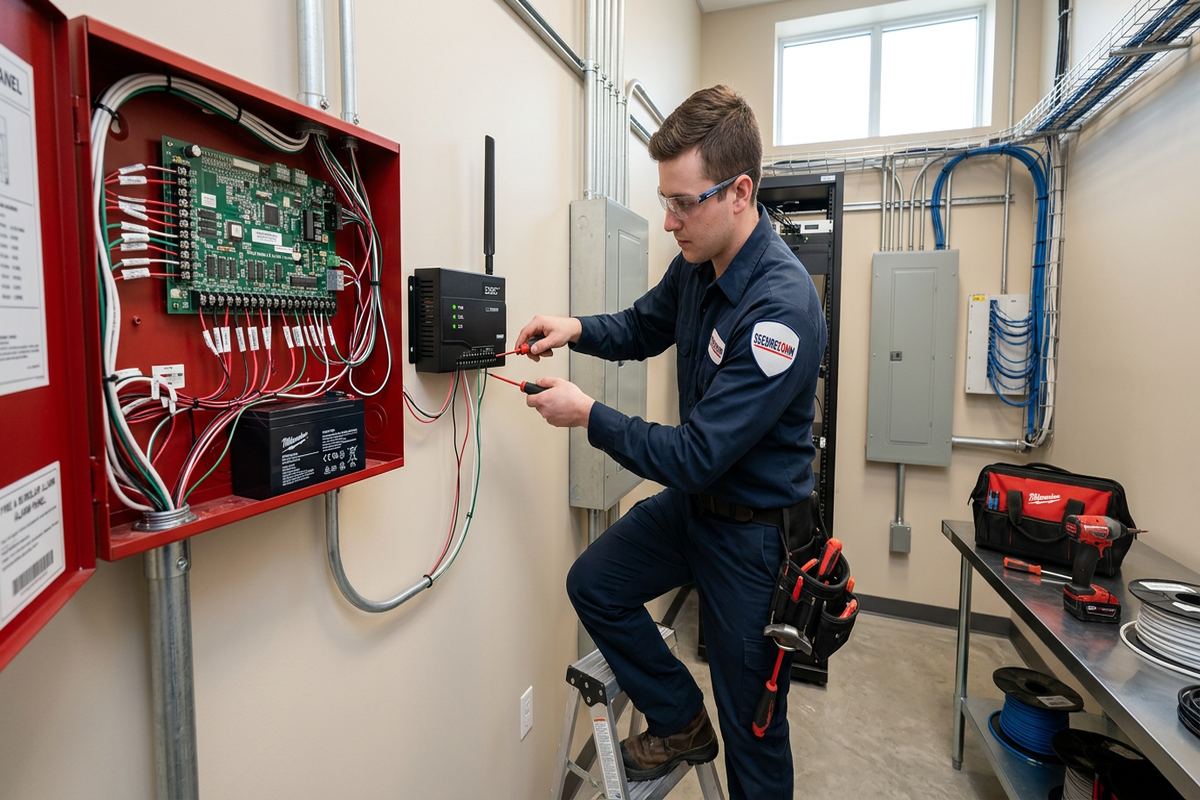
Panel programming is completed on site rather than left with generic factory settings. We assign readable zone names, configure entry and exit delays, establish stay and away behaviour and set user permissions. Where supported equipment provides application access or notifications, the connection is established with the customer’s own credentials. Network changes, cellular communication and monitoring arrangements are tested only within the agreed scope. We also confirm that power supplies, backup batteries and tamper conditions report correctly. Configuration decisions are reviewed with the owner so system behaviour is understood before handover.
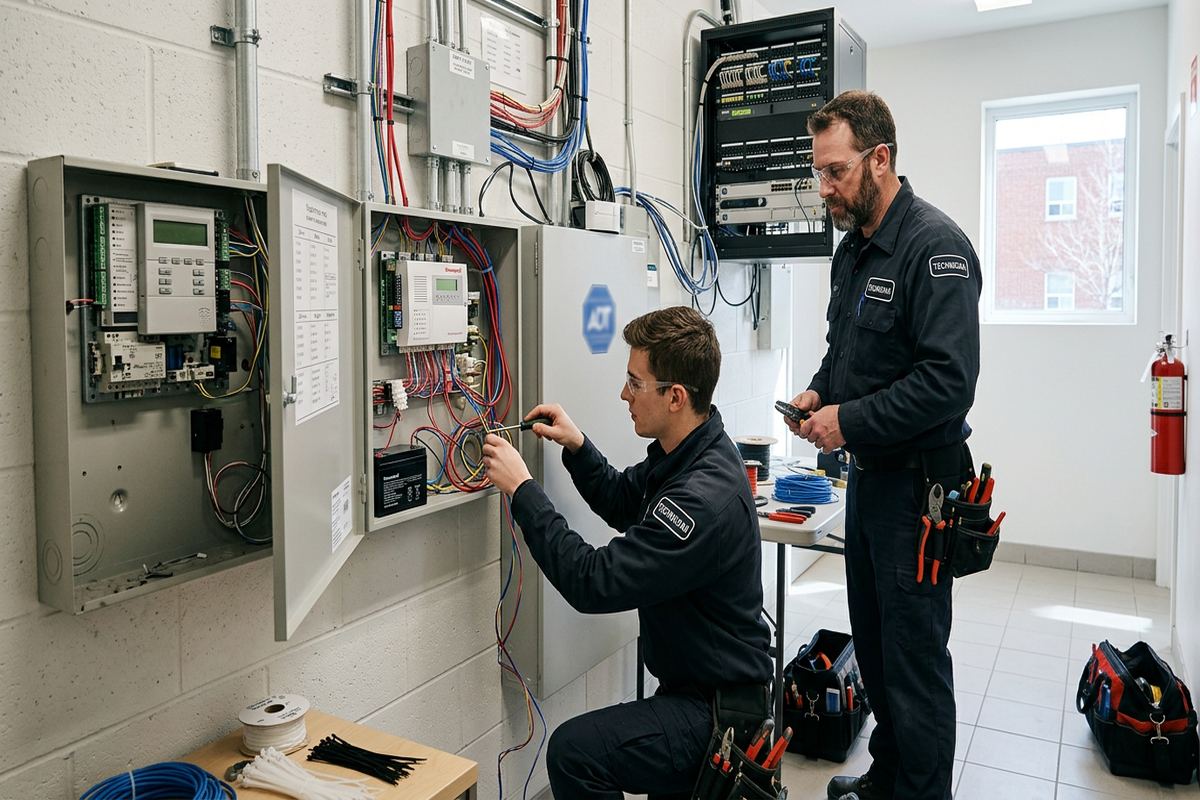
Testing covers each installed detector, contact, keypad, siren and communication path included in the project. Doors and windows are opened individually to verify their zone labels. Motion detectors are walk-tested, audible devices are activated and relevant trouble conditions are reviewed. If monitoring is part of a separate agreement, signalling tests are coordinated according to that service’s procedures. Deficiencies are corrected before completion rather than being left as unexplained alerts. The result is a commissioned Belleville alarm system whose basic responses, user controls and installed boundaries have been demonstrated on the property.
- Device locations confirmed before drilling
- Every cable run labelled
- Panel programmed on site
- Each alarm zone individually tested
- Owner present for operating review
Handover, Records and Ongoing Changes
Handover includes practical instruction for the people who will operate the alarm. We demonstrate arming, disarming, stay mode, entry delays, user-code management and the meaning of common trouble messages. Owners learn how to identify which zone caused an alert and how to avoid bypassing a fault without investigation. Application access, where included, remains under the customer’s own credentials rather than an installer-controlled account. This is important when properties are sold, tenants change or staff access must be removed. Administrative control should remain with the party responsible for the system.
UnifiedLink supplies an as-built record describing the installed arrangement. The record identifies device locations, zone names, panel location and relevant cable or equipment information available within the completed scope. It supports future troubleshooting, renovations and additions by reducing guesswork about what was installed. Equipment ownership and warranty details are also documented. For landlords or owners of mixed residential and commercial properties in Belleville, these records help separate permanent building equipment from user accounts, monitoring subscriptions or tenant-specific permissions that may change independently over time.
Alarm systems should be reviewed when the property changes. Replacing a door, finishing a basement, adding a pet, moving walls or changing internet equipment can affect detection and communication. A low-battery message, recurring zone fault or damaged contact should be investigated rather than routinely cleared. Owners can also test user codes and confirm that former residents, contractors or employees no longer have access. Documented zone names and labelled wiring make these changes easier to manage. When service is needed, one accountable contractor can assess the installed system and define any proposed work.
- Customer-owned administrator credentials
- As-built device and zone record
- Equipment ownership documented
- Operating instructions demonstrated
- Future changes easier to assess
Requesting an Alarm Assessment in Belleville
To request an assessment, provide the Belleville property address, building type and a short description of the areas you want protected. Mention detached structures, renovations, existing alarm equipment, pets, rental status or known approval requirements. Photographs may help with preliminary discussion, but they do not replace an on-site review when construction, signal conditions or cable access must be verified. Requests sent during business hours are answered the same day, while after-hours requests are answered the next business day. Site assessment timing depends on the service and travel distance.
During the visit, access is helpful to each proposed protected area, the electrical panel, internet equipment, attic or basement routes where available, and any existing alarm cabinet. If the property is a condo or rental, have relevant rules or written permissions ready for review. Business owners should identify restricted rooms, shared entrances and staff access requirements. In food-processing plants or industrial units, operational restrictions and sanitation boundaries may affect when and where work can occur. Those environments need a different plan from a waterfront house or older downtown residence.
Following the assessment, the written scope provides a defined basis for the proposed installation and pricing. It lists equipment, routes, placement, exclusions, ownership and warranty information, allowing questions to be resolved before work is scheduled. If choices remain, such as wired versus wireless devices or protection for an outbuilding, the alternatives and limitations can be discussed directly. UnifiedLink then handles installation, on-site configuration, testing and documented handover as one accountable contractor. This process applies throughout Downtown Belleville, East Hill, West Park Village, Thurlow, Bayside and Point Anne.
- Same-day reply during business hours
- Next-business-day after-hours reply
- Assessment timing based on service and travel
- Written scope issued before pricing
- One contractor from planning to handover
Belleville neighbourhoods we cover
- Downtown Belleville
- East Hill
- West Park Village
- Thurlow
- Bayside
- Point Anne
Home alarm system installation in Belleville — common questions
Can you use my existing alarm wiring?
Possibly. Existing wiring in a Belleville home must be traced, labelled and tested before it is included in a new system. Cable condition, routing, conductor availability and compatibility with the proposed equipment all matter. Unidentified or damaged wiring is not assumed to be usable. The assessment will show which runs can remain, which need replacement and where wireless devices may be more practical.
Is wired or wireless better for an older Belleville house?
The answer depends on access and construction. Older Downtown Belleville properties may have masonry, plaster and altered framing that make some concealed routes impractical. Wireless devices can reduce wall disturbance, while wired devices may still work well through basements, attics or service spaces. A hybrid design often makes sense. Signal testing and cable-route review are completed before the installation method is confirmed.
Do I need permission in a condo or rental?
Often, yes. Belleville condo corporations may control exterior doors, common walls, balconies and shared service spaces. Tenants should obtain landlord approval before permanent drilling or cabling. The owner should also decide who owns the equipment and controls administrator credentials. UnifiedLink can document approval-dependent work in the scope, but the customer remains responsible for securing required permission from the corporation, landlord or property manager.
Can the alarm cover a detached garage?
A detached garage in Thurlow, Bayside, Point Anne or elsewhere around Belleville may be included if power, distance, construction and communication conditions support reliable operation. Wireless range must be tested at the property rather than assumed from product literature. Wired routes may also require suitable underground pathways and environmental protection. The assessment determines whether separate contacts, motions or door-status devices are appropriate for the building.
What happens when the installation is finished?
Every included zone and device is tested on site. UnifiedLink demonstrates arming modes, user management, zone identification and common trouble messages. Application access, where supported, is configured with the customer’s own credentials. The handover includes an as-built record of the installed system, along with documented equipment ownership and warranty information. This gives the Belleville property owner a clear reference for future service or renovations.
How quickly will you respond to my request?
Requests sent during business hours are answered the same day. Requests sent after hours are answered the next business day. The timing of an on-site assessment in Belleville depends on the requested service and travel distance. During the initial reply, provide the property type, location, existing equipment and intended areas of protection so the next step can be arranged without relying on assumptions.
Coverage in Belleville is confirmed against the address before we quote. See everything we install in Belleville or the province-wide home alarm system installation page.