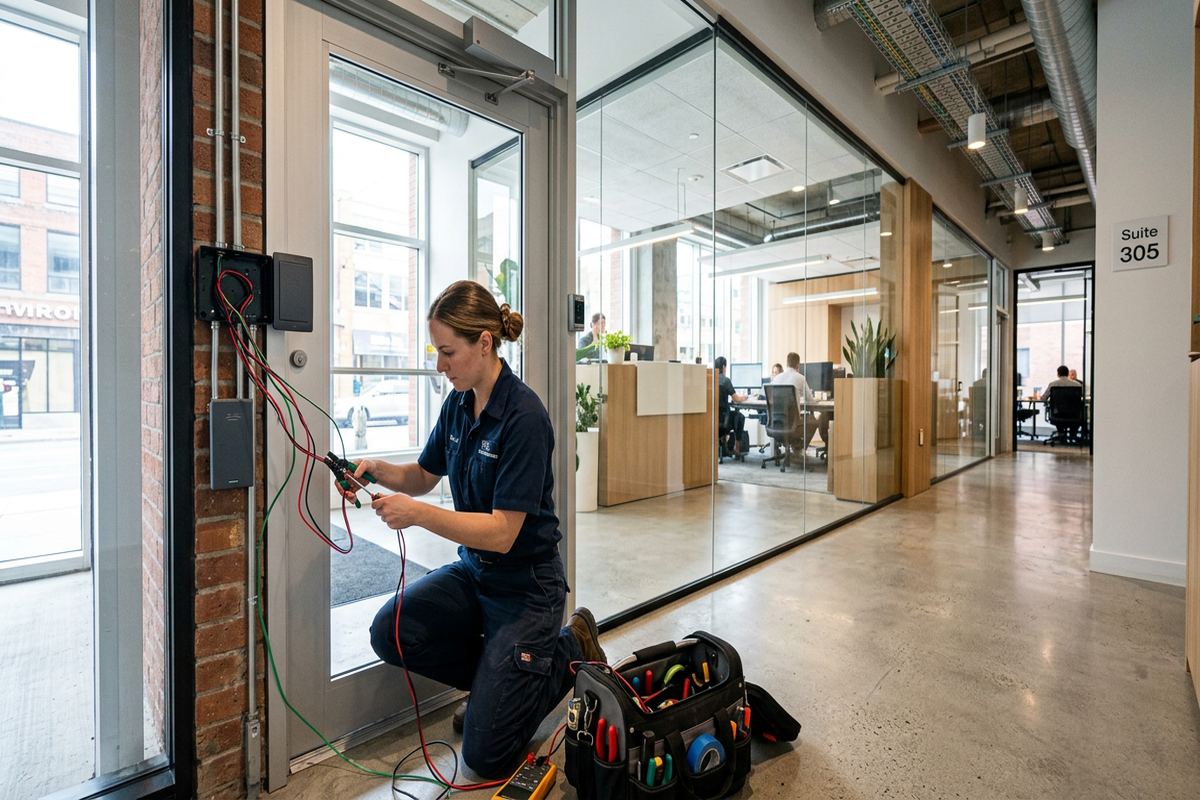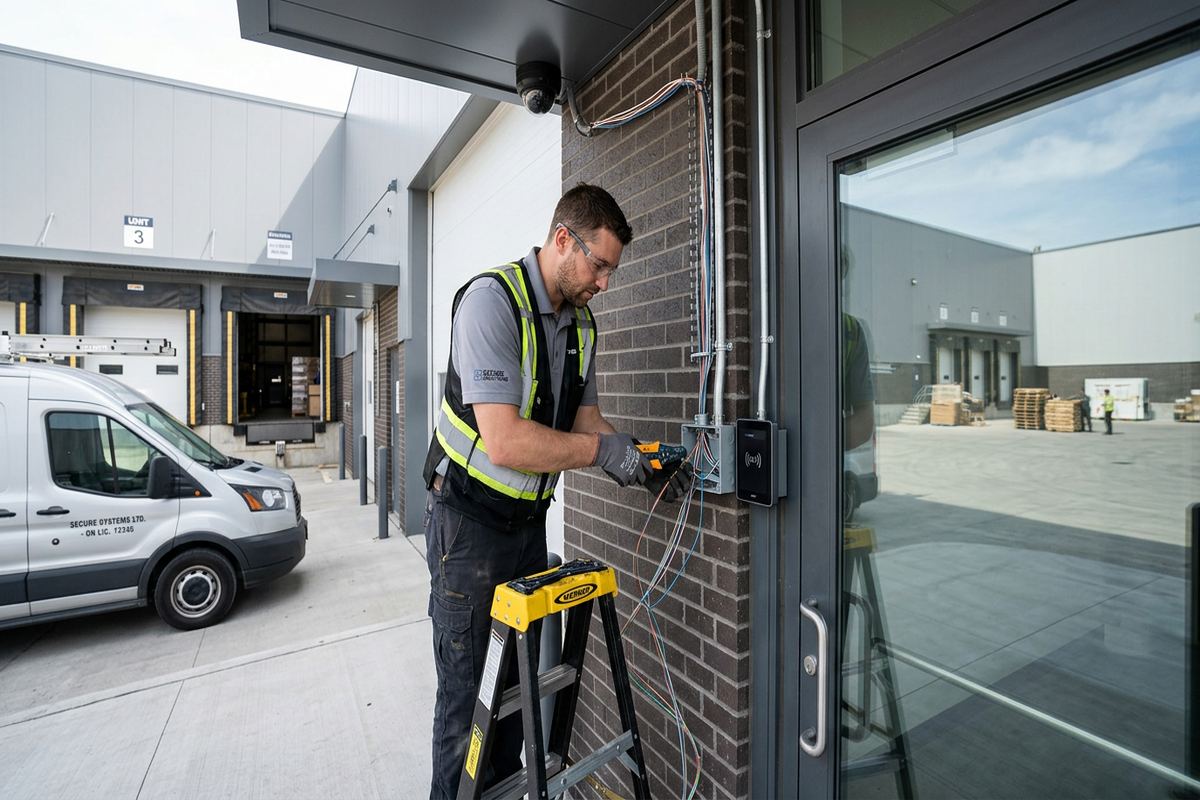
UnifiedLink installs commercial networks for offices, retail spaces, food-processing plants, industrial units and mixed-use properties in Belleville. Work begins with a site assessment, followed by a written scope for cabling, equipment, device locations and exclusions. Installation includes labelled cable runs, on-site configuration and practical handover documentation.
Commercial Network Planning for Belleville Properties
A reliable commercial network starts with the property rather than a list of equipment. Belleville includes older downtown buildings, waterfront homes used for business, commercial strips and food-processing plants, and each setting creates different routing, coverage and environmental requirements. During the site assessment, UnifiedLink reviews construction type, available pathways, service entry, equipment locations, network use and future expansion. The resulting plan addresses where cables can run, where wireless access points belong and how network hardware should be protected. This avoids treating a masonry building in Downtown Belleville like a newer frame unit in West Park Village.
Older buildings often contain several generations of electrical, telephone and network work, sometimes with undocumented routes or abandoned cable above ceilings. Masonry walls, finished trim, inaccessible cavities and shared basements can limit otherwise straightforward cable paths. Before installation, practical routes are identified between the internet service location, communications rack, work areas, wireless access points and connected devices. Where drilling or surface-mounted containment is necessary, that work is included in the written scope. Landlord or condo approvals remain the customer’s responsibility, but the proposed route and mounting details can support the approval process before physical work begins.
Business requirements also shape the design. A small professional office may need stable wired connections, staff and guest Wi-Fi, printers and voice services, while an industrial unit may connect production workstations, cameras, access control and building systems. Food-processing plants require particular attention to equipment placement, cleaning areas, moisture exposure and separation from sources of interference. UnifiedLink documents equipment, cable routes, device placement, exclusions, equipment ownership and warranty before pricing. That written scope gives the property owner or manager a clear basis for reviewing the work, coordinating other trades and confirming what will be delivered at handover.
- Site assessment before pricing
- Review of construction and usable pathways
- Documented equipment and device locations
- Planning for growth and connected systems
- Defined exclusions, ownership and warranty
Structured Cabling Installation in Belleville
Structured cabling provides the physical foundation for computers, phones, access points, cameras and other networked equipment. UnifiedLink installs continuous labelled cable runs from the communications rack or enclosure to each approved outlet or device location. Cable type is selected for the application, pathway and expected network performance rather than simply matching whatever cable is already present. Routes are planned to reduce unnecessary joins, avoid damaging building finishes and maintain appropriate separation from electrical wiring or interference sources. Each endpoint is labelled consistently so staff and future technicians can identify connections without tracing every line through ceilings or service spaces.
Construction methods vary considerably across Belleville. In Downtown Belleville, solid masonry walls and renovated upper floors may require surface raceway, carefully selected penetrations or routes through shared utility areas. Frame construction in Thurlow or West Park Village may provide wall and ceiling cavities, but insulation, fire blocking and finished spaces still affect access. Commercial strips often have open ceilings or rear service areas that simplify some routes while complicating others through demising walls. The installation plan identifies these conditions before pricing, including any access limitations, patching exclusions or work that must be completed by another trade.
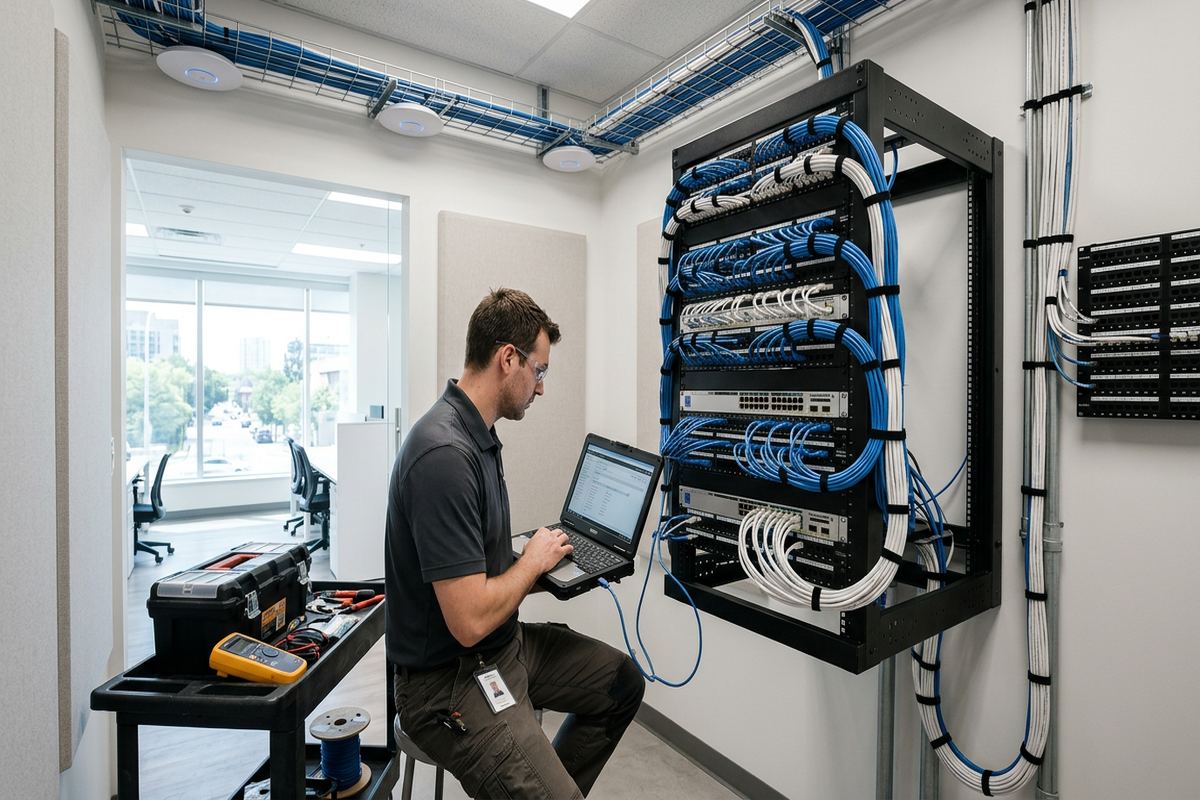
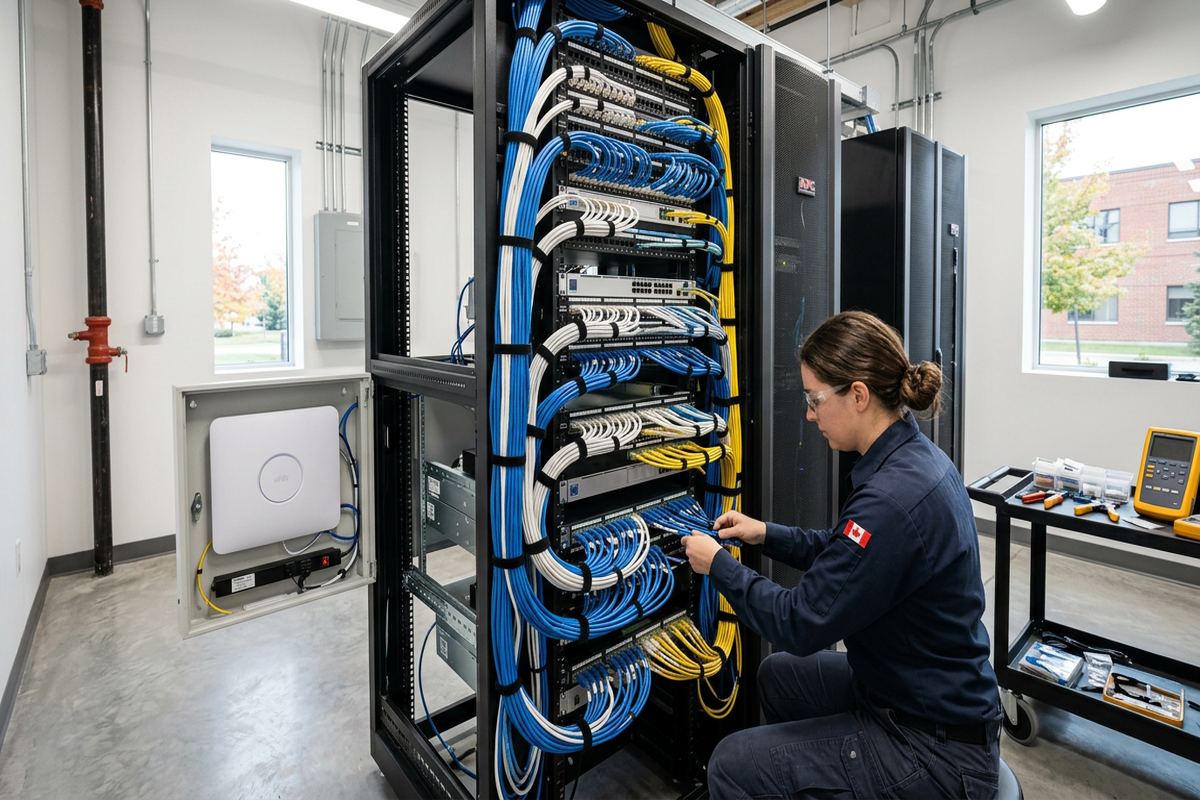
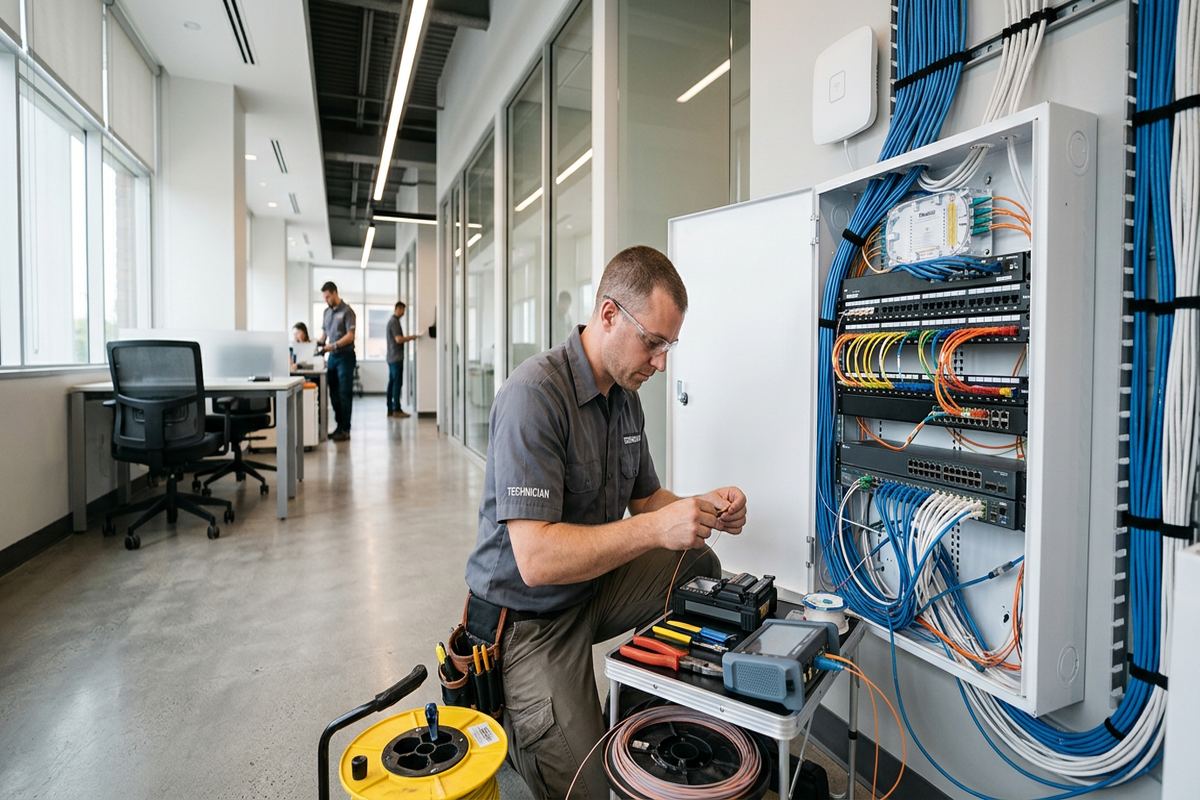
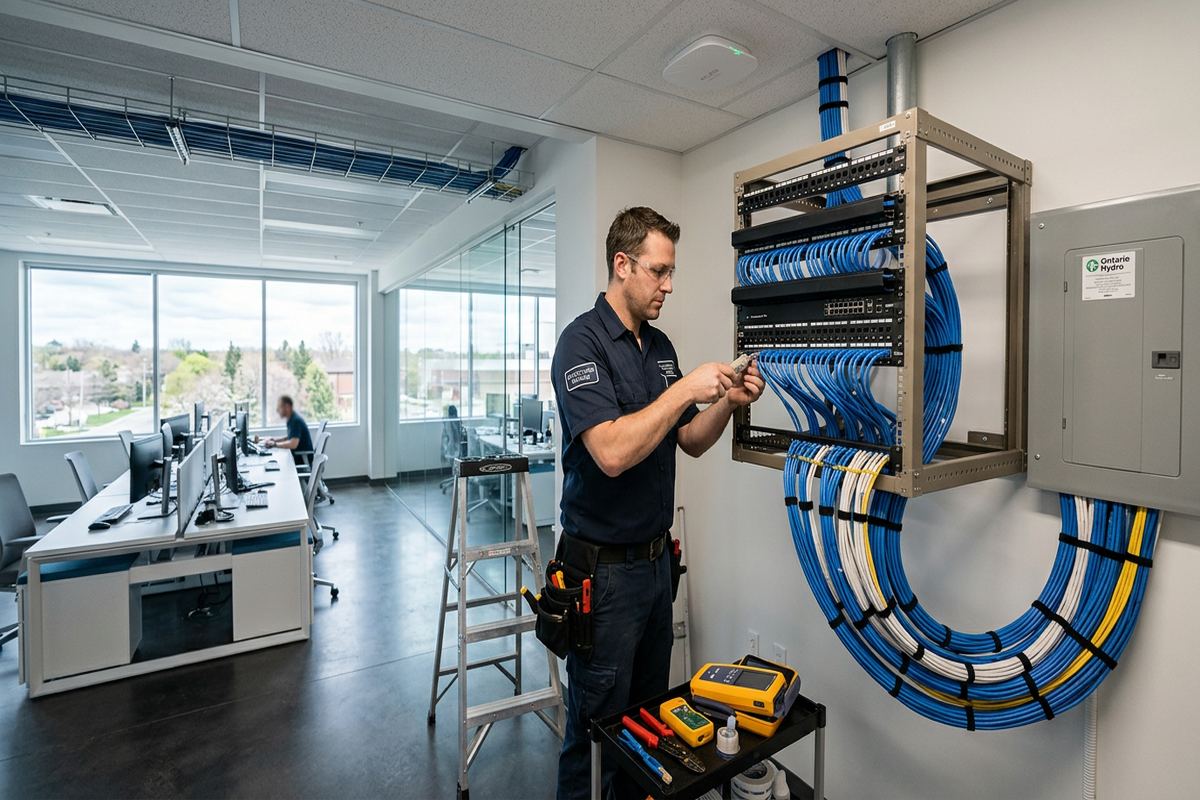
Cable termination and rack layout matter as much as the route itself. Patch panels, wall-mounted enclosures, racks and cable management are arranged so ports remain accessible and changes can be made without disturbing unrelated connections. Existing usable infrastructure can be incorporated when its type, condition and routing support the new design; unsuitable or unidentified cable is not assumed to be serviceable. At completion, UnifiedLink provides an as-built record showing installed cable and endpoint information. The customer receives network credentials under its own control, helping prevent future dependence on an installer’s private account or undocumented settings.
- Data outlets for desks and equipment
- Patch panels and rack organization
- Consistent endpoint and port labels
- Routes suited to masonry or frame construction
- As-built cable records at handover
Wired Network Design and Switching
A commercial wired network should reflect how the organization actually works. The design considers the number and location of users, internet service, shared resources, connected building systems and devices that require Power over Ethernet. Switch capacity is planned around current ports with reasonable space for known additions, rather than filling every available port on installation day. Where appropriate, network separation can keep guest access, office devices, cameras or other systems logically distinct. These choices are reviewed in plain terms so the customer understands what is being configured, what depends on third-party services and what future changes may require additional hardware.
Switches and related equipment need a suitable operating location. A crowded utility shelf, unventilated cabinet or exposed production area can create avoidable service problems. During assessment, UnifiedLink reviews power availability, ventilation, physical access, cable entry and the need for a dedicated rack or enclosure. In industrial units and food-processing plants, hardware may need placement away from washdown zones, dust, vibration, temperature extremes or accidental impact. The written scope identifies the intended equipment location and any site preparation required before installation, including electrical work that must be handled by an appropriately qualified electrical contractor.
Configuration takes place on site so connections can be checked in the environment where they will operate. This may include switch setup, port assignment, network segmentation, access point connection and coordination with the customer’s internet provider or information technology contact. UnifiedLink does not conceal administrative access behind contractor-owned credentials. Handover uses the customer’s own credentials and includes an as-built record of the installed system. If another managed service provider will maintain the network, relevant configuration and physical records can be organized for that party, subject to the agreed scope and the customer’s security requirements.
- Switch sizing based on connected devices
- Power over Ethernet planning
- Optional separation of network traffic
- Protected equipment and rack locations
- Customer-controlled administrative credentials
Belleville, Ontario
Commercial network installation in Belleville, scoped in writing first
Book a site assessment and get equipment, routes, exclusions, and warranty on paper before anything is installed.
Business Wi-Fi Coverage in Belleville
Commercial Wi-Fi performance depends on access point placement, building materials, interference and the number of active devices. Adding a stronger consumer router rarely solves coverage across several rooms, floors or work areas. UnifiedLink plans wired access points in locations that provide practical coverage while preserving serviceability and a clean installation. Masonry, metal shelving, refrigeration equipment, mechanical systems and dense storage can weaken or redirect wireless signals. These conditions are especially relevant in older Belleville properties and operating plants, where a floor plan alone does not show all obstacles affecting wireless performance.
Different users may require different wireless access. Staff devices, guests, point-of-sale equipment and operational systems should not automatically share identical permissions. Where supported by the selected equipment and scope, separate wireless networks can be configured with suitable access controls. Coverage planning also considers meeting rooms, reception areas, warehouses, loading areas and exterior work zones, without assuming every corner requires the same signal level. Wired connections remain preferable for fixed equipment needing predictable throughput or power, including desktop workstations, network video recorders and some production devices. Wi-Fi is designed as part of the network, not as a substitute for proper cabling.
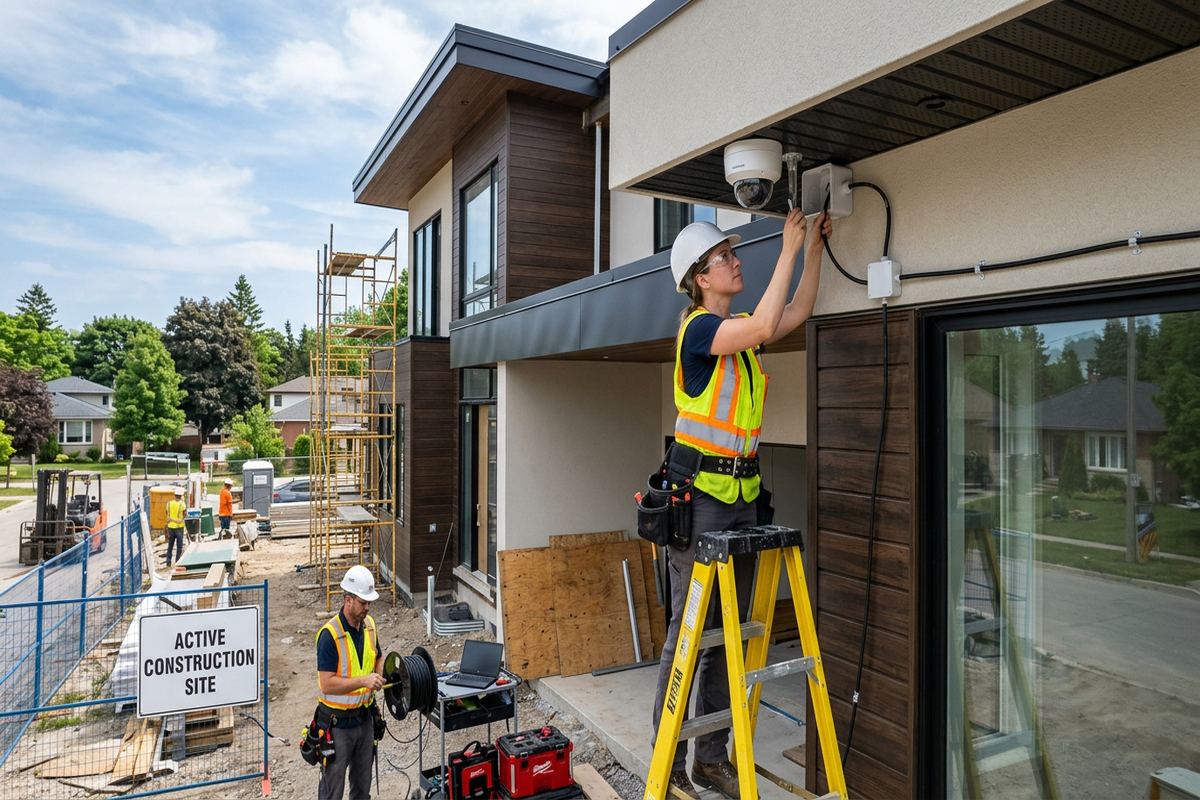
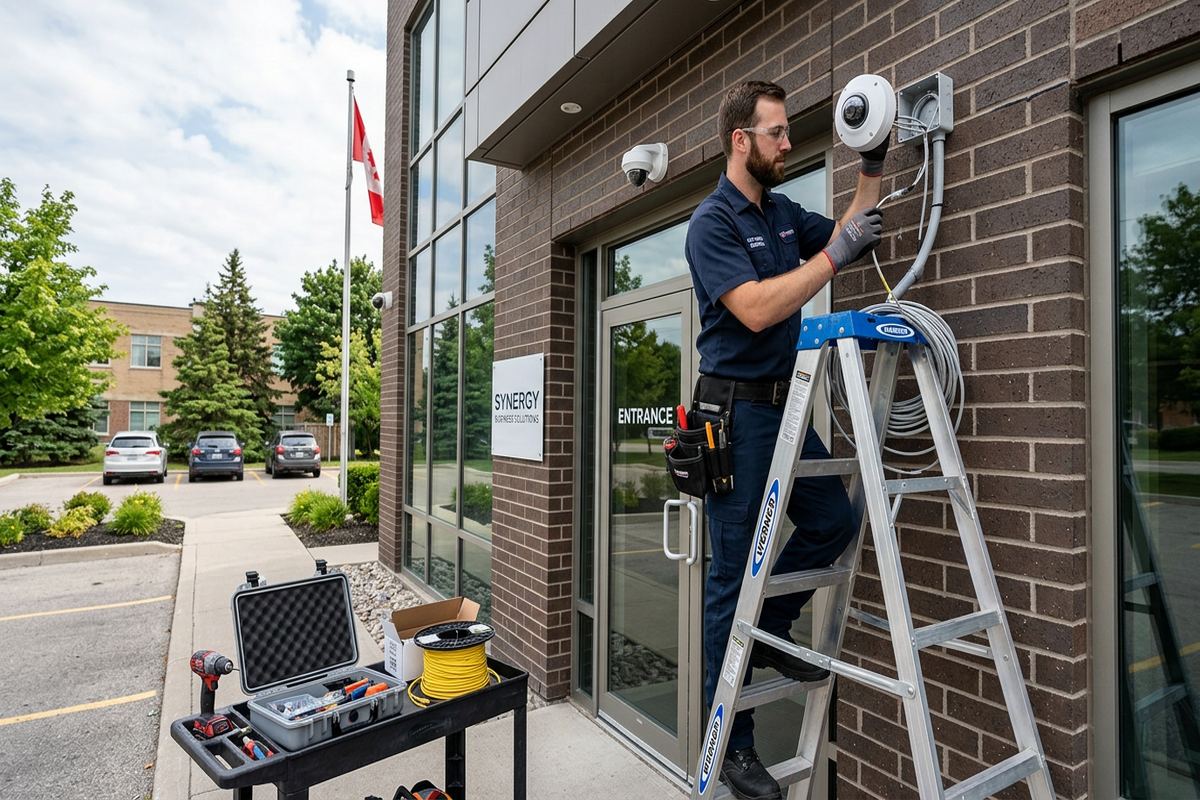
Belleville’s winters and repeated freeze-thaw cycles affect exterior wireless installations. Outdoor access points need equipment intended for the location, secure mounting, weather-resistant cable entry and penetrations sealed for the wall assembly. Brick, concrete block, siding and frame walls require different fasteners and sealing methods. Cable routes should avoid places where ice, snow clearing, roof drainage or vehicle activity can damage equipment. Waterfront exposure around the Bay of Quinte also warrants attention to wind-driven moisture and mounting stability. Exterior coverage is assessed separately because indoor access points placed near windows may not provide dependable service outside.
- Wired access point installation
- Staff and guest network separation
- Coverage planning around local construction
- Outdoor-rated equipment where required
- Sealed exterior cable penetrations
Network Installation for Belleville Operations
Office, retail, hospitality and light-industrial operations place different demands on a network. A tenant in East Hill may prioritize reliable workstations, voice services and meeting-room coverage, while a commercial unit near Bayside may need connections across offices, storage and loading areas. Point Anne and Thurlow properties can involve longer internal routes or detached workspaces that require additional pathway planning. UnifiedLink maps each required connection to a practical endpoint and identifies where wired, wireless or fibre-based links may be appropriate. Recommendations are tied to the site and use rather than a standard package.
Food-processing environments require close coordination with operations. Network equipment and cable pathways must account for sanitation procedures, moisture, temperature changes, stainless equipment and active production zones. Installation timing may need to follow access rules or avoid interfering with production, but those arrangements are established during scoping rather than assumed. Devices should be placed where they remain serviceable without creating unnecessary exposure. If specialized enclosures, conduit, elevated access or work by another trade is needed, it is identified as part of the written scope. This provides a defined boundary between network installation and other facility responsibilities.
Commercial continuity also depends on orderly installation. Existing network connections may support payment terminals, telephones, cloud applications, cameras or building access, so changes should be sequenced carefully. UnifiedLink reviews known dependencies and plans cutover steps within the agreed work. Some interruption may still be necessary when replacing central equipment or moving service connections, and those conditions are discussed before work starts. One accountable contractor handles the agreed low-voltage scope, reducing confusion over cable routes, endpoint labels and configuration responsibility. Internet provider outages and third-party platform issues remain outside the installer’s direct control.
- Plans matched to operating requirements
- Routes for offices, warehouses and plants
- Coordination around active business systems
- Documented cutover requirements
- One contractor for the agreed scope
Exterior Links and Seasonal Conditions in Belleville
Connecting detached buildings, outdoor work areas or remote devices requires more than running an indoor cable outside. The route must account for distance, electrical exposure, moisture, physical damage and the construction of each structure. Depending on site conditions, a buried pathway, protected exterior cable, fibre link or point-to-point wireless connection may be considered. UnifiedLink assesses the route before specifying a method and identifies trenching, conduit or electrical work that is excluded or assigned to another contractor. This is relevant for larger Thurlow properties, waterfront sites and industrial premises with separate offices, shops or storage buildings.
Exterior mounting in Belleville has to withstand winter weather and repeated freeze-thaw movement. Penetrations are positioned and sealed to limit water entry, while cable is supported so it does not sag into snow, drainage paths or areas exposed to impact. Mounting into brick or block differs from fastening to siding or a frame wall, and the chosen hardware must suit the substrate. Drip loops, weather-resistant entries and suitable outdoor components are included where the design requires them. Existing holes or conduits are inspected before reuse because visible access does not confirm that a route is dry, clear or appropriately protected.
Waterfront properties around the Bay of Quinte can add wind, moisture and open exposure to an exterior network plan. Equipment locations should not rely on sheltered conditions that disappear during seasonal weather, nor should a wireless link be planned without considering line of sight and moving obstructions. For mixed residential and commercial properties, condo boards, landlords or property managers may need to approve visible equipment, penetrations or common-area cable routes. UnifiedLink documents proposed locations and pathways, but the customer must obtain required permissions before installation. This prevents an approved technical design from conflicting with property rules or lease obligations.
- Detached-building connection assessment
- Freeze-thaw-conscious mounting and sealing
- Routes protected from snow and drainage
- Hardware matched to wall construction
- Documentation for property approvals
Testing, Documentation and Network Handover
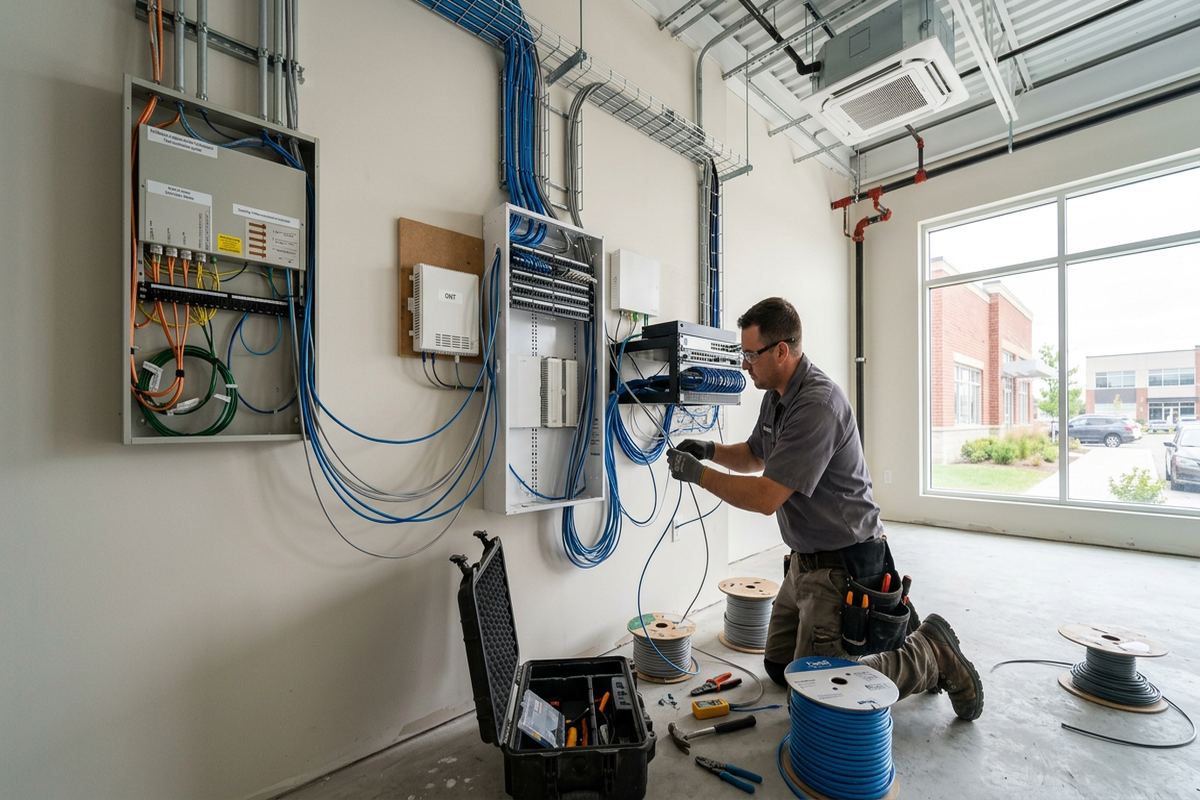
Installation is not complete when the final cable is pulled. Each new run is terminated, labelled and checked according to the agreed scope, and connected devices are verified where configuration is included. Wireless access points and switches are configured on site so basic operation can be reviewed in the actual property. Testing is intended to confirm the installed work; it cannot guarantee internet-provider performance, remote cloud services or every customer-owned device. Any limitations discovered during installation, such as inaccessible existing cable or third-party equipment restrictions, are documented and discussed before they are treated as part of the completed network.
Clear records reduce guesswork when staff move, devices are added or another technician attends the property. UnifiedLink provides an as-built record reflecting installed cable runs, endpoint labels and relevant equipment locations. The level of configuration detail follows the written scope and the customer’s security needs. Administrative credentials are created for or transferred to the customer rather than retained only in a contractor-controlled account. Equipment ownership is also stated in the scope, which is important when leased internet hardware, landlord-owned infrastructure and customer-purchased network devices share the same rack or communications area.
Handover includes a practical review of the installed network and any operating boundaries that the customer should understand. This may cover patching outlets, identifying access points, locating the communications enclosure and explaining which party manages internet service or ongoing software subscriptions. If future work is anticipated, labelled spare pathways or available rack space can be noted without implying that uninstalled capacity already exists. Belleville property owners and managers receive a system that another qualified technician can understand from the labels and records. Ongoing support, monitoring or managed services are included only when expressly listed in the agreed scope.
- Checks for newly installed cable runs
- On-site device configuration
- Endpoint and equipment records
- Credentials controlled by the customer
- Defined third-party service boundaries
Starting a Belleville Commercial Network Project
The first step is a site assessment before pricing. Information about the property, current network, internet service, user count, connected systems and known expansion plans helps define what must be inspected. During the visit, UnifiedLink reviews cable pathways, equipment locations, ceiling access, wall construction and exterior routes relevant to the requested work. In an occupied Belleville business, access restrictions and operating hours are also discussed. Site assessment timing depends on the service and travel distance, so scheduling is confirmed after the initial request rather than presented as a fixed arrival commitment.
After assessment, the customer receives a written scope covering equipment, cable routes, device placement, exclusions, equipment ownership and warranty. The scope can also note required landlord, condo or property-management approvals, as well as preparatory work by electricians, internet providers or other trades. This stage is where assumptions should be resolved, particularly in older downtown buildings or modified industrial units with concealed pathways. Pricing follows the assessed scope instead of being based on an unverified outlet count. Changes requested after approval are documented so both the technical plan and responsibility for related work remain clear.
Requests sent during business hours are answered the same day, while after-hours requests are answered the next business day. An initial discussion can establish whether the project involves a new fit-out, network replacement, expansion, Wi-Fi correction or connection of another building. Helpful details include floor plans, photographs of the communications area, the property address and a list of devices or work zones. From Downtown Belleville to Bayside, the objective is a network plan suited to the building, local conditions and operation, followed by installation, configuration and documented handover under one accountable low-voltage scope.
- Same-day replies during business hours
- Assessment timing based on service and travel
- Written scope before installation
- Coordination requirements identified early
- Installation and handover under one scope
Belleville neighbourhoods we cover
- Downtown Belleville
- East Hill
- West Park Village
- Thurlow
- Bayside
- Point Anne
Commercial network installation in Belleville — common questions
Do you assess the Belleville property before pricing?
Yes. UnifiedLink completes a site assessment before pricing because cable routes, wall construction, ceiling access, equipment locations and operating conditions affect the scope. Older Downtown Belleville buildings, industrial units and waterfront properties can require very different methods. Assessment timing depends on the requested service and travel distance. The resulting written scope defines equipment, routes, placement, exclusions, ownership and warranty.
Can you reuse our existing network cabling?
Existing cabling can be considered when its type, condition, termination and route are suitable for the planned network. It is not automatically reused simply because it reaches the right area. In older Belleville properties, labels may be missing and concealed routes may be uncertain. The assessment identifies what can reasonably remain, what requires further checking and what should be replaced with continuous labelled runs.
Can you improve Wi-Fi in an older masonry building?
Yes, but the plan must account for how masonry, multiple floors, metalwork and neighbouring wireless networks affect coverage. In Downtown Belleville, additional wired access points may be more practical than relying on one centrally located router. UnifiedLink assesses available cable routes and likely device locations, then defines access point placement and configuration in the written scope. Surface raceway may be proposed where concealed routing is not practical.
Do you install outdoor or detached-building network links?
UnifiedLink can assess links to detached buildings and outdoor work areas in Belleville. The appropriate method depends on distance, pathways, line of sight, electrical exposure and physical conditions. Options may include protected cable, fibre or a point-to-point wireless link. Exterior mounting and penetrations are planned for winter, freeze-thaw and moisture exposure. Trenching, conduit or electrical work is identified separately when another contractor is required.
Will we control the network credentials?
Yes. Handover uses the customer’s own administrative credentials rather than leaving access solely in an installer-controlled account. UnifiedLink also provides an as-built record for the installed scope, including relevant cable labels and equipment locations. If a Belleville business has an information technology provider, records can be organized for that provider while respecting the customer’s security requirements and any limits established in the written scope.
Do I need landlord or condo approval?
Approval may be required when work affects leased premises, common areas, exterior walls or visible equipment. This is particularly relevant to mixed-use buildings, commercial tenants and some waterfront or condo properties in Belleville. UnifiedLink can document proposed cable routes, penetrations and equipment locations to support the request, but the customer is responsible for obtaining permission before installation. Approval requirements should be resolved before materials and scheduling are finalized.
Coverage in Belleville is confirmed against the address before we quote. See everything we install in Belleville or the province-wide commercial network installation page.