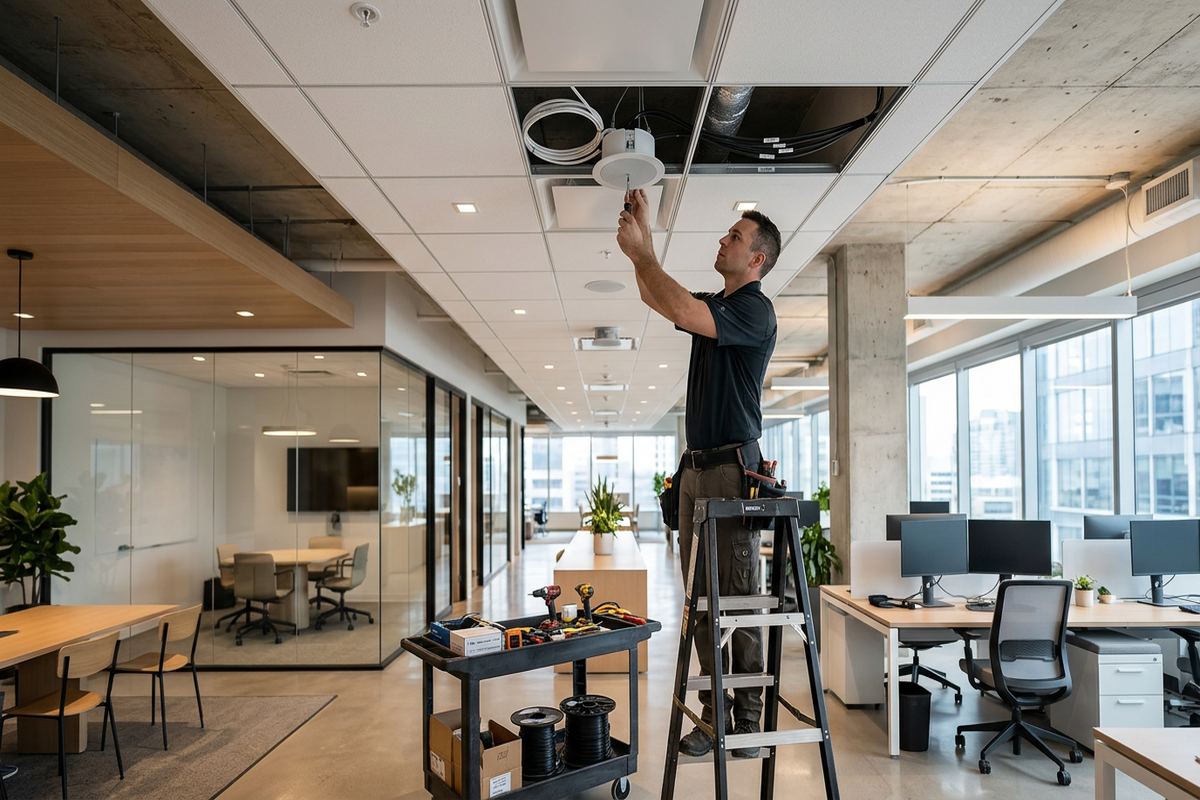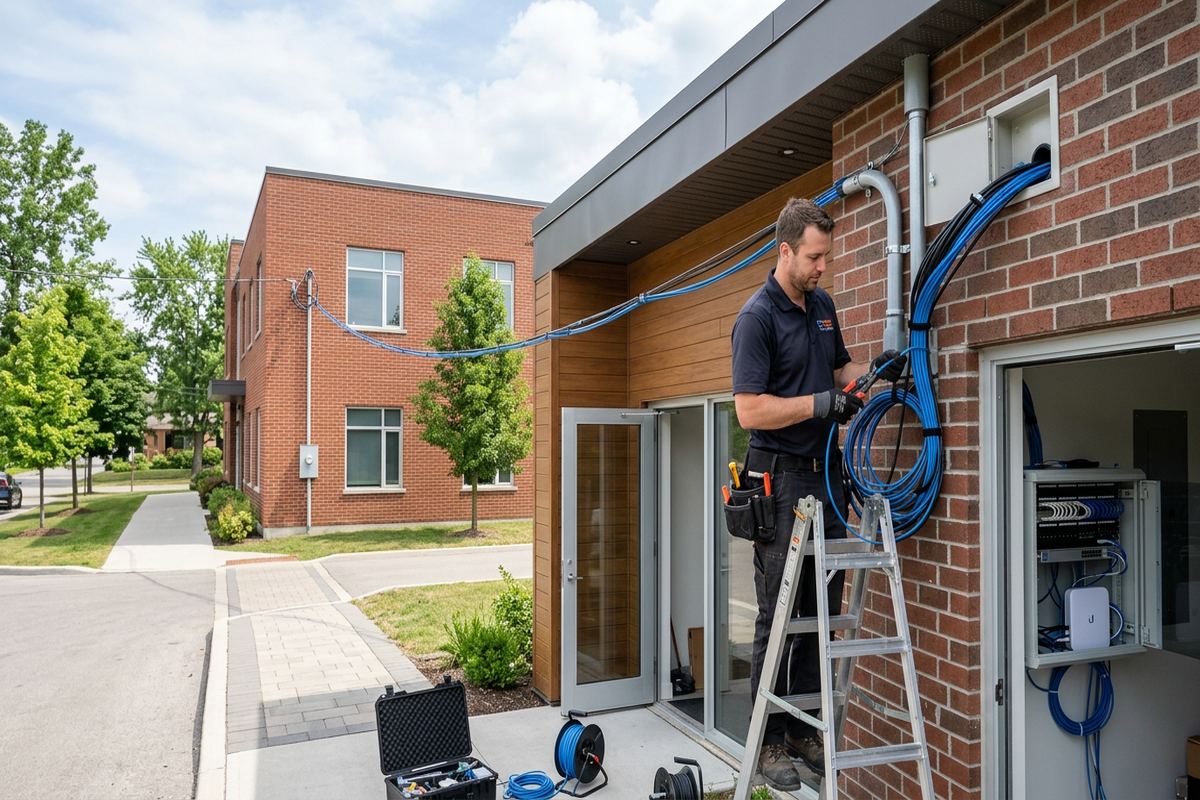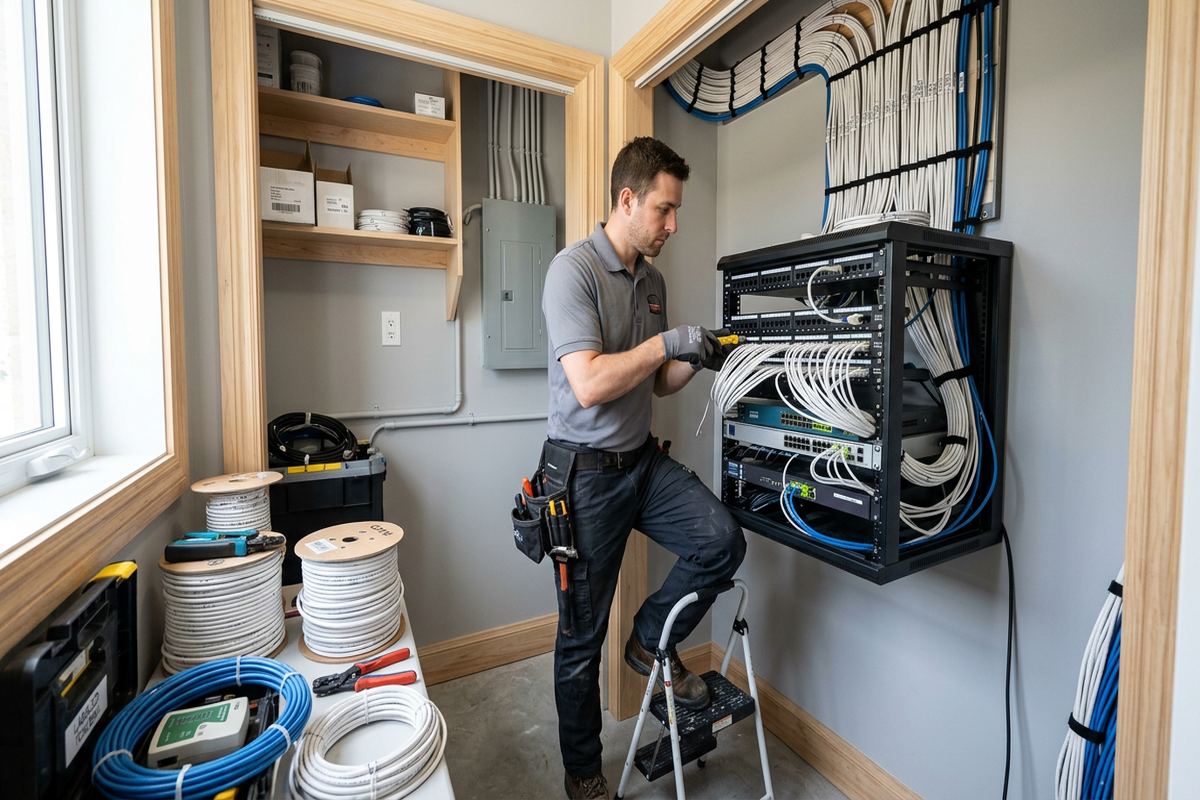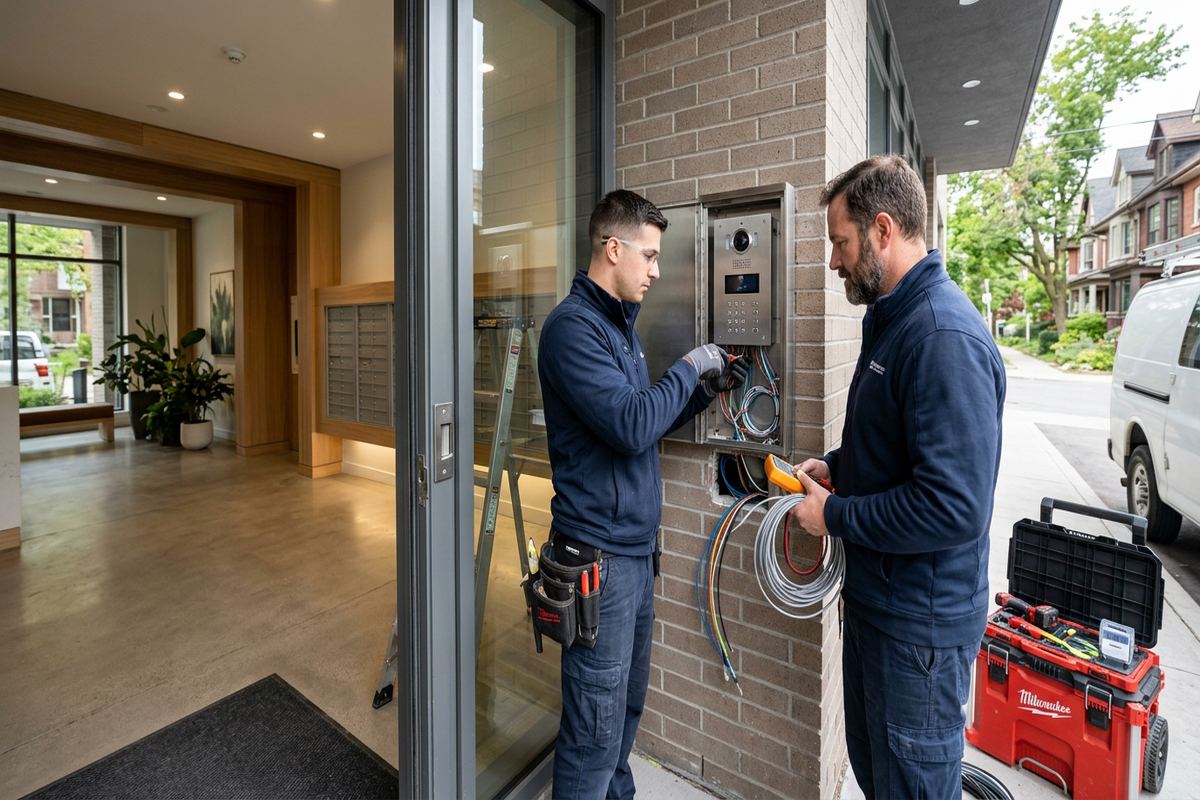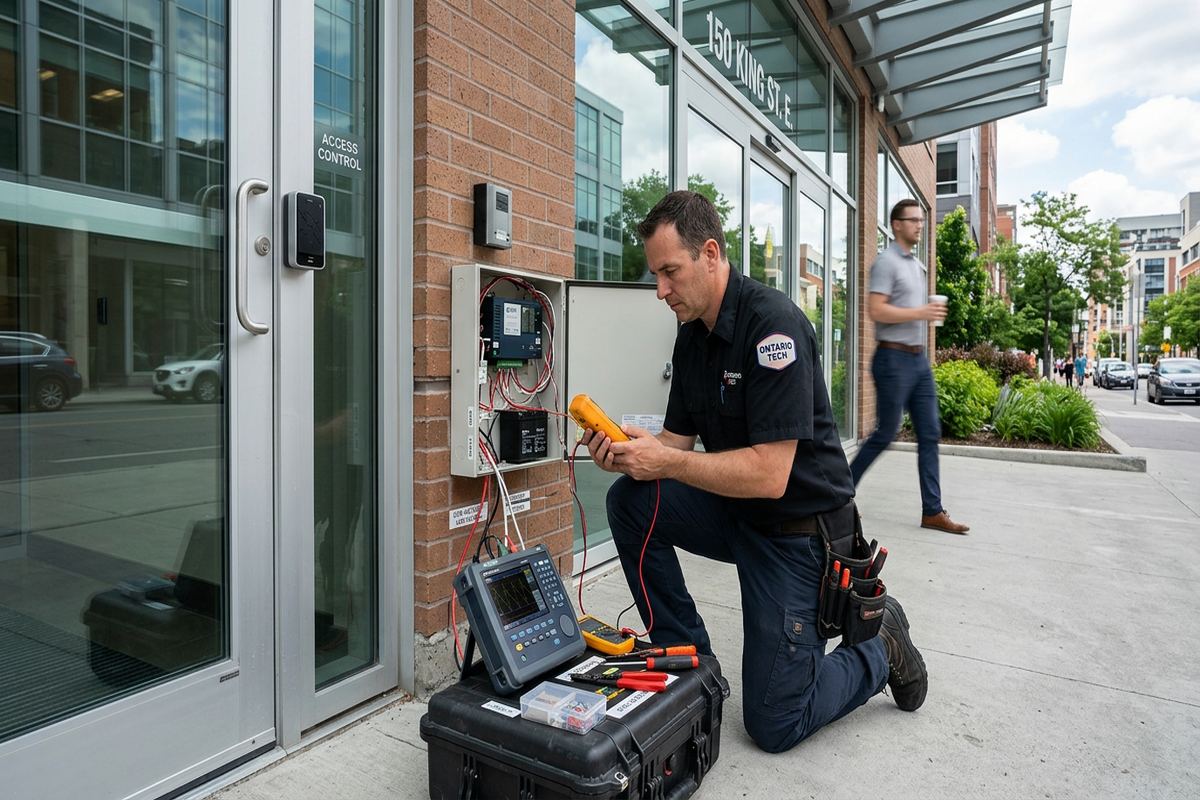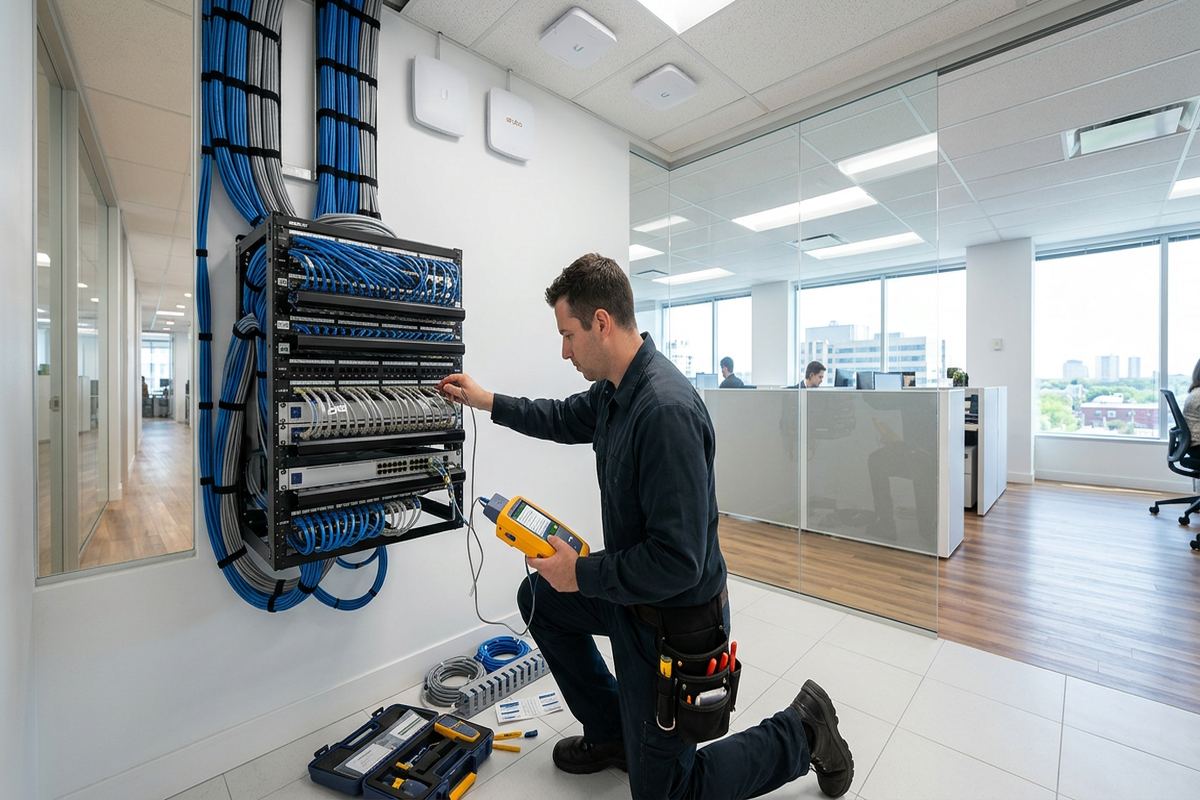
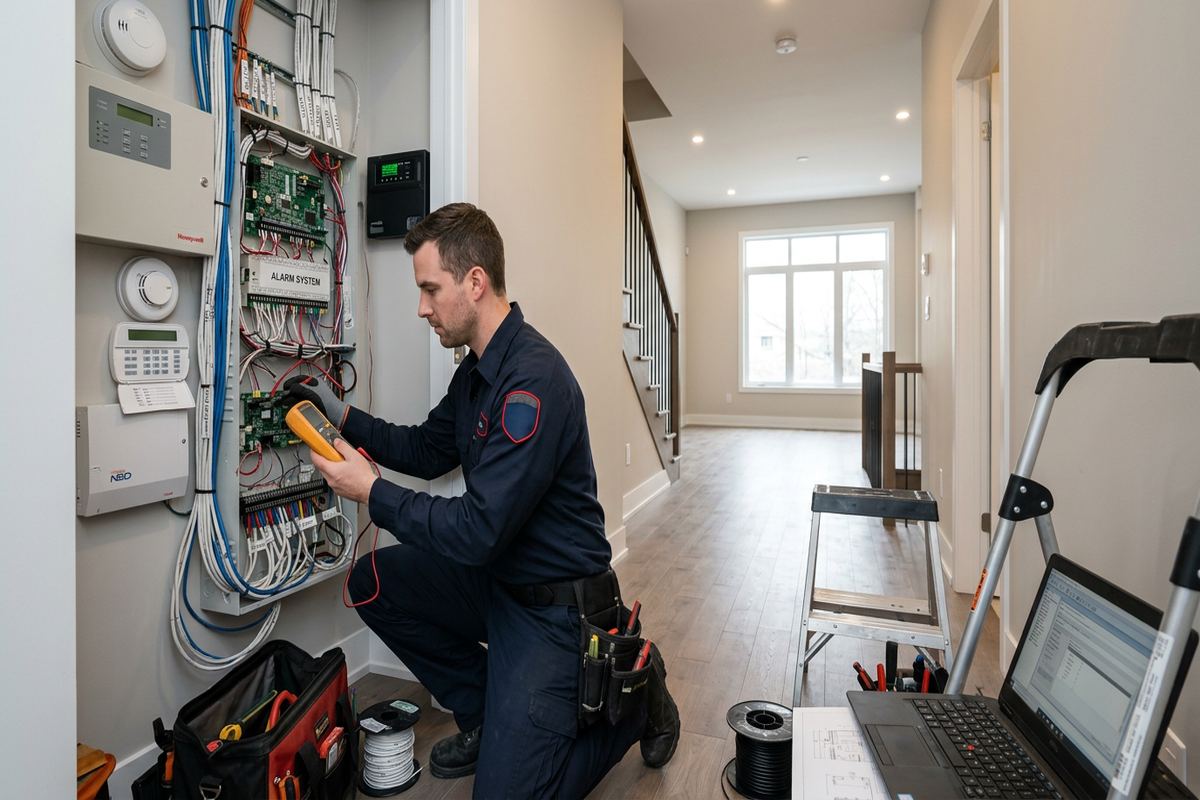
UnifiedLink installs commercial alarm systems for offices, shops, mixed-use properties, warehouses and industrial facilities across Belleville and the Bay of Quinte. Each project begins with a site assessment, followed by a written scope covering equipment, device locations, cable routes, responsibilities and exclusions. Installation, configuration, testing and handover are managed by one accountable contractor.
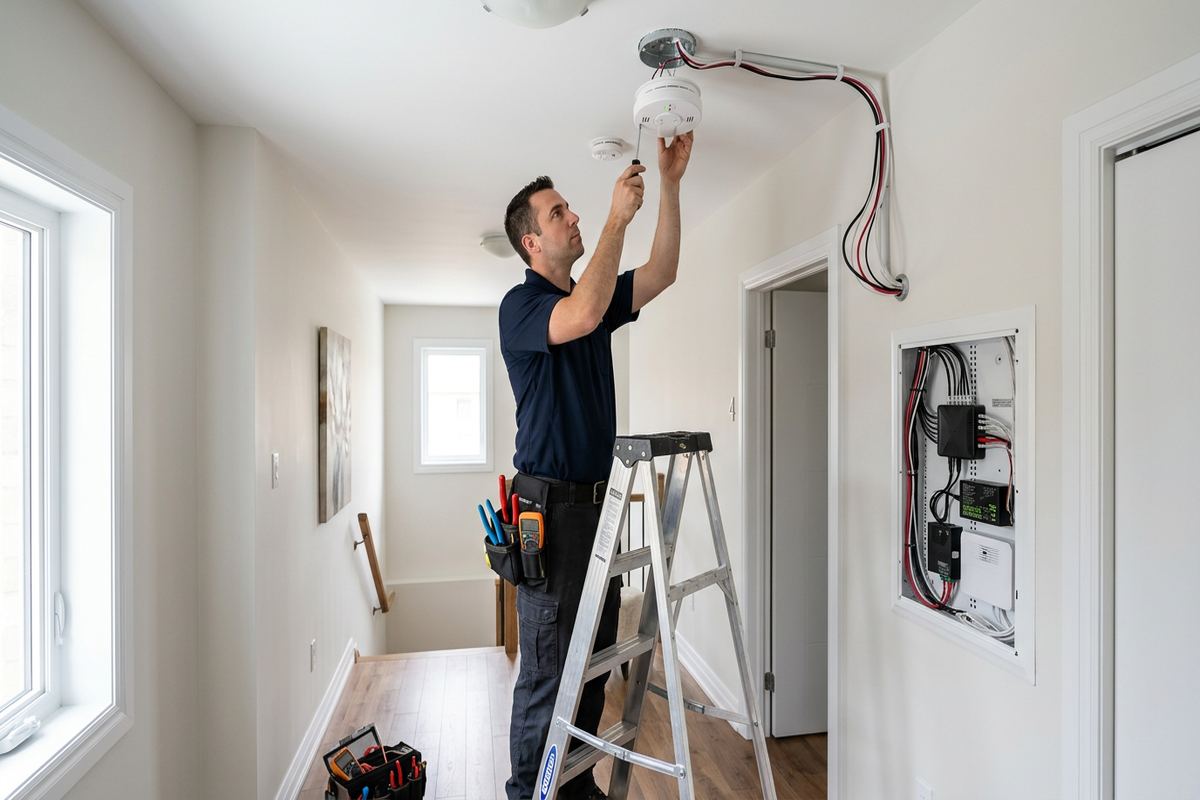
Commercial Alarm Planning for Belleville Properties
A commercial alarm should reflect how a Belleville property is built, occupied and secured after closing. An older Downtown Belleville storefront may have several entrances, shared walls, upper-floor tenants and limited routes for new cable. A newer industrial unit may need wide-area motion coverage, overhead-door contacts and separate zones for offices and production space. We assess these conditions before selecting equipment. The resulting plan identifies likely entry paths, valuable areas, staff access patterns, environmental risks and practical device locations without treating every building as though it has the same layout.
Older downtown buildings, waterfront homes and food-processing plants each require a different alarm plan. In masonry buildings, cable routes may rely on basements, utility spaces, surface raceway or existing pathways rather than unnecessary drilling through finished walls. Frame construction can offer concealed routes, but insulation, fire separations and previous renovations still affect access. Food-processing environments may require equipment placement that accounts for washdown areas, temperature variation and operating procedures. Waterfront exposure can increase attention to sealing, corrosion and outdoor device selection. These decisions belong in the scope before installation work begins.
The site assessment also establishes how the system should divide the property into usable areas. A business may want the receiving door, public entrance, stockroom and office on separate zones so staff can identify events quickly. Mixed-use buildings may require independent partitions for commercial and residential occupants, subject to landlord approval and the building’s existing arrangements. We discuss who opens and closes, which doors remain active during deliveries, and whether cleaners or contractors need limited access. This operational information prevents a technically complete alarm from becoming inconvenient during normal work in Belleville.
- Building construction and cable access review
- Entry, motion and high-value area assessment
- Practical zoning for daily business operations
- Environmental conditions considered before equipment selection
- Written scope prepared before installation pricing
Alarm Equipment and Detection Options in Belleville
Device selection begins with the risks found on site rather than a standard equipment bundle. Door contacts can monitor regular entrances, staff doors, shipping doors and overhead doors. Motion detectors provide interior coverage where their viewing angles are not blocked by shelving, partitions or machinery. Glass-break detection may suit exposed storefront glazing, while panic devices can support counters or controlled staff areas. Sirens and keypads must be placed where they can be heard and used without creating unnecessary exposure. Belleville businesses receive equipment recommendations tied to specific rooms, openings and operating routines.
Commercial alarm panels can support multiple areas, user permissions and event records, but those functions need deliberate configuration. We can create user codes based on roles, organize zones with clear names and establish partitions where separately operated spaces require them. A system should report “rear shipping door” rather than an unexplained zone number. Where compatible communication methods are available, the design can consider primary and backup reporting paths. Final capabilities depend on the chosen equipment, available services and monitoring arrangements, all of which are identified in the written project scope before installation proceeds.
Environmental fit matters throughout the Bay of Quinte. Unheated storage areas, exterior doors and detached structures can expose devices and cable entries to cold, moisture and seasonal movement. Belleville winters and repeated freeze-thaw cycles can affect poorly sealed penetrations, loose exterior fittings and unsuitable mounting surfaces. Outdoor-rated equipment is used where the design requires exterior installation, with penetrations sealed according to the surface and exposure. Interior devices are positioned away from obvious temperature disturbances, moving machinery or other conditions likely to produce unreliable detection. The goal is stable coverage, not simply more sensors.
- Door, window and overhead-door contacts
- Interior motion and glass-break detection
- Clearly named zones and system partitions
- Role-based user codes and permissions
- Suitable equipment for exposed locations
Older and Mixed-Use Belleville Buildings
Downtown Belleville buildings often contain layers of renovation that are not visible from a floor plan. Plaster, masonry, dropped ceilings, blocked chases and shared utility areas can change the proposed cable route once access points are inspected. We look for continuous pathways that protect the finish and keep future service practical. When concealed installation is not reasonable, neatly planned raceway may be preferable to disruptive cutting. Any assumptions about access are recorded in the scope, including areas that require owner preparation or separate permission. This approach reduces uncertainty before devices are mounted or walls are opened.
Mixed-use and tenanted properties need clear authority before work starts. A business owner may control the suite but not the exterior wall, common hallway, roof space or electrical room. Condo boards, landlords or property managers may require drawings, approved mounting methods or limits on work hours. In East Hill or Downtown Belleville, these approvals can influence siren placement, cable pathways and access to shared spaces. UnifiedLink identifies expected approvals during assessment, while the customer remains responsible for obtaining property authorization unless the written scope assigns a different process. Installation begins only within the agreed work area.
Masonry and frame structures call for different fastening and sealing methods. Brick or concrete may require carefully selected anchors and penetration locations, particularly around older mortar, decorative finishes or building envelopes. Frame walls can simplify routing but may conceal plumbing, electrical wiring or fire-rated assemblies. Exterior penetrations are positioned to shed water and are sealed for the local exposure rather than left around an unprotected cable. In Belleville, winter moisture and freeze-thaw action make small installation details important. A sound alarm installation must protect both system reliability and the building surface supporting it.
- Routes adapted to masonry or frame construction
- Surface raceway considered where concealment is impractical
- Landlord and condo approvals identified early
- Exterior penetrations properly positioned and sealed
- Shared spaces excluded without authorization
Belleville, Ontario
Commercial alarm system installation in Belleville, scoped in writing first
Book a site assessment and get equipment, routes, exclusions, and warranty on paper before anything is installed.
Belleville Alarm Cabling and Installation Standards
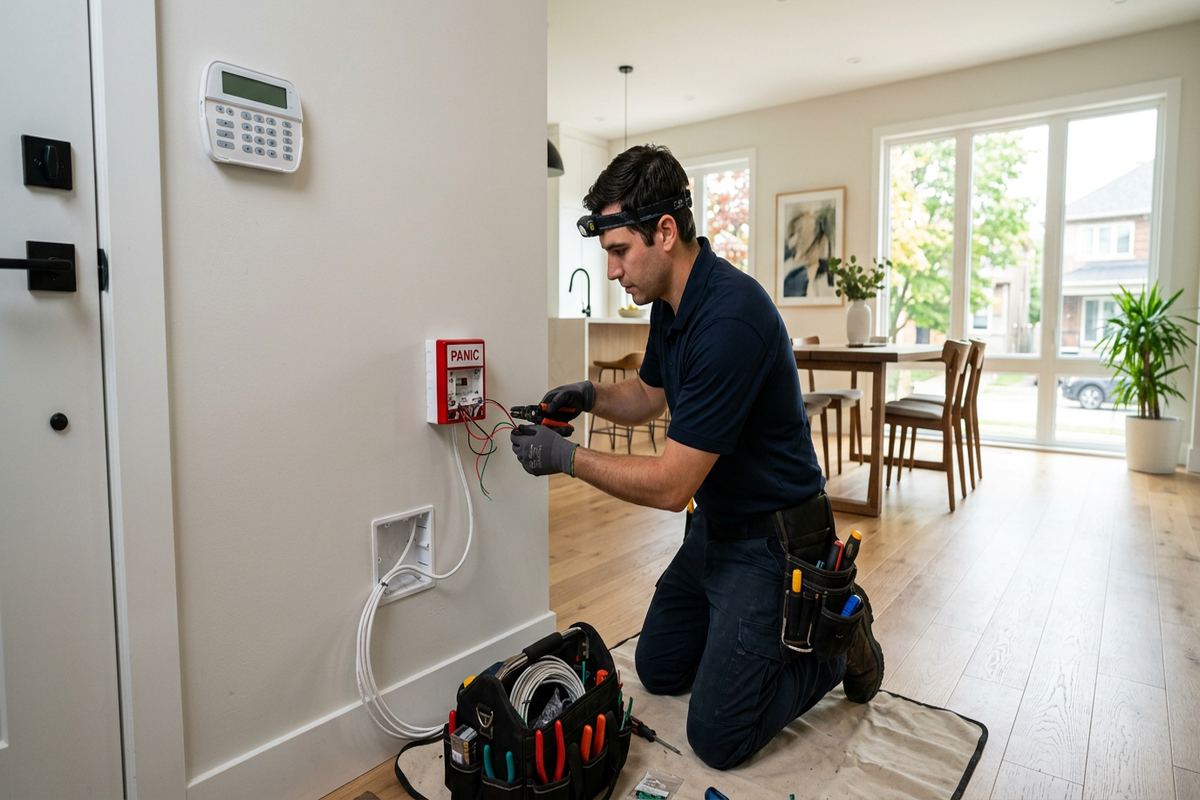
Reliable alarm operation depends on cabling that can be traced, tested and serviced. UnifiedLink installs continuous labelled cable runs between planned termination points, avoiding hidden intermediate joins that make future troubleshooting difficult. Cable type and pathway are selected for the environment, device requirements and applicable building conditions. Runs are supported rather than draped across ceilings or mixed carelessly with unrelated services. At the panel and device ends, labels correspond with the documentation provided at handover. In commercial strips and industrial units around Belleville, this organized approach is especially useful when spaces are later renovated or equipment moves.
Installation sequencing is agreed with the customer so work does not unnecessarily interfere with staff, deliveries or production. Some devices can be installed during regular access hours, while noisy drilling or work around customer areas may need a planned window. In food-processing plants, installation may also depend on sanitation procedures, restricted zones and coordination with site personnel. The scope identifies known access requirements and exclusions before work begins. If concealed conditions differ from what the assessment could reasonably show, they are reviewed with the customer instead of prompting an undocumented route or device change on site.
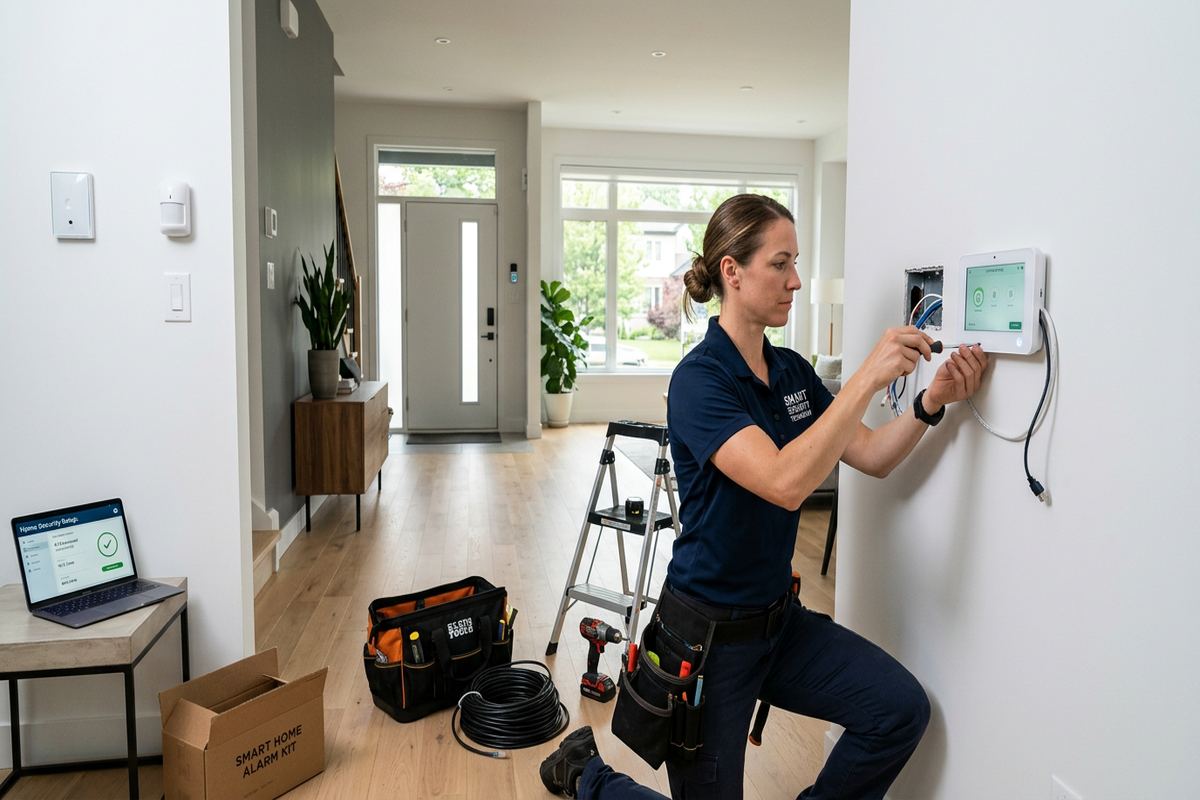
Every mounted device is checked for firm attachment, intended coverage and a practical service position. Contacts are aligned to tolerate normal door movement without creating excessive gaps, while motion detectors are aimed according to the protected area and likely obstructions. Keypads are installed where authorized users can operate them safely and clearly. Cable penetrations are finished and sealed as required by the mounting surface. Before configuration is complete, each zone is tested from the device back to the panel. Installation quality is verified through function, labelling and documentation rather than appearance alone.
- Continuous labelled cable runs
- Supported pathways and organized terminations
- Work sequencing coordinated with site operations
- Each zone tested back to the panel
- Mounting suited to the building surface
Alarm Monitoring and User Management
Monitoring is a separate operational decision from installing alarm equipment. The system design can account for compatible reporting methods, but the customer must understand who receives events, what communication service is required and what happens when an alarm is triggered. Some organizations use professional monitoring, while others need local notifications or integration with an established arrangement. Available functions depend on the selected panel, service provider and communications at the Belleville property. These dependencies are documented so installation hardware, account setup and ongoing services are not confused or represented as one undefined package.
User management should match responsibility within the organization. Owners or designated administrators can receive control credentials, while employees, cleaners and contractors may receive limited codes appropriate to their access. Individual credentials provide clearer event records than a code shared by everyone. We configure agreed names, permissions and partitions on site, then demonstrate common tasks such as arming, disarming, bypassing an authorized zone and reviewing basic status messages. Credentials are handed over to the customer rather than retained as installer-controlled access. Changes outside the original configuration can be addressed through a separately defined service request.
False alarms often begin with unclear procedures rather than failed equipment. A rear door left unlatched, a delivery entering an armed zone or a staff member using the wrong partition can create avoidable events. During handover, we explain the configured entry and exit paths, delay behaviour and zone names. Belleville businesses should maintain an internal list of authorized users and remove credentials when roles change. Physical changes also matter: new shelving, partitions, signs or machinery can obstruct detection. A system review is sensible whenever the layout or operating routine changes substantially.
- Monitoring requirements identified in the scope
- Individual codes instead of shared credentials
- Permissions matched to staff responsibilities
- On-site instruction for routine alarm use
- Customer controls administrative credentials
Testing and Handover for Belleville Businesses
Commissioning confirms that installed devices produce the expected system response. Each contact is opened, each motion area is walked and each agreed audible or reporting function is checked under controlled conditions. Zone names, delays, partitions and user permissions are compared with the approved plan. Where monitoring or third-party communication is included, testing is coordinated according to the applicable arrangement so test events are recognized correctly. Results that reveal an alignment, programming or coverage issue are corrected before handover. This process gives a Belleville customer a functioning system rather than a collection of mounted devices awaiting final setup.
At handover, the customer receives access using the customer’s own credentials and an as-built record of the completed work. Documentation identifies installed devices, zone naming, panel location and cable information available within the agreed scope. It also records material changes from the original plan, accepted exclusions and equipment ownership. Warranty information is set out in writing so responsibilities are clear. The customer is shown normal operation and basic status interpretation on site. Sensitive credentials should be stored securely and shared only with people authorized to administer or use the commercial alarm system.
One accountable contractor manages assessment, written scope, installation, configuration and handover. This avoids uncertainty over whether cable, device placement or programming belongs to a different installer. Projects involving other parties still require coordination: an electrician may provide power, a monitoring provider may establish an account, or a landlord may approve pathways. Those interfaces are identified rather than assumed. For properties in Thurlow, Bayside, Point Anne and central Belleville, site assessment timing depends on the service and travel distance. Requests during business hours receive a same-day response; after-hours requests receive a response the next business day.
- Controlled testing of every installed zone
- Programming checked against the approved plan
- Customer credentials supplied at handover
- As-built record and ownership details provided
- One contractor accountable for the defined scope
Planning Alarm Coverage by Belleville Property Type
Retail and office properties usually need coverage that follows public, staff and after-hours movement. A storefront in Downtown Belleville may combine exposed glazing, a rear service entrance, basement storage and an upper office, each requiring a distinct detection approach. Commercial strips may add shared walls, rear loading areas and landlord-controlled exteriors. The assessment considers cash-handling points, stockrooms, communications rooms and other restricted spaces without placing devices where routine activity constantly conflicts with coverage. Zoning can then support partial arming, allowing an office or storage area to remain protected while authorized work continues elsewhere.
Warehouses and industrial units present larger openings, longer sight lines and changing internal layouts. Overhead doors need contacts and mounting arrangements that tolerate normal movement and local conditions. Motion coverage must account for racking, equipment, suspended heaters and vehicles that can alter detection patterns. In a Belleville food-processing plant, placement may also be influenced by washable surfaces, controlled areas, temperature differences and sanitation schedules. We coordinate with site representatives to understand which spaces can be accessed, when work can occur and whether specific equipment restrictions apply. Unsupported assumptions are noted as exclusions until they can be verified.
Residential-style buildings used for commercial purposes require another approach. Waterfront homes converted to offices, professional spaces in East Hill, or frame buildings near West Park Village may retain household layouts while operating under business routines. Exterior doors, attached garages, basements and secondary entrances need to be reviewed according to actual use. If the property is a condo unit, leased premises or part of a shared building, approval may be needed before exterior devices or common-area cabling are installed. The alarm plan must respect ownership boundaries while still giving the occupant practical control of authorized areas.
- Retail coverage based on public and staff movement
- Industrial detection planned around equipment and racking
- Food-processing restrictions reviewed with site personnel
- Converted properties assessed by actual commercial use
- Ownership boundaries confirmed before shared-area work
Requesting a Belleville Commercial Alarm Assessment
A useful request begins with basic information about the Belleville property and its operation. The address, building type, approximate protected areas, number of entrances and current alarm equipment help establish the assessment needs. It is also helpful to identify renovations, recurring security concerns, landlord contacts and any restricted work periods. Existing drawings or equipment lists can provide context, but they do not replace verification on site. We use the initial discussion to determine what should be inspected, who needs to attend and whether access to basements, ceiling spaces, utility rooms or exterior areas is required.
During the assessment, we review device positions, panel and keypad locations, cable pathways, available communications and operating procedures. We also note construction features that affect labour or mounting, including masonry walls, finished ceilings, inaccessible cavities and exposed waterfront locations. The customer can explain delivery schedules, staff access, protected inventory and areas that may remain occupied after hours. Belleville sites vary considerably, so assessment timing depends on the service and travel distance. No installation price is presented as though the building conditions are known before this review has established a workable scope.
After assessment, the written scope covers equipment, cable routes, device placement, exclusions, equipment ownership and warranty. It also identifies customer responsibilities such as approvals, access, power, communications or third-party accounts where applicable. This document provides a common reference for installation and prevents informal assumptions from determining the finished system. Requests sent during business hours are answered the same day, while after-hours requests are answered the next business day. Once the scope is accepted and site requirements are ready, installation scheduling can be coordinated around the Belleville property’s access, occupants and operating needs.
- Property and operating details reviewed first
- On-site assessment completed before pricing
- Access and approval requirements documented
- Written scope defines responsibilities and exclusions
- Scheduling coordinated after scope acceptance
Belleville neighbourhoods we cover
- Downtown Belleville
- East Hill
- West Park Village
- Thurlow
- Bayside
- Point Anne
Commercial alarm system installation in Belleville — common questions
Do you assess my Belleville property before quoting?
Yes. UnifiedLink completes a site assessment before pricing the installation. The visit reviews construction, entrances, protected areas, likely cable routes, device positions and normal operating routines. Timing depends on the service and travel distance. Afterward, you receive a written scope covering equipment, routes, placement, exclusions, ownership, responsibilities and warranty rather than a price based only on a general description.
Can you install an alarm in an older downtown building?
Yes, subject to site conditions and property approval. Older Downtown Belleville buildings may contain masonry, plaster, blocked chases, shared spaces or several generations of renovation. We inspect practical pathways before proposing concealed cable or surface raceway. The scope identifies access assumptions, required permissions and areas where finished surfaces limit routing, reducing the chance of disruptive changes during installation.
Will exterior alarm devices handle Belleville winters?
Exterior equipment must be selected and mounted for its location. Belleville winters, moisture and freeze-thaw cycles can expose weak seals, unsuitable fittings and poorly supported cable. We use appropriate equipment where exterior installation is required, choose mounting methods for masonry or frame construction, and seal penetrations according to the surface and exposure. No device is treated as weather-suitable unless its intended application supports that use.
Do I need landlord or condo approval?
Approval may be required if the work affects exterior walls, common corridors, shared ceilings, electrical rooms or other areas outside your exclusive control. This is common in leased commercial units and mixed-use Belleville properties. UnifiedLink identifies likely approval points during assessment, but the customer generally obtains authorization unless the written scope states otherwise. We do not install through shared or restricted areas without the necessary access and permission.
Can staff have separate alarm codes?
Yes, when supported by the selected system. Individual codes can be configured for owners, managers, employees, cleaners or contractors, with permissions matched to their duties. Separate credentials provide clearer event records than one shared code. During handover at your Belleville site, we demonstrate routine use and provide the customer’s administrative credentials. Your organization remains responsible for adding, changing or removing users as staffing changes.
What documents do I receive after installation?
The handover includes an as-built record within the agreed scope, customer-controlled credentials, device and zone information, ownership details and applicable warranty information. Material changes and accepted exclusions are documented rather than left as verbal assumptions. We also provide on-site instruction for normal operation. Records should be stored securely because they can contain sensitive information about the Belleville property’s alarm layout and administrative access.
Coverage in Belleville is confirmed against the address before we quote. See everything we install in Belleville or the province-wide commercial alarm system installation page.