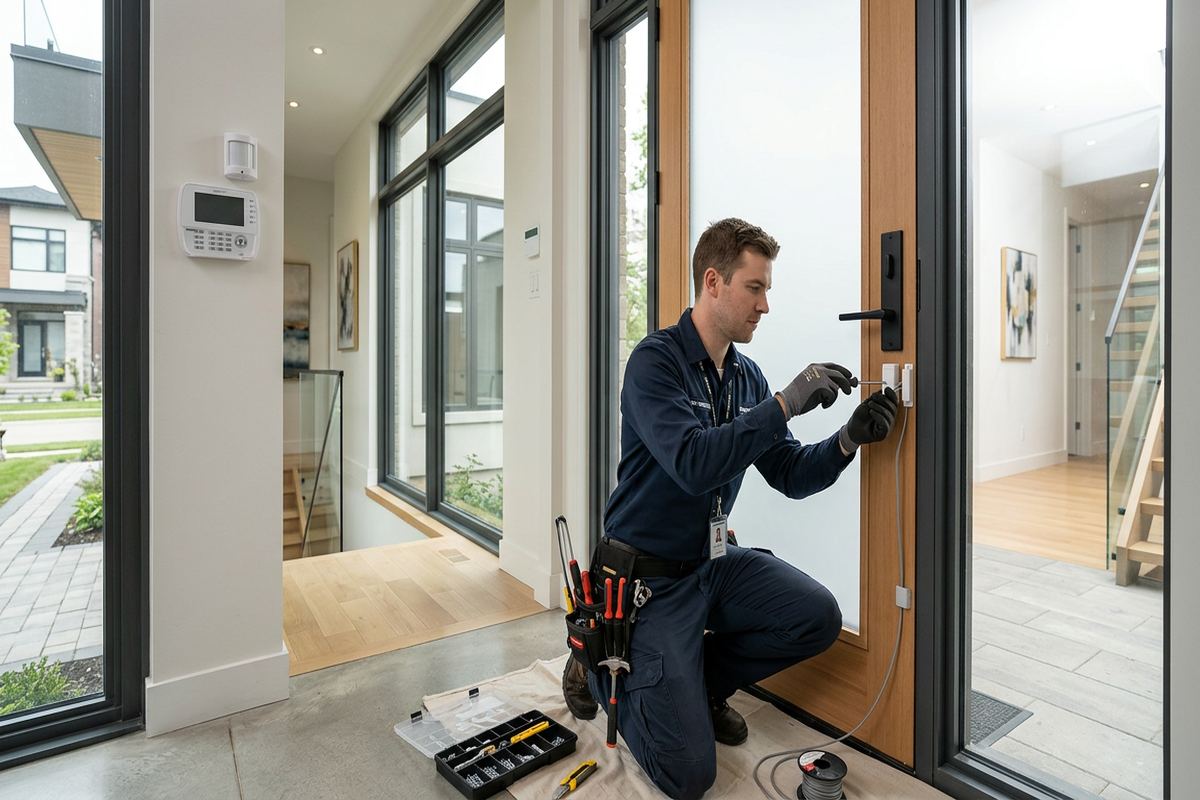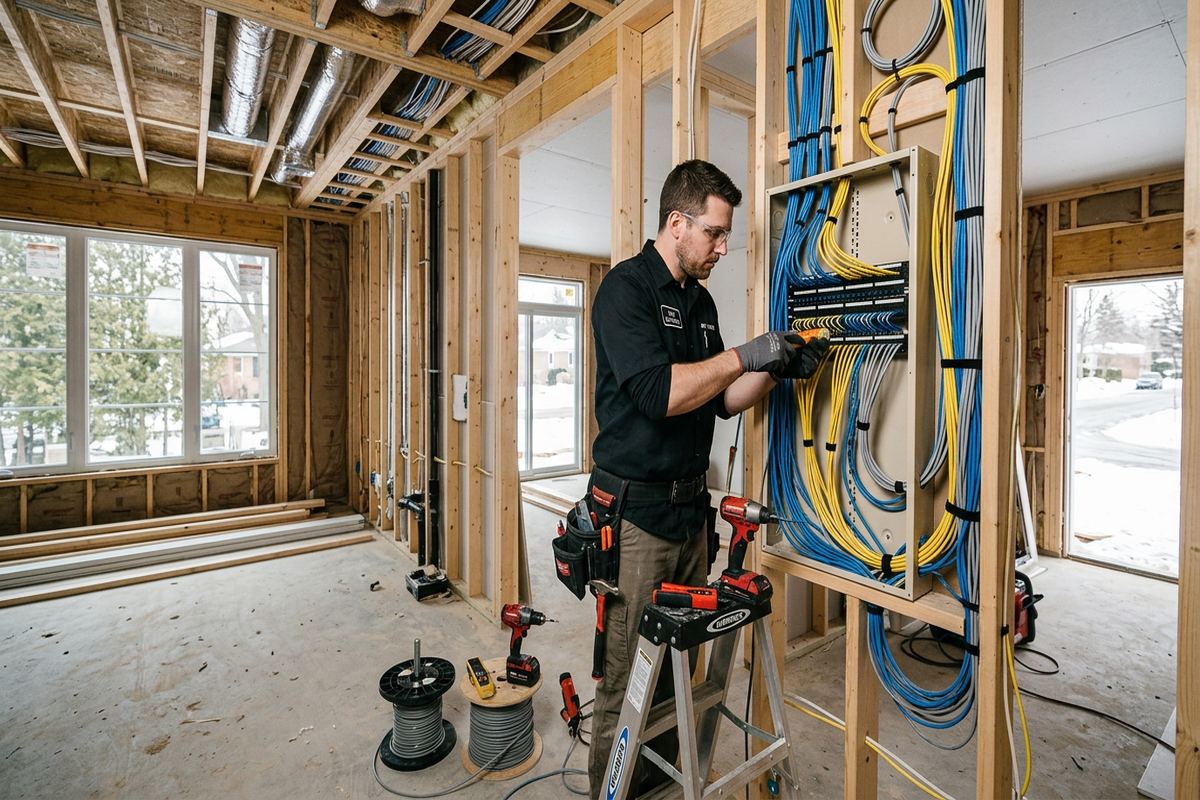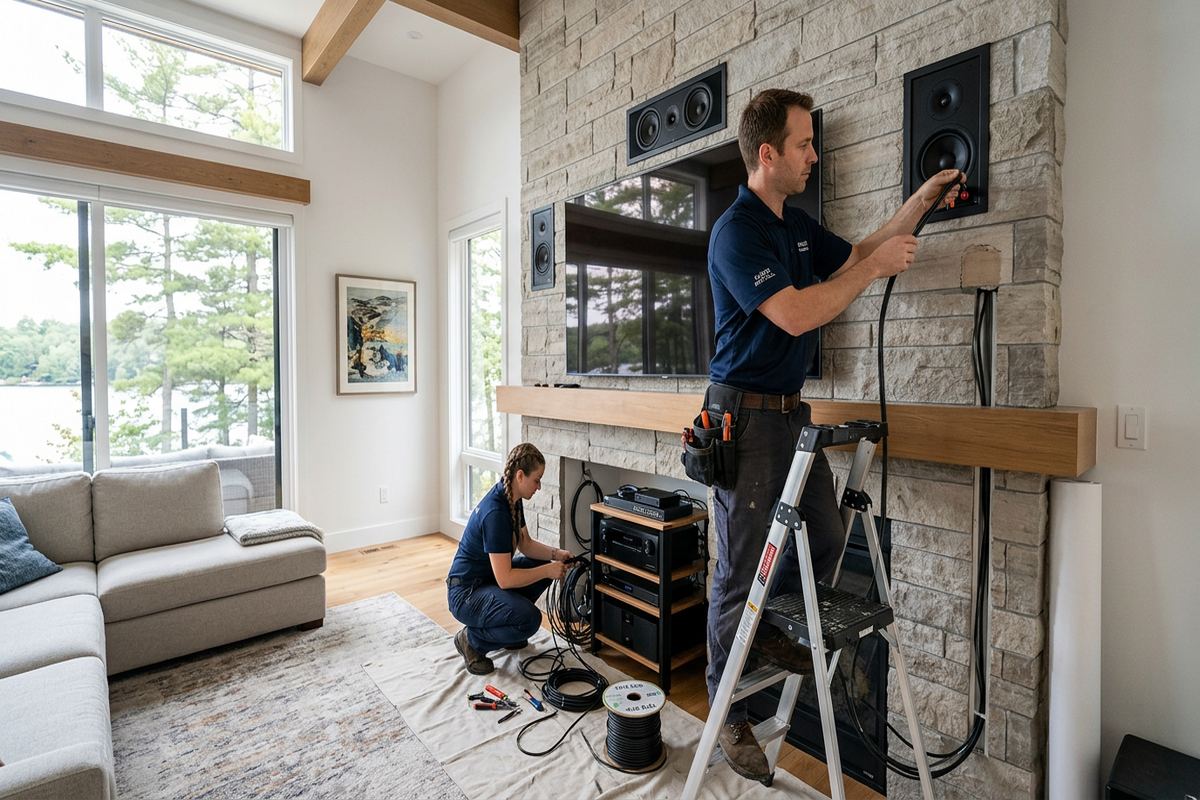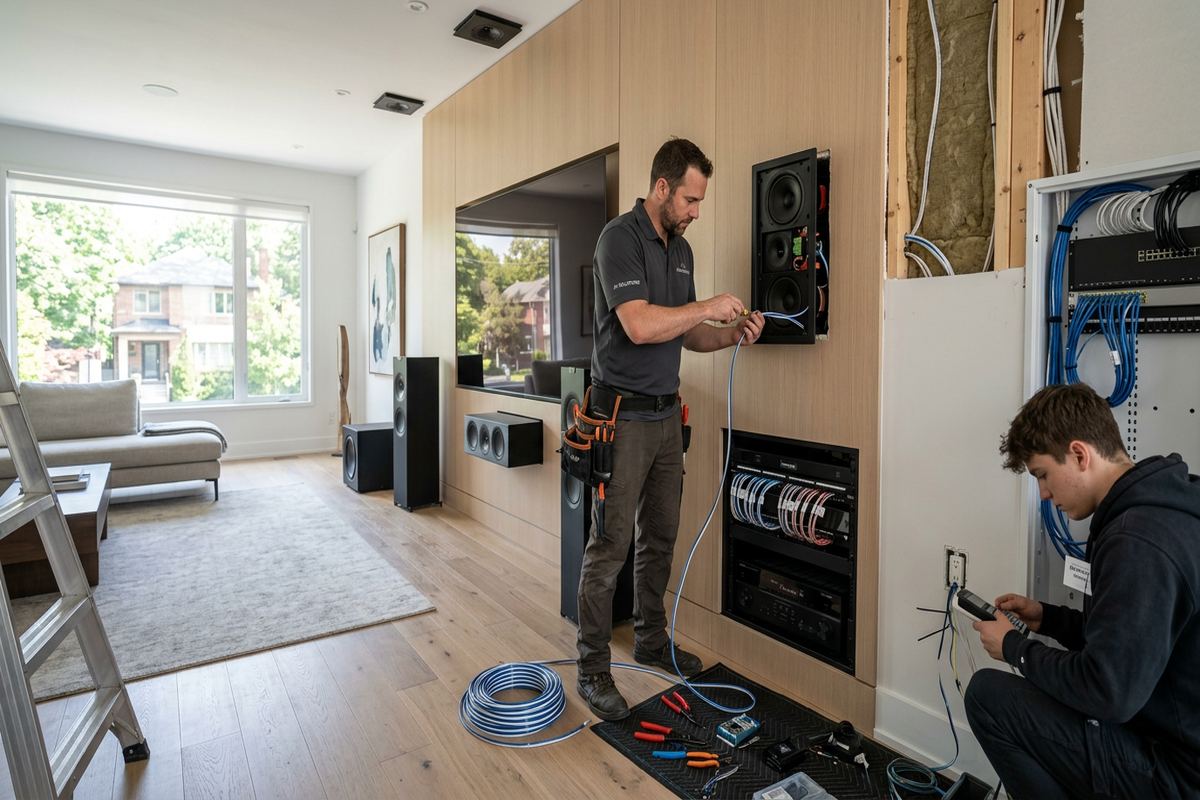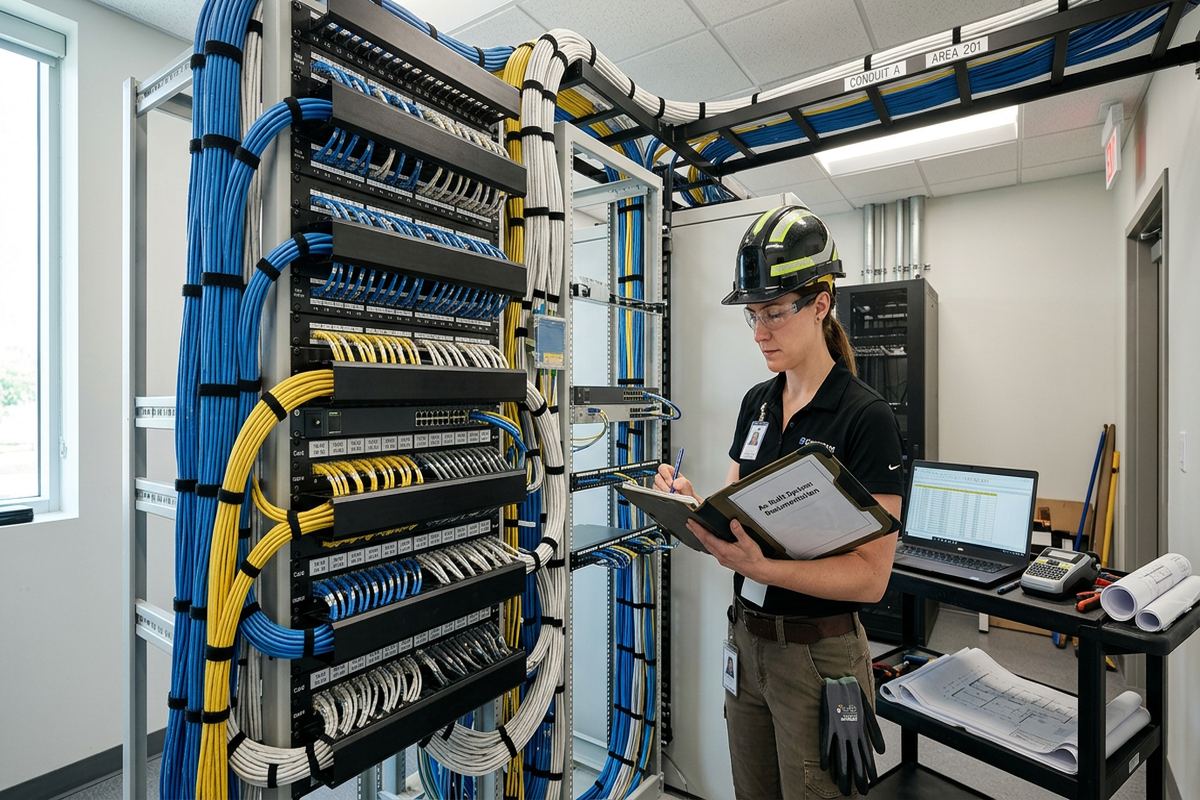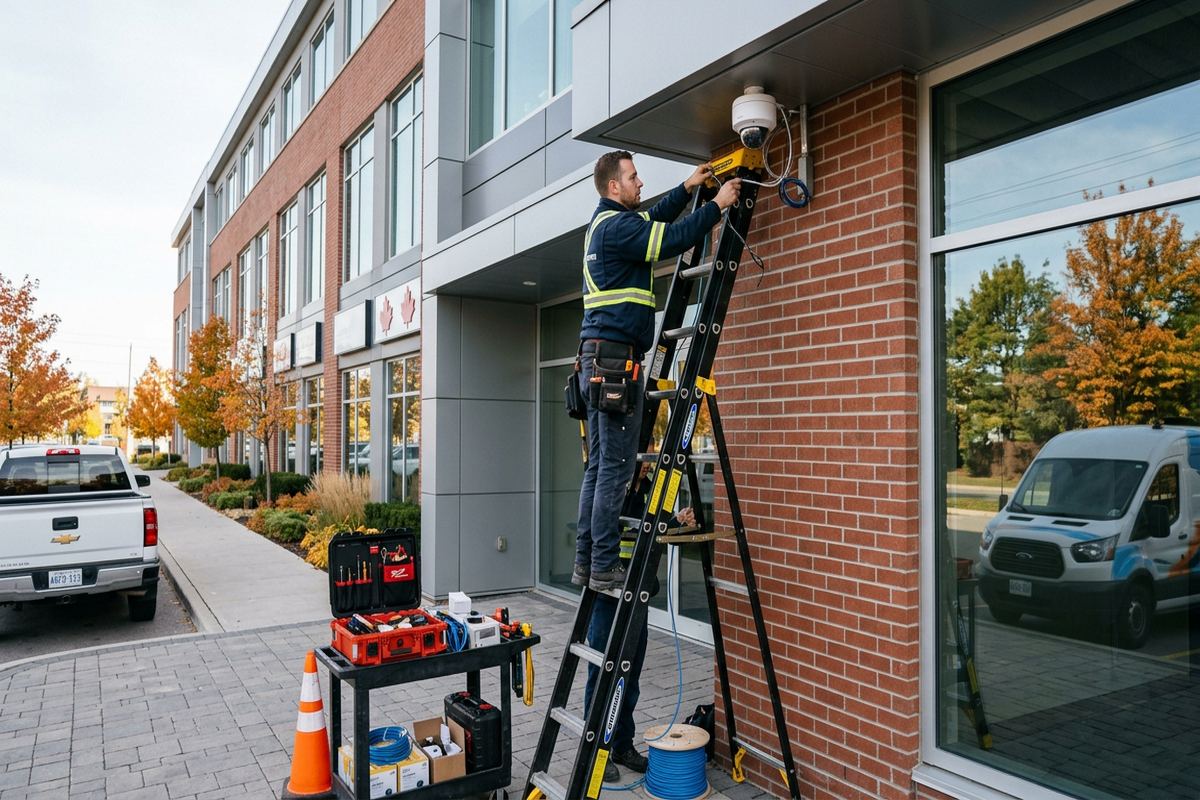
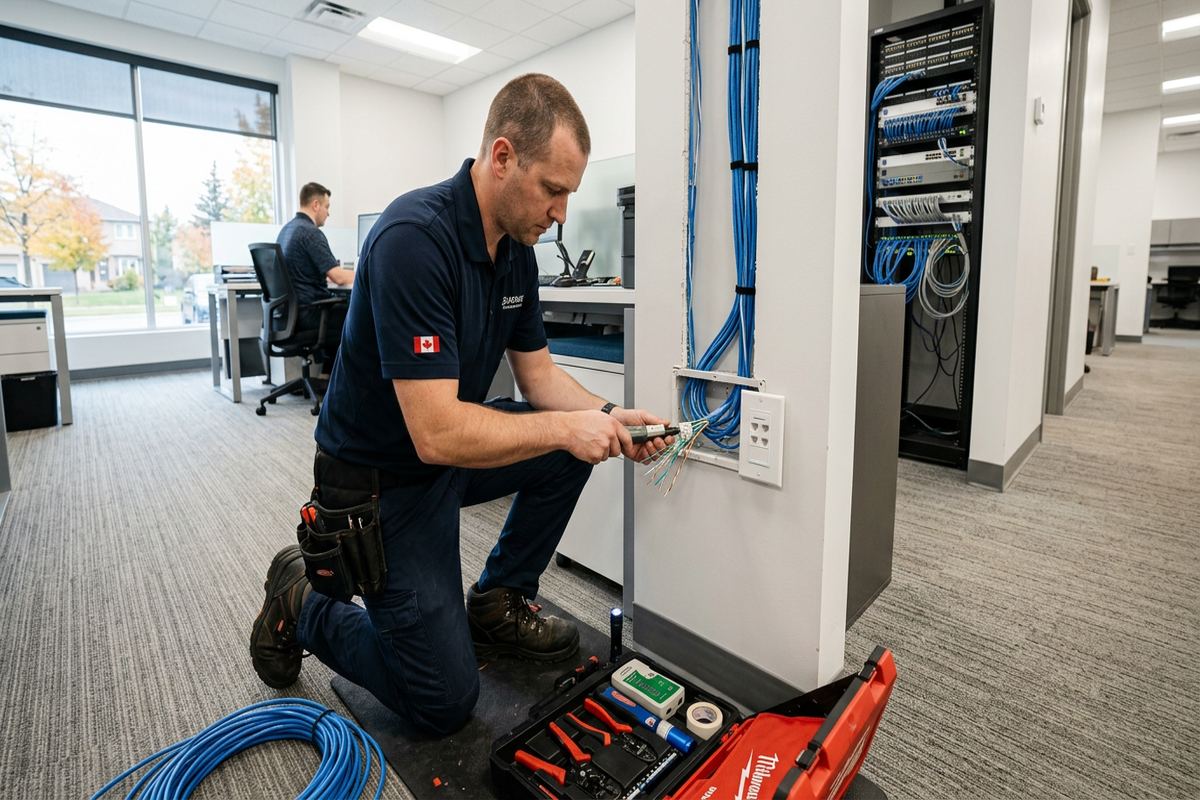
UnifiedLink installs structured cabling for homes, offices, commercial units and other properties across Barrie and Simcoe County. We plan cable routes, select suitable cable and termination hardware, label continuous runs, test completed links and document the installation. Each project starts with a site assessment so the written scope reflects the building, network requirements and future plans.
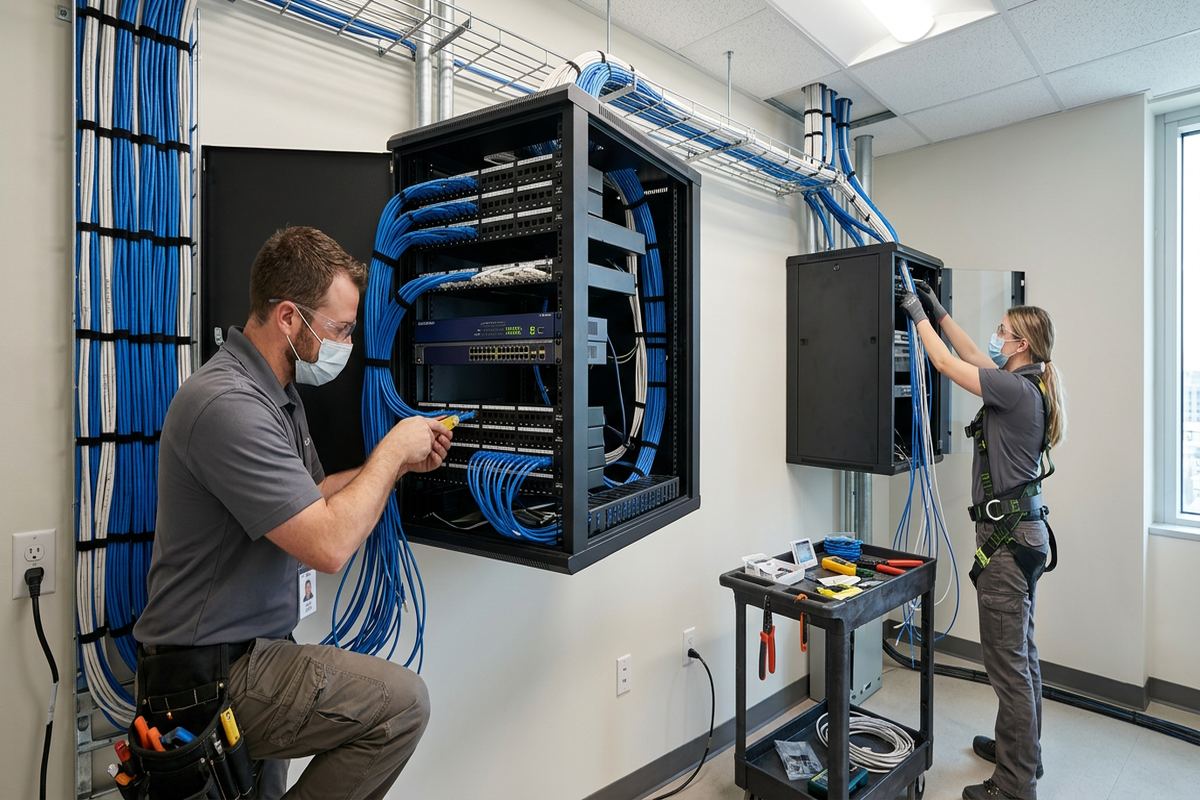
Structured Cabling for Barrie Properties
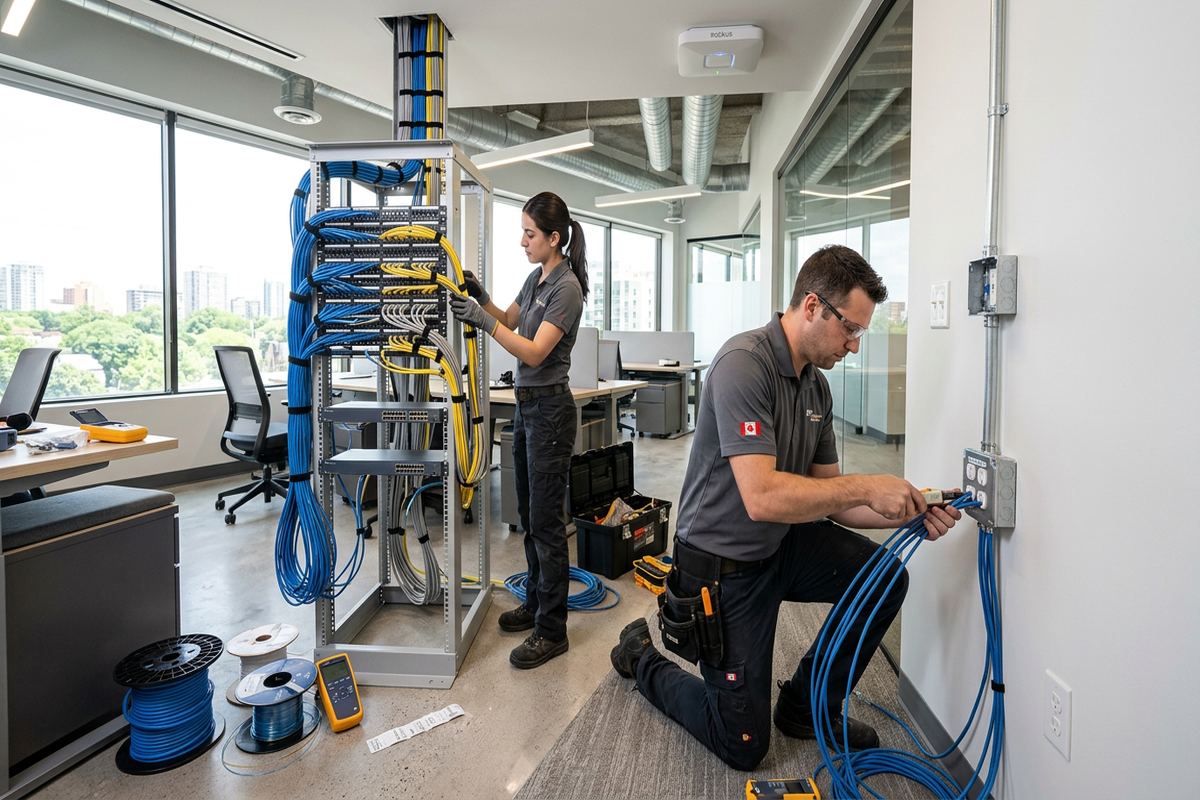
Structured cabling provides an organized physical network for computers, wireless access points, cameras, phones, displays and building systems. In Barrie, the right layout depends on the property rather than a standard port count. Waterfront homes, newer south-end subdivisions and small commercial plazas each present different pathways, distances and mounting conditions. UnifiedLink assesses the site before pricing, then defines outlet locations, cable routes, rack or enclosure placement and termination methods. This planning helps avoid exposed wiring, inaccessible junctions and links that cannot support the equipment expected to use them.
A residential project may involve a central network enclosure, data outlets in offices and media rooms, ceiling connections for Wi-Fi access points and dedicated runs for security devices. Existing homes in Downtown Barrie or Allandale can contain finished basements, additions and mixed framing that make pathways less obvious. Newer homes in Holly, Painswick and Innis-Shore may have open attic or basement routes, but builder-installed wiring does not always reach useful locations. We inspect available cavities and service spaces before recommending any drilling, fishing or surface-mounted pathway.
Commercial cabling requires equal attention to operations and future changes. A small plaza unit may need connections for workstations, payment terminals, access points, cameras, printers and phones, all returning to a secure communications area. Industrial units may combine office drops with longer routes through warehouse or service areas. We coordinate cable placement around electrical systems, ceilings, fire separations, mechanical equipment and tenant improvements. The finished scope identifies equipment, cable routes, device placement, exclusions, equipment ownership and warranty so owners, tenants and contractors understand the work before installation begins.
- Home and home-office data cabling
- Office and retail network outlets
- Wireless access point cabling
- Camera and access-control network runs
- Rack, patch panel and enclosure installation
Planning Cable Routes in Barrie Buildings
A useful cabling plan begins with how each room will be used, not simply where walls are easiest to reach. During a Barrie site assessment, we review internet service entry, network equipment, likely furniture positions, wireless coverage goals and devices that require wired connections. We also consider whether rooms may change purpose. A spare bedroom can become an office, while a commercial storage area may later need a workstation or access point. Thoughtful placement reduces extension cables, unmanaged switches and disruptive retrofits after walls, ceilings or millwork have been completed.
Building construction determines which routing methods are practical. Wood-frame walls can sometimes support concealed cable fishing, although insulation, blocking and finished basements may interrupt the path. Masonry walls, concrete floors and older plaster finishes often require surface raceway, accessible ceiling routes or carefully selected penetrations. In mixed-use and commercial buildings, shared walls and service spaces may have restrictions that affect access. We explain visible and concealed options before work starts, including where minor openings could be required and which repairs or finishing work fall outside the low-voltage installation scope.
Barrie winters also affect routes that pass through exterior walls or connect detached buildings and outdoor devices. Freeze-thaw movement, wind-driven moisture and low temperatures can expose weak penetrations or unsuitable cable jackets. Exterior entries must be positioned, protected and sealed for the assembly involved rather than treated as ordinary indoor holes. Where a route enters below-grade or moisture-prone space, we assess drainage and exposure before proceeding. Outdoor cable selection, support and transition points are documented, and no exterior path is assumed safe merely because a previous telephone or coaxial cable follows it.
- Room-by-room outlet planning
- Concealed and surface route options
- Masonry and wood-frame pathways
- Exterior penetration assessment
- Future-use cable locations
Cable Types, Terminations and Testing
Cable selection should match the application, distance, pathway and expected network equipment. Category cable is commonly used for Ethernet and Power over Ethernet devices, while fibre may suit backbone links, electrical isolation requirements or routes beyond practical copper limits. Jacket ratings must also fit the installed environment, including return-air spaces or outdoor exposure where applicable. We do not recommend a higher category simply for its label. Bend radius, separation, connector quality and installation workmanship all affect the completed link, so the entire channel needs consideration rather than the cable printing alone.
Each permanent run is installed continuously between its designated termination points. Avoiding hidden couplers and undocumented splices makes faults easier to locate and preserves a clear cabling record. At the network end, runs can terminate on a patch panel, wall-mounted enclosure or another suitable structured termination. Room ends may use wall plates, surface boxes or device-specific locations. Labels correspond at both ends and follow an understandable numbering scheme. Patch leads and active network hardware are kept distinct from permanent cabling so future equipment replacement does not disturb fixed links inside walls or ceilings.
Testing confirms that installed conductors and terminations are connected as intended. The appropriate test level depends on the scope, cable system and customer requirements, so the written proposal identifies what testing is included. Basic verification can expose open pairs, shorts, reversals or split pairs, while projects with specified performance requirements may call for more detailed results. Any failed installed link is investigated before handover. Port identifiers and test information are organized with the as-built record, helping the owner trace outlets without removing plates or guessing which patch-panel position serves each room.
- Category cable for Ethernet links
- Fibre backbone options where suitable
- Continuous runs without hidden splices
- Matching labels at both ends
- Testing defined in the written scope
Barrie, Ontario
Structured cabling installation in Barrie, scoped in writing first
Book a site assessment and get equipment, routes, exclusions, and warranty on paper before anything is installed.
Barrie Home Network Cabling
Wired connections give fixed devices a stable path while Wi-Fi handles mobile use. In a Barrie home, practical cabling can connect desktop computers, televisions, game systems, network storage, cameras and ceiling-mounted access points. The central location should provide ventilation, power access and enough room for the modem, router, switch and patching. Placing everything in a cramped electrical panel or unconditioned corner can complicate service later. We review device ownership and placement because internet-provider equipment, customer-owned networking hardware and permanent building cabling have different replacement and support responsibilities.
Homes in Ardagh Bluffs, Holly and Painswick often have different access conditions even when their layouts appear similar. Finished ceilings, spray foam, engineered floor systems and congested utility areas can limit concealed routes. Waterfront homes may also include additions, crawlspaces or detached structures where moisture and temperature exposure require closer review. We avoid assuming that an attic, soffit or existing conduit is usable until it is inspected. When a fully hidden pathway is not reasonable, a neat surface route may offer better access and less damage than repeated exploratory openings through finished materials.
Renovation timing can greatly affect installation choices. Cabling is simplest to coordinate before insulation and drywall, but it still requires a documented plan so outlets do not conflict with cabinetry, doors, appliances or structural components. In an occupied house, furniture protection, dust control and access to rooms need discussion before work begins. Homeowners in condos or managed communities may also need board approval for common-area access, exterior penetrations or work above shared ceilings. UnifiedLink identifies known approval dependencies, while the property owner remains responsible for obtaining required permission before installation.
- Home-office and media outlets
- Ceiling access point connections
- Central network enclosure planning
- Renovation-stage prewiring
- Condo approval considerations
Commercial Cabling Across Barrie
Businesses need cabling that supports daily work without becoming difficult to maintain. For offices, clinics, shops and service businesses in Barrie, we map each network outlet to a defined patch-panel position and keep device cabling separate from the permanent infrastructure. The design can account for computers, phones, printers, payment equipment, wireless access points, cameras and access-control components. We also review where internet and telecommunications services enter the unit. A secure, accessible communications location prevents network equipment from being scattered behind desks, above ceiling tiles or inside cabinets that lack airflow.
Small commercial plazas often involve landlord rules, shared service areas and limited options for vertical or exterior routing. Before drilling or entering common space, the tenant or owner may need written authorization. Ceiling construction must also be reviewed because an accessible tile ceiling does not guarantee an unrestricted cable path. Fire separations, mechanical ducts, lighting and electrical distribution can divide the route. We coordinate the low-voltage scope with available site information and other trades, identify exclusions clearly and avoid treating existing abandoned wires as approved supports or pathways for the new installation.
Industrial units in Barrie may require cabling between front offices, production areas, loading spaces and warehouse aisles. Longer distances, higher ceilings, dust, physical impact and electrical equipment can influence cable type and support method. Wireless access points and cameras also need mounting positions that remain reachable for maintenance without interfering with doors, storage racks or machinery. Where copper distance or electrical conditions create concerns, fibre may be considered for a backbone. The assessment documents operating constraints so installation can be planned around access, equipment movement and any customer-required shutdown procedures.
- Office workstation connections
- Retail and payment-device outlets
- Warehouse access point cabling
- Secure communications-area layouts
- Landlord and property-manager coordination
Network Racks and Equipment Organization
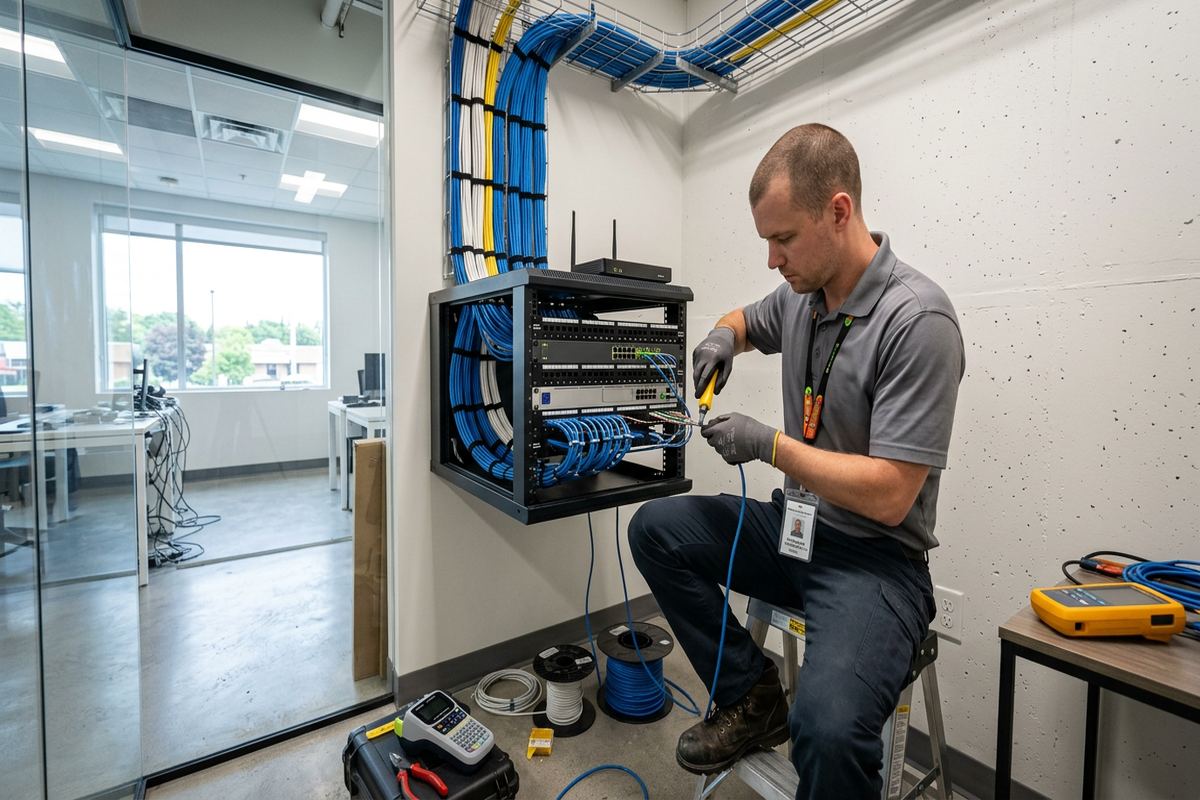
A structured installation needs an organized point where permanent cables, patch leads and active equipment come together. Depending on the property, this may be a wall-mounted enclosure, open rack or cabinet sized for patch panels, switches and related hardware. Location matters as much as capacity. The area needs suitable access, ventilation and clearance, with consideration for power and incoming services. We do not place equipment where routine maintenance would require moving stored goods or working around water lines. The written scope identifies which rack, enclosure and network components are supplied and who owns them.
Patch panels provide a fixed termination for building cables, while replaceable patch leads connect those ports to network switches. This arrangement reduces handling of permanent runs when a room changes use or a device moves. Labels should remain readable after equipment is installed, and cable management should prevent patch leads from covering port identifiers or pulling on connectors. For compact Barrie home networks, the same principles apply even when the enclosure is small. An orderly layout makes it easier to identify the modem connection, router, switch, access points and room outlets during troubleshooting.
Existing racks sometimes contain a mixture of active ports, abandoned cables and undocumented connections. Before changing them, we trace what can be identified and discuss whether old wiring should remain, be relabelled or be removed where accessible and authorized. Service continuity is important in occupied businesses, so any planned disconnection must be agreed upon. We do not assume an unlabelled cable is unused. After installation, on-site configuration covers the included equipment, and handover uses the customer’s own credentials rather than installer-controlled accounts that could restrict future administration.
- Wall enclosures and equipment racks
- Patch panels and cable managers
- Readable port-numbering schemes
- Separation of fixed and patch cabling
- Customer-controlled administration credentials
Installation, Sealing and Site Protection
Installation begins after the route and device locations have been confirmed against the written scope. Technicians protect the immediate work area, establish access to ceilings or service spaces and install supports appropriate to the pathway. Data cables are kept away from foreseeable damage and routed with attention to bend limits and electrical separation. Existing ceiling grids, pipes and other services are not substitutes for dedicated support. If hidden conditions prevent the planned route, work pauses for review rather than creating an undocumented deviation. Any changed approach is agreed upon before the affected portion proceeds.
Exterior work around Barrie requires particular care because water can enter through small gaps and freeze-thaw cycles can widen weak seals. Penetrations are placed to limit direct exposure, formed without unnecessary damage and sealed using materials suited to the surrounding assembly. Cable should include a controlled entry path rather than directing water toward the opening. Masonry, siding, wood trim and concrete each require different drilling and sealing decisions. Outdoor cable also needs appropriate support and protection from abrasion, snow-clearing activity or accessible areas where it could be struck or pulled.
Inside occupied properties, installation planning includes access, noise, dust and temporary interruption to rooms or network services. Commercial customers may prefer work to follow operating constraints, while homeowners may need particular areas completed in sequence. We identify these requirements during assessment, but timing depends on the service, travel distance and site conditions. Requests received during business hours are answered the same day; after-hours requests are answered the next business day. Site-assessment timing is then discussed based on the Barrie location, project type and access requirements.
- Dedicated low-voltage cable supports
- Controlled drilling and route changes
- Weather-suitable exterior sealing
- Protection around finished surfaces
- Scheduling based on site conditions
Documentation and Handover in Barrie
A cabling project is not complete when the last wall plate is installed. During handover, UnifiedLink reviews the labelled outlets, central terminations and included network equipment with the customer. The as-built record identifies installed runs and their corresponding termination points, reflecting approved changes made during the work. This document provides a practical reference for future troubleshooting, renovations or equipment additions. It does not replace architectural or engineering drawings, but it gives the property owner a clear account of the low-voltage infrastructure installed under the agreed Barrie project scope.
On-site configuration is provided for equipment included in the scope, such as switches or wireless access points where applicable. Administrative access is handed over using credentials controlled by the customer. This avoids dependence on an installer-owned email address, cloud account or password after completion. We explain which equipment belongs to the customer and which devices may belong to an internet provider or another party. Warranty terms and exclusions are recorded in writing, along with any work that remains the responsibility of another trade, landlord, condominium corporation or service provider.
Future additions are easier when the original system has clear labels, accessible pathways and available rack capacity. If a Barrie property later adds cameras, access control, another office or expanded Wi-Fi, the as-built information can guide the next assessment. Spare cable should not be installed without a defined termination and documentation plan, since unidentified coils often become unusable. UnifiedLink remains one accountable contractor for the agreed low-voltage scope, from assessment and route planning through installation, testing, configuration and handover, while clearly identifying dependencies that sit outside that scope.
- As-built cable and port record
- Review of labels and terminations
- Customer-owned account credentials
- Written ownership and warranty details
- One contractor for the agreed scope
Barrie neighbourhoods we cover
- Downtown Barrie
- Ardagh Bluffs
- Painswick
- Holly
- Allandale
- Innis-Shore
Structured cabling installation in Barrie — common questions
How much does structured cabling cost in Barrie?
Pricing depends on the number of runs, cable type, route accessibility, terminations, testing and whether walls or ceilings are finished. Masonry, exterior routes and occupied commercial spaces can also affect the scope. UnifiedLink completes a site assessment before pricing, then provides a written scope covering equipment, routes, device placement, exclusions, equipment ownership and warranty.
Can you run network cable in a finished Barrie home?
Often, but the available route depends on framing, insulation, floor construction and access through basements, attics or service spaces. Concealed fishing may be possible in some Barrie homes, while others require surface raceway or limited access openings. We inspect the route first and explain visible pathways, expected openings and any finishing work excluded from the low-voltage scope.
Do I need Cat6 or fibre?
The answer depends on distance, equipment, pathway and the applications using the link. Category cable is suitable for many Ethernet and Power over Ethernet connections. Fibre may be appropriate for longer backbones, links between buildings or locations where electrical isolation matters. We recommend cable based on the planned system rather than selecting a category solely because it carries a higher label.
Can you install cabling in a Barrie condo or leased unit?
Yes, subject to access and property approvals. A condominium corporation or landlord may control exterior walls, common ceilings, telecommunications rooms and shared service spaces. Barrie tenants and condo owners should obtain written permission where required before work begins. We can document proposed routes and equipment locations to support that process, but approval remains the customer’s responsibility.
Will each installed cable be labelled and tested?
Yes. Permanent runs are continuously installed between defined termination points and labelled at both ends using a consistent scheme. Testing is performed at the level identified in the written scope, and failed installed links are corrected before handover. The as-built record connects outlet identifiers with their patch-panel or enclosure positions, making future changes and troubleshooting more direct.
How quickly can you assess my Barrie property?
Requests sent during business hours are answered the same day, while after-hours requests are answered the next business day. The timing of a Barrie site assessment depends on the service, property access and travel distance. During the initial response, we gather basic project details and discuss suitable assessment timing rather than promising a fixed arrival window before reviewing the request.
Coverage in Barrie is confirmed against the address before we quote. See everything we install in Barrie or the province-wide structured cabling installation page.