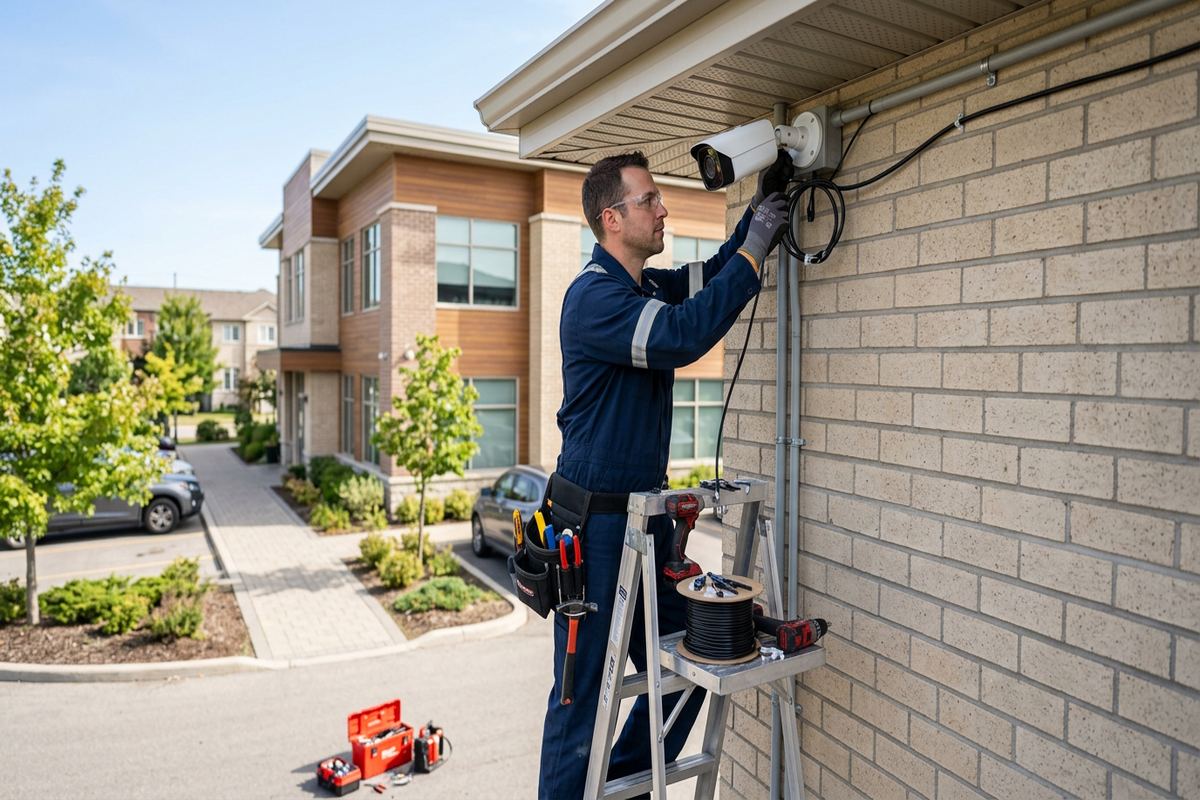
UnifiedLink installs outdoor security cameras for Barrie homes, commercial plazas and industrial units. Each project starts with a site assessment to plan coverage, cable routes, mounting locations and recording requirements. Installation includes weather-conscious exterior work, continuous labelled cable runs, on-site configuration and a documented handover using credentials owned by the customer.
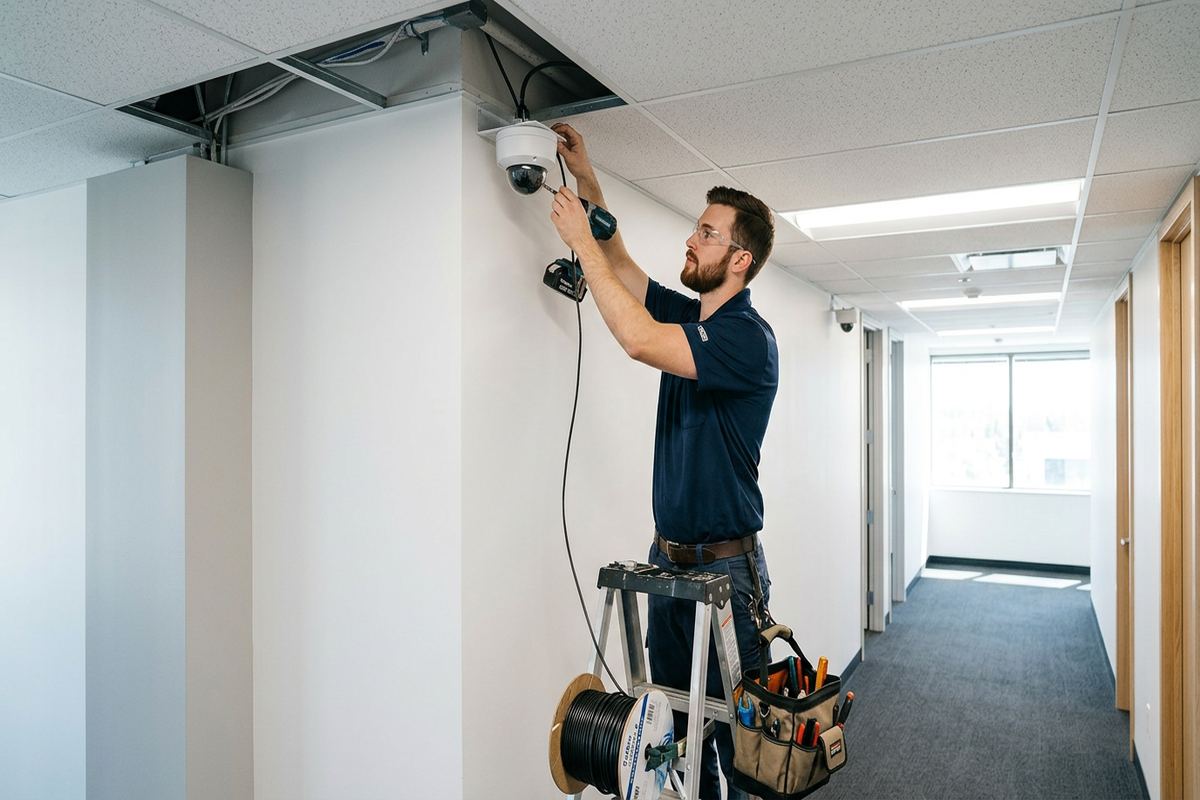
Outdoor Camera Planning for Barrie Properties
Useful outdoor surveillance begins with the view that each camera must capture, not with a device count. During a Barrie site assessment, we review entrances, driveways, gates, yards, loading areas and pedestrian approaches. Camera height, viewing angle, lens selection and available light all affect whether recorded video provides usable detail. The plan also considers trees, eaves, vehicles and seasonal obstructions. This process produces defined device locations and cable routes before pricing, reducing guesswork and helping the finished system cover the areas that matter to the property owner.
Barrie includes waterfront homes, fast-growing south-end subdivisions and small commercial plazas, so a standard layout rarely fits every site. A detached home in Holly may need driveway and side-entry coverage, while an Innis-Shore property could have a deeper lot and newer frame construction. Downtown Barrie buildings may present older masonry, shared walls or limited routing space. We adapt the design to the building rather than forcing convenient mounting points that create weak angles, excessive distance or avoidable blind areas. Any access limitations are identified in the written scope.
The written scope records the selected equipment, intended camera views, mounting surfaces, cable paths and recording location. It also identifies exclusions, equipment ownership and applicable warranty details. Where a camera could overlook a neighbour’s private area, a shared walkway or a public-facing space, the angle can be narrowed or privacy masking considered during configuration. For rental properties, condominiums and shared commercial buildings, owners should obtain landlord, condominium corporation or property management approval before holes are drilled or exterior devices are attached to common elements.
- Entrance, driveway and perimeter view planning
- Review of lighting and seasonal obstructions
- Defined camera locations before installation
- Written equipment, routing and ownership scope
- Approval requirements identified before exterior work
Weather-Resistant Installation in Barrie
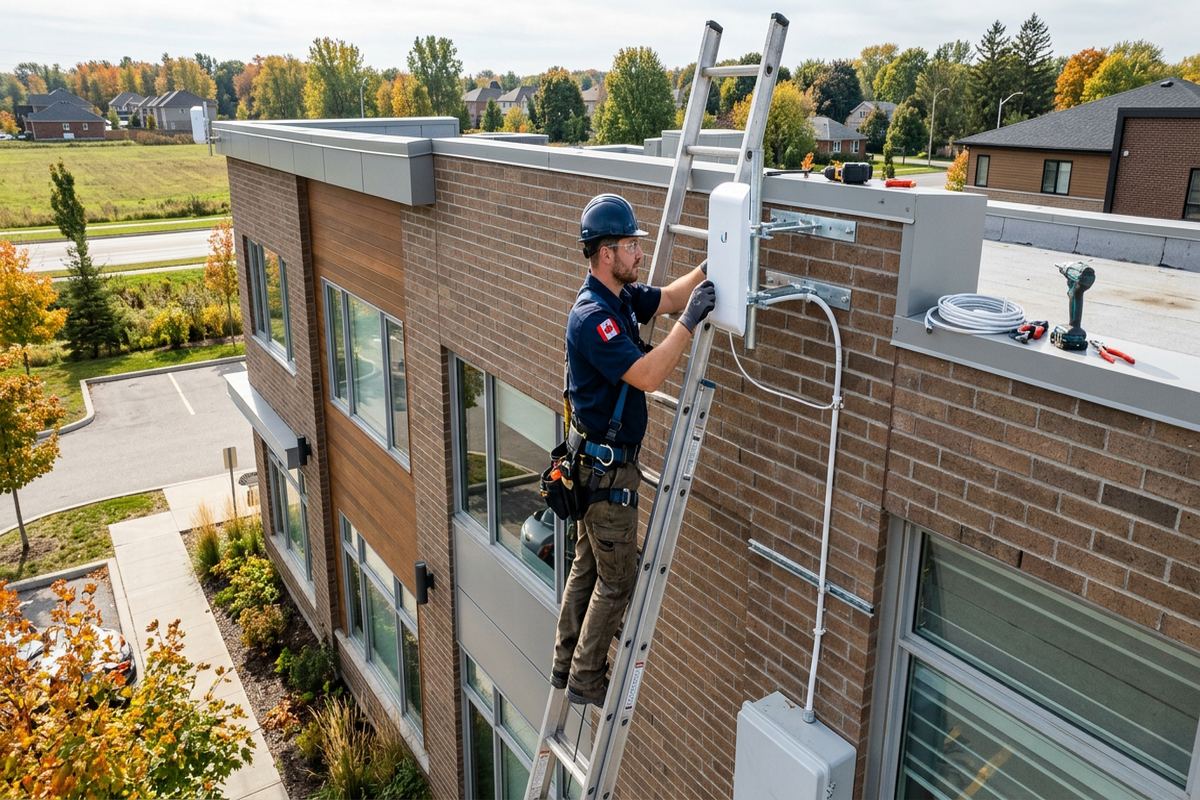
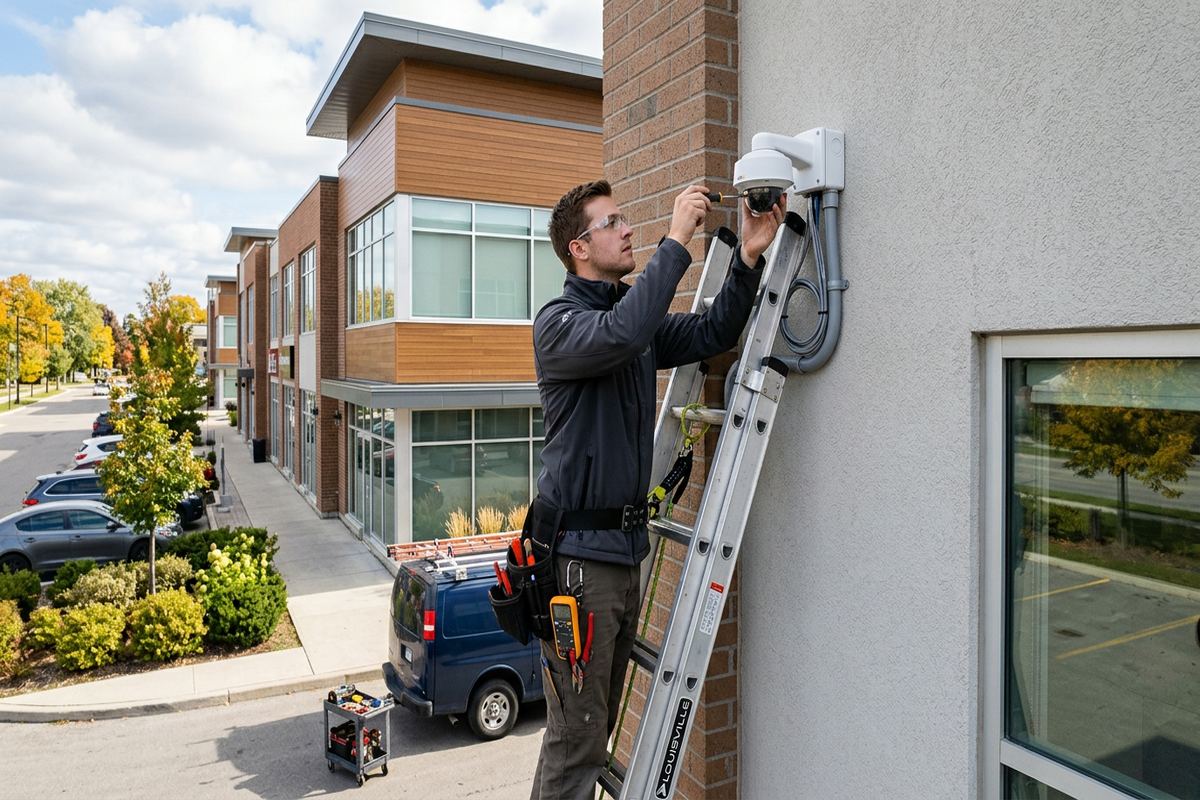
Barrie winters place repeated stress on exterior devices, connectors and mounting points. Snow, wind-driven moisture and freeze-thaw cycles can expose weak seals or loosen unsuitable fasteners. We select mounting methods according to the surface and keep cable entries protected from direct water paths. Exterior penetrations are sealed, while connectors are housed or positioned to limit moisture exposure. Drip loops and suitable exterior-rated materials are used where the route requires them. The objective is a stable installation that does not depend on exposed couplers, loosely clipped wire or sealant alone for structural support.
Mounting beneath an eave can provide some shelter, but convenience must not compromise the required view. A camera placed too high may show the top of a person’s head rather than useful facial detail. One placed too low can be easy to reach or blocked by parked vehicles and snowbanks. Barrie installations therefore balance protection, accessibility, field of view and serviceability. Infrared reflection from soffits, walls or nearby trim is also considered because it can wash out night images, particularly when a wide-angle camera is mounted tightly against a bright surface.
Temperature changes also influence where recording and network equipment should be located. An unconditioned garage, damp utility area or exposed exterior enclosure may not suit every recorder, switch or power supply. During assessment, we review power, ventilation, network access and a practical indoor location for core components. Cable routes are planned to avoid sharp bends, unsupported spans and unnecessary outdoor transitions. If a route crosses an attic, basement or finished area, the written scope explains how it will be reached and what visible surface work, if any, should be expected.
- Sealed exterior wall penetrations
- Protected connectors and cable entries
- Mounting suited to freeze-thaw exposure
- Night-view reflection checks
- Indoor planning for recording equipment
Camera Placement for Homes
At a home, the front entrance is important but usually forms only part of the coverage plan. Driveways, side passages, patio doors, detached garages and lower-level entrances can create separate paths onto the property. In Ardagh Bluffs, mature landscaping may limit long views or create moving shadows, while newer Painswick and Holly homes can have narrow side yards between closely spaced buildings. We assess likely travel paths and crossing angles so cameras capture people moving through a scene, rather than relying only on distant views directly toward the lens.
Waterfront homes can introduce glare, reflected light, wind exposure and broad open backgrounds that change throughout the day. A camera facing water or a low sun may require a different angle than one covering a shaded urban entrance. Decks, boathouses and detached structures can also complicate cabling, power and network reach. For Barrie waterfront properties, the assessment separates essential security views from general scenic coverage. This keeps the design focused on entrances, paths and assets while accounting for privacy, changing foliage and the limits of night illumination across large outdoor areas.
For attached homes, condominiums and rental units, permission can determine what is practical. Exterior walls, soffits, hallways and parking structures may be common elements even when they appear connected to an individual unit. Landlords or condominium corporations may restrict drilling, device appearance or views of shared space. UnifiedLink can document proposed camera positions and cable routes for review, but the customer remains responsible for securing authorization. Once approvals are clear, the installation can follow the accepted plan without unexpected relocation, surface damage or disputes about equipment attached outside the private unit.
- Coverage for doors, driveways and side yards
- Angles adjusted around landscaping and close lots
- Waterfront glare and exposure considered
- Shared-property approvals addressed
- Privacy masking considered where appropriate
Barrie, Ontario
Outdoor camera installation in Barrie, scoped in writing first
Book a site assessment and get equipment, routes, exclusions, and warranty on paper before anything is installed.
Barrie Commercial Camera Coverage
Small commercial plazas need coverage that distinguishes customer entrances, service doors, parking activity and delivery areas. One wide overview may show movement without providing enough detail at a doorway or vehicle approach. For Barrie plaza units, we identify priority views and consider how signs, awnings, exterior lighting and neighbouring tenants affect placement. Cable routes may need to remain within the customer’s leased area or follow routes approved by the landlord. The scope can separate tenant equipment from building-owned infrastructure so responsibility for cameras, cabling, recording and future service remains clear.
Downtown Barrie storefronts often involve older finishes, masonry walls, shared basements or limited ceiling access. These conditions can make a direct cable route impractical even when the camera position appears simple from outside. An assessment checks wall construction, available pathways, network location and safe access before a route is committed. Masonry requires suitable anchors and careful penetration sealing, while frame walls and soffits require fastening into dependable material. Visible conduit may be appropriate where concealed routing is unavailable, but its location and appearance should be agreed upon before installation begins.
Industrial units and service businesses may need cameras around overhead doors, fenced areas, loading points and employee entrances. High mounting positions can broaden coverage, yet they may reduce identification detail and complicate maintenance. Strong backlighting through an open bay door can also affect indoor-facing images. We plan complementary views where necessary and discuss retention, remote viewing and user access with the customer. The resulting design connects each camera to a defined operational purpose, helping avoid a collection of broad images that cannot answer practical questions after an incident or property concern.
- Storefront and service-door coverage
- Parking and delivery-area views
- Masonry and frame mounting methods
- Landlord-approved cable routing options
- Defined ownership of installed equipment
Cabling and Network Design
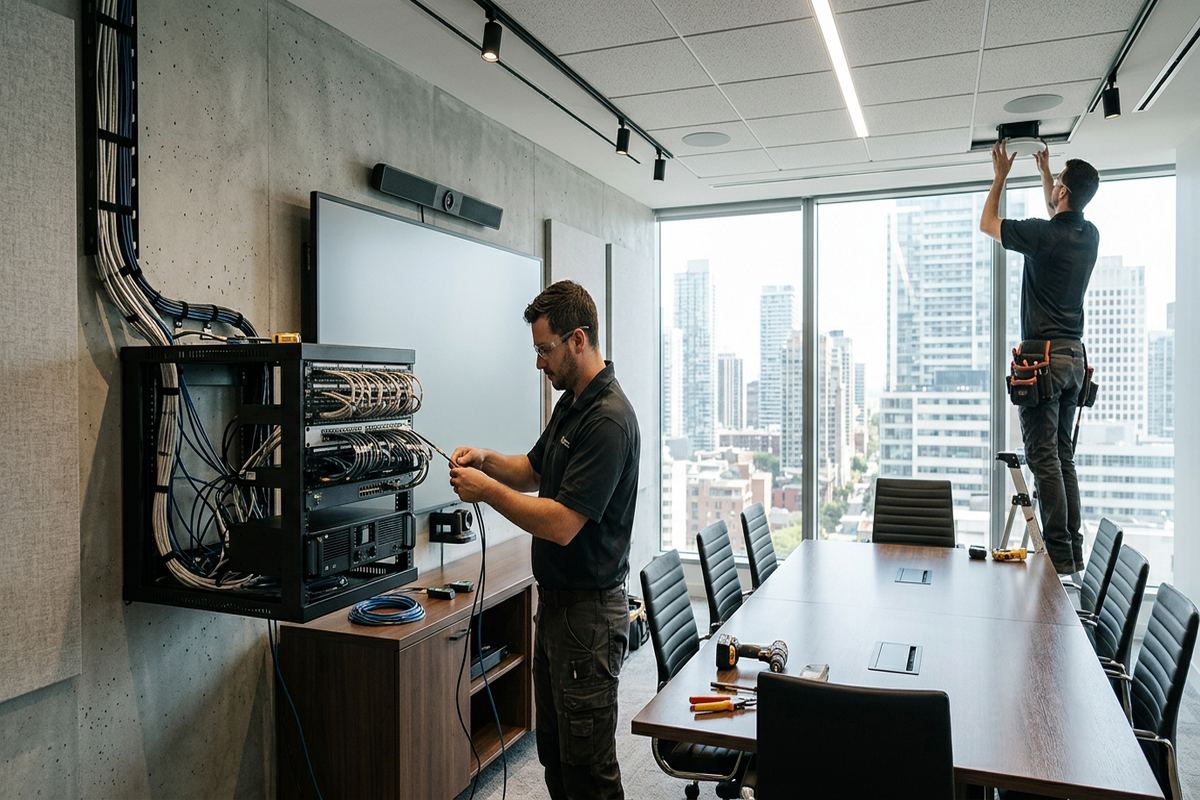
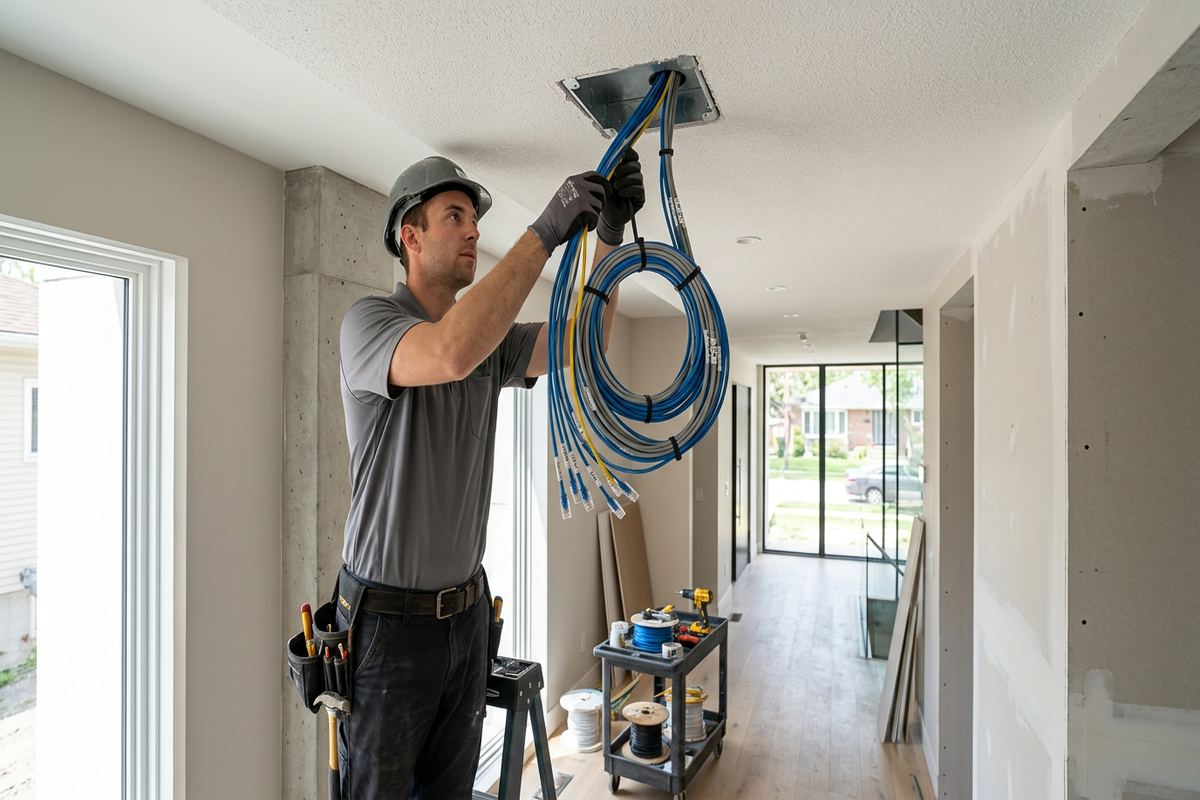
A camera system depends on its cabling as much as its image sensor. UnifiedLink installs continuous labelled cable runs between planned endpoints, avoiding hidden joins that complicate testing and later service. Routes are selected around the building structure, finished spaces and exposure risks. In newer south-end Barrie subdivisions, attic or basement access may support concealed pathways, although insulation and finished ceilings still affect feasibility. Older properties may require surface routes or conduit. The assessment explains these conditions so the owner understands where cables will run and which areas must remain accessible during work.
Power over Ethernet can carry network data and power on one cable when the selected camera and network equipment support it. That arrangement simplifies many installations, but cable distance, switch capacity, surge exposure and network layout still require review. Wireless cameras are not automatically cable-free because they generally need local power and reliable Wi-Fi at the mounting point. For exterior locations, signal strength through masonry, metal cladding, coated glass or insulated walls can vary. We recommend the connection method based on the property rather than assuming wireless operation will remain stable at every outside corner.
The recorder or network video storage location should be secure, ventilated and accessible for authorized maintenance. It also needs appropriate connections to the camera network and, where remote access is required, the customer’s internet service. Camera traffic can be organized according to the selected system and existing network conditions. During on-site configuration, we verify device communication, recording and intended viewing access. Labels at both cable ends and an as-built record help identify each run later, particularly when several cameras return to one switch, cabinet or recording location.
- Continuous point-to-point cable runs
- Labels applied at both endpoints
- Wired and wireless feasibility review
- Recorder location and ventilation planning
- As-built cable and device record
Night Recording and Image Quality in Barrie
Night performance depends on available light, camera position, subject distance and reflective surfaces. Infrared illumination can help in darkness, but it is not unlimited and may reflect from nearby walls, soffits, rain, snow or spider webs. Barrie snow cover can brighten portions of a scene while leaving entrances or faces comparatively dark. We test the installed view after configuration and adjust aim, exposure-related settings and illumination options where supported. The goal is balanced footage for the defined area, not an artificially bright image that loses detail in the most important zone.
Existing exterior lights can improve colour and detail, although poorly positioned fixtures may create glare or deep shadows. A camera aimed toward headlights, a bright sign or a low sun needs enough scene control to avoid losing the subject. In commercial strips, neighbouring signs and parking-lot lighting can change after businesses close. At homes, motion lights may switch on after a person enters the scene. We consider these transitions during design and testing. Where lighting changes are advisable, they are identified separately rather than treated as a substitute for correct camera placement.
Resolution alone does not determine whether footage is useful. A high-resolution camera covering an area that is too wide may still provide limited detail at the point of interest. Lens angle, mounting distance, compression, frame rate and recording settings all contribute to the result. During handover, customers can review representative live and recorded images from the intended viewing devices. This confirms that entrances, vehicles or loading points appear as expected and that playback is understandable. Any system limitations caused by distance, obstructions or lighting are documented rather than hidden behind specification numbers.
- Installed daytime and night-view checks
- Infrared reflection and glare review
- Exposure adjusted for priority areas
- Playback tested on customer devices
- Documented limits for distance and lighting
Recording, Access and Handover
Recording requirements should be discussed before equipment is selected. The number of cameras, chosen resolution, activity levels and recording mode affect storage needs and practical retention. Continuous recording and motion-based recording serve different purposes, and available features vary by system. We configure the selected approach on site and confirm that cameras are saving footage to the intended destination. If remote viewing is included, it is established through the customer’s network and account. UnifiedLink does not retain ownership of the customer’s primary system credentials after handover.
Customers receive access using their own credentials rather than an installer-controlled account. The handover covers live viewing, playback, basic export steps and user access appropriate to the installed platform. We also provide an as-built record identifying camera locations, cable runs and core equipment. Password practices, software updates and internet reliability remain important after installation, particularly when footage can be reached remotely. For a Barrie business with several authorized users, account permissions should reflect actual roles instead of sharing one general login among staff, contractors and property managers.
A completed system is tested as a connected whole. We confirm camera communication, intended views, recording operation and remote access where it forms part of the scope. Device labels are matched to meaningful names so playback does not depend on remembering generic channel numbers. The owner can then verify that the documented coverage matches the agreed plan. If later construction, landscaping or signage changes a view, the as-built information provides a reference for adjustments. One accountable contractor handles the defined camera, cabling, configuration and handover work instead of dividing responsibility among unrelated trades.
- Customer-owned administrator credentials
- Live view and playback orientation
- Recording operation verified on site
- Meaningful camera and cable labels
- As-built system record provided
Arranging Outdoor Camera Installation in Barrie
The process starts with a request describing the property, priority areas and any existing camera or network equipment. Requests sent during business hours are answered the same day, while after-hours requests are answered the next business day. Site assessment timing depends on the service and travel distance. For Barrie properties, useful preliminary details include the building type, number of entrances, approximate outdoor areas, preferred recording method and known approval requirements. Photographs can help with early discussion, but they do not replace assessment of mounting surfaces, access and cable routes on site.
During the site visit, we review coverage objectives with the owner or authorized representative and inspect practical installation conditions. This includes exterior materials, soffits, masonry, frame construction, finished interior areas, network location and suitable space for recording equipment. At commercial properties, access to electrical, communications or landlord-controlled rooms may need advance coordination. The findings are converted into a written scope covering equipment, device placement, cable routes, exclusions, ownership and warranty. Pricing follows the assessment so it reflects the actual property and agreed work instead of assumptions based only on camera quantity.
Installation is scheduled after the scope is accepted and required permissions are available. On the workday, access is needed to planned cable routes, network equipment and the recording location. Cameras are mounted, penetrations sealed, cables installed and labelled, and the system configured on site. Before completion, the customer reviews views and receives credentials and the as-built record. Whether the property is in Allandale, Downtown Barrie, Painswick or Innis-Shore, the same documented process keeps coverage, construction details and handover responsibilities clear from assessment through final testing.
- Site assessment completed before pricing
- Written scope supplied for review
- Approvals confirmed before drilling
- On-site installation and configuration
- Documented testing and customer handover
Barrie neighbourhoods we cover
- Downtown Barrie
- Ardagh Bluffs
- Painswick
- Holly
- Allandale
- Innis-Shore
Outdoor camera installation in Barrie — common questions
How many outdoor cameras does my Barrie property need?
The appropriate number depends on entrances, travel paths, lot shape, obstructions and the detail required at each location. A Barrie detached home may need separate views for the front door, driveway and side passage, while a plaza unit may prioritize storefront, service door and delivery areas. UnifiedLink assesses the site before pricing and defines each proposed camera’s purpose in the written scope.
Will outdoor cameras work through a Barrie winter?
Outdoor-rated equipment can operate in winter when it is selected and installed for the location. Mounting stability, sealed penetrations, protected connectors and suitable cable materials are important under Barrie snow, moisture and freeze-thaw conditions. Placement also matters because snow, ice, infrared reflection and changing light can affect images. The assessment identifies exposure concerns, and installed views are checked during configuration.
Can you install cameras on brick or masonry?
Yes, subject to the condition and construction of the wall. Masonry installation requires suitable fasteners, controlled drilling and sealing around cable penetrations. Older Downtown Barrie properties may also have layered walls, shared structures or limited interior access that affect routing. The mounting surface and proposed path are inspected before pricing, and any visible conduit or access limitation is recorded in the written scope.
Do I need condo or landlord approval?
Approval may be required whenever a camera, cable or fastener touches an exterior wall, soffit, hallway, parking area or another common element. Barrie condominium owners and tenants should confirm requirements with their corporation, landlord or property manager before installation. UnifiedLink can provide proposed locations and routes for review, but the customer is responsible for obtaining authorization and confirming any rules governing shared-space views.
Can I view my cameras remotely?
Remote viewing can be configured when supported by the selected system and the property’s internet and network setup. During handover, access is established with credentials owned by the customer, not a permanent installer-controlled account. Barrie customers are shown live view and playback on intended devices. Internet outages, account security and platform changes can affect remote access, while local recording may continue according to the installed design.
What happens before you provide pricing?
UnifiedLink completes a site assessment before pricing. We review desired views, mounting surfaces, cable routes, exterior exposure, network access and recording needs. Timing depends on the service and travel distance. The resulting written scope identifies equipment, placement, routes, exclusions, equipment ownership and warranty. Requests sent during business hours are answered the same day; after-hours requests are answered the next business day.
Coverage in Barrie is confirmed against the address before we quote. See everything we install in Barrie or the province-wide outdoor camera installation page.