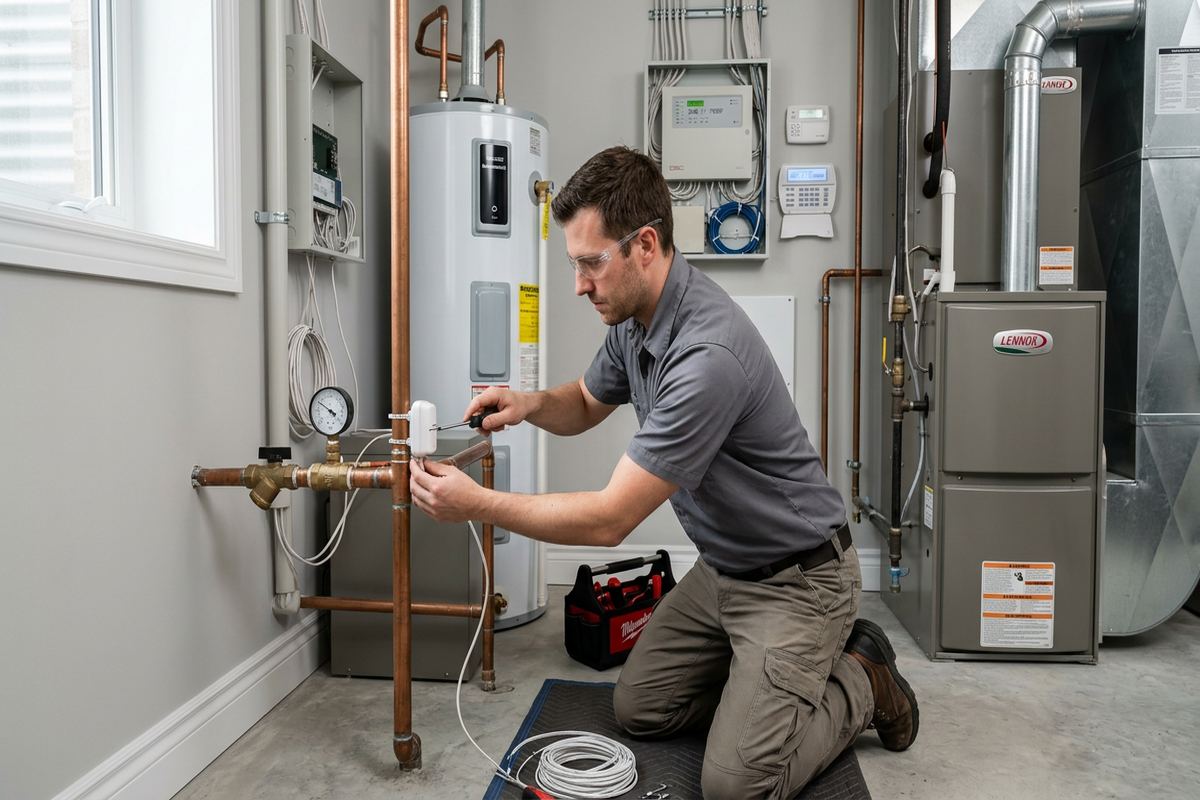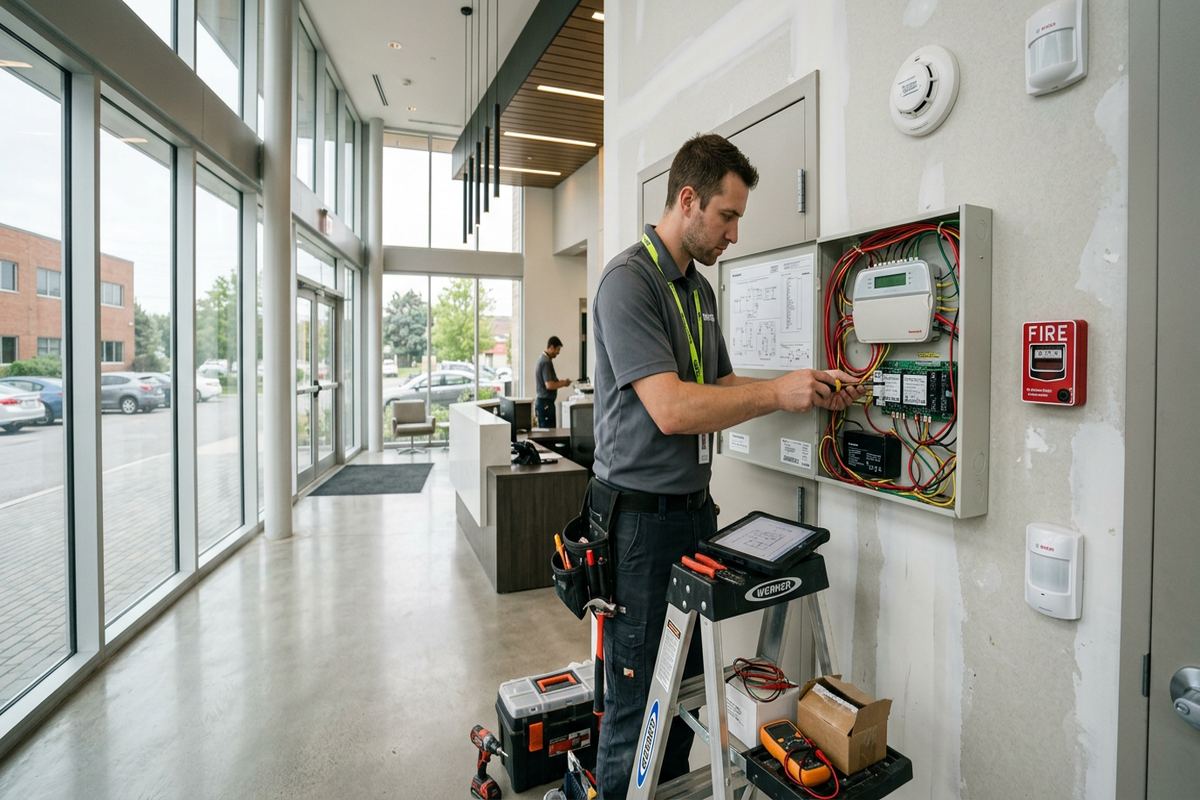
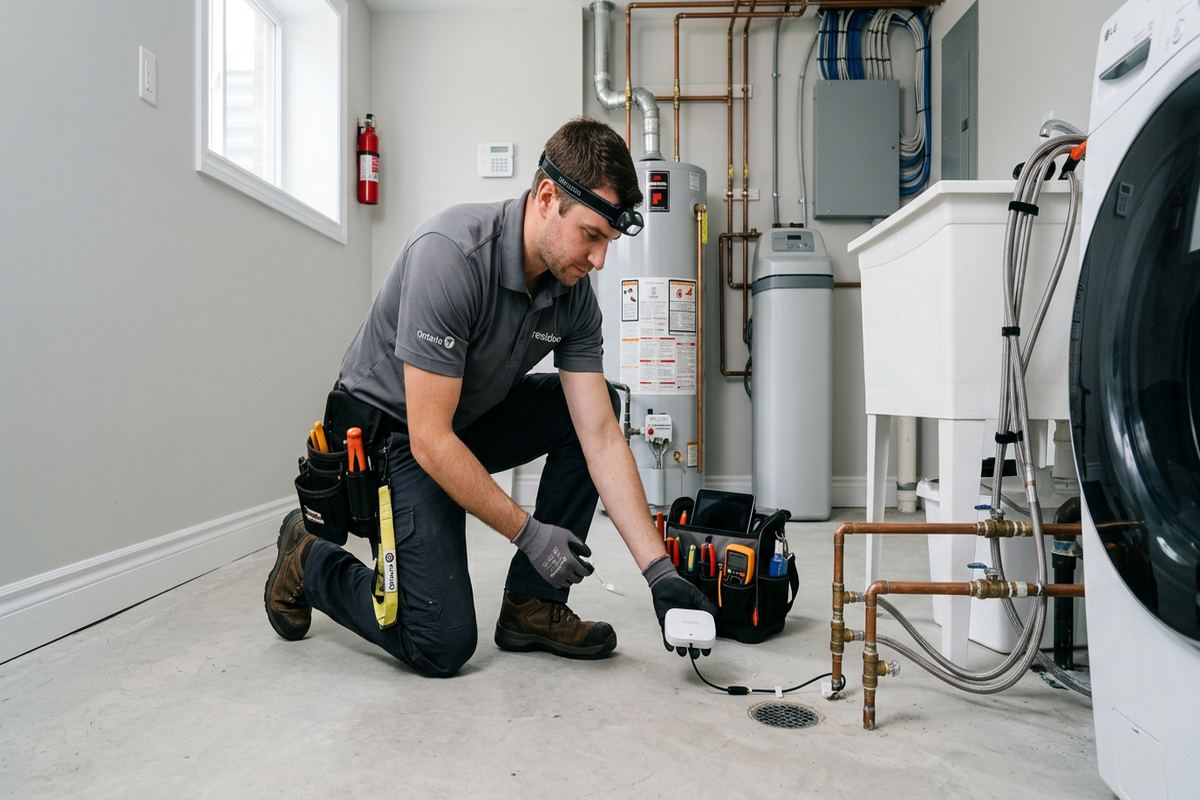
UnifiedLink installs home alarm systems for houses, condos and mixed-use properties across Barrie and Simcoe County. Each project starts with a site assessment to review entry points, interior risks, communication options and installation constraints. The result is a clearly scoped system with practical device placement, on-site configuration and a documented handover using credentials owned by the customer.
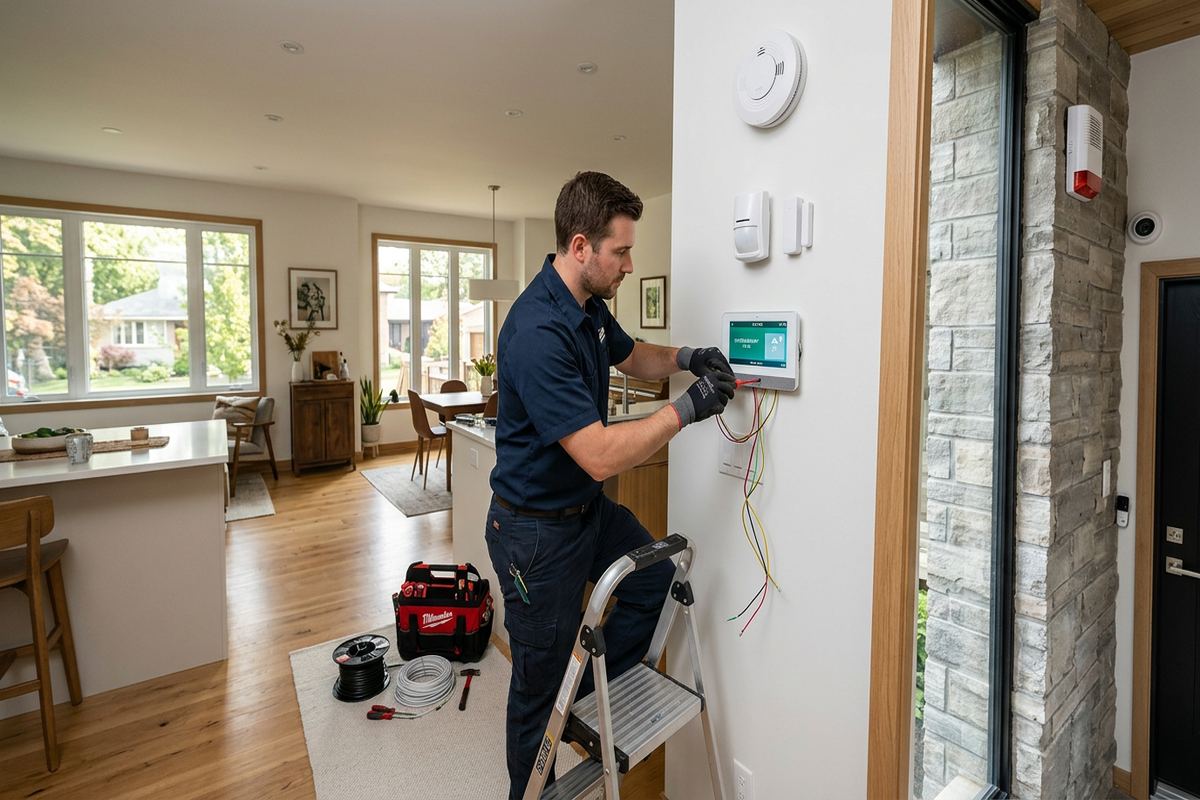
Home Alarm Planning for Barrie Properties
A home alarm should be planned around the property rather than assembled from a generic device list. During a Barrie site assessment, we review exterior doors, accessible windows, attached garages, basement entries, upper-floor access points and areas where occupants need simple control. We also discuss pets, regular schedules, guests and any spaces that should remain usable while another area is armed. These details determine suitable sensor types, keypad positions, communication paths and notification settings before equipment quantities or cable routes are finalized for the written project scope.
Barrie’s property mix creates different installation priorities. Waterfront homes may have detached buildings, exposed exterior doors and seasonal occupancy patterns. Newer houses in south-end subdivisions often have open layouts, finished basements and attached garages that require coordinated area planning. Older properties near Downtown Barrie or Allandale can contain additions, concealed renovations and mixed construction materials. The assessment identifies those conditions early, reducing unnecessary wall disturbance and helping place equipment where it can be serviced without compromising coverage, daily convenience or the appearance of finished rooms.
Alarm design also considers how people actually enter and leave. A keypad placed far from the regular entrance encourages rushed disarming, while poorly located motion detection can create avoidable conflicts with pets, stairs or heating vents. We map normal movement through the house and separate perimeter protection from interior detection where appropriate. The plan can also account for home offices, rental areas, workshops or family members with different access needs. Pricing follows the assessment, with no assumptions about construction, available power, network coverage or existing wiring until those conditions have been checked.
- Exterior door and accessible window review
- Keypad and arming location planning
- Pet and household routine considerations
- Garage, basement and outbuilding assessment
- Communication path and power review
Choosing Alarm Devices in Barrie
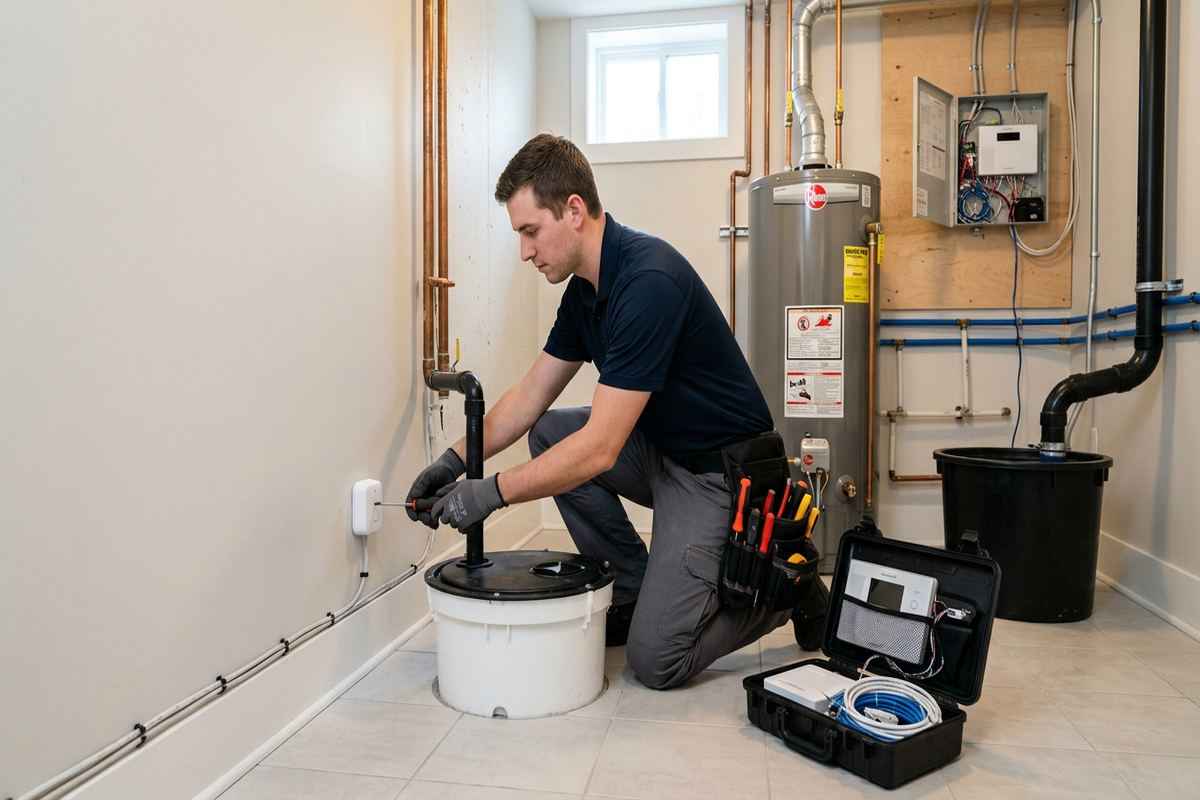
Device selection begins with the opening or condition being protected. Door and window contacts identify perimeter access, motion detectors cover selected interior areas, and glass-break sensors may support rooms with larger glazed surfaces. Environmental devices can add warning for smoke, heat, carbon monoxide, low temperature or water, subject to the selected system and installation requirements. UnifiedLink explains what each device detects, where it will be installed and what it does not cover. This avoids treating every sensor as interchangeable or adding equipment that does not address a defined risk.
Cold winters and freeze-thaw cycles matter when alarm components extend beyond conditioned living space. Garages, vestibules, detached structures and exterior gates can experience temperatures and moisture conditions unlike those inside the home. Device suitability, mounting surface, cable entry and sealing therefore need review before installation. For exterior penetrations in Barrie, we select practical routes, protect exposed cable where needed and seal openings against moisture. We do not assume that an indoor contact, detector or enclosure is appropriate simply because it can be physically attached to an outdoor location.
A complete system should remain understandable after installation. The written scope identifies the proposed equipment, device placement, cable routes, exclusions, equipment ownership and warranty. It also records whether devices are hardwired, wireless or combined in a hybrid arrangement. Hardwired equipment can suit renovations with accessible framing or existing cable, while wireless devices may reduce disruption in finished spaces. A hybrid design can preserve serviceable existing wiring while addressing new openings. The final choice depends on site conditions, compatibility, expected maintenance and the homeowner’s preferred level of physical installation.
- Door and window contacts
- Interior motion detection
- Glass-break detection where appropriate
- Environmental alarm options
- Hardwired, wireless or hybrid designs
Wired and Wireless Installation Options
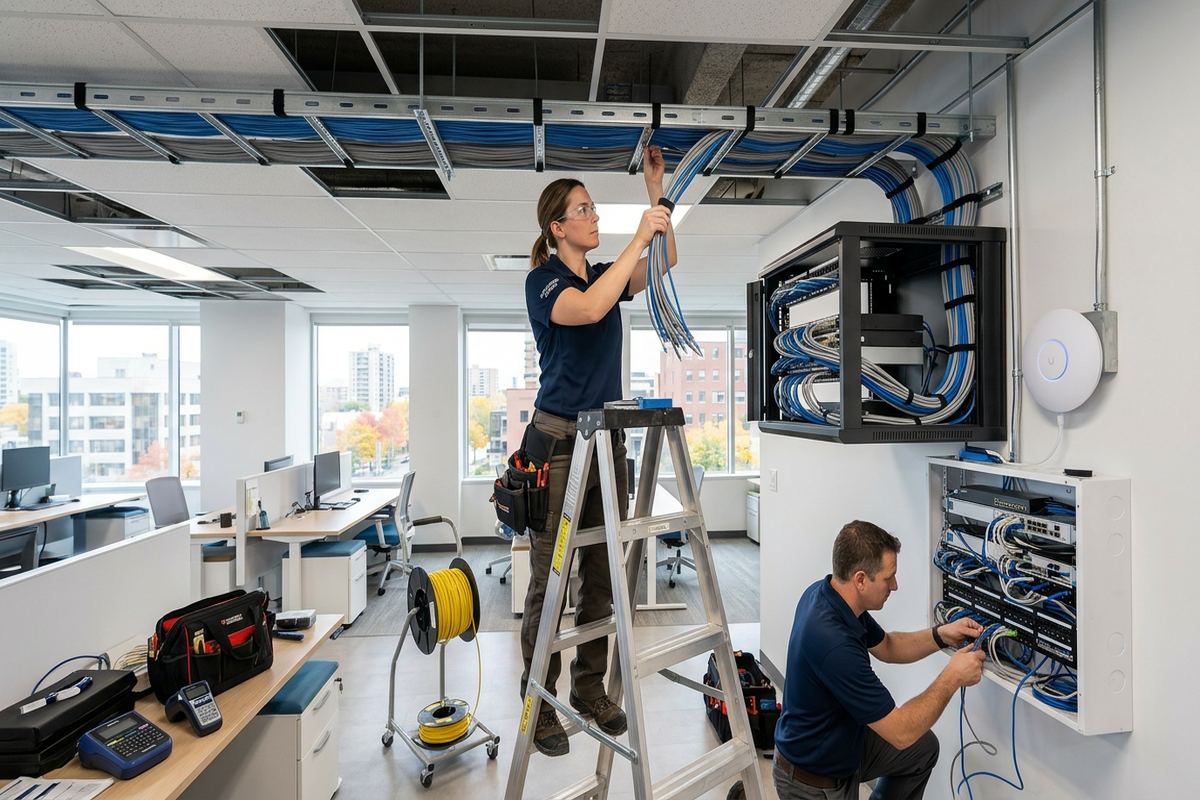
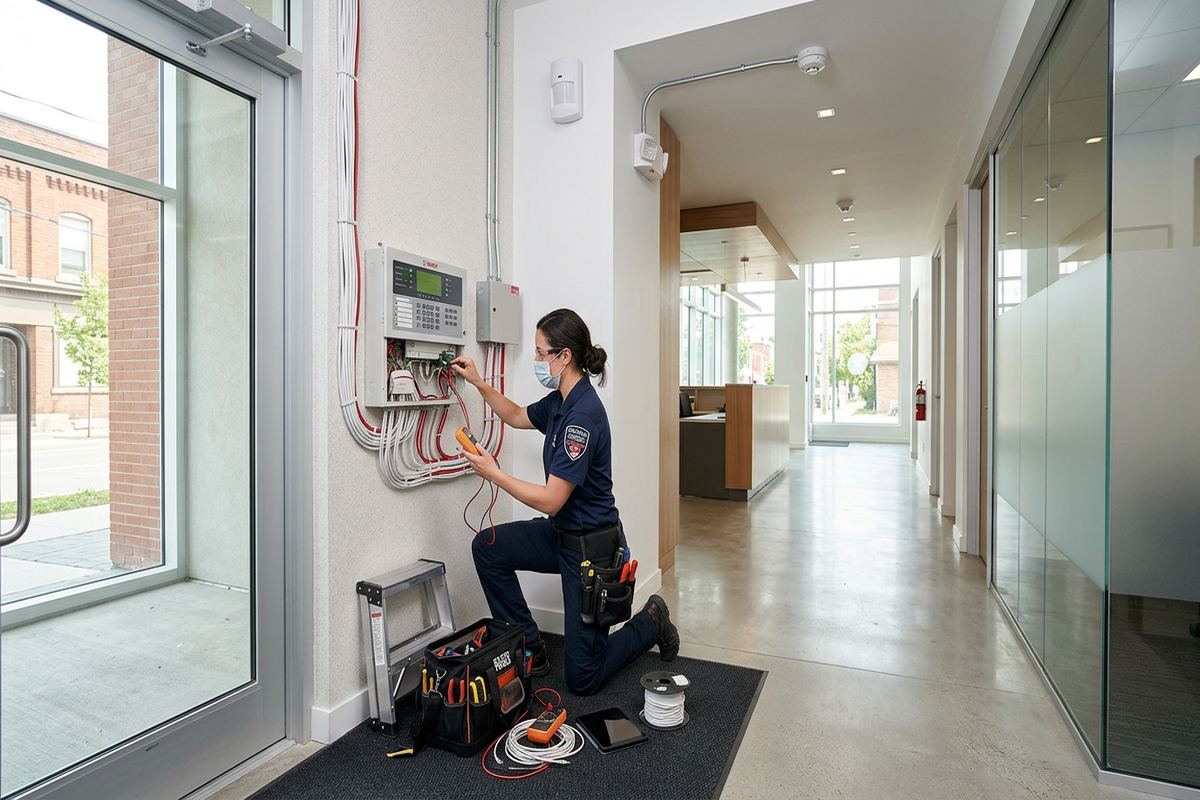
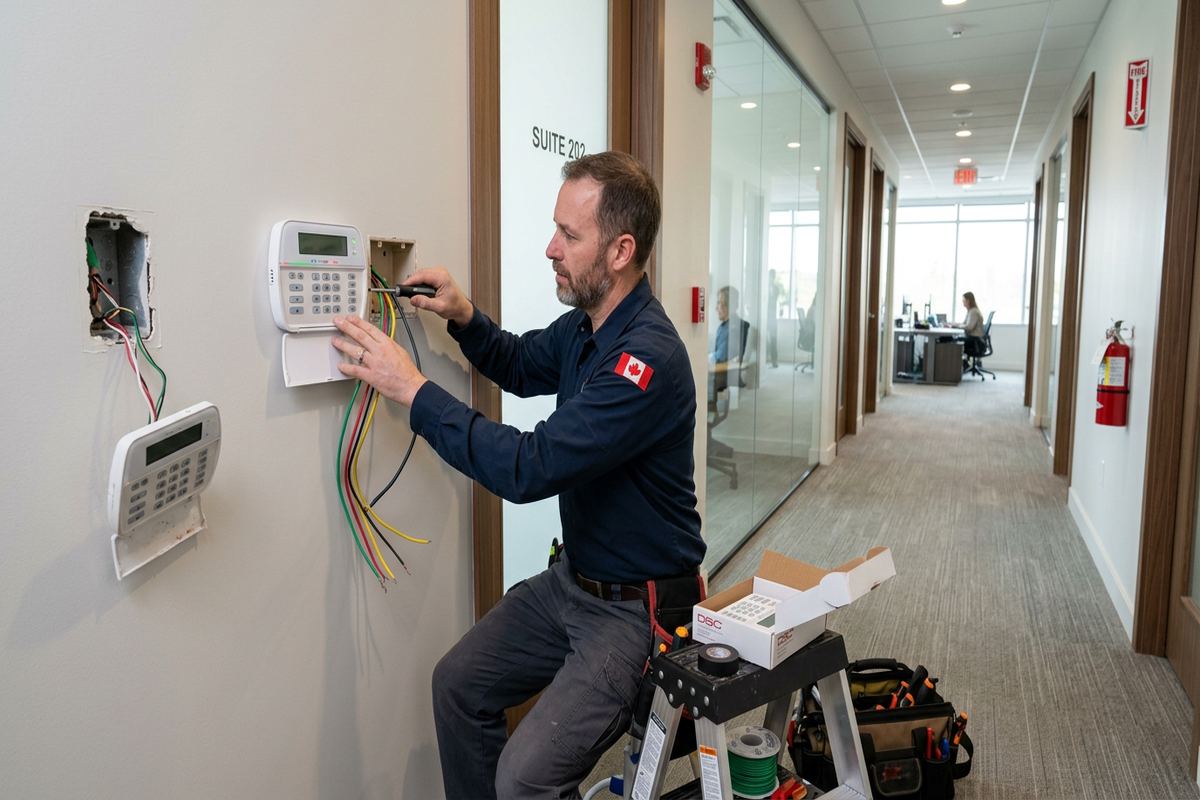
Hardwired alarm installation uses continuous labelled cable runs between field devices and central equipment wherever the design permits. Routes may pass through basements, utility rooms, accessible attics, unfinished ceilings or planned renovation areas. Frame construction often offers workable concealed pathways, although insulation, fire blocking and finished surfaces can limit access. Masonry walls require different drilling, fastening and surface-routing decisions. Before work begins, the scope identifies intended routes and visible sections. This gives the property owner a practical understanding of where drilling is required and which finishes are outside the installation scope.
Wireless systems can be useful in completed homes where opening walls would be disproportionate to the work. They still require disciplined placement, testing and documentation. Radio range may be affected by masonry, metal ductwork, large appliances, mirrors, utility rooms or distance between levels. Batteries also become part of ongoing maintenance. In Barrie condos or multi-unit properties, wireless equipment may reduce common-area disruption, but it does not remove the need for condo, landlord or property manager approval when devices affect doors, windows, corridors, exterior surfaces or shared building systems.
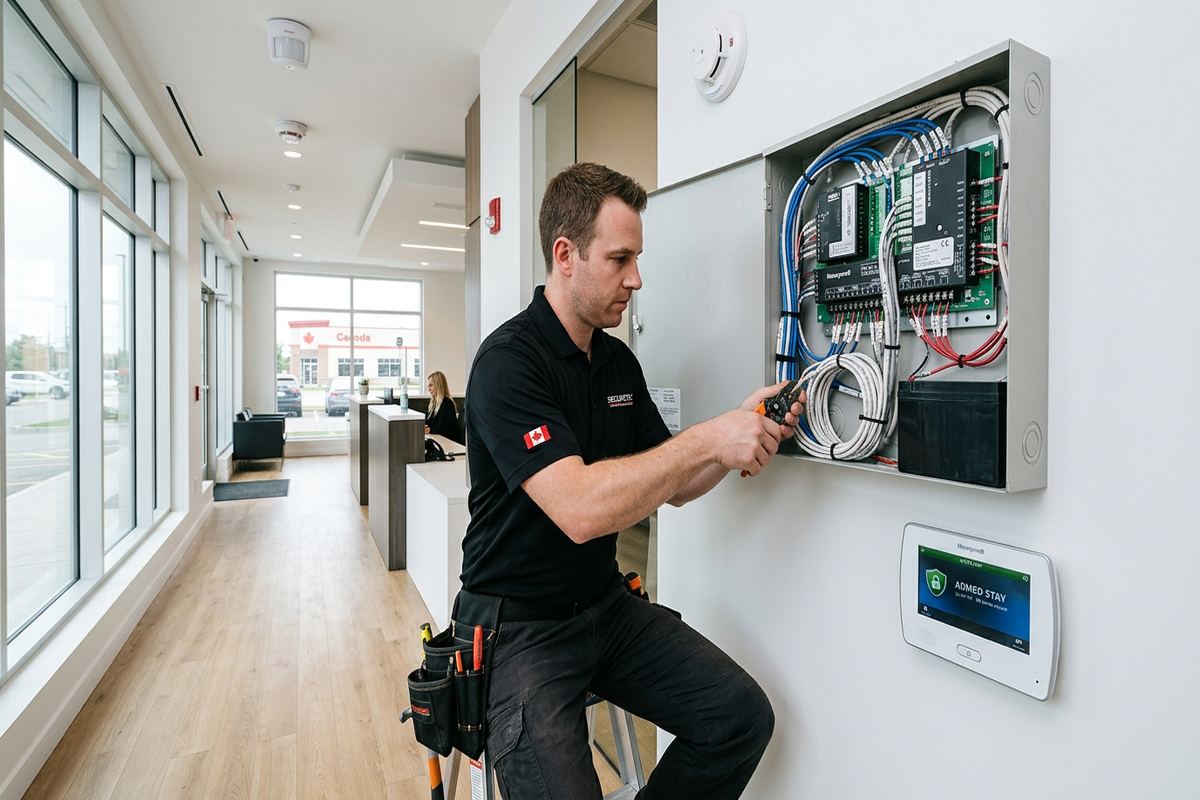
Existing alarm wiring is assessed rather than automatically reused or discarded. Cable condition, conductor continuity, labelling, route accessibility and compatibility with the proposed equipment all matter. An older panel may have serviceable field wiring even when its controls no longer suit the owner, but concealed defects cannot be judged from appearance alone. Where reuse is practical, the written scope states what remains and who owns the equipment. Where replacement is required, new runs are labelled consistently. On-site configuration then confirms device names, areas, delays and user functions against the approved plan.
- Continuous labelled cable runs
- Concealed routes where access permits
- Wireless range and battery planning
- Existing cable testing before reuse
- Documented hybrid system design
Barrie, Ontario
Home alarm system installation in Barrie, scoped in writing first
Book a site assessment and get equipment, routes, exclusions, and warranty on paper before anything is installed.
Installation for Barrie Homes and Condos
Installation methods vary across Barrie neighbourhoods. Newer homes in Painswick, Holly and Innis-Shore commonly use frame construction with finished basements, insulated garages and tightly completed interior surfaces. Older homes may include plaster, masonry, additions or previous wiring from several renovation periods. We choose fasteners, drill methods, cable protection and device locations for the actual substrate. The objective is a secure, serviceable installation with limited visual impact, not a concealed route promised before wall cavities, ceiling access and structural obstacles have been examined during the assessment.
Exterior devices and cable entries need particular care near exposed elevations, walkways and waterfront conditions. Mounting must account for siding profiles, brick joints, trim, drainage paths and future access. Openings are kept purposeful and sealed using materials appropriate to the surface and location. Cable is protected from abrasion and casual damage, with drip paths considered where relevant. Freeze-thaw movement can affect poorly chosen mounting points or failed seals, so exterior work is not treated like interior fastening. Device operating limits are also checked against the expected environment before placement.
Condo and rental installations introduce approval and ownership questions. A unit owner may control interior finishes but not an entrance door, corridor-facing surface, window assembly or common electrical area. A tenant may need written landlord authorization before equipment is fastened or wiring is altered. UnifiedLink can define the proposed work clearly so the customer can seek the required approval. The project scope identifies exclusions and equipment ownership, while installation proceeds only within authorized areas. This helps avoid conflicts involving common elements, restoration duties, shared life-safety systems or end-of-tenancy removal.
- Frame, plaster and masonry installation methods
- Careful drilling and substrate-specific fastening
- Exterior cable entry sealing
- Condo and landlord approval planning
- Defined ownership and removal responsibilities
Alarm Configuration and Customer Handover
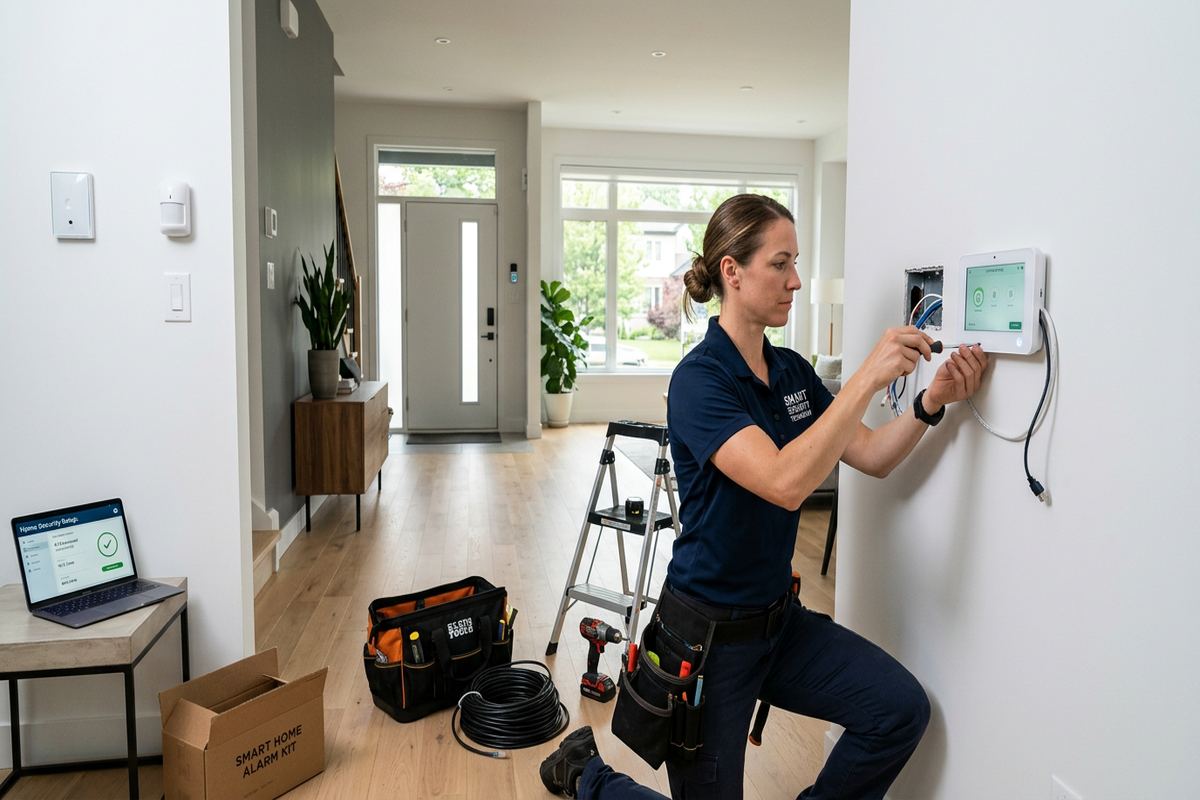
Physical installation is followed by on-site configuration. Devices receive plain names that match their actual locations, such as front entry, basement window or garage interior, rather than vague numbered labels. Entry and exit delays, arming modes and notification options are configured according to the agreed operating plan and available system functions. We verify that contacts report correctly, motion devices cover their intended areas and user controls behave consistently. Configuration also includes communication and network checks where the selected equipment relies on internet, cellular or local network connectivity for available features.
Handover is completed using credentials owned and controlled by the customer. We do not make the system dependent on an installer-only account for routine use. The owner receives an explanation of arming, disarming, bypassing, user management, notifications and basic device status. Where applicable, we also explain battery responsibilities, communication dependencies and what happens during a power or internet interruption. Household members or authorized staff can be included in the walkthrough. The purpose is to make normal operation clear without hiding essential controls behind technical terminology or undocumented settings.
An as-built record documents the installed system after field conditions and approved changes have been addressed. It identifies device locations, labels, central equipment and relevant cable information, providing a useful reference for future service or renovation work. The final record may differ from the initial plan if concealed obstructions required an agreed route adjustment. Those changes are documented rather than left to memory. With one accountable contractor handling assessment, cabling, installation, configuration and handover, the customer has a single project scope instead of separate assumptions from several trades.
- Plain-language device naming
- On-site sensor and control testing
- Customer-controlled login credentials
- User and notification setup guidance
- As-built system record
Integrating Alarms with Other Building Systems
An alarm system may share practical requirements with cameras, access control, structured cabling or Wi-Fi, but each system has a different purpose. Cameras provide visual information, while intrusion sensors report defined opening or movement events. Network connectivity may support applications and notifications, yet local alarm functions should be understood separately from internet-dependent features. During assessment, UnifiedLink identifies shared pathways, equipment locations and power needs without presenting one technology as a substitute for another. Coordinated planning can reduce duplicate drilling and crowded utility areas, particularly during renovations or new basement finishing.
For a home office, mixed-use building or small commercial plaza, alarm areas may need to reflect different schedules and authorized users. A street-facing business can require separate staff access, stockroom protection or after-hours arming, while an upstairs residential area remains occupied. Small industrial units may include overhead doors, offices and warehouse spaces with different detector conditions. Barrie’s local mix makes clear area definitions important. User permissions, entry routes and notification responsibilities should be agreed before configuration so daily operations do not depend on shared codes or informal workarounds.
Network planning becomes relevant when an alarm panel, communicator or application requires a reliable connection. Equipment should not be placed solely where Wi-Fi happens to be strongest on assessment day; the route, power source, network ownership and future service access also matter. In larger Barrie houses or detached structures, coverage can vary across floors and exterior walls. UnifiedLink can assess related cabling or Wi-Fi requirements as part of a coordinated low-voltage scope. Any integration limits, third-party subscriptions or customer-supplied network responsibilities are identified rather than assumed.
- Camera and alarm scope coordination
- Structured cabling route planning
- Wi-Fi and network dependency review
- Separate areas for mixed-use properties
- Defined user permissions and schedules
Replacing or Expanding a Barrie Alarm System
A system replacement starts with identifying what is installed and what still functions. Panels, keypads, contacts, motion detectors, sirens, power supplies, communicators and cable may have different service conditions or compatibility limits. We inspect accessible components and test wiring considered for reuse. Equipment is not retained merely to reduce the device count, and it is not removed merely because it is older. The proposed scope distinguishes reused, replaced and newly added items, along with exclusions where hidden wiring or third-party equipment cannot be fully verified before work begins.
Renovations often change the original protection plan. A finished basement may add bedrooms and exterior access, an addition may create new doors, or a converted garage may alter interior movement. South-end subdivision homes can also be expanded with completed lower levels and backyard structures after the original alarm was installed. Expansion requires more than attaching another sensor. Panel capacity, power, wireless range, area programming, cable access and user operation must be reviewed together. The as-built record is then updated to reflect the final arrangement and device naming.
False or unexplained alarms require methodical diagnosis. Common causes can include loose contacts, damaged cable, unsuitable detector placement, depleted batteries, door movement, environmental exposure or outdated programming. Barrie’s seasonal temperature changes can reveal marginal exterior mounting or alignment issues, particularly around garages and less-conditioned spaces. We begin with the reported event history and affected zone, then inspect accessible components and test operation. Corrective work is scoped according to findings; replacing the whole system is not automatically necessary when a defined device, route or configuration issue can be addressed.
- Accessible component and cable assessment
- Reuse based on testing and compatibility
- Panel capacity and power review
- Renovation-driven zone expansion
- Targeted diagnosis of recurring alarms
Arranging Home Alarm Installation in Barrie
The process begins with a request describing the Barrie property, current system if any, and the main concerns to be addressed. Useful details include property type, renovation status, accessible entrances, detached structures and whether condo or landlord approval may apply. Requests sent during business hours are answered the same day; after-hours requests are answered the next business day. Site assessment timing depends on the service and travel distance. No final installation price is set before the property and project requirements have been assessed.
At the assessment, we review construction, proposed device positions, cable access, power, communication options and any equipment expected to remain. The discussion also covers household routines, pets, user groups and desired environmental detection. UnifiedLink then prepares a written scope covering equipment, cable routes, device placement, exclusions, equipment ownership and warranty. This document provides a common reference before installation is scheduled. If approvals, renovation work or third-party services are required, those dependencies can be identified so the alarm work is not based on incomplete access or unconfirmed responsibilities.
Installation day includes the approved mounting, continuous labelled cable runs where specified, equipment connection and on-site configuration. We confirm changes caused by concealed conditions before proceeding with materially different routes or locations. Testing and customer instruction follow the physical work, and handover uses the customer’s own credentials. An as-built record captures the completed arrangement. For properties in Downtown Barrie, Ardagh Bluffs, Allandale or elsewhere in Simcoe County, the same process keeps scope, field decisions and final documentation connected under one accountable contractor.
- Same-day reply during business hours
- Site assessment before pricing
- Written equipment and installation scope
- Confirmed field changes before rerouting
- Documented testing and customer handover
Barrie neighbourhoods we cover
- Downtown Barrie
- Ardagh Bluffs
- Painswick
- Holly
- Allandale
- Innis-Shore
Home alarm system installation in Barrie — common questions
Do you install wired and wireless alarms in Barrie?
Yes. UnifiedLink can plan wired, wireless or hybrid alarm systems for Barrie properties. The suitable approach depends on construction, available cable routes, finished surfaces, device locations and maintenance preferences. Existing wiring is assessed for condition and compatibility before reuse. Wireless equipment is evaluated for range, interference, battery needs and environmental suitability rather than selected only to avoid cabling.
Can you reuse my existing alarm wiring?
Existing alarm cable can sometimes be reused, but it must first be identified and tested. In Barrie homes with renovations or older additions, concealed routes and previous splices may not be obvious at the panel. We check accessible cable condition, continuity, labelling and compatibility with the proposed equipment. The written scope states which wiring will remain, what will be replaced and any limits involving inaccessible sections.
Will exterior alarm devices handle Barrie winters?
Exterior and unconditioned locations require equipment suited to their expected temperature and moisture exposure. Barrie winters, freeze-thaw cycles and wind-driven moisture also affect mounting and cable-entry decisions. We review device operating limits, fastening surfaces, cable protection and sealing before placement. An indoor-rated device is not assumed suitable for a garage, gate, detached structure or exposed entrance simply because it can connect to the system.
Do I need condo or landlord approval?
Possibly. Barrie condo corporations, property managers and landlords may control entrance doors, windows, corridors, exterior walls, common wiring spaces or restoration requirements. UnifiedLink can provide a defined proposed scope for the customer to submit for approval. Work proceeds within authorized areas, with equipment ownership and exclusions recorded. Approval is especially important where drilling, visible hallway equipment or changes to shared building components are proposed.
Can the alarm work with cameras or Wi-Fi?
Alarm planning can be coordinated with security cameras, structured cabling and Wi-Fi at a Barrie property. The systems still have separate purposes and may have different power, network or subscription dependencies. We identify shared routes and equipment locations where practical, explain available integration limits and document customer or third-party responsibilities. A camera is not treated as a replacement for an intrusion sensor or environmental alarm device.
What happens before you provide pricing?
UnifiedLink completes a site assessment before pricing the installation. For a Barrie home or mixed-use property, we review entrances, construction, device placement, cable routes, communication options and existing equipment. You then receive a written scope covering equipment, routes, locations, exclusions, ownership and warranty. Assessment timing depends on the service and travel distance; requests received during business hours are answered that day.
Coverage in Barrie is confirmed against the address before we quote. See everything we install in Barrie or the province-wide home alarm system installation page.