UnifiedLink installs commercial security camera systems for Barrie offices, shops, plazas, warehouses and mixed-use properties. Each project begins with a site assessment to define coverage, recording, network capacity, cable routes and exterior mounting requirements. The result is a documented system configured on site and handed over using credentials controlled by the customer.
Commercial Camera Planning for Barrie Properties
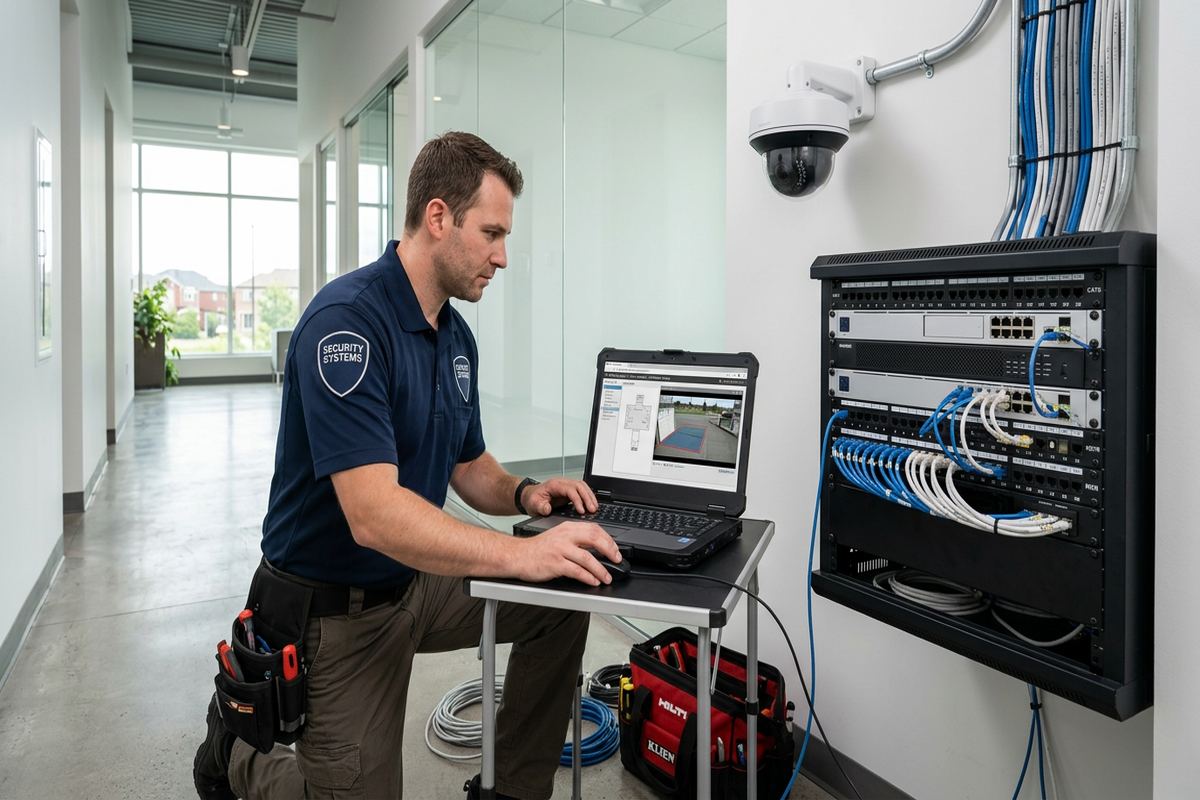
A useful camera system starts with the events a business needs to review, not with an arbitrary device count. During a Barrie site assessment, UnifiedLink examines entrances, reception areas, sales floors, storage rooms, loading points, parking approaches and other operational zones. Camera positions are then planned around identification, activity review and general awareness. The assessment also considers available lighting, viewing angles, ceiling heights, obstructions and privacy boundaries. This process produces a practical coverage plan before equipment, installation methods or recording capacity are included in a written scope.
Barrie’s property mix calls for different installation approaches. A small commercial plaza may need shared exterior coverage, individual tenant cameras and careful separation between networks. An industrial unit may require long cable routes, high mounting points and views across loading areas. Older premises near Downtown Barrie can include finished ceilings, masonry walls and limited pathways, while newer south-end buildings may have accessible service spaces but landlord-controlled construction standards. These conditions affect labour, mounting hardware, cable routing and permissions, so they are reviewed before pricing rather than assumed from floor plans.
The written scope identifies camera types, proposed locations, recording equipment, cable routes, exclusions, equipment ownership and warranty details. It can also document work that depends on landlord, condominium, electrical or property-management approval. This matters in leased units, multi-tenant buildings and mixed-use properties where exterior walls, common hallways, roofs and telecommunications rooms are controlled spaces. Clear documentation gives the owner, tenant and contractor the same reference point. It also reduces last-minute changes caused by inaccessible pathways, unapproved penetrations or misunderstood responsibility for internet, power and network equipment.
- Entrance, parking and loading-area coverage planning
- Lighting and obstruction review
- Landlord and condominium approval requirements
- Written equipment and installation scope
- Recording and retention requirements
Camera Coverage for Barrie Businesses
Camera selection depends on the detail required at each location. A wide overview can show movement through a shop or warehouse, but it may not provide useful facial or vehicle detail at the edge of the image. Entrances, payment areas and controlled doors usually need tighter fields of view than general circulation spaces. UnifiedLink plans each Barrie camera around a defined purpose, then selects an appropriate lens, resolution, mounting height and image orientation. This avoids relying on one very wide camera to perform several incompatible tasks across a large or visually complex area.
Exterior views require particular care because sunlight, headlights, snow cover and deep shade can change image quality throughout the day. A camera facing a Barrie parking entrance may encounter glare from low winter sun, while a recessed doorway can place a person against a bright background. Infrared illumination can also reflect from nearby soffits, walls, signs or glass. Placement and configuration are used to manage these conditions. Where vehicle identification matters, the required approach, distance, speed and direction are discussed rather than assuming a general parking-lot camera will capture every plate.
Interior layouts create their own blind spots. Tall shelving, displays, partitions and stacked inventory can interrupt views that appeared clear on a drawing. In restaurants and retail spaces, camera placement must also account for customer privacy, staff work areas and changing merchandise layouts. Warehouses may need separate views for aisles, shipping doors and staging zones. During installation, final angles are checked on site using the actual image. The goal is to record usable activity without aiming into neighbouring properties, private spaces or areas unrelated to the stated security purpose.
- Purpose-defined camera views
- Entrance and transaction-area detail
- Parking and vehicle approach assessment
- Glare and infrared reflection checks
- Privacy-conscious image boundaries
Exterior Camera Installation in Barrie Winters
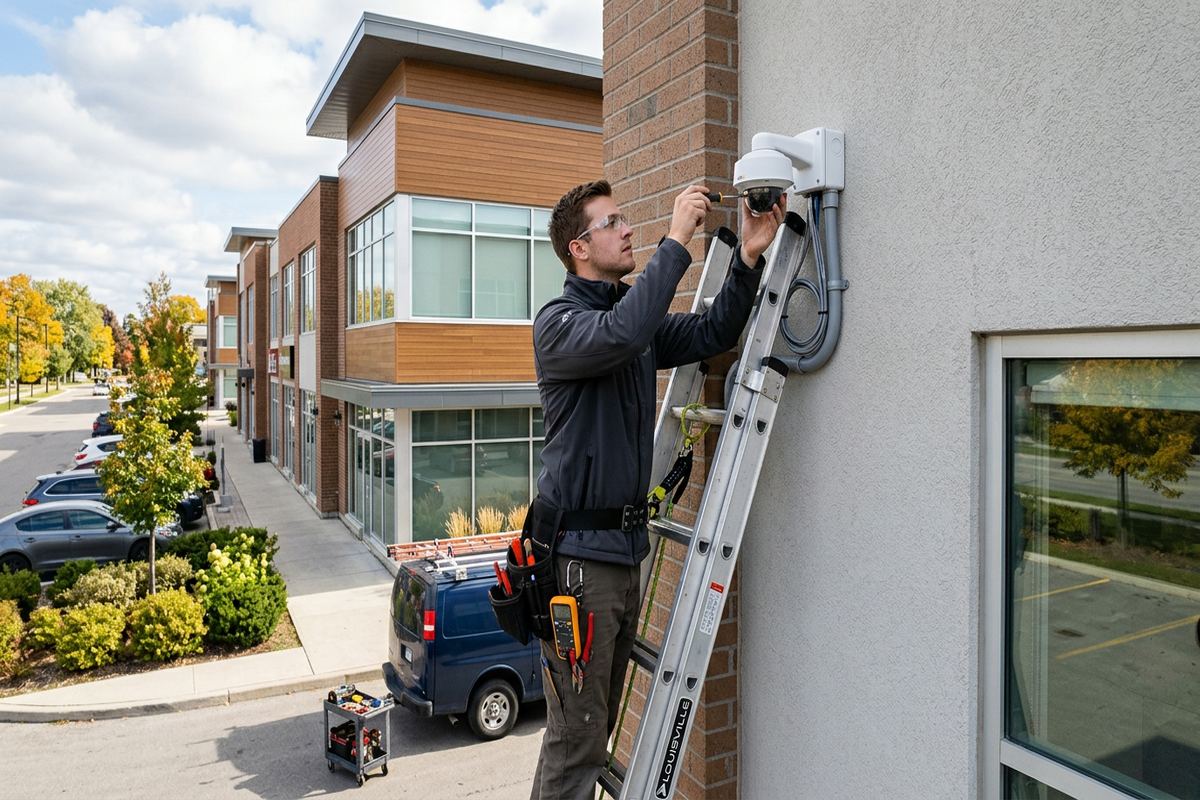
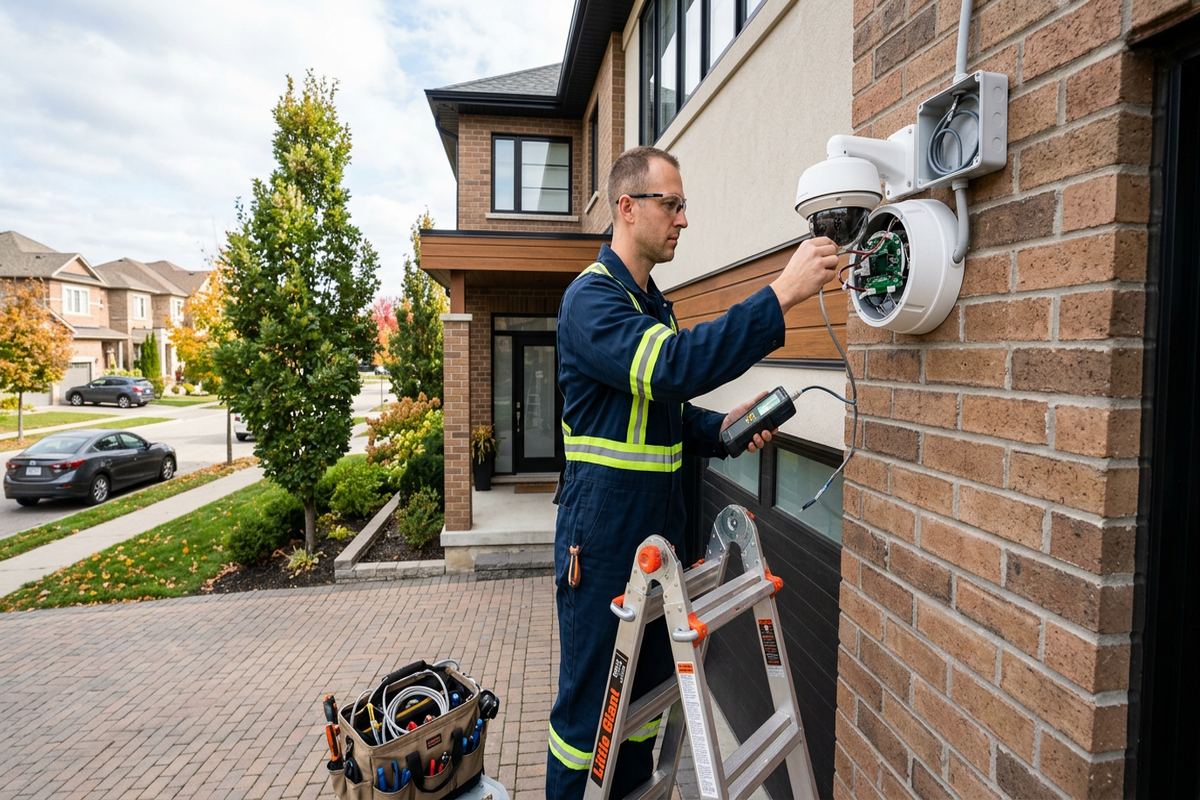
Barrie’s winters and repeated freeze-thaw cycles make exterior mounting details important. Water that enters a poorly sealed penetration can freeze, expand and damage finishes or cable pathways. UnifiedLink selects mounting locations that provide stable attachment and manageable cable entry, then seals penetrations using methods suited to the wall assembly. Drip loops, weather-resistant fittings and protected junctions help keep moisture away from terminations. Equipment suitability is reviewed for the intended exposure, including cold, precipitation and direct sun. A sheltered mounting point is useful only when it still provides the required view.
Construction type changes how an exterior camera should be attached. Masonry walls require suitable anchors and careful drilling that avoids unnecessary damage to brick faces, mortar joints or concealed services. Frame construction may use siding, sheathing, soffits or structural backing, each with different load and sealing considerations. Surface-mounted conduit may be appropriate where concealed routes are unavailable, especially in finished commercial units. Routes are planned to look orderly, limit exposed cable and keep service points accessible. Existing holes or abandoned wiring are not automatically reused without checking their condition and destination.
Snowbanks, plowed piles and seasonal vegetation can alter a camera’s effective view. A low device that works in autumn may be blocked after repeated clearing, while a view across wet pavement may suffer from reflected lighting. Exterior layouts in Painswick, Holly and Innis-Shore can also face open approaches where wind-driven precipitation reaches exposed walls. Camera height and angle are selected with these seasonal changes in mind. On-site image checks include daytime and available low-light settings, although conditions will continue to vary. The final configuration balances useful detail, serviceability and physical protection.
- Sealed exterior cable penetrations
- Weather-suitable cameras and fittings
- Masonry and frame mounting methods
- Freeze-thaw exposure considered
- Snow and seasonal obstruction planning
Barrie, Ontario
Commercial security camera installation in Barrie, scoped in writing first
Book a site assessment and get equipment, routes, exclusions, and warranty on paper before anything is installed.
Network Cabling and Recording in Barrie
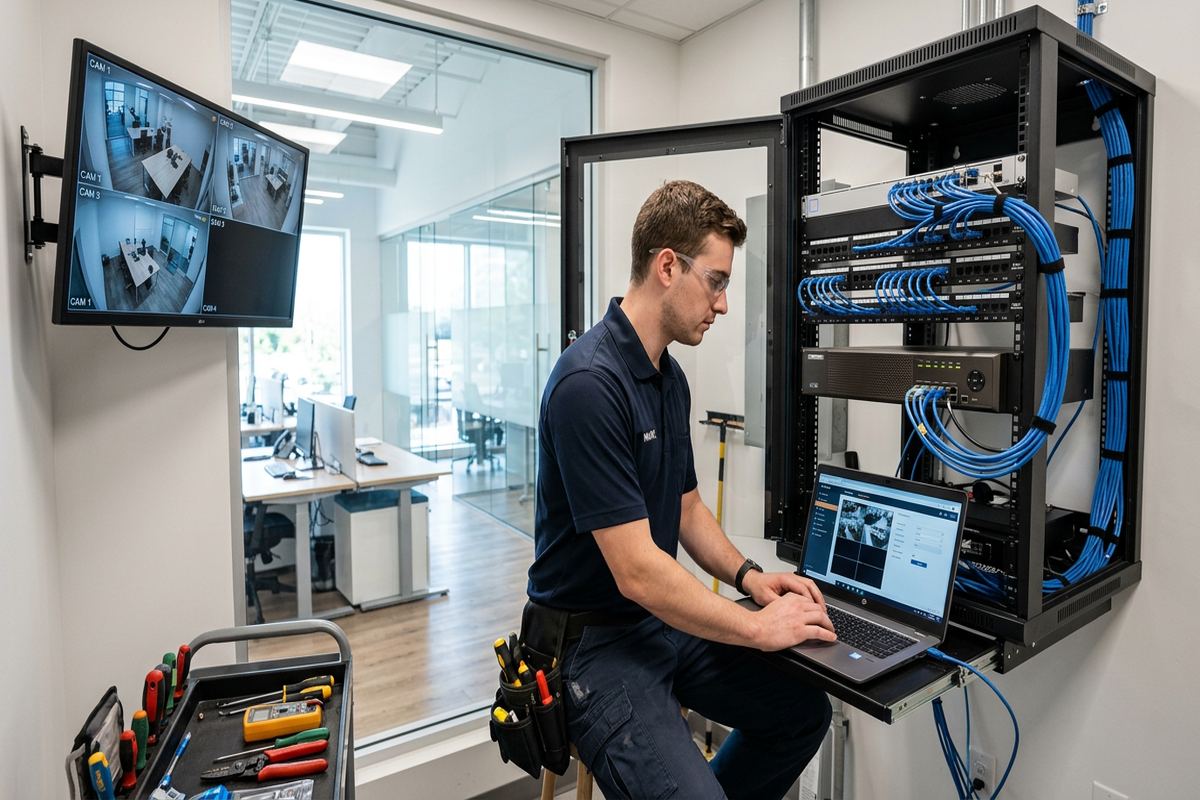
Commercial IP cameras rely on the network, but they should not be added without checking switching capacity, power availability and traffic design. UnifiedLink reviews whether an existing network can support the proposed cameras or whether dedicated switching and segmentation are appropriate. Power over Ethernet can simplify device wiring when cable distances and power budgets are properly calculated. Recording hardware also needs a suitable location with ventilation, controlled access and dependable connectivity. The system design separates camera requirements from assumptions about the customer’s everyday Wi-Fi, office computers or internet service.
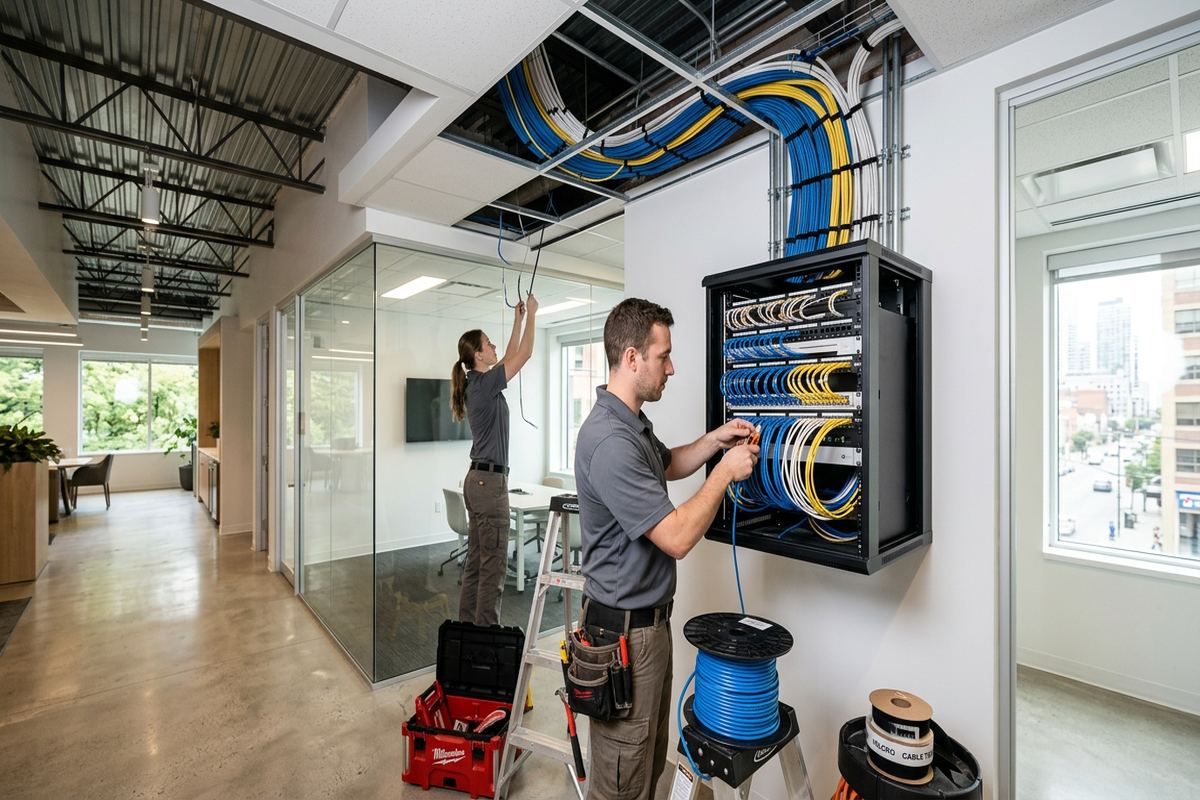
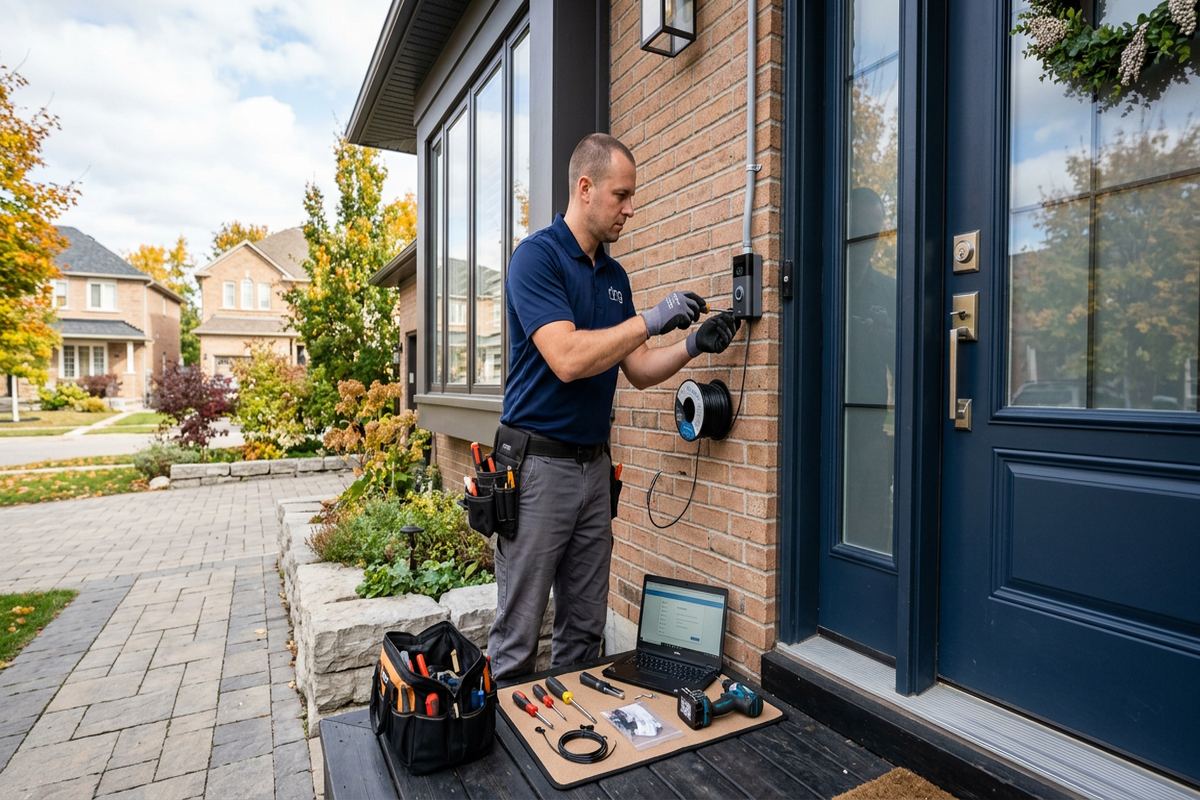
Every installed camera receives a continuous, labelled cable run wherever the agreed pathway allows it. Continuous runs reduce unnecessary joins and create clearer troubleshooting paths between the camera, patch panel, switch or recorder. Cable type is selected for the environment, including indoor pathways, exterior-rated sections and locations where mechanical protection is needed. In older Downtown Barrie properties, routes may need to work around masonry, finished ceilings and previous renovations. Newer commercial units may offer open ceiling spaces, but fire separations, shared service rooms and landlord rules still determine acceptable pathways.
Recording requirements are based on camera count, image settings, expected activity and the period the business wants footage retained. Actual retention can vary as scenes and settings change, so storage is planned with stated assumptions rather than presented as an absolute promise. The written scope identifies whether recording is local, cloud-connected or otherwise dependent on subscriptions and internet access. It also clarifies equipment ownership. Remote viewing is configured on site when included, using accounts controlled by the customer instead of installer-owned credentials that could complicate future administration or access changes.
- Power and network capacity review
- Continuous labelled cable runs
- Recorder location and ventilation planning
- Storage assumptions documented
- Customer-controlled remote access
Installation Around Active Commercial Sites
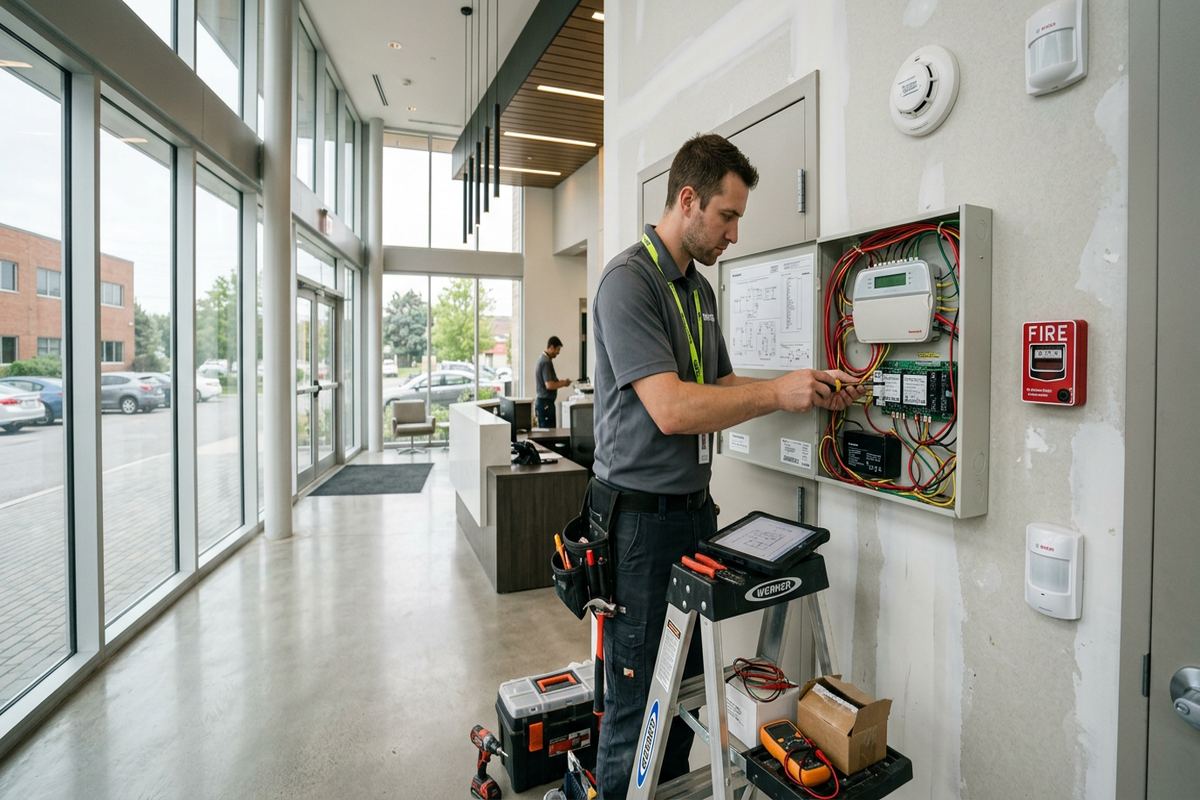
Commercial camera work often takes place while staff, customers, deliveries and contractors are moving through the property. Before installation, access requirements and practical work zones are discussed with the site contact. Ladder placement, ceiling access, drilling and temporary pathway restrictions may need coordination around opening hours or operational peaks. In a Barrie plaza, work can also affect neighbouring tenants or shared corridors. UnifiedLink keeps one accountable contractor for the defined low-voltage scope, which simplifies communication about routes, device placement, changes and final testing across the project.
Retail and office installations require protection of finishes as well as attention to safety. Cable routes may cross suspended ceilings, back rooms, utility spaces and public areas before reaching each camera. Penetrations should be limited to what the agreed design requires, and visible surface pathways should be aligned consistently where concealment is not practical. Dust-producing work near merchandise, food areas or occupied desks may require local preparation by the customer. Any assumptions about furniture movement, lift access, ceiling tile condition or restricted rooms are identified before work begins and documented where they affect scope.
Industrial units and service shops can introduce greater mounting heights, exposed structure, vehicle movement and electrically noisy equipment. Camera cabling is routed with appropriate separation from power conductors and supported independently rather than draped across ceilings or building systems. Loading doors need views that account for raised doors, parked trucks and changing daylight. In Allandale or other established employment areas, additions and previous tenant work may leave undocumented pathways. Existing cabling is assessed before reuse; appearance alone does not confirm its category, condition, route or suitability for a modern camera system.
- Work coordinated around site operations
- Orderly exposed and concealed pathways
- Access and lift requirements identified
- Cable separation and support
- Existing wiring assessed before reuse
Security Camera Upgrades in Barrie
An existing camera system may have acceptable cabling but outdated cameras, an unsupported recorder or poor configuration. Alternatively, the recorder may be functional while damaged connectors and improvised cable joins cause intermittent video. An upgrade assessment separates these issues. UnifiedLink checks accessible equipment labels, camera connections, recording status, image quality, network components and available cable test results. The objective is to determine what can reasonably remain, what should be replaced and where compatibility limits apply. Reusing equipment is considered when its condition, ownership and technical suitability can be established.
Older analogue systems sometimes use coaxial cable that may support a compatible replacement approach, while IP upgrades typically depend on network cabling, switches and power design. The right path is not determined by camera age alone. Route accessibility, required image detail, recording expectations and future expansion all matter. In masonry buildings near central Barrie, preserving viable pathways can reduce disruption, but unknown splitters, hidden joins or water-damaged exterior sections can undermine reuse. The written scope identifies any existing components expected to remain and notes exclusions where concealed conditions cannot be confirmed before work starts.
System expansion should account for more than spare recorder channels. Additional cameras can increase network traffic, switch power demand, storage use and remote-viewing bandwidth. A business adding coverage to a rear lot, neighbouring unit or new stock area may also need different cable pathways and permissions. UnifiedLink reviews the complete signal path before connecting new devices. Where staged work is appropriate, the plan can identify current equipment and later additions without promising compatibility with unspecified future products. Documentation from each stage helps keep labels, addresses, credentials and camera purposes understandable over time.
- Existing camera and recorder assessment
- Analogue and IP upgrade options
- Cable reuse subject to testing
- Network and storage expansion checks
- Staged upgrade documentation
Privacy, Access and System Handover
Commercial video surveillance involves operational and privacy responsibilities that remain with the property owner or organization using the system. Camera views should relate to a legitimate security or business purpose and avoid private areas. Audio recording is treated separately because microphones can introduce additional legal and workplace considerations. UnifiedLink can configure supported features within the agreed technical scope, but the customer determines policies for notice, access, retention and disclosure. Businesses should obtain appropriate legal or regulatory guidance where needed, especially for employee monitoring, shared residential areas or sensitive services.
Access should be assigned deliberately rather than shared through one general account. Managers, owners and other authorized users may need different permissions for live viewing, playback, exports or administration. Where the selected platform supports it, individual accounts help the customer manage access when staff responsibilities change. Passwords and recovery information are established using the customer’s own credentials. UnifiedLink does not need to remain the permanent account owner. This approach gives the Barrie business direct administrative control and reduces dependence on an installer account for routine user changes or future service.
At handover, camera names and views are checked against the agreed locations, recording is verified, and included remote access is demonstrated. The customer receives an as-built record showing the installed devices and relevant cable or equipment information. Basic operating steps can cover live view, playback and footage export on the selected platform. Warranty and ownership information are supplied as set out in the written scope. Handover also records known exclusions or customer dependencies, such as internet service, subscription renewal, monitor supply, policy decisions or access to landlord-controlled telecommunications spaces.
- Customer-owned administrator credentials
- Role-based access where supported
- Playback and export demonstration
- As-built system record
- Ownership and warranty documented
Arranging a Barrie Site Assessment
Pricing follows a site assessment because commercial properties differ in access, construction, coverage needs and existing infrastructure. A useful request includes the Barrie property address, business type, approximate areas to cover, known camera count and any concern driving the project. Photos, drawings or equipment labels can help with early discussion, but they do not replace inspection of cable routes and mounting surfaces. Site assessment timing depends on the service and travel distance. Requests sent during business hours are answered the same day; after-hours requests are answered the next business day.
The site contact should identify approval requirements before work is scheduled. Tenants may need written landlord consent for exterior devices, wall penetrations, conduit, roof access or use of shared telecommunications rooms. Condominium corporations can control common elements even when the camera serves an individual commercial unit. Properties in Ardagh Bluffs, Painswick or newer south-end subdivisions may also combine residential and commercial uses, making image boundaries and common-area permissions especially relevant. Confirming authority early prevents a technically sound design from being delayed by building rules or ownership questions.
After the assessment, UnifiedLink prepares a written scope covering equipment, cable routes, device placement, exclusions, equipment ownership and warranty. The proposal can distinguish required work from optional additions, such as extra coverage areas or network changes. If concealed conditions later differ from what could reasonably be observed, the impact is discussed before affected work proceeds. Once installation is complete, devices are configured on site and handed over with customer-controlled credentials and an as-built record. This creates a clear line from the initial coverage objective to the finished Barrie camera system.
- Site assessment before pricing
- Same-day business-hours request response
- Approvals identified before scheduling
- Written scope and exclusions
- On-site configuration and handover
Barrie neighbourhoods we cover
- Downtown Barrie
- Ardagh Bluffs
- Painswick
- Holly
- Allandale
- Innis-Shore
Commercial security camera installation in Barrie — common questions
How many cameras does my Barrie business need?
The number depends on the views and detail your business requires, not floor area alone. A Barrie site assessment examines entrances, payment points, customer areas, stock rooms, loading doors, parking approaches and existing blind spots. Each proposed camera is assigned a purpose. This avoids adding devices that duplicate the same view while leaving important identification or activity zones without useful coverage.
Can you install cameras on a leased commercial unit?
Yes, provided the tenant has authority for the proposed work. Many Barrie landlords require approval for exterior cameras, wall penetrations, surface conduit, roof access and connections in shared telecommunications rooms. UnifiedLink identifies the intended routes and mounting points in the written scope so the tenant can seek approval. Common areas or neighbouring premises should not be included in camera views without appropriate permission and purpose.
Will exterior cameras work through Barrie winters?
Equipment is selected for its intended exterior exposure, and mounting details account for cold, precipitation and freeze-thaw conditions. Penetrations are sealed using methods suited to the wall assembly, with protected junctions and sensible cable entries. Camera position also considers snow piles, glare and changing daylight. No exterior view remains identical in every condition, so seasonal obstruction and maintenance access are considered during planning.
Can you reuse my existing camera cabling?
Existing cabling can sometimes be reused, but it must first be assessed for type, condition, route and compatibility. Older Barrie buildings may contain hidden joins, abandoned sections, moisture-damaged exterior cable or wiring from several previous tenants. Coaxial and network cabling support different upgrade paths. The written scope identifies any cable expected to remain and notes where concealed conditions or test results may require a revised approach.
Can I view the cameras from my phone?
Remote viewing can be configured when it is supported by the selected system and included in the scope. It may depend on internet service, platform accounts, subscriptions and the customer’s mobile device. UnifiedLink configures access on site using credentials controlled by the customer. Individual user accounts are preferred where supported, allowing a Barrie business to change staff access without sharing one administrator password.
Do homeowners with mixed-use properties need commercial cameras?
A Barrie homeowner with a storefront, office, workshop or rental component may need a system planned around both business and residential boundaries. Camera views should avoid private living spaces and unrelated neighbouring property. Condominium, landlord or common-element approvals may apply. The assessment focuses on the actual security purpose, construction and access requirements rather than labelling the entire property as strictly residential or commercial.
Coverage in Barrie is confirmed against the address before we quote. See everything we install in Barrie or the province-wide commercial security camera installation page.