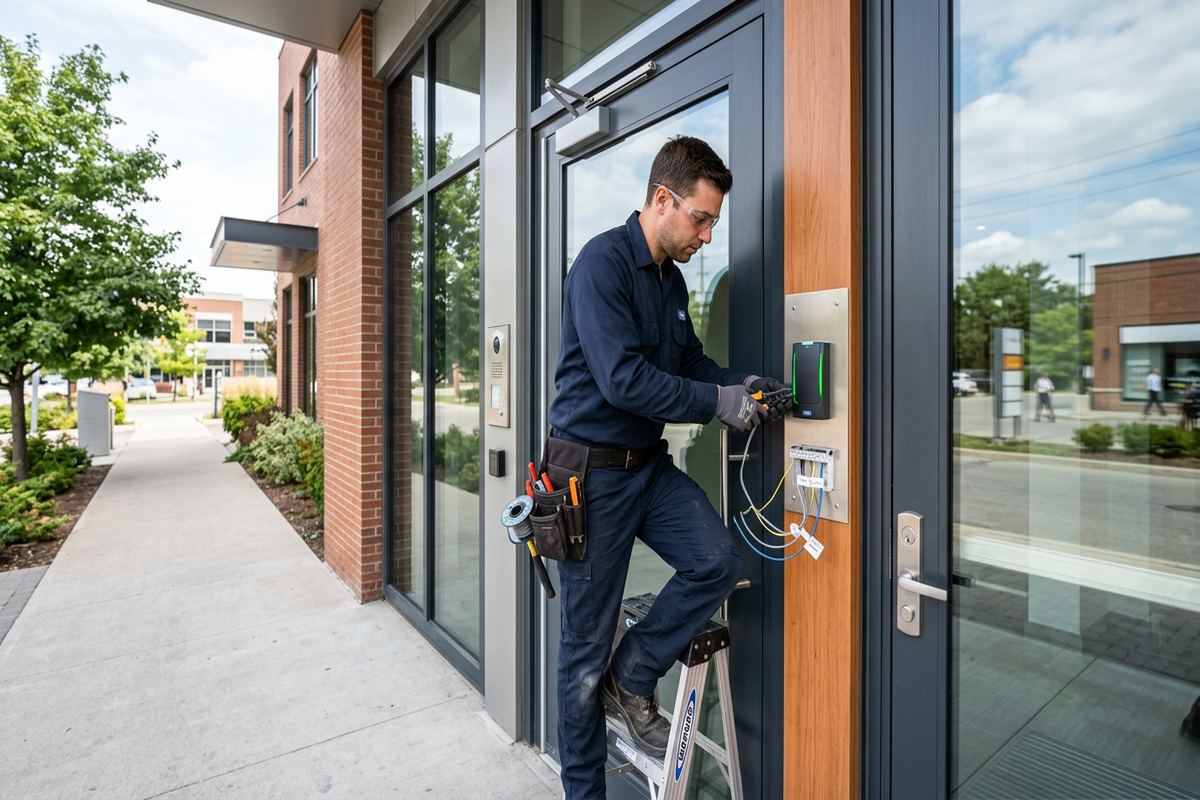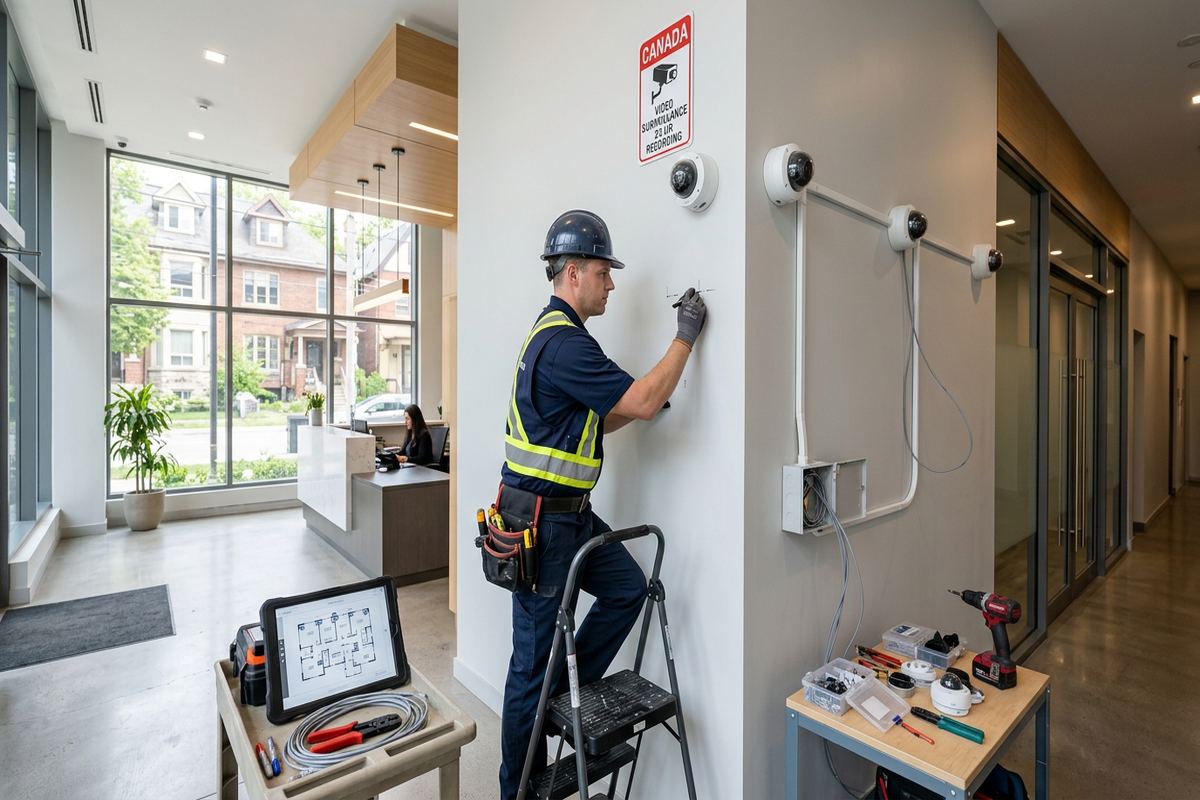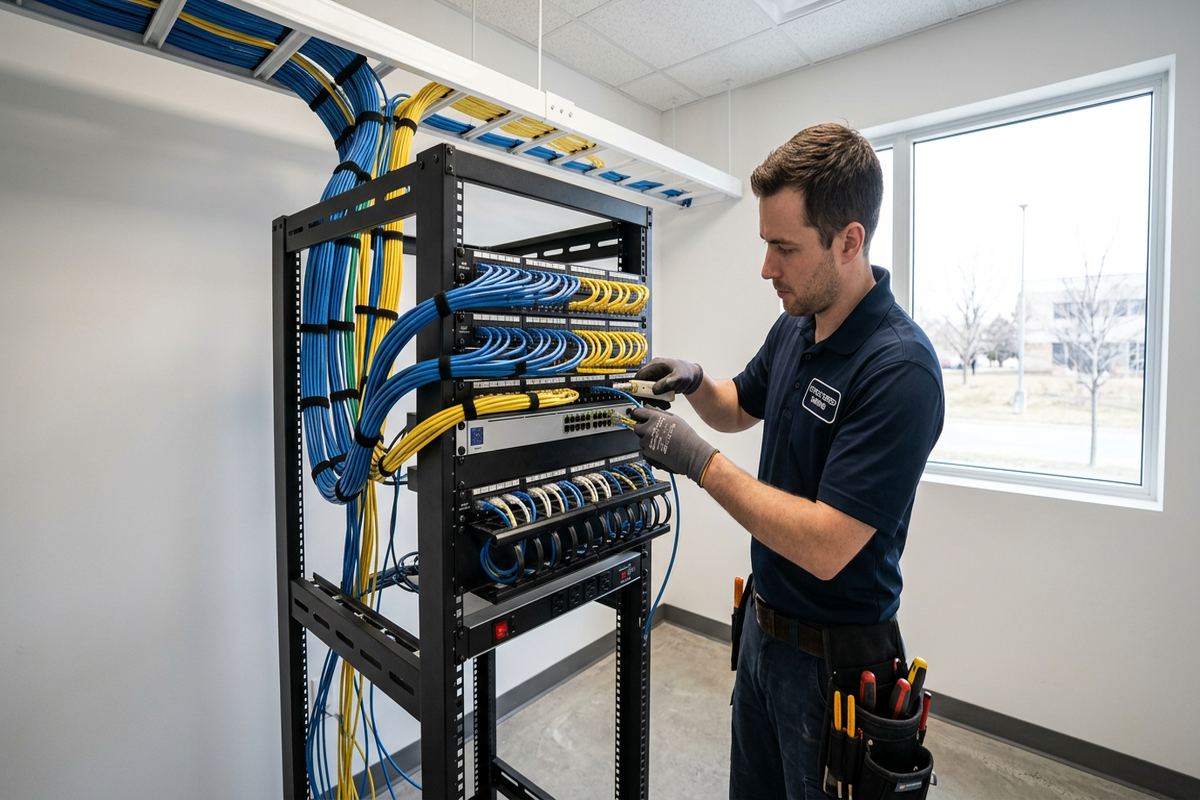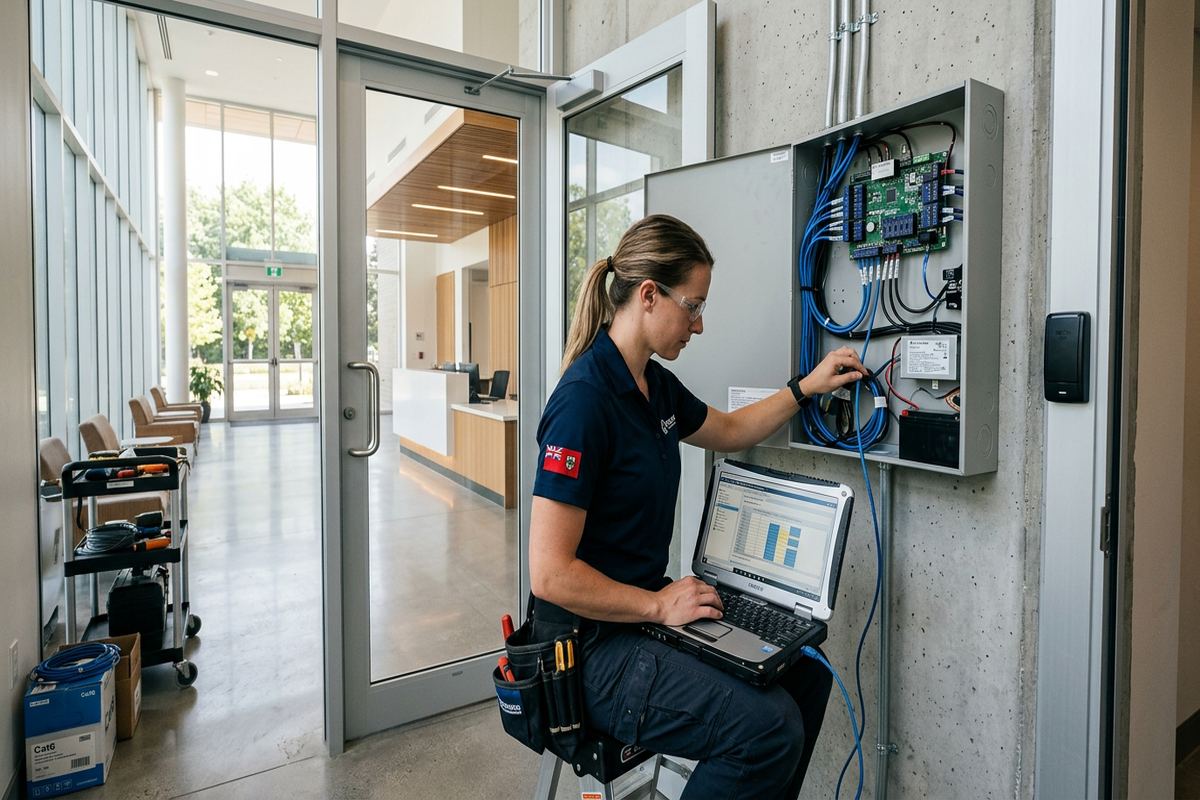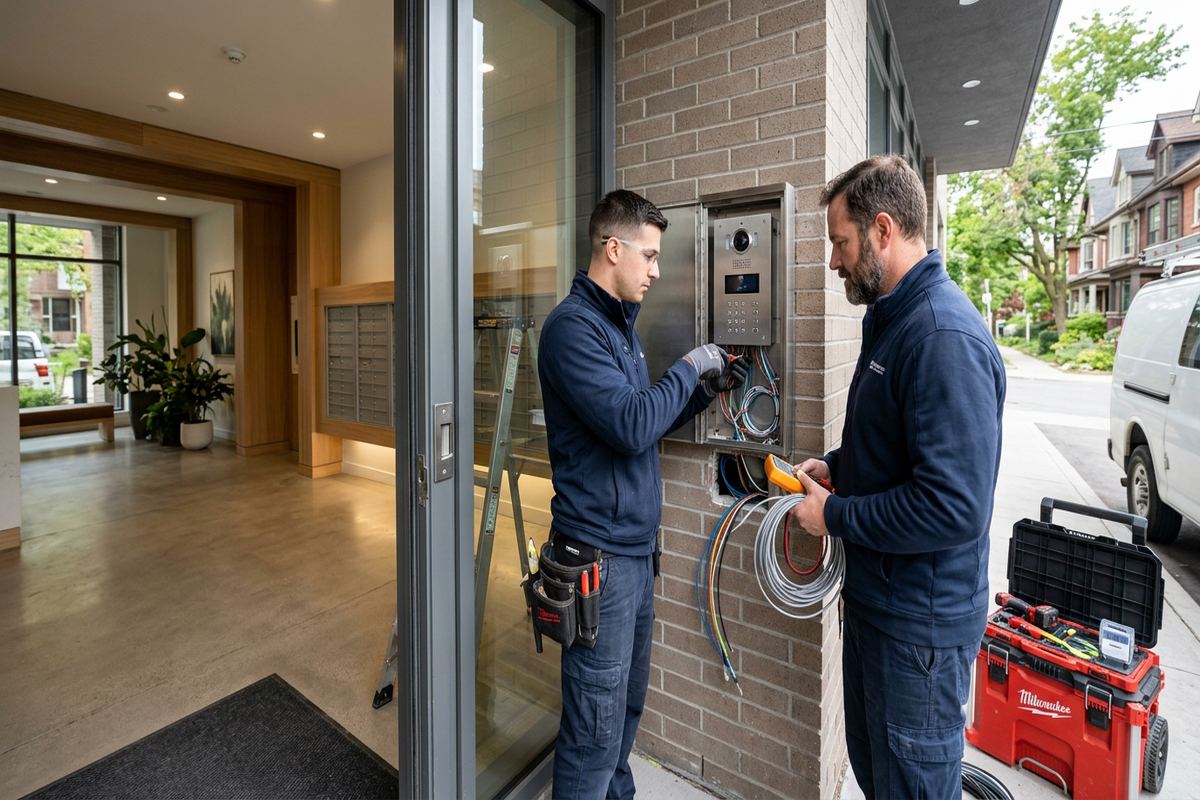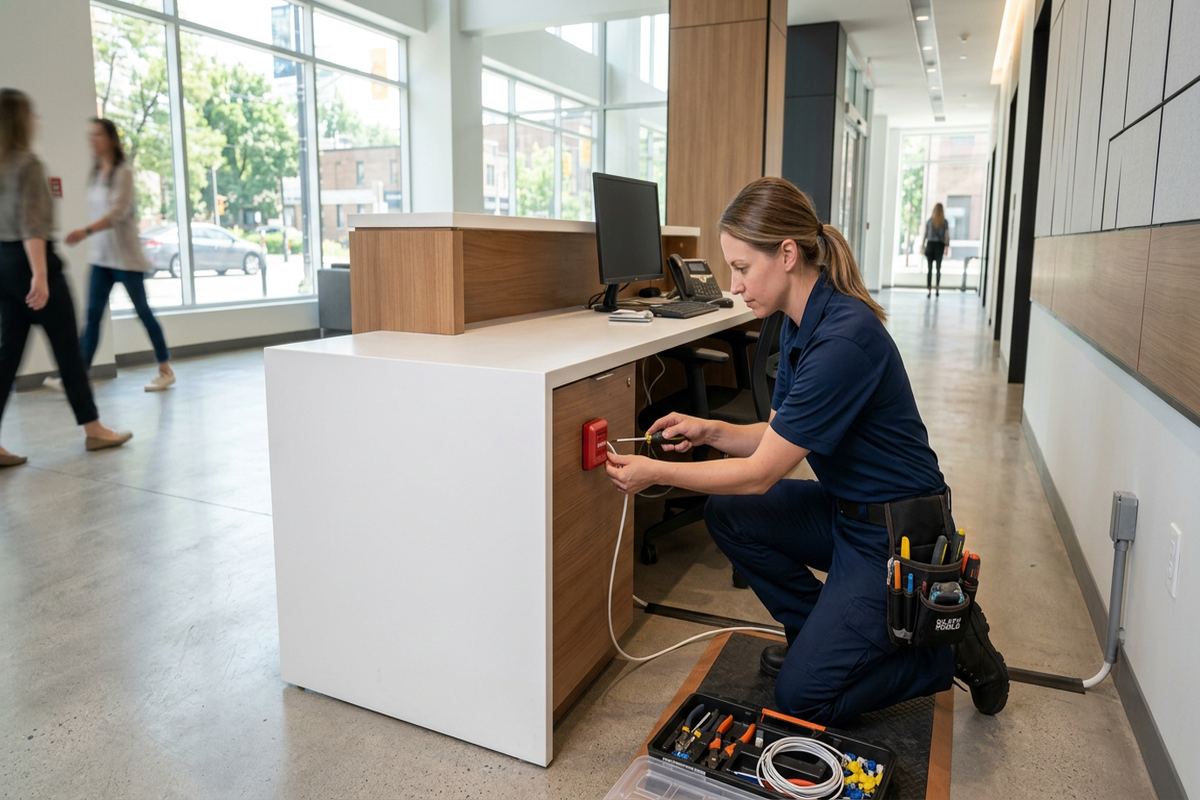
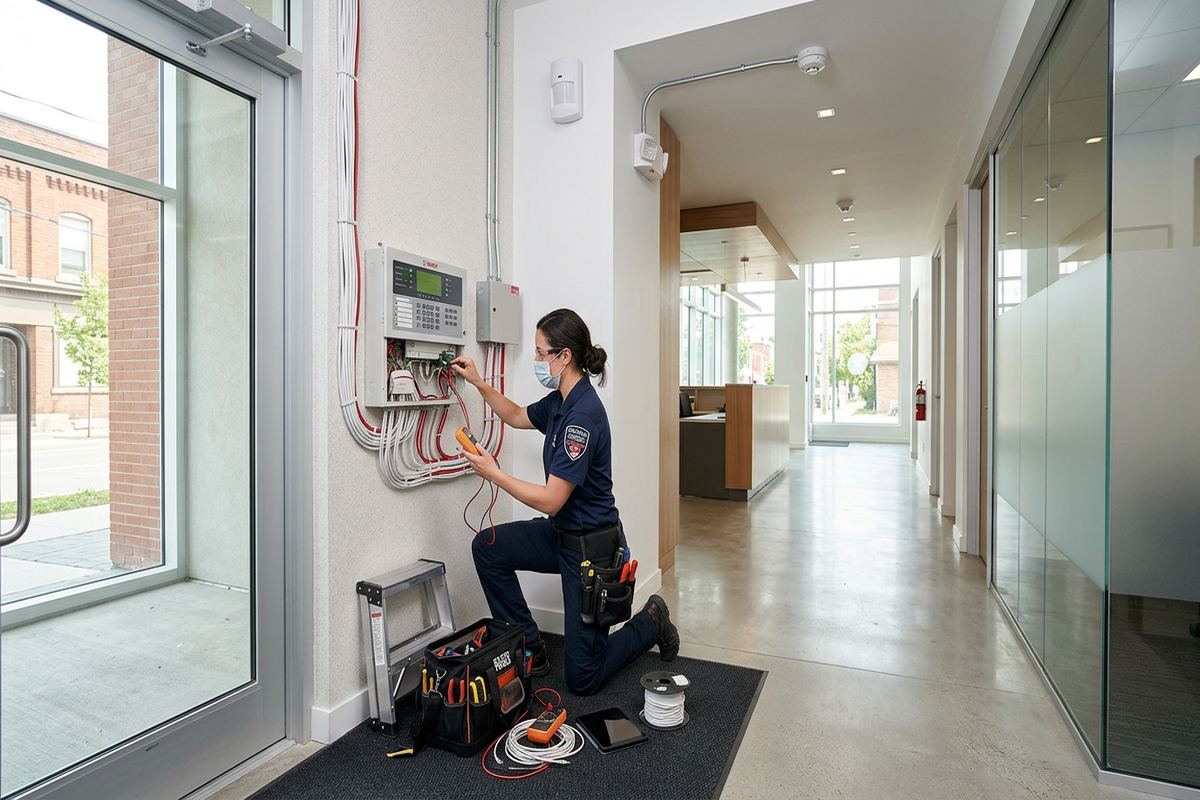
UnifiedLink installs commercial alarm systems for offices, shops, plazas, warehouses and mixed-use properties in Barrie. We assess the site before pricing, plan device locations and cable routes, configure the system on site and provide a documented handover. The result is an alarm system matched to the building, its occupants and day-to-day operating requirements.
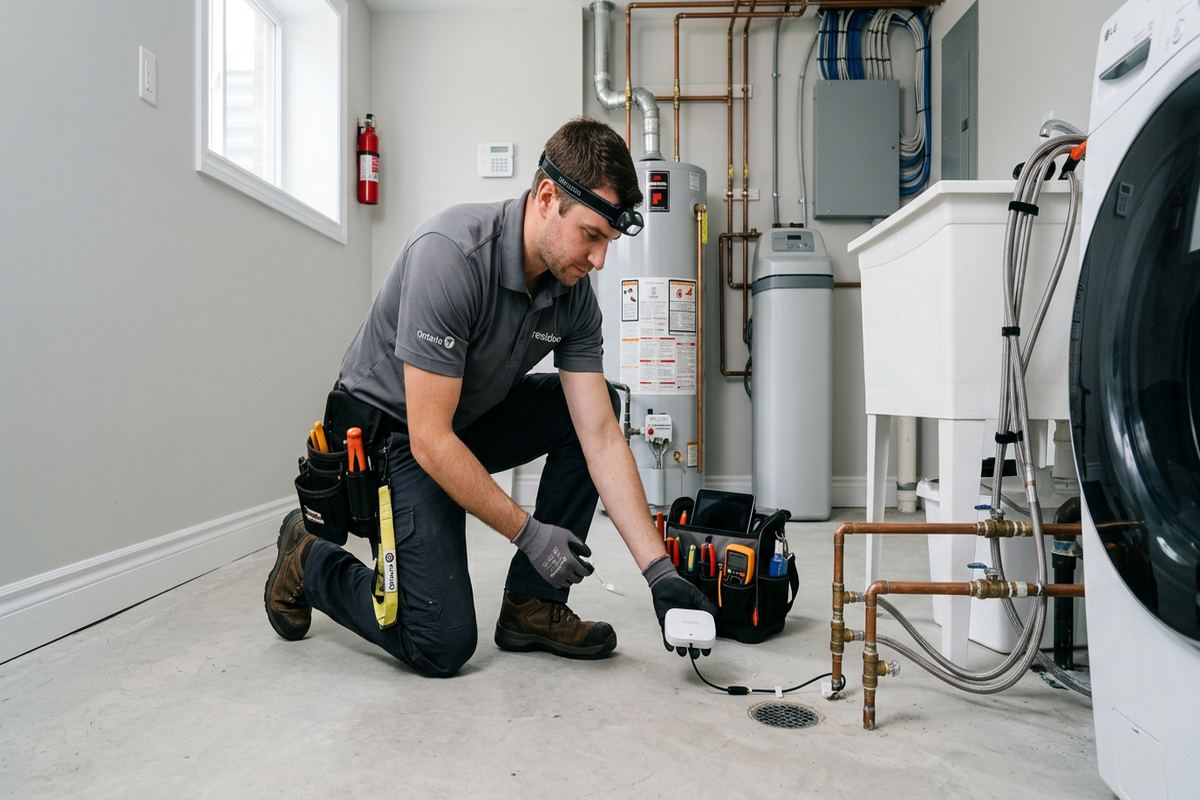
Commercial Alarm Planning for Barrie Properties
A commercial alarm installation starts with the building rather than a standard equipment package. During a site assessment, we review entrances, loading areas, accessible windows, interior circulation, ceiling construction and existing communications. A street-level shop in Downtown Barrie has different exposure from an industrial unit or a professional office in a small plaza. Occupancy schedules, staff access and after-hours activity also influence the design. This process establishes where detection is useful, where false alarms could arise and how employees will arm, disarm and respond to the completed system.
Barrie’s commercial stock includes older masonry premises, newer frame construction, converted buildings and units within multi-tenant plazas. Each type affects cable routing, fastening methods and device placement. Solid masonry may require surface pathways or carefully planned penetrations, while frame construction can provide concealed routes when ceiling and wall cavities are accessible. In leased spaces, proposed work may also require landlord approval. We identify these conditions before preparing a scope so that installation methods, access requirements and expected finishes are clear rather than being decided after work has started.
The written scope covers proposed equipment, cable routes, device placement, exclusions, equipment ownership and warranty. It also records assumptions concerning power, internet service, monitoring interfaces, ceiling access and work controlled by other trades. This is important when a Barrie business occupies only part of a larger property or shares utility rooms and communications infrastructure. Defining responsibilities early helps the owner, tenant, property manager and installer coordinate access. It also creates a practical reference for reviewing changes before extra devices or altered routes are incorporated into the installation.
- Review doors, windows and after-hours access points
- Identify practical cable routes and equipment locations
- Confirm landlord or condominium approval requirements
- Document exclusions, ownership and warranty terms
Choosing Detection Devices in Barrie
Effective intrusion detection normally combines several device types instead of relying on one layer. Door contacts identify openings, motion detectors cover selected interior areas and glass-break sensors may support exposed glazed sections. Overhead doors, stockrooms, cash-handling areas and internal doors can require separate consideration. Device selection depends on room geometry, environmental conditions and how staff use the space after hours. In Barrie plazas and commercial strips, neighbouring units, shared corridors and rear service lanes may also affect the system layout. The objective is useful coverage without making routine opening, closing or cleaning unnecessarily difficult.
Cold entrances and loading areas require particular attention because rapid temperature changes, drafts and seasonal moisture can affect unsuitable equipment. Barrie winters also bring snow, road salt and wet footwear into vestibules, while freeze-thaw cycles can stress exterior penetrations and exposed mounting points. We choose locations that reduce direct exposure and avoid placing standard indoor devices where environmental ratings are needed. Exterior sirens, contacts or other components must be mounted on suitable surfaces, with penetrations sealed according to the wall assembly rather than covered with a temporary general-purpose sealant.
Operational needs shape zoning as much as the floor plan. A business may want perimeter doors armed while authorized staff remain in an office, or a warehouse area separated from a front showroom. Cleaning crews and managers may need different permissions, while rarely used storage rooms can have distinct schedules. We discuss these patterns before programming zones and users. For businesses in Holly, Painswick or Innis-Shore, this can be especially useful where newer mixed commercial areas combine public-facing operations, service doors and staff-only rooms within one compact unit.
- Door and overhead-door contact options
- Interior motion and glass-break detection
- Separate zones for public and restricted areas
- Environmental review for cold or damp locations
Wired, Wireless and Hybrid Alarm Options
Wired alarm devices provide stable connections and are often practical during renovations, open-ceiling work or construction. Continuous labelled cable runs make future tracing and service more manageable, particularly in larger offices and industrial units. Existing finished spaces may limit concealed access, however, and opening walls is not always reasonable. Before recommending wired devices, we inspect ceiling conditions, fire separations, structural obstacles and pathways shared with other low-voltage systems. Cable is supported and routed with attention to the building construction, rather than draped over ceilings or attached without regard to serviceability.
Wireless devices can reduce disruption where heritage finishes, masonry walls or tenant restrictions make new cabling difficult. They still require careful planning for signal paths, battery maintenance, radio interference and placement. Dense construction, metal shelving, mechanical rooms and long distances can reduce reliable communication. Downtown Barrie premises in older buildings may present several of these conditions at once. A site review helps determine whether wireless detection is appropriate throughout the property or only in selected areas where installing cable would create disproportionate damage or require approvals that are unlikely to be granted.
A hybrid system can retain useful wired zones while adding wireless devices for an expansion, renovated room or difficult location. This approach may suit a Barrie business taking over a unit with existing alarm wiring whose condition and documentation are incomplete. Existing cables are not assumed to be reusable merely because they are present. They must be identified, inspected and tested as part of the project. The final design distinguishes retained infrastructure from newly installed work, and the as-built record notes device types, zone assignments and relevant cable information for future reference.
- Wired devices for accessible cable pathways
- Wireless options for difficult finished areas
- Hybrid designs for expansions and retrofits
- Existing wiring assessed before reuse
Barrie, Ontario
Commercial alarm system installation in Barrie, scoped in writing first
Book a site assessment and get equipment, routes, exclusions, and warranty on paper before anything is installed.
Alarm Communications and Monitoring Readiness
An alarm panel needs a defined method for reporting events, whether it connects through internet, cellular service or another supported communications path. The appropriate arrangement depends on the selected equipment, available services and the customer’s monitoring plan. We review where network equipment is located, whether the panel has suitable power and how communications cabling can be protected. An internet connection alone does not guarantee alarm reporting if routers are switched off, moved or placed on unreliable circuits. These dependencies are explained so the customer understands what remains necessary after installation.
Commercial users should decide who receives alarm, trouble and supervisory notifications and what those recipients are expected to do. A notification to an owner’s phone is not the same as professional monitoring, and monitoring arrangements can vary by provider and service terms. UnifiedLink does not treat these choices as interchangeable. During planning, we identify the intended workflow, compatibility requirements and information needed by the relevant provider. Barrie businesses with several managers or changing shifts should also maintain an up-to-date contact list instead of relying on credentials or telephone numbers belonging to former employees.
Network-connected alarm equipment must be handed over under customer-controlled accounts. Configuration is completed on site using the customer’s own credentials, rather than leaving the system tied to an installer’s personal account. Where remote applications are part of the selected platform, authorized users can be established and basic operation reviewed during handover. Account recovery details, notification settings and administrative permissions deserve the same care as physical keys. These controls help the business preserve access when managers, tenants or service providers change, while reducing dependence on undocumented logins that cannot be recovered later.
- Internet and cellular communication options reviewed
- Notification roles defined before programming
- Customer-controlled administrative credentials
- Monitoring compatibility confirmed in the scope
Barrie Installation and Cable Routing
Installation methods vary with wall construction, ceiling access and the rules governing the property. Masonry exterior walls may need different anchors and penetrations from wood or light-gauge frame partitions. Suspended ceilings can offer pathways, but cables still require proper support and separation from electrical conductors. In finished offices, routes may use discreet surface raceway when concealed installation is impractical. We agree on visible pathways before work proceeds. This keeps the Barrie customer informed about where devices, panels, keypads and cabling will appear once furniture and ceiling tiles are returned to position.
Exterior work is planned around water control and long-term movement. A hole through brick veneer, concrete, siding or a framed wall must respect the assembly and avoid directing moisture inward. Barrie’s repeated freezing and thawing can enlarge poorly sealed gaps and loosen unsuitable fasteners. Device orientation, drip paths, compatible sealants and cable entry points are considered together. Outdoor-rated equipment is used where the design calls for exterior placement, but an environmental rating does not eliminate the need for correct mounting. Accessible cables may also require mechanical protection against damage or tampering.
Occupied commercial premises need an installation sequence that accounts for customers, staff, stock and normal operations. We establish access to electrical rooms, communications spaces, ceilings and tenant areas before arriving. Dust-producing work, ladders and temporary obstructions may need to be scheduled around public hours. In multi-unit plazas, some pathways or utility spaces may be controlled by the landlord rather than the tenant. One accountable contractor coordinates the alarm installation scope, reducing uncertainty over who is responsible for cable placement, device mounting, configuration, testing and the final records.
- Continuous, labelled low-voltage cable runs
- Routes matched to masonry or frame construction
- Exterior penetrations mounted and sealed correctly
- Work sequence coordinated with occupied premises
Programming, Testing and Barrie Handover
Once devices are installed, the system is programmed around the agreed zones, entry delays, user permissions and operating schedule. Names should describe actual locations rather than generic numbers, allowing users to understand an event without consulting a separate sketch. We test door contacts, motion coverage, audible devices, keypads, power conditions and configured communications within the project scope. Testing also checks that doors close consistently and that movable furnishings have not blocked a sensor’s field. Any site condition preventing the intended operation is identified for correction or documented as an exclusion.
Handover focuses on tasks that staff will perform routinely. Authorized users are shown how to arm and disarm, review common status messages, acknowledge relevant alerts and identify which zone requires attention. Managers should know how user access is added or removed without sharing one code across the whole workplace. For a Barrie shop, office or industrial unit, opening and closing procedures can then be incorporated into internal policies. Training does not replace the equipment documentation, but it gives the people responsible for the premises a practical starting point for daily use.
The customer receives an as-built record reflecting the completed installation, along with the agreed equipment and warranty information. The record identifies device locations, zone descriptions and other relevant system details captured within the scope. Customer-owned credentials are confirmed before completion so administrative access does not remain dependent on the installer. If work changed because a route was inaccessible or an approved device location moved, the final record should show the installed condition. This documentation supports future troubleshooting, renovations, tenant changes and system additions across the life of the Barrie property.
- Zones named for actual protected areas
- Every installed device function-tested
- Staff shown routine system operation
- As-built record supplied at handover
Retrofits, Expansions and Tenant Changes
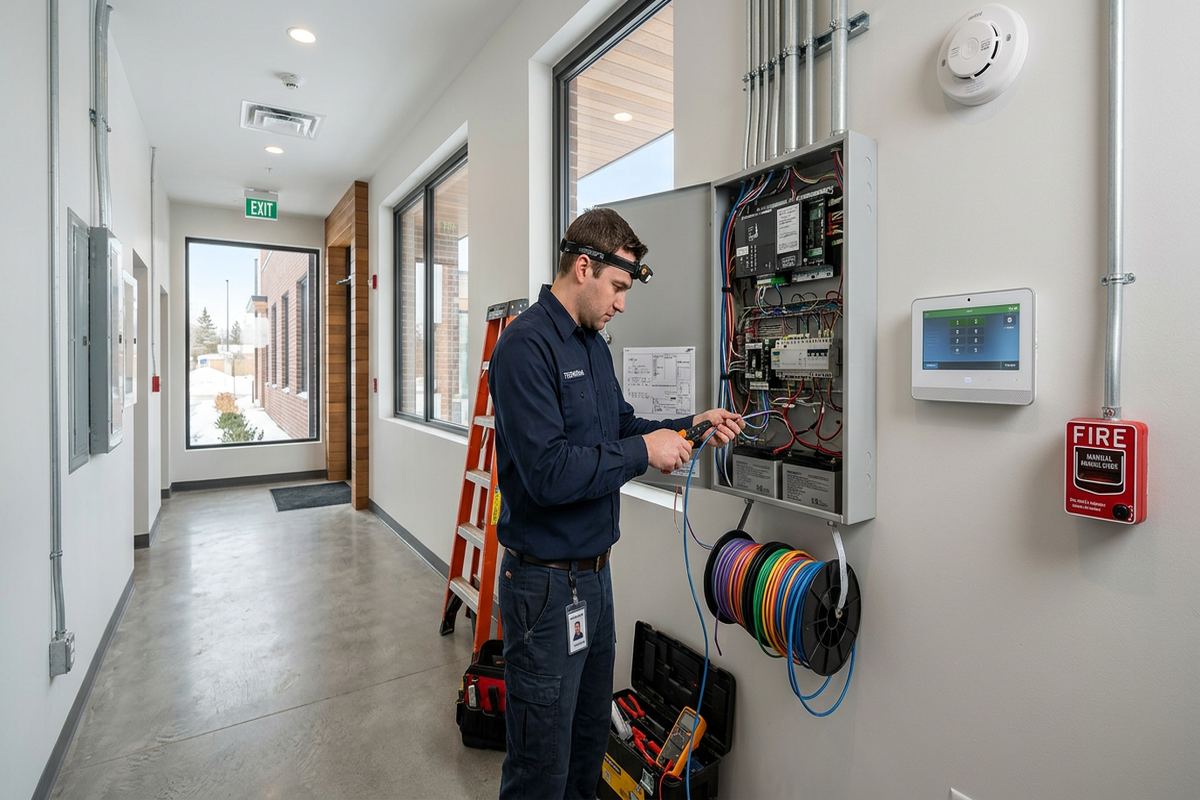
Businesses often inherit alarm equipment when they lease or purchase a property, but the panel label does not reveal whether every device works or who controls the account. A retrofit begins by identifying accessible components, reviewing wiring and checking which devices are compatible with the proposed direction. Unsupported equipment, abandoned cables and undocumented zones may need to be separated from reusable infrastructure. In Allandale or Downtown Barrie, older premises may also have several generations of alterations. A clear scope prevents unknown existing work from being silently treated as part of a new installation warranty.
Expansions can follow changes to walls, inventory, staffing or business use. Adding a stockroom, dividing an office or enclosing a service counter can alter motion coverage and create new doors requiring detection. Before adding devices, we review panel capacity, power requirements, communications and the effect on existing zones. A commercial unit in Ardagh Bluffs or the growing south end may be relatively new yet still need changes after tenant improvements. New construction does not guarantee that the original alarm layout suits the incoming business or its operating hours.
Tenants and condominium owners should obtain required approvals before cables are routed through common areas or devices are mounted on shared exterior elements. Landlords may specify pathways, restoration standards or approved access times, while property managers may control telecommunications and electrical rooms. The written scope can identify these dependencies, but the customer remains responsible for securing permissions unless another arrangement is expressly documented. Addressing approvals early avoids redesign after equipment has been ordered or installation has begun. It also clarifies ownership if alarm components will remain with the unit when a tenancy ends.
- Existing devices and cables identified
- Panel capacity checked before expansion
- Tenant improvements reflected in revised zoning
- Property approvals confirmed before shared-area work
Requesting a Commercial Alarm Assessment in Barrie
To prepare for an assessment, gather any floor plans, lease conditions, existing alarm records and known monitoring requirements. Note normal opening hours, after-hours staffing, delivery patterns and areas holding sensitive equipment or stock. It is also useful to identify recurring problems such as doors left unsecured, unreliable contacts or user codes shared among employees. During the visit, access may be needed above ceilings and inside communications, electrical or utility rooms. Accurate information allows the proposed design to address actual operations rather than assumptions based only on the visible floor plan.
Pricing follows the site assessment because cable access, construction type and system requirements cannot be confirmed from an address alone. Assessment timing depends on the requested service and travel distance. Requests sent during business hours are answered the same day, while after-hours requests are answered the next business day. After the Barrie property has been reviewed, the written scope sets out equipment, routes, locations, exclusions, ownership and warranty. Customers can then compare the proposed work on a defined basis and request revisions before authorizing installation.
A well-scoped alarm project should leave the business able to operate and administer its system without ambiguity. The installed devices must correspond to the documented zones, cables should be labelled, and account control should remain with the customer. Building conditions, approvals and communications dependencies need to be recorded rather than left as verbal assumptions. Whether the property is a small plaza unit, a commercial strip location or an industrial space elsewhere in Barrie and Simcoe County, the same process provides a traceable path from assessment through installation, configuration, testing and handover.
- Provide plans and existing alarm records
- Identify operating hours and restricted areas
- Receive a written scope after assessment
- Review proposed work before authorization
Barrie neighbourhoods we cover
- Downtown Barrie
- Ardagh Bluffs
- Painswick
- Holly
- Allandale
- Innis-Shore
Commercial alarm system installation in Barrie — common questions
Do you assess the Barrie property before providing pricing?
Yes. UnifiedLink completes a site assessment before pricing because construction, cable access, device requirements and communications vary between properties. Timing depends on the service and travel distance. Requests received during business hours are answered the same day; after-hours requests are answered the next business day. The resulting written scope defines the proposed installation and relevant exclusions.
Can you install an alarm in a leased commercial unit?
Yes, provided the required landlord or property-management approvals are in place. Barrie plaza and multi-tenant properties may restrict exterior mounting, common-area cabling, utility-room access or visible raceway. We identify anticipated routes and mounting locations in the scope. The tenant should confirm permissions before installation unless responsibility for obtaining them is specifically assigned in writing.
Should my Barrie business use wired or wireless alarm devices?
The choice depends on the building and operating requirements. Wired devices are practical where cable pathways are accessible, while wireless devices may reduce disruption in finished or masonry spaces. Hybrid systems can suit retrofits and additions. During the Barrie assessment, we consider wall construction, ceiling access, distances, radio conditions, maintenance needs and whether existing cabling is suitable for reuse.
Can you reuse the alarm equipment already in my building?
Existing equipment and wiring may be reusable, but they must first be identified, inspected and tested. Compatibility, condition, panel capacity and account ownership all matter. Older Barrie commercial buildings can contain abandoned cables or devices from several renovations. The written scope distinguishes retained components from new work and states any existing infrastructure excluded from the new installation warranty.
How are outdoor devices protected from Barrie weather?
Outdoor equipment must be suitable for its environment and mounted correctly. We consider snow, seasonal moisture, freeze-thaw movement, wall construction and exposure when selecting locations. Penetrations through masonry, siding or frame walls are sealed using methods appropriate to the assembly. Cables may also need mechanical protection where they are exposed to impact, access or tampering.
What do we receive when the alarm installation is complete?
Handover includes on-site configuration, functional testing, operating guidance and an as-built record covering the completed scope. Zones are identified by meaningful locations, and the customer receives control using its own credentials. Equipment ownership and warranty information are documented. Barrie customers can use these records when training staff, changing tenants, planning renovations or arranging future system service.
Coverage in Barrie is confirmed against the address before we quote. See everything we install in Barrie or the province-wide commercial alarm system installation page.