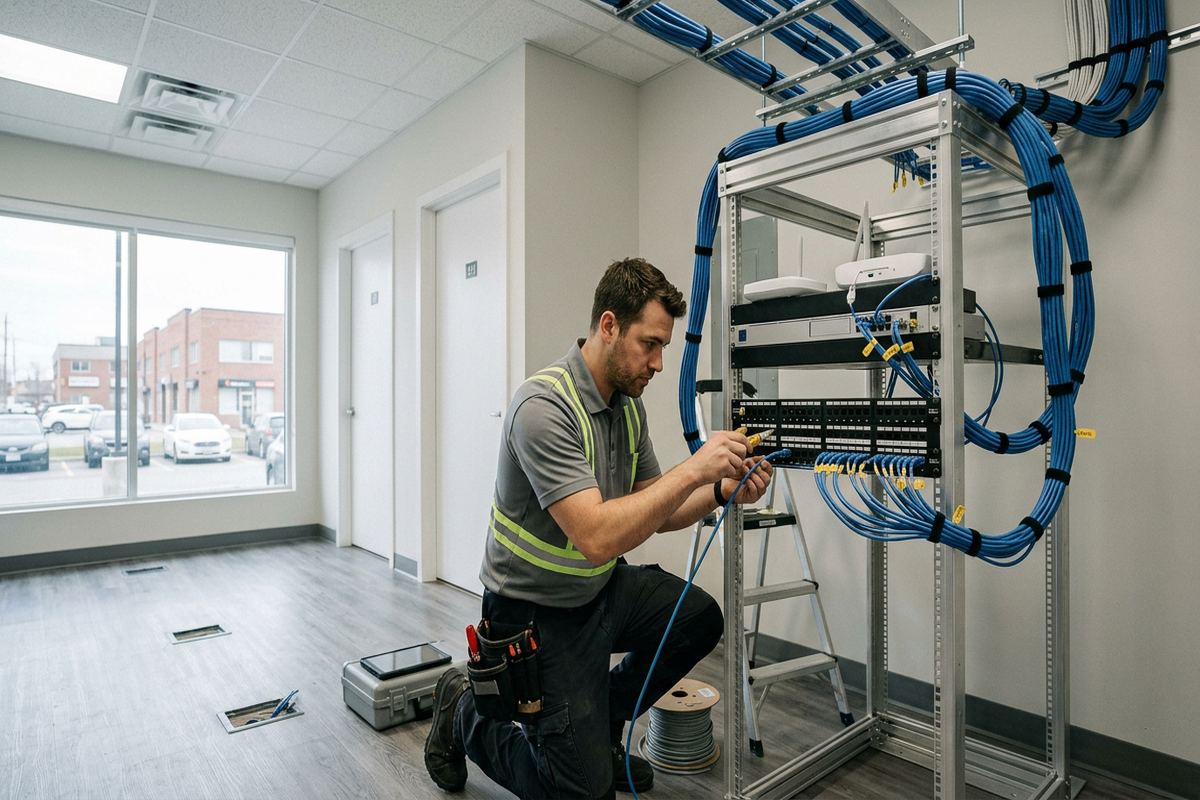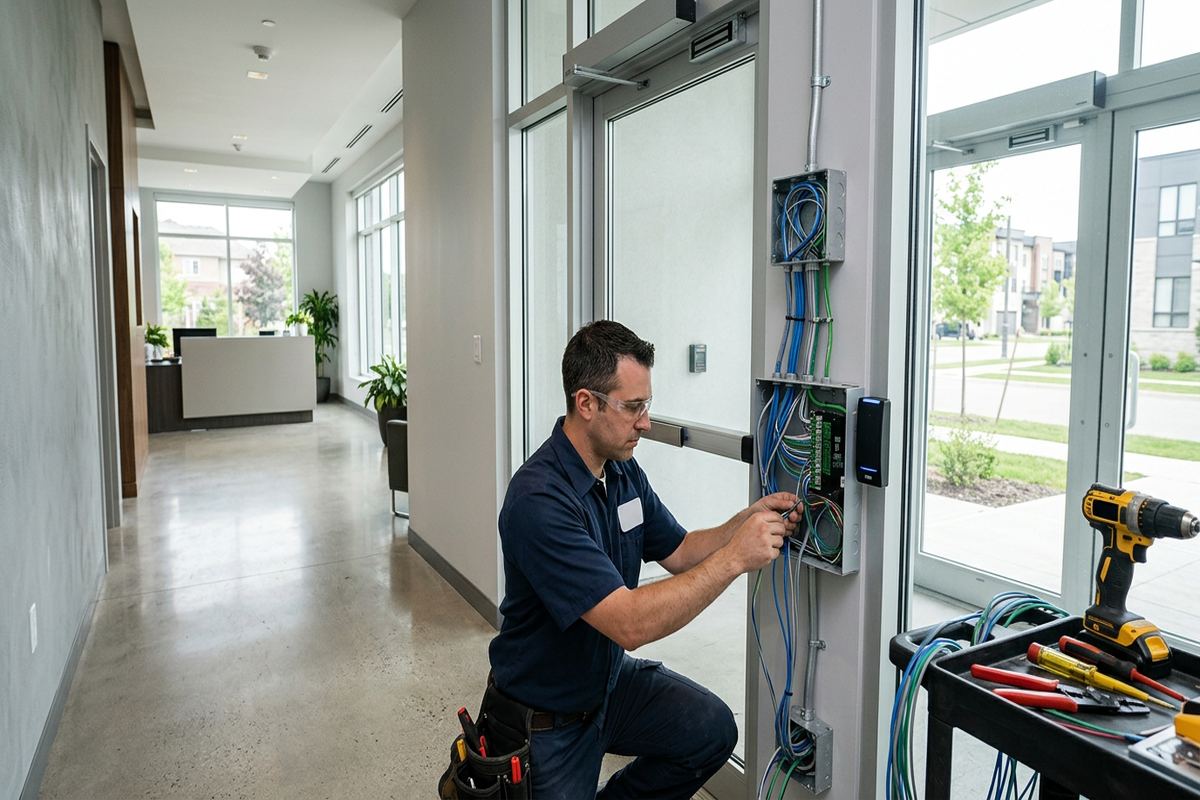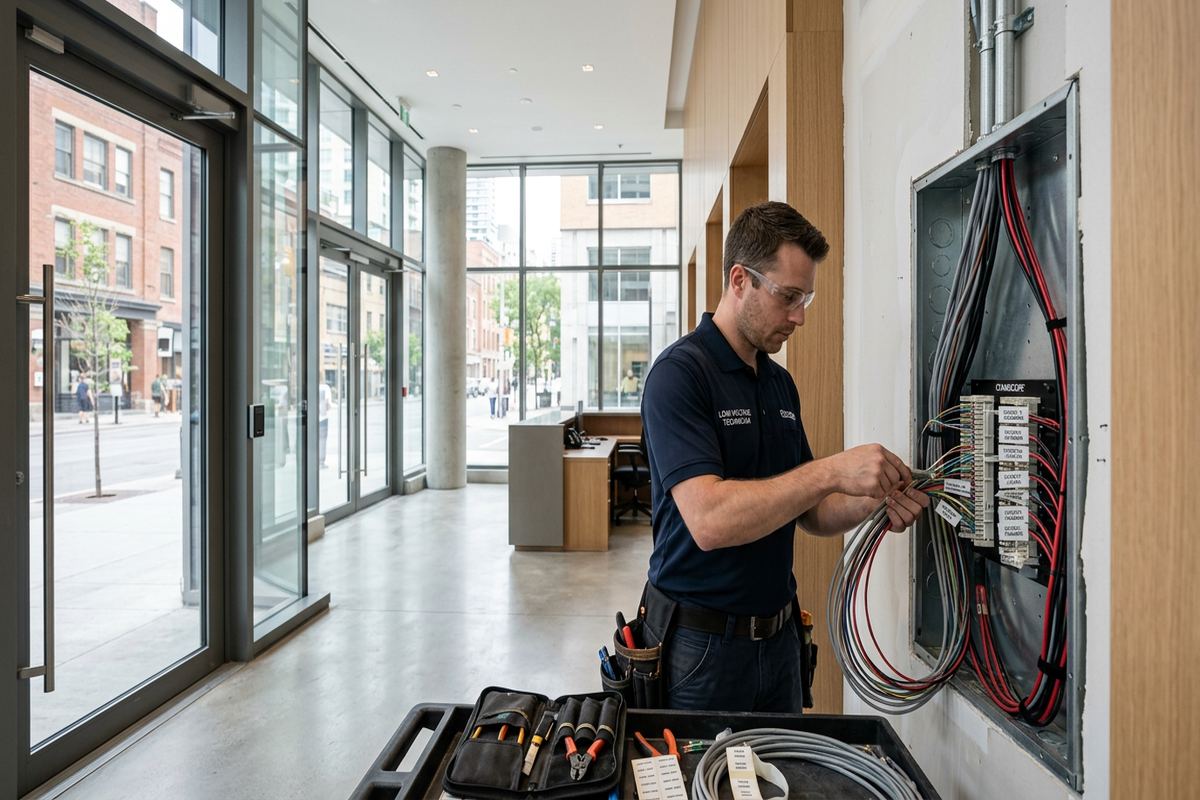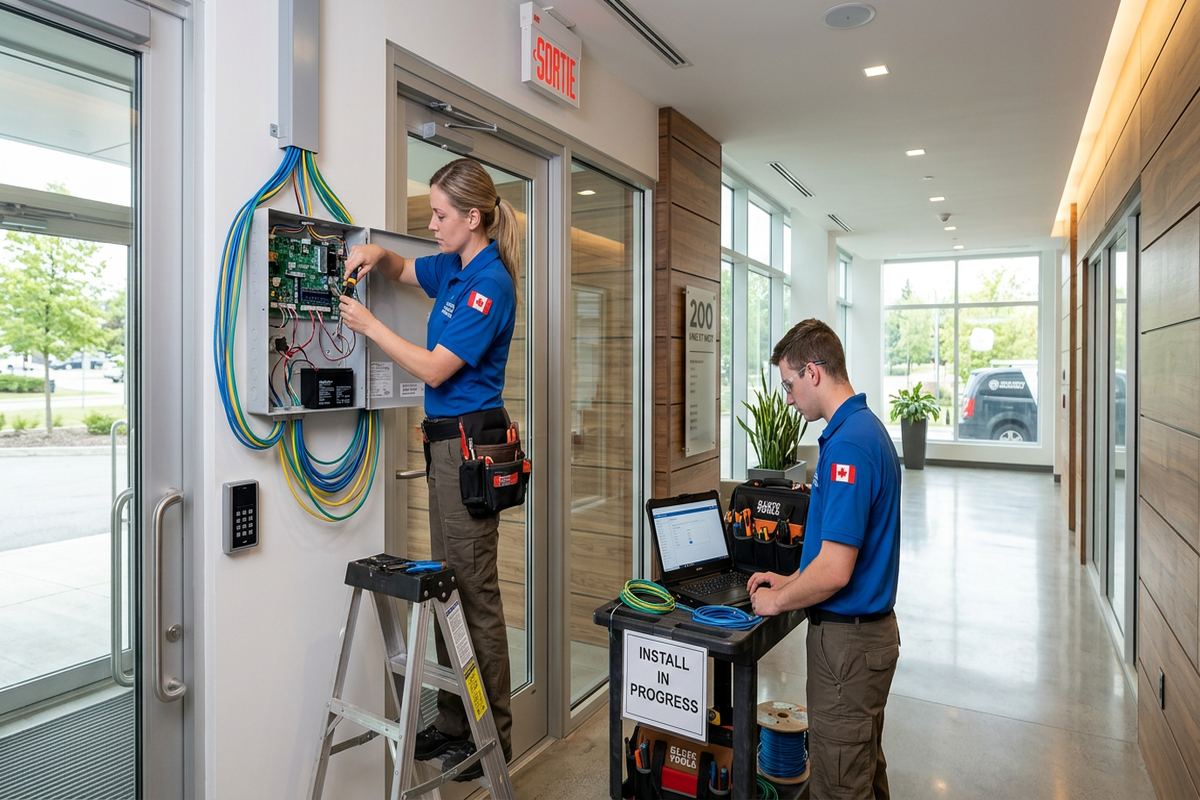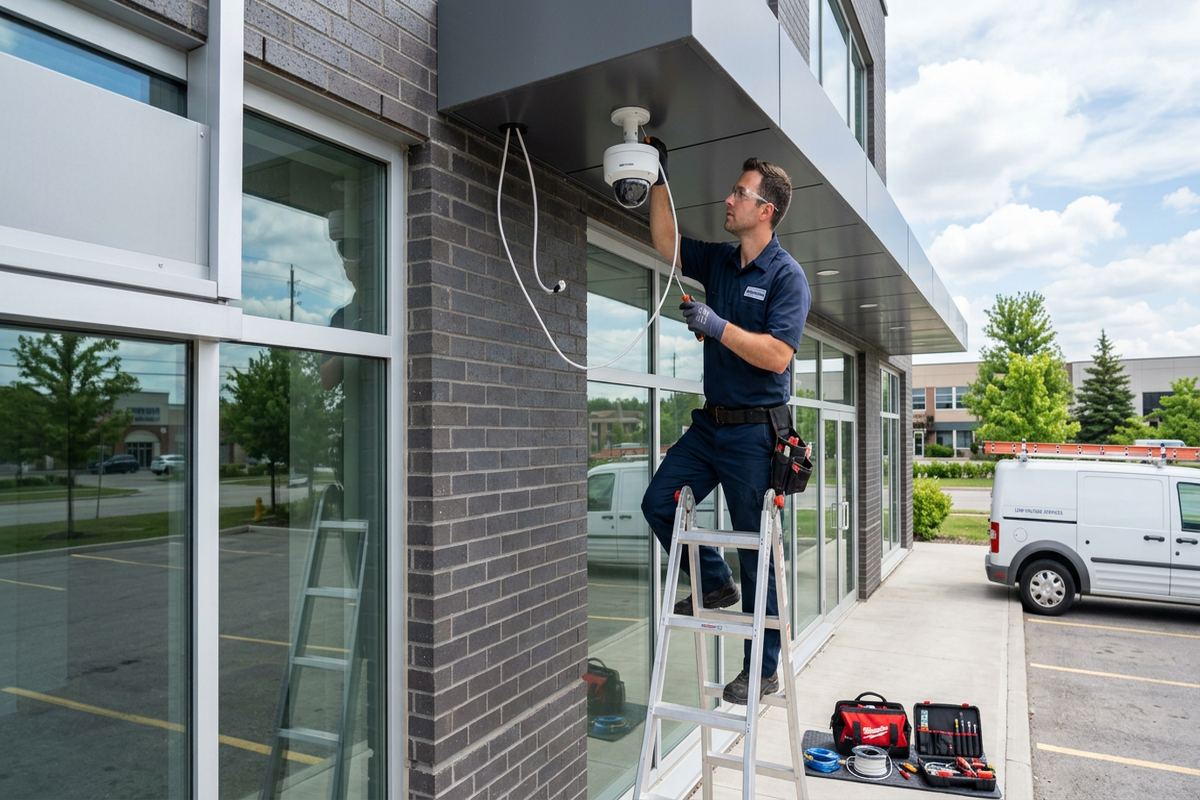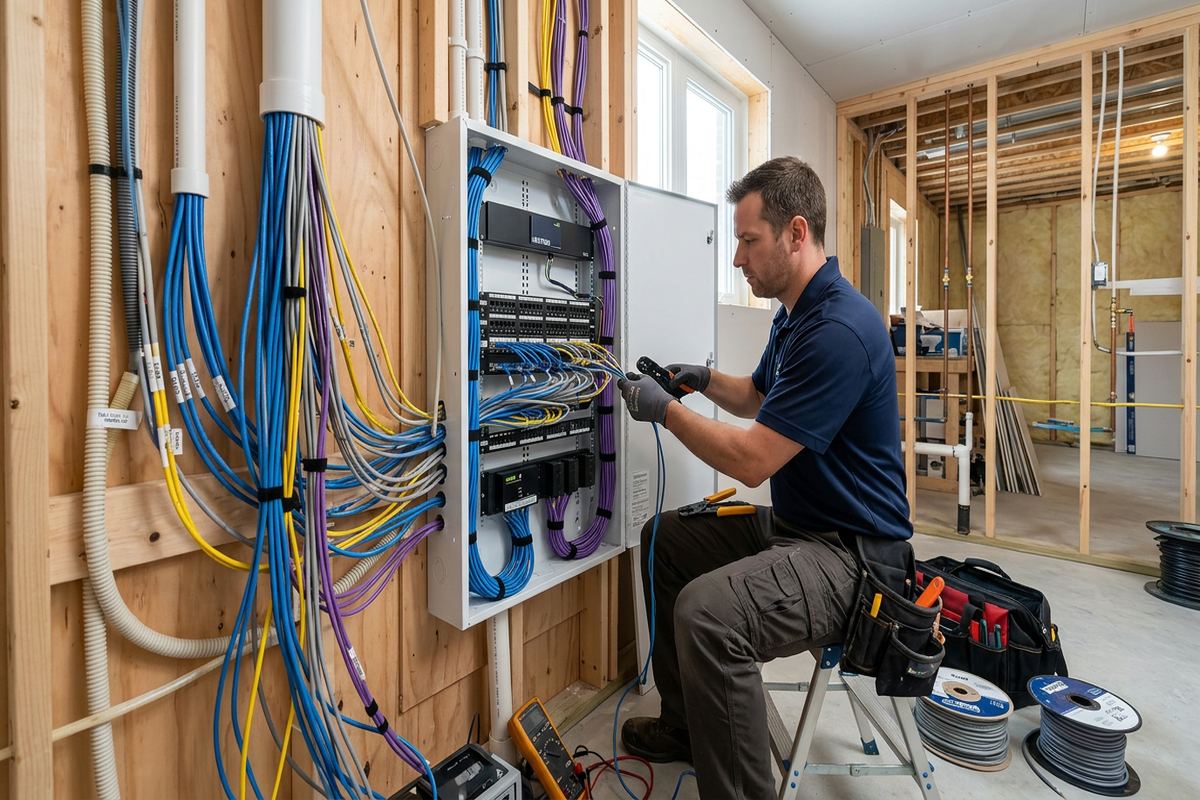
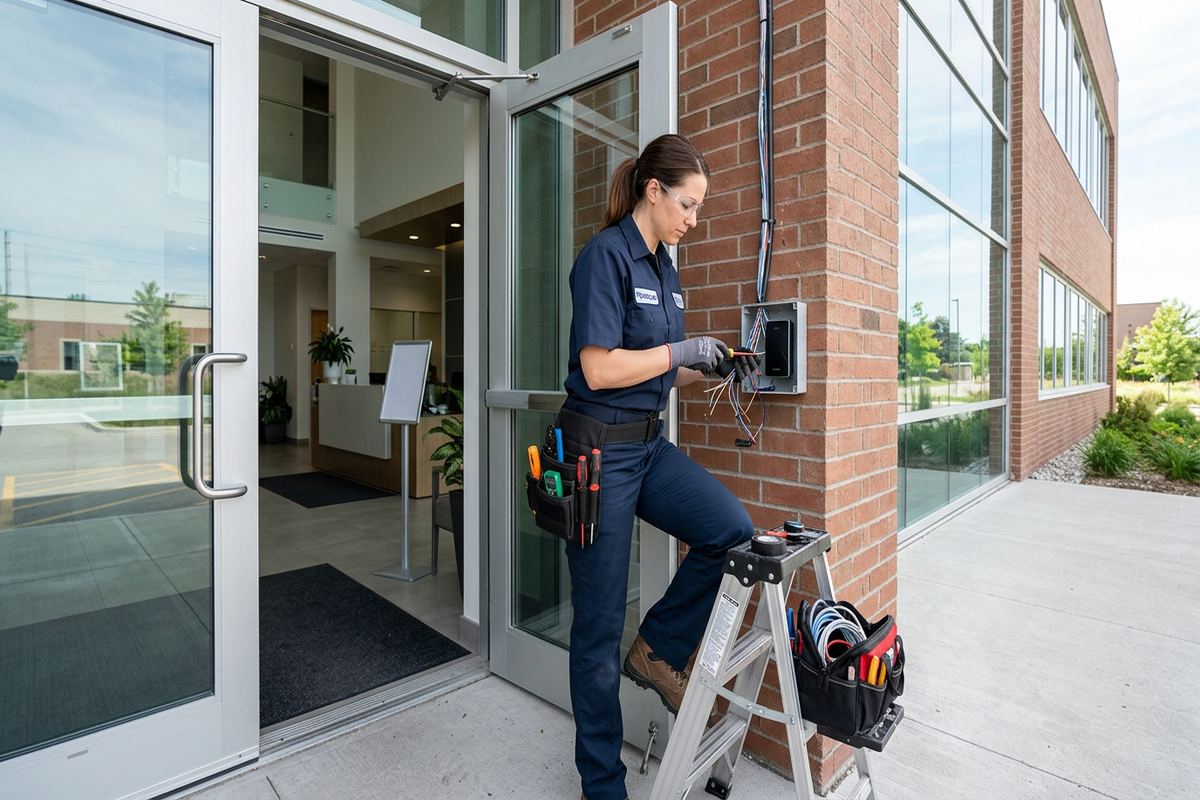
UnifiedLink installs commercial access control systems for offices, storefronts, condominium common areas, warehouses and other properties in Barrie. We assess each opening, plan the cabling and locking hardware, configure permissions on site and provide a documented handover. The result is a practical system that gives authorized people reliable entry while helping managers control keys, schedules and access records.
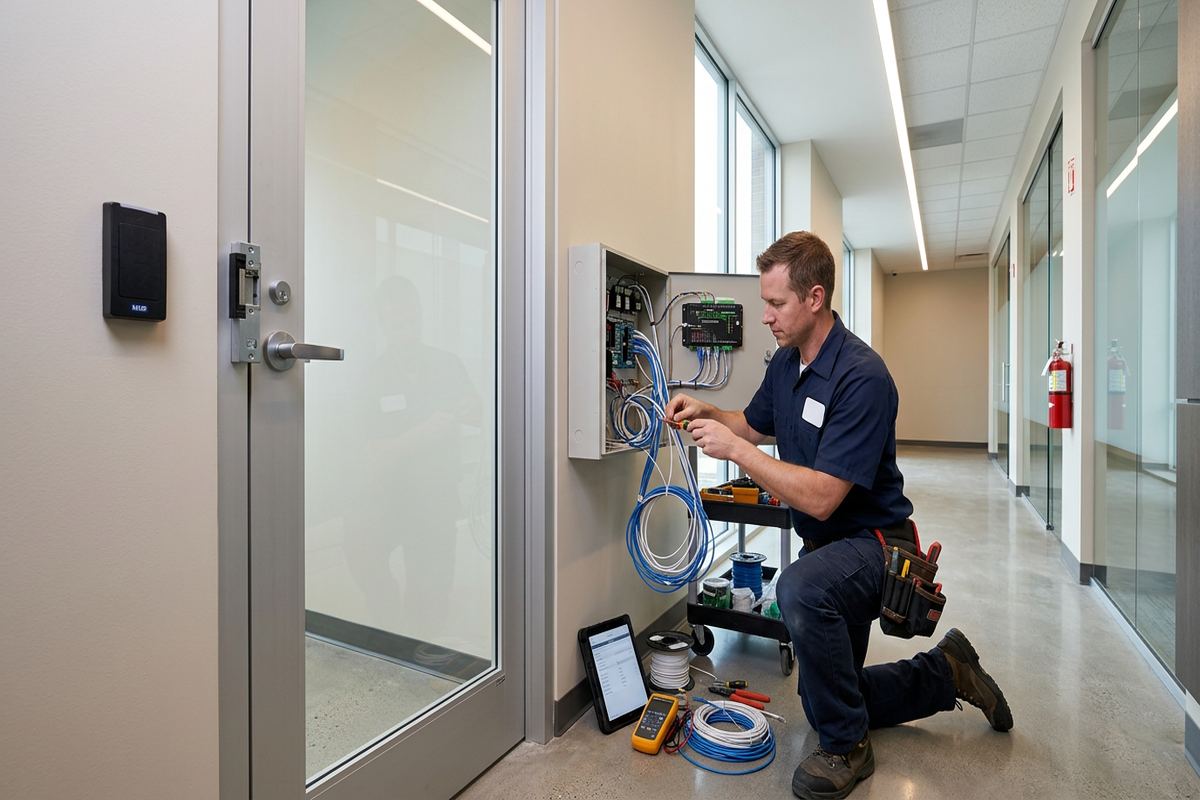
Commercial Access Control Planning in Barrie
A commercial access control project starts with the doors, users and operating rules rather than a product list. During a Barrie site assessment, we review public entrances, employee doors, service openings, interior restricted areas and emergency exits. We identify how staff, contractors, tenants and visitors should move through the property at different times. Existing locks, frames, door closers, power supplies and network connections are also checked. This process establishes which openings need electronic control, which should remain mechanical and where intercom, video or alarm integration may support daily operations without adding unnecessary complexity.
Barrie properties vary from older Downtown Barrie buildings to newer commercial spaces near Painswick and Innis-Shore. An older masonry storefront may have limited pathways above ceilings, altered door frames or several generations of previous wiring. Newer frame construction can offer cleaner routes but may still require coordination with finished walls, fire separations and landlord standards. We trace practical cable paths before preparing a scope. Where concealed routes are not reasonable, surface raceway, conduit or another protected method can be discussed and shown clearly in the proposed work.
The written scope identifies the equipment, controlled openings, reader locations, proposed cable routes and any work expected from locksmiths, electricians, door suppliers or network administrators. It also records exclusions, equipment ownership and warranty details so responsibilities remain clear. Pricing follows the site assessment because access control depends on door condition, construction, pathway length and integration requirements. Assessment timing depends on the service and travel distance. Requests sent during business hours are answered the same day, while after-hours requests are answered the next business day.
- Review every proposed controlled opening
- Identify user groups and access schedules
- Check locks, frames, closers and exit hardware
- Plan cable, power and network routes
- Document exclusions and related trades
Selecting Readers, Credentials and Controllers
Credential selection affects security, administration and the way people use the building each day. Cards and fobs provide a familiar option for offices, shops and industrial units, while mobile credentials may suit organizations prepared to manage compatible phones and applications. Keypads can support specific low-volume uses but shared codes reduce individual accountability. We discuss lost-credential handling, visitor access, staff turnover and the need for access records. The selected reader and controller platform should fit current requirements without forcing the property into features that will not be managed or maintained.
Controller location matters because it affects cable distance, service access and physical protection. Panels are normally placed in a secure, dry area with suitable power and network availability, not beside the public door they control. Multi-tenant plazas may require coordination with a landlord’s communications room, while an owner-occupied building may have a dedicated electrical or IT space. We consider how future doors could be added and whether separate buildings need independent control. Continuous labelled cable runs make troubleshooting clearer and avoid undocumented splices hidden above ceilings or inside finished walls.
Access permissions are built around roles rather than issuing every person unrestricted entry. A Barrie medical office might separate reception, clinical areas, records and staff entrances, while a warehouse may distinguish office employees, drivers, supervisors and after-hours contractors. Schedules can automatically restrict selected doors outside approved periods, and temporary credentials can expire without requiring a physical key return. Before handover, designated administrators should understand how to add and remove users, review events and respond to a lost card. Administrative access is provided through the customer’s own credentials.
- Card, fob, mobile and keypad options
- Secure controller and power-supply placement
- Role-based permissions and schedules
- Temporary access for visitors or contractors
- Expandable layouts for additional doors
Door Hardware for Barrie Commercial Properties
Electronic access control cannot correct a door that binds, drags or fails to latch consistently. Each opening is reviewed as a complete assembly, including the frame, hinges, closer, latch, threshold and existing exit hardware. Depending on the door and code requirements, the controlled device may be an electric strike, electrified lock, magnetic lock or another suitable component. Hardware selection must preserve safe egress and work with the door’s normal operation. Where adjustment, replacement or specialized locksmith work is required, that dependency is identified before installation rather than concealed within the electronics scope.
Freeze-thaw cycles, snow, road salt and wind-driven moisture place added demands on exterior openings in Barrie. Readers and request devices need an appropriate environmental rating, secure mounting and carefully sealed penetrations. Cables entering through masonry, siding or metal frames must be protected from sharp edges and water paths. A door that shifts seasonally may stop aligning with its strike even when the electronics remain functional. For that reason, exterior installation planning includes door condition, drainage, weather exposure and the ability to service components without damaging finished surfaces.
Construction materials influence both mounting methods and labour. Solid masonry around Downtown Barrie storefronts may require suitable anchors, careful drilling and protected surface pathways. Frame construction in south-end subdivisions or newer mixed-use properties can permit concealed cable routes, but vapour barriers, insulation and fire-rated assemblies must not be compromised. Hollow metal frames can carry wiring when their internal condition and preparation allow it. Glass entrances, aluminum storefront systems and heritage finishes need different approaches. The scope explains visible hardware, pathway choices and any restoration that falls outside access control work.
- Electric strikes and electrified locking options
- Door alignment and latching checks
- Weather-resistant reader installation
- Sealed exterior cable penetrations
- Coordination for specialized door repairs
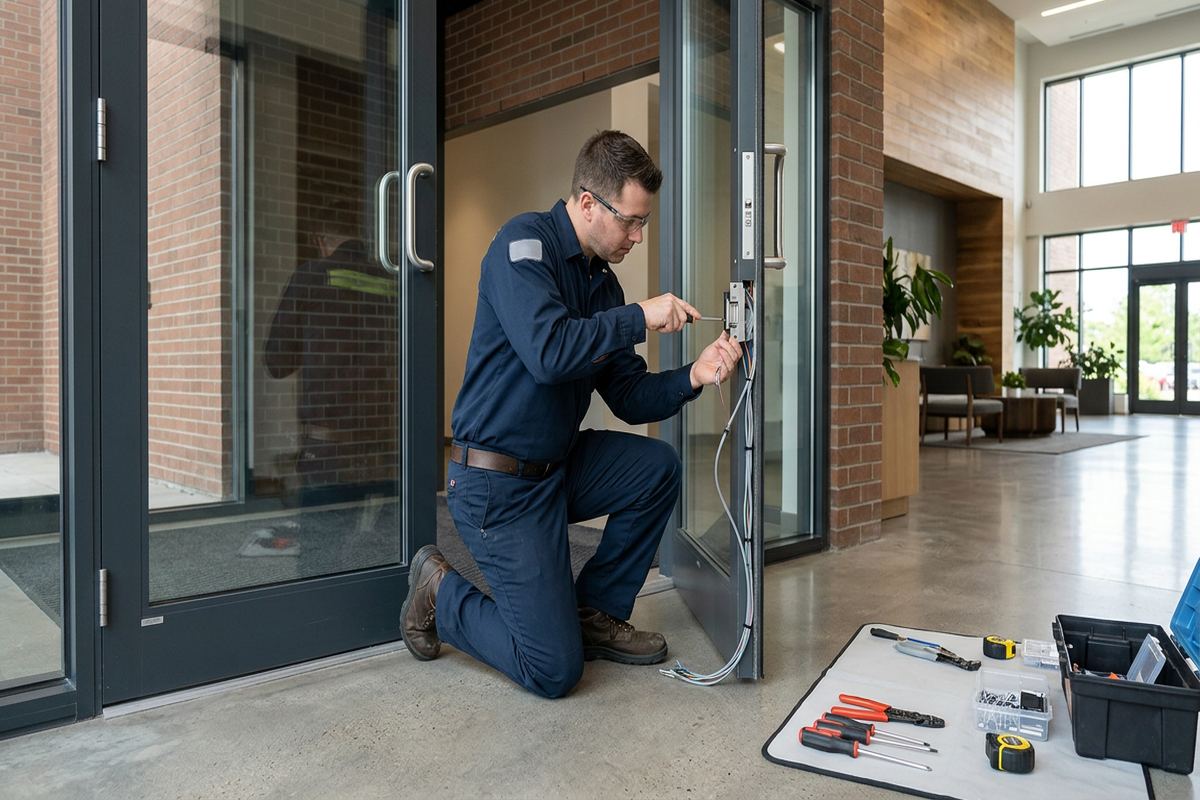
Barrie, Ontario
Commercial access control installation in Barrie, scoped in writing first
Book a site assessment and get equipment, routes, exclusions, and warranty on paper before anything is installed.
Cabling and Power Design in Barrie
Reliable access control depends on cabling that is planned, supported and identifiable. Reader, lock, door-contact and request-to-exit conductors may have different requirements, even when they serve the same opening. We plan routes around accessible ceiling areas, communications spaces and existing pathways while avoiding unsupported cable, unnecessary joints and interference risks. Each installed run is continuous and labelled at both ends. Labels correspond with the controller and as-built record, allowing a future technician or building manager to identify a door circuit without guessing which unmarked cable disappears into a wall.
Power requirements are calculated from the controller, readers, locks and associated devices rather than assumed from the number of doors. Electrified hardware can draw different current during normal operation and activation, and voltage drop becomes important on longer routes. Battery backup may maintain selected functions during a power interruption, subject to the system design and connected load. Fail-safe and fail-secure operation must be chosen deliberately for each opening while maintaining required egress. Any dedicated electrical work is identified for coordination with a qualified electrical contractor where it falls outside the low-voltage installation scope.
Network-connected platforms require early discussion with the customer’s IT contact. We confirm the expected connection method, addressing responsibilities, remote-management approach and any firewall or account requirements. Cloud-managed and locally managed systems have different dependencies, licensing arrangements and ownership considerations. In a Barrie commercial plaza, landlord-controlled internet or shared telecommunications rooms can affect deployment. Industrial units may have limited network coverage near shipping doors or detached spaces. The written scope states what UnifiedLink will configure on site and what must be supplied or approved by the customer’s network administrator.
- Continuous, labelled low-voltage cable runs
- Calculated lock and controller power loads
- Planned battery-backup requirements
- Documented network and account responsibilities
- Coordination with electrical and IT contacts
Integration with Commercial Security Systems
Access control can operate independently, but coordinated systems may give managers a clearer view of events. A door-forced or door-held condition can be associated with nearby video, helping an authorized user review what occurred without searching through unrelated footage. Intrusion alarm integration may support arming rules or controlled entry workflows where compatible equipment and operating procedures allow it. Intercoms can provide visitor communication before a door is released. Integration is planned around specific use cases, interfaces and responsibilities rather than assuming that products from different manufacturers will communicate automatically.
Video placement should show the person using an entrance and the activity around the doorway without relying on the credential reader itself. In small Barrie commercial plazas, exterior lighting, window reflections, deep overhangs and vehicle headlights may influence camera position and image quality. Interior cameras can support reception or shipping-door workflows where appropriate. Any connection between access events and recorded video is tested during configuration. The scope also distinguishes access control equipment from cameras, recording appliances, network storage and monitoring services so ownership and warranty terms remain understandable.
Elevators, automatic door operators, fire alarm interfaces and monitored security systems require careful coordination. These systems may involve specialized contractors, regulated work or manufacturer-specific controls. We identify the intended sequence, available contacts and testing responsibilities before connecting interfaces. A release signal should never be improvised without understanding how the door must behave during an emergency or power loss. Condo boards and commercial landlords may also require drawings, approved device finishes or contractor coordination before work begins. Those approvals remain part of project planning, particularly in shared Barrie properties with common entrances.
- Access events linked with compatible video
- Visitor entry through intercom workflows
- Planned intrusion alarm interfaces
- Coordination with automatic door operators
- Clear testing responsibility for integrations
Installation Across Barrie Building Types
Different businesses need different access patterns even when their doors appear similar. A Downtown Barrie professional office may prioritize a public front entrance, staff-only rooms and scheduled after-hours access. A Holly retail unit may need employee entry at the rear while leaving the customer entrance mechanically operated during business hours. Industrial units often add shipping doors, tool rooms or separated office areas. We map these workflows with the people who manage the property, then assign hardware and permissions to each opening instead of applying one standard arrangement throughout the building.
Multi-tenant properties require agreement on who controls shared doors, owns the equipment and administers credentials. A tenant may be allowed to control its suite but not the building entrance, vestibule or telecommunications room. Landlord approval can also govern drilling, visible raceway, exterior reader style and use of common pathways. Condominium properties may require board or property-manager authorization before devices are mounted in common areas. We document these dependencies early so the installation does not proceed on assumptions that conflict with lease terms, building standards or another party’s security responsibilities.
Renovations introduce practical uncertainties behind finished surfaces. In Allandale or older commercial areas, previous tenants may have abandoned cable, modified frames or covered access points during earlier construction. Newer units around Painswick and Innis-Shore may have open pathways during fit-out, making coordination with the general contractor valuable. We verify accessible conditions during assessment, but hidden obstructions can still affect a route once work begins. If the proposed path must change, the revised approach is discussed before proceeding, including its effect on visible finishes, related trades and the agreed scope.
- Offices, storefronts and industrial units
- Shared-entry planning for multi-tenant buildings
- Landlord and condominium approval support
- Coordination during renovations and fit-outs
- Door-specific workflows instead of templates
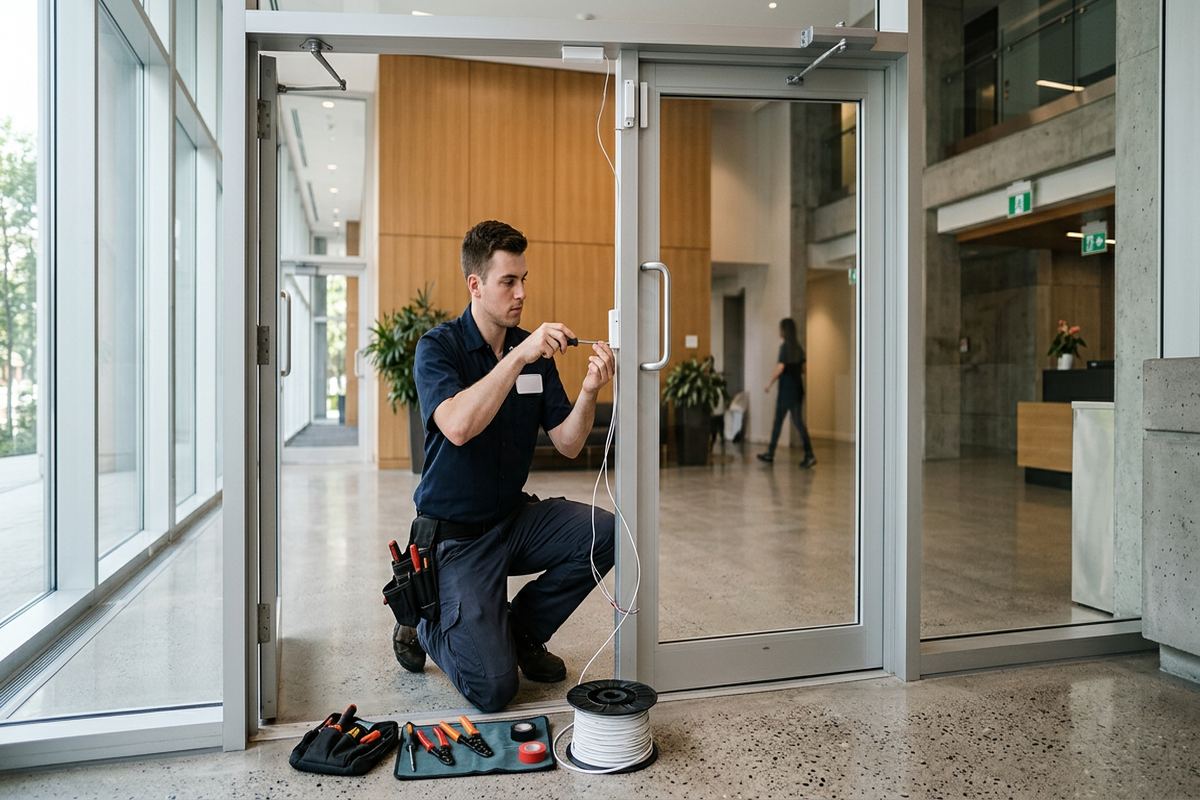
Commissioning and Handover in Barrie
Commissioning confirms that every controlled opening behaves as designed. We test credential reads, lock operation, door contacts, request-to-exit devices, schedules and configured alerts. Doors are checked from both sides to confirm authorized entry and unrestricted egress where required. Network communication, controller status and integrated functions are reviewed on site. Exterior openings receive particular attention because a reader can appear functional while poor latching prevents reliable locking. Any door adjustment or third-party deficiency observed during testing is recorded and assigned rather than being treated as a software problem.
System administration is handed over using accounts owned by the customer, not credentials retained solely by the installer. Designated users receive practical instruction on adding and disabling credentials, changing schedules, reviewing access events and recognizing common door alerts. We also discuss how to handle staff departures, lost cards and temporary contractor access. For organizations with several Barrie locations or departments, administrator permissions can be separated where the platform supports it. The aim is to leave the customer able to manage routine changes without depending on an installer for every user update.
The as-built record identifies controlled doors, device locations, panel placement and labelled cable runs. It records relevant network details, configured interfaces and changes from the proposed route where applicable. Equipment ownership and warranty information remain tied to the written scope and handover documents. This documentation is useful when tenants change, a building is renovated or another door is added later. One accountable contractor manages the low-voltage access control scope, coordinates listed dependencies and provides a clear point of contact instead of leaving the customer to reconcile unrelated installation notes.
- Door-by-door operational testing
- Customer-owned administrative credentials
- Training for routine user management
- As-built device and cable record
- Recorded deficiencies and third-party dependencies
Maintaining Access Control Through Barrie Winters
Access control maintenance should include the mechanical door as well as the electronic system. A reader may continue accepting credentials even when a closer no longer pulls the door fully into the latch. Regular checks should cover door alignment, hinges, closers, strikes, contacts, power supplies and backup batteries where installed. Event logs can reveal repeated door-held or forced-door conditions that point to an operating issue. Staff should report intermittent latching early, especially when it affects an exterior entrance, rather than compensating by propping the door or disabling an alert.
Barrie winters can expose weaknesses in seals, mounting surfaces and door adjustment. Ice at thresholds, expanding materials and accumulated salt can change how an opening closes. Exterior readers should be inspected for physical damage, loose mounting and deteriorated sealant around penetrations. Weather protection does not replace proper building-envelope work, so water entry or damaged cladding may require another trade. Seasonal checks are particularly useful for exposed service doors and entrances facing prevailing weather. Correcting the mechanical cause protects the lock hardware and reduces recurring access events that distract administrators.
Changes in staffing, tenancy and building use should trigger a permissions review. Credentials belonging to former employees or contractors should be disabled, schedules should reflect current operating hours, and administrator accounts should be limited to people who still need them. When a Barrie business expands into another unit or adds an entrance, the existing controller capacity, power and network path should be checked before equipment is ordered. A new door should be documented with the same labels, testing and handover standards as the original installation, preserving a coherent system over time.
- Seasonal exterior-door inspections
- Review of users and administrator accounts
- Backup power and supply checks
- Investigation of repeated door alerts
- Documented additions and system changes
Barrie neighbourhoods we cover
- Downtown Barrie
- Ardagh Bluffs
- Painswick
- Holly
- Allandale
- Innis-Shore
Commercial access control installation in Barrie — common questions
How is a Barrie access control installation priced?
Pricing follows a site assessment because door hardware, construction, cable distance, power and network needs vary. A written scope covers equipment, routes, device placement, exclusions, ownership and warranty. Assessment timing depends on the service and travel distance. Requests made during business hours receive a same-day response; after-hours requests are answered the next business day.
Can you add access control to an older commercial door?
Often, but the door and frame must first be inspected. Older Barrie storefronts may have altered frames, worn closers, masonry surroundings or limited cable pathways. The assessment determines whether an electric strike, electrified lock or another option is practical and whether locksmith, door, electrical or restoration work must be coordinated separately.
Will exterior readers withstand Barrie winters?
Exterior equipment is selected and mounted for its environment, with protected cable entries and sealed penetrations. Barrie freeze-thaw cycles can also affect door alignment, thresholds and latching, which no reader can correct. The complete opening should be maintained seasonally, including hinges, closer, strike, weather seals and any exposed mounting surface.
Do I need landlord or condo approval?
Approval may be required when the work affects a leased unit, common entrance, exterior wall, shared communications room or condominium common element. Barrie landlords and condo boards may specify device finishes, cable pathways or restoration requirements. Confirming authorization before installation helps prevent conflicts over drilling, visible raceway, system ownership and responsibility for shared doors.
Can access control connect with cameras or an intercom?
Compatible access control can be integrated with video, intercoms or intrusion systems for defined workflows, such as reviewing a door event or releasing an entrance after speaking with a visitor. The exact capability depends on product interfaces, network access and system ownership. UnifiedLink documents the intended integration and tests included functions during on-site configuration.
What do we receive when installation is complete?
The Barrie handover includes on-site testing, customer-owned administrative credentials, instruction for routine user management and an as-built record showing controlled doors, devices, panel locations and labelled cable runs. The written scope also records equipment ownership, warranty details and exclusions. Any unresolved door adjustment or third-party dependency is documented for follow-up.
Coverage in Barrie is confirmed against the address before we quote. See everything we install in Barrie or the province-wide commercial access control installation page.