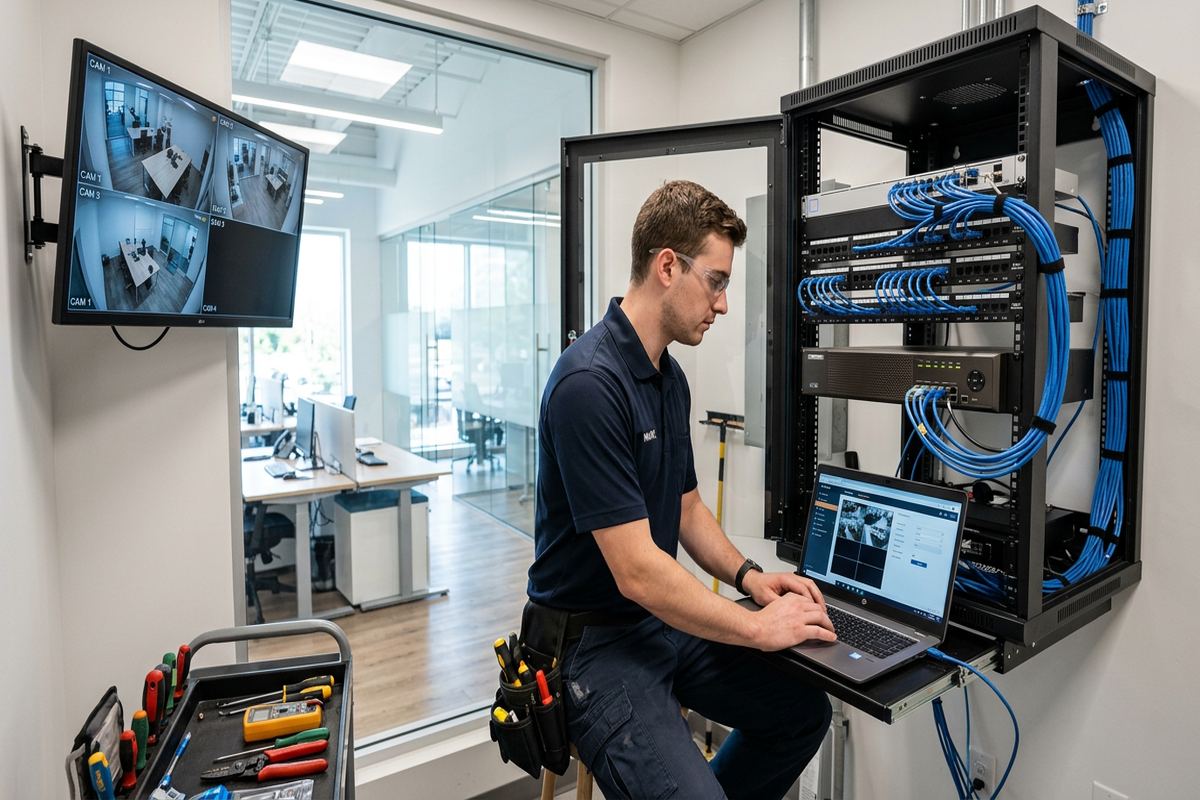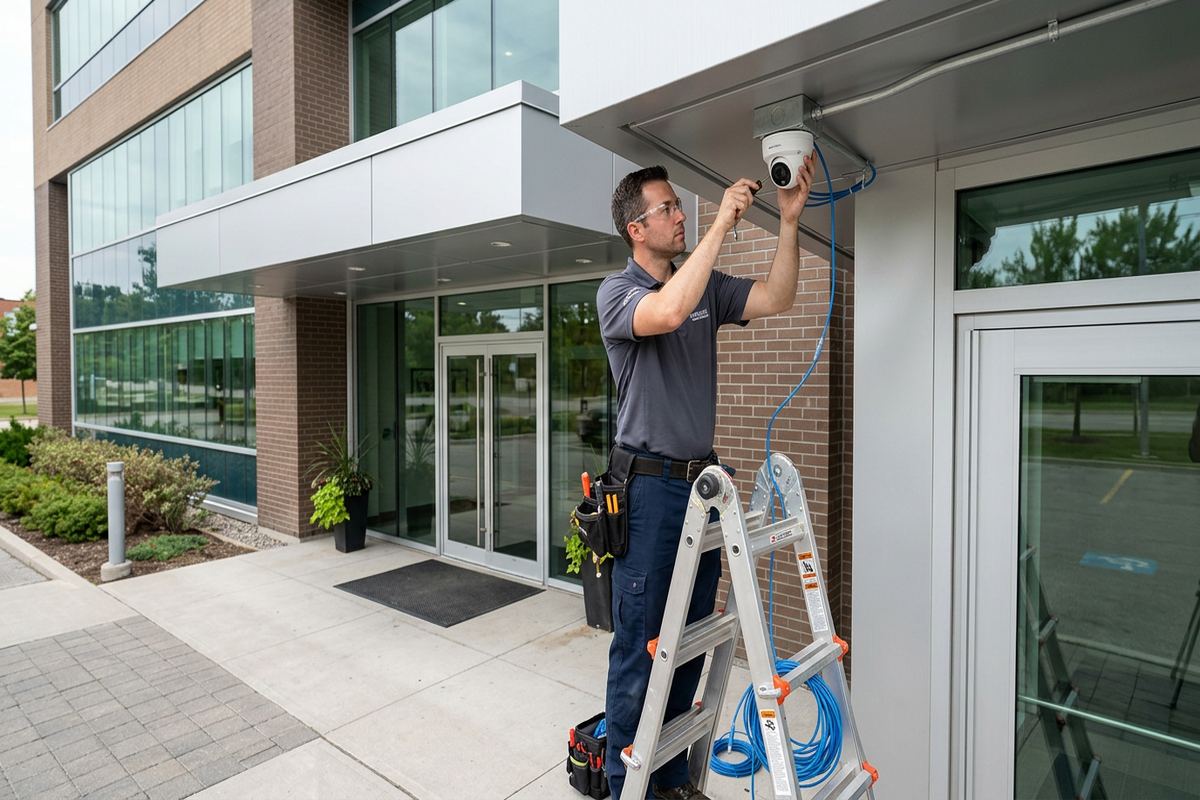
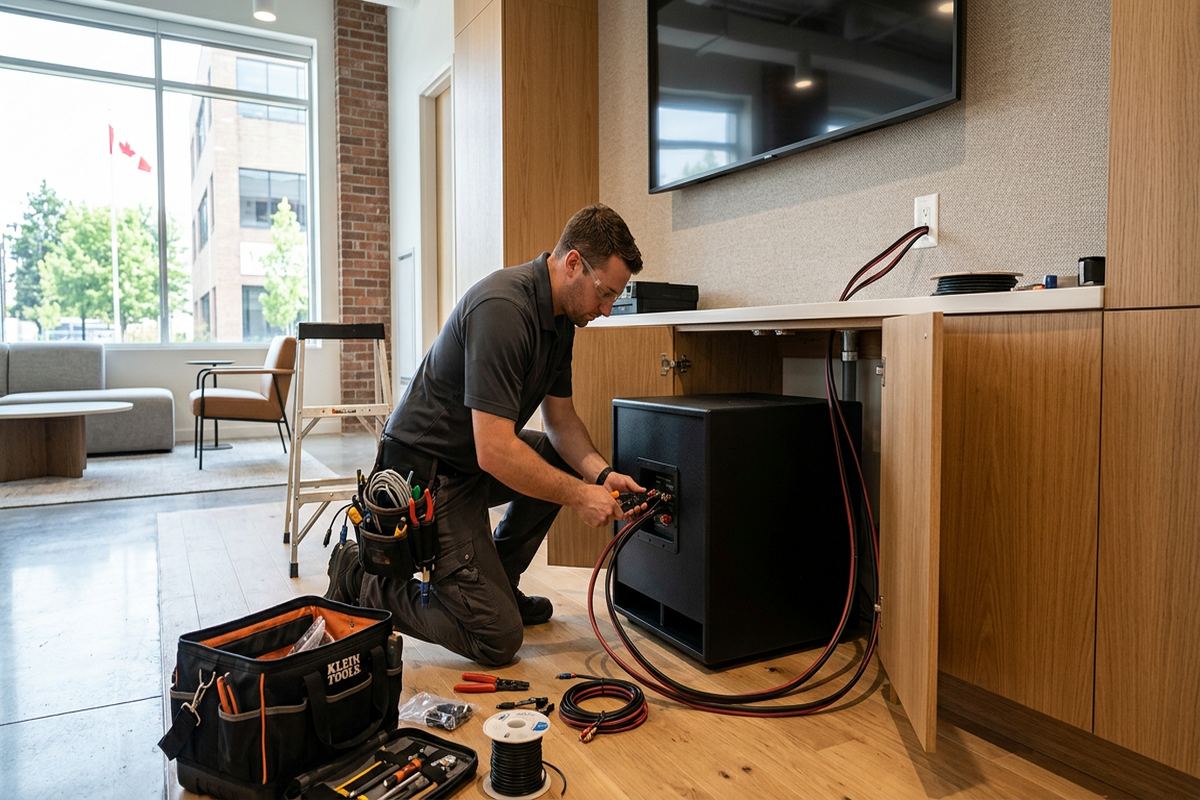
UnifiedLink installs whole-home audio systems for houses, estates and selected commercial spaces in Aurora. We plan speaker locations, amplifier capacity, controls and cable routes around the building rather than treating audio as a collection of separate devices. Every project begins with a site assessment, followed by a written scope and practical installation plan.
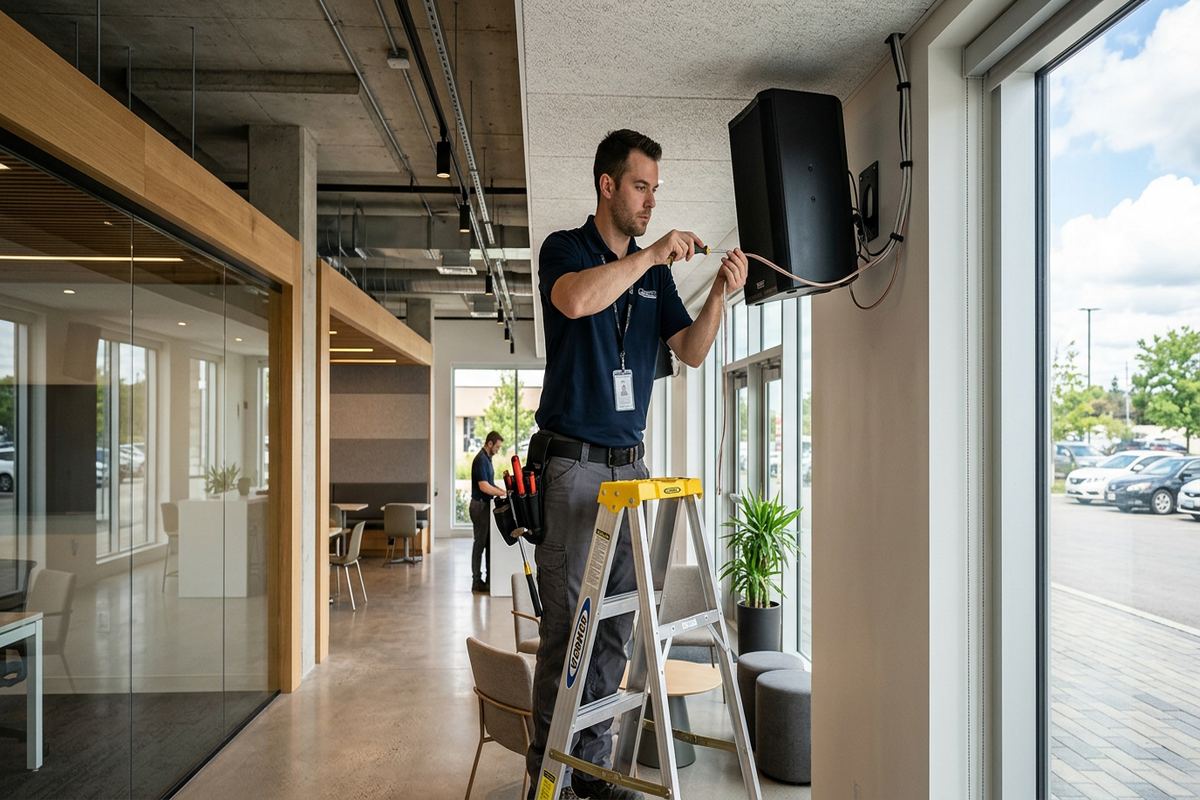
Whole-Home Audio Planning for Aurora Properties
A useful whole-home audio system starts with decisions about where sound is needed, how rooms connect and who will control each zone. During an Aurora site assessment, UnifiedLink reviews listening areas, likely volume levels, equipment locations, network coverage and available cable routes. We also identify spaces that should operate independently, such as bedrooms, kitchens, offices, patios or workshops. This planning prevents common problems including uneven coverage, complicated controls and amplifiers that cannot support the intended number of speakers. Pricing follows the assessment rather than assumptions about the property or its construction.
Aurora’s housing mix makes a standard package impractical. Heritage homes near Yonge Street may have plaster finishes, restricted cavities and renovations from several periods. Larger estate properties east of town can involve long cable distances, separate mechanical areas and extensive outdoor zones. Frame construction usually permits different routing options than masonry, while finished basements and vaulted ceilings may limit access. The written scope records proposed speaker positions, equipment, cable routes and exclusions so the owner can understand where openings, surface pathways or repair work may be required before installation begins.
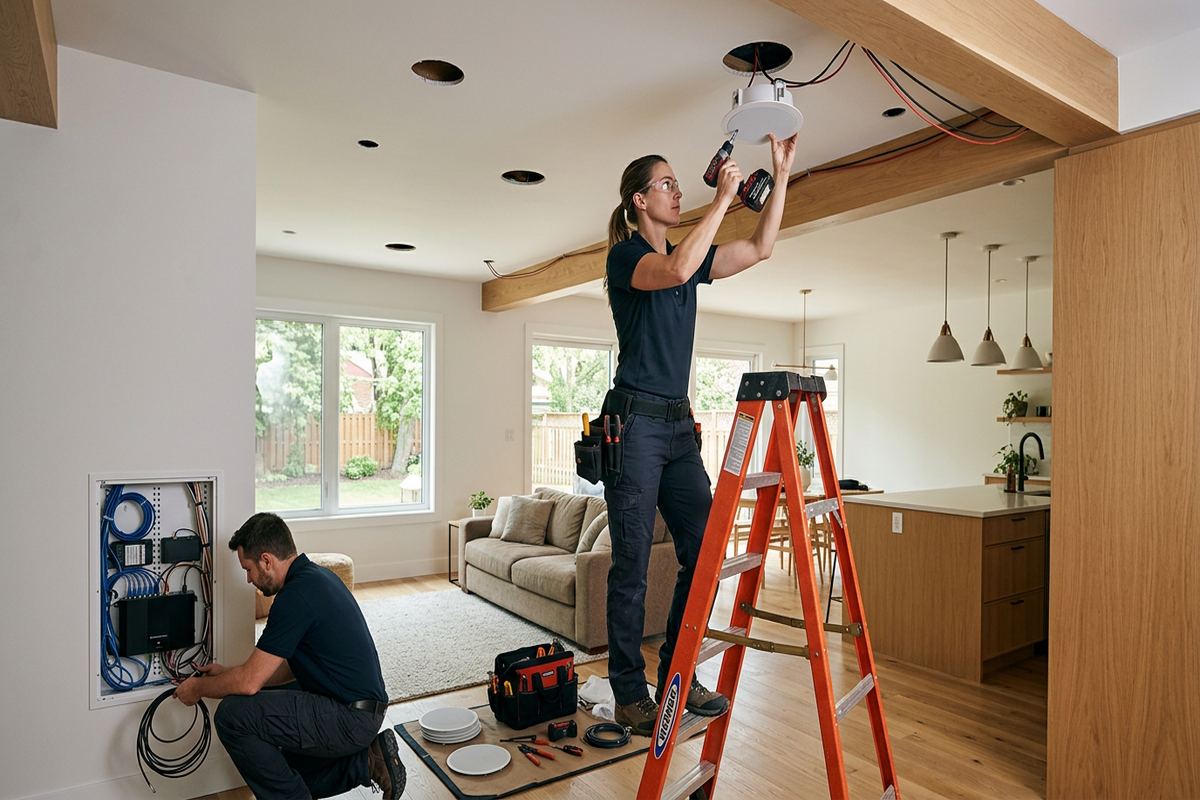
Room use matters as much as floor area. A kitchen with hard surfaces behaves differently from a furnished family room, and an open staircase can carry sound into areas intended to remain quiet. UnifiedLink considers speaker dispersion, ceiling height, listening position and expected background noise before selecting locations. Where architectural speakers are unsuitable, we can discuss surface-mounted, bookshelf or weather-resistant alternatives. The objective is consistent, controllable sound without filling every ceiling with hardware. Final placement remains subject to framing, mechanical services, electrical wiring and other conditions confirmed during installation.
- Room and zone requirements documented
- Speaker locations checked against room use
- Amplifier capacity matched to planned zones
- Cable routes reviewed before pricing
- Installation exclusions stated in writing
Speaker Placement and Zoning in Aurora Homes
Speaker placement determines whether a system sounds balanced at everyday levels. In Aurora Village homes, rooms may be narrow, divided by additions or finished with reflective plaster and hardwood. Installing speakers wherever ceiling access happens to be easiest can produce loud spots and weak areas. UnifiedLink lays out pairs or distributed arrangements according to room shape, seating and cabinetry. We also account for recessed lighting, joists, ductwork and plumbing. When exact symmetry is impossible, placement is adjusted to preserve useful coverage while avoiding conflicts that could create vibration, servicing difficulties or unnecessary ceiling openings.
Zones let occupants choose what plays, where it plays and at what level. A straightforward system might group the kitchen and breakfast area while keeping the dining room separate. Larger homes in Hills of St. Andrew or Rural Aurora may need independent control for multiple floors, guest spaces, a gym, garage and outdoor areas. We clarify whether each area requires different content or simply separate volume control. That distinction affects amplifier channels, source equipment, control options and cabling. It is documented before equipment is ordered, reducing the risk of controls that do not match daily routines.
Bathrooms, nurseries, home offices and bedrooms need particular care because high output is rarely the main requirement. Quiet, even coverage is usually more useful than a powerful central speaker. Moisture exposure, insulation, vapour barriers and access above the ceiling also influence product and placement choices. UnifiedLink discusses visible finishes, grille colour and control methods with the owner before cutting begins. For retrofits, exploratory access may be necessary where drawings are unavailable. Any uncertainty affecting routes or placement is identified in the scope rather than concealed behind a fixed layout that may not be buildable.
- Independent music and volume zones
- Layouts based on seating and surfaces
- Moisture-appropriate bathroom speaker options
- Grilles coordinated with visible finishes
- Conflicts checked before ceiling cuts
Cabling Older and Renovated Aurora Houses
Retrofitting audio into an older building requires careful route selection. Near Yonge Street, heritage-era construction may include plaster and lath, masonry sections, solid blocking or previous alterations that are not visible from the room. UnifiedLink checks basements, attics, closets and utility spaces for workable pathways before proposing concealed runs. We do not assume every wall cavity is continuous. Where concealed access would cause excessive disturbance, alternatives can include discreet surface raceway, selected access openings or relocating equipment. The chosen approach, including known finish repairs outside our work, is recorded in the written scope.
Continuous cable runs reduce avoidable connection points hidden inside walls and ceilings. UnifiedLink installs labelled runs from the equipment location to each speaker or control point, subject to the agreed design. Labels correspond with the system documentation, making future troubleshooting or renovation work more manageable. Cable type is selected for the signal, distance, installation environment and equipment design rather than convenience. Audio, network and control cabling are kept appropriately routed around power wiring and heat sources. Penetrations are handled carefully, and fire separations or special assemblies are treated according to project requirements.
Renovations create the best opportunity to coordinate audio with framing, electrical, insulation and drywall work. If a Bayview Wellington or Aurora Highlands property is already open, we can review proposed cabinetry, lighting and mechanical layouts before cables are covered. Pre-wire locations should be photographed and measured because final finishes can hide structural reference points. We can also leave planned cable capacity for later speakers without installing every device immediately. The owner still receives a clear record of installed routes and terminations, while responsibility for patching, painting or other trades remains defined in the project scope.
- Continuous home-run cable where specified
- Every installed run clearly labelled
- Routes coordinated with other building systems
- Pre-wire locations recorded before closing
- Repair responsibilities identified in scope
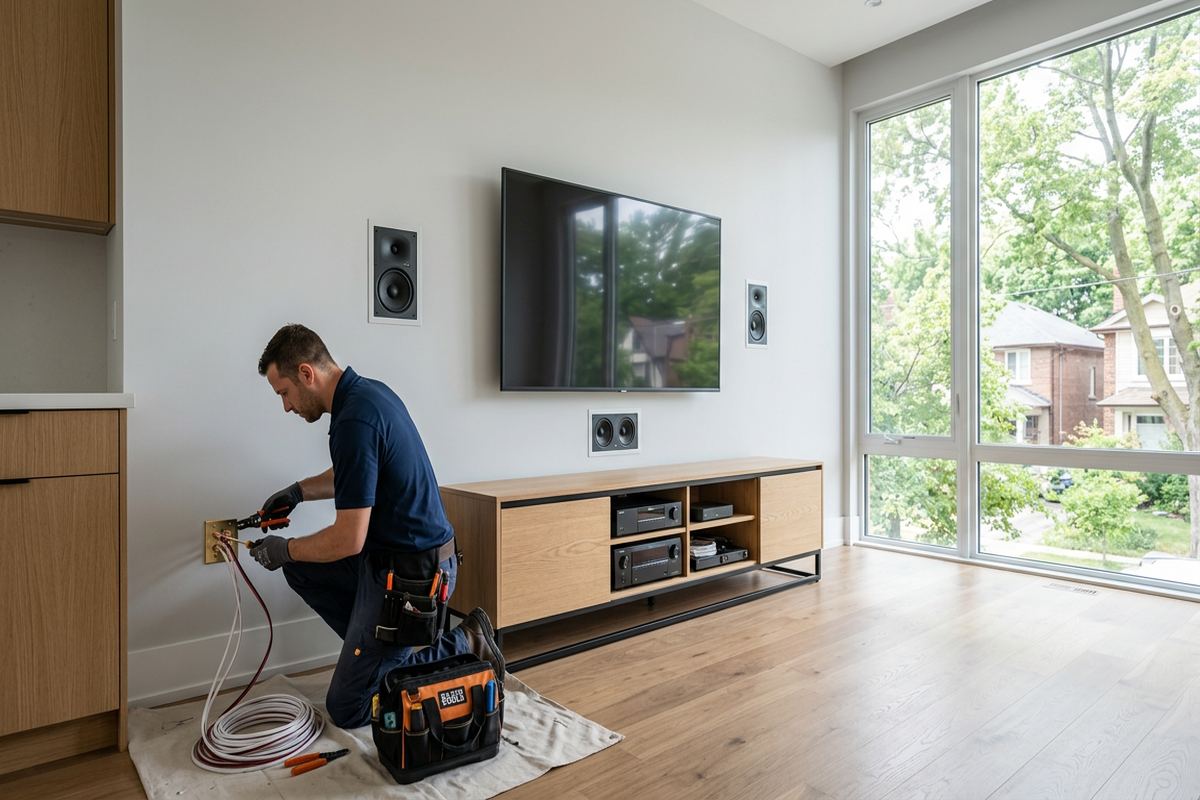
Aurora, Ontario
Whole-home audio installation in Aurora, scoped in writing first
Book a site assessment and get equipment, routes, exclusions, and warranty on paper before anything is installed.
Equipment, Sources and Audio Controls
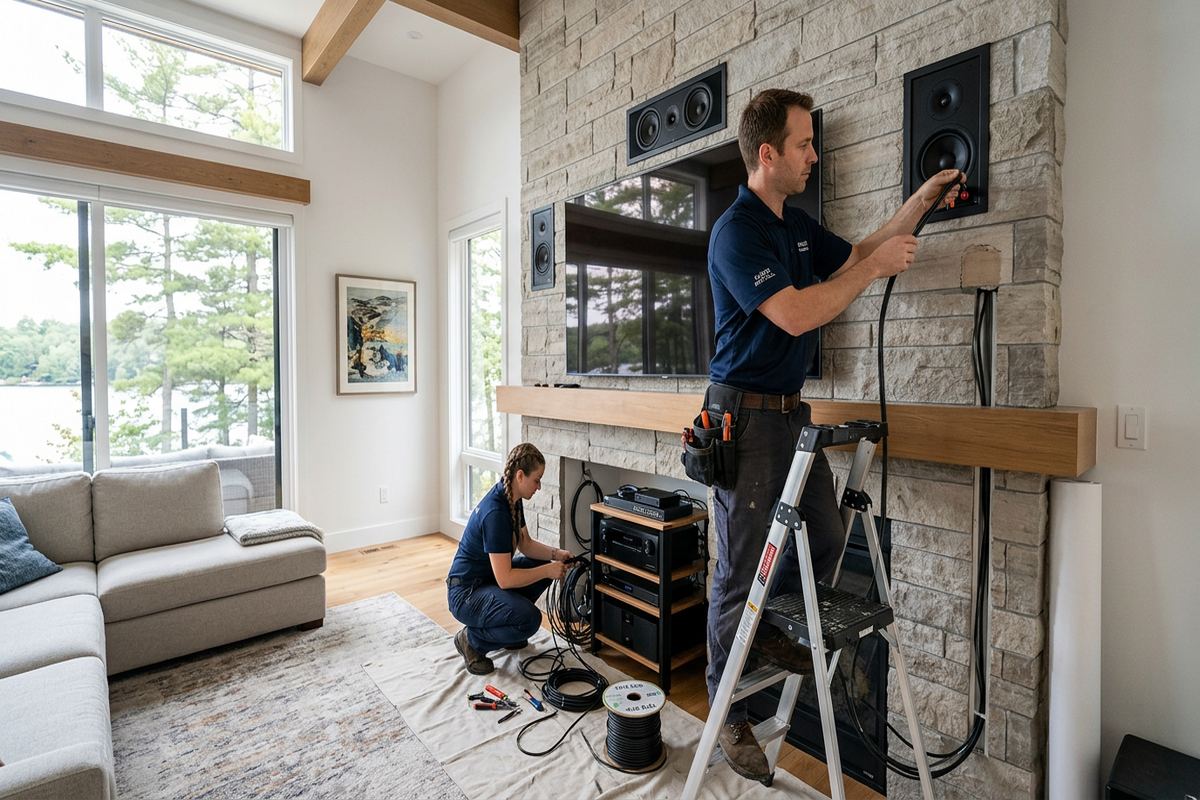
Whole-home audio equipment must support the required zones without becoming difficult to operate. UnifiedLink reviews amplifier channels, speaker loads, source inputs, network needs and equipment ventilation as one system. Some owners want simple app-based playback, while others need wall controls, television audio integration or a shared source available throughout the house. Compatibility is checked before selection because products can differ in supported services and control behaviour. We avoid promising that every existing device will integrate until its model, connections and current condition have been verified during assessment or bench review.
The central equipment location needs power, network connectivity, airflow and service access. In larger Aurora estates, placing everything at one end of the building can create long speaker runs or weak wireless control coverage. A distributed design may be more appropriate, but it requires coordination between equipment areas. Components should not be enclosed in an unventilated cabinet or buried behind stored belongings. UnifiedLink identifies rack, shelf or cabinet requirements and notes who supplies each item. Ownership of installed equipment is also stated in the scope, avoiding uncertainty where subscription, customer-supplied or contractor-supplied products are involved.
Controls should match the people using the building. A phone application may suit regular users but can be inconvenient for guests, children or anyone who wants immediate volume adjustment. Physical controls can help in frequently used rooms, provided their wiring and placement are planned early. UnifiedLink configures approved devices on site and uses the customer’s own credentials for supported accounts. We explain normal operation during handover instead of retaining personal login details. Features dependent on third-party platforms, subscriptions or internet services remain subject to those providers, and those dependencies are identified where they affect the proposed design.
- Amplifiers sized for connected speaker loads
- Source compatibility reviewed before installation
- Ventilation and service access considered
- App and physical control options
- Customer-owned accounts used at handover
Outdoor Audio for Aurora Weather
Outdoor audio in Aurora must be planned for moisture, snow, seasonal temperature changes and repeated freeze-thaw cycles. Weather-resistant equipment still needs suitable placement and correct installation; a product rating does not make every exposed location appropriate. UnifiedLink assesses eaves, walls, decks, gardens and equipment pathways before recommending speaker types. Coverage is aimed toward the intended listening area to limit unnecessary sound beyond the property. Volume expectations should be realistic, especially where neighbouring homes are close. Outdoor zones are normally controlled separately so they can be shut off without affecting indoor playback.
Exterior mounting involves more than fastening a bracket to a wall. Masonry, brick veneer, siding and wood framing require different anchors and drilling methods. Penetrations must be positioned and sealed to reduce water entry, and cable should be suitable for the route and exposure. Drip loops, protected junction points and mechanically secure supports may be required. UnifiedLink reviews the mounting surface before work proceeds and avoids relying on cosmetic sealant as the only protection. Existing damaged masonry, loose siding or questionable substrates may need repair by an appropriate trade before equipment can be safely mounted.
Estate properties east of town may call for audio around a pool, covered terrace, detached garage or broad landscaped area. Long distances change cable calculations and can make a single pair of wall speakers ineffective. Rural Aurora sites may also have buried pathways, irrigation, grading and future landscaping to consider. We define whether trenching, conduit or landscape restoration is included, excluded or assigned to another contractor. Outdoor equipment placement must remain accessible for seasonal inspection and service. Where a detached structure is involved, network connectivity, grounding considerations and available power are assessed alongside the audio design.
- Weather-resistant speaker selection
- Mounting matched to exterior construction
- Penetrations sealed against water entry
- Outdoor zones controlled independently
- Buried pathway responsibilities documented
Network and Wi-Fi Requirements in Aurora
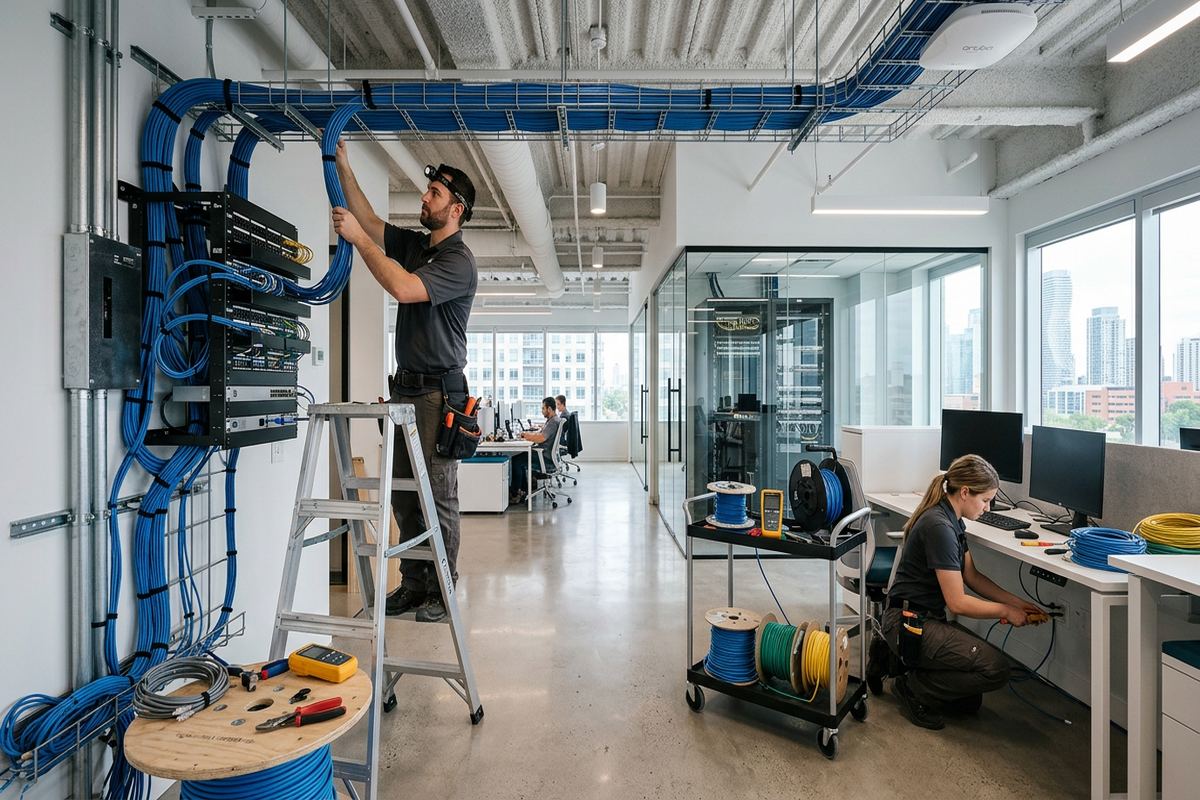
Modern audio systems often depend on the home network for control, streaming and communication between devices. Strong internet service at the modem does not guarantee reliable Wi-Fi in every listening area. Large Aurora properties, masonry walls, mechanical rooms and additions can all reduce wireless performance. UnifiedLink checks relevant network conditions during planning and identifies where wired connections or improved access-point placement may be appropriate. Audio installation does not automatically include a full network rebuild, so any required switches, data cabling or Wi-Fi work is separated clearly in the scope. This keeps responsibilities and costs understandable.
Whenever practical, fixed audio equipment benefits from a wired network connection. Wired links can reduce dependence on changing wireless conditions, but they still require suitable switching capacity, cable routes and equipment configuration. Portable controllers and phones will continue to rely on Wi-Fi, making coverage important in patios, basements and distant rooms. UnifiedLink can coordinate structured cabling and audio pathways so they do not become separate, conflicting projects. Installed data runs are labelled and tested according to the agreed work. Existing customer network hardware is evaluated before being relied upon, rather than assumed to support the completed system.
Streaming services and voice assistants are controlled by outside platforms whose features, subscriptions and compatibility can change. During on-site configuration, UnifiedLink connects supported equipment using credentials entered or owned by the customer. We can demonstrate source selection, grouping, volume control and common recovery steps, but cannot guarantee the continuing operation of third-party services. If internet access fails, available local functions depend on the chosen equipment and sources. These limitations are discussed before final selection, particularly for Aurora owners who want television audio, stored music or other local sources to remain usable independently of streaming.
- Wi-Fi conditions reviewed for control areas
- Wired connections used where practical
- Network additions separated in the scope
- Data runs labelled and tested
- Third-party service dependencies explained
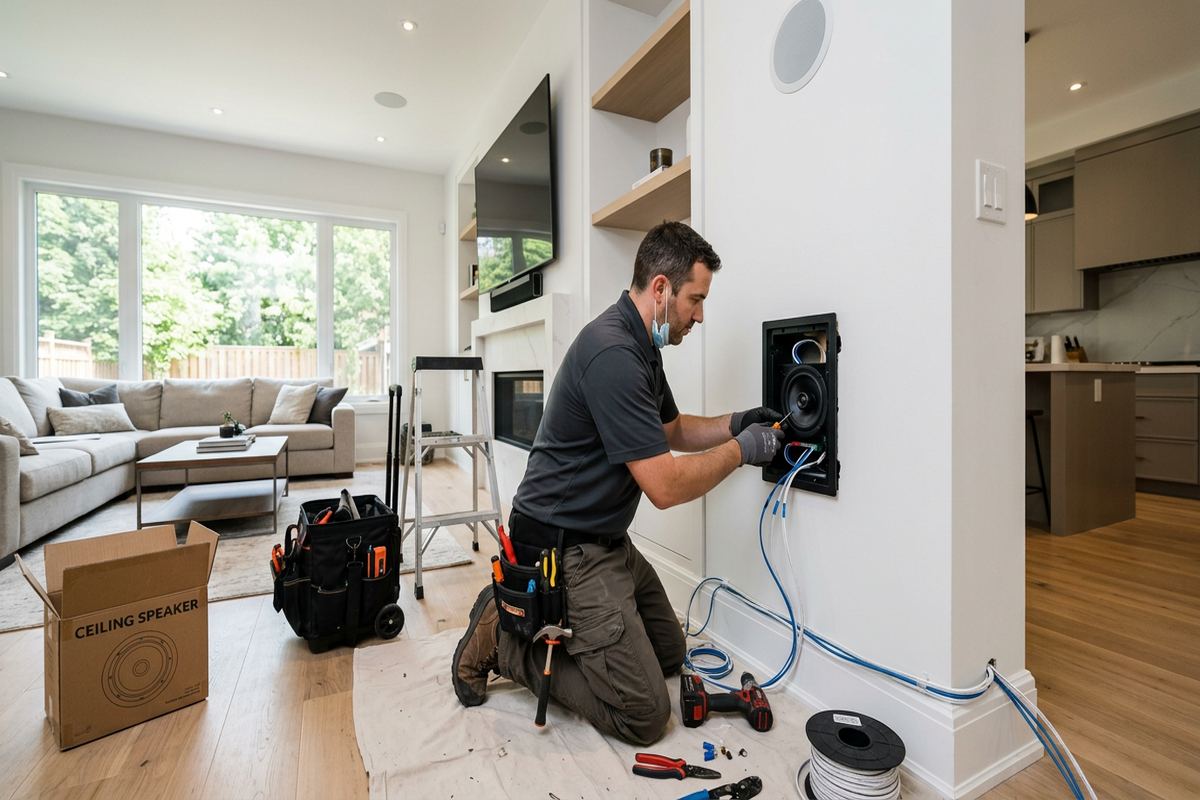
Audio for Condos, Rentals and Aurora Businesses
Condo and rental installations require permission before walls, ceilings or common elements are altered. Aurora owners and tenants should confirm condominium rules, landlord requirements, permitted work hours and documentation needs before scheduling. Speaker backboxes, penetrations, equipment noise and shared structural assemblies may all be regulated. UnifiedLink can provide a written installation scope for review, but approval remains the customer’s responsibility unless specifically included. Where concealed cabling is not permitted, surface-mounted speakers or non-invasive pathways may offer alternatives. We do not proceed on the assumption that an owner or tenant has unrestricted authority to modify the building.
Commercial strips and professional spaces near Aurora’s main corridors may use distributed audio for background music, meeting rooms, reception areas or staff spaces. Industrial units can present higher ceilings, open structure, equipment noise and longer routes than a house. The design must account for actual use rather than applying residential speaker spacing. UnifiedLink reviews source control, zoning, mounting heights, cable support and equipment access. Business owners are responsible for obtaining any music licensing needed for public or commercial playback. Audio for paging, life safety or emergency communication requires separate assessment and must not be assumed from a background-music system.
Mixed-use and tenant-improvement projects need coordination with the general contractor, electrician, ceiling installer and property manager. Cable pathways may cross fire separations or shared service areas, while speaker locations can conflict with sprinklers, lighting and HVAC diffusers. UnifiedLink identifies dependencies and installs only within the approved scope. For occupied businesses, work sequencing should protect customer areas and maintain safe access. Site assessment timing depends on the service and travel distance. Requests sent during business hours are answered the same day; after-hours requests are answered the next business day, without implying an immediate site visit.
- Approval requirements identified before work
- Residential and commercial zoning options
- Open-ceiling cable support planned
- Other trades coordinated through one scope
- Music licensing remains owner responsibility
Installation, Testing and Handover in Aurora
Once the design is approved, UnifiedLink provides one accountable contractor for the specified audio, cabling and configuration work. The written scope covers equipment, cable routes, device placement, exclusions, equipment ownership and warranty information. During installation, planned locations are checked against conditions revealed behind finishes. If framing, plumbing or other obstructions require a meaningful change, the revised approach is discussed instead of improvised without notice. Work areas are managed according to the property, whether the project is a finished Aurora home, an active renovation, a detached structure or an occupied commercial unit.
Testing covers each installed speaker, zone, source and control included in the project. UnifiedLink verifies channel assignment, basic operation, network communication and practical volume control. We listen for obvious rattles or wiring faults and confirm that zones correspond with their labels. Final tuning is based on the capabilities of the selected equipment and the agreed use of each space; it cannot correct every acoustic issue caused by hard surfaces or open architecture. Outdoor speakers are checked from their intended listening area, while excessive levels that create unnecessary spill beyond the property are avoided.
Handover gives the customer control of the completed system. Supported applications and devices are configured on site using the customer’s own credentials, and normal operating steps are demonstrated. UnifiedLink provides an as-built record reflecting installed speaker zones, equipment and labelled cable runs within the agreed scope. Warranty information and known third-party dependencies are reviewed, along with any owner maintenance such as keeping vents clear or inspecting exposed exterior components. This documentation is particularly useful when an Aurora property is renovated, sold or serviced later, because future contractors can understand the system without tracing every cable again.
- One accountable installation contractor
- Written scope before work begins
- Every specified zone tested on site
- Customer credentials retained by customer
- As-built system record supplied
- Warranty details included at handover
Aurora neighbourhoods we cover
- Aurora Village
- Bayview Wellington
- Aurora Highlands
- Hills of St. Andrew
- Rural Aurora
Whole-home audio installation in Aurora — common questions
Can you install audio in an older Aurora home?
Yes, subject to a site assessment. Older Aurora homes may contain plaster and lath, masonry, blocked cavities or several generations of renovations. We inspect accessible attics, basements and service spaces before proposing routes. The written scope identifies concealed cabling, possible access openings, surface pathway alternatives and any patching or finishing that belongs to another trade.
How many audio zones does my house need?
The answer depends on how your household uses each space. Open kitchens and family rooms may work as one Aurora audio zone, while bedrooms, offices, patios and guest areas often need separate control. We clarify whether rooms require independent content or only independent volume, then match amplifier channels, controls and cabling to that requirement.
Will outdoor speakers withstand Aurora winters?
Outdoor-rated equipment can be suitable for Aurora’s snow, moisture and freeze-thaw conditions when properly selected and mounted. We review exposure, mounting surfaces, cable routes and drainage before installation. Penetrations are sealed, hardware is matched to masonry or frame construction, and speakers are positioned where they can be inspected without assuming that weather resistance removes all maintenance needs.
Do I need better Wi-Fi for whole-home audio?
Possibly. Large Aurora houses, masonry walls, finished basements and additions can create weak wireless areas even when internet speed is adequate. We assess control and equipment locations, then identify where wired data connections, switching changes or improved Wi-Fi coverage may help. Any network upgrades are listed separately rather than being assumed as part of the audio installation.
Can you install speakers in an Aurora condo or rental?
Yes, where the proposed work is permitted. Condo corporations, landlords and property managers may restrict ceiling openings, cable routes, common-element penetrations and work hours. The customer must secure required approvals unless the scope states otherwise. We can provide installation details for review and discuss surface-mounted or less invasive options when concealed cabling is not authorized.
What do I receive when installation is complete?
After installation, we test the specified speakers, zones, sources and controls on site. Supported services are configured using your own credentials, and normal operation is demonstrated. You receive an as-built record of installed equipment, zones and labelled cable runs, plus applicable warranty information. This provides a practical reference for future renovations or service at your Aurora property.
Coverage in Aurora is confirmed against the address before we quote. See everything we install in Aurora or the province-wide whole-home audio installation page.