UnifiedLink installs outdoor security cameras for homes, estates and commercial properties across Aurora and York Region. Each project begins with a site assessment to plan useful views, cable routes, mounting points and recording requirements. We install the system, configure it on site and provide a clear handover using credentials controlled by the customer.
Outdoor Camera Planning for Aurora Properties
A useful camera system starts with the areas that actually need evidence, not with an arbitrary device count. During an Aurora site assessment, we review entrances, driveway approaches, gates, detached buildings, walkways and less visible sides of the property. The aim is to define what each camera should show and the detail needed at that location. A broad overview may help establish movement, while a tighter view can better document a person, vehicle or delivery. Lighting, landscaping, expected traffic and neighbouring properties all affect placement before cable routes or equipment are selected.
Aurora properties vary enough that one standard layout rarely works. Heritage homes near Yonge Street may have limited concealed pathways, decorative exterior finishes and additions built during different periods. Larger estate properties east of town can involve long driveways, multiple structures, broad yards and gates positioned far from the main building. We consider those physical differences when choosing camera locations, transmission methods and recording capacity. The assessment also identifies access limitations, available network equipment and practical service points, reducing the need for improvised routes once installation has started.
The written scope sets expectations before pricing or physical work begins. It covers proposed equipment, camera placement, cable routes, exclusions, equipment ownership and applicable warranty information. It can also identify work that requires access by another trade, such as opening finished surfaces or providing electrical power at a remote structure. For commercial or multi-residential sites, the scope may note restricted work hours, lift access and approval responsibilities. This process gives an Aurora owner or manager a defined system design rather than a collection of devices without a documented purpose.
- Entrances, driveways and blind sides reviewed
- Views selected for identification or overview
- Lighting and landscaping considered before placement
- Cable routes documented in the written scope
- Ownership, exclusions and warranty terms recorded
Weather-Resistant Mounting in Aurora
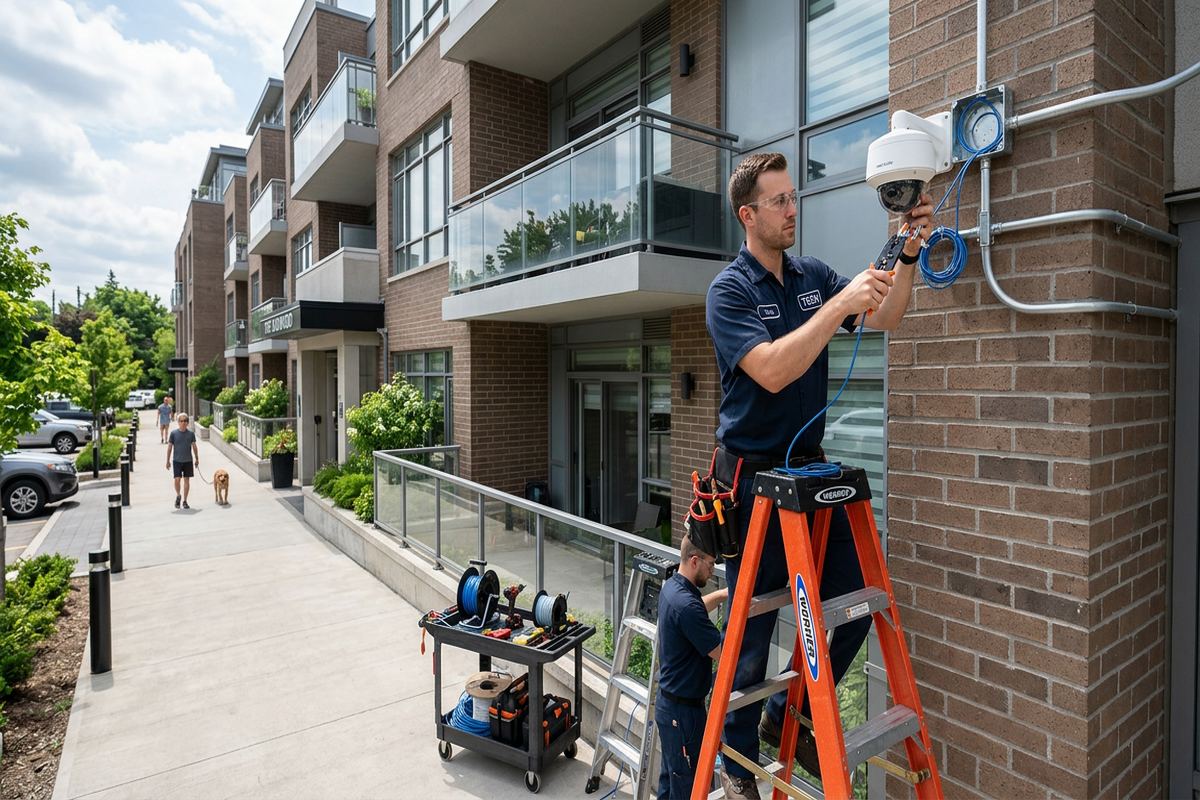
Exterior equipment in Aurora must tolerate snow, rain, wind and repeated freeze-thaw cycles. Weather resistance depends on more than the camera’s published enclosure rating. The mounting surface, cable entry, fasteners, junction box and drip path all contribute to whether a connection remains protected. We position entries to limit direct exposure, use suitable exterior hardware and seal penetrations without creating places that trap water. Camera bodies are also aimed so snow accumulation, roof runoff and seasonal vegetation are less likely to obstruct the view or repeatedly wet the connection point.
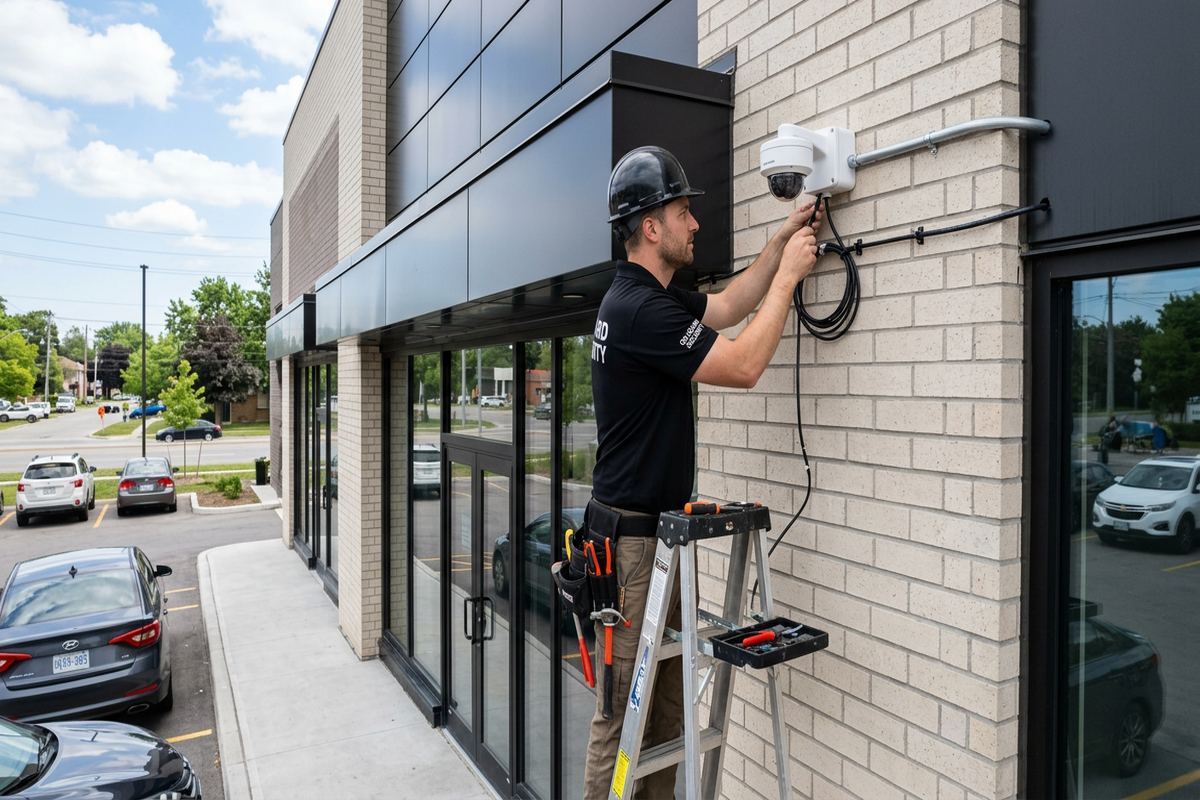
Mounting methods change with the building material. Brick and other masonry require suitable anchors, careful drilling and attention to mortar joints, cavities and the route behind the wall. Frame construction may allow a more direct cable path, but the installer still needs to locate solid backing and avoid damaging membranes, trim or concealed services. On older Aurora homes, mixed materials can appear across the original structure, enclosed porches and later additions. Each mounting point is evaluated individually instead of assuming that every exterior wall has the same construction or fastening requirements.
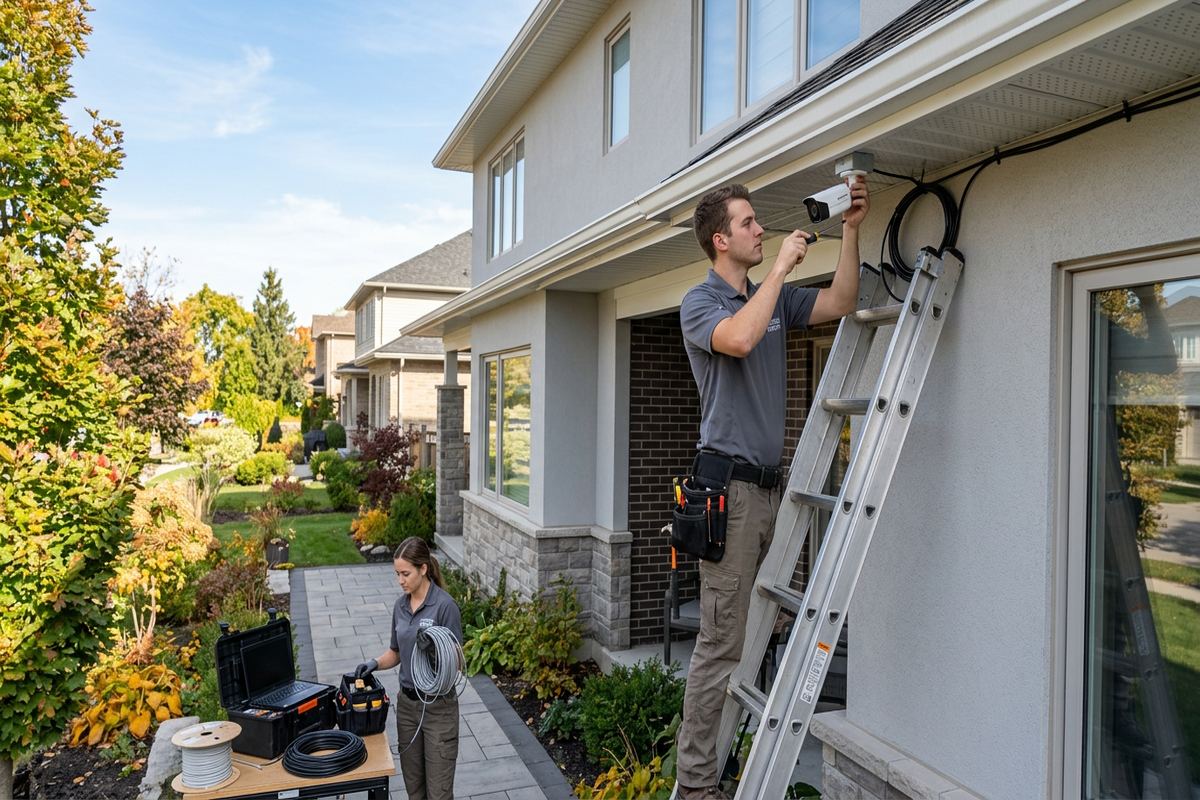
Soffits can provide protected mounting positions, but they are not automatically the right choice. A high camera may show the top of a person’s head while missing useful facial detail, and lightweight soffit panels may not provide adequate support. Lower wall mounts can improve the viewing angle but require thoughtful routing and protection from accidental contact. We balance image purpose, mounting strength, service access and appearance. Where a junction box is needed, it is selected and positioned to protect terminations while keeping the finished installation orderly and accessible for future camera adjustment or replacement.
- Sealed exterior cable penetrations
- Fasteners matched to mounting materials
- Junction boxes protect outdoor terminations
- Mounting heights based on image purpose
- Snow, runoff and vegetation considered
Camera Views for Aurora Homes and Estates
Residential layouts in Aurora Village and Aurora Highlands often require several distinct views rather than one camera expected to cover everything. A front camera can document visitors and deliveries, while a separate driveway view can show vehicle movement without sacrificing detail at the door. Side passages, basement entrances and backyard gates may need attention where fencing or mature planting creates hidden approaches. We plan overlapping coverage only where it adds value. Unnecessary overlap consumes recording capacity and can leave another important area unobserved, so each proposed view is tied to a specific security objective.
Estate properties in Rural Aurora and east of town create different design questions. A gate or driveway entrance may be too distant for a simple cable run from the house, and trees, grade changes or outbuildings can interrupt wireless links. We review distances, available pathways, power, network reach and the need for surge or environmental protection before recommending a connection method. Long-range views are planned around the level of detail required, because seeing that a vehicle entered is different from obtaining a clear view at a controlled gate or parking position.
Night performance is assessed as part of placement, not treated as a setting to fix later. Built-in infrared can reflect from nearby walls, eaves, branches, spider webs or light-coloured surfaces, producing a bright foreground and a dark target area. Existing porch lights and landscape lighting can also create contrast that changes after sunset. We consider alternate angles, controlled fields of view and supplemental lighting where appropriate. Final aiming and image settings are completed on site under the actual conditions available, with motion areas adjusted to reduce avoidable alerts from roads, trees or neighbouring activity.
- Separate views for doors and driveways
- Gate and outbuilding distances assessed
- Night reflections considered during placement
- Motion areas limited to relevant property zones
- Neighbouring windows excluded where practical
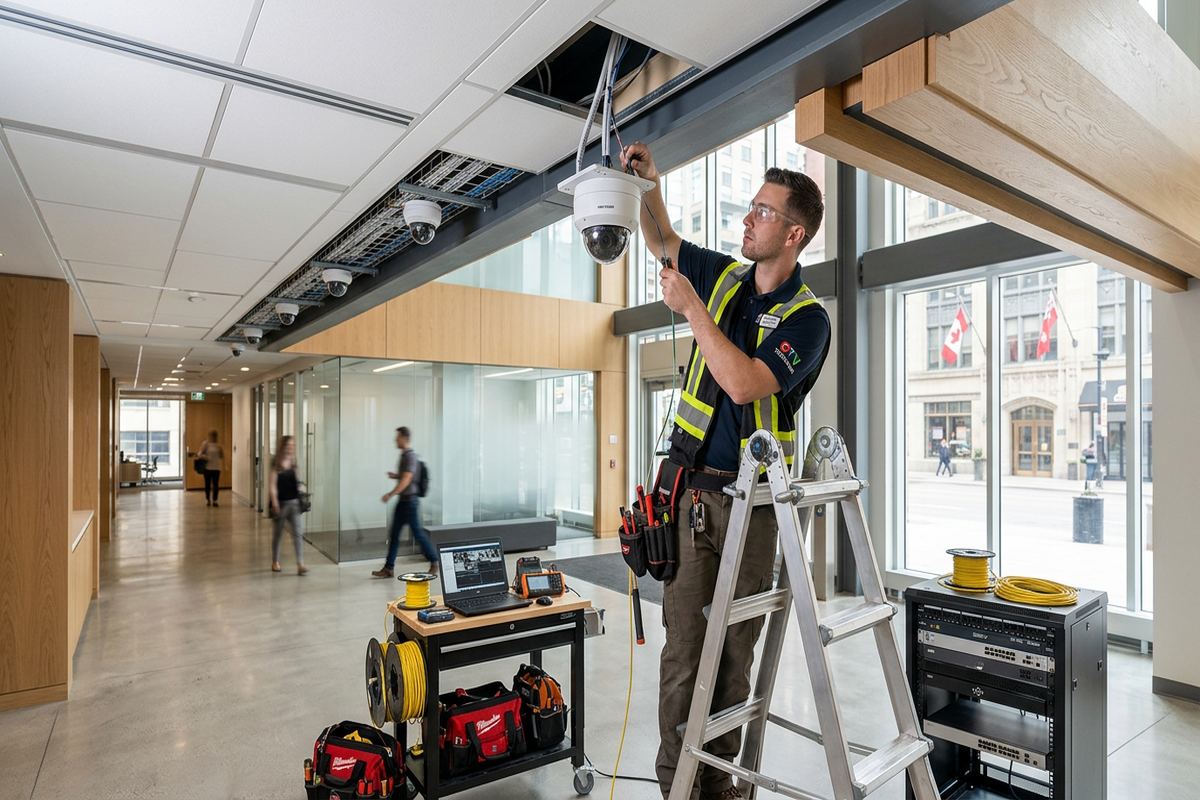
Aurora, Ontario
Outdoor camera installation in Aurora, scoped in writing first
Book a site assessment and get equipment, routes, exclusions, and warranty on paper before anything is installed.
Wired Outdoor Cameras and Structured Cabling
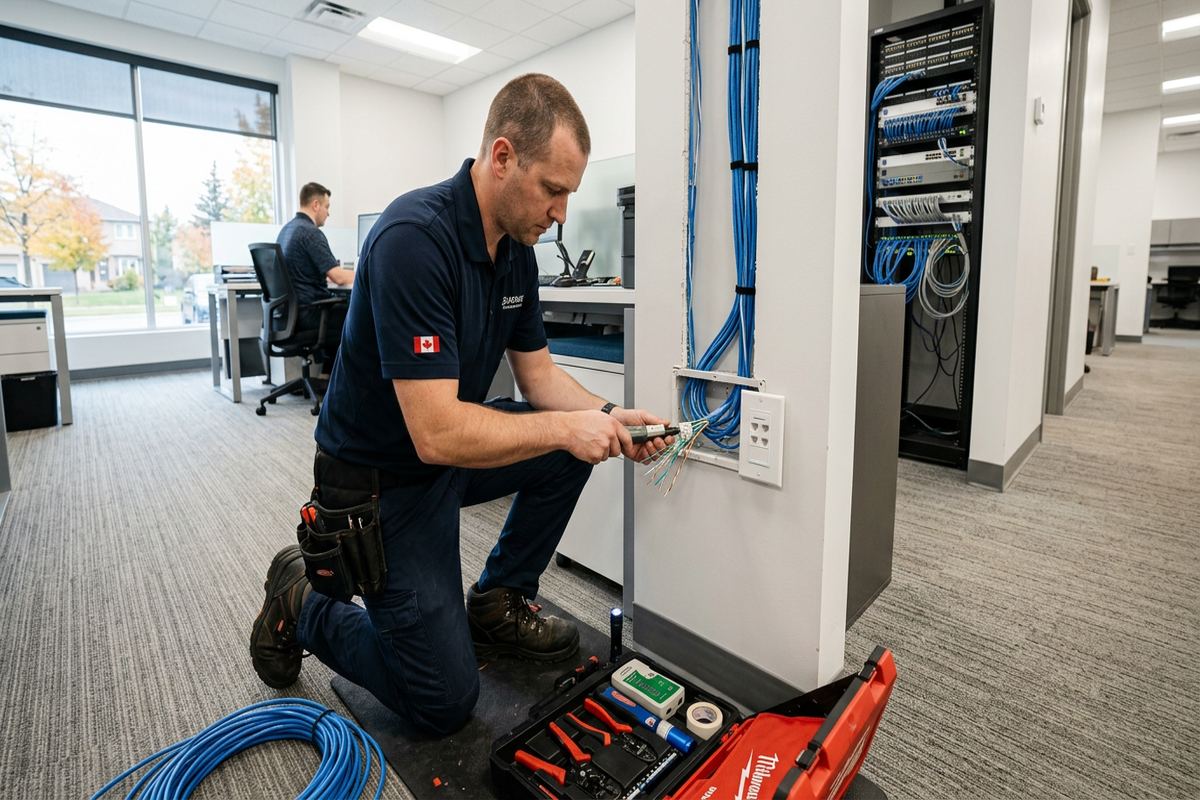
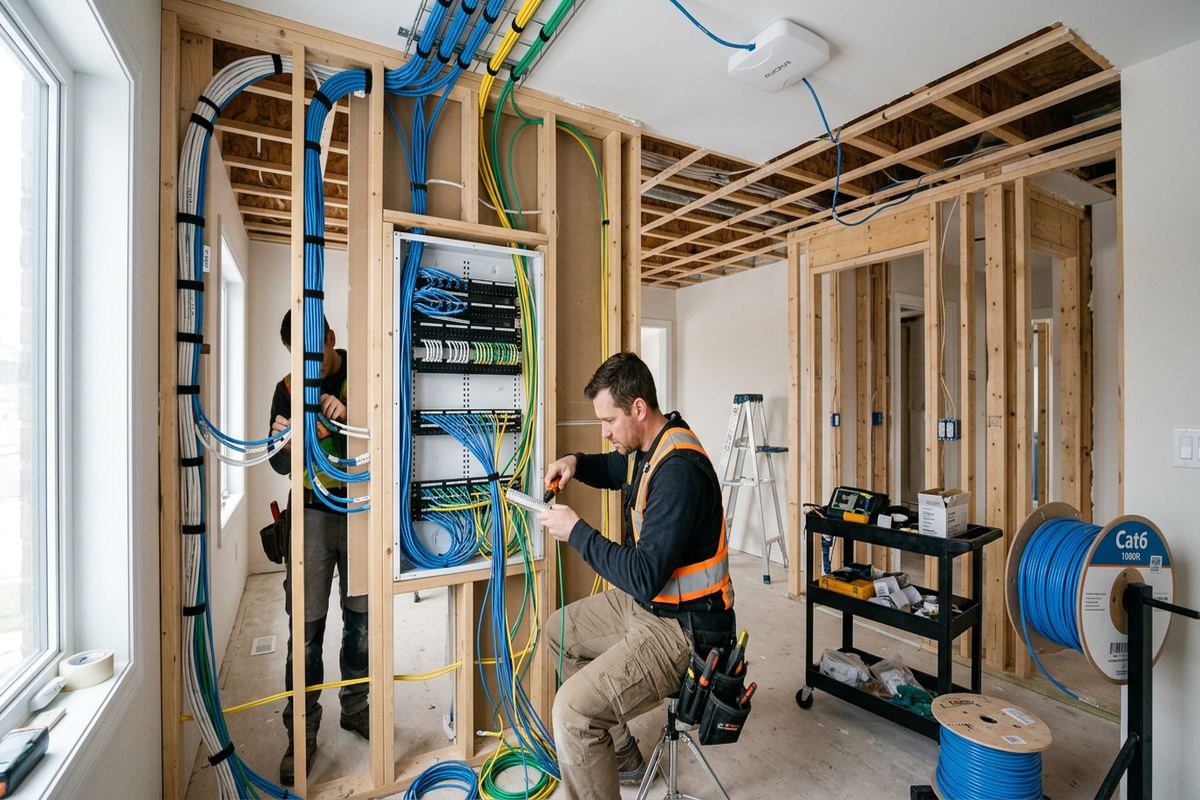
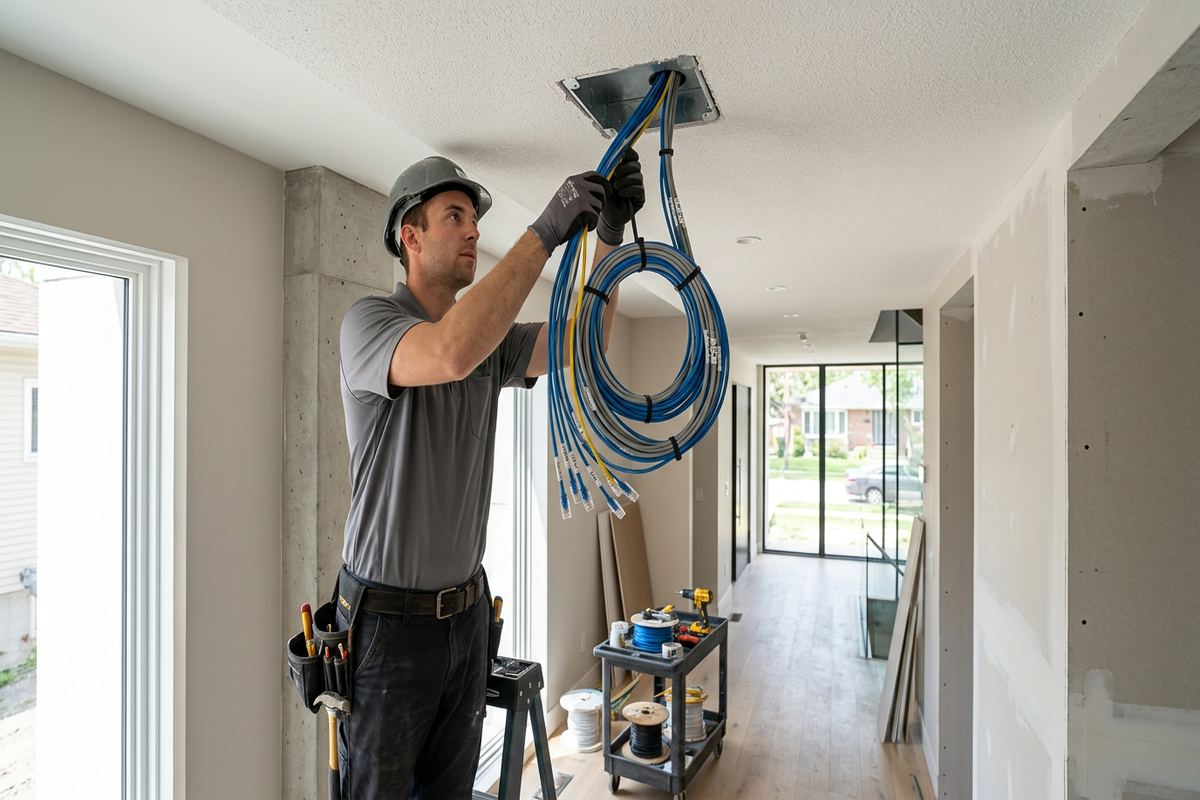
For many Aurora installations, a wired network camera provides a stable connection and receives power through the same structured cable. The cable route still matters as much as the camera. UnifiedLink installs continuous labelled runs rather than joining short sections in concealed or exposed locations. Routes are planned through accessible interior spaces, attics, basements, garages or approved exterior pathways while avoiding sharp bends, heat sources and unnecessary exposure. At the recorder or network location, labels correspond to camera positions so troubleshooting and future changes do not depend on guessing which cable serves each device.
Heritage and renovated homes can make concealed cabling difficult. Plaster, finished basements, narrow roof spaces and multiple construction layers may prevent a route that would be straightforward in a newer frame building. The assessment identifies accessible cavities and discusses where surface raceway, a discreet exterior route or limited access work may be necessary. We do not assume that drilling from the nearest room will reach a usable pathway. The written scope records the planned route and relevant exclusions, allowing the owner to understand how appearance, access and construction constraints affect the installation before approving the work.
Detached garages, workshops and estate gates require additional planning because ordinary copper network cable has practical distance and electrical-environment limitations. Depending on the site, an appropriate design may use fibre, a point-to-point wireless bridge or network equipment located in an outbuilding. Available power, grounding conditions, pathway protection and equipment environment must be checked rather than assumed. In Aurora’s winter conditions, outdoor enclosures and exposed pathways also need suitable placement. The objective is a maintainable connection designed around the actual distance and structures, not an indoor cable extended outside without adequate protection.
- Continuous cable from device to endpoint
- Both cable ends clearly labelled
- Routes avoid unnecessary outdoor exposure
- Remote buildings assessed separately
- Recorder and network locations documented
Recording, Remote Viewing and Privacy
Recording design determines what happens after a camera captures an event. We discuss continuous recording, event-based recording and the retention objective before selecting storage. Resolution, frame rate, camera count and activity levels all influence capacity, so a stated number of days cannot be assumed without system details. The recorder also needs a suitable location with ventilation, network access and reasonable physical security. For an Aurora home, that may be a utility or communications area; a business may require controlled access and a documented monitor or export process for designated staff.
Remote viewing is configured on site using accounts controlled by the customer. Where supported by the selected system, we connect authorized phones or computers, confirm live and recorded playback, and review how alerts work. The handover does not rely on credentials retained only by the installer. Customers receive their own login information and are responsible for controlling access after completion. We also explain practical account measures such as unique passwords and available multi-factor authentication. If several family members, tenants or employees need access, individual permissions should reflect what each person is expected to view or manage.
Camera placement must account for privacy as well as coverage. Outdoor cameras should focus on the owner’s entrances, paths, parking areas and property rather than unnecessarily viewing neighbouring windows or private yards. At condos, approval may be required before attaching equipment to exterior walls, balconies or other common elements. Landlords and commercial tenants should also confirm who can authorize drilling, cabling and recording. UnifiedLink can define the technical work, but the customer remains responsible for obtaining property approvals and determining their legal obligations concerning video, audio, signage, access and retention.
- Storage based on actual recording settings
- Customer controls system credentials
- Remote playback tested during handover
- Permissions can separate user access
- Views limited to relevant property areas
Outdoor Cameras for Aurora Businesses
Commercial strips near Yonge Street commonly need coverage for public entrances, rear service doors, delivery areas and customer parking. These sites can combine pedestrian traffic, vehicle headlights, exterior signs and shared access with neighbouring units. Camera views should document the business’s own operational areas without assuming unrestricted use of common property. We review opening patterns, delivery routes and likely incident locations with the owner or manager. Device placement can then distinguish between general situational awareness and closer views at controlled points such as a doorway, cash-handling route or receiving entrance.
Industrial and service units elsewhere in Aurora may have tall walls, loading doors, fenced yards and equipment stored outside. Height can provide a broad view, but excessively high placement may reduce useful detail and complicate maintenance. Loading activity can also block a camera that appears clear when the yard is empty. We consider parked trucks, open overhead doors, stacked materials and changing lighting when planning views. Where work requires elevated access, the scope identifies access expectations. Cable pathways, communications rooms and recording access are coordinated with the building manager or authorized tenant before installation begins.
A commercial system should be manageable after the installer leaves. Camera names can correspond to recognizable locations, recording rules can match operational needs, and authorized staff can be shown how to search and export relevant footage. The as-built record documents installed camera positions and cable endpoints, providing a reference for maintenance or future expansion. If several locations or departments are involved, access can be organized according to the selected platform’s capabilities. UnifiedLink remains one accountable contractor for the defined camera, cabling, configuration and handover work rather than dividing responsibility across unrelated installers.
- Entrances and receiving areas prioritized
- Parking and loading obstructions considered
- Camera names match physical locations
- Authorized staff shown footage export
- As-built record supplied at handover
Approvals and Installation Conditions in Aurora
Before work starts, property authority must be clear. A detached homeowner can usually approve work on the building they own, but condo corporations may control exterior walls, soffits, balconies and shared pathways. Tenants in Aurora commercial units may need written landlord or property-manager approval for penetrations, visible conduit, recorder placement or work in common telecommunications rooms. Heritage-related property considerations may also influence acceptable routes or visible equipment. Customers should secure the necessary permissions, while our scope provides enough detail about proposed placement and cabling to support an approval request.
Installation timing depends on access and safe working conditions. Snow or ice can conceal hazards, restrict ladder placement and make exterior sealing unreliable. Strong wind, active loading areas or blocked driveways may also affect the work sequence. Inside the property, access may be required to attics, basements, network cabinets or finished utility spaces. We identify expected access during assessment so equipment, vehicles or stored items can be moved beforehand. Site assessment timing depends on the service and travel distance within Aurora and the surrounding York Region service area.
Changes discovered during installation are handled against the written scope rather than made without explanation. An inaccessible cavity, concealed masonry layer, damaged existing cable or unavailable network port can alter the planned route or required equipment. When that happens, the condition is reviewed with the customer before work proceeds beyond the agreed scope. This is particularly important in older buildings and units altered by previous tenants or renovations, where drawings may not reflect current conditions. Clear documentation keeps decisions tied to the intended camera coverage, finished appearance and maintainability of the completed system.
- Condo approval confirmed before exterior work
- Landlord authority checked for leased premises
- Safe exterior access required
- Interior cable spaces made accessible
- Scope changes reviewed before proceeding
Aurora Camera Setup, Testing and Handover
Physical mounting is only one part of an outdoor camera installation. Once devices and cabling are in place, we verify connections, name cameras, set recording parameters and adjust each field of view on site. Daytime aiming is checked against the intended coverage, while available night settings, infrared behaviour and motion areas are configured for the property. Network details and remote access are tested with the customer’s equipment where included. This process helps confirm that the system records the required areas rather than merely showing that every camera has power and a live image.
Handover gives the Aurora customer practical control of the installed system. We review live viewing, playback, event search and footage export using the selected recorder or application. The customer receives access through their own credentials, along with an as-built record showing camera locations and cable identification. Equipment ownership and warranty information follow the written scope. We also point out routine factors that can affect images, including dirty lenses, growing branches, changed lighting, spider webs and objects moved into a camera’s view. These checks help owners recognize when physical conditions have changed.
Outdoor coverage should be reviewed whenever the property changes. New fencing, landscaping, additions, signs, parked equipment or revised traffic flow can turn a previously useful view into an obstructed one. Software updates, account changes and storage status also deserve periodic attention according to the equipment manufacturer’s guidance. Aurora service requests sent during business hours are answered the same day; after-hours requests are answered the next business day. Site assessment timing depends on the required service and travel distance, allowing the next steps to be based on the actual property and system.
- Every camera aimed and named on site
- Recording and playback functions tested
- Customer credentials used for access
- As-built camera and cable record provided
- Maintenance factors explained at handover
Aurora neighbourhoods we cover
- Aurora Village
- Bayview Wellington
- Aurora Highlands
- Hills of St. Andrew
- Rural Aurora
Outdoor camera installation in Aurora — common questions
How many outdoor cameras does my Aurora home need?
The number depends on the views you need, not simply the property’s size. A typical assessment considers doors, driveway approaches, side passages, backyard access and detached structures. Aurora Village homes may need compact coverage around close property lines, while Rural Aurora estates may require separate gate, driveway and outbuilding views. We define each camera’s purpose before recommending equipment or preparing pricing.
Can cameras be installed on an older brick home?
Yes, but older Aurora masonry requires careful assessment. Brick condition, mortar joints, wall cavities, additions and interior access can affect mounting and cable routing. Heritage homes near Yonge Street may also have plaster interiors or mixed construction from past renovations. We select appropriate mounting hardware, plan penetrations carefully and document visible routes or access limitations in the written scope before work begins.
Will outdoor cameras work through an Aurora winter?
Equipment must be selected for outdoor use and installed with suitable mounts, protected connections and sealed penetrations. Aurora’s snow, moisture and freeze-thaw cycles make junction-box placement, drip paths and cable entry details important. No installation can prevent every weather-related issue, but careful placement reduces avoidable exposure. Snow buildup, ice, dirt and changing vegetation should still be checked as part of routine property maintenance.
Do I need condo or landlord approval?
Possibly. Aurora condo corporations may control exterior walls, balconies, soffits and other common elements, even when the camera serves one unit. Commercial and residential tenants should obtain authorization before drilling, adding visible conduit or placing equipment in shared rooms. UnifiedLink can provide a proposed technical scope, but the customer is responsible for securing approvals and confirming any rules governing recording, privacy, signage or audio.
Can I view my Aurora cameras from my phone?
Remote viewing can be configured when the selected camera platform, network and internet service support it. During handover, we can connect authorized devices, test live and recorded viewing, and review notifications. Access is established with credentials controlled by you rather than an installer-only account. Available multi-factor authentication and individual user permissions should be used where supported, especially when employees, tenants or several family members need different access.
What happens before I receive pricing?
UnifiedLink completes a site assessment before pricing. For an Aurora property, this includes reviewing required views, mounting surfaces, cable routes, network and recording locations, access conditions and any detached structures. You then receive a written scope covering equipment, placement, routes, exclusions, equipment ownership and warranty information. Assessment timing depends on the service and travel distance; enquiries received during business hours are answered the same day.
Coverage in Aurora is confirmed against the address before we quote. See everything we install in Aurora or the province-wide outdoor camera installation page.