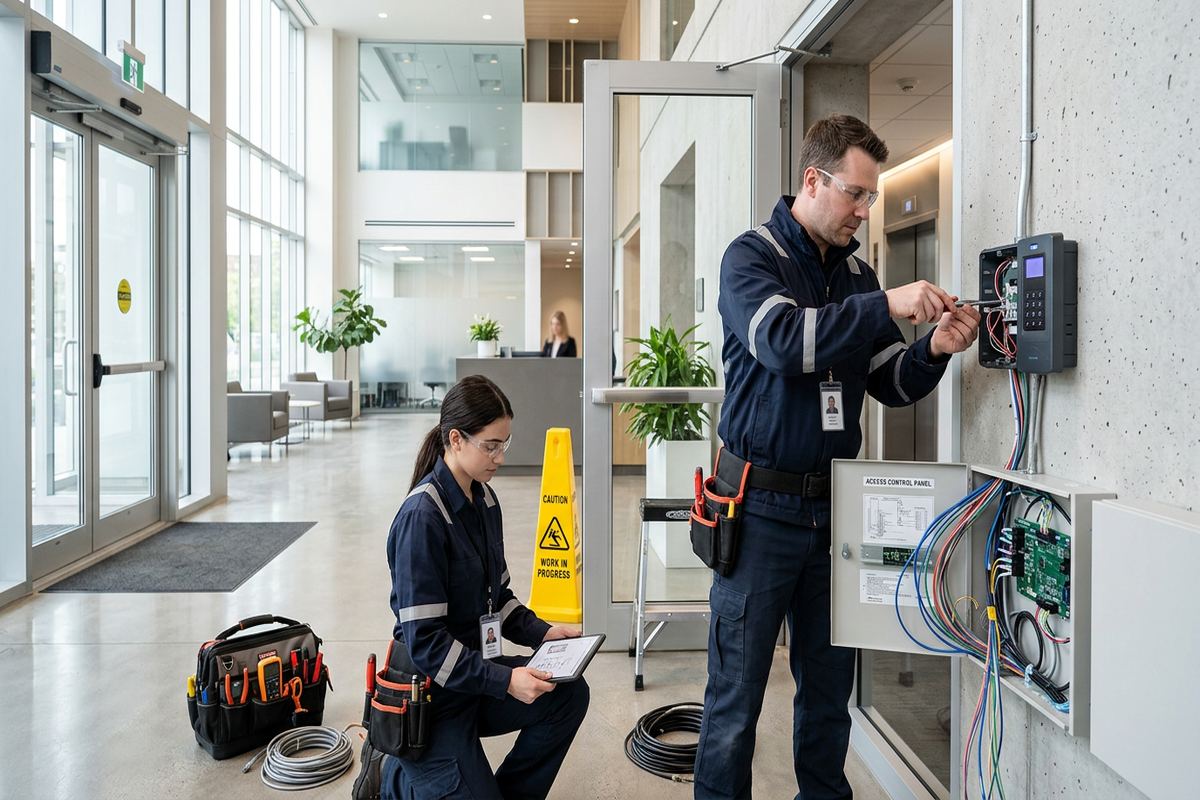
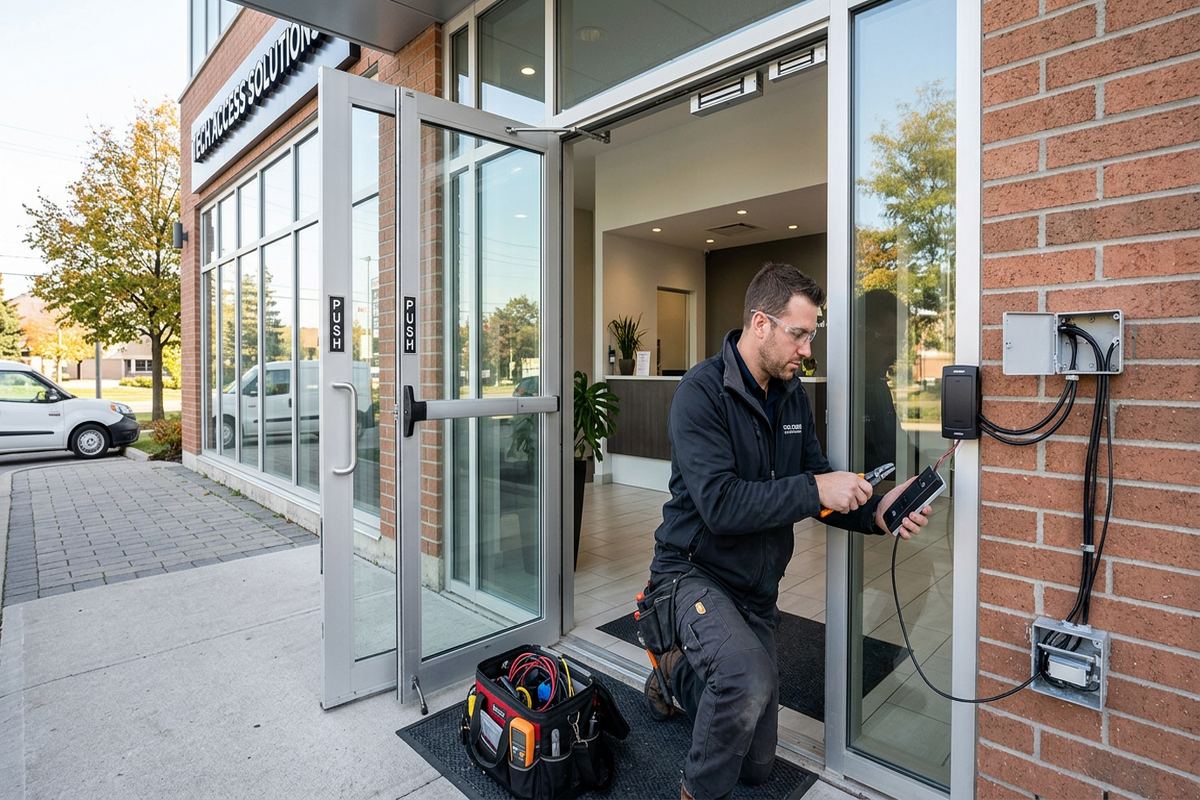
UnifiedLink installs condo access control systems for residential buildings in Aurora and across York Region. We assess entrances, shared spaces, door hardware, cabling routes and management requirements before pricing. Each project receives a written scope, on-site configuration and a documented handover using credentials controlled by the condominium or property owner.
Planning Condo Access Control in Aurora
A condo access control project starts with understanding how residents, visitors, staff and contractors move through the property. UnifiedLink reviews main entrances, parking access, amenity rooms, service doors, elevators and management areas before recommending equipment. The assessment also considers existing locks, door operators, fire alarm interfaces and intercom systems. In Aurora, the right design depends on the individual building rather than a standard equipment package. A written scope identifies devices, cable routes, proposed credential types, exclusions, equipment ownership and warranty terms before installation work or final pricing proceeds.
Condominium boards and property managers usually need clear decisions about who can enter each controlled area and when. Resident credentials may provide continuous building access, while cleaners, trades and delivery personnel may require restricted schedules or temporary permissions. Lost credentials should be removable without affecting every resident. Management also needs a practical process for move-ins, move-outs and replacement credentials. We map these workflows during planning so the installed system supports daily administration. This avoids relying on shared codes, unmanaged keys or permissions that remain active after a resident, employee or contractor leaves the property.
Aurora properties vary in layout, construction and access requirements. Heritage homes near Yonge Street and larger estate properties east of town shape many local installation methods, while condominium work adds shared entrances, approval processes and common electrical spaces. Nearby commercial strips and industrial units may also influence mixed-use access requirements, loading access or after-hours staff entry. Our assessment separates condo-controlled areas from individually owned spaces and third-party systems. That distinction helps establish responsibility for door hardware, electrical work, internet service, credential administration and any approvals needed before drilling, cabling or equipment replacement begins.
- Entrance and shared-area assessment
- Resident and contractor access schedules
- Existing hardware and system review
- Written equipment and installation scope
- Ownership, warranty and exclusion details
Aurora Condo Entrances and Door Hardware
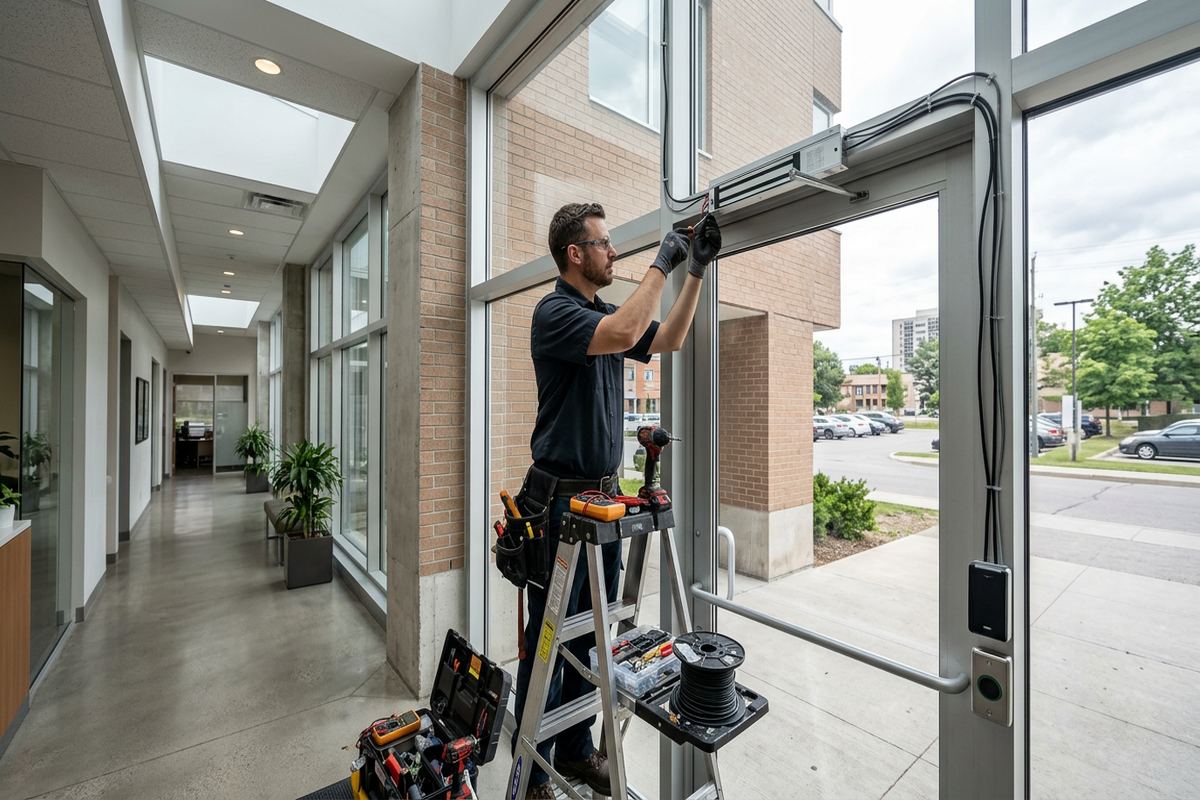
Reliable access control depends on the physical door working correctly. An electronic reader cannot compensate for a dragging door, loose hinges, failed closer or latch that does not align. During an Aurora site assessment, we inspect the opening and document hardware issues that could prevent dependable locking. The proposed system may use an electric strike, electrified lock, magnetic lock or another compatible release method, depending on the door and applicable requirements. Necessary locksmith, door, electrical or fire alarm work is identified in the scope rather than hidden inside a general access control allowance.
Main entrances require different planning from storage rooms, parking vestibules or management offices. A public-facing entrance may need a reader, intercom release, accessible door operator coordination, request-to-exit device and door position monitoring. An interior amenity door may need a simpler permission schedule but still require event records and reliable egress. We evaluate each opening separately, including how it locks during a power or communications interruption. This door-by-door approach keeps equipment appropriate to the risk, traffic and operating needs instead of placing identical hardware everywhere without considering its actual function.
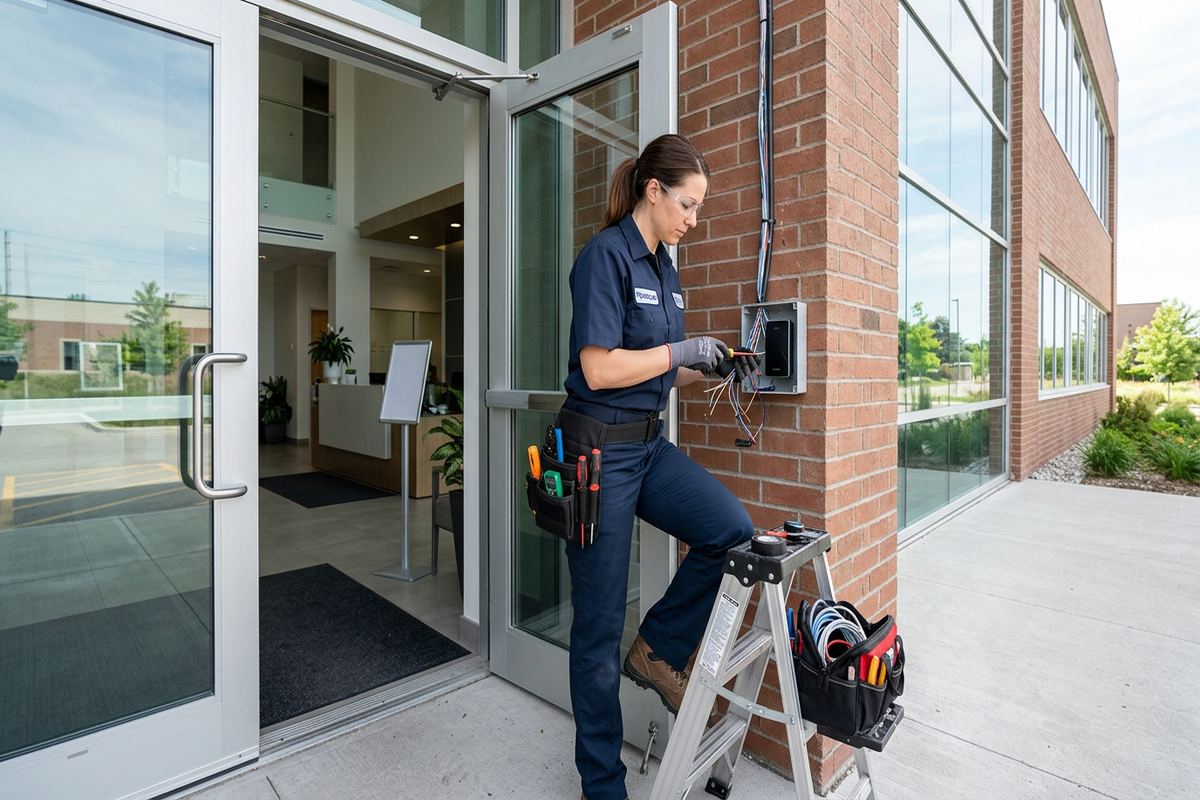
Exterior and vestibule equipment in Aurora must handle winter moisture, snow, road salt and repeated freeze-thaw conditions. Reader placement should reduce direct exposure where practical, while penetrations need suitable sealing to keep water away from cabling and wall cavities. Metal frames, masonry walls and framed construction require different anchors, pathways and finishing methods. We also check whether cold conditions could affect door alignment, closer operation or latch engagement. Weather-resistant equipment helps, but good mounting and a properly operating door remain essential. Any existing damage or corrective work is recorded before the access equipment is installed.
- Door and frame condition review
- Locking hardware compatibility checks
- Accessible operator coordination
- Door position and exit monitoring
- Exterior sealing for Aurora winters
Credentials, Permissions and Audit Records
Modern credentials give condo management more control than a collection of copied keys or a shared entry code. Depending on the selected platform, residents may use cards, fobs or supported mobile credentials. The important design question is not simply which credential looks convenient, but how it is issued, suspended, replaced and assigned. UnifiedLink configures permission groups around the condominium’s approved operating rules. Management can then remove a lost credential without rekeying every opening, provided the system and connected doors are operating normally. Administrative access remains with the customer’s own credentials at handover.
Permission groups should reflect actual building responsibilities. Residents might receive access to their entrance, parking route and shared amenities, while staff permissions could cover management, service and storage areas. Contractors can be limited to specific doors and approved periods instead of receiving unrestricted credentials. Where the selected system supports event records, authorized administrators can review credential activity and door events for operational investigation. These records should be handled according to the condominium’s privacy, retention and governance policies. We configure technical functions, but the board or manager determines who is authorized to view and use them.
Credential administration needs a clear routine after installation. Condo managers should know how to add a resident, cancel a missing fob, revise a schedule and check whether a door has been left open. We demonstrate these tasks during handover and document the installed system. The condominium receives its own administrator credentials rather than depending on an installer-owned account. Management should also assign internal responsibility for approving changes and protecting account access. A technically capable system can still become difficult to manage if several people make undocumented changes or if former personnel retain administrative permissions.
- Cards, fobs or supported mobile credentials
- Door-specific resident permission groups
- Scheduled access for contractors
- Credential cancellation without rekeying
- Customer-controlled administrator accounts
Aurora, Ontario
Condo access control systems in Aurora, scoped in writing first
Book a site assessment and get equipment, routes, exclusions, and warranty on paper before anything is installed.
Intercom, Elevator and Parking Integration in Aurora
Condo access control often needs to work alongside an intercom rather than replace it. A visitor may call a resident, receive a temporary door release and continue only into approved common areas. The exact arrangement depends on the existing intercom, entrance hardware and wiring. UnifiedLink identifies available interfaces and documents whether integration is direct, limited or requires work by another provider. We do not assume compatibility based only on a product name. Testing must confirm that door release, resident credentials, request-to-exit functions and door monitoring behave correctly together under normal operating conditions.
Elevator and parking control can extend permissions beyond the lobby. Where compatible equipment and approvals are available, a credential may call an elevator, permit selected floor access or activate a controlled parking gate. These functions require coordination with elevator, gate, fire alarm and electrical contractors because access control should not interfere with safety systems or proprietary equipment. In Aurora condominiums, the written scope identifies UnifiedLink’s connection points and any third-party responsibilities. This keeps cabling and programming work separate from adjustments that must be completed by the equipment’s authorized service provider or another qualified trade.
Mixed-use buildings may need a sharper division between residents, commercial occupants and service personnel. Street-facing units, nearby commercial strips or connected industrial spaces can introduce deliveries, shift schedules and separate management responsibilities. The system should prevent a commercial credential from opening residential amenities unless that permission is intentional. It should also avoid forcing every user through one schedule. We define controlled boundaries, shared routes and administration rights during assessment. If separate systems must exchange a release signal, the scope states the interface and limitations so each owner understands which equipment records and controls the event.
- Intercom door-release assessment
- Elevator interface planning
- Parking gate access options
- Third-party contractor coordination
- Separate residential and commercial permissions
Cabling and Construction Conditions Across Aurora
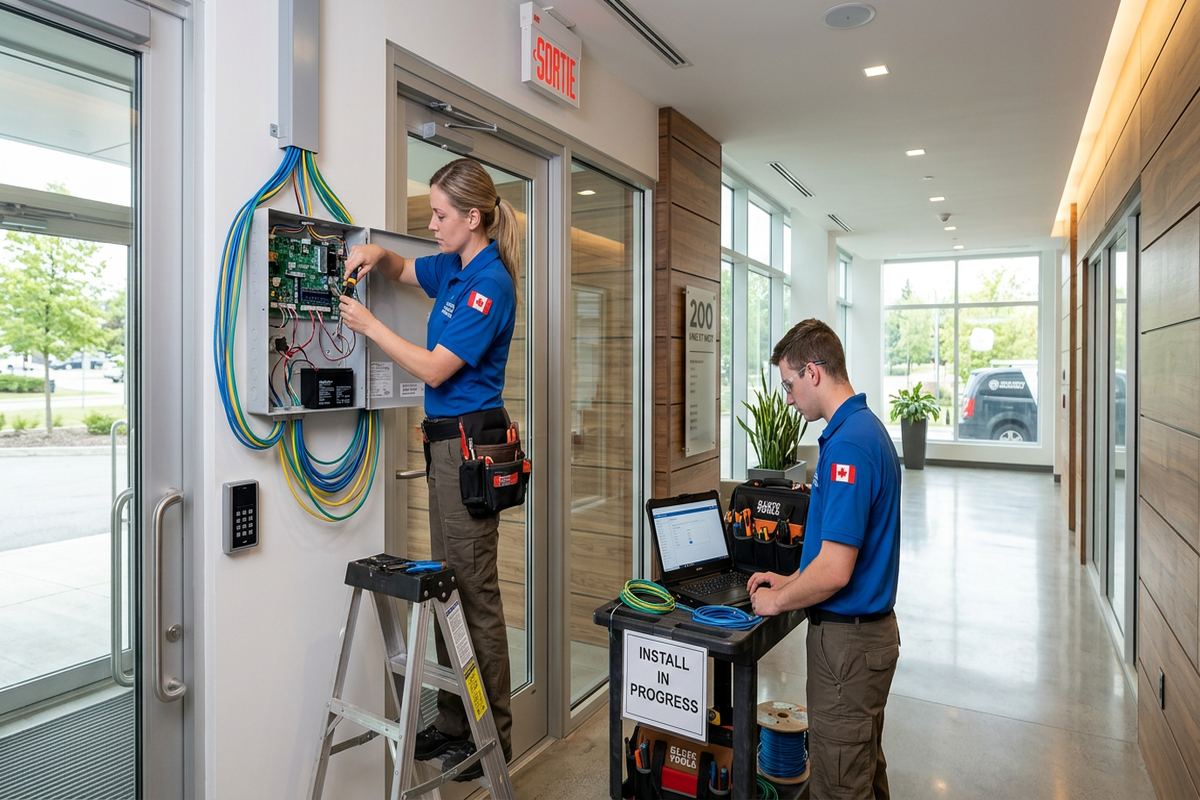
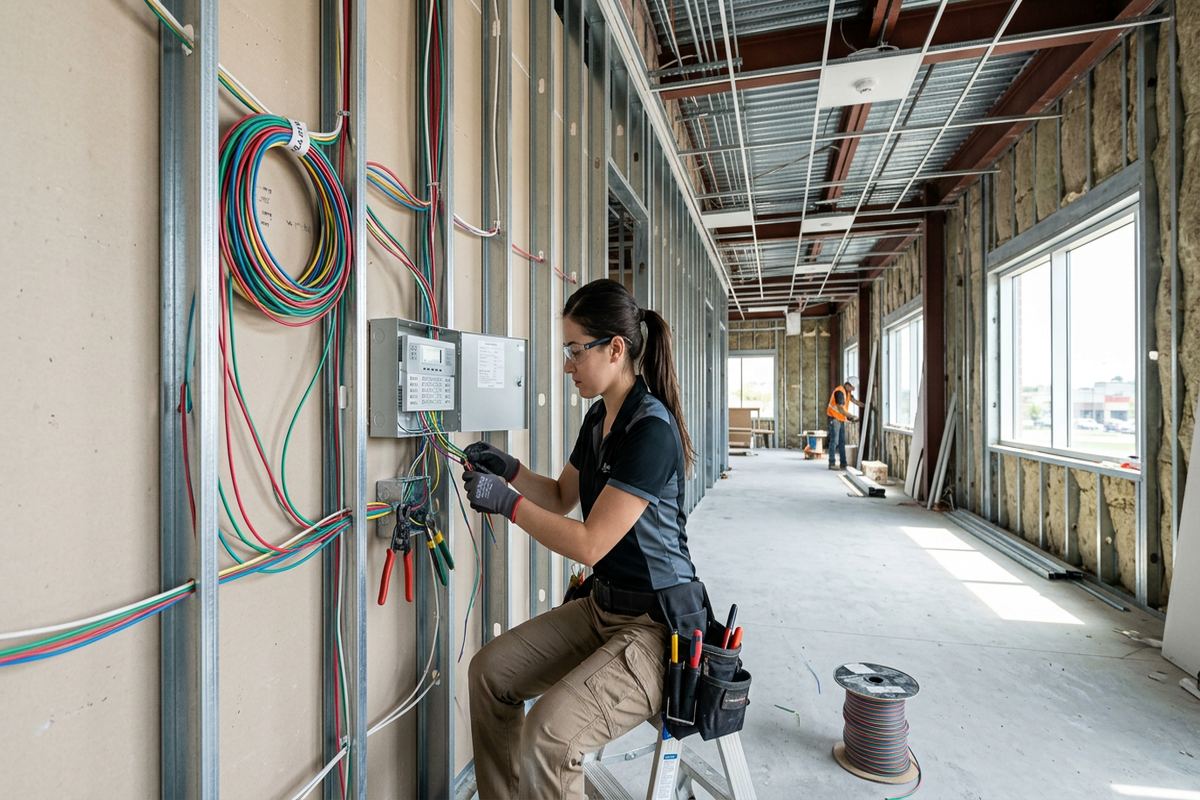
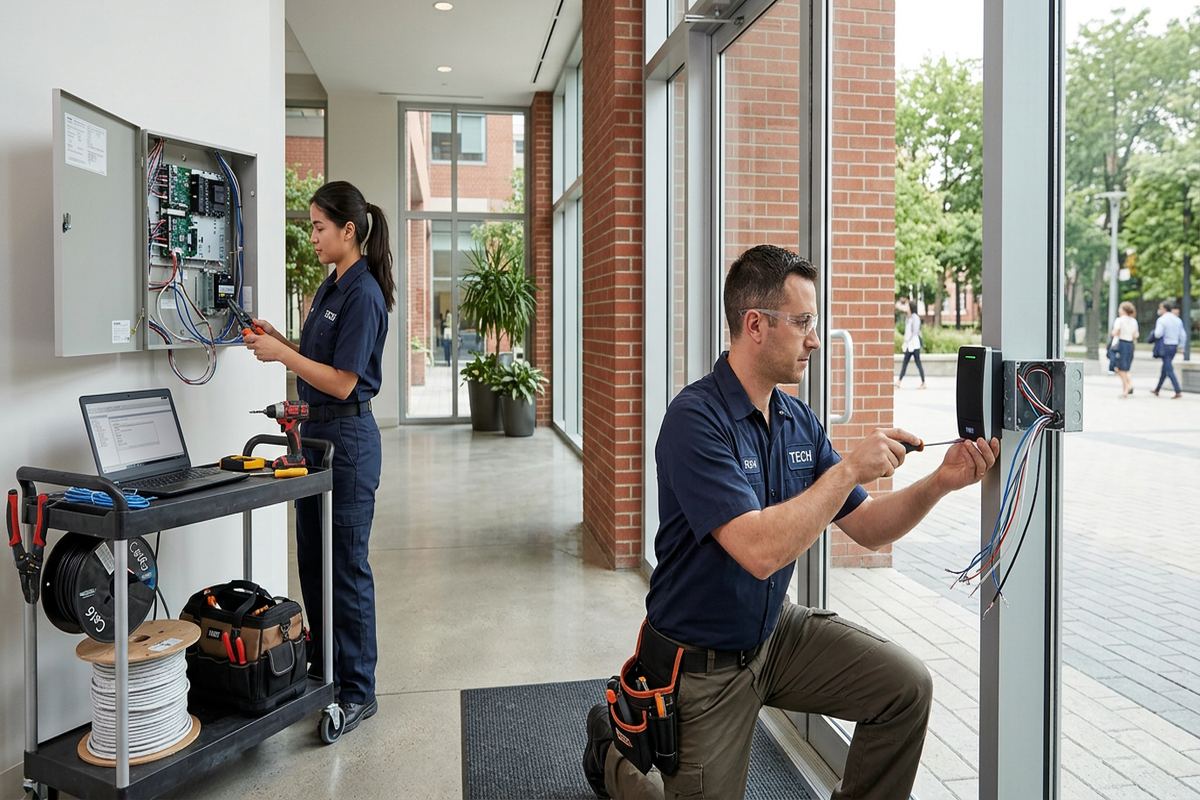
Access control cabling links readers, locks, door contacts, exit devices, controllers and power equipment. UnifiedLink installs continuous labelled cable runs within the agreed scope, avoiding unnecessary joins that complicate troubleshooting. Routes are selected after reviewing ceiling spaces, risers, electrical rooms, finished corridors and fire separations. Condo approval may be required before opening ceilings or using common pathways. Where existing cable is proposed for reuse, its type, condition and routing must be checked rather than assumed. Unverified wiring can create intermittent faults, voltage loss or undocumented connections that make future service more difficult.
Construction type changes how an installation should proceed. Masonry can require surface raceway, core drilling approval or carefully located penetrations, while frame construction may provide concealed routes but introduce insulation and finished-wall constraints. The heritage character around Yonge Street makes cautious routing and finish protection especially relevant when condo conversions or adjacent older structures are involved. Larger properties east of town may have longer pathways between gates, entrances and utility spaces. Cable distance, voltage requirements and network availability are reviewed during assessment so the design does not depend on unsuitable routes or unsupported extensions.
Controller and power supply locations must remain accessible for authorized service while protected from casual interference. Suitable spaces may include secured communications, electrical or management rooms, subject to available power, ventilation and condominium approval. Enclosures are labelled, and connected field cables are identified to support later diagnosis. If network connectivity is required, the scope defines the expected connection and identifies whether the condominium or its provider supplies it. Backup power requirements are considered with the selected equipment and locking method. We also document dependencies that could affect operation during utility, network or building system interruptions.
- Continuous labelled cable runs
- Masonry and frame routing plans
- Condo-approved common-area pathways
- Secured controller and power locations
- Documented network and power dependencies
Condo Approvals and Project Coordination
Access control work affects common elements, resident movement and building security, so approval should come before installation. The condominium board or authorized manager may need to approve equipment appearance, reader locations, cable pathways, shutdowns and work hours. Landlord approval may also apply in rental buildings or leased mixed-use spaces. UnifiedLink provides a written scope that can support this review, including device placement and exclusions. The customer remains responsible for obtaining required permissions unless the scope assigns a specific coordination task. We schedule physical work only after the relevant access and installation conditions are confirmed.
Coordination is particularly important when doors connect to fire alarm, accessibility, elevator or parking systems. Other contractors may need to isolate, test or modify their own equipment. Rather than making undocumented changes, we identify required interfaces and establish who completes each part. One accountable low-voltage contractor manages the access control scope, while specialized providers remain responsible for proprietary or regulated equipment outside that scope. Building management should notify residents about temporary entrance restrictions and alternative routes. Planned testing can then occur without creating confusion about whether a door is available, monitored or temporarily under contractor control.
Occupied condominiums need tidy, staged work. Tools, cable and opened ceiling areas must be controlled around residents, pets, deliveries and cleaning staff. We agree on access to electrical rooms, management spaces, suites when applicable and restricted service areas before arrival. Work sequences can keep essential entrances operating where the design and site conditions permit, but any planned interruption must be defined with management. At completion, affected areas are checked, devices are tested and identified deficiencies are recorded. Items outside the agreed access control scope are communicated rather than altered without authorization or added informally.
- Board or manager approval support
- Landlord permission where applicable
- Resident notice and work-area planning
- Coordination with specialized contractors
- Recorded out-of-scope deficiencies
Local Access Risks in Aurora Communities
Different parts of Aurora present different installation contexts even when the access objective is similar. Aurora Village may involve older finishes, constrained routes or buildings influenced by the heritage character near Yonge Street. Bayview Wellington and Rural Aurora properties can have different site layouts, entrance distances and exterior pathways. Aurora Highlands and the Hills of St. Andrew may include larger residential settings where gates, detached facilities or longer private routes affect equipment placement. We use these conditions as planning prompts, not assumptions, because the actual building assessment determines the appropriate system and construction method.
Winter operation should be considered at every exterior opening. Freeze-thaw movement can expose marginal door alignment, while snow and ice may prevent a door from closing fully. Moisture can enter poorly sealed penetrations, and road salt can accelerate deterioration around parking or service entrances. Access software cannot correct those physical problems. Aurora condo managers should include door closers, sweeps, hinges, latches and drainage conditions in routine property maintenance. During commissioning, we test lock release and secure closure, but seasonal building movement may still require later mechanical adjustment by the appropriate door or locksmith provider.
Unauthorized entry is not always caused by a failed reader. Doors can be held open, credentials can be shared, and delivery or service access can remain active longer than intended. A practical Aurora system combines controlled credentials with door monitoring, suitable schedules and management procedures. Amenity rooms may need permissions that reflect booking hours, while waste, bicycle or storage areas may require different access groups. Event information can support investigation where available, but it should be paired with physical inspection and documented administration. Security cameras may add context, although they remain a separate system and scope.
- Planning for varied Aurora building stock
- Freeze-thaw door operation checks
- Sealed exterior reader penetrations
- Amenity and storage permission groups
- Door-held-open monitoring options
Installation, Testing and Handover in Aurora
UnifiedLink begins with a site assessment before pricing because door conditions, cable routes and integration requirements cannot be confirmed remotely. Assessment timing depends on the service and travel distance. Requests sent during business hours are answered the same day, while after-hours requests are answered the next business day. After review, the written scope covers equipment, routes, device placement, exclusions, ownership and warranty. Condo representatives can use that document to confirm approvals and compare responsibilities before work starts. Changes discovered later are documented rather than quietly substituted into the original design or installation plan.
Installation includes mounting devices, completing continuous labelled cable runs and configuring the approved access rules on site. Each controlled opening is tested for credential acceptance, denied access, exit operation, secure closure and relevant monitoring. Integrated release signals are checked within the agreed scope, with other contractors participating where their equipment is involved. Testing also considers schedules and permission groups, not only whether the lock clicks. Any door or third-party issue that prevents final operation is recorded for correction. This provides management with a clear distinction between completed access work and outstanding dependencies requiring attention.
At handover, the Aurora customer receives control through its own credentials along with an as-built record of the completed work. We review routine administration, including adding users, disabling credentials and checking common door events where supported. Equipment locations, labels and relevant interfaces are documented for future service. The board or property manager should securely retain administrator details and determine who may request changes. A documented handover reduces reliance on individual memory when staff or board members change. It also gives future contractors a practical reference instead of requiring them to trace every cable and connection again.
- Site assessment before pricing
- On-site programming and functional testing
- Customer-owned administrator credentials
- As-built system record
- One accountable access control contractor
Aurora neighbourhoods we cover
- Aurora Village
- Bayview Wellington
- Aurora Highlands
- Hills of St. Andrew
- Rural Aurora
Condo access control systems in Aurora — common questions
Do we need condo board approval before installation?
Usually, yes. Readers, locks, cabling and controllers commonly affect shared doors or common areas, so the board or authorized property manager should approve the work. An Aurora condo may also require approval for drilling, ceiling access, shutdowns, device appearance and contractor work periods. UnifiedLink provides a written scope showing proposed equipment, routes, locations and exclusions to support that review.
Can you reuse our existing condo door hardware?
Existing hardware can sometimes remain, but it must be inspected for condition and compatibility. A reader will not make a misaligned door, weak closer or damaged latch reliable. During the Aurora assessment, we review each opening, its locking method, exit hardware and available wiring. The written scope identifies reusable components and any locksmith, door, electrical or specialized work required before commissioning.
Will the system work during an internet outage?
That depends on the selected platform, controller design and how permissions are stored. Some functions may continue locally while remote administration, notifications or cloud records are unavailable. We document the expected network dependency and test the agreed operating functions. Aurora condo management should also understand how locks behave during power loss and whether backup power, mechanical override or another approved procedure applies.
Can residents use phones instead of fobs?
Mobile credentials may be available when supported by the chosen system, resident devices and condominium policies. They are not automatically the right option for every Aurora building. Management should consider onboarding, lost phones, accessibility, privacy and residents who do not use compatible devices. A system may support cards, fobs and mobile credentials together, allowing the board to choose an administration method that suits the property.
Can access control connect with our intercom and cameras?
Access control can often exchange a door-release signal with a compatible intercom, but the available integration must be verified. Camera systems can provide visual context for entrances, although video and access records remain separate unless a supported integration is selected. At an Aurora site assessment, UnifiedLink reviews models, wiring and connection points, then states integration limits and third-party responsibilities in the scope.
How long does an Aurora condo assessment take to arrange?
Timing depends on the service requirements and travel distance. Requests sent during business hours are answered the same day, and after-hours requests are answered the next business day. Before attending, we may request door counts, plans, hardware photos and information about existing intercom, elevator or parking systems. The assessment is completed before pricing so the proposed scope reflects actual Aurora site conditions.
Coverage in Aurora is confirmed against the address before we quote. See everything we install in Aurora or the province-wide condo access control systems page.