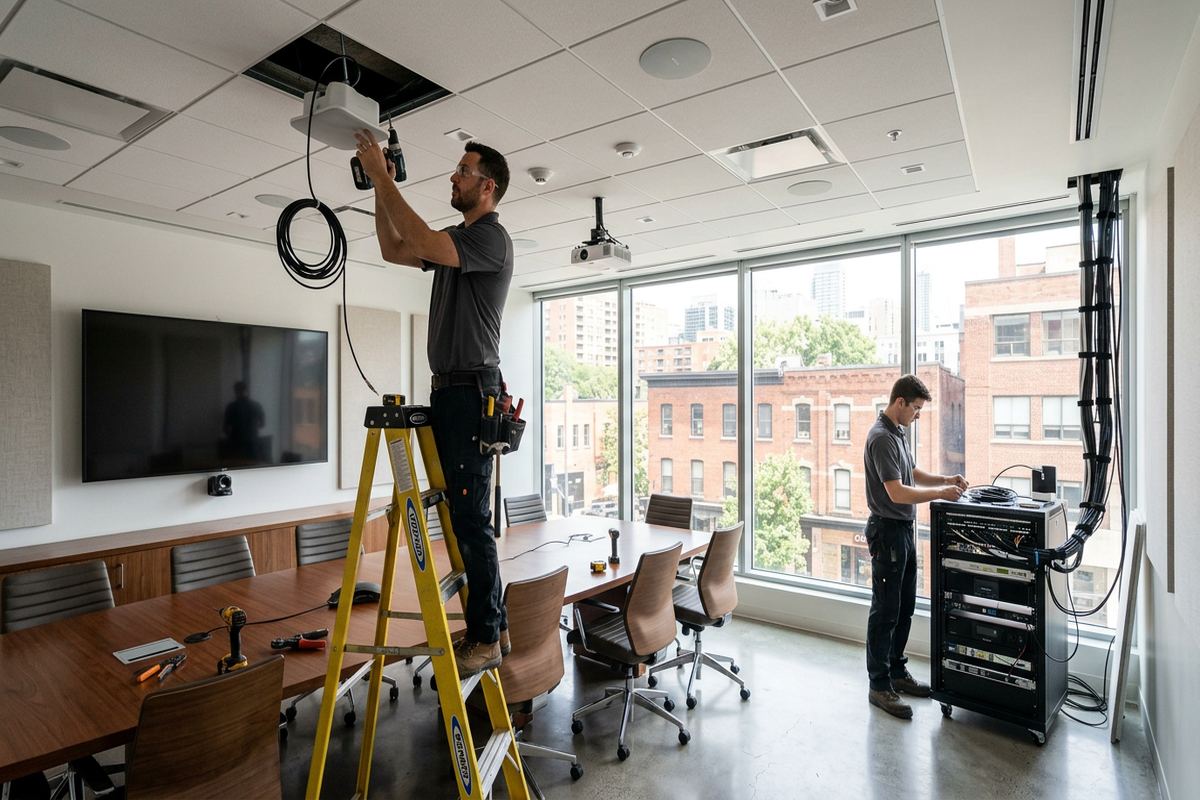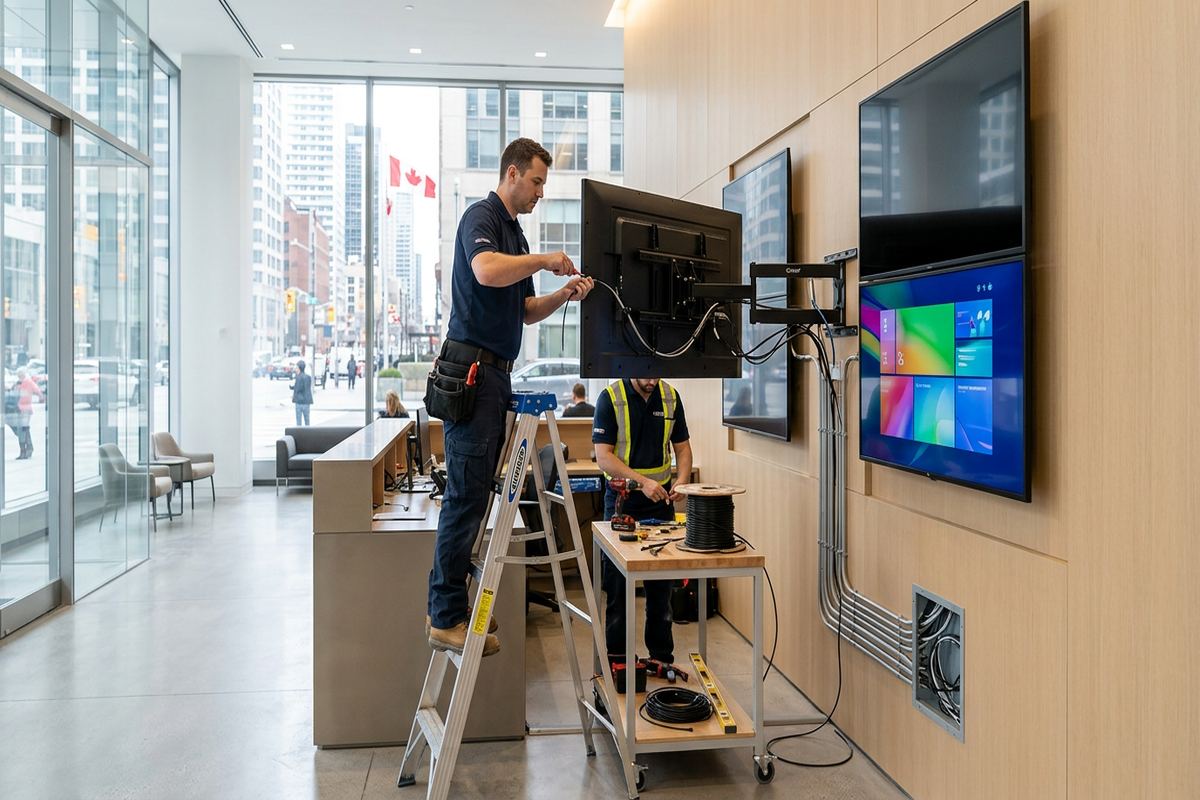
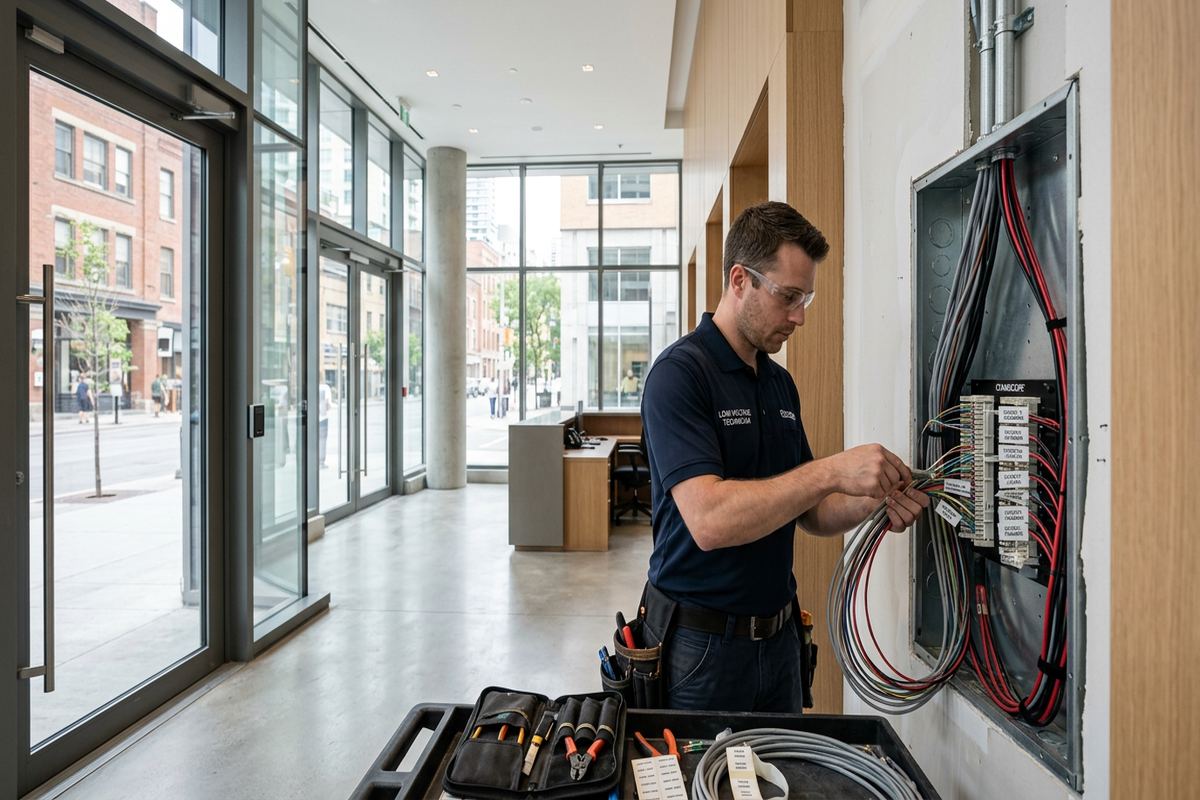
UnifiedLink installs commercial access control systems for offices, shops, clinics, multi-tenant properties and industrial units in Aurora. We assess each opening, plan the cable routes and connect compatible readers, controllers, locks and request-to-exit devices. Every project receives a written scope, on-site configuration and a documented handover using credentials owned by the customer.
Commercial Access Control Planning in Aurora
An effective access control system starts with the door, not the software. During an Aurora site assessment, we review how staff, visitors, contractors and deliveries move through the property. Each controlled opening is checked for door material, frame condition, existing lock hardware, closing force, fire-rating requirements and available cable pathways. We also identify reception procedures, accessible entry needs and the response expected during power or network loss. That information determines whether the project needs electric strikes, magnetic locks, electrified hardware, standalone readers or a centrally managed platform.
Aurora commercial properties range from converted buildings near Yonge Street to newer retail, office and mixed-use developments. Older frame construction may offer concealed pathways through walls or basements, while masonry façades can require surface raceway, careful drilling or alternate reader placement. Larger properties east of town may have detached gates, long cable distances or separate outbuildings. We account for those conditions before selecting equipment, because a reader specification alone does not address physical security, cable limits, weather exposure, door operation or the practical cost of reaching each opening.
Following the assessment, UnifiedLink prepares a written scope covering equipment, cable routes, device placement, exclusions, equipment ownership and warranty. The scope also identifies work that may involve a locksmith, electrician, door contractor, fire alarm provider, property manager or network administrator. This separation matters when existing doors are misaligned, frames are damaged or life-safety interfaces need specialist approval. By defining responsibilities before installation, an Aurora business can compare the proposed system against its operational needs without relying on assumptions about hardware, subscriptions, network access or work by other trades.
- Opening, frame and lock assessment
- Credential and user-group planning
- Cable route and controller location review
- Power, network and backup requirements
- Written scope before installation
Access Control Hardware for Aurora Properties
Hardware selection depends on the construction and use of each opening. A busy staff entrance may require different locking hardware from an interior records room, loading door or executive office. We consider traffic volume, latch type, door handing, frame depth, accessibility hardware and whether the opening must remain free for egress. Where suitable, a card or mobile reader can replace uncontrolled keys while retaining a mechanical override. The design must keep normal entry convenient without compromising door closure, emergency exit operation or the building’s established fire and security procedures.
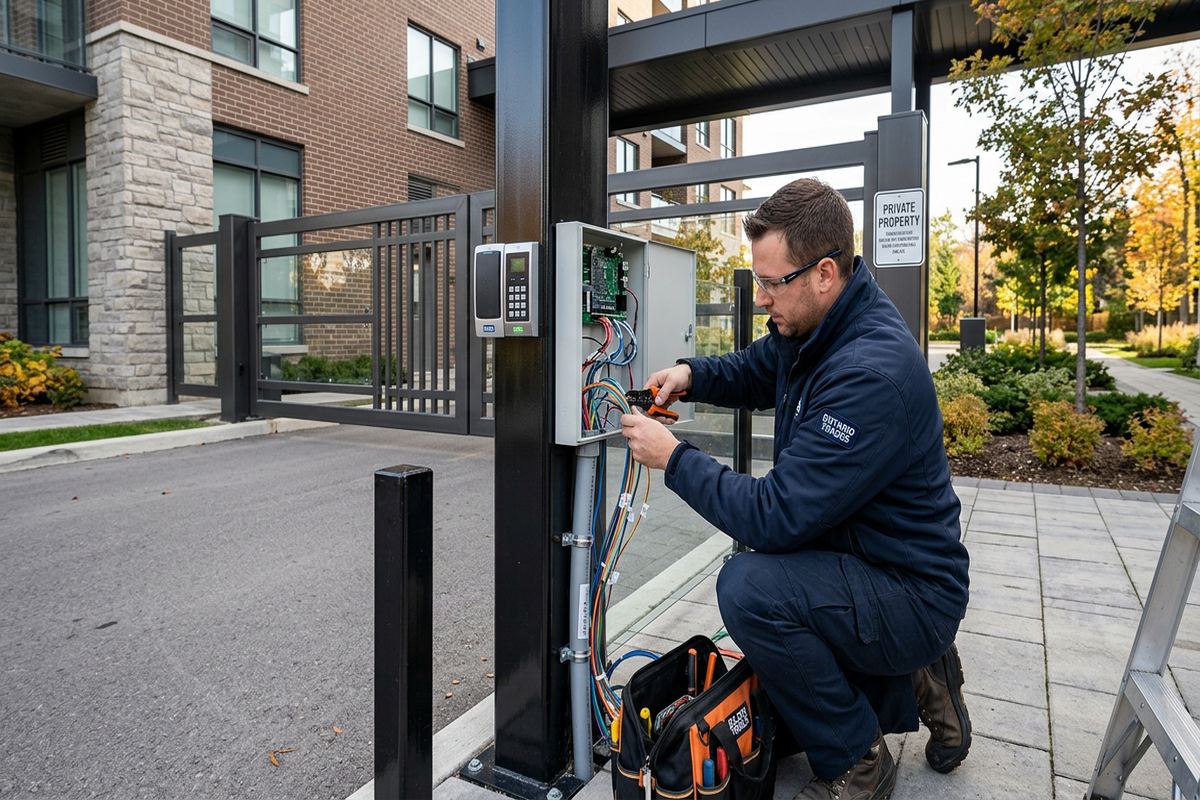
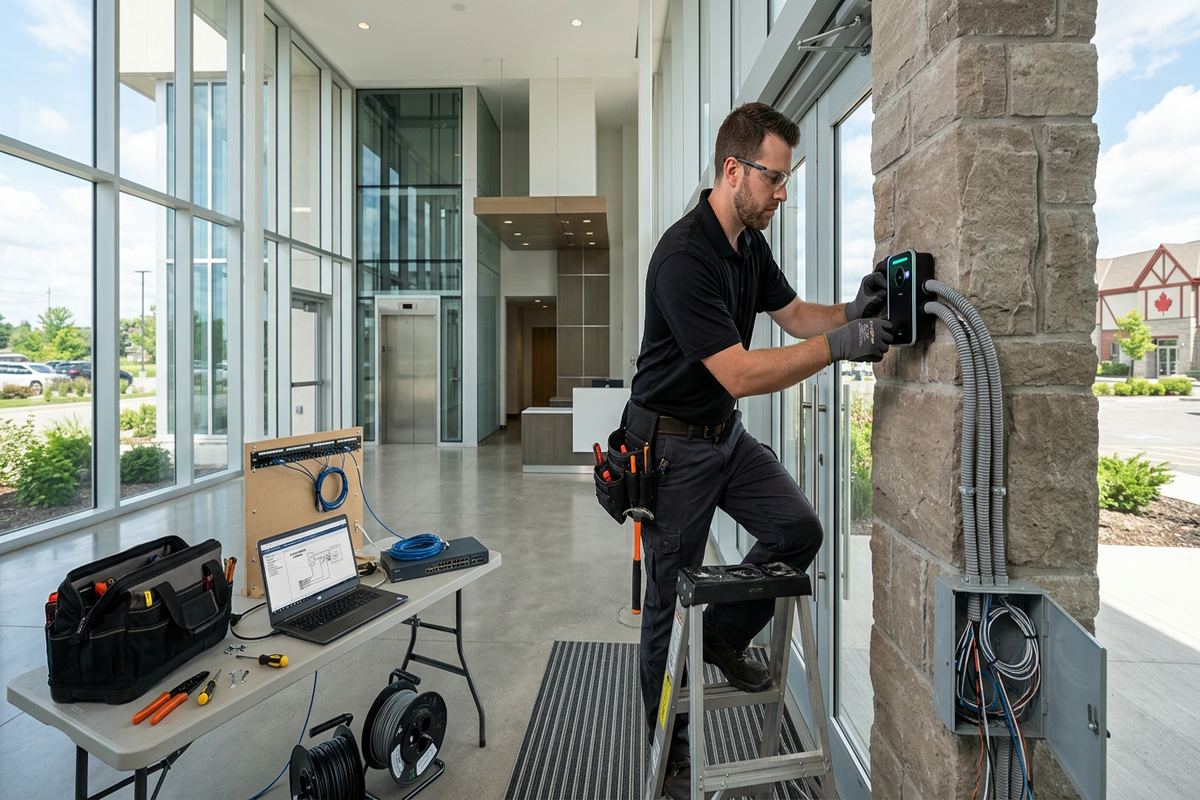
Exterior equipment in Aurora must tolerate winter moisture, snow, road salt and repeated freeze-thaw cycles. Reader housings, junction points and cable entries need appropriate environmental protection, while penetrations require careful sealing to reduce water entry behind brick, siding or metal panels. A weather-rated reader cannot compensate for an exposed connection or poorly positioned conduit. We plan drip paths, mounting surfaces and service access, then use suitable fasteners for masonry, concrete, steel or frame construction. Exterior gates and detached entrances may also need surge protection, grounding review and communication methods suited to the distance.
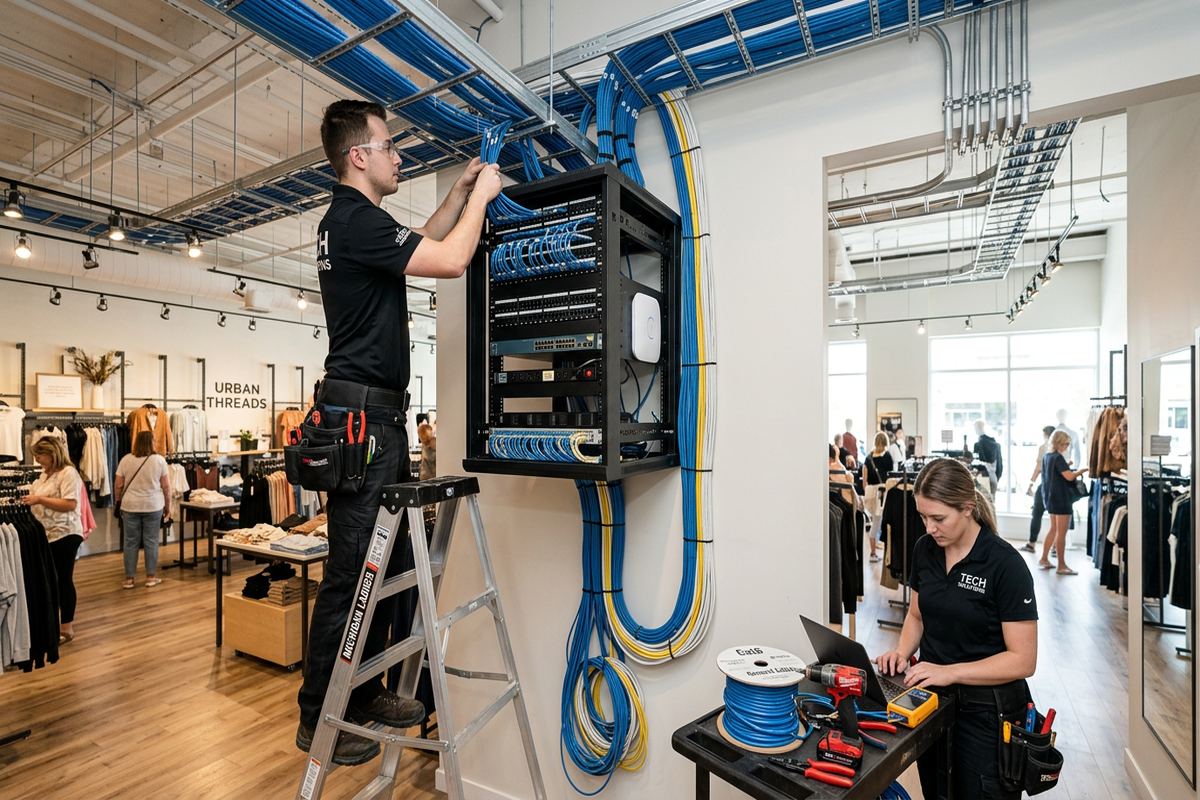
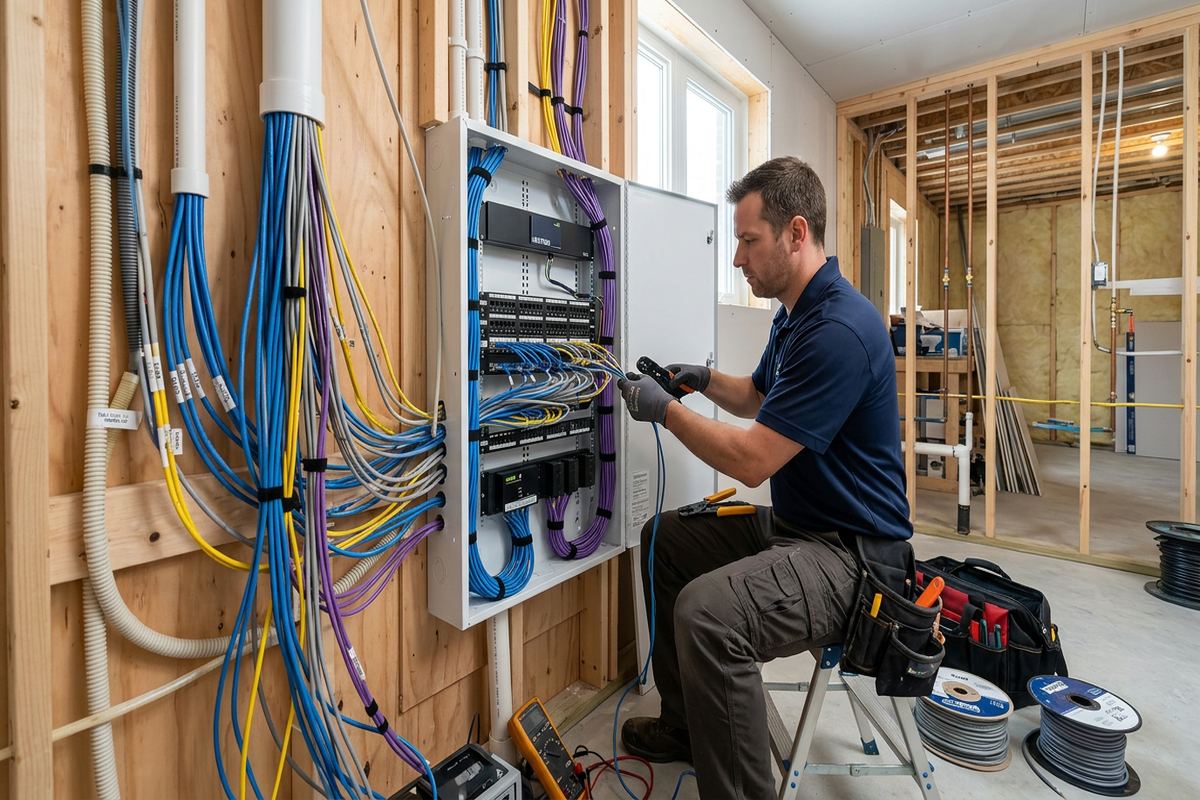
Controller and power-supply placement affects both reliability and future service. Equipment should be mounted in a secure, accessible interior location rather than hidden above an inaccessible ceiling or placed where temperature and moisture are uncontrolled. Continuous labelled cable runs help technicians identify readers, locks, door contacts and request-to-exit devices without tracing unmarked conductors. We document terminations and avoid unnecessary concealed splices. Where an Aurora site already has security, network or intercom equipment, the layout is coordinated so that new panels can be maintained without disturbing unrelated systems or blocking required working space.
- Card, fob or mobile readers
- Electric strikes and compatible lock hardware
- Door contacts and request-to-exit devices
- Secure controllers and power supplies
- Weather-conscious exterior installation
Reader and Lock Choices for Aurora Doors
Electric strikes are often practical where an existing latch and frame can accept the hardware, but they are not automatically suitable for every door. Frame dimensions, latch alignment, fire labels and the required locked or unlocked state during power loss all affect the decision. Magnetic locks introduce different egress and life-safety considerations and generally require coordinated release devices. Electrified panic hardware may be appropriate on higher-traffic exits. UnifiedLink reviews these conditions with the relevant trades so the access system operates as intended without altering listed openings or bypassing required emergency-release functions.
Credential choice should reflect how the Aurora organization manages people, not simply what a reader supports. Cards and fobs are straightforward to issue and revoke, while mobile credentials may reduce physical credential handling but can introduce licensing, phone compatibility and account-management questions. Keypads can help with selected low-risk doors, though shared codes provide less individual accountability. We define user groups, schedules and administrative roles during configuration. This gives the customer a workable method for onboarding staff, removing former users, granting temporary access and reviewing events without depending on a single employee’s undocumented knowledge.
Door monitoring adds context beyond a basic unlock command. A properly installed contact can report whether a door is open, forced or held beyond an approved interval, while a request-to-exit device helps the controller distinguish normal departure from an unexplained opening. These functions require accurate placement and testing because loose doors, wide frame gaps or moving metal surfaces can cause unreliable status reports. In Aurora’s older commercial spaces, settling or past renovations may have left inconsistent clearances. We identify those mechanical issues and separate door repairs from electronic configuration in the written scope.
- Fail-safe and fail-secure review
- Door-position monitoring
- Individual credential assignment
- Scheduled access permissions
- Mechanical override planning
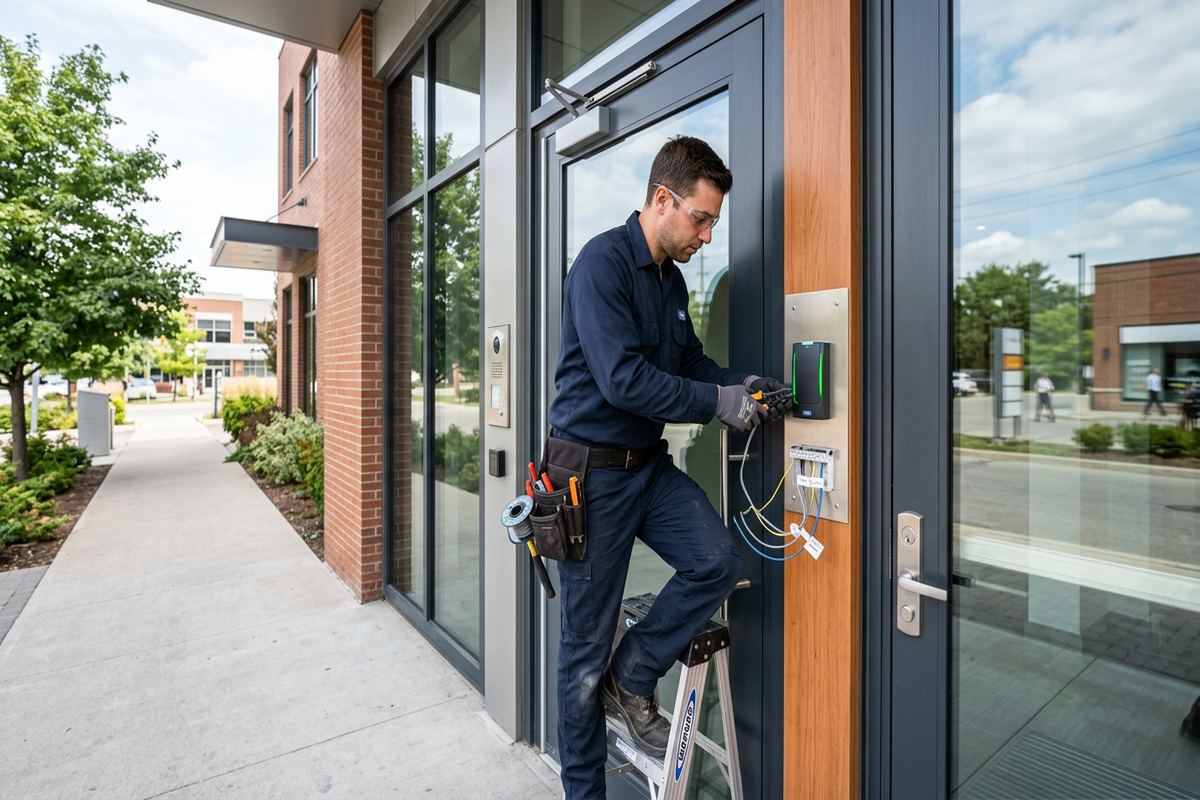
Aurora, Ontario
Commercial access control installation in Aurora, scoped in writing first
Book a site assessment and get equipment, routes, exclusions, and warranty on paper before anything is installed.
Cabling and Installation Across Aurora
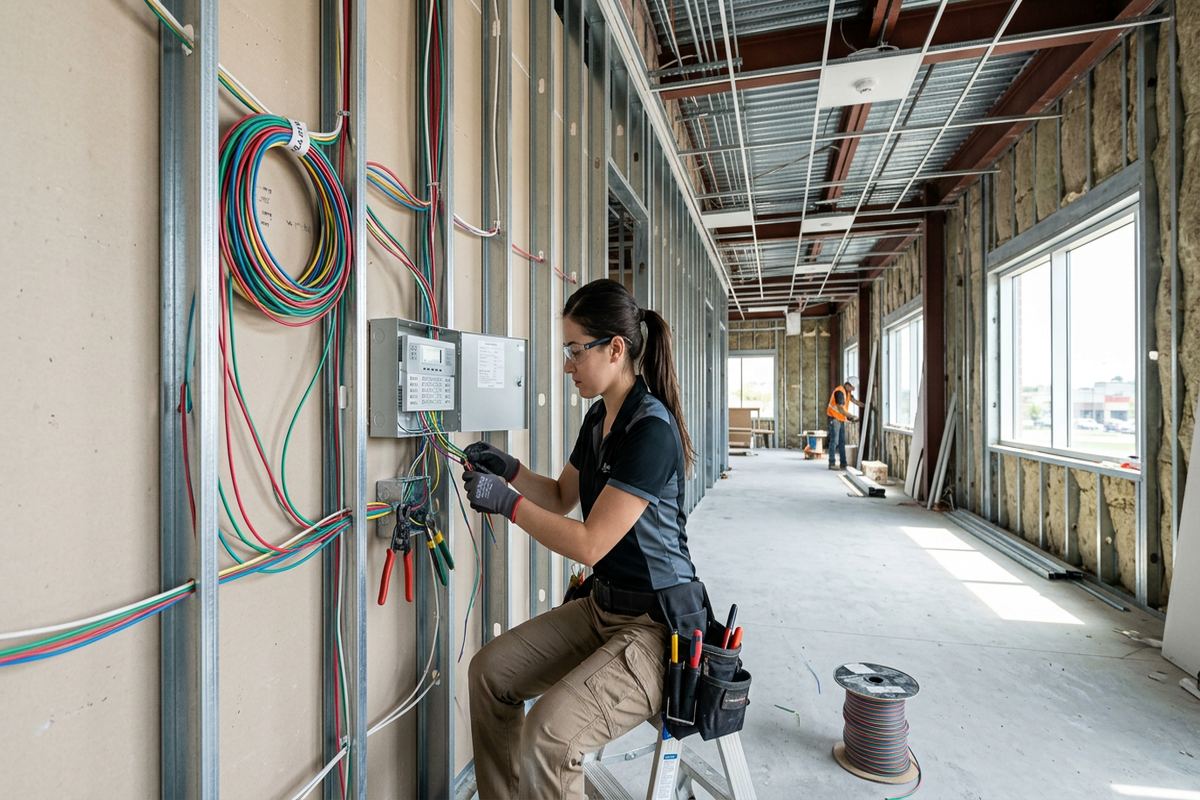
Access control cabling carries power, reader data and door status signals between each opening and its controller. UnifiedLink installs continuous labelled runs where the site permits, using pathways appropriate to the building and keeping low-voltage wiring separated from electrical conductors as required. Cable type and conductor count are selected for device demand, distance and future serviceability rather than assumed from a generic door package. At completion, labels correspond with controller positions and the as-built record, giving the customer a clear reference for troubleshooting, additions or future renovations at the Aurora property.
Construction methods vary across Aurora Village, Bayview Wellington and Aurora Highlands. A renovated frame building may have congested wall cavities, plaster finishes or additions built in several stages. Newer commercial units may provide suspended ceilings and shared service rooms but impose landlord standards for penetrations and pathways. Masonry demising walls can require conduit or surface raceway where concealed cabling is impractical. Before drilling, we confirm the proposed route, visible finish and responsibility for patching. This protects finished spaces and prevents an apparently simple reader installation from becoming an unplanned building repair.
Installation is coordinated around normal operations where practical, but controlled doors may need short periods of restricted use while hardware, cabling and testing are completed. We identify alternate entry arrangements and sensitive areas during planning. Dust control, ceiling access and device mounting are discussed for occupied clinics, offices, shops and warehouses. If a landlord or condominium corporation controls common doors, risers or electrical rooms, written approval may be needed before work begins. UnifiedLink can provide the proposed device locations and pathways, while the customer remains responsible for obtaining property approvals unless the scope states otherwise.
- Continuous labelled cable runs
- Masonry and frame pathway planning
- Neat raceway where concealment is impractical
- Coordinated work in occupied spaces
- As-built cable and device records
Networked Access Control and Administration
A networked system can centralize permissions, schedules and event records across several Aurora doors or buildings. Before connection, we confirm the platform’s network requirements with the customer’s IT contact, including addressing, firewall rules, remote access, update responsibilities and account ownership. Access control should not be placed on a network without an agreed security plan. Where cloud management is proposed, the written scope identifies applicable service dependencies and exclusions. Where local management is preferred, the customer still needs a defined backup, update and administrator-access process for the controller or management workstation.
On-site configuration turns installed hardware into an operational system. We create agreed door names, time schedules, user groups, unlock periods and event rules, then test valid entry, denied entry, door status and power-loss behaviour. Permissions should follow job function rather than giving every credential access to every opening. For multi-tenant Aurora properties, administration may need separation so a property manager controls common entrances while individual occupants manage their own staff. Those boundaries are confirmed before credentials are imported or issued, reducing confusion over who may add users, view events or change schedules.
Integrations require explicit compatibility review. Access control may exchange signals with an intrusion alarm, intercom, elevator interface, automatic door operator or video surveillance platform, but a shared network connection does not guarantee direct integration. We identify the required input, output, licence, relay or supported software interface before including it in the scope. Fire alarm release functions and regulated life-safety work must be coordinated with the appropriate provider. UnifiedLink remains one accountable contractor for its defined work while documenting dependencies that must be supplied, programmed or approved by other parties serving the Aurora site.
- Role-based user permissions
- Door schedules and holiday rules
- IT coordination before network connection
- Documented integration requirements
- Customer-controlled administrator accounts
Access Control for Aurora Business Types
Retail and professional spaces along commercial corridors often need a simple distinction between public, staff and restricted areas. A front entrance may remain unlocked during business hours while offices, stockrooms, medication rooms or rear service doors require individual credentials. Event records can help managers investigate access questions without distributing additional keys. For converted properties near Yonge Street, device placement must respect existing finishes and the limitations of older framing or masonry. We plan visible hardware and pathways before installation rather than assuming every cable can be concealed without damage.
Industrial and warehouse units commonly combine pedestrian doors, loading areas, fenced yards and office sections. Metal frames and block walls require appropriate mounting methods, while long routes may affect controller placement and conductor sizing. A loading door used throughout an Aurora winter also needs hardware positioned away from direct impact, accumulated snow and water wherever possible. Access permissions can separate warehouse, management and contractor schedules, but electronic control does not correct a door that drags, fails to latch or has damaged panic hardware. Mechanical repairs are identified before commissioning so status monitoring remains dependable.
Multi-tenant buildings and larger estate properties east of town can involve gates, detached structures or shared entrances with different administrative owners. Rural Aurora sites may also have longer distances between the main building and an entrance, making direct copper cabling impractical or vulnerable without appropriate protection. We review power availability, communications, trenching responsibility and environmental exposure before proposing a method. In the Hills of St. Andrew or other managed properties, exterior appearance and common-element rules may influence reader colour, conduit location and approval timing. These conditions belong in the scope rather than being resolved during drilling.
- Retail staff and stockroom control
- Office and clinic permission groups
- Warehouse and loading-area monitoring
- Multi-tenant administration boundaries
- Gate and outbuilding planning
Commissioning and Handover in Aurora
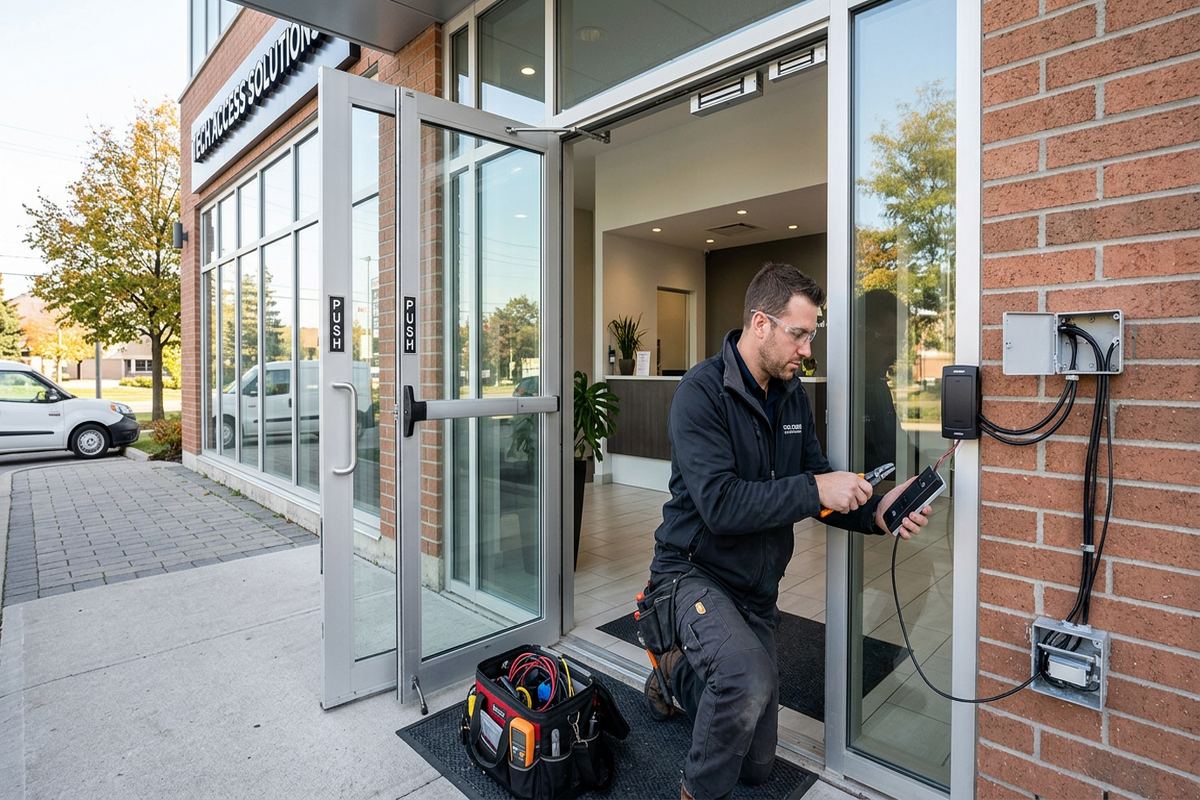
Commissioning verifies more than whether a credential unlocks a door. Each controlled opening is tested for reader response, lock operation, door-position reporting, request-to-exit behaviour and relocking after entry. We also check agreed schedules, denied credentials, held-open events and the response to a local power interruption. Exterior openings receive a visual review of mounting, cable entry and sealing. Where another trade has provided hardware or interfaces, testing confirms the defined handoff point. Any unresolved door alignment, network or third-party issue is recorded rather than hidden through temporary configuration changes.
The customer receives access using its own credentials, not an installer account that remains the only route into the platform. Handover includes the agreed administrator method, basic operational guidance and an as-built record identifying installed devices, controller locations and labelled cable runs. We explain how to add or revoke users, adjust normal schedules and review common door events within the supplied platform. Passwords and recovery details should be stored through the customer’s internal security process. This approach gives an Aurora organization control of its system while preserving enough documentation for future service or expansion.
Staff responsibilities should be settled before the system goes live. Someone must approve access requests, remove departed users, protect spare credentials and review unusual events according to company policy. Temporary contractor permissions should have defined dates rather than remaining active indefinitely. If several departments share the system, administrator rights can be limited to reduce accidental changes. UnifiedLink documents the configured structure at handover, but ongoing personnel decisions remain with the customer. Clear ownership prevents a technically sound Aurora installation from becoming difficult to manage after staffing, tenancy or operating hours change.
- Functional test at every opening
- Power-loss behaviour verification
- Customer-owned administrator credentials
- Basic operational guidance
- As-built device and cable record
Expanding and Maintaining Aurora Access Systems
Access control should be reviewed when doors, tenants, operating hours or security policies change. A system that suited one entrance may need additional controller capacity, network resources or power when several doors are added. Keeping the as-built record current helps identify available panel positions and existing routes before expansion begins. For Aurora businesses moving into an occupied unit, we also determine who owns the installed equipment and whether former administrators retain access. Ownership, licences and reset options should be resolved before relying on inherited readers, controllers or credentials.
Seasonal inspection is particularly useful for exterior doors exposed to Aurora’s freeze-thaw conditions. Weather stripping, closer performance and frame movement can change how consistently a latch engages, even when the electronic components remain functional. Water staining, cracked sealant, loose reader mounts and corroded connections should be addressed before they cause intermittent operation. Property staff should also watch for doors propped open, damaged request-to-exit devices or recurring held-open events. Access control reports conditions, but routine physical inspection is still needed to keep the entire opening secure, accessible and dependable.
When a fault occurs, accurate labels and records shorten the path to diagnosis. The issue may involve the credential, reader, cable, power supply, network, controller configuration, lock or the mechanical door itself. We approach troubleshooting by confirming symptoms and testing each part of that chain rather than replacing equipment without evidence. Requests sent during business hours are answered the same day, while after-hours requests are answered the next business day. Site assessment timing depends on the required service and travel distance. One accountable contractor coordinates UnifiedLink’s defined cabling, device installation, configuration and documentation work.
- Capacity review before adding doors
- Exterior mounting and seal inspection
- Credential and administrator audits
- Updated records after system changes
- Structured fault diagnosis
Aurora neighbourhoods we cover
- Aurora Village
- Bayview Wellington
- Aurora Highlands
- Hills of St. Andrew
- Rural Aurora
Commercial access control installation in Aurora — common questions
What does an Aurora access control assessment include?
We inspect each proposed opening, its frame, lock, closer, exit hardware and available cable route. We also discuss users, schedules, visitor handling, network availability and expected behaviour during power loss. Aurora building conditions, including older construction, masonry walls and exposed exterior doors, are considered before equipment is selected. Pricing follows the assessment and a written scope is provided.
Can access control be installed in an older Aurora building?
Yes, subject to the condition of the doors and practical cable pathways. Older properties near Yonge Street may have plaster, masonry, additions or limited ceiling access. We assess whether concealed cabling, conduit or neat surface raceway is appropriate. Existing fire-rated openings, heritage considerations and damaged frames may require approval or work by another trade before access control hardware can be installed.
Do I need landlord or condominium approval?
Approval may be required when work affects a leased unit, common entrance, shared electrical room, exterior façade or condominium common element. Aurora landlords and condominium corporations may also specify acceptable hardware, contractors, cable routes or restoration methods. We can document proposed reader locations, controller placement and pathways for review, but the customer is responsible for obtaining approvals unless the written scope assigns that task differently.
Will exterior readers work through Aurora winters?
Exterior readers can operate reliably when the selected equipment, mounting and connections suit the location. Aurora winters introduce moisture, snow, salt and freeze-thaw movement, so we review weather ratings, cable entry, sealing, fasteners and exposure. The complete door also matters: a shifting frame, weak closer or frozen latch can prevent proper locking even when the reader and controller are operating normally.
Can you connect access control to our cameras or alarm?
Integration may be possible, but compatibility must be confirmed for the specific access control, video and alarm platforms. We review supported software interfaces, relays, inputs, licences and network requirements before including integration in an Aurora scope. Fire alarm release or other life-safety functions require coordination with the appropriate provider. A common brand or shared network does not by itself confirm compatibility.
Who owns the credentials and system accounts?
The customer receives the system using its own administrator credentials. The written scope identifies equipment ownership, relevant service dependencies and exclusions before work begins. At handover, we provide agreed operational guidance and an as-built record for the Aurora installation. The customer should store passwords and recovery information securely, assign internal administrators and establish a process for issuing, revoking and auditing staff credentials.
Coverage in Aurora is confirmed against the address before we quote. See everything we install in Aurora or the province-wide commercial access control installation page.