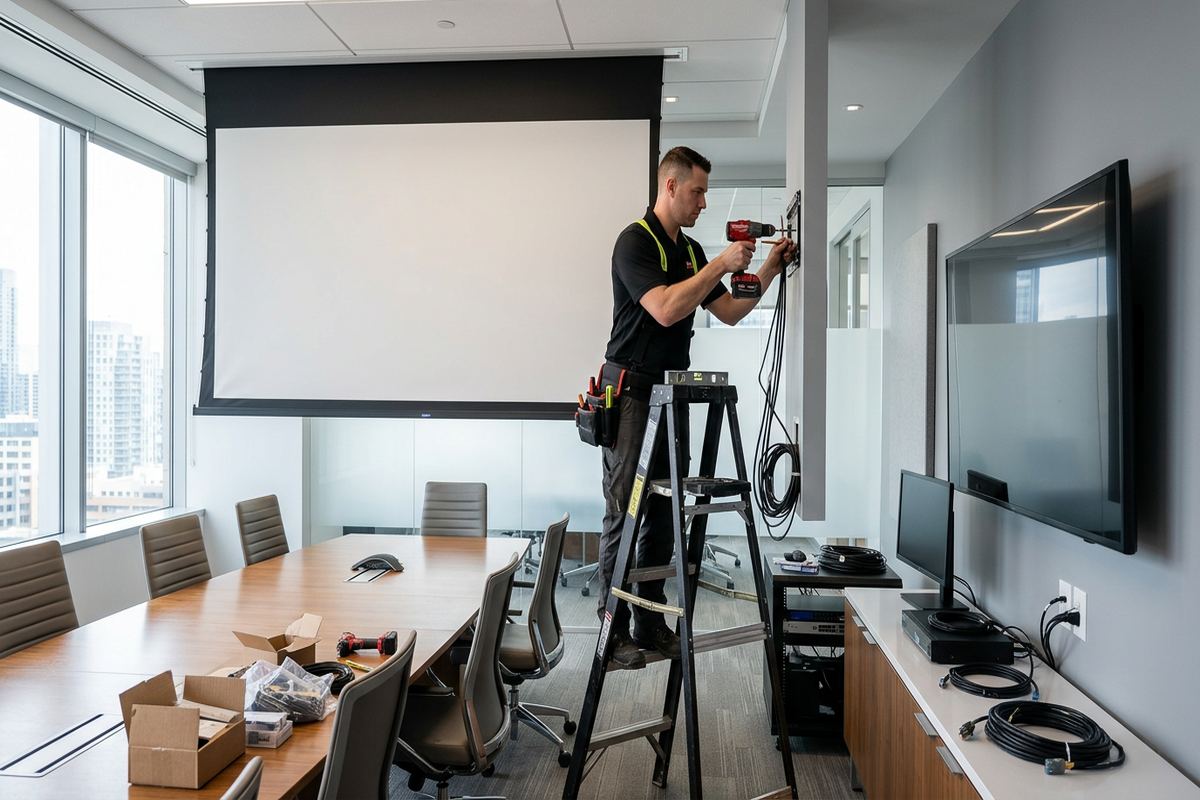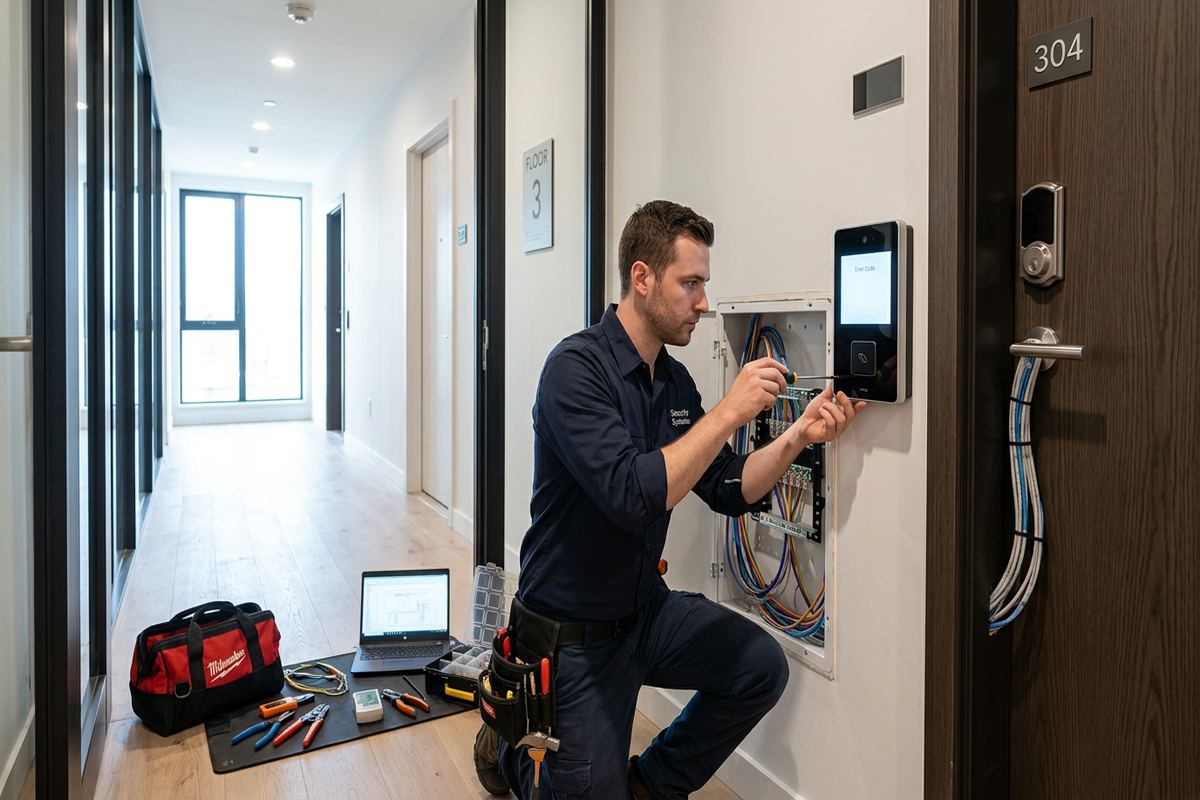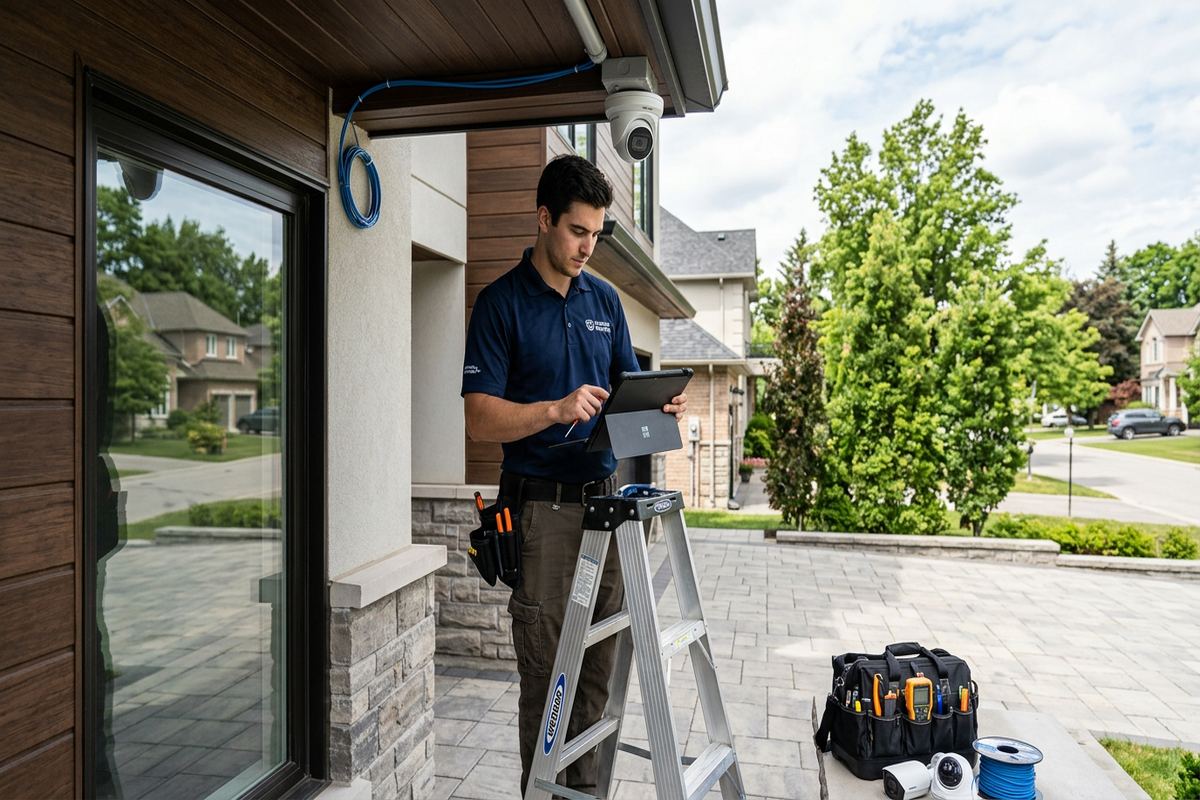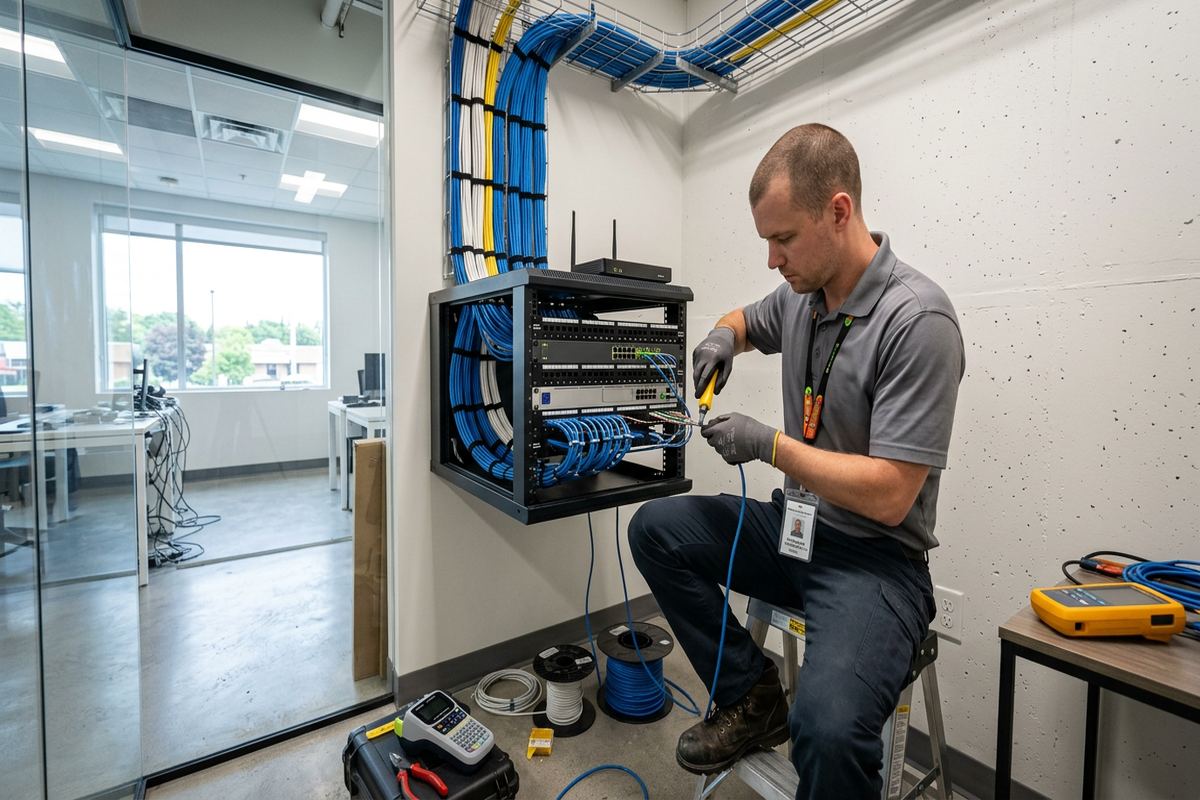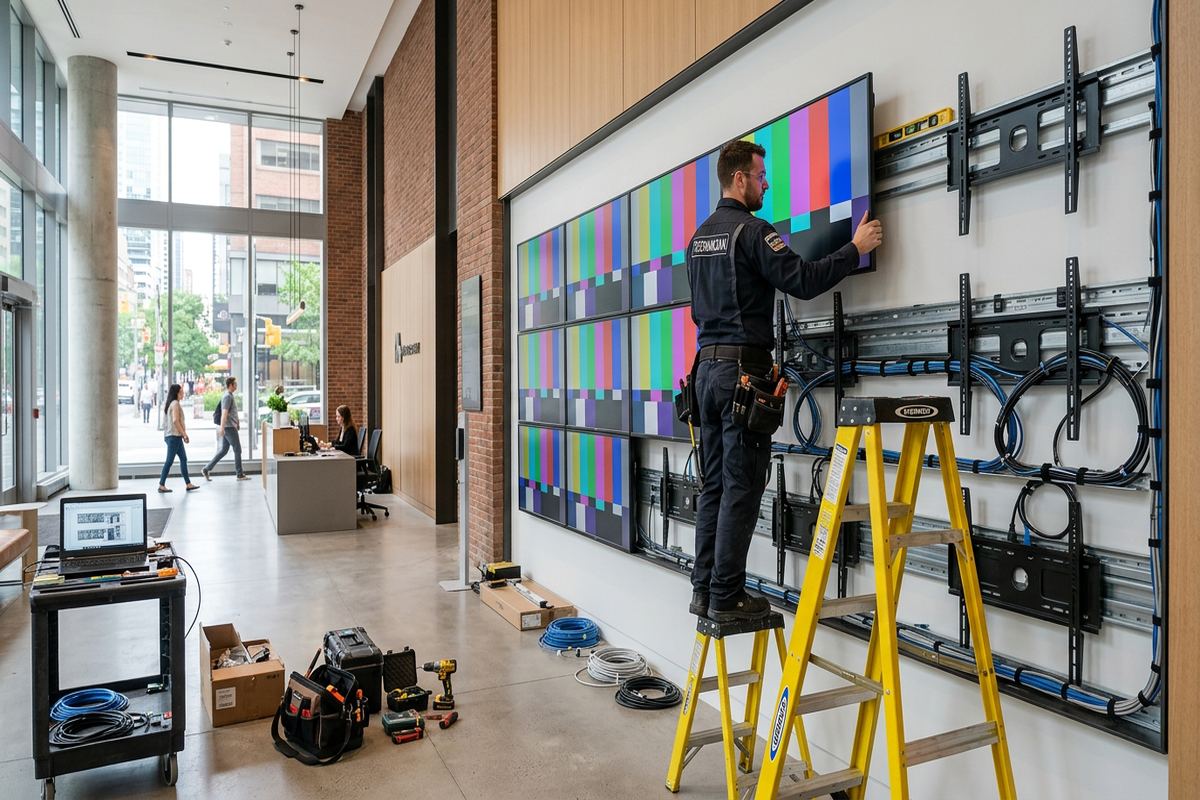
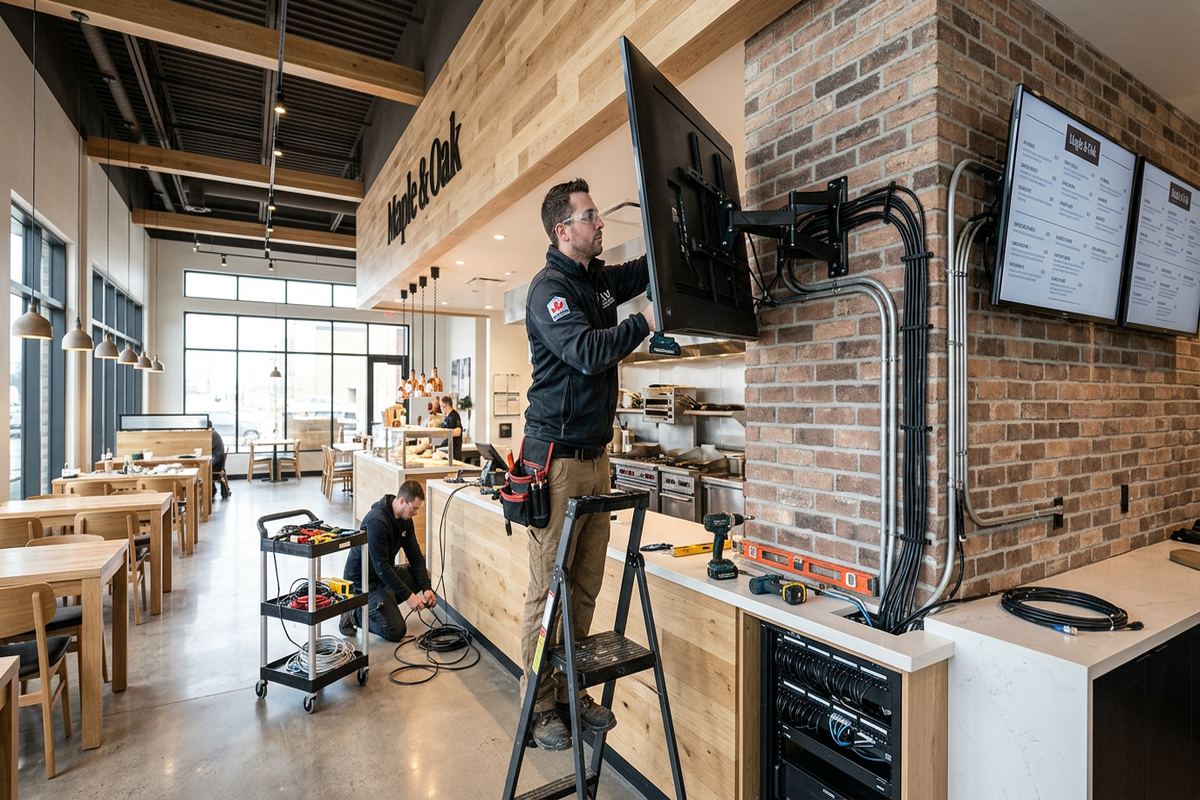
UnifiedLink installs outdoor televisions for homes and businesses across Ajax and Durham Region. We assess the wall, viewing area, power, signal path and seasonal exposure before defining the work. Each installation is planned around reliable mounting, protected connections, practical cable routes and straightforward operation, with particular attention to Ontario winters and exterior sealing.
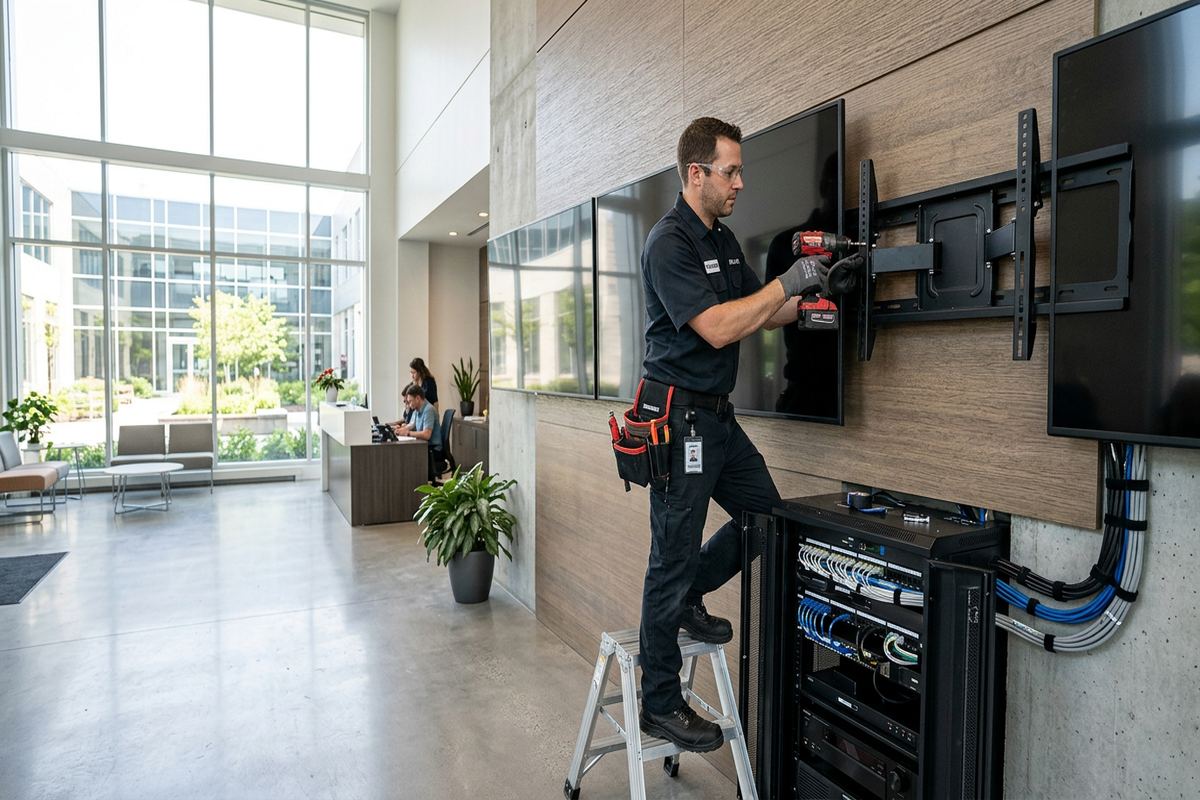
Outdoor TV Installation Planning in Ajax
A useful outdoor television starts with a site assessment rather than a bracket selected from a photograph. In Ajax, we review the proposed viewing area, wall construction, sun direction, seating position, nearby power and the route back to network or source equipment. We also check roof overhangs, drainage points and exposure to wind-driven rain. These details determine whether the requested location is suitable, which mounting approach is practical and how cables can reach the display without creating avoidable penetrations or visible loops across finished exterior surfaces.
Newer subdivisions in Nottingham, Applecroft and other parts of Ajax often have finished interiors and carefully completed outdoor spaces. Although these homes can make retrofits straightforward, the work remains detail-heavy because cable routes may need to pass behind finished basement ceilings, insulated exterior walls or completed decks. We trace practical routes before opening surfaces and identify where access panels, conduit or small controlled openings may be required. The written scope records the agreed device position, cable path, equipment responsibilities, exclusions and finishing expectations before installation proceeds.
Viewing height and angle are planned for the actual seating arrangement, not simply the centre of an available wall. A television mounted too high can be uncomfortable, while one placed near a barbecue, heater, pool edge or high-traffic doorway may face heat, moisture or impact. We consider glare throughout the likely viewing period and verify that doors, covers and articulating arms have enough clearance. Where multiple locations are possible, we explain the installation consequences of each so the customer can choose between appearance, weather protection, service access and viewing performance.
- Assessment of mounting surface and wall structure
- Review of sunlight, rain and seasonal exposure
- Planned routes for power, signal and network cabling
- Written scope before installation work begins
Weather-Resistant Mounting for Ajax Properties
Exterior mounting in Ajax must account for rain, snow, humidity and repeated freeze-thaw cycles. Water can follow a fastener, cable or poorly sealed opening into a wall assembly, particularly when snow accumulates near the installation. We select attachment methods according to the verified substrate and seal penetrations with exterior-rated materials suited to that assembly. The objective is not merely to cover a hole, but to preserve drainage and limit moisture entry while keeping the bracket securely supported through seasonal movement and regular use.
Brick veneer, poured concrete and framed walls require different anchors and cable-entry details. A bracket should never be treated as though the visible surface alone provides structural support. On masonry, we assess joint condition, edge distances and the location of the structural backing. On framed construction, we locate suitable framing or plan an appropriate support method rather than relying on cladding. Vinyl siding, stone veneer and exterior insulation may need spacing or blocking so the mounting hardware does not crush, distort or loosen the finished surface.
An outdoor-rated television is generally the appropriate choice for a permanently exposed location because its enclosure, operating range and brightness are designed for exterior conditions. A standard indoor model placed outside may remain vulnerable even beneath a roof, and a cover does not change its manufacturer rating. During assessment, we review the proposed television, mounting hardware and environment together. We also preserve access to service panels, ventilation areas and connection compartments, avoiding improvised sealing that could trap heat or interfere with drainage intended by the equipment manufacturer.
- Fasteners selected for the confirmed substrate
- Exterior-rated sealing around necessary penetrations
- Clearance maintained for ventilation and service access
- Mounting hardware matched to display size and use
Cable Routing in Finished Ajax Homes
Finished basements are common in newer Ajax subdivisions and can offer useful routes between communications equipment and an outdoor living area. They can also conceal joists, ducts, plumbing and vapour-control layers that must not be disturbed casually. We inspect accessible utility spaces, ceiling sections and exterior transition points before recommending a route. Where concealment is practical, UnifiedLink installs continuous labelled cable runs rather than hidden couplers. If a fully concealed route would require extensive finishing work, the scope identifies alternatives such as discreet exterior-rated conduit or an agreed accessible pathway.
Lakefront homes around Duffin's Bay and Pickering Beach may present longer runs, renovated additions or outdoor structures separated from the main equipment location. Cable type and pathway are selected according to distance, bandwidth, exposure and the devices being connected. Exterior sections require products and fittings intended for the environment, while transitions into conditioned space need careful sealing. Low-voltage cabling is kept separate from electrical conductors as required, and unnecessary splices are avoided. The resulting route is labelled at termination points and shown in the as-built record provided during handover.
Power is reviewed alongside low-voltage cabling because outdoor displays need a suitable receptacle and compliant electrical arrangement. UnifiedLink does not treat extension cords through doors or windows as permanent infrastructure. If new line-voltage work is necessary, that requirement is identified during planning so it can be completed by the appropriate electrical trade. Signal, data and control cables are then coordinated with the power location, mounting plate and weatherproof connection area. This sequencing avoids a finished installation with exposed adapters, strained leads or inaccessible connections behind the television.
- Continuous cable runs without concealed intermediate couplers
- Labels applied at both ends of each run
- Exterior conduit used where concealment is impractical
- Power requirements identified before mounting proceeds
Ajax, Ontario
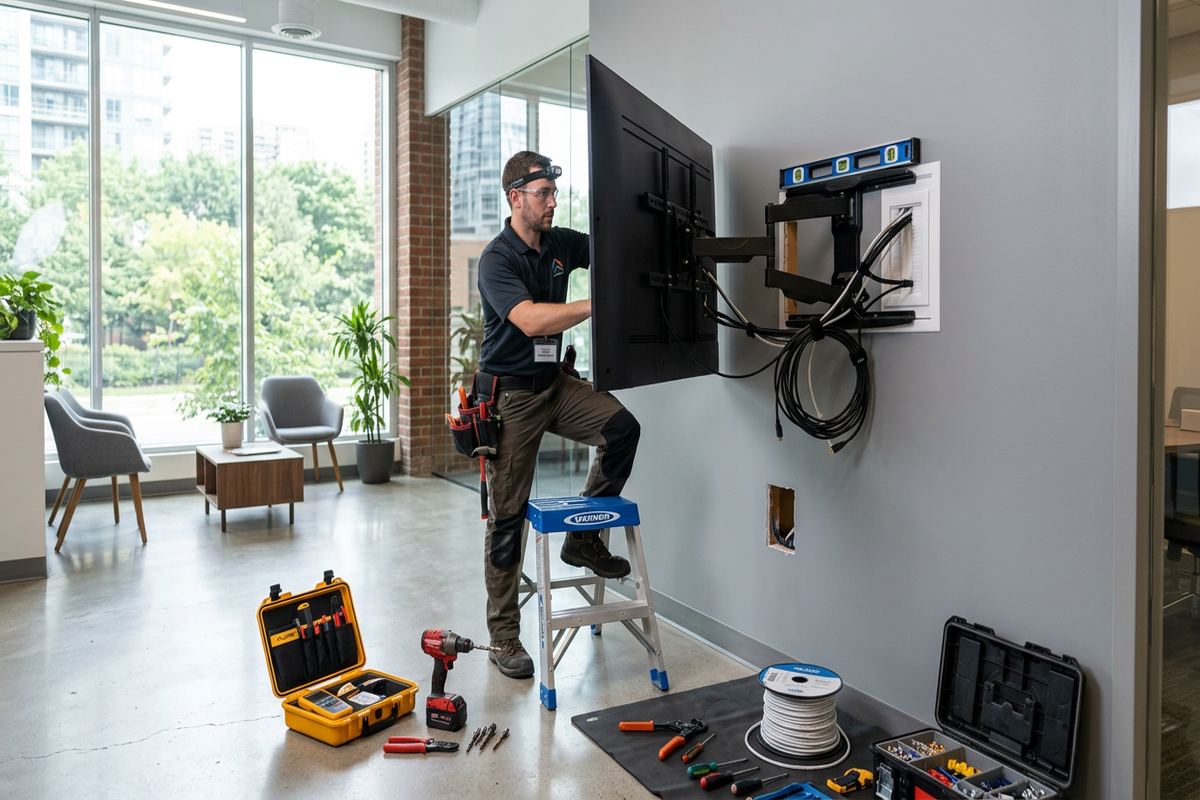
Outdoor TV installation in Ajax, scoped in writing first
Book a site assessment and get equipment, routes, exclusions, and warranty on paper before anything is installed.
Picture, Sound and Network Setup
Outdoor viewing conditions differ substantially from an indoor family room. Ambient daylight can reduce apparent contrast, reflections may change as the sun moves, and nearby surfaces can affect sound. After mounting, we configure practical display settings for the installation environment without pushing the panel unnecessarily at all times. Sources are checked at the resolutions and formats the customer expects to use. Where a television has selectable outdoor modes or automatic brightness features, we explain their purpose and confirm that controls remain accessible through the chosen remote, application or connected system.
Reliable streaming depends on more than the television's advertised wireless capability. Exterior walls, masonry, foil-backed insulation and distance from the router can weaken Wi-Fi at a patio even when indoor coverage appears adequate. During an Ajax site assessment, we review the available network signal and determine whether wired Ethernet, improved wireless coverage or an existing connection is suitable. Network changes are included only when agreed in the written scope. Configuration is completed on site using the customer's own network and service credentials rather than installer-controlled accounts that become difficult to recover later.
Outdoor audio may come from the television, a weather-suitable soundbar or a separate speaker system, depending on the space and required coverage. Placement matters because excessively high volume used to overcome poor positioning can carry beyond the property. We review connection methods, delay, control and cable protection while avoiding assumptions about neighbouring properties. For commercial patios or shared areas, the design may also need simple staff controls and restricted settings. At handover, we demonstrate source selection, volume operation and the normal start-up sequence for the installed components.
- On-site picture and source configuration
- Wired or wireless network options assessed
- Customer-owned credentials used for connected services
- Audio controls demonstrated during system handover
Outdoor Displays for Ajax Businesses
Restaurants, offices and customer-facing units in Central Ajax may use outdoor displays for entertainment, menus, queue information or staff communication. These projects require the same attention to weather and structure as residential work, with additional consideration for public reach, operating schedules and secure controls. We review whether the screen can be touched, struck or tampered with, and whether staff can access connections without removing the display. Mount position is coordinated with sightlines, exits and normal circulation so the installation does not create an avoidable obstruction.
Commercial strips and industrial units often combine masonry demising walls, steel framing, suspended ceilings and exposed service areas. Each can support a workable cable route, but the pathway must be confirmed rather than assumed. We identify landlord or property-management requirements, permitted drilling areas and any need to coordinate with other trades before work begins. In leased Ajax premises, the written scope can distinguish customer-owned equipment from building infrastructure and record what is being attached permanently. This helps owners, tenants and managers understand responsibility for the display, cabling and future removal.
A business display should restart predictably after normal shutdowns or interruptions and should not depend on a former employee's personal account. UnifiedLink configures agreed sources and network access on site using credentials controlled by the customer. We can document the normal operating sequence, input selection and accessible connection points for staff. Where content platforms, subscriptions or specialized commercial software are involved, ownership and setup responsibilities are identified in advance. Handover includes the as-built cable record and equipment information covered by the project scope, giving one accountable contractor for the installed low-voltage work.
- Public reach and tampering risks considered
- Staff operation kept clear and repeatable
- Landlord requirements identified before attachment
- Equipment ownership recorded in the written scope
Approvals for Condos and Rental Properties
Condominium rules may limit exterior attachments, visible wiring, drilling through common elements or changes to balconies and terraces. Before scheduling installation, an Ajax condo owner should confirm what the corporation requires and obtain written approval where applicable. UnifiedLink can provide a proposed device location, mounting approach and cable route for review, but the property owner remains responsible for securing permission. We do not assume that an exclusive-use balcony permits unrestricted drilling, and we adjust the scope if management specifies approved hours, access procedures or particular restoration requirements.
Tenants should also obtain landlord consent before a television bracket, conduit or cable penetration is installed. Even when a mounting location appears to be part of the rented space, exterior walls and building systems remain the owner's property. A clear approval should address the mounting area, visible pathway and expectations when the tenancy ends. During assessment, we can identify less intrusive alternatives, including freestanding structures where suitable, but every option still needs evaluation for stability, weather exposure, electrical access and compliance with the property's operating rules.
Shared commercial properties can involve another layer of coordination because exterior façades, signs, loading areas and service corridors may be controlled by the landlord. A display facing a walkway can also affect public circulation and require review beyond the tenant's internal fit-out. For Ajax units in plazas or multi-tenant industrial buildings, we document the proposed penetrations and cable route before installation. If access above another tenant's ceiling or through a common electrical room would be needed, that dependency is identified as an exclusion or coordination item rather than handled informally.
- Condo approval confirmed by the property owner
- Landlord consent required for rental installations
- Common-element drilling never assumed to be permitted
- Access and restoration requirements documented in advance
Installation Day and Ajax Project Handover
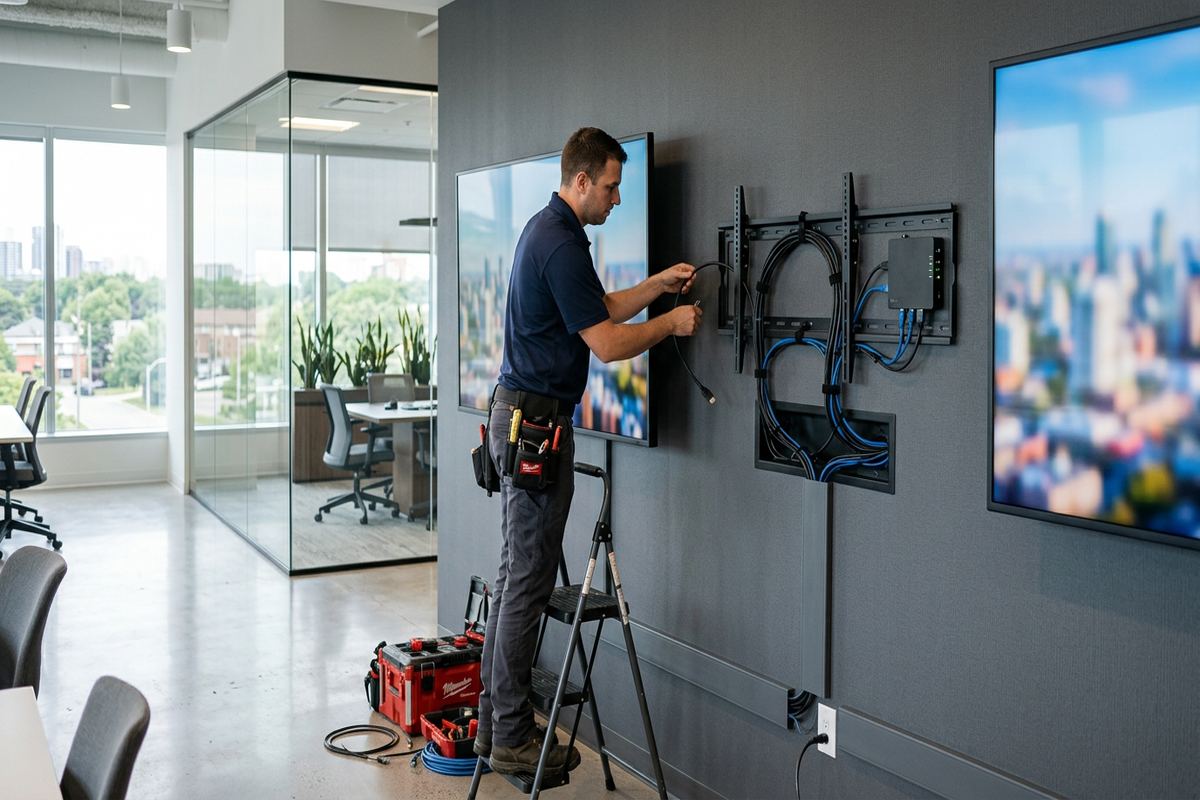
Before drilling begins, the installer confirms the agreed screen position, bracket movement, cable entry and equipment list with the customer. The mounting surface is checked again because drawings and initial observations may not reveal every obstruction. Work areas are protected, and drilling methods are chosen to control debris around patios, finished basements and occupied commercial spaces. If site conditions differ materially from the written scope, we explain the issue before changing the route or attachment method. This keeps decisions visible and prevents an improvised solution from becoming hidden behind the completed display.
Once the bracket and pathways are ready, cables are pulled as continuous labelled runs, terminated and tested for their intended function. The television is mounted with the required clearances, and connected equipment is arranged so ports remain serviceable. On-site configuration covers the agreed network, sources, controls, picture settings and audio operation. We verify that articulating mounts move without pinching cables and that fixed mounts allow necessary ventilation. Exterior connection covers, glands and penetrations are inspected before completion, with attention to sealing details that will face Ajax rain, snow and temperature changes.
Handover is completed with the customer's own credentials and includes a practical demonstration rather than leaving unexplained applications or remotes. We identify the normal input, power sequence, network connection and any seasonal steps specified by the equipment manufacturer. The customer receives an as-built record showing the installed cable routes and labels, along with the equipment and warranty information included in the written scope. Equipment ownership is recorded clearly, particularly where a landlord, business tenant or third party supplied components. This documentation makes later service, renovation or replacement easier to plan.
- Final placement confirmed before drilling
- Mount movement and cable clearance tested
- Customer controls explained on site
- As-built cable record supplied at handover
Maintaining an Outdoor TV in Ajax
Seasonal inspection helps identify small exterior issues before they affect the display or wall assembly. After winter, owners should look for loosened covers, cracked sealant, damaged conduit and debris around drainage or ventilation points. The television should be cleaned only according to its manufacturer instructions, without pressure washing or household chemicals that can damage coatings and seals. In Ajax's freeze-thaw conditions, visible gaps around penetrations deserve attention because repeated expansion can change a previously sound joint. Any movement in the bracket or mounting surface should be assessed rather than tightened without checking the substrate.
Operating limits vary by model, so the manufacturer's temperature and storage guidance should govern cold-weather use. Some outdoor televisions can remain installed year-round, while other equipment may require shutdown, protection or removal under particular conditions. Covers can reduce dirt and direct exposure when properly fitted, but they should not trap moisture or block ventilation during operation. Customers should also avoid leaving cables hanging where ice, wind or routine snow clearing can pull them. We review the accessible connection area during handover so normal seasonal checks can be completed without disturbing sealed wall entries.
Future renovations should account for the documented cable route before contractors drill, cut cladding or rebuild a deck. The as-built record provides a practical reference, although concealed site conditions must still be verified before new work. If the television is replaced, bracket capacity, hole pattern, weight, connection layout and weather rating should be reviewed rather than assuming the existing setup fits. UnifiedLink can assess changes to the display, audio or network as one coordinated low-voltage project, preserving clear labels and updating the record when agreed work alters the original Ajax installation.
- Inspect seals and conduit after winter
- Follow manufacturer temperature and cleaning guidance
- Keep ventilation and drainage areas unobstructed
- Review bracket compatibility before replacing the display
Ajax neighbourhoods we cover
- Southwood
- Nottingham
- Duffin's Bay
- Applecroft
- Pickering Beach
- Central Ajax
Outdoor TV installation in Ajax — common questions
Can any television be installed outdoors in Ajax?
A television should be selected for the conditions where it will operate. A covered Ajax patio can still experience humidity, wind-driven rain, cold and temperature swings. An indoor-rated television does not become outdoor-rated because it is under a roof or inside a fabric cover. We review the proposed model, exposure, brightness needs, ventilation and manufacturer requirements before confirming the installation approach.
Can you hide the cables in my finished home?
Often, but the route depends on framing, insulation, finished basement ceilings and access to the exterior wall. Newer Ajax homes can provide useful concealed pathways, although tracing them takes care. We assess the route before pricing and identify any required openings or finishing exclusions. Where concealment is impractical, discreet exterior-rated conduit may provide a cleaner, serviceable alternative to exposed loose cables.
Will Wi-Fi work reliably on my patio?
It depends on router location, wall materials, distance and interference. Brick, masonry and foil-backed insulation can weaken service outside even when indoor coverage is good. During an Ajax assessment, we check the proposed television area and discuss wired Ethernet or improved wireless coverage if needed. Any network work is included only when agreed, and configuration uses credentials controlled by you.
Do I need condo or landlord approval?
Usually, approval should be confirmed before drilling or attaching equipment to an exterior wall, balcony or common element. Ajax condo corporations and landlords may regulate visible cable, working hours, façade penetrations and restoration. The owner or tenant is responsible for obtaining permission. UnifiedLink can document the proposed display position, attachment method and cable route for submission to the relevant property manager or landlord.
What happens during the site assessment?
We examine the viewing area, mounting surface, weather exposure, sunlight, power, signal sources, network coverage and possible cable routes. For Ajax properties, we also consider freeze-thaw exposure and whether the building uses masonry veneer, concrete or framed construction. The assessment supports a written scope covering equipment, routes, placement, exclusions, equipment ownership and warranty. Timing depends on the service and travel distance.
How quickly will UnifiedLink answer my request?
Requests sent during business hours are answered the same day. After-hours requests are answered the next business day. This response is for the initial enquiry, not a guaranteed installation or site-visit time. Site assessment timing depends on the required service and travel distance. Once the Ajax property and project details are understood, the next practical assessment step can be arranged.
Coverage in Ajax is confirmed against the address before we quote. See everything we install in Ajax or the province-wide outdoor tv installation page.